2027 Paying for an Online Ed.D. in Leadership and Learning in Organizations: A Program Deferral After Paying a Deposit
Audited and Verified:
Our Editorial and Data Verification Process
Research.com uses government datasets, official education statistics and primary institutional information to support its career and degree guides. Our review process checks factual accuracy, occupational definitions, source dates and the requirements associated with the credentials discussed.
How This Article Was Fact-Checked
Our editorial team verifies salary estimates, employment projections, education requirements and program information against original data providers and official organizations. Salary figures are checked against the relevant occupational definitions and reporting periods. Information about licensure, accreditation and required in-person training is reviewed separately.
Fact-checked and verified on:

Co-Founder and Chief Data Scientist
A doctoral program's decision to postpone your start can change the value of an offer you have already paid to accept. For a working professional considering an online Ed.D. in leadership and learning, the deposit is only one concern: tuition, employer support, scheduling, and access to a workplace project may also change.
This guide explains what to request in writing, how to compare a later start with a refund or another program, and which financial commitments to avoid until your enrollment terms are clear.
Key Things You Should Know
- A program-initiated deferral does not, by itself, establish whether your deposit is refundable, transferable, or forfeited. Request the applicable written policy and an individual decision before accepting new terms.
- Compare the original and proposed entry terms - not just the deposit. Tuition, aid, employer reimbursement, required travel, and time to completion may differ.
- Ask for written confirmation of your new start date, admission status, deposit treatment, and deadline to decline. If those terms do not work, request a refund decision and assess other options before paying more.
What Is an Online Ed.D. in Leadership and Learning in Organizations?
An online Ed.D. in leadership and learning in organizations is generally a practice-oriented doctorate for professionals studying how people learn, lead, and implement change at work. Depending on the institution, coursework may connect adult learning and organizational development with applied inquiry. "Online" describes where much instruction occurs; it does not establish that classes are self-paced or that campus visits are unnecessary.
Programs with similar names can award different degrees and require different final projects. Confirm the exact degree title, curriculum, meeting schedule, and capstone or dissertation requirements in the catalog for your proposed entry term. If a deferral gives you time to reconsider your academic focus, an Ed.D. concentration selection guide can help frame the comparison - but a course topic is not necessarily a formally awarded concentration.
How Much Does an Online Ed.D. in Leadership and Learning in Organizations Cost?
The relevant cost is the total cost under the new start date, not the deposit alone. Without a school's current tuition schedule, required credits, fee schedule, and deferral terms, a reliable program total cannot be stated. This comparison identifies costs to check across both entry terms.
| Cost component | What a deferral can change |
| Deposit | Whether it is credited to tuition, carried forward, refunded, or retained |
| Tuition and required fees | The rates and charges applicable to the later entering cohort |
| Campus convenings | Travel, lodging, and time away from work or caregiving |
| Financing and employer support | Loan eligibility, reimbursement-year limits, and continued-employment conditions |
| Delayed completion | Additional waiting time and possible effects on a planned career move |
Ask the bursar or program office whether the original price is protected and whether the deposit will appear as a credit on the first bill. A later entry term may also change the timing of payments even if the published tuition rate does not. Do not treat a verbal estimate or a prospective salary increase as a guaranteed return on the degree.
What Happens If a Doctoral Program Defers Admission After You Pay a Deposit?
What happens next depends on who initiated the deferral and the terms you accepted. A school postponing an entering cohort is different from a student asking to defer an available place. Neither situation has a universal deposit rule. An admission offer for a later term may be firm, conditional, or still awaiting approval; get its status in writing.
Act before any response deadline. The following sequence creates a record and prevents a deposit dispute from obscuring the larger enrollment decision:
- Save the offer, deposit receipt, payment terms, deferral notice, and dated messages. Identify which office issued each document.
- Ask admissions for a written explanation of the change, your confirmed or conditional entry term, and the deadline and procedure for accepting or declining it.
- Ask the office responsible for the charge whether the deposit will be refunded, credited to the later term, or retained; request the policy applied and the amount of any credit.
- Ask the program and bursar which catalog, tuition rates, cohort requirements, and completion rules will govern the later start.
- If the answer is unclear or conflicts with your documents, seek written review through the institution's stated escalation process before authorizing further charges.
Do not assume silence preserves your place or that accepting a later offer preserves every original term. If you paid by card and believe the charge was handled contrary to its disclosed terms, consult your card issuer about its dispute process and deadlines; a dispute is not an automatic refund or a substitute for reviewing the school's policy. Keep the institution's response and your payment records together.
Rebuild your funding plan around the actual entry term. Federal aid, institutional awards, and private loans have separate eligibility and disbursement rules; an earlier aid discussion does not establish funding for a postponed term. Ask the financial aid office whether you must update an application, accept a revised award, or meet a new enrollment requirement before funds can be disbursed.
Employer support deserves a separate check. A manager's encouragement is not the same as an approved tuition agreement. Obtain the reimbursement cap, eligible dates, required grades, employment conditions, and repayment obligations in writing. If you are exploring grants for doctoral study in higher education leadership, confirm that any opportunity covers your specific program and revised term rather than assuming an award carries over.
Compare the later Ed.D. start with a lower-cost way to meet your immediate goal. If you mainly need a near-term skill in evaluation or leadership development, a targeted course or employer-sponsored project may serve you better while the doctoral offer remains uncertain.
Verify that the institution holds recognized institutional accreditation for the period and degree you intend to pursue. Check the accreditor's current listing and the school's catalog rather than relying on an advertisement or assuming a related school's status covers every offering. Ask the institution to clarify any programmatic recognition it claims and its scope.
Accreditation does not automatically make a general organizational leadership Ed.D. a state-approved route to teacher, principal, or superintendent licensure. If a regulated position is your goal, confirm the program's disclosures and the relevant state licensing authority's requirements before allowing a deferral to lock you into another cohort.
Admission standards vary by institution. Programs may review prior degrees and transcripts, professional responsibilities, statements of purpose, recommendations, interviews, or evidence that an applicant can undertake applied doctoral work. Do not assume that a particular master's field, managerial title, test score, or number of years is required everywhere.
A postponed start raises a more immediate admissions issue: does your existing offer remain valid? Ask whether you must submit updated transcripts, recommendations, or employer information and whether any conditions attached to your original offer still apply. Prior graduate credits considered for admission are not necessarily credits applied toward the doctorate. Applicants comparing online doctoral program choices after an Ed.S. should request a separate, written evaluation of any proposed transfer credit; the degree's existence alone does not establish a shorter Ed.D.
Leadership and learning Ed.D. curricula may address adult learning, organizational change, leadership practice, research methods, and program evaluation. Their emphasis differs: one program may focus on workplace learning and talent development, while another centers on education administration. Review required courses, not just elective titles, to see whether the later cohort still matches your purpose.
Also confirm the final-project sequence. A capstone, dissertation in practice, and research dissertation are not interchangeable requirements. If your intended project depends on employee or learner information, ask about faculty oversight and organizational permission; postponement could affect your sponsor or access to data. Do not collect restricted information in advance on the assumption that a future project will be approved.
Completion time depends on the program's course sequence, enrollment pattern, required convenings, and final project - not merely on the number of calendar months since admission. A deferral can add waiting time before coursework begins and may shift a cohort-based sequence or project deadline. Request a term-by-term plan for the new start, including live meetings and any required travel, before committing household or work schedules.
If you have completed doctoral work elsewhere, do not assume it will shorten the postponed program. Some Ed.D. programs considering previous doctoral coursework use distinct admission or completion models; only the receiving institution can determine what it will accept and how that affects your timeline.
An organizational leadership Ed.D. can support experienced professionals seeking more responsibility in learning and development, organizational improvement, consulting, or education administration. It does not replace the management experience, sector knowledge, or role-specific qualifications an employer requires. If your employer's promotion window will pass during the deferral, ask whether relevant leadership assignments are available now rather than assuming the degree is the only route.
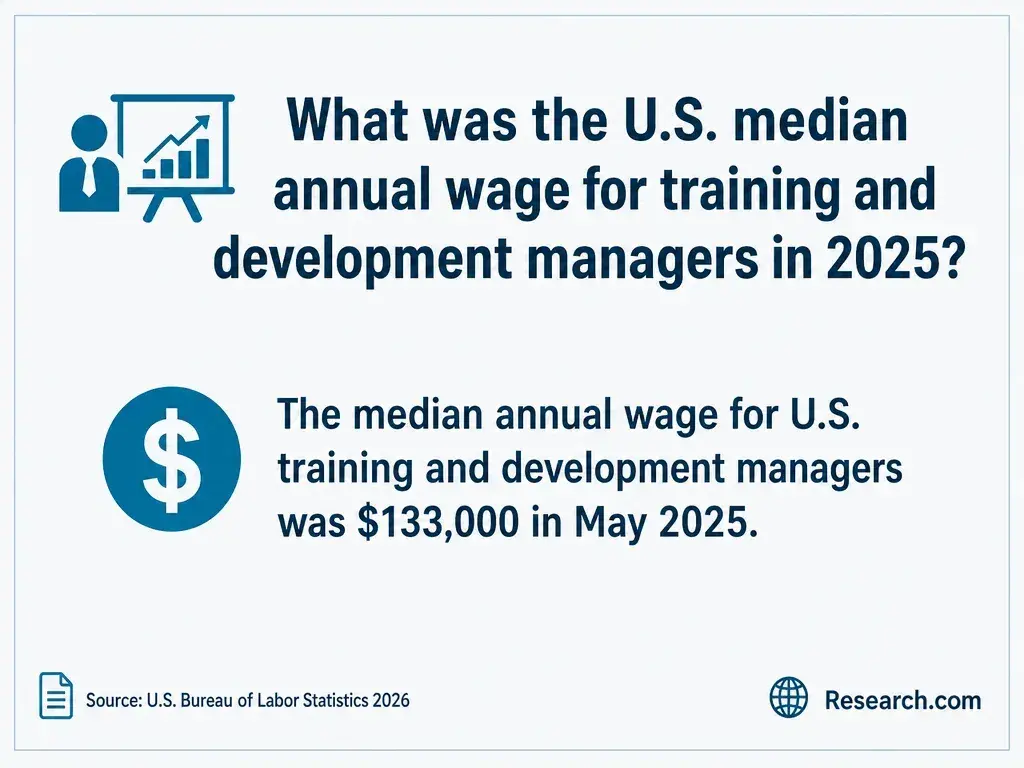
The U.S. Bureau of Labor Statistics reports a May 2025 median annual salary of $133,000 for training and development managers. That occupation-wide figure is not an expected salary for Ed.D. graduates; use it to understand the role's market context, then compare actual job requirements and your current experience. Higher education professionals weighing a sector-specific move can use organizational leadership Ed.D. study for higher education leaders to identify questions for programs without assuming the same career path fits corporate or nonprofit roles.
How Do You Choose a Reputable Online Ed.D. Program?
For a deposited applicant, a reputable choice is one that supplies verifiable academic information and clear answers when plans change. Compare the catalog for each possible entry term, institutional accreditation, required courses, live attendance and travel, final-project supervision, total charges, and published withdrawal and deferral policies. Ask which office has authority to issue a binding answer on each issue.
Set a personal decision deadline before the school's response deadline. Keep the deferred offer if the school confirms an acceptable place, deposit credit, cost, and schedule in writing. Seek a refund review and compare other programs if the material terms have changed or remain unresolved. If neither doctorate meets your immediate professional need, retaining your money for a focused credential or supervised leadership experience may be the better decision.
Other Things You Should Know About EdD Leadership
Usually you can evaluate another offer, but read both institutions' acceptance terms before paying a second deposit or making conflicting commitments. Ask each school about its withdrawal deadline.
Do not assume so. Advisor assignments can depend on staffing and cohort schedules; request confirmation if a particular faculty member is important to your project.
You may be able to take courses, but receiving credit is a separate decision. Obtain written preapproval from the Ed.D. program before enrolling if transferability matters.
Planning a possible topic is different from conducting an approved study. Check program supervision, employer permission, privacy rules, and any required ethical review before recruiting participants or accessing restricted data.
- Student Deposits Prior to Enrollment | NYS Education Department https://www.acces.nysed.gov/bpss/schools/student-deposits-prior-enrollment
- Disbursing Title IV Funds | 2025-2026 Federal Student Aid Handbook https://fsapartners.ed.gov/knowledge-center/fsa-handbook/2025-2026/vol4/ch2-disbursing-title-iv-funds
- Employer-offered educational assistance programs can help pay for college | Internal Revenue Service https://www.irs.gov/newsroom/employer-offered-educational-assistance-programs-can-help-pay-for-college
- Financial Aid Frequently Asked Questions - Affording UA https://afford.ua.edu/financial-aid/faq/
- Conditions of Aid | SUNY Empire https://sunyempire.edu/admissions-and-aid/financial-aid-and-scholarships/conditions-of-aid/index.html
- Online Ed.D. in Higher Education | Rockhurst University https://onlinedegrees.rockhurst.edu/programs/online-edd-education-leadership/higher-ed
- Deferrals and Term Changes - DU Bulletin - University of Denver https://bulletin.du.edu/graduate/admission-and-enrollment-policies/admission-process-and-standards-for-all-applicants/admission-term-changes/
- Miscellaneous Fees - Regulation and Policy Hub https://policy.ufl.edu/regulation/3-0376/
- Frequently Asked Questions - FSU's Office of Financial Aid https://financialaid.fsu.edu/resources/frequently-asked-questions
- Deferrals - Undergraduate Admissions https://undergraduate-admissions.mines.edu/deferrals/