2027 Online Ed.D. in Leadership and Learning in Organizations: Degree Fit for Leaders Tackling A Shift from Founder-Led to Professional Management
Audited and Verified:
Our Editorial and Data Verification Process
Research.com uses government datasets, official education statistics and primary institutional information to support its career and degree guides. Our review process checks factual accuracy, occupational definitions, source dates and the requirements associated with the credentials discussed.
How This Article Was Fact-Checked
Our editorial team verifies salary estimates, employment projections, education requirements and program information against original data providers and official organizations. Salary figures are checked against the relevant occupational definitions and reporting periods. Information about licensure, accreditation and required in-person training is reviewed separately.
Fact-checked and verified on:

Co-Founder and Chief Data Scientist
A founder-led organization may be ready to delegate decisions, yet its new managers can struggle if authority, knowledge, and accountability still flow through the founder. For leaders responsible for that transition, an online Ed.D. in Leadership and Learning in Organizations could offer a way to study change while applying it at work.
It is also a substantial commitment, and a degree cannot substitute for governance decisions. This guide explains what doctoral study could contribute, where shorter alternatives may work better, and what to verify before enrolling.
Key Things You Should Know
- Best fit: An Ed.D. can help an experienced leader diagnose decision bottlenecks, develop managers, and evaluate a transition, but only if the organization will support meaningful inquiry and change.
- Not a governance fix: If the founder will not delegate authority, coaching, board action, or a revised operating model may matter more than another degree.
- Career context: The US median annual salary for training and development managers was $133,000 in 2025; that occupational figure is not an expected Ed.D. graduate salary.
What is an online Ed.D. in Leadership and Learning in Organizations?
An Ed.D. is a practice-oriented Doctor of Education. Programs focused on leadership and organizational learning typically examine how people make decisions, develop skills, share knowledge, and implement change.
"Online" describes where much of the teaching occurs, not necessarily a self-paced degree; live classes, group work, or campus visits may still be required.
In a founder-to-professional-management transition, the learning problem is broader than teaching newly hired managers the company's procedures. Institutional knowledge may reside with one person, while formal job descriptions imply authority that managers cannot exercise.
An Ed.D. may help a leader investigate those gaps, design manager development, and assess whether changes are working. It cannot itself settle ownership rights, appoint executives, or compel the founder to delegate.
Is an online Ed.D. in organizational leadership worth it for experienced professionals?
It may be worth it when your continuing work involves leading complex organizational change and you need sustained training in organizational learning, research, and evaluation.
It is less compelling if the immediate task is to clarify reporting lines, negotiate the founder's role, or train managers on a known process. Those problems may call for a governance decision, experienced adviser, or targeted development program first.
Consider the source of the transition difficulty before choosing a credential. These routes develop different capabilities; none can replace the authority to put a new management model into effect:
| Route | Potential fit for the transition | Principal limitation |
| Leadership and learning Ed.D. | Ongoing responsibility for manager development, organizational diagnosis, and applied evaluation | Requires substantial study and an academically feasible project |
| MBA or executive education | Stronger grounding in strategy, finance, operations, or a defined executive skill gap | May offer less depth in applied organizational inquiry |
| Governance adviser, executive coach, or change consultant | Immediate help defining decision rights or managing founder-executive relationships | Does not necessarily build the leader's long-term research capability |
| PhD or DBA | A research-intensive career, or advanced study centered on business practice, respectively | Program aims and research expectations may not match a learning-focused change role |
A useful test is whether you can name several future decisions - not just this transition, for which better evidence about leadership and learning would change your practice.
If so, the doctorate may have enduring value. If cost is decisive, compare the affordable organizational leadership doctorates against their actual curriculum and project requirements, rather than selecting by tuition alone.
What careers can an Ed.D. in Leadership and Learning in Organizations prepare you for?
For an experienced leader, the most direct outcome may be greater effectiveness in an existing role: building a management team, developing successors, or evaluating whether delegated decisions remain delegated.
Related paths include organizational development leadership, talent or training management, internal change leadership, and consulting. Employers will still assess sector knowledge, budgets managed, implementation record, and ability to work with owners and boards.
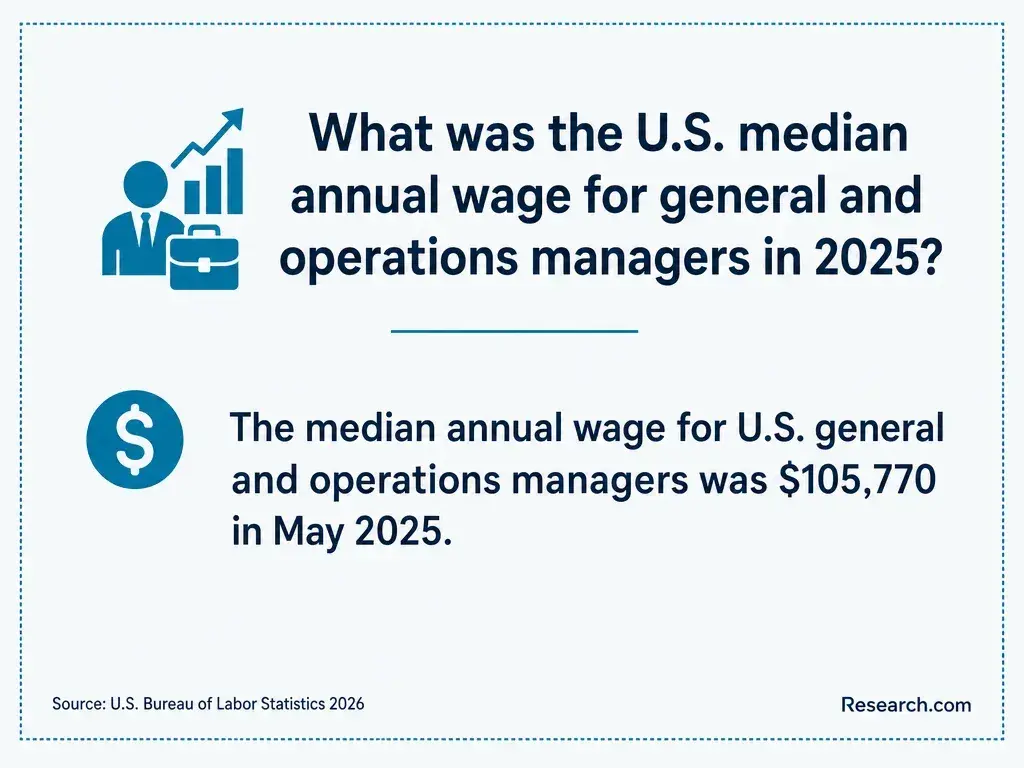
The US Bureau of Labor Statistics reports a 2025 median annual salary of $101,860 for management analysts, an occupation that includes organizational consultants, and projects 10.1% employment growth from 2025 to 2035.
That describes a broad occupation, not the pay or prospects of Ed.D. graduates. A leader seeking consulting work should be prepared to show credible, appropriately redacted evidence of changes they helped implement, not rely on the degree title alone.
Online study can let a leader remain close to the organization during a transition. That proximity may make it easier to observe decisions, collaborate with managers, and test improvements. Campus-based study may offer more in-person interaction, but neither format guarantees better access to faculty or a suitable applied project.
Compare the obligations behind each format: live-session attendance, group meeting times, required campus convenings, adviser availability, and what happens if work demands intensify. A founder-led transition can produce unpredictable workload peaks.
Ask whether you could keep participating if a new executive arrives, your role changes, or the organization withdraws project access. Location flexibility is useful only if the program's attendance and research expectations remain feasible.
Course titles and requirements vary, but relevant study may include leadership and organizational theory, adult learning, organizational development, change implementation, research methods, and program evaluation.
For this transition, look beyond course names: determine whether assignments require students to examine decision authority, knowledge transfer, manager capability, and evidence of implementation.
For example, training newly appointed managers may help them run meetings. It will not resolve a system in which every consequential decision still needs informal founder approval.
Coursework in organizational diagnosis should help distinguish a skills gap from a decision-rights problem; evaluation coursework should help define observable indicators, such as approval turnaround or the consistency of escalation practices, without claiming those indicators prove causation.
Confirm the final academic deliverable before enrolling. Some education doctorates using alternative research projects do not require a traditional dissertation, but "alternative" does not mean that a workplace assignment automatically qualifies. Ask what faculty must approve and what organizational access the project requires.
Requirements are program-specific. Schools may evaluate prior graduate education, transcripts, professional responsibilities, recommendations, a statement of purpose, and evidence of readiness for applied doctoral work. An experienced leader should describe decisions they actually owned and changes they helped implement, rather than rely on a founder-given title.
In an application, a credible proposed problem might be how to transfer decision-making knowledge to a new management team. Present it as a question to investigate, not a diagnosis you have already proved.
State what access or sponsorship might be available, while distinguishing a founder's encouragement from permission to use employee information or conduct a doctoral project.
If you hold an education specialist degree, Ed.S.-to-Ed.D. program options may be worth examining. Ask the admissions and registrar's offices separately whether prior study supports eligibility and whether any credits would actually apply to the doctorate; one does not establish the other.
Completion time depends on required credits, course sequencing, enrollment pace, and the final project or dissertation. The transition itself can introduce delays: a new executive may change priorities, a project sponsor may leave, or access to organizational records may become restricted.
Request the program's published course sequence and completion rules rather than assuming that online study can be accelerated at will.
If you previously began doctoral study, comparing education doctorate ABD completion routes may be more relevant than starting a standard cohort program. The receiving institution must determine whether your prior coursework, candidacy status, and proposed project meet its requirements; an ABD label alone does not establish a shorter route.
There is no reliable universal price. Compare each school's published tuition basis - per credit, term, or program - with required fees, credits, expected enrollment length, and any travel for convenings.
Include the potential cost of reduced working hours or delayed completion. Online Doctor of Education tuition planning is most useful when it accounts for the full study period, not just an advertised rate.
If the organization offers education assistance, get the terms in writing. Confirm annual limits, eligible expenses, grade or employment conditions, and whether repayment is required if you leave. A founder's verbal support is not a funding agreement, and a possible promotion should not be treated as a guaranteed return on tuition.
Generally, leaders do not need a professional license simply to study organizational leadership or manage change in a private organization. The Ed.D. itself does not confer a management license or professional certification.
Requirements can differ if the target job is regulated, for example, certain school-administrator positions. Confirm any such eligibility with the program and the relevant state authority rather than assuming a broadly focused leadership doctorate provides licensure preparation.
How can you choose an accredited online Ed.D. program for organizational change?
First, verify the institution's current accreditation status through the institution and its recognized accreditor. Then verify the exact degree awarded, delivery requirements, curriculum, final-project rules, and any licensure disclosures.
Institutional accreditation establishes an important baseline; it does not establish that a program specializes in founder transitions or qualifies graduates for a regulated role.
For this particular challenge, the strongest program fit is one you can connect to a feasible organizational question. Before applying, ask the program and your organization to clarify the following:
- Can the required project examine a management transition, and who approves its scope and supervision?
- Will organizational leaders authorize appropriate access to decisions, processes, or records without compromising employee confidentiality?
- What happens to the project if your employer, founder sponsor, or access to data changes?
- How will live classes, group work, and any campus visits fit your responsibilities during the transition?
If those answers are uncertain, resolve the governance and access questions before committing to doctoral tuition. A program can teach rigorous change inquiry, but the organization must still permit responsible inquiry and make the management decisions that follow.
Other Things You Should Know About EdD Leadership
No. The founder can retain an ownership or strategic role. What matters is whether the organization clearly defines which decisions managers can make and consistently respects those boundaries.
Yes, but family relationships and ownership rights need explicit attention. An Ed.D. can help a leader examine learning and change; it does not replace legal, succession, or governance advice.
Usually you can discuss the problem, your methods, and your responsibilities at an appropriate level. Obtain any required organizational permission and remove confidential or identifiable information before sharing a portfolio or findings.
Clarify which parts of the decision remain open to evidence. If no meaningful diagnosis or revision is possible, that initiative may be a poor doctoral project even if it remains an important management assignment.
- Cost of Attendance (Budget) | 2026-2027 Federal Student Aid Handbook https://fsapartners.ed.gov/knowledge-center/fsa-handbook/2026-2027/vol3/ch2-cost-attendance-budget
- Online group projects in higher education - PMC https://pmc.ncbi.nlm.nih.gov/articles/PMC10038701/
- Synchronous | University of Illinois Springfield https://www.uis.edu/colrs/foundations-course-design/course-modalities/synchronous
- Wharton EMBA Application, Admission Requirements | Wharton Executive MBA https://executivemba.wharton.upenn.edu/emba-application-requirements/
- Doctoral dissertation or capstone: how to choose the right program | PhD/Doctorate | Capella University Blog https://www.capella.edu/blog/phd-doctorate/the-difference-between-a-dissertation-and-doctoral-capstone/
- What is a Cost of Attendance (COA)? | Student Financial Support https://www.bumc.bu.edu/osfs/cost-of-attendance-bot/
- Full Guide to the Doctorate in Organizational Leadership (2025) | Pepperdine University https://gsep.pepperdine.edu/blog/posts/online-edd-in-organizational-leadership-overview.htm
- Online EdD in Education Policy and Leadership | American University https://www.american.edu/baker/graduate/edd/
- The Application Process - LaFetra College of Education https://education.laverne.edu/edd/requirements/
- Doctor of Education in Leadership (Ed.D.) Degree | Digital Crafts https://www.trident.edu/doctoral-online/edd-leadership-degree/