2027 Online Ed.D. in Leadership and Learning in Organizations: Evaluating Academic Teaching Goals Alongside Practice Leadership
Audited and Verified:
Our Editorial and Data Verification Process
Research.com uses government datasets, official education statistics and primary institutional information to support its career and degree guides. Our review process checks factual accuracy, occupational definitions, source dates and the requirements associated with the credentials discussed.
How This Article Was Fact-Checked
Our editorial team verifies salary estimates, employment projections, education requirements and program information against original data providers and official organizations. Salary figures are checked against the relevant occupational definitions and reporting periods. Information about licensure, accreditation and required in-person training is reviewed separately.
Fact-checked and verified on:

Co-Founder and Chief Data Scientist
An online Ed.D. in Leadership and Learning in Organizations can support a career in organizational improvement while creating opportunities to teach adults. But preparation for practice leadership is not necessarily preparation for a research-intensive faculty job.
This distinction matters if you hope to keep leading teams, move into higher education, or do both. This guide explains what to look for in the curriculum, applied research requirements, teaching opportunities, and career outcomes - and when another pathway may serve your academic goals better.
Key Things You Should Know
- A practice-oriented Ed.D. may strengthen both organizational leadership and teaching-related expertise, but it does not by itself qualify a graduate for a particular faculty appointment.
- For academic teaching goals, compare supervised teaching opportunities and scholarly output, not just leadership courses or the doctoral title.
- The U.S. Bureau of Labor Statistics reports a $75,350 median annual salary for postsecondary teachers in May 2025; that occupation-wide figure is not an expected salary for Ed.D. graduates.
What is an online Ed.D. in Leadership and Learning in Organizations?
It is a practice-oriented Doctor of Education focused on how organizations develop people, use evidence, and lead change. Programs with this or a similar name may examine adult learning, organizational culture, leadership development, and applied inquiry across business, government, healthcare, nonprofits, and education.
The exact degree title and requirements belong to the institution offering it; similar names do not establish identical curricula.
The central fit question is what you want to teach. An Ed.D. can provide subject matter for courses in leadership, professional learning, or organizational change. It may also help you bring credible practice examples into the classroom. It does not necessarily provide supervised college teaching, a publication record, or the discipline-specific scholarship a research university seeks.
If producing original academic research and competing for research-focused faculty positions is your primary objective, compare education or organizational-studies PhD programs before choosing an Ed.D.
What careers can an online Ed.D. in Leadership and Learning prepare you for?
The most plausible outcome depends on the work you already do. An experienced learning and development professional might use doctoral study to lead evaluations or larger change initiatives; an established organizational leader might add teaching to a practice career. Someone without teaching or leadership experience should not expect the degree alone to provide either.
These paths use overlapping knowledge but reward different evidence of readiness. The comparison can help you decide which experiences to seek during the degree:
| Target | Typical responsibilities | Evidence beyond the degree |
| Organizational learning or leadership | Diagnose performance needs, develop people, evaluate initiatives, and implement change | Decision-making responsibility, completed projects, stakeholder collaboration, and measurable evaluation methods |
| Practice-oriented college teaching | Teach courses, assess student work, mentor learners, and connect theory with professional practice | Relevant professional expertise, teaching experience, and evidence of effective course design |
| Research-intensive faculty work | Teach while producing scholarship, seeking research support, and contributing to a discipline | Scholarly publications, a research agenda, and methods preparation aligned with the hiring department |
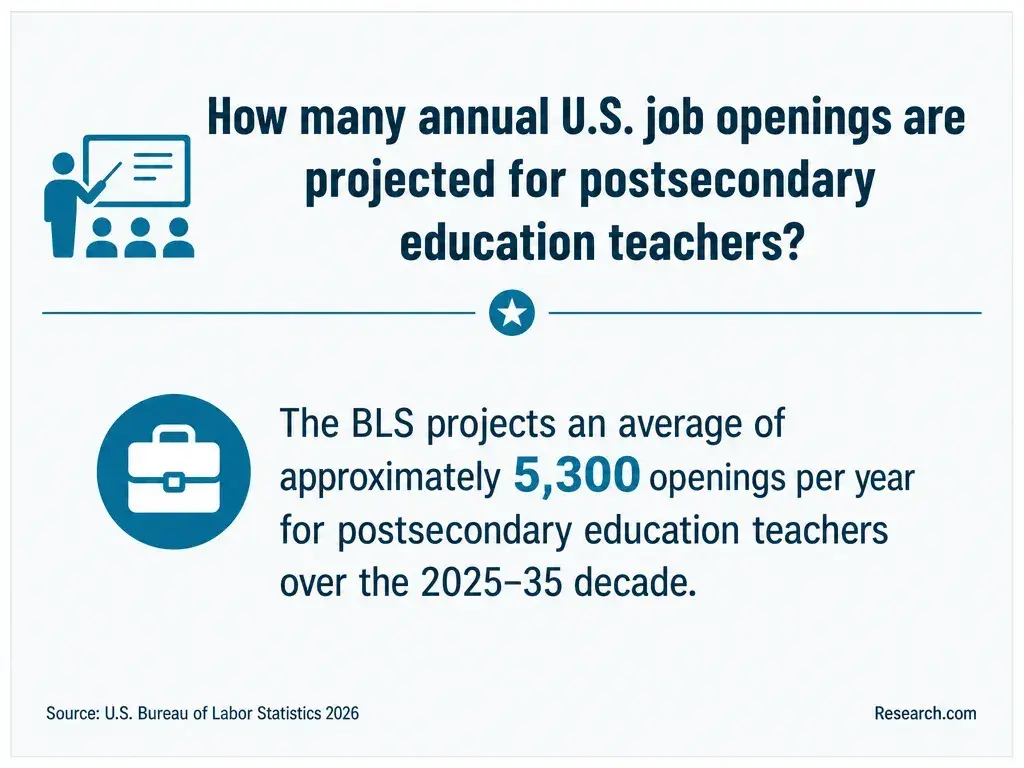
The Bureau of Labor Statistics projects 2.5% employment growth for postsecondary teachers from 2025 to 2035. That broad projection does not describe openings in leadership and learning specifically, nor does it distinguish adjunct, teaching-focused, and tenure-track jobs.
Read actual postings before treating a doctorate as a hiring requirement. University employees considering a combined administrative and teaching path can also compare organizational leadership Ed.D. programs for university professionals.
How much does an online Ed.D. in Leadership and Learning cost?
There is no reliable single price for this degree category. Schools may charge by credit or term, and advertised tuition may exclude fees or required travel. A meaningful comparison uses the published requirements and charges for your entry term, not the lowest displayed tuition figure.
Request an itemized estimate that separates the following costs. This matters particularly if teaching would supplement, rather than replace, your current income:
- Required tuition and institutional fees through the research or capstone stage.
- Books, technology, and any required campus-convening travel and lodging.
- Potential costs of reduced work hours, childcare, or extending enrollment.
- Employer reimbursement limits, grade conditions, and repayment obligations.
Compare that estimate with what your target position actually requires. If you mainly want to teach an occasional professional course, a full doctorate may be a costly route compared with gaining teaching experience or completing focused graduate study. For a broader price search, review cost-conscious routes to a leadership doctorate, then confirm each school's current total charges directly.
Relevant study often connects adult learning and leadership theory with organizational diagnosis, change implementation, and evaluation. Methods courses may teach students to frame a practical question, collect appropriate evidence, recognize limitations, and communicate findings. Course titles alone cannot tell you how deeply a program develops any of these abilities.
For a combined teaching-and-practice goal, inspect two sides of the curriculum. Practice preparation means opportunities to investigate a real organizational problem, work with stakeholders, and assess an intervention responsibly.
Teaching preparation means opportunities to design learning, facilitate adults, receive feedback on instruction, or teach under supervision. A course on how organizations learn is valuable subject matter, but it is not automatically training in how to teach college students.
Also examine the required culminating work. A dissertation in practice, team capstone, and individual research dissertation can produce different kinds of writing and evidence for a future academic application. If that distinction affects your plans, compare Ed.D. study with dissertation alternatives against the actual deliverable, faculty guidance, and opportunities to share scholarly work at each school.
Completion time depends on course sequencing, enrollment intensity, required convenings, and the culminating project. Ask for the program's published schedule and completion rules rather than assuming online study is self-paced.
A workplace project may also depend on organizational permission, usable data, and faculty approval, factors that can affect timing even when coursework stays on schedule.
If you have unfinished doctoral study, do not assume prior credits or research will shorten a new Ed.D. Ask for a written evaluation that distinguishes admission eligibility, transferable credits, and remaining degree requirements. Education doctorate ABD program options may be worth investigating, but their policies do not imply that another school will accept your previous work.
Requirements vary by institution. A program may request graduate transcripts, a statement of purpose, recommendations, and evidence of professional experience; its rules determine acceptable prior degrees, grades, tests, and any exceptions.
A master's in education or a teaching background should not be assumed to be universally required.
For this particular goal, use the application to explain both parts of your plan without conflating them. Describe a leadership or learning challenge you have actually encountered, your responsibility for addressing it, and why doctoral inquiry would help. Then explain the academic teaching you hope to pursue.
Admissions staff can confirm eligibility; faculty or program staff can clarify whether students can gain relevant teaching experience. Neither an admission offer nor an interest in teaching establishes future faculty-job eligibility.
Accreditation must be checked for the specific institution, not inferred from the degree name or online format. Verify institutional accreditation through the accreditor or the U.S. Department of Education's recognized-institution information, and confirm that it covers the institution awarding the doctorate.
Ask the university what, if any, additional recognition applies to the program; do not assume specialized accreditation is required or present.
Accreditation supports an essential legitimacy check, but it cannot tell you whether graduates receive teaching practice, publish research, or meet an employer's faculty hiring standards. Those questions require program documents and target-job postings.
Delivery mode changes access, not the degree's basic academic purpose. Online study may let a working leader remain employed and investigate a problem in their organization.
Campus-based study may make it easier to participate regularly in departmental teaching or research, if those opportunities are actually available. Neither format guarantees mentorship, teaching assignments, or publication.
Compare the opportunities you can use, rather than assuming proximity or flexibility. An online cohort might require live classes, group meetings, and campus convenings; a local campus program might offer evening courses but limited teaching openings.
Ask both programs who can teach, how teaching assignments are made, whether faculty supervise student scholarship, and what attendance commitments apply.
If your primary ambition is a research-intensive appointment, compare the program's scholarly opportunities with those of a relevant PhD, not merely with another Ed.D.'s delivery mode.
Generally, a school teaching license is not inherent to studying organizational leadership. Admission rules still belong to each program. College faculty hiring is a separate matter: an employer evaluates the applicant's graduate education, disciplinary expertise, teaching record, and other qualifications for the position.
Do not confuse college teaching with licensed K-12 teaching or school administration. A broadly focused organizational leadership Ed.D. does not automatically prepare someone for a teacher, principal, or superintendent license.
If your target is a regulated school role, check the program's licensure disclosures and the relevant state authority before enrolling.
How can you choose a reputable online Ed.D. in Leadership and Learning program?
Start with two sample vacancies: one for the organizational role you want and one for the kind of academic teaching you hope to do. Compare their stated qualifications with your existing experience.
This prevents you from paying for a doctorate to solve a gap better addressed through supervised teaching, scholarly writing, or leadership responsibility.
Then ask each shortlisted program for evidence on the points most likely to change your decision:
- Confirm the awarded degree, institutional accreditation, curriculum, online attendance rules, required visits, and culminating project.
- Ask what teaching, course-design, faculty mentorship, and scholarly dissemination opportunities students can actually access.
- Request the full cost estimate, funding conditions, and published completion information; ask how any reported outcomes were measured.
- Check whether the program's applied project can fit your workplace permissions and data restrictions without compromising confidentiality.
If you work in a university, examine funding for higher education leadership doctorates alongside your institution's own reimbursement policy. Choose the Ed.D. when its practice-focused inquiry and available teaching opportunities fit both goals.
Choose a research-focused doctorate when sustained scholarship is central; choose a shorter teaching or leadership-development route when the missing qualification is narrower.
Other Things You Should Know About EdD Leadership
Possibly. The hiring institution decides whether your existing qualifications meet its requirements, while your Ed.D. program determines whether students may hold teaching assignments. Ask both before relying on teaching during enrollment.
Not automatically. A completed degree requirement and a published scholarly article are different outputs. Ask whether you may adapt the work for publication and what organizational permissions or confidentiality limits apply.
Potentially, but the hiring department will assess preparation in the subject being taught. The doctorate's title does not replace relevant graduate coursework or professional expertise in another discipline.
Seek opportunities to facilitate adult learning, design a course or workshop, and collect appropriate feedback. Keep a concise teaching portfolio that explains your objectives, instructional choices, and revisions without disclosing confidential learner information.
- Cost of Attendance (Budget) | 2026-2027 Federal Student Aid Handbook https://fsapartners.ed.gov/knowledge-center/fsa-handbook/2026-2027/vol3/ch2-cost-attendance-budget
- Accreditation in the U.S. | ed.gov http://www.ed.gov/laws-and-policy/higher-education-laws-and-policy/college-accreditation/accreditation-in-the-us
- Education Leadership | IES https://ies.ed.gov/funding/research/programs/education-research-grants/education-leadership
- Understanding College Costs | studentaid.gov https://studentaid.gov/resources/prepare-for-college/students/choosing-schools/consider-costs
- How Do Online Classes Work? What to Expect as an Online Student - Online Degrees & Programs | Kent State University https://onlinedegrees.kent.edu/blog/how-do-online-classes-work-what-to-expect-as-an-online-student
- How In-Person Experiences Enhance Online Degree Programs | umich.edu https://onlineteaching.umich.edu/articles/face-to-face-with-virtual-learners-how-in-person-experiences-enhance-online-degree-programs/
- EdD in Organizational Change and Leadership | USC Online https://online.usc.edu/programs/organizational-change-leadership/
- Online Doctor of Education in Leadership (EdD) | spalding.edu https://online.spalding.edu/programs/online-doctor-education-leadership
- Online EdD in Organizational Leadership | Pepperdine University https://gsep.pepperdine.edu/doctorate-organizational-leadership/
- Online Doctorate in Education and Leadership (Ed.D.) | Rockhurst University https://onlinedegrees.rockhurst.edu/online-edd-programs