2027 Online Ed.D. in Leadership and Learning in Organizations: How to Evaluate a Research Partner That Withdraws Mid-Project
Audited and Verified:
Our Editorial and Data Verification Process
Research.com uses government datasets, official education statistics and primary institutional information to support its career and degree guides. Our review process checks factual accuracy, occupational definitions, source dates and the requirements associated with the credentials discussed.
How This Article Was Fact-Checked
Our editorial team verifies salary estimates, employment projections, education requirements and program information against original data providers and official organizations. Salary figures are checked against the relevant occupational definitions and reporting periods. Information about licensure, accreditation and required in-person training is reviewed separately.
Fact-checked and verified on:

Co-Founder and Chief Data Scientist
A research partner's withdrawal can leave an Ed.D. student without a project site, sponsor, participants, or permission to use organizational data. For working leaders completing an applied doctoral project, the immediate task is not simply finding a replacement: it is determining what remains academically valid and ethically authorized.
This guide explains how to assess the loss, work with faculty and the organization, and compare options for revising or relocating the project. It also identifies the program questions worth asking before enrollment, when a partner change is easier to plan for than to resolve.
Key Things You Should Know
- First identify what withdrew: an individual collaborator, an organizational sponsor, site access, or data permission. Each loss calls for a different response.
- Separate three decisions: whether the organization permits continued involvement, whether required research oversight permits the revised work, and whether the Ed.D. program approves it for the degree.
- Preserve the approved record and pause affected activities before replacing a partner or reusing data. A feasible backup project needs its own scope, permissions, faculty review, and timeline.
What is an online Ed.D. in Leadership and Learning in Organizations?
An online Ed.D. in leadership and organizational learning is a practice-oriented doctorate concerned with how people learn, lead, and improve systems at work. Depending on the institution, students may study adult learning, organizational change, evaluation, and applied research. The exact degree title and final requirement vary: one program may require a dissertation in practice, another a team capstone, and another a different doctoral project.
That distinction matters when a partner withdraws. A course consulting assignment may be replaceable within a term, while a required doctoral project may need formal approval to change its site, question, team, or evidence. Before committing to a program, compare its actual project rules - not just its leadership curriculum - with different education doctorate specialization pathways.
How do you evaluate accreditation for an online Ed.D. program?
Confirm the university's institutional accreditation with the accreditor and determine that the Ed.D. is awarded by that institution. Then review the program catalog for the exact degree, project requirement, and any licensure disclosure. Institutional accreditation does not establish that an organizational leadership doctorate prepares graduates for principal, superintendent, or another regulated position.
Accreditation also does not resolve a project-site dispute. Ask the program which written policies govern partner withdrawal, changes to an approved proposal, continuation in a team project, and access to an alternative site. The program and its research-oversight offices - not the accreditor - decide how those rules apply to an individual student.
What should you do if a research partner withdraws mid-project?
Pause the work affected by the withdrawal and establish exactly what permission has ended. A sponsor stepping down does not necessarily mean the organization has withdrawn, and losing access to new participants does not automatically settle whether previously collected data may be retained or analyzed. Conversely, data already in a student's possession is not automatically authorized for continued use.
The first conversation should establish the facts, not negotiate a replacement on the spot. Use this sequence to protect participants, preserve the academic record, and give your advisor a workable decision to review:
- Document the withdrawal in writing: who made the decision, its effective date, which activities or data it covers, and whether an authorized organizational representative remains available.
- Stop recruitment, collection, access, or sharing that depended on the withdrawn permission. Secure existing records under the approved storage and retention rules; do not copy them to a personal account or delete them without direction.
- Notify your faculty advisor and, where applicable, the program coordinator and institutional review or research-compliance office. Report what has happened before changing participants, methods, sites, or the research question.
- Inventory what can still support the project: approved materials, completed work, authorized data, remaining stakeholders, deadlines, and the minimum evidence needed for the required deliverable.
- Develop a revised proposal - such as a narrower question, a new site, a different authorized data source, or a documented change in project scope - and obtain the required academic, organizational, and ethics decisions before resuming affected work.
Use an illustrative example: a nonprofit sponsor withdraws from a staff-learning evaluation after interviews have begun. The student should not assume that another nonprofit can supply interchangeable interviewees, or that the first organization's interviews can be published. The advisor must assess whether the revised question still meets doctoral standards; the relevant organization must authorize access; and the institution must determine whether the existing approval needs modification. If the original agreement addresses data ownership, retention, or reporting, review it with the appropriate offices.
Ask the advisor: What minimum project elements must remain, and what changes require renewed approval? Ask the program coordinator: Could a site change affect enrollment or completion deadlines? Ask the organization's authorized representative: Which permissions remain, and who can decide about existing data and deliverables? Record the answers. An informal assurance from a supportive colleague is not a substitute for site authorization.
If no viable site remains, a smaller approved project or a later completion date may be more defensible than rushing to recruit a new partner. Even programs described among dissertation-free Ed.D. study options to evaluate can have substantial capstone or other final-project requirements; verify the actual alternative before assuming it solves the access problem.
Requirements vary by program and entry term. Schools may ask for graduate transcripts, a statement connecting professional experience to a problem of practice, recommendations, and evidence of readiness for doctoral research. Some specify a completed master's degree or relevant experience; applicants should check the published rules rather than assume a particular job title or education major is mandatory.
For an applicant planning an external project, admission readiness also includes a realistic access plan: who could authorize the work, what data might be available, and what alternative exists if the partner leaves. An employer's expression of interest is useful but is not project approval. Applicants progressing from an education specialist credential can examine education specialist to doctoral degree planning, while asking the Ed.D. program separately whether prior coursework satisfies admission rules or transfers into degree requirements.
Programs commonly draw on leadership theory, adult learning, organizational change, and qualitative or quantitative inquiry, but required courses and their depth differ. For a student whose project depends on an external partner, especially valuable preparation includes research ethics, evaluation design, stakeholder engagement, and interpreting incomplete organizational evidence.
Review the course sequence alongside the project milestones. A methods course taken after a site agreement is needed may offer limited help with early scoping. Ask whether faculty teach students to revise a question when access changes and whether the curriculum includes supervised practice in developing an evidence plan that does not depend on one person's cooperation.
Completion time and charges depend on the program's required credits, enrollment pattern, tuition structure, fees, and final-project rules. A partner withdrawal can add costs if it requires another term, new travel, or unpaid time to rebuild access. Do not estimate the financial effect from advertised program length alone; request the rules for continuation enrollment and any charges that apply while a revised project is under review.
Build a budget with both a planned-completion case and a delayed-project case. Include required convenings, research-related travel, and any employer-reimbursement conditions alongside tuition. For a broader comparison of tuition and aid considerations, see budget-conscious doctoral study in education; confirm every quoted charge and funding condition directly with the institution before relying on it.
Online delivery can make coursework accessible without relocation, but it does not guarantee self-paced study or remote access to a project site. Live sessions, team meetings, campus convenings, and faculty approval checkpoints may still control the schedule. Campus-based study may make in-person collaboration easier, yet it does not guarantee that an external organization will continue sponsoring research.
Compare formats by asking when project milestones occur, how quickly advisors can review a revised proposal, and whether students can change sites without interrupting their cohort sequence. Include travel and possible delays in the comparison. Readers considering an education-sector role can use budget planning for higher education leadership doctoral study as a starting point, while checking the chosen program's actual attendance and funding terms.
Depending on prior experience, graduates may pursue or advance in learning and development, organizational development, program evaluation, consulting, nonprofit leadership, or education administration. A project disrupted by partner withdrawal can still develop professional judgment if the student documents how they revised scope, handled permissions, and communicated uncertainty - but it should not be presented as a completed organizational impact study.
Hiring decisions turn on relevant responsibilities and demonstrated work, not the doctorate alone. A learning professional seeking a management role may need evidence of budgeting and team leadership; a consultant may need credible client work and sector knowledge. If the immediate goal is simply to manage a current project more effectively, supervised experience or targeted evaluation training may be a more direct investment than an Ed.D.
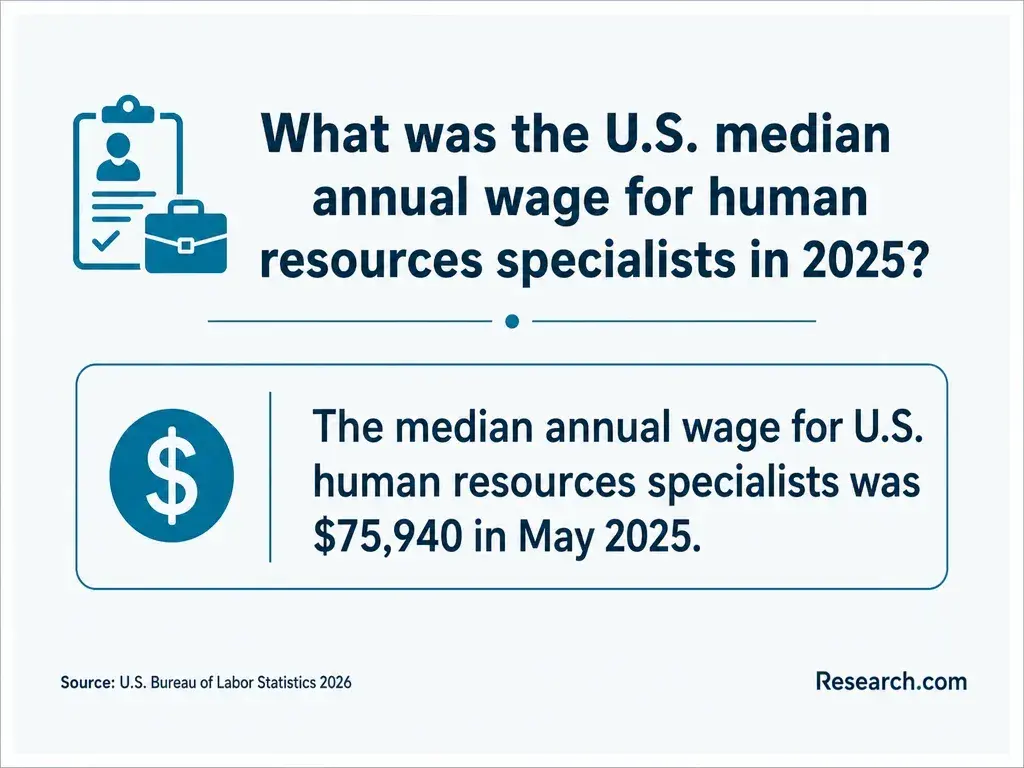
US Bureau of Labor Statistics data place the May 2025 median annual pay for training and development managers at $133,000. That is an occupational median, not an expected salary for Ed.D. graduates; these jobs generally require substantial relevant experience, and compensation varies by employer and responsibility.
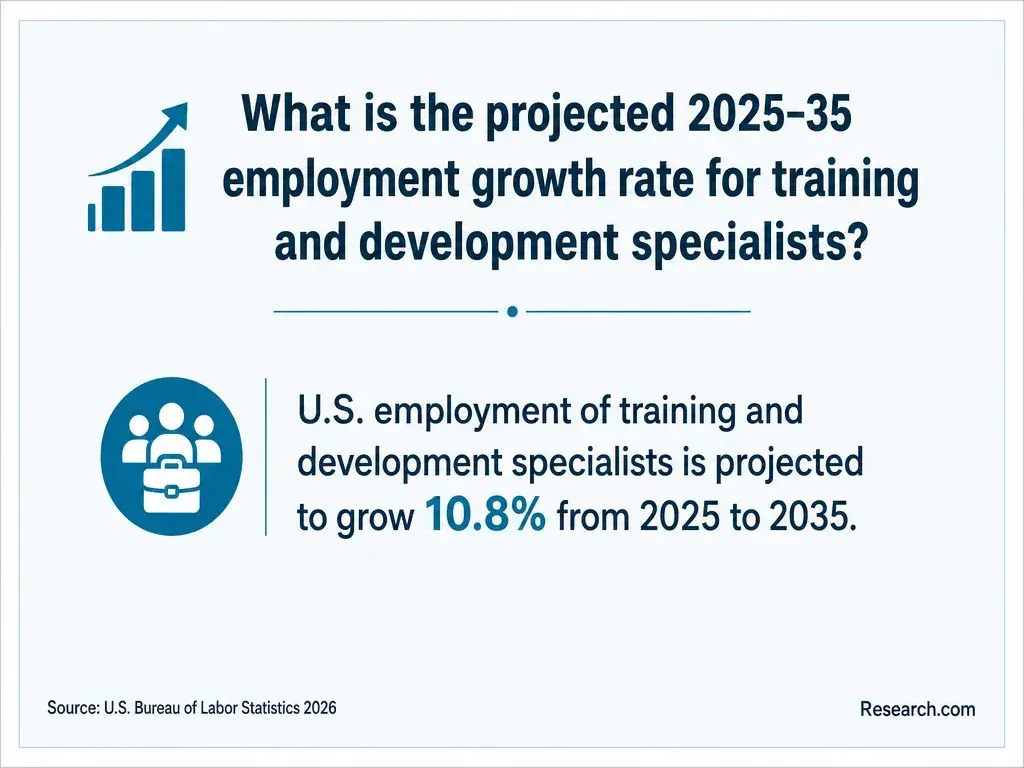
The BLS projects 10.8% employment growth for training and development specialists from 2025 to 2035. For someone moving into organizational learning, that outlook may support exploring the field, but it does not show that a doctorate is required or that any particular project will improve hiring prospects.
Which certifications or professional standards matter for Ed.D. graduates?
No general certification replaces the Ed.D. program's project approval or an organization's permission to use its data. Depending on the role, professional development in evaluation, project management, learning design, or change management may strengthen a specific skill. Choose it by the work you need to perform, not as a presumed requirement attached to the doctorate.
For a disrupted applied project, the most consequential standards are responsible research and data practice: honor consent and access limits, distinguish findings from untested recommendations, and report limitations plainly. If the intended career is a regulated education position, verify state licensure rules separately; a broadly focused organizational leadership Ed.D. does not automatically satisfy them.
Other Things You Should Know About EdD Leadership
Possibly, but use only material you have permission to share. Describe your own approved work and decision-making without exposing confidential data, identifying participants, or implying that proposed findings were validated.
Ask the advisor how the program assigns individual and team responsibilities. Confirm whether the remaining students can meet the required scope and how prior contributions should be credited before redistributing work.
Not automatically. Follow the applicable consent language, approved protocol, retention rules, and institutional direction. A participant's withdrawal and an organization's withdrawal can carry different consequences.
A partner may have legitimate confidentiality and reporting rights under an agreement, but academic assessment belongs to the institution. Resolve any conflict over review, publication, or data ownership through the agreement and appropriate university offices before promising either party control.
- Withdrawal of Subjects from Research Guidance (2010) | hhs.gov https://www.hhs.gov/ohrp/regulations-and-policy/guidance/guidance-on-withdrawal-of-subject/index.html
- TCPS 2 (2022) - Chapter 3: The Consent Process https://ethics.gc.ca/eng/tcps2-eptc2_2022_chapter3-chapitre3.html
- The Ethics of Withdrawal from Study Participation - PMC - NIH https://pmc.ncbi.nlm.nih.gov/articles/PMC9527709/
- Data Handling When a Subject Withdraws From a Study | mit.edu https://couhes.mit.edu/guidelines/data-handling-when-subject-withdraws-study
- Ed.D. Admissions - Peabody | Vanderbilt University Online https://peabodyonline.vanderbilt.edu/edd-in-organizational-learning/admissions/
- Conducting Research After IRB Approval | Brown University https://division-research.brown.edu/research-cycle/conduct-research/human-subjects-research/conducting-research-after-irb
- IRB Modification Submission Self-Check | 2020 | IRB Blog | Columbia University https://www.tc.columbia.edu/institutional-review-board/irb-blog/2020/irb-modification-submission-self-check/
- 346. Consent and Early Withdrawal or Cessation of Participation | Research Integrity & Security https://www.unr.edu/research-integrity/program-areas/human-research/human-research-protection-policy-manual/346-consent-and-early-withdrawal-or-cessation-of-participation