2027 Choosing an Online Ed.D. in Leadership and Learning in Organizations Around a Screen Reader Accommodation
Audited and Verified:
Our Editorial and Data Verification Process
Research.com uses government datasets, official education statistics and primary institutional information to support its career and degree guides. Our review process checks factual accuracy, occupational definitions, source dates and the requirements associated with the credentials discussed.
How This Article Was Fact-Checked
Our editorial team verifies salary estimates, employment projections, education requirements and program information against original data providers and official organizations. Salary figures are checked against the relevant occupational definitions and reporting periods. Information about licensure, accreditation and required in-person training is reviewed separately.
Fact-checked and verified on:

Co-Founder and Chief Data Scientist
An online Ed.D. can remove a commute without making doctoral study accessible. Readings, live discussions, research software, group projects, and campus visits may still create barriers for a screen reader user.
If you are considering a leadership and learning doctorate, the decision is whether a particular program can support your participation from admission through the final project - not whether its website says "online." This guide shows you what to test, whom to ask, and how to weigh accessibility alongside academic fit, cost, and career goals before you enroll.
Key Things You Should Know
- Request a screen-reader test of the actual learning platform, course materials, library resources, and required research tools; an accessible admissions website does not establish that the degree is accessible.
- Confirm live attendance, group-work, campus-visit, and final-project requirements in writing, along with how approved accommodations will work in each setting.
- Use career and cost claims cautiously: the US median for training and development managers is $133,000, but that occupational figure is not an expected salary for Ed.D. graduates.
What is an online Ed.D. in Leadership and Learning in Organizations?
An Ed.D. is a practice-oriented doctoral degree. A program focused on leadership and learning in organizations generally studies how adults learn at work, how leaders implement change, and how organizations evaluate improvement. Its setting may be a business, nonprofit, government agency, healthcare organization, or educational institution; it is not necessarily a school-administrator degree.
Program names and requirements vary. Some award a formally named leadership and learning degree; others offer a broader Ed.D. with a concentration or relevant electives. Check the credential printed on the transcript, required courses, and final project rather than inferring a specialization from one course. An Ed.D. concentration selection guide can help you compare academic focus, but accessibility must be checked against each program's actual coursework.
For a screen reader user, the best academic fit is a program whose core work - not merely its optional electives - can be completed with accessible readings, collaboration tools, evidence displays, and assessment methods. If your goal is only to improve a specific workplace skill, targeted professional development may be a more proportionate choice.
Is an online Ed.D. in organizational leadership accredited?
It can be, but accreditation belongs to a particular institution and, where applicable, a particular program - not to all online Ed.D. degrees as a category. Check the university's institutional accreditation with its named accreditor and confirm that the degree is awarded by that institution. Do not assume institutional accreditation establishes educator licensure eligibility or guarantees accessible course delivery.
When comparing affordable doctoral education in organizational leadership, verify accreditation and the exact degree designation before comparing advertised prices. Separately, ask the disability services office how students access required third-party platforms and what happens when a vendor's tool is inaccessible. Accreditation and an effective accommodation process answer different questions.
What careers can you pursue with this online Ed.D. degree?
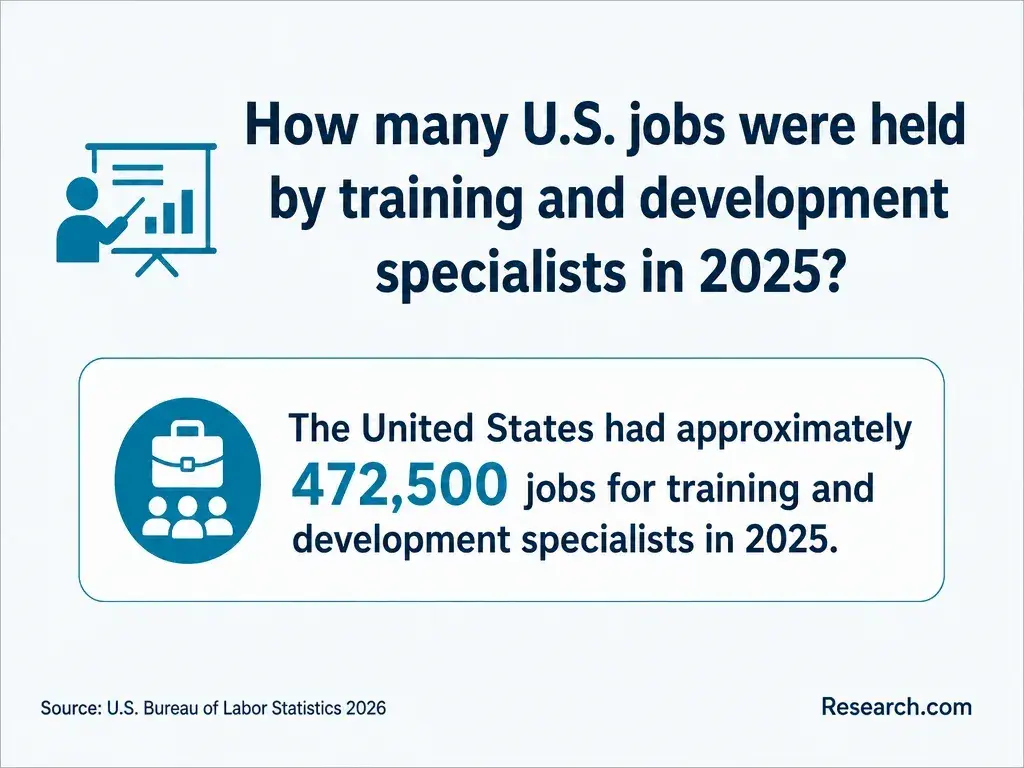
Possible paths include learning and development management, organizational development, workforce training, consulting, and leadership roles in education or public service. The degree may strengthen an experienced practitioner's ability to diagnose learning needs, lead change, and evaluate results. It does not substitute for management experience, sector knowledge, or an employer's specific hiring requirements.
If you already design training, lead teams, or evaluate programs, look for doctoral projects that extend those responsibilities and produce work you can describe without disclosing confidential data. If you hope to enter a new field, compare the degree with relevant job postings first: supervised projects, mentoring, or a focused certificate may address an experience gap more directly.
Higher education is one possible setting, but its roles have distinct qualifications and budgets. If that is your target, examine higher education leadership doctorate tuition assistance alongside the hiring requirements for the positions you want; employer support and a promotion are separate decisions.
Online study changes where you participate, not necessarily when or how. Compare the formats through the tasks you would actually perform with a screen reader, including discussion, collaborative writing, research, and any required convenings. The table highlights questions to investigate rather than promising that either format is inherently more accessible.
| Feature | Online program | Campus-based program |
| Course participation | May involve live video, chat, recordings, and an online learning platform; test their keyboard and screen-reader behavior. | May offer accessible digital materials but also require access to classroom displays, handouts, and in-person activities. |
| Collaboration | Group work may rely on shared documents, discussion boards, and scheduled virtual meetings. | Group work may occur in person, with separate arrangements needed for accessible materials and shared work. |
| Travel | Eliminates routine commuting only if the program is fully remote; required visits may remain. | Requires regular travel or relocation, depending on the schedule. |
Ask for the attendance policy and required visit schedule for your intended entry term. A program with accessible asynchronous materials could still be a poor fit if its live sessions conflict with work; a nearby campus program might be preferable if its library, faculty support, and classroom accommodations are demonstrably stronger.
Relevant curricula may cover adult learning, organizational change, leadership, program evaluation, and qualitative or quantitative inquiry. Required courses and their depth differ by institution. For this decision, inspect a sample syllabus from a core course and a research course, not just a course-title list.
Ask how assigned books, scanned readings, diagrams, statistical output, and learning-platform quizzes are provided accessibly. A tagged PDF is not necessarily usable if its reading order, tables, or figures are unclear.
In methods courses, confirm that you can obtain meaningful descriptions or underlying values for visualizations and use required analysis tools with your assistive technology or an approved accessible alternative. These details affect your ability to learn and demonstrate the methods, not merely to open a file.
Requirements vary, but programs may ask for prior graduate study, transcripts, professional experience, recommendations, and a statement connecting your leadership goals to an organizational problem. Some evaluate research preparation or conduct an interview. Obtain the requirements for your intended entry term directly from admissions; do not assume an education master's degree or a particular job title is universally required.
Prior graduate coursework can raise a separate question: whether it establishes admission eligibility is not the same as whether it transfers into the doctorate. Applicants with an Ed.S. or other graduate credits can use a guide to comparing Ed.S.-to-Ed.D. program options, then request an individual written credit evaluation from each institution.
You can ask about accessibility during recruitment without assuming that an admissions representative can approve accommodations. Direct questions about course access and documentation procedures to disability services, while confirming academic and scheduling requirements with the program.
Completion time depends on required credits, enrollment pace, course availability, and the final project. Request a term-by-term plan showing when research courses, project approvals, and any campus convenings occur. Also ask what happens if inaccessible material delays an assessment or if you need a leave; do not assume either issue automatically changes a deadline.
For a usable cost estimate, request the institution's current tuition basis and required fees for your entry term, then account for books and accessible course-material arrangements, technology, visits, and any reduction in paid work.
Compare the full estimate with budget-friendly online education doctorates rather than choosing by an advertised per-credit figure alone. Ask whether employer reimbursement depends on grades, continued employment, or completion; it should not be treated as guaranteed funding.
Effective support is specific to the required task. It may include accessible electronic readings, properly structured documents, text alternatives for figures, usable tables and forms, accessible participation in live classes, and an equivalent way to complete an assessment when a required tool presents a barrier.
The institution's disability services office determines an individual accommodation process; faculty and technology staff then need a workable way to implement it. Approval should not be assumed to waive essential academic requirements.
Before committing, request a coordinated demonstration involving the program and disability services. These checks focus on points where a usable website may conceal inaccessible doctoral work:
- Test a sample core-course module with your screen reader and keyboard, including assignments, discussion, quizzes, library readings, and any timed activity.
- Ask how faculty supply accessible charts, slide content, research articles, and feedback early enough to meet the same deadlines as classmates.
- Test required video-meeting, shared-document, citation, survey, and analysis tools; ask who arranges an approved alternative if a tool fails.
- Confirm how group projects, any campus convening, and the final project will be accessible, including presentation materials and authorized organizational data.
- Ask disability services how to report a barrier during a term, who resolves it, and how an unresolved access problem affects a deadline.
Keep the test grounded in your own assistive-technology setup; compatibility can differ among screen readers, browsers, and document formats. Workplace data used in a doctoral project also requires employer permission and appropriate privacy protections. Accessibility does not itself authorize access to restricted employee or learner records.
There is no single reliable salary for graduates of a leadership and learning Ed.D. Pay depends on occupation, experience, sector, location, and responsibility. The US Bureau of Labor Statistics reports a May 2025 median annual salary of $133,000 for training and development managers. That is an occupational median across workers, not a doctoral-graduate earnings estimate or a likely starting offer.
For a financial decision, compare compensation in positions you could realistically pursue now with positions for which the doctorate would add a documented advantage. Do not count a managerial salary increase unless your employer's promotion rules or actual job postings support that assumption.
Does this Ed.D. lead to educator licensure or professional certification?
A broadly focused Ed.D. in organizational leadership and learning should not be assumed to lead to teacher, principal, superintendent, counseling, or other regulated licensure. It also does not automatically award a professional certification. Such credentials have separate requirements, and a school-focused program may differ substantially from a cross-sector leadership doctorate.
If licensure matters to your goal, ask the institution for its written disclosure for your state and verify eligibility with the relevant licensing authority before enrolling. If certification matters, check the certifying organization's requirements independently. An accessible program is still the wrong choice if it cannot prepare you for the credential your intended role requires.
Other Things You Should Know About EdD Leadership
Ask the institution how it separates admissions review from accommodation requests. You can describe your professional goals without disclosing a disability in an academic statement, while contacting disability services separately to understand the documentation and support process.
Ask the registrar and disability services about the institution's record practices. Do not assume that an approved accommodation changes the name of the degree awarded.
Check course rules and privacy restrictions first. AI-generated summaries can omit or misstate research findings, and confidential workplace or unpublished academic material may not be suitable for upload to an outside tool.
Only to the extent permitted by the program and any organization that supplied information. Ask about publication rights, confidential data, and whether you can prepare a redacted portfolio version.
- Disability Discrimination: Technology Accessibility | ed.gov http://www.ed.gov/laws-and-policy/civil-rights-laws/disability-discrimination/disability-discrimination-key-issues/disability-discrimination-technology-accessibility
- Enforcement Guidance on Reasonable Accommodation and Undue Hardship under the ADA https://www.eeoc.gov/laws/guidance/enforcement-guidance-reasonable-accommodation-and-undue-hardship-under-ada
- How Does Online Learning Work at CSU? | colostate.edu https://online.colostate.edu/faqs/online-learning.dot
- What to Look for in an Accessible Online University as a Student with a Disability | University of the People | https://www.uopeople.edu/blog/accessible-online-university-for-students-with-disability/
- Recommendations for Faculty - Access at WSU https://access.wsu.edu/guidelines-and-policies/accessible-classroom-materials/recommendations-for-faculty/
- Testing with Assistive Technology | umich.edu https://accessibility.umich.edu/how-to/test/testing-with-assistive-tech
- Online Doctorate in Education and Leadership (Ed.D.) | Rockhurst University https://onlinedegrees.rockhurst.edu/online-edd-programs
- What Is an Accredited University? Understanding Accreditation | National University https://www.nu.edu/blog/what-is-an-accredited-university/
- Alternative Format Reading Materials | princeton.edu https://ods.princeton.edu/assistive-technology/alternative-format-reading-materials
- Accessibility Tips for Library Resources: Course Materials | LibGuides at Oregon State University https://guides.library.oregonstate.edu/c.php