2027 Is an Online Ed.D. in Leadership and Learning in Organizations a Good Fit for Humanitarian Program Directors?
Audited and Verified:
Our Editorial and Data Verification Process
Research.com uses government datasets, official education statistics and primary institutional information to support its career and degree guides. Our review process checks factual accuracy, occupational definitions, source dates and the requirements associated with the credentials discussed.
How This Article Was Fact-Checked
Our editorial team verifies salary estimates, employment projections, education requirements and program information against original data providers and official organizations. Salary figures are checked against the relevant occupational definitions and reporting periods. Information about licensure, accreditation and required in-person training is reviewed separately.
Fact-checked and verified on:

Co-Founder and Chief Data Scientist
Humanitarian program directors already lead teams, manage partnerships, and answer for results under difficult conditions. An online Ed.D. in Leadership and Learning in Organizations could deepen their ability to develop staff and evaluate organizational change - but it may not be the most direct route to their next role.
This guide examines what the degree teaches, where it may help, and how its time and cost compare with more targeted options. It is designed to help US-based directors decide whether doctoral study addresses a problem they actually need to solve.
Key Things You Should Know
- An Ed.D. is a strong fit when a director wants to lead organization-wide learning or investigate a persistent implementation problem - not merely add a credential to an established humanitarian résumé.
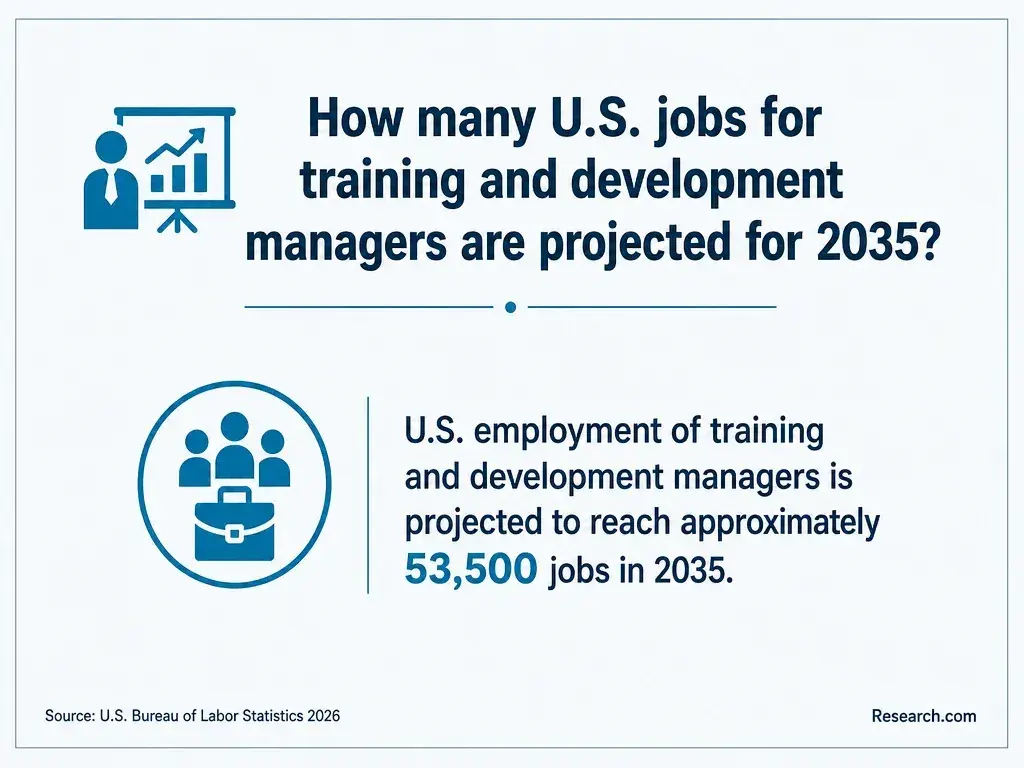
- The US median for training and development managers was $133,000 in May 2025, but that occupation is not a salary forecast for humanitarian directors or Ed.D. graduates.
- Before enrolling, confirm the program's live attendance, field-travel demands, total cost, and whether its doctoral project can use an approved humanitarian organization and ethically accessible data.
Is an online Ed.D. in Leadership and Learning in Organizations right for humanitarian program directors?
Often, but only for a particular goal. A practice-oriented Ed.D. makes sense for a director who wants to improve how an organization learns across programs: developing field leaders, transferring knowledge between responses, or evaluating whether training changes practice. Experience managing grants, security constraints, local partnerships, and dispersed teams gives that study a useful foundation.
The degree is less compelling if the immediate gap is technical humanitarian expertise, grant compliance, logistics, or access to a senior role that primarily requires a stronger record of field operations. It also cannot substitute for local partners' knowledge or authority. The comparison below focuses on what each pathway adds to an experienced director's work.
| Pathway | Best fit for a humanitarian director | Important limitation |
| Leadership and learning Ed.D. | Leading staff development, organizational change, and applied evaluation across programs | Substantial study and a doctoral project; not a humanitarian technical credential |
| MPA or targeted graduate study | Strengthening public administration, budgeting, policy, or a specific management gap | May offer less depth in organizational learning or doctoral inquiry |
| Employer development or short courses | Building a defined skill while continuing operational work | Less sustained faculty guidance or research preparation |
| Research-oriented PhD | Pursuing a career centered on producing academic research | Usually a less direct match for improving practice in a current leadership role |
A useful test is to name the decision the director hopes to improve. If it concerns why learning fails to transfer between field offices - and the director can obtain appropriate organizational support - doctoral inquiry may be worthwhile. If the answer is a specific budgeting skill or a stronger promotion record, a narrower investment may serve them better.
What does an online Ed.D. in Leadership and Learning in Organizations teach?
These practice-oriented doctorates generally connect leadership, adult learning, organizational change, and applied research. For humanitarian work, the valuable question is not whether a program offers a course called "leadership," but whether its curriculum helps a director diagnose a learning problem, work with affected stakeholders, implement a response, and assess it responsibly.
For example, a director might examine how onboarding prepares rotating staff to collaborate with local partners. Learning theory could inform the training design; organizational analysis could reveal whether turnover or decision rights are the larger obstacle; evaluation methods could test what changed without treating attendance or satisfaction as proof of better services. Compare education doctorate concentration and curriculum choices against the work you want to do, and verify which courses are required rather than assuming a named topic is a formal concentration.
Applied work also has boundaries. An employer's permission to discuss a problem is not permission to use beneficiary records, staff interviews, or partner data in a doctoral project. The institution determines academic and research-review requirements; the organization and applicable data rules govern access and disclosure.
What career opportunities can humanitarian program directors pursue with an online Ed.D.?
A director could use the degree to compete for broader responsibilities in humanitarian learning and development, organizational effectiveness, program quality, evaluation leadership, or nonprofit executive management. Consulting on workforce development or implementation is another possibility. These are experience-dependent transitions: employers will still look for evidence of budget authority, staff leadership, sector knowledge, and results - not the doctorate alone.
For a move into consulting, the US Bureau of Labor Statistics projects 10.1% employment growth for management analysts from 2025 to 2035. That suggests a growing broader occupation, not equivalent demand for humanitarian consultants. A director interested in that path should build a portfolio of authorized, appropriately anonymized work that shows the problem addressed, the decisions made, and the limits of the evidence.
Internal advancement may be the better first test. Ask whether your organization has a learning, quality, or regional leadership function; whether decision-makers value doctoral study; and whether a supervised cross-program initiative could demonstrate readiness sooner.
The university should hold institutional accreditation from an accreditor recognized by the US Department of Education. Confirm the institution's current status directly with the accreditor or federal accreditation records, and verify that the offered credential is an Ed.D. at the doctoral level. Online delivery does not create a separate substitute for institutional accreditation.
Do not assume a general leadership doctorate requires a particular programmatic accreditation - or that institutional accreditation establishes eligibility for school-administrator licensure. If a job requires a regulated credential, check the relevant state authority and the program's licensure disclosures. For a humanitarian director, faculty expertise, applied-project support, and graduates' relevant work may be more informative than an accreditation claim that does not apply to the target role.
Online study can let a director remain employed and avoid routine relocation. It does not necessarily permit study at any hour: programs may require live classes, fixed cohort meetings, group projects, and campus visits. Those obligations can become difficult during a deployment or when colleagues and faculty work across time zones.
A campus-based program may offer more regular in-person contact with faculty and peers, but travel or relocation may disrupt field responsibilities. Neither format is inherently more rigorous; compare the actual curriculum, supervision, project requirements, and access to support. If considering online Ed.D. programs with intensive pacing, ask how course deadlines and project milestones would fit an unpredictable response schedule. Request the attendance policy and convening calendar before assuming leave or recorded sessions will cover a deployment.
Course titles vary, but relevant study may include adult learning, leadership theory, organizational change, qualitative and quantitative methods, and program evaluation. A humanitarian director should inspect assignments as well as titles: a course on evaluation is more useful when it addresses feasible measures, weak comparison groups, and responsible interpretation in complex programs.
The culminating requirement deserves separate scrutiny. Schools may require a dissertation, dissertation in practice, capstone, or another approved project; these are not interchangeable. When comparing education doctorate capstone and project pathways, ask who approves a project site, whether external or team-based work is permitted, and what happens if an employer or partner withdraws access. A feasible topic might concern staff learning across offices, but it must meet the program's rules and protect confidential information.
Requirements differ by institution. Applicants commonly need prior graduate study and may be asked for transcripts, recommendations, a statement of purpose, and evidence of professional leadership. A humanitarian director can make that evidence concrete by describing decisions made, teams supported, constraints navigated, and an organizational learning problem they want to investigate - without claiming unmeasured impact.
Ask the admissions office whether your degree and professional experience meet its specific rules, and whether research-methods preparation is expected. Prior graduate credits considered for admission do not automatically transfer into the doctorate. Directors returning after unfinished doctoral study should likewise obtain a written evaluation of any proposed credit recognition; planning an online Ed.D. return after ABD status is a distinct question from ordinary admission.
Time to completion depends on required credits, course sequence, enrollment pace, and the doctoral project. A director should obtain the program's published plan and ask how a leave, deployment, or lost project site would affect progression. An accelerated schedule may reduce calendar time while increasing weekly demands.
No single tuition figure reliably describes online Ed.D. programs. Build a written estimate from required tuition and fees, books and technology, any campus-convening travel and lodging, and likely expenses while completing the project. Compare that estimate with employer reimbursement rules, including continued-employment conditions, rather than treating proposed support as guaranteed. A guide to education doctorate fees and total study costs can help frame the comparison, but the institution's charges and your work arrangements control the actual decision.
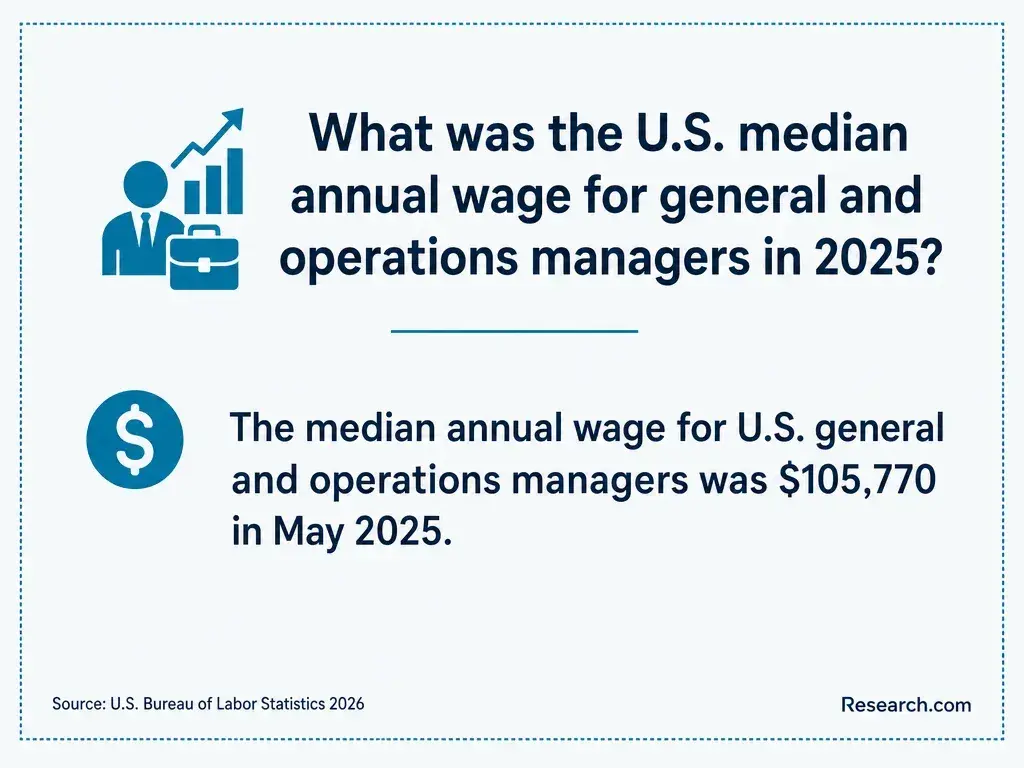
There is no defensible Ed.D.-specific salary figure for humanitarian program directors. Pay varies by employer, funding, location, responsibility, and experience. As one point of comparison, the US median annual salary for training and development managers was $133,000 in May 2025. That occupation may be relevant to a director moving into organization-wide staff development, but its median is not a predicted nonprofit salary or a return on doctoral tuition.
For a sound financial decision, compare actual postings for your target jobs with your current compensation and the program's full cost. Look for explicit degree preferences and responsibilities you can credibly meet; do not assume an Ed.D. will trigger a raise or promotion.
Do humanitarian program directors need licenses or professional certifications?
A general humanitarian program director role does not have a universal US professional license, and an organizational leadership Ed.D. does not confer one. Individual jobs can still require qualifications tied to a technical specialty, employer policy, or jurisdiction. Check the posting and the responsible regulator or certifying body when a specific credential is named.
Training in project management, monitoring and evaluation, safeguarding, or another relevant specialty may address a defined skill gap more directly than doctoral study. Before paying for certification, ask whether your target employers require it, merely prefer it, or instead prioritize documented experience.
Other Things You Should Know About EdD Leadership
Only if the award terms, organizational policy, and authorized budget permit it. Get written approval from the appropriate grants and finance staff; a project's training budget is not automatically available for personal tuition.
Not automatically. Publication may require organizational and partner permission, protection of confidential information, and institutional research review. Agree on what can be shared before starting the work.
Recognition varies by employer and country. Check the target employer's requirements and any local degree-recognition process; US institutional accreditation alone does not settle overseas eligibility.
That is a reason to ask prospective programs how projects are developed and approved, not to invent one for an application. A focused workplace initiative or targeted training may be the better immediate step.
- Humanitarian Aid Workers | CDC Yellow Book™ https://www.cdc.gov/yellow-book/hcp/travel-for-work-other/humanitarian-aid-workers.html
- Types of Financial Aid: Grants, Work-Study, and Loans | studentaid.gov https://studentaid.gov/understand-aid/types
- A Systemic Approach to Human Research Participant... - NCBI https://www.ncbi.nlm.nih.gov/books/NBK43560/
- The Protection of Non-Subjects from Research Harm | hhs.gov https://www.hhs.gov/ohrp/sachrp-committee/recommendations/tab-c-the-protection-of-non-subjects-from-research-harm.html
- Maximizing the Impact and ROI of Leadership Development | nih.gov https://pmc.ncbi.nlm.nih.gov/articles/PMC11505461/
- Protecting Participants of Social Science Research | Illinois Criminal Justice Information Authority https://icjia.illinois.gov/researchhub/articles/protecting-participants-of-social-science-research/
- Ed.D. in Executive Leadership - Degrees & Requirements | Columbia University https://www.tc.columbia.edu/organization-and-leadership/edd-in-executive-leadership/degrees--requirements/executive-leadership-edd/
- UNC EdD Online: Organizational Learning and Leadership https://online.unc.edu/online-doctoral-programs/online-edd-organizational-learning-and-leadership/
- Best Degrees for Humanitarian Jobs | University of San Diego Online Degrees https://onlinedegrees.sandiego.edu/top-humanitarian-degrees/
- Online Ed.D. in Leadership and Learning in Organizations | VU-EDU https://peabodyonline.vanderbilt.edu/edd-in-organizational-learning/