2027 Online Ed.D. in Leadership and Learning in Organizations vs. a PhD in Human Resource Development: Which Fits Your Goals?
Audited and Verified:
Our Editorial and Data Verification Process
Research.com uses government datasets, official education statistics and primary institutional information to support its career and degree guides. Our review process checks factual accuracy, occupational definitions, source dates and the requirements associated with the credentials discussed.
How This Article Was Fact-Checked
Our editorial team verifies salary estimates, employment projections, education requirements and program information against original data providers and official organizations. Salary figures are checked against the relevant occupational definitions and reporting periods. Information about licensure, accreditation and required in-person training is reviewed separately.
Fact-checked and verified on:

Co-Founder and Chief Data Scientist
An online Ed.D. in Leadership and Learning in Organizations and a Ph.D. in Human Resource Development can both help you study how people develop at work, but they prepare you to do different kinds of doctoral work. If you lead learning initiatives, advise organizations, or hope to conduct research, that distinction matters more than the letters after your name. This comparison explains how the degrees differ in curriculum, research, scheduling, cost, and career relevance so you can choose a program - or a shorter alternative - that fits the work you want to do.
Key Things You Should Know
- Choose a practice-oriented Ed.D. if your primary goal is to lead organizational learning or improvement; favor a Human Resource Development Ph.D. if you want to produce research about workplace learning and talent development.
- Compare each program's required research product, faculty expertise, employer-data rules, and attendance obligations. "Online" does not necessarily mean self-paced.
- The U.S. Bureau of Labor Statistics reports a $133,000 median annual salary for training and development managers in May 2025, but that occupational figure is not a predicted salary for either degree's graduates.
What Is an Online Ed.D. in Leadership and Learning in Organizations?
An Ed.D. in Leadership and Learning in Organizations is a professional doctorate centered on how leaders support learning, change, and improved performance across organizations. Students may examine adult learning, organizational culture, leadership development, and the use of evidence in decisions. The exact degree title and curriculum belong to the institution offering it; similar-sounding Ed.D. programs can have substantially different requirements.
Its defining question is often practical: how can a leader diagnose a problem, work with stakeholders, implement a defensible response, and assess what happened? A program might require a dissertation in practice, another applied research project, or a traditional dissertation. Confirm the actual deliverable rather than assuming every Ed.D. ends with the same kind of capstone.
The organizational focus can be useful in business, healthcare, government, nonprofits, and education. It should not be mistaken for a school-administrator licensure program unless the institution and relevant state authority confirm that preparation.
How Does an Ed.D. in Leadership and Learning Compare With a Ph.D. in Human Resource Development?
Both are doctoral degrees, and both may use qualitative and quantitative research. The most useful distinction is the work each program asks you to produce and the audience that work is meant to serve. Human Resource Development, or HRD, concentrates on developing people and capabilities in work settings; a leadership and learning Ed.D. may address a broader organizational problem through a practice-focused lens.
The comparison below describes common orientations, not universal rules. A program's required courses and dissertation or project policies should settle any close decision.
| Decision factor | Leadership and learning Ed.D. | HRD Ph.D. |
| Primary purpose | Improve leadership, learning, or organizational practice | Develop and test knowledge about workplace learning and development |
| Typical research emphasis | Context-specific inquiry, implementation, and evaluation | Theory, research design, and a scholarly contribution to HRD |
| Likely professional use | Leading change, learning strategy, or evidence-informed improvement | Research, academic work, or research-intensive HRD practice |
| Final requirement | Program-specific applied project or dissertation | Usually an original research dissertation; verify program rules |
Neither label guarantees a particular method or career. A rigorous Ed.D. can support publication, and a Ph.D. graduate can lead organizational change. If your goal is to investigate why a development approach works across settings, examine the Ph.D.'s methods sequence and faculty research. If you need to improve a specific organization's learning system, examine the Ed.D.'s project structure and access requirements.
Which Degree Better Fits Your Career Goals and Professional Experience?
Start with the responsibilities you already hold and the work you want next. For an experienced learning and development manager who can influence an organization's training strategy, an Ed.D. may offer a useful framework for diagnosing needs, leading implementation, and evaluating results. For a practitioner who wants to design studies, publish findings, and pursue a research-focused faculty role, an HRD Ph.D. is generally the more direct preparation.
Your starting experience matters as much as your target title. An instructional designer moving toward organizational leadership may need budget ownership, stakeholder management, and cross-functional projects - not simply another credential. An HRD professional pursuing academic research may need stronger methods preparation and a close match with a prospective faculty adviser. If you work in a college, Ed.D. options for organizational improvement in colleges can help narrow a search, but check whether each curriculum addresses your actual role.
For an adjacent career move, a doctorate may deepen established expertise. For a major switch into HRD or organizational development without relevant work experience, supervised projects, mentoring, or a targeted master's or certificate may be a more direct first step. Neither doctorate replaces the leadership record or functional experience an employer expects.
A leadership and learning Ed.D. may combine adult learning, organizational change, leadership theory, evaluation, and applied research. The practical value lies in connecting those subjects: a training problem, for example, may actually involve unclear incentives or limited managerial support. Coursework should help a leader test that diagnosis before prescribing more instruction.
An HRD Ph.D. commonly places greater weight on research methods and scholarship concerning workplace learning, training, talent development, and organizations. Look beyond course titles to the sequence of statistics or qualitative methods, research opportunities, dissertation expectations, and whether faculty study questions close to yours.
Where either program offers electives, check that they are available during your enrollment and count toward the degree. A course on coaching or analytics is not necessarily a formal specialization. If the Ed.D. route interests you, guidance on choosing an Ed.D. concentration can help you distinguish an officially awarded concentration from a collection of relevant courses.
Requirements vary by institution. Ed.D. applications may emphasize professional responsibility, a relevant organizational challenge, prior graduate study, recommendations, and readiness for applied inquiry. HRD Ph.D. applications may place particular weight on research interests, methodological preparation, writing, and fit with available faculty. Neither an education master's degree nor a publication record should be assumed to be universally required.
Check each program's accepted degrees, grades, tests, writing samples, interviews, and professional-experience rules for your entry term. If you have completed doctoral coursework elsewhere, ask separately whether it supports admission and whether any credits can satisfy degree requirements; those are different decisions. Applicants returning after unfinished doctoral study can also investigate all-but-dissertation education doctorate admission options without assuming prior credits or a dissertation proposal will transfer.
A strong application explains a genuine problem or research interest, what your experience lets you investigate, and what you still need to learn. For a practice-based project, confirm that you could seek appropriate organizational access; a promising idea alone does not establish permission to use workplace data.
Online delivery changes where you participate, not necessarily when. An online Ed.D. may require live classes, team meetings, or campus convenings alongside independent study and an applied project. A campus-based HRD Ph.D. may offer frequent in-person research collaboration and teaching opportunities, but its schedule may be harder to combine with full-time employment. These patterns vary in both directions.
Before treating format as a deciding advantage, ask for the actual attendance calendar, required travel, group-work expectations, research supervision arrangements, and policies for changing pace or taking leave. Ask Ph.D. programs whether funding entails teaching or research duties, and ask online programs how students meet advisers and access research support. If your employer changes during study, clarify whether an Ed.D. project can move to another approved site rather than assuming it can.
There is no dependable duration or total price for either degree without a named program and enrollment plan. Time to completion depends on course sequencing, study intensity, research approval, and the final project or dissertation. A Ph.D. funding offer may offset tuition but require substantial teaching or research work; an employer's Ed.D. reimbursement may depend on continued employment and satisfactory progress.
To compare offers, request each school's published tuition basis, required credits, mandatory fees, expected enrollment pattern, continuation charges, and required travel. Then add likely lodging, lost work time, and any employer-reimbursement limits. Online Ed.D. affordability and degree planning can support an initial search, but a lower advertised tuition rate does not establish a lower total cost.
Evaluate the financial decision against a realistic career plan, not an assumed doctoral salary premium. If the next role requires experience leading a learning function, paying for a doctorate before gaining that responsibility may be a poor use of resources.
An Ed.D. may be relevant to experienced learning leaders, organizational development practitioners, consultants, and administrators who use evidence to guide change. An HRD Ph.D. can support research-intensive development roles and academic ambitions. Employers still assess management experience, scholarly work, technical skills, and sector knowledge; neither degree appoints a graduate to a senior role.
These U.S. Bureau of Labor Statistics occupational medians offer salary context for related work, not outcomes for doctoral graduates. The occupations differ in responsibilities and entry requirements.
| Related occupation | Median annual salary, May 2025 | How to interpret it |
| Training and development managers | $133,000 | Relevant to experienced leaders who manage development functions |
| Management analysts | $101,860 | Relevant to some organizational consulting work |
| Training and development specialists | $69,280 | Relevant to practitioner roles that do not inherently require a doctorate |
The gap between specialist and manager medians reflects different occupations, not a raise caused by earning an Ed.D. or Ph.D. Compare job postings for your intended role and location, then identify which requirements you already meet and which you can develop through work experience.
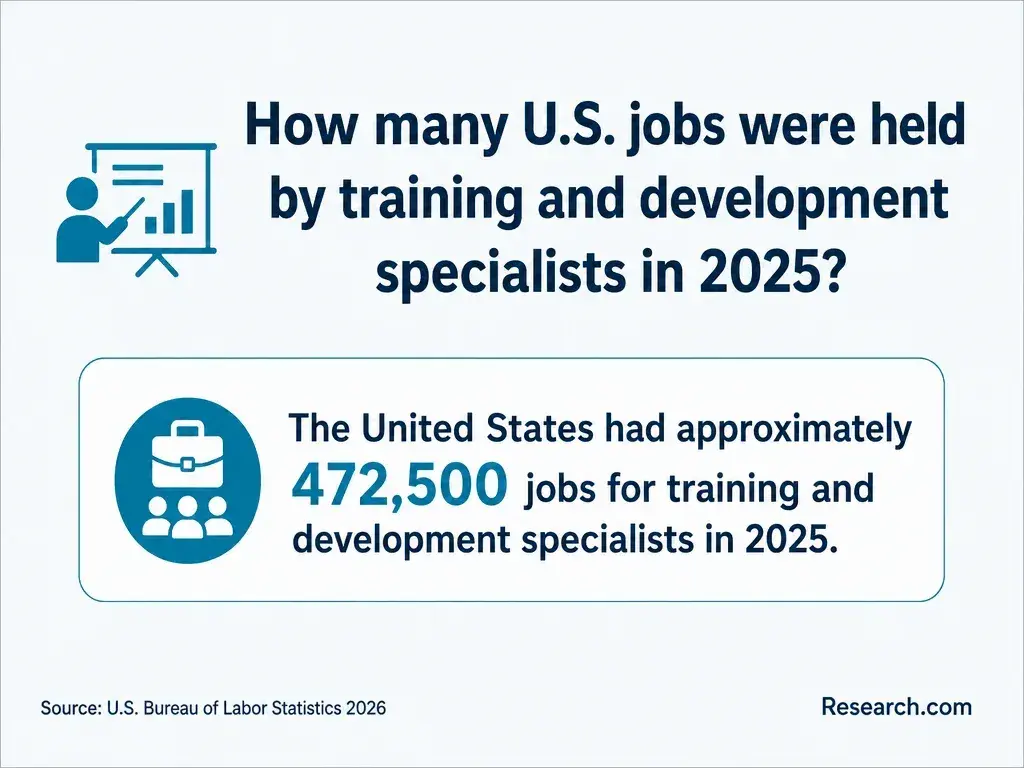
The Bureau of Labor Statistics projects employment of training and development specialists to grow 10.8% from 2025 to 2035. That projection signals demand for the occupation, but it does not measure demand for Ed.D. or HRD Ph.D. graduates specifically - and many specialist positions do not require doctoral study.
Read occupational projections alongside the work you want to perform. A leader responsible for strategy and budgets faces a different hiring market from a researcher seeking a faculty appointment. For either pathway, evidence of completed projects, sound evaluation, effective collaboration, and role-specific experience will make your qualifications easier for employers to assess than the degree title alone.
How Can You Choose an Accredited and Reputable Doctoral Program?
First verify the institution's accreditation through the accreditor and the U.S. Department of Education's accreditation information. Then evaluate the actual doctoral program; institution-level accreditation alone does not establish a program's research quality, licensure eligibility, or value to a particular employer.
A short evidence check can reveal more than a broad ranking. Request the current catalog and ask program staff and potential advisers to confirm the following:
- The exact degree awarded, required courses, final research product, and rules for choosing or changing a project site.
- Faculty availability and expertise in your proposed organizational or HRD research question.
- Live attendance, campus visits, research support, published costs, funding conditions, and any reported completion outcomes.
- Whether the program meets any licensure or credential requirement you specifically need.
Compare answers in writing across schools. If cost is a constraint, use organizational leadership doctoral study on a budget as a starting point, then check each listed program's current degree designation, total charges, and fit with your intended research. The best choice is the program whose required work advances your goal at a feasible cost - not simply the least expensive doctorate with "leadership" in its name.
Other Things You Should Know About EdD Leadership
Yes. Publication depends on the quality and suitability of the work, journal standards, and permission to share any organizational information - not on whether the degree says Ed.D. or Ph.D.
You can apply, but a completed Ed.D. does not guarantee Ph.D. admission or transferable credits. Ask the prospective Ph.D. program how it evaluates prior doctoral study.
Only with appropriate organizational authorization and required academic or ethics review. A supervisor's informal approval may not satisfy data-access, privacy, or publication rules.
Tell your adviser promptly. Whether you can retain the original site, revise the project, or use another organization depends on program approval and continuing access to authorized data.
- Choosing Between the EdD or PhD Program - UK Online https://online.uky.edu/blog/earning-education-doctorate-degree-uk-online-choosing-between-edd-or-phd-program
- Balancing Work, Life, and an EdD: What to Expect in an Educational Leadership Doctorate | Fairfield University https://www.fairfield.edu/news/insights/education-human-development/what-to-expect-in-an-educational-leadership-doctorate.html
- EdD vs. PhD in Education: Choosing the Right Program | Goodwin College of Professional Studies https://drexel.edu/soe/resources/career-path/edd-vs-phd/
- PhD vs. EdD in Education: Nine expert tips to help you choose | USC Rossier https://rossier.usc.edu/news/phd-vs-edd-in-education-nine-expert-tips-to-help-you-choose/
- 2026 UNC Online EdD in Organizational Learning & Leadership https://online.unc.edu/online-doctoral-programs/online-edd-organizational-learning-and-leadership/
- Online Ed.D. in Leadership and Learning in Organizations | VU-EDU https://peabodyonline.vanderbilt.edu/edd-in-organizational-learning/
- Doctor of Education in Human Resource Development | Online https://online.uark.edu/programs/doctor-education-human-resource-development.php
- Advance Your Leadership Career with an Online Ed.D. | UMass Global https://www.umassglobal.edu/blog-news/advance-your-leadership-career-online-edd
- Leadership and Learning in Organizations Online Ed.D. | Peabody College of Education and Human Development https://peabody.vanderbilt.edu/academics/edd-programs/online-leadership-learning-organizations/