2027 Criminal Justice Degree Programs That Accept Transfer Credits

Co-Founder and Chief Data Scientist
Many prospective students face complex barriers when transferring credits to a criminal justice degree program-especially navigating GPA thresholds, course recency rules, concentration-specific restrictions, and extensive documentation requirements. These factors critically affect how many prior credits actually count toward degree completion and can delay graduation timelines.
Research indicates that criminal justice graduates earn a median annual wage of $67,600 nationwide, varying significantly by industry and region. This article explores transfer credit policies across institutions, clarifying how to maximize credit acceptance and effectively plan the pathway to a criminal justice degree with minimal loss of progress and clear guidance on institutional expectations.
Key Things to Know About Criminal Justice Degree Programs That Accept Transfer Credits
- Programs typically require a minimum transfer GPA-often 2.5 or higher-to ensure prior coursework meets academic standards relevant to criminal justice studies.
- Course recency rules limit transfer credits to classes completed within the last 5-7 years, reflecting rapid changes in criminal justice policies and practices.
- Certain concentrations-like forensic psychology or homeland security-may restrict transfer credits to core courses only, affecting how specialized prior coursework counts.
Which Criminal Justice Degree Programs That Accept Transfer Credits Are Available at the Undergraduate Level?
Undergraduate criminal justice degree programs with transfer credit options are available in several structured formats designed to accommodate a range of student backgrounds. These include associate-to-bachelor pathways, bachelor's completion programs, and traditional four-year degrees that openly accept transfer students.
- Associate-to-Bachelor Pathways: These structured programs allow students to begin at a community college earning an associate degree before transferring to a bachelor's program. Many have formal articulation agreements ensuring smooth credit transfer for general education and introductory criminal justice courses, enhancing credit applicability.
- Bachelor's Completion Programs: Tailored for students with prior college credits-often from an associate degree or partial bachelor's coursework-these programs facilitate accelerated completion of a criminal justice bachelor's degree. They emphasize transfer policies including maximum allowable credits, minimum GPA thresholds, and recency requirements to ensure courses align with program standards.
- Traditional Four-Year Degrees: Regionally accredited institutions often maintain transfer-friendly policies accepting significant prior coursework. They require official transcripts, detailed course descriptions, and may impose concentration-specific credit limits to guarantee applicability toward the criminal justice major.
Additional factors influencing credit acceptance include age limits on transferred courses, GPA minimums, and supporting documentation verifying course content.
Military veterans can sometimes convert relevant service training into academic credit, broadening pathways into criminal justice studies. Selecting programs with transparent, supportive transfer credit policies early in academic planning is essential for maximizing transferred credits and minimizing time to degree completion.
Many students exploring criminal justice bachelor's degree pathways accepting transfer credits find these options crucial-especially community college graduates, working adults, and career changers seeking efficient degree completion. Prospective students may also explore related fields through resources like the cheapest online PhD programs, which highlight affordable advanced education routes.
What Are the Most Common Transfer Credit Policies Among Accredited Criminal Justice Programs?
Transfer credit acceptance policies at accredited criminal justice programs follow structured frameworks balancing academic rigor with student mobility. These policies determine how many prior credits apply toward a degree and vary by institution type-two-year versus four-year, public versus private-as well as program-specific details.
- Maximum Transfer Credit Caps: Most programs limit accepted credits, typically between 60 and 90 credit hours for bachelor's pathways. Two-year institutions often accept full credit for an associate degree, facilitating seamless transfer to a four-year program. Four-year schools usually require completing a significant portion of credits in residence to maintain degree integrity.
- Course Equivalency Reviews: Institutions review prior coursework to assess alignment with their criminal justice curriculum-comparing syllabi and consulting faculty for specialized electives related to criminal justice to ensure relevance.
- Grade Thresholds: A minimum GPA requirement for transfer credits is common, often demanding a C grade or better. Some programs enforce higher minimum GPA requirements for transfer credits in criminal justice degrees, especially for core courses, preserving academic quality.
- Variations by Institution Type:
- Public colleges usually follow statewide articulation agreements that streamline credit transfers among community colleges and universities within the same system.
- Private institutions often adopt stricter or more flexible evaluations but require thorough credit assessments.
- Additional Requirements: Submitting official transcripts, course descriptions, and demonstrating credit relevance to criminal justice career outcomes are frequently required.
- Impact on Students: Students' choice of institution crucially affects how many previous credits count towards graduation. Prospective students should compare transfer policies carefully and seek academic advising to maximize credit acceptance and degree progression. For those exploring affordable degree options, resources listing the cheapest online masters in mental health counseling may also offer useful insights on transfer-friendly institutions.

How Many Transfer Credits Can Students Typically Apply Toward a Criminal Justice Degree?
Transfer credit acceptance for criminal justice degrees varies widely across accredited institutions, often influenced by institutional policies and program requirements.
Typically, bachelor's programs allow incoming students to transfer between 60 and 90 credits, which may satisfy general education or elective components. However, the credits applying directly to the criminal justice major tend to be fewer-usually between 20 and 40-since foundational and specialized courses often must be completed within the program itself.
- Transfer Limits: Overall credit transfer caps differ but generally fall within the 60 to 90 credit range for bachelor's completion programs.
- Major Applicability: Only a subset of transferred credits typically fulfill major-specific course requirements, reflecting the need for core subject mastery.
- Accreditation and Quality: Credits from regionally accredited schools with relevant coursework receive stronger consideration, particularly when aligned with criminal justice topics.
- Academic Standards: GPA minimums-typically 2.0 to 2.5-and course completion timelines are often enforced to maintain transfer credit validity.
- Program Specifics: Additional restrictions may include concentration-focused limits, prerequisite fulfillment, and documentation requirements, all impacting final credit applicability.
- Strategic Transfer: Early accumulation of transfer credits from community colleges or military training can accelerate degree completion and reduce tuition expenses.
- Evaluation Advice: Students are encouraged to seek preliminary transfer credit assessments from prospective schools to clarify credit acceptance before enrollment.
A professional who graduated in criminal justice shared that navigating transfer credits involved unexpected bureaucracy and persistent follow-ups. 'I thought having previous coursework would streamline my path, but I had to provide detailed syllabi and even meet with academic advisors multiple times,' he recalled.
Despite these hurdles, he emphasized the payoff: 'Once everything was approved, those transferred credits shaved nearly a year off my degree timeline, saving me considerable money and helping me enter the workforce sooner.' His experience highlights the importance of proactive communication and thorough preparation during the transfer credit process.
Many four-year institutions offering criminal justice programs establish formal or informal partnerships with community colleges to ease credit transfers. These arrangements-often built around articulation agreements-clarify which credits will be recognized, helping students avoid losing coursework hours or repeating classes.
Such coordination supports smoother degree completion and benefits those exploring accredited criminal justice bachelor's programs accepting two-year credits.
- Transfer Pathway Degrees: Associate degrees designed as transfer pathways play a vital role in aligning community college curricula with bachelor's requirements. Known as Transfer Associate degrees, these programs focus on foundational criminal justice topics-like criminology and law enforcement basics-ensuring they satisfy four-year institutions' standards. This alignment frequently shortens time to graduation and streamlines the progression into upper-division coursework.
- State Transfer Guarantees: Statewide initiatives significantly influence credit acceptance by standardizing transfer policies between two-year and four-year schools. For instance, California's Associate Degree for Transfer (ADT) grants guaranteed junior standing within the California State University system, restricting excess transferable credits to keep pathways clear. Florida's articulation agreements mandate that public universities accept core prerequisites and general education from community colleges, enhancing transparency around credit acceptance. New York's Transfer and Articulation Manual further details curriculum expectations, emphasizing criminal justice and social science course alignment.
- Institutional Policies: Universities often supplement state frameworks with their own criteria, including minimum GPAs, course relevance, recency of study, and limits on elective credits. Some programs request detailed syllabi or official course descriptions to evaluate coursework carefully before granting credit.
- Student Guidance: Prospective students should verify existing transfer articulation agreements between their community college and targeted criminal justice bachelor's programs. Consulting academic advisors and reviewing institutional resources helps prevent missteps and wasted effort. Working adults, military veterans, and career changers alike benefit by understanding these policies to make informed decisions on degree pathways.
Those interested in accelerated routes might also explore related programs like a cybersecurity degree online, which can complement criminal justice studies.
Most accredited criminal justice programs set distinct GPA requirements for transfer credit evaluation-these often vary between the minimum GPA needed for admission and the grade thresholds for individual courses to count toward the degree. Typically, a cumulative GPA around 2.0 to 2.5 is required for transfer admission, ensuring the student has maintained an adequate academic standard across all previous coursework.
- Admission GPA: Institutions commonly expect a minimum overall GPA on prior college work to be considered for transfer enrollment.
- Course-Level GPA: For specific courses to be accepted in the criminal justice major or core curriculum, a minimum grade equivalent to a C (about 2.0 GPA) is usually necessary.
- Sliding-Scale Policies: Some schools adopt flexible criteria, granting transfer credit for more courses if the student's GPA exceeds baseline requirements.
- Official Policies: It's essential to consult the detailed transfer credit guidelines provided by the school-not just admissions materials-as they explain GPA expectations, course equivalencies, and other conditions.
- Options for Lower GPAs: Transfer students with GPAs below the required cutoffs may still progress by retaking or completing course equivalents within the new program.
A criminal justice professional who graduated after navigating transfer credit requirements shared that the process wasn't always straightforward.
"At first, I worried my GPA might limit how many credits would carry over," she explained. However, carefully reviewing the institution's transfer policies helped clarify which courses qualified and which needed repeating.
She valued the transparency about minimum grade standards and appreciated the flexibility to retake certain classes, which ultimately allowed her to stay on track. This experience highlighted the importance of thorough preparation and using official resources when managing transfer credit evaluation.
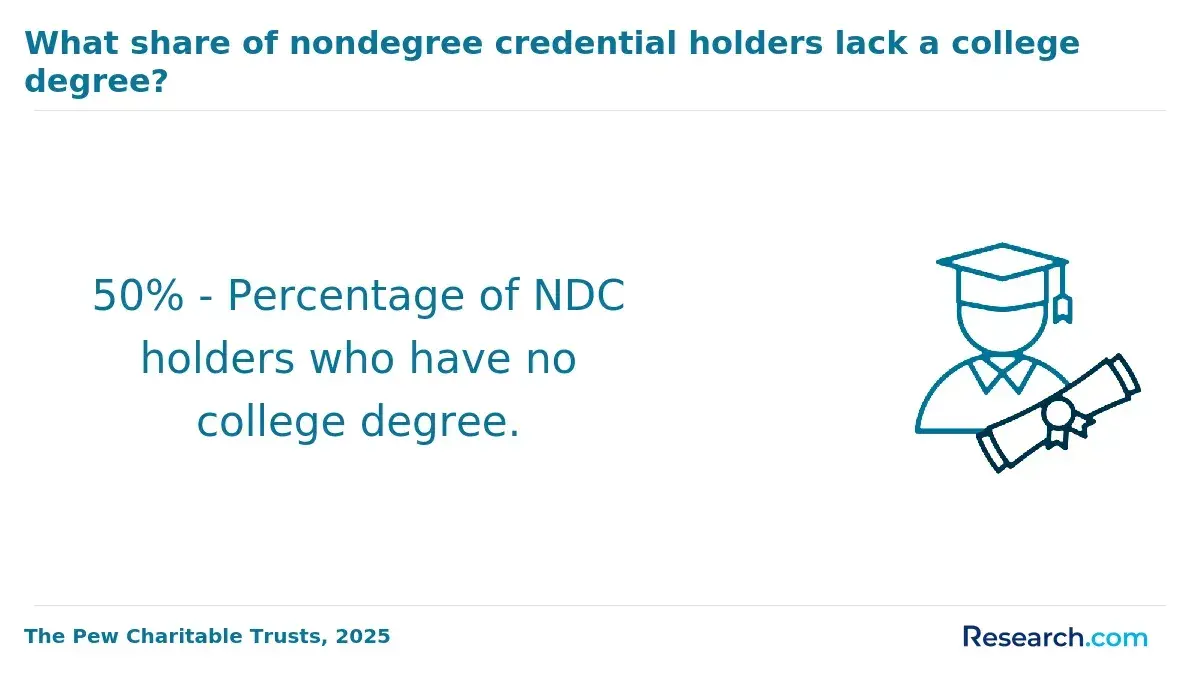
Accredited criminal justice programs assess non-traditional credits-such as those from military service, professional training, or employer-sponsored workforce development-using established frameworks to maintain academic standards.
A primary resource is the American Council on Education (ACE) Credit recommendations, widely used to validate military and professional training experiences. Additionally, programs often accept College-Level Examination Program (CLEP) results for demonstrating college-level knowledge acquired outside of standard classes.
Many institutions also implement portfolio reviews, where students submit detailed documentation-like official syllabi, certifications, performance evaluations, or professional licenses-to support their credit transfer requests. The thoroughness and accuracy of this material greatly impact the evaluation's success and how many credits are accepted.
- Military Service: Credit awarded through ACE guides and military transfer agreements tailored to service trainings.
- Workforce Development: Job-related education programs backed by employers to upgrade skills.
- Professional Certifications: Relevant certifications in law enforcement, corrections, or forensic fields that may translate into credits.
- Standardized Exams: CLEP and similar assessments that measure college-level competencies.
Prospective students should confirm if their institution participates in consortia like the National College Credit Recommendation Service, which endorses non-traditional credit transfers. Recent research indicates that over 75% of accredited criminal justice programs now acknowledge some form of non-traditional credits, reflecting the field's evolving approach toward flexible academic pathways.
Many online Criminal Justice degree programs at regionally accredited institutions have crafted policies that cap residency requirements at 30 credit hours or fewer. This allows students to transfer a broad range of equivalent coursework, including community college classes, military training, and credits from other universities, significantly accelerating degree completion.
These flexible transfer policies often extend to specialized Criminal Justice topics, general education, and electives.
Online Criminal Justice programs typically exhibit more adaptable transfer credit acceptance than their on-campus counterparts. This flexibility arises from several factors:
- Market Competition: Online programs compete aggressively for adult learners-working professionals, veterans, and career changers-encouraging schools to ease transfer rules to attract these demographics.
- Adult Learner Focus: Recognizing the busy schedules of adult students, programs design transfer policies that acknowledge prior relevant learning to reduce time and tuition costs.
- Accreditation Standards: While maintaining regional accreditation ensures academic quality, schools may vary in their transfer equivalency evaluations and adherence to programmatic accreditation important for certain careers.
Students should consider trade-offs regarding program quality and employer perception:
- Program Quality and Perception: Some highly flexible programs might lack specialized accreditation recognized by employers or licensing boards, which could impact career opportunities.
- Residency and Major Restrictions: Transfers in core Criminal Justice courses may be limited, and many institutions require a minimum number of credits completed in residence.
- Documentation and GPA Requirements: Formal transcripts, course syllabi, and minimum grades are often required to validate transfer credits.
Prospective students should thoroughly verify institutional regional accreditation and relevant programmatic accreditation for their career goals. They should also compare residency expectations and major-specific transfer policies carefully to identify programs offering genuinely flexible and practical transfer credit options in Criminal Justice.
Regionally accredited institutions generally hold greater prestige and enjoy broader acceptance when it comes to credit transfer. These schools frequently maintain reciprocal agreements, easing the process for students transferring credits within criminal justice degree programs.
This aspect is especially important for those seeking bachelor's completion pathways or aiming to continue their education smoothly. The impact of regional accreditation on criminal justice transfer credits ensures that prior coursework is more likely to be recognized and applied toward degree requirements.
- National Accreditation: Nationally accredited schools typically focus on career, vocational, or technical education. While these institutions provide valuable training, their credits often face limitations during transfer to regionally accredited colleges or universities. Criminal justice students transferring from nationally accredited programs may find many of their credits unaccepted, leading to repeating courses or extending time to degree completion. This difference reflects national accreditation standards for criminal justice degree credit transfer and influences student decision-making.
- Transfer Risks: Enrolling in a nationally accredited criminal justice program with hopes of later transferring into a regionally accredited institution involves risks such as credit loss and additional coursework. Many institutions enforce GPA thresholds, course recency rules, concentration-specific restrictions, and documentation requirements that affect how many credits ultimately count toward the degree. Students must navigate these variables carefully.
- Policy Confirmation: Obtaining written confirmation from the receiving school is essential before enrollment. This step clarifies credit transfer policies, eligible courses, GPA minimums, and necessary documentation, reducing surprises and facilitating planning that aligns with academic and career goals.
Students interested in accelerated paths or return-to-study options should also explore options like marriage and family therapy programs online and other related fields that may offer flexible credit transfer opportunities.
Articulation agreements are formal, negotiated contracts between two academic institutions that guarantee the transferability of specific Criminal Justice courses or entire degree sequences, reducing uncertainty for students changing schools.
These agreements provide a clear roadmap showing which credits will be accepted by the receiving institution, which is particularly valuable for those navigating complex state transfer credit policies for criminal justice programs.
The most common structures include:
- Bilateral Agreements: Direct contracts between two schools that specify which Criminal Justice courses transfer and their equivalencies.
- Statewide Articulation Systems: State-level policies that standardize credit transfer among public colleges and universities within that state.
- National Transfer Frameworks: Larger systems designed to facilitate credit recognition across multiple institutions or regions nationwide.
Students should research whether their sending institution has active articulation agreements with Criminal Justice programs they wish to pursue-this can often be done through the advising office or the school's website. When reviewing these agreements, look carefully for course lists accepted, credit amounts, any concentration-specific restrictions, and confirm the agreement's currency, as these contracts are periodically updated.
To maximize benefits, students are advised to work closely with academic advisors at both institutions from their first semester onward. Advisors help clarify GPA thresholds, course recency rules, and documentation requirements, ensuring that transfer credits align with degree requirements.
For those evaluating costs alongside transfer options, it can also help to review information like the MLIS degree cost to plan financial commitments effectively.
Prior learning assessment (PLA) provides a structured way for criminal justice students to earn academic credit by validating knowledge gained outside standard coursework. Unlike transfer credit-which typically relies on transcripts from accredited institutions-PLA demands formal evaluation through comprehensive documentation and, at times, competency demonstrations such as exams or portfolios.
Key PLA methods relevant to criminal justice programs include:
- CLEP Exams: Allow students to gain credit by passing tests that prove mastery of college-level subjects, reducing required classes.
- DSST Exams: Similar to CLEP, these tests assess knowledge in areas pertinent to criminal justice and often serve veterans or working adults.
- Institutional Challenge Exams: Offered by some schools, these allow students to demonstrate proficiency and skip specific courses.
- Portfolio Assessment: Involves assembling evidence of experiential learning-such as military training or job experience-for faculty evaluation and credit award.
- ACE-Evaluated Training: The American Council on Education assesses military and workplace training, recommending equivalent credit that many schools accept.
PLA credits are typically noted differently on transcripts-marked as earned via examination or experiential learning-unlike standard transfer credits.
According to the Council for Adult and Experiential Learning (CAEL), PLA can accelerate degree completion by up to a year, offering adults with prior experience a valuable advantage. Because acceptance policies vary considerably, prospective students should consult their program's registrar about PLA criteria before applying.
Certain graduate programs in Criminal Justice-such as master's degree completion tracks, bridge programs, and post-baccalaureate certificates-frequently accept relevant undergraduate or prior graduate coursework to partially fulfill program criteria. These offerings often cater to working adults, veterans, and career changers by recognizing previous academic achievements and professional experience.
Several factors influence whether transfer credits are accepted:
- Academic Level Equivalency: Only upper-division undergraduate or graduate-level courses typically qualify for transfer.
- Course Recency: Most institutions require credits to be completed within the last five to seven years to ensure material remains current.
- Accreditation: Transfer credits usually must come from regionally accredited colleges or recognized programs.
- Curriculum Fit: Coursework is assessed to determine if it aligns as foundational or advanced relative to the new program's requirements.
- GPA Thresholds: A minimum grade-often a B or higher-is commonly needed for transfer eligibility.
Professional master's programs-including applied or hybrid MBA models-and accelerated tracks tailored to career changers most frequently allow transfer credits. In contrast, research-oriented graduate degrees with thesis requirements tend to enforce residency and limit acceptance of outside credits to maintain academic integrity and curriculum cohesion.
Prospective students should request a graduate credit evaluation during admissions to clarify which credits will apply toward degree requirements. This helps avoid unexpected course loads and ensures alignment with personal and professional goals when transitioning into a Criminal Justice graduate program.
What Graduates Say About Criminal Justice Degree Programs That Accept Transfer Credits
- Emiliano: "When I began my degree, I was pleasantly surprised to learn that transfer credits require a minimum GPA threshold to count toward the program-this was a game-changer for me, making me more focused on maintaining strong grades early on. I found the documentation requirements quite stringent, but it ensured everything was properly vetted and streamlined my course audits later. Overall, understanding these elements helped me navigate the process with confidence and avoid any surprises."
- Jared: "Reflecting on my experience, one key insight was the strict course recency rules-credits older than a set number of years didn't transfer, which made me rethink my prior coursework and pursue recent classes where possible. Also, some concentrations had specific restrictions that limited how many transfer credits could apply, which initially threw me off but ultimately encouraged me to tailor my electives carefully. Knowing these aspects upfront would have saved me some back-and-forth with advisors."
- Amir: "From a professional standpoint, I appreciated how vital the documentation requirements are-having detailed transcripts and course descriptions ready sped up the credit evaluation process tremendously. I also learned that maintaining at least the minimum GPA in transferred courses was non-negotiable, highlighting the program's commitment to academic standards. This rigorous approach motivated me to stay disciplined and truly value each class contributing to my degree."
Other Things You Should Know About Criminal Justice Degrees
Yes, many 2027 criminal justice programs require a minimum GPA for transferring credits, often around 2.5 to 3.0. This GPA standard ensures a student’s prior academic performance aligns with the program's academic expectations and maintains the quality of education.
When submitting transfer credits, students must provide official transcripts from the previous institution showing course titles, credit hours, and grades. Some programs also require detailed course descriptions or syllabi to verify content alignment with criminal justice curriculum standards. Additionally, accreditation proof of the previous institution may be requested to confirm the legitimacy of the prior coursework.
Yes, most criminal justice programs in 2027 limit transfer credits to 60 credit hours to maintain academic integrity. However, limits vary by institution, so it's essential to confirm exact policies with each program's administration before transferring.
- Online Prior Learning Assessment (PLA) Programs | Colorado State University Global https://csuglobal.edu/admissions/transfer-students/alternative-credit-options/online-prior-learning-assessment-pla-programs
- Our Best Online Criminal Justice Degrees Companies - May 2026 Reviews & Comparison https://coupons.consumervoice.org/top-online-criminal-justice-degrees
- How to Accelerate a Degree in Criminal Justice: Flexible Pathways and Planning Strategies https://www.aiuniv.edu/degrees/criminal-justice/articles/accelerate-online-criminal-justice-degree
- Executive Team Updates https://www.aacrao.org/who-we-are/newsroom/executive-director-updates/executive-director-update/2020/02/20/impact-of-education-dept.s-new-accreditation-rules-on-transfer-of-credit-policies
- Undergrad Application and Transfer Guide https://www.criminaljustice.com/resources/undergraduate-application-and-transfer-guide/
- Alternative Degree Pathways - Fisher College https://www.fisher.edu/academics/alternative-degree-pathways
- 4 Ways Transfer Students Can Maximize College Credits for Prior Experience https://www.umassglobal.edu/blog-news/4-ways-transfer-students-can-maximize-college-credits-prior-experience
- Transfer Guide https://coursetransfer.northcarolina.edu/guide/2024-2025/445
- Athens State University | B.S. in Criminal Justice Program https://www.athens.edu/degree-completion-transfer-students/3-steps-to-finding-the-best-b-s-in-criminal-justice-program-for-you/
- Criminal Justice Transfer Major | Southeastern Community College - Iowa | SCC Iowa https://www.scciowa.edu/programs/pathways/behavioral-and-social-science/criminal-justice-major.aspx