2027 Online Ed.D. in Leadership and Learning in Organizations: Developing an Evaluation Proposal for an Existing Learning Program
Audited and Verified:
Our Editorial and Data Verification Process
Research.com uses government datasets, official education statistics and primary institutional information to support its career and degree guides. Our review process checks factual accuracy, occupational definitions, source dates and the requirements associated with the credentials discussed.
How This Article Was Fact-Checked
Our editorial team verifies salary estimates, employment projections, education requirements and program information against original data providers and official organizations. Salary figures are checked against the relevant occupational definitions and reporting periods. Information about licensure, accreditation and required in-person training is reviewed separately.
Fact-checked and verified on:

Co-Founder and Chief Data Scientist
An existing learning program may be well attended without improving how people work. For learning and development professionals and organizational leaders considering an online Ed.D., developing an evaluation proposal offers a way to test that distinction before recommending changes. This guide shows how to define the decision, select credible evidence, plan for organizational permissions, and present findings responsibly. It also explains when doctoral study adds value - and when a focused evaluation course or experienced evaluation partner may be enough.
Key Things You Should Know
- An evaluation proposal should specify the decision it will inform, the program's intended outcomes, feasible measures, and who can authorize access to the evidence.
- Attendance and satisfaction show reach and reaction; they do not establish learning transfer or organizational impact. A useful proposal distinguishes these evidence layers.
- An online Ed.D. can support a rigorous, practice-focused evaluation, but the degree is not required to evaluate a program, and an employer project does not automatically qualify as doctoral work.
What is an online Ed.D. in Leadership and Learning in Organizations?
An online Ed.D. in Leadership and Learning in Organizations is a practice-oriented doctorate concerned with how organizations develop people, use evidence, and lead change. Exact degree names and requirements vary by institution. Online delivery describes where students participate; it does not necessarily mean self-paced study or eliminate live meetings and campus visits.
For someone evaluating a learning program, the relevant value is sustained preparation in adult learning, organizational systems, applied research, and communicating findings to decision-makers. A research-focused PhD may fit a goal of producing broader scholarly knowledge; targeted evaluation training may fit a bounded workplace task at substantially less commitment. The appropriate choice depends on whether the reader needs doctoral-level leadership development beyond this proposal.
How does an evaluation proposal improve an existing learning program?
An evaluation proposal is a plan for gathering and using evidence - not evidence that the program works. It improves decision-making by making the program's intended effects, available data, and limits explicit before anyone collects responses. For example, a hypothetical organization might already offer supervisor onboarding. Its decision could be whether to revise the training, improve post-training coaching, or retain the current approach. Poor performance would not, by itself, prove that training is the cause.
Build the proposal around a decision the program owner can actually make. The following sequence produces a document that a sponsor, faculty advisor, and relevant data stewards can review:
- Define the program and decision. Record who receives the learning, what it contains, how it is delivered, and which change the sponsor is willing to consider.
- Map the expected pathway. Describe how participation is supposed to produce learning, how learning could transfer to work, and what conditions - such as coaching or available time - could help or block that transfer.
- Write a small set of evaluation questions. Separate implementation questions, such as whether participants received the intended instruction, from outcome questions, such as whether they can apply a specific skill.
- Match measures to questions. Identify existing records, a feasible baseline, follow-up timing, and any new assessment or interview needed. Specify who owns each source and how missing or incomplete records will be handled.
- Plan interpretation and use. State what evidence would support revising, continuing, or further investigating the program; identify likely alternative explanations; and name the audience and format for the findings.
A proposal might measure participation from learning-system records, skill demonstration through a task aligned with the instruction, and workplace application through a defined follow-up observation. Those measures answer different questions. A favorable participant survey cannot substitute for evidence of skill use, while a performance change may reflect staffing, incentives, or other changes rather than the program alone.
Design choice affects the strength of a conclusion. The comparison below helps distinguish what common approaches can - and cannot - show.
| Approach | Useful evidence | Main interpretation limit |
| Implementation review | Reach, delivery, participation, and barriers | Does not show that performance improved |
| Before-and-after assessment | Change among people measured at both points | Other events or differences in who responds may explain change |
| Comparison-group design | Outcomes for participants relative to a relevant group | Group selection and unequal starting conditions can bias the comparison |
If a credible comparison group is unavailable, a narrower, honest evaluation is better than an unsupported causal claim. The proposal should describe how participants are selected, whether measures reflect the intended skill, and what conclusions the design will permit.
Permissions belong in the proposal, not after data collection. Identify the employer sponsor, data owner, faculty advisor, and anyone who must approve contact with learners or access to records. Check institutional review procedures before beginning doctoral work; a workplace evaluation is not automatically exempt from review, nor is every evaluation automatically human-subjects research. Address consent where applicable, secure storage, limited access, reporting of small groups, and any employment-record or FERPA obligations. Obtain separate permission before sharing organizational findings or a redacted proposal in a portfolio.
What careers can an Ed.D. in Leadership and Learning prepare you for?
For an established learning professional, a credible evaluation proposal can demonstrate readiness to advise on program improvement - not just deliver training. Related work appears in learning and development management, organizational development, consulting, workforce development, and some higher-education administration roles. Employers still assess sector knowledge, management experience, and evidence that a candidate has implemented decisions.
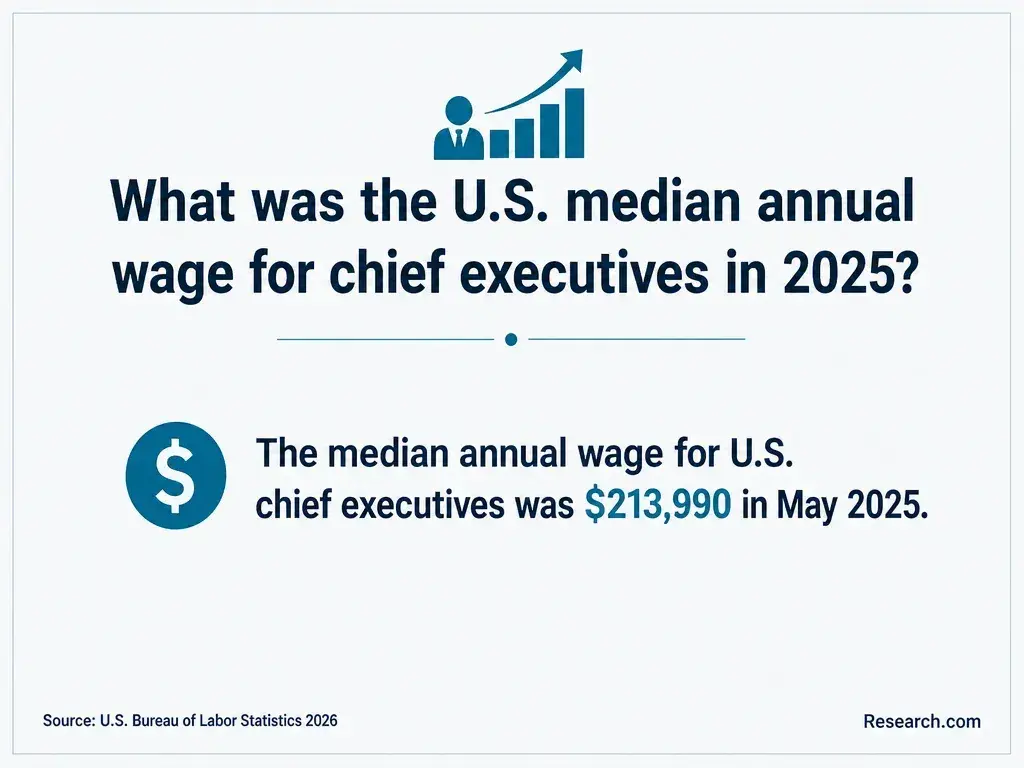
The U.S. Bureau of Labor Statistics reports a May 2025 median annual salary of $133,000 for training and development managers. That occupation-wide figure is not an expected salary for Ed.D. graduates: a manager's responsibilities and experience matter independently of the degree. College administrators considering organizational leadership doctoral options for college administrators should likewise match programs to their actual hiring and governance context rather than assume one leadership doctorate fits every role.
For this project, prioritize coursework that connects adult learning and learning transfer to program evaluation, research design, measurement, organizational change, and ethics. A useful sequence moves from identifying a performance problem to designing measures, interpreting imperfect evidence, and presenting an implementable recommendation. A course titled "analytics" alone does not establish that students receive supervised practice with real evaluation designs.
Ask whether the program's required research project can accommodate an evaluation of an existing program, what faculty guidance is available, and whether an employer-sponsored project needs separate site approval. Programs differ in whether they require a dissertation in practice, another dissertation format, or a capstone; readers seeking capstone-based education doctorate pathways should confirm the actual deliverable before treating a workplace proposal as eligible doctoral work.
Requirements vary. Programs may request graduate transcripts, evidence of relevant professional or leadership work, recommendations, a statement of purpose, and evidence of readiness for applied inquiry. Some specify a completed master's degree or other graduate-credit conditions; others may assess preparation differently. Prior graduate credits considered for admission are not necessarily credits that transfer into the doctorate.
An applicant can describe the existing program, the decision its sponsor faces, and the evidence they hope to examine without claiming access or results they do not have. Applicants with a specialist degree can investigate advanced study options after an Ed.S., while requesting a written, program-specific determination of admission eligibility and any transferable credit.
Completion time depends on the program's course sequence, enrollment rules, required project, and the time needed to secure data access and approvals. An evaluation can stall if the organization changes its program, restricts records, or cannot schedule a follow-up measure. Ask the program for its published plan of study, maximum completion period, and procedures if a project site becomes unavailable.
Compare advertised faster routes through an education doctorate against the time your evaluation actually needs. A compressed academic schedule cannot create a credible baseline or accelerate an employer's approval process.
Calculate cost from the institution's published charges for the applicable entry term and required curriculum, then account for fees, any campus travel, materials, and continued enrollment while completing the project. For a working professional, protected time to arrange permissions, analyze evidence, and meet with faculty is also a meaningful cost - even if an employer permits the project at work.
Employer reimbursement is not guaranteed sponsorship: check annual limits, eligible expenses, grade conditions, and repayment obligations before enrolling. Readers comparing ways of reducing higher education leadership doctoral study costs should obtain a written program-specific estimate rather than infer total cost from an advertised per-credit rate.
Check the institution's current accreditation status with its recognized institutional accreditor and confirm that the degree is awarded by that institution. Accreditation of the university does not mean every program carries a separate specialized accreditation or qualifies graduates for a regulated role.
Evaluating workplace learning generally does not require an educator license. If the goal is a teacher, principal, superintendent, or other licensed position, ask the program for its licensure disclosure and check the applicable state authority. A broadly focused organizational leadership Ed.D. should not be treated as a state-approved licensure pathway without that confirmation.
Both formats can support a sound evaluation proposal; the practical difference is how students work with faculty, peers, and project partners. An online cohort may have fixed live sessions and group deadlines, while a campus program may make in-person consultation easier but require more travel or relocation. Neither format supplies employer data access or project approval automatically.
For a project tied to an existing learning program, compare advisor access, methods support, required convenings, and whether classes coincide with the program's evaluation schedule. If work or caregiving limits availability, request actual attendance and team-work expectations rather than assuming that "online" means flexible.
How can you choose a reputable online Ed.D. program?
Choose against the proposed evaluation, not the degree title alone. Request the current curriculum, project handbook, research-review guidance, attendance requirements, accreditation information, and a complete cost estimate. Then ask a program representative whether students may evaluate an existing employer program, when site and data permissions are required, who supervises methods decisions, and what happens if access is withdrawn.
Before committing to a doctorate, draft a one-page concept note with the program owner: decision to be made, intended learning outcome, available evidence, missing permissions, and likely timing. If the task is a single, bounded evaluation and doctoral-level leadership study is not otherwise a goal, a focused course, mentor, or qualified evaluation partner may be the more proportionate next step.
Other Things You Should Know About EdD Leadership
Yes. It can reveal that the program lacks a clear outcome, usable baseline, or decision-maker. Resolving those gaps may improve the program and prevent unnecessary data collection.
Agree in advance with the sponsor on the decision deadline and reporting needs. If the work is part of a doctorate, academic completion also depends on the program's separate assessment requirements.
It can help generate candidate questions, but a qualified reviewer should check their clarity, relevance, bias, and privacy implications. Do not put confidential organizational information into a tool without authorization.
Report the evidence, its limitations, and reasonable alternative interpretations. Distinguish disagreement about what the data show from disagreement about which action the organization should take.
- Step 4 - Gather Credible Evidence | Program Evaluation https://www.cdc.gov/evaluation/php/evaluation-framework-action-guide/step-4-gather-credible-evidence.html
- Plan for Program Evaluation from the Start | National Institute of Justice https://nij.ojp.gov/topics/articles/plan-program-evaluation-start
- Elements of an Evaluation Plan | Agency for Healthcare Research and Quality https://www.ahrq.gov/talkingquality/assess/evaluation-plan.html
- FERPA | Protecting Student Privacy - Department of Education https://studentprivacy.ed.gov/ferpa
- Developing Your Evaluation Plans: A Critical Component of Public Health Program Infrastructure - PMC https://pmc.ncbi.nlm.nih.gov/articles/PMC4592485/
- Program Evaluation Toolkit, Module 2, Chapter 1 | ed.gov https://ies.ed.gov/rel-central/2025/01/program-evaluation-toolkit-module-2-chapter-1-transcript
- Data Ethics and Accountability | ncat.edu https://libguides.library.ncat.edu/c.php
- Working with evaluation stakeholders: A rationale, step-wise approach and toolkit - ScienceDirect https://www.sciencedirect.com/science/article/abs/pii/S0149718910000637
- Section 5. Developing an Evaluation Plan - Community Tool Box https://ctb.ku.edu/en/table-of-contents/evaluate/evaluation/evaluation-plan/main
- Understand and engage stakeholders - Rainbow Framework https://www.betterevaluation.org/frameworks-guides/rainbow-framework/manage/understand-engage-stakeholders