2027 Online Ed.D. in Leadership and Learning in Organizations vs. a PhD in Organizational Development: Which Fits Your Goals?
Audited and Verified:
Our Editorial and Data Verification Process
Research.com uses government datasets, official education statistics and primary institutional information to support its career and degree guides. Our review process checks factual accuracy, occupational definitions, source dates and the requirements associated with the credentials discussed.
How This Article Was Fact-Checked
Our editorial team verifies salary estimates, employment projections, education requirements and program information against original data providers and official organizations. Salary figures are checked against the relevant occupational definitions and reporting periods. Information about licensure, accreditation and required in-person training is reviewed separately.
Fact-checked and verified on:

Co-Founder and Chief Data Scientist
An online Ed.D. in Leadership and Learning and a Ph.D. in Organizational Development can both deepen your understanding of how organizations change, but they prepare you to use that knowledge differently. If you already lead training, talent, or organizational initiatives, the choice affects the research you conduct, the time you can commit, and the work you may pursue afterward.
This comparison explains the academic and practical trade-offs so you can shortlist programs based on your goals - not the appeal of a doctoral title.
Key Things You Should Know
- Choose a practice-oriented Ed.D. if your priority is improving learning or leadership in organizations; favor a research-oriented Ph.D. if you want to produce scholarship and pursue research-intensive academic work.
- Compare the required project, faculty expertise, live sessions, and funding at each school. Neither degree's name tells you whether its research is workplace-based or whether online study is self-paced.
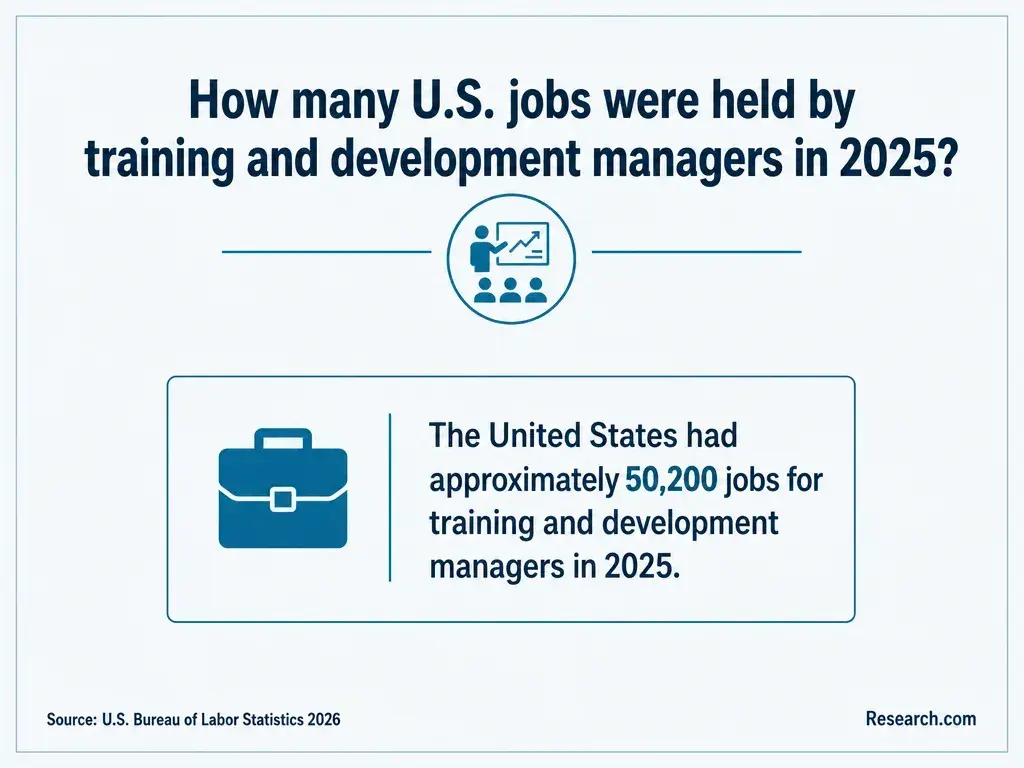
- The U.S. median pay for training and development managers was $133,000 in May 2025, according to BLS; that occupational figure is not a predicted salary or promotion for doctoral graduates.
What is the difference between an online Ed.D. in Leadership and Learning and a Ph.D. in Organizational Development?
An Ed.D. in Leadership and Learning generally emphasizes applying research to problems of practice, such as improving leadership development or evaluating whether workplace learning transfers into job performance. A Ph.D. in Organizational Development generally emphasizes building and testing knowledge about organizational change, behavior, and development. Both are doctoral degrees; "applied" does not mean an Ed.D. lacks rigorous research, and a Ph.D. can study practical problems.
The comparison below describes typical orientations, not requirements shared by every university. Program titles vary: a relevant Ph.D. might instead be named organizational behavior, human resource development, or education.
| Decision factor | Ed.D. in Leadership and Learning | Ph.D. in Organizational Development or a related field |
| Primary aim | Improve leadership and learning practice in a defined setting | Develop research that contributes to scholarly understanding |
| Common research focus | Organizational diagnosis, implementation, and evaluation | Theory, research design, and testing or explaining organizational processes |
| Final work to verify | May require a dissertation in practice, capstone, or dissertation | Typically requires an original research dissertation |
| Strongest fit | Experienced practitioners addressing organizational problems | Applicants seeking sustained research or research-intensive faculty work |
Look beyond the label to the required methods courses and final-project rules. For a broader explanation of degree designs, see comparing Doctor of Education program types.
Which degree better fits your career goals: an Ed.D. or Ph.D.?
If you work in learning and development, talent management, or organizational leadership and want to lead more complex improvement efforts, an Ed.D. may fit: its value lies in connecting evidence to decisions you can influence. The fit is weaker if you cannot access an appropriate project setting or mainly want advanced research training.
If you want to design studies, publish scholarship, or compete for research-intensive faculty positions, examine Ph.D. programs first. Faculty hiring still depends on research record, disciplinary fit, teaching needs, and the institution; a Ph.D. is not an appointment guarantee. An Ed.D. may also support some teaching roles, but its usual practice orientation can be a disadvantage for research-heavy searches.
For college administrators focused on improving institutional operations rather than becoming researchers, organizational leadership doctoral options for college administrators offer a more targeted comparison. If your goal is a first move into organizational development, neither doctorate substitutes for experience diagnosing problems, facilitating change, and measuring results. A relevant master's degree, employer development program, or supervised project may be the more direct next step.
How do online Ed.D. and Ph.D. program formats compare?
"Online" describes where much of the instruction happens, not how much control you have over your schedule. An Ed.D. may use live cohort classes, group projects, and campus convenings; an online or hybrid Ph.D. may require research meetings, intensive methods work, or campus access. Availability of fully online Ph.D. options also depends on the field and institution.
Before applying, request a sample term schedule and written requirements for live attendance, travel, research supervision, and final-project work. Working professionals should also ask what happens if their job changes during a workplace-based project. A shorter advertised course sequence is not necessarily a shorter path through research and approval milestones; review faster routes through an education doctorate with that distinction in mind.
An Ed.D. may combine adult learning, leadership, organizational change, program evaluation, and qualitative or quantitative inquiry. For an experienced learning professional, the important question is whether coursework moves beyond designing training to diagnosing performance problems, engaging stakeholders, and assessing implementation.
A related Ph.D. may place greater weight on organizational theory, advanced methods, scholarly literature, and independent study design. Compare syllabi rather than topic labels: a course called "organizational change" could emphasize either leading an intervention or explaining change through research. In both pathways, check whether faculty supervise the methods and organizational questions you actually want to pursue.
Requirements vary by program. Ed.D. admissions commonly assess prior graduate study, professional responsibility, an applicant's proposed problem of practice, and readiness for doctoral work. Ph.D. admissions may put more weight on research interests, methods preparation, writing, and fit with prospective faculty. Neither a master's in education nor a publication record is a universal requirement.
Ask each admissions office which degrees and experience qualify, what writing sample or research statement it expects, and whether tests or interviews apply to your entry term. If you have prior graduate credits, distinguish credits that establish admission eligibility from credits the institution will actually apply to the doctorate; only an official evaluation can resolve the latter.
There is no reliable program-wide price or completion time for either degree. Ed.D. schedules may be structured around working professionals, while a Ph.D.'s dissertation and research milestones can be less predictable. A structured schedule is useful only if you can meet its attendance and project obligations.
Compare a school's published tuition basis and required credits with fees, travel, continued enrollment during research, and potential lost earnings. Also obtain written funding terms: some Ph.D. offers include research or teaching support, while a professionally oriented Ed.D. may depend more heavily on personal financing or employer reimbursement. Neither arrangement should be assumed. Use an online doctoral education program cost guide to identify cost questions, then calculate totals from each school's current charges and your likely pace.
Check that the university - not merely a marketing page - identifies the exact degree and awarding institution. Confirm the institution's current accreditation status in the U.S. Department of Education's accreditation database or the accreditor's directory, including whether the status covers the institution offering the online program.
Next, ask the school whether any specialized accreditation applies to this specific degree. Institutional accreditation does not establish that a leadership doctorate meets school-administrator licensure rules or carries a professional organizational development certification. Verify those claims separately with the relevant authority.
An Ed.D. can complement experience leading workplace learning, talent development, organizational improvement, or higher-education initiatives. A related Ph.D. may be especially relevant to academic research, research-focused consulting, and roles that design or interpret organizational studies. Either graduate might pursue consulting, but clients and employers will also look for sector knowledge and evidence of effective work.
Match the degree to the work you want to do. Training managers oversee programs and teams; organizational development consultants diagnose problems and guide change; faculty researchers develop studies and publish findings. If you have only delivered training, a doctorate alone will not demonstrate experience managing budgets or leading organization-wide change. Seek progressively responsible projects and keep a portfolio that respects employer confidentiality.
BLS occupational figures provide labor-market context, not doctoral-graduate earnings. The following U.S. figures compare roles that may be relevant to applicants with different experience and career aims.
| Occupation | Median annual pay, May 2025 | Projected employment growth, 2025-2035 |
| Training and development managers | $133,000 | 6.4% |
| Management analysts, including organizational consultants | $101,860 | 10.1% |
| Training and development specialists | $69,280 | 10.8% |
The manager median exceeds the specialist median, but the jobs carry different responsibilities; obtaining a doctorate does not move someone automatically between them. Compare likely openings in your sector and location with your current experience before borrowing for a degree. If cost is central, choosing a budget-friendly organizational leadership doctorate is a useful starting point, provided you also verify its fit and full cost.
Do these degrees require licensure, certification, or professional credentials?
Organizational development and most workplace learning roles do not have a single doctorate-specific license. Employers may value optional certifications or particular technical skills, but those are separate from earning an Ed.D. or Ph.D.
Regulated positions are different. If you intend to become a public-school principal, teacher, or another licensed professional, ask the university whether the exact program is approved for your intended credential and confirm eligibility with the relevant state authority. A broadly focused leadership and learning doctorate should not be treated as a licensure pathway merely because it belongs to a school of education.
Other Things You Should Know About EdD Leadership
Possibly. Ask whether the program permits external project sites and what faculty approval, partner agreement, data access, and research review would be required before relying on that plan.
Access to people or data may end when employment ends. Ask the program how it handles a change of site or scope, and do not assume your former employer will continue supporting the work.
Publication depends on academic rules, employer agreements, confidentiality, and any applicable consent or research oversight. Establish those conditions before collecting data, not after writing the results.
Possibly, but hiring institutions assess subject expertise, teaching experience, and sometimes graduate coursework in the discipline. A doctorate in leadership or organizational development does not establish qualifications to teach every business or education subject.
- Maximizing the Impact and ROI of Leadership Development | nih.gov https://pmc.ncbi.nlm.nih.gov/articles/PMC11505461/
- Understanding College Costs | studentaid.gov https://studentaid.gov/resources/prepare-for-college/students/choosing-schools/consider-costs
- Cost of Attendance (Budget) | 2025-2026 Federal Student Aid Handbook https://fsapartners.ed.gov/knowledge-center/fsa-handbook/2025-2026/vol3/ch2-cost-attendance-budget
- How Organizational Theory Impacts Leadership Effectiveness | Vanderbilt University https://blog.peabody.vanderbilt.edu/the-peabody-blog/how-organizational-theory-impacts-leadership-effectiveness
- How to Become a Professor - School of Education | Goodwin College of Professional Studies https://drexel.edu/soe/resources/career-path/how-to-become-a-professor/
- Advance Your Leadership Career with a Doctorate in Organizational Leadership | UMass Global https://www.umassglobal.edu/blog-news/advance-your-leadership-career-a-doctorate-organizational-leadership
- 16 Careers For Ed.D. Graduates | marymount.edu https://online.marymount.edu/blog/16-careers-edd-graduates
- Online (Ed.D.) in Leadership for Organizations | UD-EDU https://educationonline.udayton.edu/edd/
- Career-Focused Degrees vs. Research Degrees | UAGC https://www.uagc.edu/blog/career-focused-degrees-vs-research-degrees
- Management vs. Leadership: What's the Difference? | ollusa.edu https://www.ollusa.edu/blog/management-vs-leadership.html