
2027 Spiritual Counselor Careers: Guide to Career Paths, Options & Salary

Co-Founder and Chief Data Scientist
Choosing a spiritual counseling career means deciding how you want to support people through grief, crisis, identity questions, faith transitions, illness, relationship strain, and the search for meaning. The path can be deeply rewarding, but it is not always straightforward: job titles vary, licensure rules differ by state and setting, and “spiritual counselor” can mean anything from faith-based guidance to clinically licensed therapy that integrates spirituality.
This guide explains what spiritual counselors do, where they work, how much they can earn, what education or credentials may be needed, and how to build a credible career in 2027. It is written for students exploring counseling, ministry, psychology, theology, social work, chaplaincy, or holistic wellness careers—and for current professionals who want to add spiritual care to their practice responsibly.
Quick answer: Is spiritual counseling a good career path?
Spiritual counseling can be a strong career fit if you want to combine emotional support, spiritual insight, ethical helping skills, and service to people during difficult life moments. The field is not a single licensed occupation, so your options depend heavily on your training. A certificate may support coaching, lay counseling, or ministry-based work, while licensed counseling or psychotherapy generally requires a graduate degree and state licensure.
Demand is supported by broader growth in related counseling fields. Employment of substance abuse, behavioral disorder, and mental health counselors is projected to grow by 19% from 2023 to 2033. Salary data also varies by role: as of February 2025, the average annual salary for a spiritual counselor in the U.S. is $63,587, with top earners making up to $91,000 per year.
Key things to know before choosing spiritual counseling
- Strong related job growth: The closest federal labor category—substance abuse, behavioral disorder, and mental health counselors—is projected to grow by 19% from 2023 to 2033, which is much faster than the average for all occupations.
- Moderate but variable pay: As of February 2025, spiritual counselors earn an average annual salary of $63,587 in the U.S.; top earners make up to $91,000 per year, depending on setting, location, specialization, and experience.
- Many work environments: Spiritual counselors may work in religious organizations, hospitals, hospice programs, prisons, rehabilitation centers, community agencies, schools, wellness settings, or private practice.
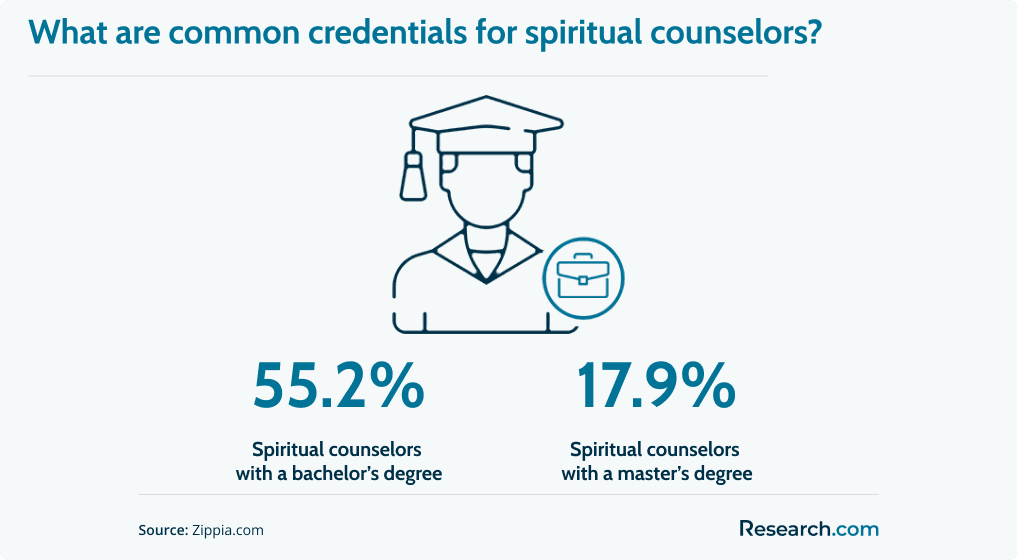
- Education depends on scope: A bachelor’s or master’s degree in counseling, psychology, theology, divinity, religious studies, or social work is common. Clinical roles usually require graduate education and licensure.
- Licensure matters: Spiritual guidance, coaching, chaplaincy, and clinical counseling are not interchangeable. If you diagnose or treat mental health disorders, you generally need the appropriate state license.
- Alternative roles are common: Related paths include chaplaincy, grief and bereavement counseling, spiritual life coaching, holistic wellness coaching, religious education, and interfaith consulting.
- Why consider spiritual counseling in 2027?
- What is the job outlook and salary potential?
- Do spiritual counselors need professional accreditation?
- What challenges should spiritual counselors expect?
- How can you build and manage a private practice?
- Are advanced certifications worth the cost?
- What skills do spiritual counselors need?
- How do you start a spiritual counseling career?
- How can you move into advanced roles?
- What legal and ethical issues matter most?
- How can organizational psychology improve your practice?
- How does evidence-based research strengthen spiritual counseling? See advancement options
- What related careers can spiritual counselors pursue?
- How can you serve diverse communities well?
- Should you pursue a PsyD for spiritual counseling?
- What extra qualifications can improve credibility? PsyD option Diverse communities Alternative careers Key insights
Why consider spiritual counseling in 2027?
Spiritual counseling is a helping profession focused on emotional, existential, and spiritual concerns. Clients may seek support after a death, illness, divorce, trauma, moral conflict, loss of faith, religious trauma, major life transition, or a persistent feeling that their life lacks purpose. Unlike general life advice, ethical spiritual counseling requires careful listening, respect for the client’s beliefs, appropriate boundaries, and a clear understanding of when clinical mental health referral is necessary.
The need is easy to understand. Over 70% of U.S. adults say religion is important, yet many mental health professionals receive limited training on spirituality. Up to 80% of psychologists report little to no formal education on integrating spirituality into therapy. That mismatch can leave clients searching for professionals who can discuss faith, meaning, identity, suffering, and healing without dismissing their values.
Spiritual counselors may lead individual sessions, facilitate support groups, conduct spiritual assessments, provide grief support, guide meditation or prayer-based reflection, help clients clarify values, or collaborate with healthcare and community professionals. Some work from a specific religious tradition, while others use an interfaith or spiritually integrated approach.
If you want a step-by-step overview of training routes, review this guide to becoming a spiritual counselor. Readers interested in combining psychology with spiritual growth can also explore the spiritual psychology career path.
Who is spiritual counseling best suited for?
- People drawn to meaning-centered work: You should be comfortable discussing grief, purpose, suffering, values, forgiveness, identity, and faith questions.
- Strong listeners: The work requires patience, presence, and the ability to avoid imposing your own beliefs.
- Professionals with clear boundaries: Spiritual care can become harmful when counselors overstep into diagnosis, treatment, or religious persuasion without proper authority or consent.
- Lifelong learners: Effective counselors keep studying ethics, trauma, cultural humility, mental health, theology, and referral practices.
Who should consider a different path?
- If you mainly want to practice psychotherapy: You may need a licensed counseling, psychology, marriage and family therapy, or social work route instead of a spiritual counseling certificate alone.
- If you are uncomfortable with diverse beliefs: Spiritual counselors often serve clients whose traditions, doubts, or practices differ from their own.
- If you want predictable income immediately: Private practice and coaching-based paths can take time to build and may not provide stable early earnings.
- If you prefer highly standardized work: Spiritual counseling often involves complex, personal, and culturally sensitive issues that do not fit simple scripts.
Employment data for spiritual counseling is usually tracked through adjacent occupations rather than one unified federal category. The U.S. Bureau of Labor Statistics projects employment of substance abuse, behavioral disorder, and mental health counselors to grow 19% from 2023 to 2033. During that same period, 48,900 openings are expected in that field, along with 29,100 openings for school and career counselors and 7,500 openings for marriage and family therapists, including roles connected to hospice care. These figures do not guarantee spiritual counseling jobs, but they show broader demand for counseling-related services.
What is the job outlook and salary potential for spiritual counseling in 2027?
The career outlook is strongest for spiritual counselors who pair spiritual care skills with recognized credentials, clinical training, chaplaincy preparation, healthcare experience, or a focused niche such as grief, trauma-informed care, addiction recovery, hospice, or interfaith support. Employers often want more than spiritual insight; they may also look for documentation skills, crisis response training, ethics knowledge, and the ability to collaborate with clinicians or clergy.
As of February 10, 2025, the average annual salary for a spiritual counselor in the United States is $63,587, equal to about $30.57 per hour. Reported salaries commonly range from $48,500 at the 25th percentile to $80,000 at the 75th percentile, while top earners make up to $91,000 per year. Actual pay can differ substantially based on geography, employer type, licensure, population served, and whether the counselor is employed or self-employed.
Some adjacent roles report higher average earnings. Volunteer chaplains earn an average of $68,665 annually, and hospice bereavement coordinators earn around $65,571. Spiritual counseling is not usually chosen for maximum earning power, but it can offer stable, meaningful work for professionals who build credible qualifications and serve a clear need.
Spiritual counseling salary and role comparison
| Role or salary point | Reported salary | What it suggests for career planning |
| Spiritual counselor average annual salary | $63,587 | A useful benchmark for general earning expectations, though pay varies by setting and credentials. |
| Spiritual counselor hourly equivalent | $30.57 per hour | Helpful for comparing employed roles with contract or session-based work. |
| 25th percentile spiritual counselor salary | $48,500 | Entry-level, part-time, lower-cost regions, or nonclinical roles may fall closer to this range. |
| 75th percentile spiritual counselor salary | $80,000 | Experienced counselors, specialized practitioners, or professionals in stronger markets may reach this level. |
| Top spiritual counselor earners | Up to $91,000 per year | Higher earnings often depend on specialization, practice development, leadership, or advanced credentials. |
| Volunteer chaplain average | $68,665 annually | Chaplaincy can be a related path for people interested in institutional spiritual care. |
| Hospice bereavement coordinator average | Around $65,571 | Grief and end-of-life support can be a practical specialization for spiritually oriented counselors. |
Do spiritual counselors need professional accreditation?
Professional accreditation and certification are not always legally required, but they can make a major difference in credibility, employability, referral trust, and ethical practice. Because “spiritual counselor” is used in many ways, credentials help clients and employers understand what you are qualified to do—and what you are not qualified to do.
If your goal is ministry-based support, chaplaincy, or spiritual coaching, a certificate or denominational credential may be appropriate. If your goal is clinical counseling, psychotherapy, or treatment of mental health conditions, you will generally need a graduate degree and state licensure in a recognized profession. Students who want broader clinical options may compare spiritual counseling training with related accredited programs, such as accredited marriage and family therapy programs online.
Credential options by career goal
| Career goal | Credential direction | Best fit |
| Lay counseling or ministry support | Certificate, supervised ministry training, or faith-community preparation | People who want to serve within churches, nonprofits, or community groups under appropriate oversight. |
| Spiritual coaching | Coaching certificate plus ethics and referral training | People focused on purpose, values, spiritual growth, and life direction rather than mental health treatment. |
| Chaplaincy | Theology, divinity, pastoral care, or chaplaincy preparation | People who want to provide spiritual care in hospitals, military settings, prisons, hospice, or institutions. |
| Licensed counseling or therapy | Graduate degree, supervised clinical hours, exam requirements, and state licensure | People who want legal authority to assess, diagnose, and treat mental health conditions. |
| Academic or research work | Doctoral-level preparation | People interested in teaching, research, leadership, or advanced theoretical work. |
What challenges should spiritual counselors expect?
Spiritual counseling can be emotionally demanding because clients often come during painful, confusing, or morally complex periods. Counselors must hold space for grief, anger, doubt, trauma, religious conflict, family pressure, and existential fear without becoming directive, judgmental, or personally overinvolved.
Another challenge is role clarity. A client may assume a spiritual counselor can provide therapy, diagnose depression, treat trauma, or intervene in crisis. If you are not licensed for those services, you need clear informed consent, careful language, and referral relationships with licensed professionals. Understanding compensation across counseling roles can also help with realistic planning; this overview of how much a counselor makes can help compare related paths.
Common challenges and better responses
| Challenge | Why it matters | Better response |
| Working with beliefs different from your own | Clients may feel judged or misunderstood if the counselor centers personal doctrine. | Use respectful inquiry, cultural humility, and client-led meaning-making. |
| Confusing spiritual care with therapy | Practicing outside your competence can create legal and ethical risk. | Define services clearly and refer to licensed clinicians when mental health treatment is needed. |
| Burnout and compassion fatigue | Grief, trauma, and crisis work can drain emotional capacity. | Use supervision, peer consultation, personal spiritual practice, and manageable caseload boundaries. |
| Boundary issues | Spiritual authority can create power imbalances. | Use informed consent, avoid coercion, document appropriately, and protect confidentiality. |
| Unclear business model | Private practice income can be inconsistent without planning. | Define your niche, pricing, referral sources, and administrative systems before launching. |
How can you build and manage a spiritual counseling practice?
A sustainable practice requires more than compassion. You need a defined scope of services, ethical intake procedures, referral relationships, documentation routines, client communication systems, and a clear explanation of whether you provide spiritual guidance, coaching, pastoral care, or licensed clinical counseling.
Start by identifying your audience. You might serve grieving families, people recovering from religious trauma, hospice patients, interfaith couples, clergy, caregivers, people in addiction recovery, or professionals seeking purpose-driven coaching. A focused niche makes your services easier to explain and easier for referral partners to remember.
Education can also support practice management. If you are comparing affordable training routes, review the best affordable online counseling programs to understand how counseling coursework may strengthen your foundation.
Steps to build a credible practice
- Define your scope: State clearly whether you offer spiritual care, coaching, pastoral counseling, chaplaincy services, or licensed therapy.
- Choose a niche: Select a population or issue area where your training, experience, and spiritual approach are strongest.
- Prepare intake documents: Include informed consent, confidentiality limits, fees, cancellation rules, referral policies, and crisis procedures.
- Create referral pathways: Build relationships with licensed therapists, physicians, clergy, hospice teams, recovery programs, and community organizations.
- Use ethical marketing: Avoid promising healing, guaranteed outcomes, or treatment results beyond your qualifications.
- Track outcomes carefully: Use client feedback, session goals, and consultation to improve your work over time.
- Plan administration: Use secure scheduling, payment, recordkeeping, and client communication tools that fit your legal obligations.
Are advanced certifications in spiritual counseling worth the cost?
Advanced certificates can be worthwhile when they directly support your career goal, target population, or legal scope of work. They are less useful when chosen only because they sound impressive. Before enrolling, compare tuition, supervision requirements, renewal obligations, curriculum depth, recognition by employers, and whether the credential helps you serve clients more safely.
Cost planning matters because spiritual counseling careers can include uneven early earnings, especially in private practice. If you are comparing education-related expenses in a nearby specialty, this guide on how much it costs to become an addiction counselor can help you think through tuition, credentials, and return on investment.
Questions to ask before paying for a certificate
- Is the program aligned with the exact work I want to do?
- Does it include ethics, boundaries, crisis referral, and cultural competence?
- Will employers, faith communities, or clients recognize the credential?
- Does it require supervised practice or only coursework?
- Are there renewal fees, continuing education requirements, or membership costs?
- Does the credential expand my competence, or does it risk making me appear qualified beyond my legal scope?
What skills do spiritual counselors need?
Spiritual counselors need a combination of interpersonal maturity, spiritual literacy, ethical discipline, and counseling-informed communication. The best practitioners do not simply offer advice; they help clients explore meaning, values, pain, hope, and next steps without pressuring them toward a predetermined answer.
- Spiritual and psychological literacy: Counselors should understand spiritual frameworks and basic mental health concepts well enough to offer appropriate support and recognize when referral is needed.
- Active listening: Clients need to feel heard before they can examine grief, doubt, shame, fear, or purpose.
- Empathy and compassion: Spiritual counseling often occurs during vulnerable moments, so emotional steadiness and genuine care are essential.
- Cultural humility: A respectful counselor avoids assumptions about religion, race, gender, sexuality, family structure, disability, class, or spiritual practice.
- Clear communication: The role requires explaining boundaries, reflecting meaning, asking thoughtful questions, and discussing sensitive topics carefully.
- Ethical judgment: Confidentiality, informed consent, competence, documentation, and referral decisions are central to trust.
- Self-awareness: Counselors must understand their own beliefs and biases so they do not project them onto clients.
- Crisis awareness: Spiritual counselors should know how to respond when a client presents safety concerns, abuse, severe distress, or urgent clinical needs.
Students who want an entry-level foundation in human behavior may consider an online psychology associate degree before moving into more specialized spiritual care training.
How do you start a career in spiritual counseling?
There is no single required degree for every spiritual counseling job. Your starting point depends on whether you want to work in ministry, coaching, chaplaincy, healthcare, community support, or licensed mental health care. Common academic backgrounds include counseling, psychology, theology, divinity, religious studies, social work, and pastoral care.
For faith-centered preparation, a Christian counseling degree online may help students connect counseling methods with Christian theology. Others may choose interfaith, secular, psychology-based, or social work programs depending on the communities they plan to serve.
Developing your own spiritual grounding is also important. Many spiritual counselors study with mentors, clergy, supervisors, elders, or experienced practitioners. Some work within a specific tradition, while others build interfaith competence. Either way, your practice should be guided by humility, consent, and respect for the client’s belief system.
Basic career pathway
- Clarify your role: Decide whether you want to provide spiritual guidance, coaching, chaplaincy, pastoral counseling, or licensed therapy.
- Choose the right education level: Match your program to your intended scope of practice.
- Study ethics early: Learn confidentiality rules, boundary management, mandated reporting basics, and referral responsibilities.
- Gain supervised experience: Volunteer, intern, apprentice, or work under qualified supervision in a ministry, healthcare, nonprofit, or counseling-adjacent setting.
- Build a referral network: Know when to refer clients to therapists, crisis services, physicians, clergy, or community resources.
- Document your qualifications accurately: Use titles that reflect your training and do not imply licensure you do not hold.
What can you do with an associate’s degree in spiritual counseling?
Pastoral Assistant
A pastoral assistant helps clergy and faith-based staff with administrative duties, community outreach, spiritual support activities, and ministry coordination.
Median salary: $35,000
Lay Counselor
A lay counselor provides faith-informed support in churches, nonprofits, or community organizations, typically with supervision and clear limits on clinical practice.
Median salary: $38,000
Spiritual Care Coordinator
A spiritual care coordinator supports patients, families, residents, or caregivers in hospitals, hospice programs, assisted living communities, and other care settings.
Median salary: $40,000
What can you do with a bachelor’s degree in spiritual counseling?
Chaplain
A chaplain offers spiritual and emotional care in hospitals, military environments, prisons, workplaces, or other institutional settings, often supporting people through grief, trauma, and crisis.
Median salary: $55,000
Spiritual Life Coach
A spiritual life coach helps clients clarify purpose, values, direction, and personal growth goals through a spiritual or meaning-centered framework.
Median salary: $50,000
Religious Educator
A religious educator teaches faith, ethics, scripture, spiritual formation, or religious studies in churches, schools, or community programs.
Median salary: $48,000
Can you get a spiritual counseling job with only a certificate?
Yes, a certificate may support entry-level or nonclinical work such as lay counseling, spiritual coaching, pastoral assistance, or ministry-based support. However, a certificate by itself typically does not qualify someone to diagnose or treat mental health disorders. That distinction is critical for legal and ethical practice.
The American Institute of Health Care Professionals offers a spiritual counseling certification pathway that includes peer advisory oversight, credential maintenance, re-certification, and continuing education. The California Institute of Integral Studies offers a Spiritual Counseling Certificate for therapists, counselors, coaches, and caregivers; the 18-unit program focuses on applied skills and wisdom for working with existential and spiritual questions.
If you want a stronger academic foundation before moving into advanced training, related easy associate degrees may help you begin with a flexible, accessible credential.
How can you move into advanced spiritual counseling roles?
Career advancement usually comes from deeper training, recognized credentials, supervised experience, and a more specialized service area. A master’s degree in counseling, psychology, divinity, theology, or a related field can open doors to chaplaincy, pastoral counseling, clinical licensure routes, leadership roles, and higher-responsibility positions.
Specialized certifications in pastoral counseling, spiritual psychology, transpersonal psychology, grief support, trauma-informed care, or interfaith ministry can also strengthen a professional profile. For those interested in research, teaching, or advanced behavioral science, an online PhD in psychology may provide broader preparation in human behavior, methodology, and scholarship.
What can you do with a master’s in spiritual counseling?
Licensed Pastoral Counselor
A licensed pastoral counselor provides faith-integrated counseling to individuals, couples, and families dealing with grief, emotional distress, spiritual conflict, or life transitions. Work settings may include private practice, religious institutions, and healthcare organizations.
Median salary: $60,000
Military Chaplain
A military chaplain supports service members and families through stress, trauma, deployment issues, moral injury, grief, and faith-related concerns.
Median salary: $65,000
Spiritual Psychologist
A spiritual psychologist integrates psychological theory with spiritual development to support emotional, relational, and existential well-being in clinical, private practice, or research settings. If you are comparing advanced academic pathways, this explanation of EdD vs. PhD programs can help you understand which degree better fits teaching, research, or applied leadership goals.
Median salary: $70,000
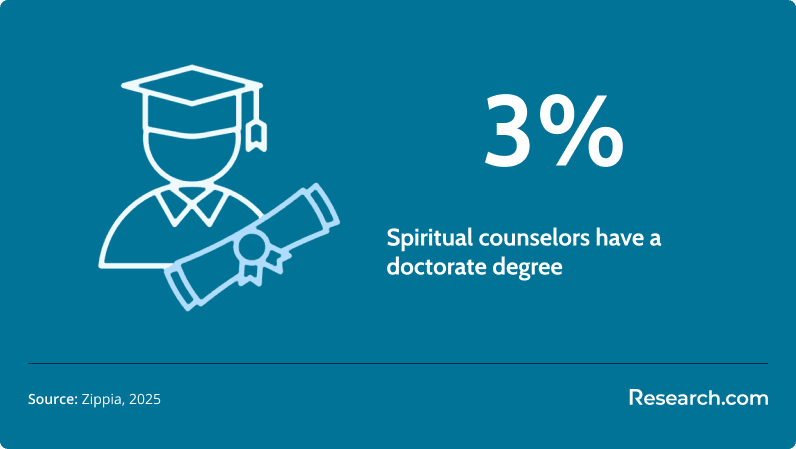
What kind of job can you get with a doctorate in spiritual counseling?
Transpersonal Psychologist
A transpersonal psychologist studies and applies approaches that connect psychology, spirituality, consciousness, growth, and self-actualization in research, education, or therapeutic settings.
Median salary: $80,000
Religious Psychologist
A religious psychologist examines how belief systems, spiritual experiences, religious identity, and faith communities affect mental health, behavior, and development. These professionals often work in universities or research organizations.
Median salary: $85,000
Professor of Spiritual Counseling
A professor of spiritual counseling teaches courses in spirituality, counseling, psychology, ethics, and pastoral care while training future practitioners and conducting research. If academia interests you, this guide on how to become a college professor explains the education and qualifications typically involved.
Median salary: $90,000
What legal and ethical issues matter most for spiritual counselors?
Legal and ethical clarity is one of the most important parts of spiritual counseling. Clients may share deeply private information about trauma, family conflict, sexuality, faith, guilt, medical decisions, or mental health symptoms. Counselors need systems that protect confidentiality, explain its limits, and guide appropriate referrals.
State licensing rules matter when spiritual counseling overlaps with psychotherapy, diagnosis, treatment planning, or clinical claims. Comparing nearby professions can help clarify boundaries; for example, this article on whether it is better to be a psychologist or social worker shows how different roles carry different training, responsibilities, and regulatory expectations.
Ethical rules to take seriously
- Do not misrepresent your credentials: Use titles that match your actual education, certification, license, or ministry authorization.
- Get informed consent: Clients should understand your approach, fees, confidentiality limits, referral policies, and crisis procedures.
- Respect client autonomy: Spiritual counseling should not pressure clients into a belief, ritual, relationship decision, donation, or religious affiliation.
- Know when to refer: Suicidality, abuse, severe mental health symptoms, addiction crises, domestic violence, or medical issues may require licensed or emergency support.
- Protect privacy: Spiritual concerns can be highly sensitive, especially in small religious or cultural communities.
- Practice within competence: Do not use methods or address conditions beyond your training and legal authority.
How can organizational psychology improve a spiritual counseling practice?
Organizational psychology can help spiritual counselors who lead teams, manage programs, work in institutions, or run private practices. Skills such as conflict resolution, feedback design, change management, leadership development, and workplace communication can make spiritual care more effective and sustainable.
This is especially relevant for chaplains, directors of spiritual care, nonprofit leaders, corporate wellness consultants, and counselors who collaborate with healthcare or community teams. If you want formal training in the workplace side of human behavior, compare cheapest online organizational psychology masters programs that may complement counseling or ministry preparation.
How does evidence-based research strengthen spiritual counseling?
Evidence-based practice does not remove spirituality from counseling. Instead, it helps counselors evaluate whether their methods are safe, appropriate, ethical, and useful for the client’s goals. Research-informed practice can improve assessment, referral decisions, documentation, client feedback, and the way counselors adapt support to individual needs.
Professionals who want stronger analytical tools may benefit from related behavioral science training. For example, online masters in applied behavior analysis programs can help practitioners understand measurement, intervention planning, and behavior-focused decision-making, although ABA and spiritual counseling are distinct fields with different scopes.
Current trends shaping spiritual counseling
- Greater openness to spirituality in therapy: Professional discussions increasingly recognize that religion and spirituality may matter in mental health care when handled ethically and with client consent.
- More holistic wellness models: Clients often look for support that connects emotions, relationships, body, values, identity, and meaning.
- Telehealth and online coaching: Digital delivery can expand access, but counselors must understand privacy, jurisdiction, and scope-of-practice limits.
- Demand for cultural competence: Counselors need preparation for interfaith, multicultural, LGBTQ+, immigrant, and nonreligious clients who may define spirituality differently.
- AI and digital tools: Scheduling, documentation, content creation, and client education tools may support practice operations, but they cannot replace ethical judgment, human presence, or crisis assessment.
What related careers can spiritual counselors pursue?
Spiritual counseling skills transfer well to roles that involve emotional support, values clarification, grief care, community education, wellness, and crisis response. Many professionals combine several roles over time, such as chaplaincy plus grief work, coaching plus teaching, or counseling plus nonprofit leadership.
Alternative career paths
- Holistic Wellness Coach: Supports clients in connecting emotional balance, physical well-being, lifestyle habits, and spiritual growth.
- Grief and Bereavement Counselor: Helps people process loss in hospice, hospitals, faith communities, or nonprofit programs.
- Life Coach: Guides clients in setting personal, professional, or spiritual goals while building self-awareness and direction.
- Chaplain in corporate, hospital, or prison settings: Provides spiritual care to diverse populations outside traditional congregational ministry.
- Meditation or Mindfulness Instructor: Teaches attention, reflection, grounding, and stress-reduction practices in wellness centers, workplaces, schools, or private settings.
- Interfaith Educator or Consultant: Helps organizations, schools, and communities understand religious diversity and design inclusive spiritual programs.
Professionals who want leadership roles in integrated behavioral health may consider a doctorate in behavioral health to prepare for advanced work across counseling, wellness, and organizational systems.
How can you serve diverse communities well?
Serving diverse communities requires more than general kindness. Spiritual counselors need cultural humility, religious literacy, trauma awareness, and the discipline to let clients define their own beliefs and values. A Christian client, Muslim client, Buddhist client, Indigenous client, atheist client, interfaith couple, or person harmed by a religious institution may need very different forms of support.
Training in psychology can strengthen this work by helping counselors understand identity, development, family systems, trauma, power, and social context. If you are comparing graduate options, review the cheapest online masters in psychology to see how psychology education may support culturally responsive practice.
Practical ways to adapt your approach
- Ask clients how they describe their spirituality instead of assuming based on background.
- Use the client’s language for faith, doubt, meaning, healing, or practice.
- Learn about traditions represented in your community, but avoid treating clients as representatives of an entire group.
- Be careful with prayer, ritual, scripture, meditation, or touch; use consent and explain options.
- Recognize religious trauma and spiritual abuse as serious experiences that may require clinical referral.
- Make your services welcoming to clients who are questioning, nonreligious, or spiritually uncertain.
Should you pursue a PsyD for spiritual counseling?
A PsyD may be useful if your goal is clinical practice, psychological assessment, advanced therapy, supervision, or leadership in mental health settings. It is usually more than what is needed for spiritual coaching, lay counseling, or ministry-based spiritual support. The decision should depend on whether you want doctoral-level clinical authority and whether the program aligns with your state’s licensure requirements.
Students comparing doctoral options can review PsyD programs online to understand how programs approach assessment, evidence-based intervention, clinical training, and applied psychological practice. Before enrolling, confirm accreditation, practicum requirements, internship expectations, licensure alignment, total cost, and residency requirements.
When a PsyD may make sense
- You want to become a licensed psychologist and integrate spirituality into evidence-based clinical work.
- You are interested in assessment, diagnosis, treatment planning, and advanced supervision.
- You want leadership roles in clinics, healthcare systems, universities, or integrated care organizations.
- You are prepared for the time, cost, clinical training, and licensure process required for doctoral psychology practice.
When a PsyD may be unnecessary
- You want to offer nonclinical spiritual direction, coaching, or ministry support.
- You do not plan to diagnose or treat mental health disorders.
- A master’s degree, chaplaincy training, or focused certificate would meet your career goal more efficiently.
- You are not ready for the financial and time commitment of doctoral study.
What extra qualifications can improve credibility?
Additional qualifications can strengthen your reputation when they match your scope of practice and client population. Useful areas include trauma-informed care, grief support, chaplaincy, pastoral counseling, crisis response, ethics, cultural competence, addiction recovery, family systems, and interfaith studies.
Social work education can also be relevant for professionals who want a stronger understanding of systems, social services, family stress, poverty, crisis intervention, and community resources. If that route interests you, compare online MSW programs and check whether they align with your state’s licensure requirements and career goals.
Common mistakes to avoid when entering spiritual counseling
| Mistake | Why it can hurt your career | Better decision |
| Choosing a program without checking accreditation or recognition | The credential may not help with employment, licensure, or client trust. | Verify institutional accreditation, program reputation, and whether it fits your career goal. |
| Assuming a certificate allows clinical practice | Diagnosing or treating mental health conditions without licensure can create legal risk. | Separate spiritual guidance from licensed counseling and follow state rules. |
| Focusing only on tuition | Fees, supervision, travel, books, renewals, and lost work time can affect total cost. | Compare full cost and expected career value before enrolling. |
| Ignoring transfer credit policies | You may repeat coursework or lose credits when moving to a higher degree. | Ask schools how credits transfer before starting. |
| Relying only on rankings | A highly ranked program may not match your tradition, licensure goal, budget, or schedule. | Use rankings as one input, not the entire decision. |
| Promising spiritual or emotional outcomes | Guarantees can be unethical and damage trust. | Describe your process honestly and avoid outcome claims. |
| Neglecting referral relationships | Clients with urgent clinical or safety needs may require help outside your scope. | Build a referral network before taking clients independently. |
Questions to ask before choosing a spiritual counseling program
- Is the program designed for spiritual guidance, pastoral care, coaching, chaplaincy, or licensed clinical counseling?
- Does the curriculum include ethics, confidentiality, crisis referral, trauma awareness, and cultural competence?
- Who recognizes the credential—employers, faith communities, certifying bodies, or licensing boards?
- Does the program include supervised practice or only classroom learning?
- Will the credits transfer into a higher degree if I continue my education?
- What are the total costs, including fees, books, supervision, travel, and credential renewal?
- If the program is online, does it meet requirements in the state where I plan to work?
- What career support, mentorship, or practicum placements are available?
Key insights
- Spiritual counseling is a flexible helping path, but the title is broad; your legal scope depends on your education, credentials, license status, and work setting.
- The strongest career options usually come from combining spiritual care skills with counseling knowledge, ethics training, supervision, and a clear specialization.
- Related counseling fields show strong projected growth, including 19% growth for substance abuse, behavioral disorder, and mental health counselors from 2023 to 2033.
- Reported spiritual counselor pay averages $63,587 annually, but earnings vary widely by role, location, employer, licensure, and private practice development.
- A certificate can support lay counseling, coaching, or ministry-based work, but clinical therapy typically requires a graduate degree and state licensure.
- Before choosing a program, verify accreditation, licensure alignment, transfer policies, total cost, supervision opportunities, and whether the credential is recognized in your intended career setting.
- The best spiritual counselors protect client autonomy: they do not impose beliefs, overpromise outcomes, or practice beyond their competence.
References:
- World Health Organization. (2022, June 8). Mental disorders. World Health Organization.
- Abrams, Z. (2023, November). Can religion and spirituality have a place in therapy? Experts say yes. American Psychological Association.
- Careersinpsychology. (2023, September 11). How to become a spiritual counselor. CareersinPsychology.org.
- University of Central Florida. (2019, September 6). Religion and spirituality careers with a graduate degree. UCF Psychology.
- U.S. Bureau of Labor Statistics. (2023, May). Occupational employment and wages, May 2023: 21-1019 Social workers, all other. U.S. Department of Labor. BLS.
- U.S. Bureau of Labor Statistics. (2015). Hospice care workers: Working with the terminally ill. U.S. Department of Labor. BLS.
- Salary.com. (n.d.). Spiritual advisor salary. Salary.com. Retrieved February 20, 2025, from https://www.salary.com/research/salary/hiring/spiritual-advisor-salary
- Zippia. (n.d.). Spiritual advisor jobs. Zippia. Retrieved February 20, 2025, from https://www.zippia.com/spiritual-advisor-jobs/
Other Things You Should Know about Spiritual Counseling
Most spiritual counselor certification programs require 100 to 300 supervised practice hours, plus 20 to 40 hours of ethics and spiritual-care training. Some also require a written case study or competency review before issuing the credential.
To become a spiritual counselor in 2027, a bachelor's or master's degree in counseling, psychology, or a related field is often required. Additional certifications in spiritual counseling or pastoral care, along with adherence to ethical codes, may enhance career prospects. Specific licensure requirements can vary by region.


