2027 How to Become a Marriage and Family Therapist in Hawaii: Requirements & Certification

Co-Founder and Chief Data Scientist
Becoming a licensed marriage and family therapist (LMFT) in Hawaii requires more than choosing a graduate program and completing clinical hours. You need to understand Hawaii’s licensing rules, find training that prepares you for culturally responsive practice, plan for the state’s high cost of living, and decide whether this career path fits your financial and professional goals. This guide is for students, career changers, and counseling professionals who want a practical roadmap to marriage and family therapy licensure in Hawaii. You will learn the required education, supervised experience, exam and application steps, salary and job market considerations, practice options, common challenges, and questions to ask before committing to this path.
Quick Answer: How to Become a Marriage and Family Therapist in Hawaii
To practice as a marriage and family therapist in Hawaii, you generally need a master’s degree in marriage and family therapy or a closely related field, supervised clinical experience, and a passing score on the national MFT exam. Hawaii requires 3,000 hours of supervised clinical experience for licensure, and licensed therapists must complete continuing education to keep their credentials active. The career can be meaningful and in demand, but prospective therapists should plan carefully because Hawaii’s cost of living is high and graduate training can be expensive.
Key Things You Should Know About Becoming a Marriage and Family Therapist in Hawaii
- Demand is strong. Marriage and family therapist employment in Hawaii is projected to grow 22% from 2021 to 2031, compared with 14% for all occupations nationally. Growth is tied to greater public awareness of mental health needs and rising demand for family-centered care.
- Salary varies by setting. As of 2023, the average annual salary for marriage and family therapists in Hawaii is approximately $66,000. Pay can differ by experience, island, employer, specialty, and practice model, with some professionals earning upwards of $80,000 in private practice or specialized clinics.
- Openings are expected each year. Hawaii is projected to have about 300 job openings annually, including new roles and positions created by turnover.
- Cost of living matters. Hawaii’s cost of living index is 185.8, compared with the national average of 100. A salary that looks competitive on paper may feel different once housing, transportation, food, insurance, and student loan payments are included.
- Licensure has multiple steps. Candidates must complete a qualifying graduate degree, supervised clinical experience, and the national MFT exam before they can practice independently in the state.
- How can you become a marriage and family therapist in Hawaii?
- What is the minimum educational requirement to become a marriage and family therapist in Hawaii?
- What does a marriage and family therapist do?
- What is the certification and licensing process for a marriage and family therapist in Hawaii?
- What ethical and legal guidelines should you observe as a marriage and family therapist in Hawaii?
- How much can you earn as a marriage and family therapist in Hawaii?
- What is the job market like for a marriage and family therapist in Hawaii?
- What career and advancement opportunities are available for a marriage and family therapist in Hawaii?
- What distinguishes marriage and family therapy from related professions?
- How do marriage and family therapy and psychology licensure paths differ in Hawaii?
- What educational resources and institutions can support aspiring marriage and family therapists in Hawaii?
- How can insights from criminal psychology enhance your therapeutic practice in Hawaii?
- How is telehealth transforming marriage and family therapy practice in Hawaii?
- What business steps should you take to successfully launch your practice in Hawaii?
- How can integrating substance abuse counseling enhance your practice in Hawaii?
- What challenges should you consider as a marriage and family therapist in Hawaii?
- What else should I consider when pursuing a career as a marriage and family therapist in Hawaii?
- What are the insurance and reimbursement considerations for marriage and family therapists in Hawaii?
- How can ongoing professional development and mentorship support your career as a marriage and family therapist in Hawaii?
- How can interdisciplinary collaboration with school psychologists enhance your practice in Hawaii?
- Can diversifying your therapeutic skillset improve client outcomes?
How can you become a marriage and family therapist in Hawaii?
The path to becoming a marriage and family therapist in Hawaii is sequential: earn the right graduate degree, complete supervised training, pass the required exam, apply for state licensure, and keep your license current through continuing education. The process is manageable if you verify requirements before enrolling in a program and document your supervised hours carefully.
| Step | What you need to do | Why it matters |
| 1. Build an undergraduate foundation | Complete a bachelor’s degree, commonly in psychology, counseling, social work, human development, or a related field. | Graduate MFT programs typically require an undergraduate degree and may expect prerequisite coursework or relevant experience. |
| 2. Earn a qualifying graduate degree | Complete a master’s degree in marriage and family therapy, counseling psychology, or a closely related discipline. | Graduate-level clinical training is the minimum academic foundation for MFT licensure. |
| 3. Complete practicum and supervised experience | During graduate study, complete a practicum with at least 300 hours of supervised client contact. After graduation, complete required supervised clinical experience, including direct therapy and clinical supervision. | Supervised practice helps you translate theory into safe, ethical, culturally responsive client care. |
| 4. Pass the national exam | Take and pass the National Marital and Family Therapy Examination. | The exam confirms readiness for professional practice and is required for licensure. |
| 5. Apply through the state | Submit your application, education records, supervised experience documentation, and exam results to the Hawaii Department of Commerce and Consumer Affairs. | Only the state licensing authority can approve you to practice as a licensed MFT in Hawaii. |
| 6. Maintain your license | Complete 45 hours of continuing education every three years, including at least 6 hours in ethics. | Continuing education keeps your practice current and protects your professional standing. |
Students who cannot find a local program that fits their schedule may consider online or hybrid graduate options, but they should confirm that the curriculum, practicum structure, and supervision rules satisfy Hawaii requirements before enrolling. Some online programs, including CACREP-accredited options such as those from Walden University, may provide relevant coursework, but accreditation alone does not automatically guarantee state licensure eligibility.
Documentation is one of the most important parts of the process. Keep records of practicum hours, direct client contact, supervisor credentials, supervision dates, and signed verification forms. Waiting until the end of training to reconstruct your experience can delay licensure.
Marriage and family therapists spend a substantial part of their week providing direct clinical care, although the number of client-facing hours depends on the work setting. According to the American Association for Marriage and Family Therapy, MFTs in school, college, or university settings average 23.8 hours per week in direct clinical services. Those in group practices average 23.5 hours, therapists in agency settings average 22.1 hours, and MFTs in individual practice average 21.2 hours per week.
These differences show why your preferred work environment should influence your career planning. Agency and school roles may offer structure and team support, while individual practice can provide autonomy but may require more business, billing, and marketing work.
What is the minimum educational requirement to become a marriage and family therapist in Hawaii?
The minimum educational requirement for marriage and family therapist licensure in Hawaii is a master’s degree in marriage and family therapy or a closely related field. A bachelor’s degree is the entry point for graduate admission, and a doctoral degree may support teaching, research, leadership, or specialized clinical roles, but it is not required for licensure.
What should your graduate program include?
- Core clinical coursework: Look for training in family systems, couples therapy, human development, psychopathology, assessment, diagnosis, ethics, multicultural counseling, and clinical interventions.
- Family and relationship focus: A strong MFT program should teach you to understand problems in relational context, not only as individual symptoms.
- Supervised clinical practice: Hawaii requires supervised clinical preparation, including direct therapy experience and clinical supervision.
- Licensure alignment: Before enrolling, ask the program to show how its curriculum maps to Hawaii requirements.
- Accreditation review: Programs accredited by recognized bodies such as the Commission on Accreditation for Marriage and Family Therapy Education (COAMFTE) may provide strong professional preparation. Still, you should verify how the state licensing board evaluates each program.
| Education stage | Typical time commitment | Role in the licensure path |
| Bachelor’s degree | About four years | Prepares you for graduate admission and introduces psychology, counseling, social work, or human development concepts. |
| Master’s degree | Two to three years after the bachelor’s degree | Provides the required graduate-level clinical education for MFT licensure. |
| Supervised clinical training | Completed during and after graduate study | Builds client-facing competence under qualified supervision. |
| Doctoral degree | Optional | May support advanced practice, academic, research, supervision, or leadership goals. |
Altogether, many candidates spend approximately six to seven years completing undergraduate and graduate education before they are eligible to move fully into the licensure process. Chaminade University is one Hawaii institution frequently considered by students interested in marriage and family therapy preparation. Students may also compare related counseling and psychology pathways, including resources such as the Maine LPC career outlook, to understand how requirements differ by state and profession.
What does a marriage and family therapist do?
Marriage and family therapists assess, diagnose, and treat mental, emotional, and relational concerns through the lens of family systems. Instead of focusing only on one person’s symptoms, MFTs examine communication patterns, roles, conflict cycles, attachment, trauma, parenting dynamics, cultural expectations, and life transitions that affect relationships.
Common responsibilities of an MFT
- Conduct intake assessments to understand client concerns, strengths, risks, and goals.
- Create treatment plans for individuals, couples, families, or relational systems.
- Lead therapy sessions with couples, parents, children, extended family members, or individuals.
- Use approaches such as systemic therapy, cognitive-behavioral strategies, emotionally focused work, trauma-informed care, and psychoeducation.
- Coordinate with physicians, psychiatrists, school staff, social workers, case managers, and other professionals when appropriate.
- Help clients develop communication skills, conflict-resolution strategies, coping tools, and healthier relational patterns.
In Hawaii, the work often requires strong cultural humility. Therapists may serve Native Hawaiian families, Pacific Islander communities, Asian American families, military families, multigenerational households, mixed-cultural couples, and clients living across different islands. Effective practice means understanding family, community, spirituality, migration, colonization, socioeconomic pressure, and local values without making assumptions about any client’s identity.
The Bureau of Labor Statistics projects 22% growth in MFT employment from 2021 to 2031, reflecting broader demand for mental health services and recognition of the importance of family relationships in treatment. However, job growth does not guarantee a specific salary or position for every graduate, so students should compare local employers, supervision availability, and cost of living before choosing this path.
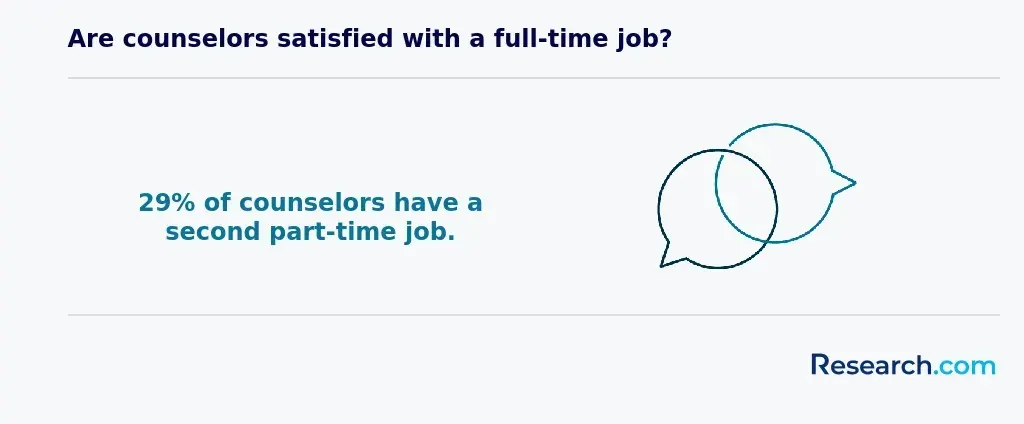
Career satisfaction can be mixed, as in many helping professions. A recent survey found that 29% of counselors are not fully satisfied and have a second part-time job, which is shown in the graphic below.
What is the certification and licensing process for a marriage and family therapist in Hawaii?
Hawaii’s MFT licensing process verifies that applicants have completed the required education, supervised clinical preparation, and national examination. The most important step is to rely on the Hawaii Department of Commerce and Consumer Affairs for current rules, forms, and deadlines because licensing requirements can change.
Licensure checklist for Hawaii MFT candidates
- Complete a qualifying graduate degree: The degree must be in marriage and family therapy or a closely related discipline that includes the required clinical content.
- Document supervised experience: Candidates must meet Hawaii’s supervised clinical experience requirements, including 3,000 hours of supervised clinical experience for licensure.
- Prepare for the national exam: Applicants must pass the National Marital and Family Therapy Examination before becoming licensed.
- Submit a complete application: Provide transcripts, supervised experience verification, exam results, fees, and any other materials required by the state.
- Respond promptly to board requests: Incomplete forms, unclear supervision records, or missing transcripts can slow approval.
- Renew your credential: Licensed MFTs in Hawaii must complete 45 hours of continuing education every three years, including at least 6 hours in ethics.
| Requirement | What to confirm before you apply |
| Graduate education | Does your degree title, coursework, practicum, and clinical preparation meet Hawaii’s MFT licensing rules? |
| Supervision | Is your supervisor qualified under state rules, and are all hours documented in the required format? |
| Exam | Have you completed the required testing process and requested official score reporting? |
| Application | Are your transcripts, supervision forms, exam records, and fees submitted correctly? |
| Renewal | Do your continuing education activities meet the 45-hour requirement and the 6-hour ethics minimum? |
Prospective therapists should also compare MFT licensure with related counseling paths. For example, the Idaho LPC career outlook can help readers see how licensed professional counseling differs from marriage and family therapy across states.
What ethical and legal guidelines should you observe as a marriage and family therapist in Hawaii?
Ethical practice is central to MFT work because therapists handle confidential information, emotionally vulnerable clients, family conflict, and safety concerns. In Hawaii, therapists must follow state law, federal privacy rules, licensing board standards, and professional ethics codes.
Core legal and ethical responsibilities
- Licensure compliance: MFTs must be licensed through the Hawaii Department of Commerce and Consumer Affairs before practicing independently. Licensure involves qualifying education, supervised clinical experience, and the national MFT exam.
- Mandatory reporting: Therapists are required to report suspected child abuse or neglect and threats of harm to self or others under applicable Hawaii law, including Hawaii Revised Statutes (HRS) §350-1.
- Confidentiality: Client privacy is protected, but it is not absolute. Exceptions can include mandatory reporting, danger to self or others, court orders, and other legally defined circumstances.
- Informed consent: Clients should understand the purpose of therapy, fees, privacy limits, recordkeeping, telehealth rules, cancellation policies, and how information may be handled in couples or family sessions.
- HIPAA compliance: Therapists who are covered entities or work in covered settings must follow Health Insurance Portability and Accountability Act (HIPAA) privacy and security standards.
Ethical issues that can be especially important in Hawaii
- Dual relationships: In smaller island communities, therapists may encounter clients in schools, churches, community events, healthcare settings, or extended social networks. Clear boundaries are essential.
- Cultural humility: Therapists should not assume that one model of family, marriage, parenting, grief, spirituality, or communication fits all clients.
- Couples and family confidentiality: Therapists need clear policies about secrets, individual disclosures, records, and who is considered the client when multiple people attend therapy.
- Telehealth boundaries: Virtual care requires attention to privacy, emergency planning, client location, informed consent, and secure technology.
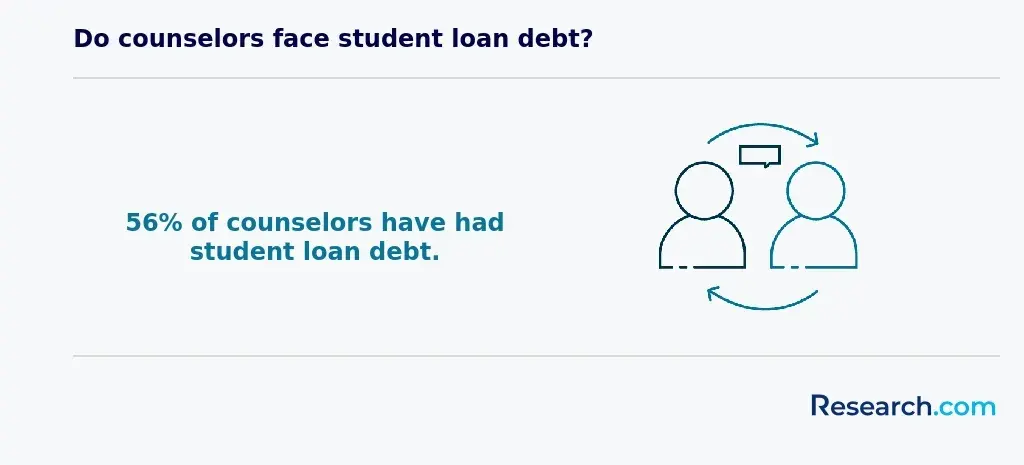
Student debt is another practical concern for counseling professionals. One survey reported that 56% or more than half of all counselors have had student debt, as shown in the graphic below.
How much can you earn as a marriage and family therapist in Hawaii?
Marriage and family therapist pay in Hawaii depends on employer type, island, licensure status, experience, specialty, caseload, reimbursement rates, and whether the therapist works for an agency or owns a practice. The salary figures reported in the source material vary: one estimate places the average annual salary at approximately $66,000 as of 2023, while another lists an average of approximately $61,000 and a median around $58,000. The national average salary cited is about $55,000.
Salary figures cited for MFTs
- Average salary in Hawaii: approximately $66,000 as of 2023
- Alternative average salary in Hawaii: approximately $61,000
- Median salary in Hawaii: around $58,000
- National average salary: about $55,000
- Possible higher earnings: upwards of $80,000 in private practice or specialized clinics
| Work setting | Potential advantages | Financial considerations |
| Healthcare and social assistance | Access to interdisciplinary teams, client referrals, and structured employment. | Pay may be tied to agency budgets, insurance contracts, and productivity expectations. |
| Educational services | Opportunities to support students, families, and campus communities. | Roles may follow academic calendars or institutional salary structures. |
| Government | Potentially stable employment, benefits, and public-service career paths. | Hiring processes can be competitive and may require specific experience. |
| Private practice | Greater control over niche, schedule, fees, and clinical approach. | Income can fluctuate and depends on referrals, billing, cancellations, expenses, and insurance participation. |
Where earnings may differ in Hawaii
- Honolulu: The state capital and largest city offers more healthcare, education, and private practice opportunities, but competition and living costs can be significant.
- Kailua: Demand for mental health services in suburban communities may support clinical opportunities.
- Hilo: Community-focused services can create roles for therapists who want to work outside Oahu.
When evaluating salary, do not look at income alone. Compare rent or mortgage costs, commuting, professional liability insurance, continuing education, supervision fees if applicable, student loans, taxes, and health benefits. A lower-paying role with strong benefits and supervision may be a better early-career choice than a higher-paying role with unstable hours.
What is the job market like for a marriage and family therapist in Hawaii?
The job market for marriage and family therapists in Hawaii is favorable but not simple. Demand for behavioral health care is growing, and the U.S. Bureau of Labor Statistics projects 22% employment growth for MFTs from 2020 to 2030. At the same time, jobs can be concentrated in certain areas, and competition may be stronger in urban markets such as Honolulu.
What is driving demand?
- Greater mental health awareness: More individuals, couples, and families are seeking professional help for anxiety, depression, trauma, parenting strain, relationship conflict, and life transitions.
- Need for culturally responsive care: Hawaii’s diverse communities need therapists who can work respectfully across cultures, languages, family structures, and community traditions.
- Family-centered treatment models: Employers increasingly recognize that relational context matters in mental health care.
- Telehealth access: Virtual therapy can help reach clients outside major population centers, though therapists must follow legal and ethical requirements.
Students comparing therapy careers in the state may also review Hawaii LPC careers to understand how licensed professional counseling compares with marriage and family therapy.
Job market factors to evaluate before enrolling
| Factor | Questions to ask |
| Supervised experience availability | Can graduates find qualified supervisors and appropriate clinical sites on the island where they live? |
| Employer concentration | Are jobs available in community agencies, hospitals, schools, government programs, or private practices near you? |
| Cultural fit and training | Does the program prepare therapists for Hawaii’s diverse family systems and local community contexts? |
| Compensation and benefits | Does the salary support Hawaii’s cost of living after taxes, loans, insurance, and housing? |
| Competition | Are you entering a crowded urban market, or is there stronger need in a less-served community? |
Career growth is possible for therapists who build specialized skills in areas such as trauma-informed care, couples therapy, substance abuse counseling, child and adolescent treatment, military family support, or culturally grounded practice.
What career and advancement opportunities are available for a marriage and family therapist in Hawaii?
Marriage and family therapy can lead to clinical, supervisory, administrative, educational, consulting, and private practice roles. The best path depends on whether you want direct client work, leadership responsibility, program development, teaching, or business ownership. Readers comparing counseling paths may find it useful to explore what it means to become a licensed counselor in Hawaii alongside MFT licensure.
Common career stages for MFTs in Hawaii
| Career stage | Possible roles | How to prepare |
| Entry level | Community health therapist, school-based therapist, agency clinician, intake therapist. | Prioritize supervision quality, documentation skills, crisis training, and exposure to diverse client concerns. |
| Experienced clinician | Couples therapist, family therapist, trauma-informed clinician, substance use-focused therapist, group practice clinician. | Develop a specialty, pursue continuing education, and build referral relationships. |
| Supervisory or program roles | Clinical supervisor, program coordinator, training lead, community outreach coordinator. | Build leadership skills, learn compliance requirements, and gain experience supporting newer clinicians. |
| Senior leadership | Director of clinical services, behavioral health manager, nonprofit executive director. | Strengthen budgeting, staff management, grant writing, strategic planning, and quality assurance skills. |
| Independent practice | Private practice owner, group practice founder, consultant, workshop facilitator. | Learn business planning, insurance billing, marketing, risk management, and practice operations. |
Some MFTs also work as cultural competency specialists, consultants, educators, or trainers. These roles may be especially relevant in Hawaii because effective care often depends on understanding family identity, community relationships, place-based values, and cross-cultural communication.
The Bureau of Labor Statistics has anticipated a 22% growth in employment for MFTs by 2029, reinforcing that the field offers opportunities for trained professionals. Still, advancement depends on licensure status, experience, reputation, supervision, specialty, and local hiring needs. Students seeking graduate options can compare the best online counseling master's degrees when evaluating flexible pathways into the mental health field.
Many therapists first encounter the MFT field during college. According to the American Association for Marriage and Family Therapy, 52% of new therapists first learned about marriage and family therapy in college. Smaller groups learned about it before college or during graduate school, at 9%, while 1% discovered it after beginning another career. The graphic below summarizes those findings.
What distinguishes marriage and family therapy from related professions?
Marriage and family therapy is defined by its focus on relationships, systems, and interaction patterns. While counselors, psychologists, and social workers may also treat individuals and families, MFTs receive specialized preparation in how couples, parents, children, extended family members, and broader systems influence mental health.
| Profession | Typical focus | When it may be the better fit |
| Marriage and family therapy | Couples, families, relational systems, communication, conflict, attachment, and family dynamics. | You want to specialize in relationship-based clinical work. |
| Professional counseling | Individual mental health, coping skills, life transitions, emotional concerns, and sometimes family or group therapy. | You want broad counseling preparation across client populations. |
| Social work | Clinical care plus case management, advocacy, community systems, and social services. | You want to combine therapy with social support, resource navigation, and systems advocacy. |
| Psychology | Assessment, diagnosis, research, therapy, testing, and psychological science. | You want deeper training in psychological assessment, research, or doctoral-level practice. |
If you are still comparing helping professions, a side-by-side guide to social work vs counseling can clarify how training models, responsibilities, and career outcomes differ.
How do marriage and family therapy and psychology licensure paths differ in Hawaii?
The MFT and psychology pathways in Hawaii serve different professional goals. Marriage and family therapy training emphasizes systemic assessment, couples and family interventions, and relational treatment planning. Psychology licensure generally involves broader psychological assessment, research preparation, diagnostic training, and a different academic route.
Choose the MFT path if your primary interest is helping couples and families improve relationships, communication, parenting, and relational functioning. Consider psychology if you want doctoral-level preparation, psychological testing, research-intensive training, or a broader assessment role. For a closer look at psychology requirements, review the guide to psychologist education requirements in Hawaii.
What educational resources and institutions can support aspiring marriage and family therapists in Hawaii?
Choosing the right program is one of the highest-stakes decisions in this career path. The program should meet licensing requirements, offer meaningful clinical placement support, and prepare students to work with Hawaii’s diverse communities. Do not choose a school based only on convenience, tuition, or name recognition.
Questions to ask before choosing an MFT program
- Does the curriculum satisfy Hawaii’s marriage and family therapist licensing requirements?
- Is the program accredited or otherwise recognized by relevant professional or licensing bodies?
- How many practicum hours are included, and what types of clients do students serve?
- Does the school help students find local supervision and field placements?
- How does the program teach cultural responsiveness in Hawaii’s communities?
- What are graduation rates, licensure exam support options, and career services like?
- Can online students complete practicum and supervision requirements where they live?
- What is the total cost, including fees, travel, books, technology, and supervision-related expenses?
The University of Hawaii at Manoa is one institution often associated with behavioral health and psychology education in the state, and Chaminade University is also noted for relevant training pathways. Students exploring broader mental health programs can review psychology programs in Hawaii to compare institutions, academic options, and related fields.
Professional organizations can also support your development. The Hawaii Psychological Association and the American Association for Marriage and Family Therapy offer educational materials, events, networking opportunities, and professional guidance. Mentorship, workshops, and practicum connections can be as valuable as coursework because they help students understand how therapy is actually practiced across the islands.
How can insights from criminal psychology enhance your therapeutic practice in Hawaii?
Marriage and family therapists sometimes work with clients affected by violence, coercive control, trauma, legal stress, substance use, or court involvement. Understanding concepts from criminal psychology can help therapists recognize risk factors, document appropriately, collaborate with other professionals, and maintain safety-focused treatment plans.
This does not mean an MFT becomes a forensic psychologist. Rather, selected knowledge from related fields can improve assessment and referral decisions. If you are exploring adjacent behavioral health careers or compensation context, the guide to criminal psychology salary in Hawaii may provide additional perspective.
How is telehealth transforming marriage and family therapy practice in Hawaii?
Telehealth has become especially relevant in Hawaii because geography can limit access to in-person therapy. Virtual care can help clients on different islands, people with transportation barriers, families with demanding schedules, and those in underserved communities connect with licensed professionals.
Telehealth benefits and cautions for MFTs
| Potential benefit | Practice caution |
| Improves access for clients outside major cities. | Therapists must confirm client location, emergency contacts, and crisis procedures. |
| Allows couples or family members in different places to join sessions. | Confidentiality and privacy are harder to manage when clients attend from separate locations. |
| Supports flexible scheduling. | Technology problems can interrupt emotionally intense sessions. |
| May reduce travel time and missed appointments. | Therapists must use secure platforms and follow privacy rules. |
Telehealth does not eliminate the need for cultural responsiveness, informed consent, documentation, and legal compliance. Professionals considering broader community-based roles can also learn about how to become a social worker in Hawaii.
What business steps should you take to successfully launch your practice in Hawaii?
Private practice can offer autonomy, but it also turns the therapist into a business owner. Before launching, confirm that you meet the MFT license requirements in Hawaii and understand the legal, financial, administrative, and clinical responsibilities of independent work.
Private practice startup checklist
- Define your niche: Decide whether you will focus on couples therapy, family conflict, parenting, trauma, military families, young adults, substance use, or another area.
- Study local demand: Assess whether your services fit the needs of the community where you plan to practice.
- Estimate startup and monthly expenses: Include office space, telehealth software, insurance, marketing, records systems, billing tools, taxes, and continuing education.
- Choose a billing model: Decide whether to accept insurance, use private pay, join payer panels, or offer a mix.
- Create compliant forms: Prepare informed consent, privacy notices, telehealth consent, cancellation policies, and emergency procedures.
- Build referral relationships: Connect with physicians, schools, attorneys, clergy, community organizations, psychiatrists, and other therapists.
- Track outcomes and finances: Monitor client progress, no-shows, revenue, expenses, and referral sources.
A common mistake is assuming clinical skill alone will sustain a practice. Successful private practitioners also understand scheduling, client acquisition, documentation, billing, risk management, and ethical marketing.
How can integrating substance abuse counseling enhance your practice in Hawaii?
Relationship distress and substance use concerns often overlap. Couples and families may seek therapy because substance use has contributed to conflict, mistrust, financial stress, parenting concerns, trauma, or safety issues. MFTs who understand substance abuse counseling concepts can better screen, refer, coordinate care, and support family systems affected by addiction.
Integrating these skills does not mean practicing outside your competence. It means developing enough knowledge to identify co-occurring concerns, collaborate with substance use specialists, and incorporate family-based support where appropriate. For therapists considering a specialized pathway, Research.com offers a guide on how to become a substance abuse counselor in Hawaii.
What challenges should you consider as a marriage and family therapist in Hawaii?
The MFT career can be deeply meaningful, but students should enter with a realistic view of the challenges. Hawaii’s cultural richness, geographic realities, high living costs, and workforce needs create both opportunities and pressures.
Major challenges and better ways to prepare
| Challenge | Why it matters | How to prepare |
| Graduate education costs | Tuition can range from $20,000 to $60,000, and many students also face living expenses and lost work hours. | Compare total program cost, scholarships, employer tuition support, transfer policies, and flexible study options. |
| High cost of living | Hawaii’s cost of living can make early-career salaries feel tighter than expected. | Create a budget using local housing, transportation, loan, insurance, and tax estimates. |
| Supervision access | Licensure depends on supervised experience, and availability may vary by island and setting. | Ask programs and employers how graduates typically secure supervision. |
| Complex family dynamics | Therapists may work with blended families, multigenerational households, military families, single-parent homes, and cross-cultural couples. | Choose training with strong family systems, multicultural, and trauma-informed coursework. |
| Infidelity and high-conflict cases | Couples therapy can involve betrayal, emotional escalation, safety concerns, and difficult decisions. | Pursue specialized training in couples therapy, domestic violence screening, and crisis management. |
| Vicarious trauma | Repeated exposure to client trauma can affect the therapist’s emotional health. | Use consultation, supervision, workload boundaries, personal therapy, and sustainable self-care routines. |
Students concerned about cost or flexibility may compare programs listed among the best online counseling master's degrees, but they should verify that any online option can support Hawaii licensure requirements.
What else should I consider when pursuing a career as a marriage and family therapist in Hawaii?
Before committing to the MFT route, compare it with related mental health professions. Licensed mental health counselors, social workers, psychologists, school psychologists, substance abuse counselors, and speech-language pathologists may work with overlapping client concerns but follow different training and licensure pathways.
If your interests include individual counseling, diagnosis, group therapy, or broader mental health treatment beyond relational systems, it may help to study how to become a mental health counselor in Hawaii. The right choice depends on the population you want to serve, the type of clinical work you want to do, and the license that best matches your long-term goals.
Common mistakes to avoid
- Choosing a program before checking licensure alignment: Always confirm Hawaii requirements with the licensing authority and the school.
- Looking only at tuition: Total cost includes fees, books, travel, technology, supervision, exam fees, lost income, and living expenses.
- Assuming online programs automatically qualify: Online coursework may be acceptable, but practicum and supervision must still meet state rules.
- Ignoring cultural preparation: Clinical theory is not enough; effective practice in Hawaii requires cultural humility and local awareness.
- Waiting to plan for supervised hours: Identify potential clinical sites and supervisors early.
- Assuming salary outcomes are guaranteed: Earnings depend on employer, experience, location, licensure, caseload, reimbursement, and business skills.
What are the insurance and reimbursement considerations for marriage and family therapists in Hawaii?
Insurance participation can shape an MFT’s income, caseload, administrative burden, and client access. Some therapists join insurance panels to reach more clients, while others use private pay, sliding-scale fees, employee assistance program referrals, or agency employment.
| Payment model | Advantages | Trade-offs |
| Insurance panels | Can increase referrals and make therapy more affordable for insured clients. | Requires credentialing, billing, documentation, claim follow-up, and acceptance of payer rates. |
| Private pay | More control over fees, policies, and clinical documentation style. | May limit access for clients who cannot pay out of pocket. |
| Agency employment | Billing, benefits, and referrals may be handled by the employer. | Therapists may have productivity requirements or less schedule flexibility. |
| Hybrid model | Allows a mix of access, revenue sources, and professional flexibility. | Requires careful tracking of policies, billing procedures, and client communications. |
Early-career therapists should learn the basics of payer credentialing, diagnosis coding, documentation standards, reimbursement timelines, denied claims, and client billing policies. For broader licensing and career planning guidance, review how to become a therapist in Hawaii.
How can ongoing professional development and mentorship support your career as a marriage and family therapist in Hawaii?
Continuing education is not just a renewal requirement. It is how therapists stay competent as clinical research, telehealth rules, ethics standards, community needs, and treatment models evolve. In Hawaii, mentorship is especially valuable because therapists may navigate small professional networks, multicultural practice, rural access issues, and complex family systems.
Professional development options to consider
- Ethics courses that satisfy the 6-hour ethics requirement within the 45 hours of continuing education every three years.
- Training in couples therapy, family systems, trauma-informed care, domestic violence screening, grief, child and adolescent therapy, and substance use.
- Consultation groups with experienced MFTs and interdisciplinary clinicians.
- Supervision training if you plan to support future therapists.
- Workshops on telehealth, documentation, insurance billing, and private practice operations.
- Cultural humility training grounded in Hawaii’s communities and histories.
Some professionals also explore faith-informed counseling or pastoral care models. If that is relevant to your goals, you may compare alternative pathways such as how to become a Christian counselor without a degree, while remembering that protected clinical titles and independent therapy practice still depend on state licensure rules.
How can interdisciplinary collaboration with school psychologists enhance your practice in Hawaii?
Many family concerns appear first in school settings. Children and adolescents may show distress through academic problems, behavior changes, attendance issues, peer conflict, anxiety, or family stress. Collaboration with school psychologists can help MFTs understand developmental, educational, and behavioral factors that affect the whole family system.
Effective collaboration may include referrals, coordinated treatment plans, parent consultations, crisis support, and communication with school teams when families provide consent. Therapists interested in education-based mental health work can learn more about how to become a school psychologist in Hawaii.
Can diversifying your therapeutic skillset improve client outcomes?
Broader clinical knowledge can make an MFT more effective, especially when families present with overlapping communication, developmental, trauma, substance use, medical, school, or behavioral concerns. Skill diversification should be intentional: add training that strengthens your core practice rather than chasing unrelated credentials.
For example, families may struggle with communication patterns that are shaped by language development, speech differences, neurodevelopmental conditions, or cognitive processing challenges. Understanding when to refer to a speech-language professional can improve care coordination. If you are interested in that pathway, review what it takes to become a speech language pathologist in Hawaii.
What do marriage and family therapists say about their careers in Hawaii?
Marriage and family therapists in Hawaii often describe the work as relationship-centered, community-connected, and personally meaningful. Many value the opportunity to serve families in a place where culture, land, kinship, and community identity can play a major role in healing.
-
: "
The setting can support openness in therapy, but the real work comes from trust, cultural respect, and helping clients feel safe enough to speak honestly. Linda
"
-
: "
Incorporating values such as family, care, and connection can make therapy feel more relevant for clients when it is done respectfully and without assumptions. Kimberly
"
-
: "
As more people recognize the importance of mental health, the work feels purposeful. The need is real, and so is the responsibility to practice with humility. Malia
"
Programs connected to institutions such as the University of Hawaii at Manoa can help students build a foundation in behavioral health, but the best preparation combines graduate education, supervised clinical experience, ethical judgment, cultural humility, and long-term professional development.
Related Articles for Nearby States
- 2027 How to Become a Marriage and Family Therapist in Alaska: Requirements & Certification
- 2027 How to Become a Marriage and Family Therapist in California: Requirements & Certification
- 2027 How to Become a Marriage and Family Therapist in Oregon: Requirements & Certification
- 2027 How to Become a Marriage and Family Therapist in Washington: Requirements & Certification
- 2027 How to Become a Marriage and Family Therapist in Nevada: Requirements & Certification
- 2027 How to Become a Marriage and Family Therapist in Arizona: Requirements & Certification
- 2027 How to Become a Marriage and Family Therapist in Idaho: Requirements & Certification
- 2027 How to Become a Marriage and Family Therapist in Utah: Requirements & Certification
- 2027 How to Become a Marriage and Family Therapist in Montana: Requirements & Certification
- 2027 How to Become a Marriage and Family Therapist in Wyoming: Requirements & Certification
Key Insights
- Hawaii requires serious preparation. The MFT path includes a qualifying graduate degree, supervised clinical experience, the national MFT exam, and state licensure through the Hawaii Department of Commerce and Consumer Affairs.
- Verify before you enroll. Do not assume a program meets Hawaii requirements because it is online, convenient, or accredited. Ask how the curriculum, practicum, and supervision structure align with Hawaii licensure.
- Salary must be viewed against cost of living. Reported Hawaii MFT salary figures include approximately $66,000, approximately $61,000, and a median around $58,000, but Hawaii’s cost of living index of 185.8 makes financial planning essential.
- Cultural competence is not optional. Effective therapy in Hawaii requires humility, awareness of local and diverse family systems, and the ability to adapt evidence-based care to each client’s context.
- Career options are broad. MFTs can work in agencies, schools, healthcare settings, government programs, private practice, supervision, consulting, or leadership roles.
- Private practice requires business skills. Clinical training alone is not enough; therapists must understand billing, insurance, marketing, documentation, legal compliance, and client acquisition.
- Ongoing mentorship protects your career. Consultation, continuing education, and supervision help therapists manage complex cases, avoid isolation, and reduce the risk of burnout or vicarious trauma.
References:
- Blake, P. (2020, November 3). Career pathways in marriage and family therapy. Marriage and Family Therapist Career.
- CareersinPsychology.org. (2013, May 1). Hawaii requirements for licensed marriage and family therapists. CareersinPsychology.org.
- CCA Hawaii. (2024). Licensed marriage and family therapist information. Hawaii Department of Commerce and Consumer Affairs.
- HawaiiMFT.org. (2024). Licensure guidance for marriage and family therapists in Hawaiʻi. HawaiiMFT.org.
- MFT-License.com. (2020, November 18). Hawaii MFT licensing requirements. MFT-License.com.
- Noodle.com. (2020, February 3). Benefits and drawbacks of becoming a marriage and family therapist. Noodle Education.
- OnlineMFTPrograms.com. (2024, March 1). Marriage and family therapy programs in Hawaii. OnlineMFTPrograms.com.
Other Things You Should Know About Becoming a Marriage and Family Therapist in Hawaii
To become licensed as a Marriage and Family Therapist in Hawaii in 2027, individuals must earn a master's or doctoral degree in marriage and family therapy, complete 3,000 supervised practice hours, and pass the national licensing exam. Additionally, licensure candidates must apply to the Hawaii Department of Commerce and Consumer Affairs for formal certification.
In Hawaii, Marriage and Family Therapists must complete 45 hours of continuing education every triennial renewal period to maintain their license. These hours should include ethics training and courses relevant to the profession to stay compliant with state regulations.