2027 Hawaii MFT Licensing, Certifications, Careers and Requirements

Co-Founder and Chief Data Scientist
If you want to become a licensed marriage and family therapist in Hawaii, the main decision is not simply whether the career is meaningful. It is how to choose the right graduate program, complete supervised clinical training, pass the required exams, and avoid delays caused by Hawaii’s state-specific licensing rules. The path can be especially complex for students who study online or outside the state because program accreditation, coursework, practicum expectations, and supervised hours must still align with Hawaii requirements.
This guide explains what an MFT license allows you to do in Hawaii, the education and supervised experience you need, how long the process may take, what costs to plan for, and how to evaluate whether this career path fits your goals. It also covers practical issues that matter in Hawaii, including cultural competence, telehealth, school-based opportunities, financial aid, related counseling credentials, and career outlook.
Quick answer: How do you become an MFT in Hawaii?
To become a licensed marriage and family therapist in Hawaii, you generally need a master’s or doctoral degree in marriage and family therapy or a closely related field, at least 3,000 hours of supervised clinical experience, and passing scores on the required MFT examination process. Applicants should verify requirements directly with the Hawaii Department of Commerce and Consumer Affairs because licensing rules, fees, forms, and renewal requirements can change.
| Requirement area | What Hawaii MFT applicants should confirm |
| Graduate education | Whether the degree is in marriage and family therapy or a closely related field and whether the curriculum satisfies Hawaii licensing standards. |
| Supervised experience | Whether the required 3,000 supervised clinical hours include the right type of client contact and qualified supervision. |
| Exams | Which national and state-specific exams apply before submitting or completing the license application. |
| Renewal | How many continuing education hours are required and what topics must be included. |
| Career fit | Whether you want to work with couples, families, children, school communities, or clients with complex relational and behavioral concerns. |
Key things to know before pursuing Hawaii MFT licensing
- Hawaii has documented need for mental health professionals, including marriage and family therapists. One cited Hawaii Department of Health figure reports about 15 licensed MFTs per 100,000 residents, compared with a national average of 30 per 100,000.
- Salary figures vary by source, role, and setting. The article’s cited data includes an average salary of approximately $60,000 per year, while other cited wage figures for Hawaii MFTs exceed $70,000 annually and include an average annual salary of $71,890.
- Several outlook figures are cited for Hawaii and the national field. The article references projected growth of 22% from 2020 to 2030, 14% from 2022 to 2032, and an increase from 1,000 positions in 2020 to 1,250 by 2030.
- Common employment settings include private practice, community health organizations, hospitals, schools, nonprofit agencies, and educational institutions.
- Hawaii’s cultural context matters. MFTs often work with families shaped by Native Hawaiian traditions, multicultural communities, intergenerational households, and strong community-based values.
- What does an MFT license allow you to do in Hawaii?
- What education do you need for Hawaii MFT licensure?
- What are the main Hawaii MFT licensing steps?
- How does Hawaii MFT license renewal work?
- How long does Hawaii MFT licensure usually take?
- How does Hawaii’s culture shape MFT practice?
- What costs should MFT applicants in Hawaii expect?
- How can telehealth support MFT practice across Hawaii?
- How is marriage and family therapy different from other counseling roles?
- Can MFTs add substance abuse counseling skills?
- Which certifications can strengthen an MFT practice?
- Can criminal psychology knowledge help MFTs?
- What financial aid options may support MFT training?
- Can social work training complement MFT practice?
- What legal and ethical issues should Hawaii MFTs watch?
- Where can MFTs work in Hawaii?
- What is the job outlook for MFTs in Hawaii?
- How much can MFTs earn in Hawaii?
- What questions should you ask before choosing this career?
- Can school psychologist credentials support MFT work?
- Can school counselor credentials expand MFT opportunities?
What does an MFT license allow you to do in Hawaii?
A Hawaii marriage and family therapist license authorizes qualified professionals to provide therapy focused on relationships, family systems, couples, children, and individuals whose concerns are connected to interpersonal patterns. Unlike general helping roles, licensure matters because it signals that the therapist has met state standards for graduate education, supervised clinical practice, examination, and professional conduct.
Licensed MFTs in Hawaii commonly help clients with marital conflict, parenting stress, family communication, grief, trauma, life transitions, behavioral concerns, and mental health symptoms that affect relationships. The work is not limited to couples counseling. Many MFTs also provide individual therapy, child and adolescent counseling, and family-based treatment when a relational lens is clinically appropriate.
| MFT responsibility | What it looks like in practice |
| Assessment | Identify presenting concerns, family patterns, relational stressors, safety risks, and treatment needs. |
| Treatment planning | Create goals that may involve communication, conflict resolution, parenting strategies, emotional regulation, or symptom reduction. |
| Psychotherapy | Use evidence-informed interventions with individuals, couples, families, or groups. |
| Collaboration | Coordinate with physicians, schools, social workers, case managers, courts, or community organizations when appropriate. |
| Documentation and ethics | Maintain records, protect confidentiality, obtain informed consent, and follow Hawaii law and professional standards. |
For licensure in Hawaii, candidates must complete a master’s or doctoral degree in marriage and family therapy or a related field, complete at least 3,000 hours of supervised clinical experience, and pass the national MFT exam. Because the state evaluates education and experience carefully, applicants should keep syllabi, practicum documentation, supervision records, and official transcripts organized from the start.
What education do you need for Hawaii MFT licensure?
Hawaii MFT applicants need graduate-level preparation. A bachelor’s degree may be the first academic step, but it is not enough by itself to qualify for independent MFT licensure. Candidates generally need a master’s or doctoral degree in marriage and family therapy or a closely related discipline that includes the coursework and clinical training expected by the licensing board.
Students should pay close attention to accreditation and curriculum fit. Programs accredited by the Commission on Accreditation for Marriage and Therapy Education (COAMFTE) or recognized through the American Association for Marriage and Family Therapy (AAMFT) are often easier to evaluate because their training model is aligned with the profession. However, applicants should not assume that a program automatically satisfies Hawaii requirements simply because it is reputable, online, or accepted in another state.
Examples of Hawaii-based institutions mentioned for aspiring MFTs include the University of Hawaii at Manoa, which offers a Master of Science in Marriage and Family Therapy; Chaminade University, which offers a Master of Arts in Counseling Psychology with a marriage and family therapy focus; and Hawaii Pacific University, which offers a Master of Arts in Counseling with an MFT emphasis. Students considering online or out-of-state options should compare the curriculum against Hawaii licensing requirements before enrolling.
| Program factor | Why it matters for Hawaii licensure | Question to ask before enrolling |
| Accreditation | Accreditation can affect whether coursework is accepted and how easily the board can evaluate the degree. | Is the program COAMFTE-accredited or otherwise clearly aligned with Hawaii MFT requirements? |
| Coursework | Missing required content can delay licensure or require additional classes after graduation. | Can the school provide a course-by-course match to Hawaii licensing standards? |
| Practicum or internship | Clinical training must prepare students for supervised post-graduate practice. | Does the program help Hawaii students secure local placements or approved remote placements? |
| Online format | Online study can increase access, but students still need compliant clinical experience. | How does the program support students living in Hawaii with supervision and fieldwork? |
| Transfer and prior credits | Transfer policies can affect cost and time to completion. | Which previous graduate credits can be accepted, and will they count toward licensure-relevant coursework? |
The Hawaii Association for Marriage and Family Therapy (HAMFT) and AAMFT can be useful professional resources for students seeking networking, continuing education, and updates on the field. The U.S. Bureau of Labor Statistics projection cited in the original source notes 22% growth for marriage and family therapists from 2020 to 2030, which helps explain why many students are exploring this license path.
What are the main Hawaii MFT licensing steps?
The Hawaii Department of Commerce and Consumer Affairs oversees the licensing process for marriage and family therapists. The broad sequence is straightforward: complete the right graduate degree, finish supervised clinical experience, pass required exams, submit the application, and maintain the license through renewal. The details, however, are where applicants often run into delays.
- Earn an eligible graduate degree. Applicants must hold a master’s or doctoral degree in marriage and family therapy or a closely related field from an accredited institution. COAMFTE-accredited programs are especially relevant for this profession.
- Complete supervised clinical experience. Hawaii requires at least 3,000 hours of supervised clinical experience, including at least 1,500 hours of direct client contact. Supervision must be provided by a licensed MFT or another qualified mental health professional who meets state expectations.
- Pass the required examinations. Candidates must pass the Examination in Marital and Family Therapy administered by the Association of Marital and Family Therapy Regulatory Boards (AMFTRB) and the Hawaii Jurisprudence Exam, which covers laws and ethical standards that apply to practice in the state.
Hawaii also places practical importance on cultural competence. MFTs practicing in the state serve families shaped by Native Hawaiian values, Pacific Islander communities, Asian communities, multigenerational households, military families, and residents navigating island-specific access and cost pressures. Cultural humility is not an optional soft skill; it affects assessment, treatment planning, trust, and ethical care.
| Licensing stage | Common mistake | Better approach |
| Choosing a degree | Assuming any counseling-related master’s degree will qualify. | Ask the program and the Hawaii licensing authority how the degree maps to MFT requirements. |
| Tracking hours | Waiting until the end of supervision to organize clinical documentation. | Maintain a running log of total hours, direct client contact, supervisor credentials, and dates. |
| Exam planning | Scheduling the exam late without allowing time for retesting or application processing. | Build exam preparation into your post-graduate supervision timeline. |
| Ethics and law | Relying only on general national ethics training. | Study Hawaii-specific statutes, rules, reporting duties, and telehealth expectations. |
Professional associations such as HAMFT can help candidates understand continuing education options, networking opportunities, and advocacy issues affecting MFTs in Hawaii. Applicants should still use official state licensing materials as the final authority.
How does Hawaii MFT license renewal work?
Renewal keeps an MFT license active and confirms that the therapist continues to meet professional education and conduct standards. In Hawaii, the Department of Commerce and Consumer Affairs manages renewal, and the process typically occurs every two years.
- Continuing education: Licensees must complete 30 hours of continuing education every two years. The cited requirement includes at least 3 hours in ethics and 3 hours in cultural competency.
- Renewal application: MFTs must submit renewal information through the DCCA online system and keep their professional details current.
- Renewal fee: The cited renewal fee is approximately $150, though applicants should confirm the current amount before submitting payment.
- Professional standing: Licensees must disclose whether disciplinary actions or other issues affect their ability to practice.
A practical renewal workflow is simple: select approved continuing education early, save completion certificates, review your license expiration date, complete the online renewal form, pay the fee, and submit before the deadline. Waiting until the final weeks can create avoidable stress, especially if you still need ethics or cultural competency hours.
The cited DCCA-related figure states that, as of 2023, Hawaii had approximately 1,500 licensed MFTs. That number should be read as a snapshot from the cited source rather than a permanent count.
-
: "
“The continuing education requirement looked intimidating at first, but choosing courses that connected directly to my clients made renewal feel useful instead of bureaucratic.”
"
How long does Hawaii MFT licensure usually take?
Most candidates should expect the full path to Hawaii MFT licensure to take several years. The exact timeline depends on whether you study full time or part time, how quickly you complete clinical placement requirements, how supervision is structured after graduation, and how soon you pass the required exams.
A graduate degree in marriage and family therapy or a related field usually takes two to three years. After graduation, the 3,000 hours of supervised clinical experience can take another two years or more, depending on caseload, employment setting, supervisor availability, and whether the hours meet Hawaii’s documentation rules.
Exam preparation and licensing paperwork add additional time. Candidates often need several months to study, register, take the exam, receive results, and complete any remaining application steps. For many applicants, the total path from starting graduate school to obtaining an MFT license in Hawaii is approximately four to six years.
| Stage | Typical time consideration | How to avoid delays |
| Graduate study | Usually two to three years. | Choose a program that clearly prepares students for Hawaii MFT licensure. |
| Clinical training during school | Depends on practicum and internship structure. | Confirm placement availability before enrolling, especially for online programs. |
| Post-graduate supervision | Often two years or more to complete 3,000 hours. | Secure a qualified supervisor and track hours from day one. |
| Exams and application | Can require several months for study, scheduling, and processing. | Prepare early and keep official records ready for submission. |
If you are comparing healthcare and helping-profession timelines, Research.com also offers a guide on how to become an LPN, though nursing licensure is a different pathway with different education and practice requirements.
How does Hawaii’s culture shape MFT practice?
MFT practice in Hawaii requires more than technical competence. Therapists must understand how identity, history, family structure, land, community, and cultural values influence the way clients define problems and healing. Hawaii’s population includes Native Hawaiian, Japanese, Chinese, Filipino, Polynesian, and many other communities, each with distinct traditions and family expectations.
The concept of ʻohana, often understood as family, is central in many therapeutic conversations. Clients may involve extended family members, elders, or community relationships in ways that differ from mainland individual-focused models. Respect for kupuna, collective decision-making, and the desire to maintain harmony can all affect how clients communicate distress, set boundaries, and respond to treatment.
Hawaii’s geography also affects care. Island separation, limited local services in some communities, high living costs, and transportation barriers can increase stress and make consistent therapy harder to access. MFTs need to combine evidence-based care with cultural humility, local knowledge, and practical flexibility.
Students preparing for practice in the state should look for training that includes cultural diversity, community-based care, ethical telehealth, family systems, and trauma-informed work. Those comparing related mental health paths can review Research.com’s guide to mental health counselor credentials in Hawaii.
What costs should MFT applicants in Hawaii expect?
The total cost of becoming an MFT in Hawaii depends heavily on tuition, whether you attend an in-state, out-of-state, online, public, or private graduate program, and how quickly you complete degree and supervision requirements. Licensing costs are only one piece of the budget.
- Application fees: The initial MFT license application fee is cited as typically ranging from $100 to $200.
- Examination fees: The national examination fee is cited as approximately $300.
- Background check: A required criminal background check is cited as costing around $50 to $75.
- Continuing education: After licensure, MFTs should budget for continuing education, with cited costs of around $200 to $500 every two years.
- Renewal fees: Renewal costs are cited as ranging from $100 to $200, with another cited renewal figure of approximately $150.
Using the cited fee ranges, prospective MFTs should plan for approximately $750 to $1,300 or more in licensing-related costs from application through renewal. This does not include tuition, books, technology, transportation, exam preparation materials, lost income during practicum, or supervision-related costs if supervision is not provided by an employer.
| Cost category | Why students underestimate it | Cost-control strategy |
| Graduate tuition | Students focus on per-credit tuition but overlook total credits and fees. | Compare total program cost, not just tuition per course. |
| Clinical placement | Practicum may require travel, schedule changes, or unpaid hours. | Ask how placements work for students living on different islands. |
| Exams | Retesting or prep materials can increase the total cost. | Build exam costs into your graduation-year budget. |
| Licensing fees | Application, background check, and renewal fees arrive at different times. | Create a licensing checklist with due dates and expected payments. |
| Continuing education | CE is recurring, not a one-time cost. | Choose CE that also strengthens your specialty area or employer requirements. |
If you are comparing counseling licensure costs and rules in other states, you may also review Research.com’s guide on how to be an LPC in Missouri.
How can telehealth support MFT practice across Hawaii?
Telehealth can be especially valuable in Hawaii because clients and clinicians may be separated by islands, travel costs, weather, work schedules, or limited local provider availability. For MFTs, secure video-based care can make therapy more accessible to families who would otherwise delay or avoid treatment.
Telehealth does not remove professional obligations. Therapists still need informed consent, confidentiality protections, secure technology, emergency planning, documentation, and compliance with Hawaii rules and applicable privacy laws. Clinicians who provide services across state lines must also understand whether another state’s licensing rules apply.
| Telehealth benefit | Risk to manage |
| Improves access for rural and island communities. | Not every client has private space, reliable internet, or suitable technology. |
| Reduces travel time for families and therapists. | Therapists need clear crisis protocols when the client is not physically nearby. |
| Supports continuity of care during relocation or schedule changes. | Licensure boundaries and jurisdiction rules must be checked before providing care. |
| Can expand specialized services. | Clinical appropriateness should be assessed; not every case is ideal for remote care. |
For a broader overview of the licensing pathway, see Research.com’s guide on how to become a marriage and family therapist in Hawaii.
How is marriage and family therapy different from other counseling roles?
MFTs are trained to view symptoms and distress through relationship systems. That means they often ask how communication patterns, roles, boundaries, attachment, conflict, culture, and family history shape the client’s current concerns. This focus distinguishes MFTs from professionals who primarily use individual, educational, medical, or case-management frameworks.
| Profession | Primary focus | When it may be the better fit |
| Marriage and family therapist | Couples, families, relational systems, and individual concerns connected to relationships. | You want to treat relational conflict, family dynamics, and systemic patterns. |
| Mental health counselor | Individual and group counseling for emotional, behavioral, and mental health concerns. | You prefer a broader counseling identity with strong individual therapy emphasis. |
| Social worker | Clinical care, advocacy, case management, systems navigation, and community resources. | You want to combine therapy with social services, policy, or community intervention. |
| School counselor | Student academic, social-emotional, and career development in school settings. | You want to work primarily inside K-12 education systems. |
If you are deciding between related helping professions, Research.com’s comparison of social work vs counseling can help clarify training models and career options.
Can MFTs add substance abuse counseling skills?
Yes. Substance use concerns often affect couples, parenting, finances, trust, safety, and household stability, so addiction-focused training can be a practical addition to MFT practice. However, MFTs should not move beyond their competence. Specialized continuing education, supervision, and relevant credentials may be necessary depending on the services offered.
In Hawaii, an MFT who regularly works with substance-related concerns may benefit from training in screening, motivational interviewing, relapse prevention, family recovery models, co-occurring disorders, safety planning, and referral coordination. Collaboration with physicians, treatment centers, peer support providers, and case managers can also improve care.
For professionals considering this specialty, Research.com’s guide on how to become a substance abuse counselor in Hawaii explains a related pathway and may help you compare credential options.
Which certifications can strengthen an MFT practice?
Specialized certifications can help MFTs serve clients with more complex needs, but they should be chosen strategically. A certificate is most useful when it aligns with your client population, employer expectations, referral network, and ethical scope of practice.
- Trauma-informed care: Useful for therapists working with abuse, grief, violence exposure, disasters, or intergenerational trauma.
- Crisis intervention: Relevant for community agencies, schools, hospitals, and high-acuity outpatient settings.
- Domestic violence training: Important for therapists who may encounter coercive control, safety planning needs, or court-involved families.
- Child and adolescent therapy: Valuable for MFTs serving schools, families, foster care systems, or youth-focused clinics.
- Telehealth training: Helpful for clinicians serving clients across islands or in underserved areas.
If domestic violence work is part of your intended specialty, review the requirements to become a domestic violence counselor to understand related training considerations.
Can criminal psychology knowledge help MFTs?
Criminal psychology can complement MFT work when families are affected by legal involvement, domestic violence, juvenile justice, risk behavior, incarceration, probation, or court-ordered treatment. MFTs do not need to become forensic psychologists to benefit from understanding risk factors, assessment boundaries, mandated reporting, and the impact of legal stress on family systems.
This knowledge is most useful when paired with careful ethical practice. Therapists should be clear about confidentiality limits, court documentation, role conflicts, custody-related requests, and the difference between therapy and forensic evaluation. Additional training may be needed before accepting court-involved or high-risk cases.
For readers exploring this adjacent field, Research.com provides information on criminal psychology colleges in Hawaii.
What financial aid options may support MFT training?
Students pursuing MFT education in Hawaii should look beyond tuition sticker price. Financial support may include federal aid, institutional scholarships, graduate assistantships, payment plans, employer tuition benefits, professional association awards, and loan programs. The first step for many students is completing the Free Application for Federal Student Aid (FAFSA) and asking each school for a full financial aid estimate.
| Funding option | Best for | What to verify |
| Federal financial aid | Students enrolled in eligible graduate programs. | Whether the school and program qualify for federal aid. |
| Institutional scholarships | Students with strong academic records, service goals, or financial need. | Whether awards are renewable and whether they apply to all terms. |
| Employer support | Working adults already employed in healthcare, education, or social services. | Whether you must remain employed for a set period after receiving tuition support. |
| Payment plans | Students trying to reduce upfront semester costs. | Fees, due dates, and whether plans cover all charges. |
| Professional scholarships | Students committed to underserved communities or specialized practice areas. | Eligibility, deadlines, service commitments, and documentation requirements. |
Students comparing behavioral health credentials may also find it useful to review the BCBA certification requirements in Hawaii, especially if they are interested in behavioral intervention and related services.
Can social work training complement MFT practice?
Social work training can strengthen an MFT’s understanding of community systems, public benefits, case management, advocacy, housing instability, child welfare, and family stressors tied to social conditions. This can be especially helpful in Hawaii, where access, cost of living, and resource coordination may be part of the clinical picture.
MFTs who add social work-informed skills may be better prepared to collaborate with schools, courts, hospitals, nonprofit agencies, and government programs. Still, the two professions have different licensure structures. If you want to practice as a social worker, you must meet social work-specific requirements rather than relying on MFT licensure alone.
For a closer look at that path, see Research.com’s guide to social worker education requirements in Hawaii.
What legal and ethical issues should Hawaii MFTs watch?
Legal and ethical competence is central to safe MFT practice. Hawaii therapists must understand confidentiality, informed consent, documentation, mandated reporting, professional boundaries, cultural respect, telehealth requirements, and supervision rules. These obligations apply whether therapy is delivered in person, online, in a school, in a clinic, or in private practice.
- Confidentiality: Explain privacy limits clearly, especially when working with couples, families, minors, or court-involved clients.
- Informed consent: Clarify fees, treatment approach, records, cancellation policies, telehealth risks, and communication methods.
- Mandated reporting: Know when reporting is legally required and how to document related decisions.
- Telehealth compliance: Use secure platforms, verify client location, and plan for emergencies.
- Scope of competence: Seek supervision, consultation, or referral when cases involve specialized risks.
- Cultural humility: Avoid assumptions about family structure, identity, religion, traditions, or community obligations.
If you are comparing routes into counseling roles, Research.com’s resource on the fastest way to become a counselor in Hawaii can help you understand how different credentials vary in speed, scope, and requirements.
Where can MFTs work in Hawaii?
Licensed MFTs in Hawaii can work in several settings, and the right path depends on whether you prefer clinical depth, school collaboration, community work, private practice autonomy, or interdisciplinary care. Because Hawaii’s communities vary widely by island and local resources, job options may differ between Honolulu and more rural areas.
- Clinical therapist: MFTs may work in health centers and outpatient settings, including organizations such as Kalihi Palama Health Center and Hawaii Behavioral Health.
- Behavioral counselor: Some MFTs work with specific populations, such as children with autism. The Center for Autism in Maui County is cited as an example of an employer seeking family therapy experience.
- Family-focused social service roles: MFT training can be valuable in agencies that serve children, families, courts, and community systems, including the Judiciary and Child and Family Service of Hawaii.
- Private practice: Experienced MFTs may build independent practices, which can offer more flexibility but also requires business, billing, compliance, and referral-management skills.
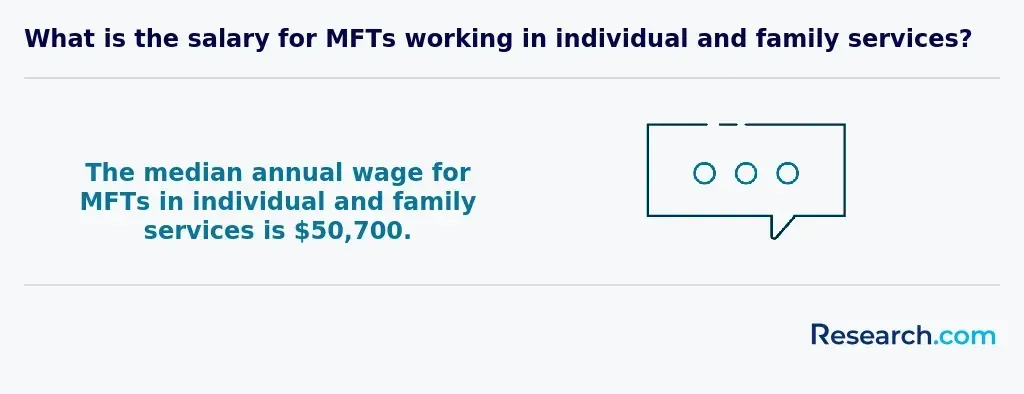
The cited U.S. Bureau of Labor Statistics data reports approximately 90 MFTs practicing in Hawaii, an average annual salary of $71,890, a national average of $63,300, and an average salary of $75,640 in Honolulu. These figures should be interpreted as source-specific estimates, not guaranteed earnings.
Students comparing mental health occupations can explore broader career paths in counseling to see how MFT work differs from other counseling roles.
What is the job outlook for MFTs in Hawaii?
The cited job outlook for Hawaii MFTs is positive, though the article includes multiple figures from different sources and time periods. One cited projection shows employment increasing from 1,000 positions in 2020 to 1,250 by 2030, which equals 25% growth over the decade. The same section cites about 130 annual job openings during that period. Elsewhere, the article cites a projected growth rate of 14% from 2022 to 2032 and a U.S. Bureau of Labor Statistics projection of 22% from 2020 to 2030.
The broader mental health workforce is also expanding. Nationally, employment of substance abuse, behavioral disorder, and mental health counselors is cited as projected to rise by 16% from 2023 to 2033, faster than the average for all occupations.
In Hawaii, demand may be supported by school-based mental health needs, community health shortages, family stressors, telehealth adoption, and greater awareness of therapy. MFTs may find opportunities in the following settings:
- Community mental health centers
- Private practices
- Hospitals and healthcare organizations
- Schools and educational institutions
- Nonprofit mental health and family service agencies
For readers who want to compare timelines and alternative counseling roles, Research.com’s fast counselor career guide can provide additional context.
-
: "
“In school settings, the need is not abstract. Students bring family stress, anxiety, grief, and conflict into the classroom, and trained mental health professionals can change the support system around them.”
"
How much can MFTs earn in Hawaii?
MFT salary prospects in Hawaii can be competitive, but earnings vary by setting, island, experience, specialty, and whether the therapist works in private practice, community care, schools, healthcare, or agency-based roles. The article’s cited figures include salaries exceeding $70,000 annually, an average annual salary of $71,890, and a Honolulu average of $75,640. It also cites an average salary of approximately $60,000 per year and notes that some MFTs in private practice may earn upwards of $80,000.
These numbers should not be treated as guaranteed outcomes. Private practice may offer higher earning potential, but it also brings overhead costs, inconsistent caseloads, marketing demands, insurance billing, rent, technology expenses, and administrative responsibilities. Agency roles may offer lower upside but can provide steadier income, benefits, supervision, and client referrals.
| Salary factor | How it can affect earnings |
| Location | Urban areas such as Honolulu may offer higher salaries than some rural regions, according to cited figures. |
| Experience | New clinicians usually earn less than independently licensed therapists with established specialties. |
| Practice setting | Private practice, hospitals, schools, nonprofits, and community agencies use different pay structures. |
| Specialization | Training in trauma, couples therapy, addiction, youth services, domestic violence, or telehealth may improve marketability. |
| Cost of living | Hawaii salaries should be evaluated against housing, transportation, insurance, and other living costs. |
Prospective students should calculate return on investment before enrolling. Compare total program cost, expected debt, time out of the workforce, licensing fees, supervision availability, and realistic salary ranges in your preferred location. If cost is a major concern, review Research.com’s guide to affordable online degrees for MFT.
What questions should you ask before choosing this career?
Before committing to the MFT path in Hawaii, ask questions that connect licensing requirements to your actual life, finances, and career goals. This is especially important if you plan to attend an online program, relocate between islands, work while studying, or specialize in school-based or community care.
- Does the graduate program clearly meet Hawaii MFT education requirements?
- Will the school help me secure practicum or internship placements in Hawaii?
- Who can supervise my 3,000 clinical hours after graduation?
- How will I document at least 1,500 hours of direct client contact?
- What will the total degree cost be after fees, books, travel, technology, and lost work hours?
- Can I realistically complete supervision while managing work and family responsibilities?
- Do I want to work with couples, families, children, trauma, addiction, schools, or community agencies?
- How will Hawaii’s cultural context shape the way I practice?
- What salary range is realistic in the setting and island where I hope to work?
- Would another credential be a better fit for my goals?
If you are still comparing therapy and counseling routes, learning how to become a therapist in Hawaii can help you evaluate related licensure options.
Can school psychologist credentials support MFT work?
School psychology knowledge can help MFTs who work with children, adolescents, parents, and educational teams. Training in assessment, learning needs, behavioral intervention, and school systems can improve collaboration with teachers, administrators, and special education professionals.
This route is most relevant if you want to work closely with schools or serve youth with academic, behavioral, or developmental concerns. However, school psychologist credentialing is separate from MFT licensure and may involve different education, practicum, internship, and certification requirements.
For a detailed look at that pathway, see Research.com’s guide to Hawaii school psychologist certification requirements.
Can school counselor credentials expand MFT opportunities?
School counseling credentials may be useful for MFTs who want to work more directly in K-12 education. School counselors focus on academic development, social-emotional support, career planning, student advocacy, and collaboration with families and school personnel.
For an MFT, this background can deepen understanding of school culture and youth support systems. It may also broaden employment options if the therapist meets school-specific credentialing requirements. As with school psychology, school counseling is a distinct professional pathway, so students should not assume MFT licensure automatically qualifies them for school counselor positions.
To compare requirements, review Research.com’s guide to school counselor requirements in Hawaii.
Common mistakes to avoid when pursuing Hawaii MFT licensure
| Mistake | Why it can hurt you | What to do instead |
| Choosing a program before checking licensure fit. | You may graduate with missing coursework or clinical requirements. | Ask the school and Hawaii licensing authority for written guidance before enrolling. |
| Looking only at tuition. | Fees, travel, practicum costs, supervision, and exam expenses can change the real cost. | Build a full budget for the entire licensure pathway. |
| Assuming online programs are automatically accepted. | Online format does not guarantee state licensure alignment. | Confirm accreditation, coursework, practicum support, and Hawaii-specific requirements. |
| Waiting to find a supervisor. | Supervision availability can affect how quickly you complete 3,000 hours. | Research employers and supervisors before graduation. |
| Ignoring cultural training. | Poor cultural fit can damage trust and treatment quality. | Seek training in Hawaii’s communities, family systems, and culturally responsive care. |
| Assuming salary estimates are guaranteed. | Actual earnings depend on setting, location, caseload, and experience. | Compare job postings, benefits, cost of living, and career advancement options. |
What graduates say about Hawaii MFT licensing
- “Earning my MFT license in Hawaii changed how I understand clinical work. My clients come from many cultural backgrounds, and that diversity pushes me to use flexible, respectful therapeutic approaches. The professional community also values mental health in a way that makes the work feel meaningful.” - Ian
- “Starting practice in Hawaii gave me a unique perspective on healing. The environment, community values, and family-centered culture all influence the therapy process. The licensing steps were manageable because I connected with local professional resources early.” - Layla
- “As a recent graduate, I found that Hawaii offers both opportunity and responsibility. The demand for services is real, but so is the need for ongoing education, cultural awareness, and collaboration with other professionals.” - Nina
Related Articles for Nearby States
- 2027 Alaska MFT Licensing, Certifications, Careers and Requirements
- 2027 California MFT Licensing, Certifications, Careers and Requirements
- 2027 Oregon MFT Licensing, Certifications, Careers and Requirements
- 2027 Washington MFT Licensing, Certifications, Careers and Requirements
- 2027 Nevada MFT Licensing, Certifications, Careers and Requirements
- 2027 Arizona MFT Licensing, Certifications, Careers and Requirements
- 2027 Idaho MFT Licensing, Certifications, Careers and Requirements
- 2027 Utah MFT Licensing, Certifications, Careers and Requirements
- 2027 Montana MFT Licensing, Certifications, Careers and Requirements
- 2027 Wyoming MFT Licensing, Certifications, Careers and Requirements
References
- cca.hawaii.gov (31 Dec 2023). Marriage And Family Therapist Program. cca.hawaii.gov
- bls.gov. (2024). Marriage and family therapists. bls.gov
- onetonline.org (09 Aug 2024). Hawaii Employment Trends. onetonline.org
Key insights
- Hawaii MFT licensure generally requires graduate education, 3,000 supervised clinical hours, required exams, and ongoing renewal through continuing education.
- Program choice is the biggest early decision. Before enrolling, confirm accreditation, coursework, practicum support, and Hawaii licensing alignment.
- The full path often takes approximately four to six years when graduate school, supervised experience, exams, and application processing are included.
- Costs include more than licensing fees. Tuition, practicum logistics, exam preparation, supervision, renewal, and continuing education should all be part of your budget.
- Hawaii’s cultural context is central to effective MFT practice. Therapists should understand ʻohana, community-centered values, intergenerational family structures, and island-specific access barriers.
- Salary and job outlook figures are encouraging but vary by source, setting, location, and experience. Use cited averages as planning data, not guarantees.
- Telehealth, school collaboration, substance abuse training, trauma-informed care, and related credentials can expand opportunities, but each area requires careful attention to scope, ethics, and state rules.
Other Things You Should Know About Hawaii MFT Licensing
To become a Marriage and Family Therapist (MFT) in Hawaii in 2027, individuals must first obtain a master's degree in marriage and family therapy or a related field. After achieving the degree, candidates are required to accrue supervised clinical experience and pass the national MFT exam. Finally, successful applicants must apply for licensure with the Hawaii Board of Professional Counselors.
In 2027, licensed Marriage and Family Therapists (MFTs) in Hawaii must complete 45 hours of continuing education every three years. This includes a minimum of 6 hours focused on ethics training. This requirement helps ensure that MFTs remain updated on best practices and relevant ethical standards.