2027 Online Digital Photography Degrees With the Most Flexible Enrollment Paths

Co-Founder and Chief Data Scientist
Choosing an online digital photography degree is really a choice about flexibility, portfolio growth, and career direction. The field is changing fast as AI editing, social media content, e-commerce, and hybrid creative roles reshape what photographers need to know. The U.S. Bureau of Labor Statistics reports a May 2024 median annual wage of $42,520 for photographers, which gives prospective students a realistic salary benchmark.
This guide explains degree types, schedules, costs, accreditation, courses, careers, and red flags so you can compare programs with a clearer return-on-investment lens.
Key Things You Should Know
- The most flexible online digital photography paths usually combine asynchronous courses, multiple start dates, part-time pacing, transfer credit, and portfolio-based assignments rather than fixed studio schedules.
- Photographers had a May 2024 median annual wage of $42,520, according to the U.S. Bureau of Labor Statistics, so program cost and portfolio quality matter heavily when evaluating ROI.
- A certificate can be enough for a focused skill upgrade, while an associate or bachelor's degree is usually stronger for students who want broader creative, business, marketing, or media-production roles.
What is an online digital photography degree with flexible enrollment, and who is it best for?
An online digital photography degree is a college program that teaches camera operation, lighting, digital editing, visual storytelling, image critique, portfolio development, and often the business side of creative work. "Flexible enrollment" means the program gives students more control over when they start, how many courses they take, how quickly they progress, or how much previous college credit they can apply.
This type of degree is best for working adults, career changers, parents, military-connected students, freelance creatives, and students who cannot relocate for a campus-based art or media program. It can also fit students who already shoot weddings, portraits, events, products, sports, or social media content but want stronger technical training and a more polished portfolio.
It is not the best fit for everyone. If you need daily in-person studio access, darkroom photography, large-format equipment, or constant face-to-face critique, a campus program may be a better match. If you only need one narrow skill, such as Lightroom workflow or product lighting, a short certificate or noncredit course may be more practical than a full degree.
The table below summarizes common student profiles and the type of flexible photography path that often fits them best. Use it as a first filter before comparing individual schools.
| Student goal | Best-fit flexible path | Why it may work |
| Build entry-level photography skills quickly | Online certificate | Shorter timeline, focused courses, lower commitment than a degree |
| Earn a college credential while exploring creative careers | Associate degree | Combines photography courses with general education and transfer options |
| Move into media, branding, art direction, or advanced freelance work | Bachelor's degree | Offers broader creative, business, communication, and portfolio development |
| Upskill while working full-time. | Part-time asynchronous program | Lets students complete lectures, editing work, and critiques around job schedules |
| Finish a degree after prior college | Degree-completion program | Uses transfer credits to reduce time and total cost |
How do online digital photography degrees work compared with traditional campus programs?
Online digital photography programs usually deliver lectures, demonstrations, critiques, and portfolio reviews through a learning management system. Students shoot assignments independently, upload image files, receive instructor feedback, participate in peer critique, and build a digital portfolio. Some programs may require students to have a DSLR or mirrorless camera, editing software, a calibrated monitor, and basic lighting equipment.
Campus programs tend to offer easier access to studios, lighting labs, print labs, equipment checkout, and in-person critique. Online programs tend to offer better scheduling flexibility and can be more practical for students who already have access to shooting locations, local clients, or home studio equipment.
The comparison below shows where online and campus formats differ most. The better choice depends on your schedule, equipment access, learning style, and career goal.
| Factor | Online digital photography degree | Campus digital photography degree |
| Scheduling | Often asynchronous or evening-friendly | Usually fixed class and studio times |
| Studio access | Students may need personal or local equipment | School facilities may provide lighting, backdrops, and labs |
| Critique format | Recorded, written, or live virtual feedback | In-person critique and studio discussion |
| Networking | Online peers, local clients, virtual communities | Campus faculty, classmates, galleries, and local arts events |
| Best for | Working adults, remote learners, freelancers, degree completers | Students who want immersive studio culture and hands-on facilities |
Students comparing creative programs should also think about whether they want to make images, design visual systems, or combine both. If your main interest is branding, layout, typography, and digital campaigns, an online graphic design degree may align better than a photography-focused program.
What types of online digital photography degrees and certificates can you earn?
Online digital photography education is usually offered at the certificate, associate, and bachelor's levels. Some schools house photography inside broader programs such as visual arts, digital media, commercial photography, graphic communications, or media production. This matters because the program title can affect the courses you take and the careers you are prepared to pursue.
The table below compares the most common credential types. It can help you decide whether you need a focused skill credential or a broader degree.
| Credential type | Typical focus | Best for | Main trade-off |
| Undergraduate certificate | Camera skills, editing, lighting, portfolio basics | Beginners, hobbyists turning professional, working creatives | Faster and cheaper, but less comprehensive than a degree |
| Associate degree | Photography foundations, general education, digital workflow | Students seeking entry-level skills or transfer preparation | More complete than a certificate, but may not cover advanced strategy |
| Bachelor's degree | Advanced photography, visual communication, business, portfolio, electives | Students aiming for broader creative careers or leadership paths | Longer and usually more expensive |
| Degree-completion bachelor's | Upper-division creative and professional courses | Students with prior college credit or an associate degree | Requires careful transfer-credit planning |
| Graduate certificate or MFA-related coursework | Advanced critique, conceptual practice, teaching preparation | Experienced artists or future instructors | May require a strong portfolio and prior degree |
A certificate makes sense when you want practical skills without a long academic commitment. An associate degree is useful if you want a structured start and possible transfer route. A bachelor's degree is usually the stronger choice when you want to combine photography with media strategy, entrepreneurship, art direction, or teaching-related preparation, though teaching requirements vary by institution and role.
Some photography students become interested in architectural imaging, interior documentation, real estate media, or visualizing built environments. If that interest grows into design, planning, or professional architecture preparation, it may be worth comparing photography coursework with an online architecture degree.
How can you tell if an online digital photography program is properly accredited and reputable?
Accreditation is one of the most important checks before enrolling. For degree programs, the institution should hold recognized institutional accreditation. This affects credit transfer, federal financial aid eligibility, graduate school acceptance, and employer confidence. Programmatic art or design accreditation can add another layer of quality review, but it is not always required for photography careers.
Reputation should be evaluated through evidence, not advertising language. A strong online photography program should show clear curriculum requirements, faculty experience, portfolio expectations, technology requirements, student work examples, transfer policies, and transparent tuition information.
Use the following steps before applying. They are especially important for online programs because polished marketing can hide weak academic structure.
- Confirm institutional accreditation through the school's official accreditation page and verify that the accreditor is recognized by federal or higher education authorities.
- Check whether credits are transferable to public or nonprofit institutions you might attend later, especially if you are starting with an associate degree.
- Review faculty portfolios, professional experience, exhibition history, commercial work, or media-production background.
- Ask whether the program includes formal portfolio reviews, instructor critique, and career-facing assignments rather than only lecture-based coursework.
- Request a full list of technology, camera, software, printing, and equipment costs before comparing tuition.
Red flags include vague accreditation claims, pressure to enroll immediately, unclear refund policies, no public curriculum, few examples of student work, unrealistic income promises, or a program that refuses to explain transfer-credit rules. A reputable school should be willing to answer specific questions before you commit.
What enrollment and scheduling options make a digital photography program truly flexible?
A program is not automatically flexible just because it is online. The most flexible online digital photography degrees reduce friction in several areas: start dates, course pacing, assignment timing, transfer credit, portfolio submission, and access to academic support.
The table below ranks common flexibility features by how much they can affect working adults and students with irregular schedules. Look for several of these features together, not just one:
| Flexibility feature | What it means | Why it matters |
| Asynchronous coursework | Lectures and assignments are completed without set meeting times | Best for students balancing work, caregiving, or freelance shoots |
| Multiple start dates | New terms begin several times per year | Reduces waiting time if you miss a fall or spring deadline |
| Part-time pacing | Students can take fewer courses per term | Helps avoid overload during busy work seasons |
| Transfer-friendly policy | Prior college credits can apply toward the degree | Can lower both time to completion and total tuition |
| Portfolio or prior-learning review | Some experience may count toward placement or credit where allowed | Useful for experienced photographers returning to school |
| Short sessions | Courses run in accelerated blocks rather than full semesters | Can speed progress, but may increase weekly workload |
Before choosing a program, ask admissions and academic advising teams direct questions about scheduling. Good questions include whether critique sessions are required live, whether deadlines are weekly or self-paced, whether students can pause enrollment, and whether photography assignments can be completed using local subjects and locations.
One common mistake is choosing the fastest option without checking workload. Accelerated courses can be convenient, but photography assignments require shooting, editing, revision, critique, and resubmission time. If you work full time, a slower part-time path may produce a stronger portfolio than rushing through assignments.
What courses and specializations are typically included in an online digital photography curriculum?
Most online digital photography programs combine technical instruction, creative development, critique, and professional preparation. The best curricula do more than teach camera settings; they help students make intentional images for real audiences and professional uses.
Common courses often include the following areas. These subjects matter because employers and clients usually judge photographers by both technical reliability and visual judgment.
- Camera operation, exposure, lenses, composition, and digital capture workflow
- Lighting for portraits, products, events, interiors, and controlled studio-style shoots
- Digital editing, color correction, retouching, file management, and output preparation
- Visual storytelling, documentary practice, photojournalism, and ethics
- Commercial photography, branding, social media imagery, and client-based assignments
- History of photography, visual culture, critique, and contemporary image-making
- Portfolio development, artist statements, professional presentation, and capstone work
- Business practices, pricing, copyright basics, contracts, marketing, and client communication
Specializations vary by school, but common options include portrait photography, commercial photography, fashion photography, product photography, documentary photography, fine art photography, sports photography, real estate photography, and multimedia production. Programs with video, motion graphics, drone imaging, or social media strategy can be especially useful for students who want hybrid creative roles.
AI-assisted editing is also changing course expectations. Students should learn how to use AI tools responsibly for culling, masking, retouching, upscaling, and workflow efficiency while still developing original judgment, ethical disclosure habits, and copyright awareness. The strongest programs teach technology as a tool, not a substitute for visual thinking.
What are the usual admission requirements for online digital photography degrees?
Admission requirements vary by credential level and school selectivity. Certificate and associate programs are often more accessible, while bachelor's programs may ask for transcripts, a statement of purpose, or a creative portfolio. Portfolio requirements are not always meant to screen out beginners; in some programs, they help faculty place students at the right level.
The table below summarizes typical requirements by program level. Always confirm details with the school because online art and media programs can differ widely.
| Program level | Common admission requirements | What to prepare |
| Certificate | Application, proof of high school completion, basic technology readiness | Camera access, editing software plan, sample images if requested |
| Associate degree | High school diploma or equivalent, transcripts, placement requirements where applicable | Prior college transcripts, financial aid documents, transfer goals |
| Bachelor's degree | High school or college transcripts, possible portfolio, essay, minimum GPA policies | Portfolio of strongest images, statement of goals, transfer-credit evaluation |
| Degree-completion program | Prior college credit, official transcripts, sometimes an associate degree | Course syllabi, credit evaluations, portfolio if required |
| Graduate-level option | Bachelor's degree, advanced portfolio, statement, recommendations | Focused body of work, artistic direction, teaching, or professional goals |
Students with uneven academic records should not assume they are out of options. Some schools offer open admission at the associate level, conditional admission, or pathways that let students build a stronger record before transferring. Students with strong creative experience but limited formal education should ask whether portfolio review or prior-learning assessment is available.
If you want photography to support bilingual media, travel content, cultural organizations, education, or international-facing communications, language skills can widen your creative options. In that case, comparing photography training with Spanish degrees online may help you build a more distinctive profile.
How long do online digital photography degrees take, and what do they cost?
Program length depends on credential level, transfer credit, enrollment intensity, and whether courses run in traditional semesters or shorter terms. A certificate may take a few months to a year, an associate degree often takes about two years of full-time study, and a bachelor's degree commonly takes about four years for first-time students. Degree-completion students may finish faster if many credits transfer.
Cost varies widely by institution, residency status, credit load, and equipment requirements. College Board's 2024-25 published tuition and fee averages show why the school type matters: public two-year colleges often have much lower sticker prices than four-year institutions, while private nonprofit colleges typically charge more. For photography students, the total cost should include gear and software, not only tuition.
These are the main cost categories to compare before enrolling. Ask each school for a written estimate so you can compare programs on the same basis.
- Tuition and mandatory fees, including whether online students pay different rates
- Camera body, lenses, tripod, memory cards, storage drives, lighting, backdrops, and printing needs
- Editing software subscriptions, cloud storage, portfolio hosting, and computer upgrades
- Books, course materials, proctoring fees, graduation fees, and transcript fees
- Lost income or reduced work hours if the program has intensive deadlines
The table below gives a practical timeline and cost comparison by credential type. The ranges are general planning categories, not promises of what any one school will charge.
| Credential | Typical full-time timeline | Cost considerations | Best ROI use case |
| Certificate | Several months to 1 year | Lower tuition exposure, but equipment may still be required | Skill upgrade, portfolio refresh, freelance specialization |
| Associate degree | About 2 years | Often more affordable at public community colleges | Entry-level preparation or transfer to bachelor's study |
| Bachelor's degree | About 4 years | Higher total cost, especially with limited transfer credit | Broader creative, media, business, or leadership goals |
| Degree-completion bachelor's | Often 1 to 2 years after transfer | Depends heavily on accepted credits | Finishing a credential without restarting college |
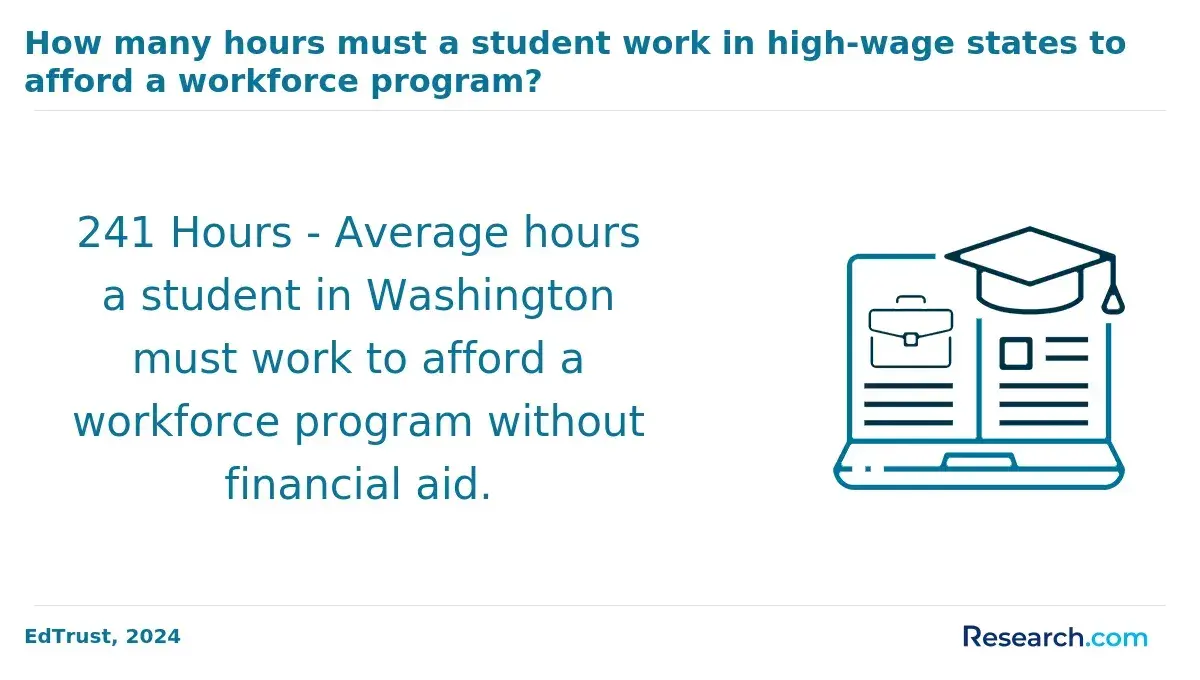
Financial aid can change affordability. The maximum Federal Pell Grant for the 2024-25 award year is $7,395 for eligible students, which can substantially reduce out-of-pocket costs at lower-priced public programs. Still, aid eligibility depends on enrollment status, school participation, financial need, and federal rules, so students should complete the FAFSA and compare net price rather than relying on sticker tuition.
What careers can an online digital photography degree lead to, and what do they pay?
An online digital photography degree can support photography-centered jobs and broader visual media roles. Outcomes depend heavily on portfolio quality, location, specialization, client network, business skills, and willingness to freelance. Many photographers are self-employed or combine photography with editing, video, content production, social media, marketing, or design.
The U.S. Bureau of Labor Statistics reported a May 2024 median annual wage of $42,520 for photographers. That number is a useful benchmark, but it does not capture every path because freelance income can be uneven and hybrid roles may be classified under other media, marketing, or design occupations.
The table below shows common career directions and how a digital photography education may apply. Use it to connect your program choice with a realistic work setting.
| Career path | Typical responsibilities | Helpful preparation |
| Portrait or wedding photographer | Plan shoots, direct subjects, edit images, manage clients, deliver galleries | Lighting, posing, editing workflow, business practices |
| Commercial or product photographer | Create images for brands, catalogs, ads, e-commerce, and campaigns | Studio lighting, retouching, client briefs, color accuracy |
| Photojournalist or documentary photographer | Cover events, communities, news, and long-form visual stories | Ethics, storytelling, captioning, field workflow |
| Real estate or architectural photographer | Photograph properties, interiors, buildings, and spaces | Wide-angle technique, perspective correction, HDR workflow |
| Digital imaging specialist or photo editor | Retouch, organize, optimize, and prepare image assets | Editing software, file management, color correction |
| Content creator or multimedia producer | Produce stills, short-form video, campaigns, and social content | Photography, video basics, branding, analytics awareness |
Students who want higher earning potential should think beyond the word "photographer." Commercial niches, technical product work, real estate media, branded content, and hybrid photo-video roles can sometimes offer more stable client demand than general freelance work. However, no degree guarantees income, and most creative careers require ongoing portfolio development and business outreach.
If sports media interests you, photography can lead to team content, athlete branding, event coverage, or sports journalism. If you are more interested in performance data, scouting, and statistical storytelling than image production, the path to becoming a sport analyst may be a better fit.
What is the job outlook for digital photography professionals in a changing, tech-driven market?
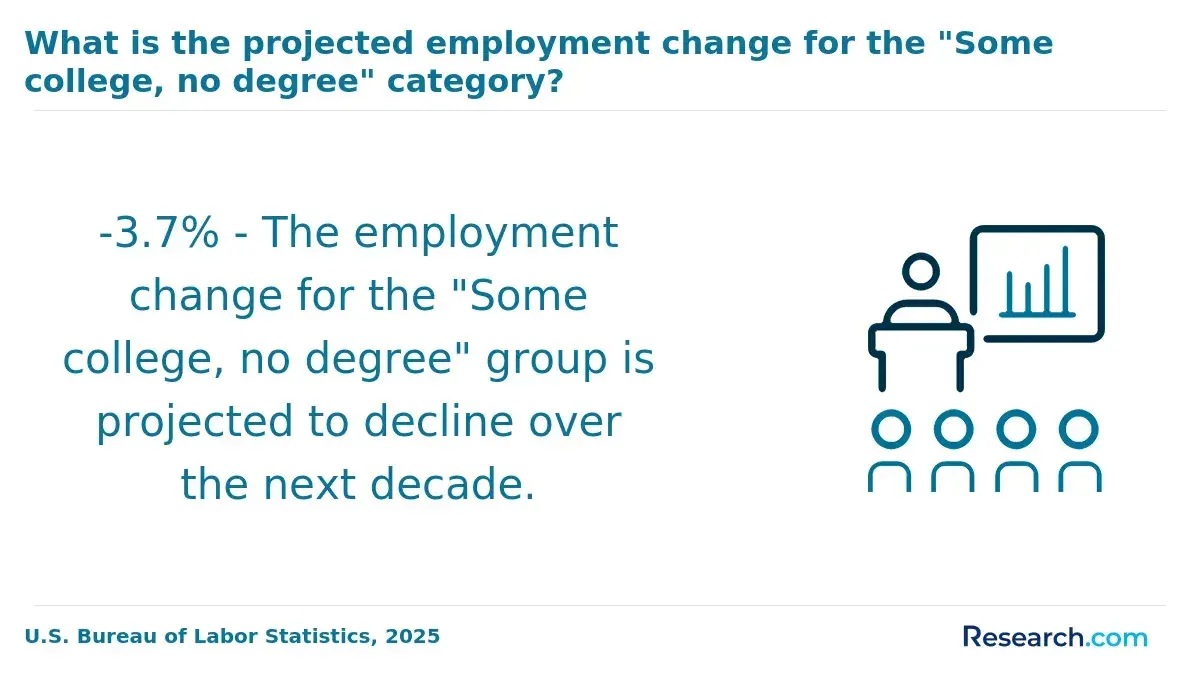
The outlook for digital photography is mixed: demand exists, but competition is strong and technology is changing what clients expect. The U.S. Bureau of Labor Statistics projects photographer employment to grow 4% from 2024 to 2034, which suggests continued opportunities but not a shortage-driven market. Students should treat the degree as one part of a broader career strategy that includes specialization, portfolio quality, networking, and business skills.
AI and automation are reshaping the field most visibly in editing, image generation, background replacement, retouching, and asset management. This does not eliminate the need for photographers, but it raises expectations. Clients may expect faster turnaround, more polished deliverables, short-form video, social-ready crops, and clear usage rights.
Several trends should influence how you choose a program. The strongest programs prepare students for the current market rather than only teaching traditional camera technique.
- Hybrid creative roles are growing in importance, so programs with video, digital media, content strategy, and editing workflows may offer broader career flexibility.
- Commercial clients increasingly need images for e-commerce, social platforms, websites, email campaigns, and paid ads, making marketing literacy valuable.
- AI tools make basic edits faster, so photographers need stronger creative direction, ethical judgment, client communication, and recognizable style.
- Freelance competition remains high, so business courses in pricing, contracts, copyright, taxes, and client management can be as important as technical courses.
- Portfolio evidence often matters more than the credential name, especially for freelance and commercial work.
A smart program choice should match the market you want to enter. If you want gallery-based fine art, prioritize critique, concept development, and exhibition preparation. If you want commercial clients, prioritize lighting, retouching, business, and production workflow. If you want content roles, prioritize programs that include motion, branding, and platform-specific storytelling.
Other Things You Should Know About Digital Photography
Expensive cameras are not necessary for online digital photography students in 2027. Many programs emphasize technical skills and creative vision over equipment. Students often have access to resources, including tutorials for various devices, ensuring learning isn't limited by gear.
It can help show composition, storytelling, and visual taste, especially for beginner-friendly programs. However, degree programs that teach manual exposure, lens choice, lighting, and RAW editing may still require work made with a dedicated camera.
Beginners usually benefit from broad foundations first: lighting, editing, composition, critique, and workflow. Specializing later makes more sense once you understand which subjects, clients, and working conditions fit your strengths.
Many flexible online digital photography degrees accept up to 60 transfer credits from regionally accredited colleges. Schools usually require a minimum 2.0 GPA, and some cap transfer credit at 75 percent of the degree. Official transcripts are reviewed before admission or during the first term.
References
- Top 5 reasons to study a photography degree online https://www.falmouth.ac.uk/news/top-5-reasons-study-photography-degree-online
- Open University Online Courses https://rps.org/qualifications/open-university-online-courses/
- What careers can you do with a Photography degree? | University for the Creative Arts https://www.uca.ac.uk/blogs/careers-with-a-photography-degree/
- Best Online Photography Degrees https://www.onlineu.com/degrees/photography
- Online Photography Degrees | Photography Programs & Courses https://www.onlinecolleges.net/degrees/photography/
- Digital Photography market Size, Share & Outlook to 2034 https://www.marketreportsworld.com/market-reports/digital-photography-market-14722543
- College Certificate vs Online Photography School | Cameraderie https://cameraderie.org/threads/college-certificate-vs-online-photography-school.56322/
- Online Photography Degree and Certificate Programs | Sessions College https://www.sessions.edu/digital-photography-info/
- Top 10 Online Photography Classes You Can't-Miss: From Beginner to Pro https://www.zno.com/blog/top-10-online-photography-classes.html
- Should you Study Photography at College or are There Better Options Now? https://digital-photography-school.com/should-you-study-photography-at-college-or-are-there-better-options-now/