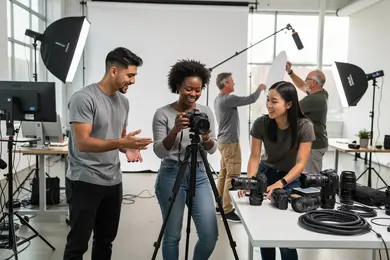
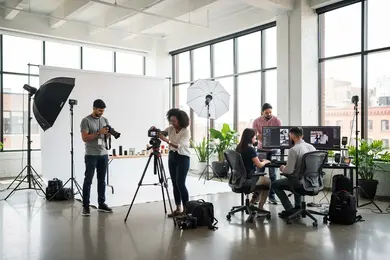
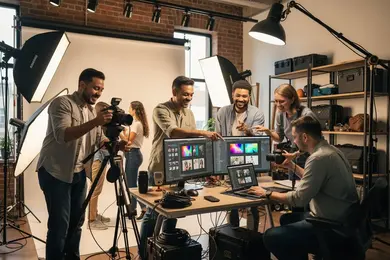
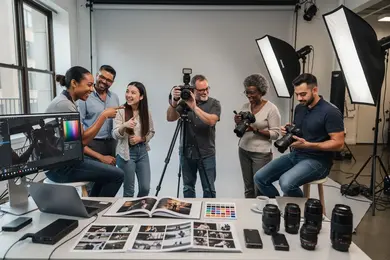
2027 Online Digital Photography Degrees With Fine Art Photography Focus

Co-Founder and Chief Data Scientist
Choosing an online digital photography degree is really a question of fit: do you want technical camera training, a fine art practice, or both? The U. S. Bureau of Labor Statistics reports a 2024 median pay of $42,520 for photographers, but earnings vary widely by portfolio, market, niche, and business skills.
This guide is for students comparing online photography programs with a fine art focus. You will learn how programs work, what they cost, which credentials matter, and how to judge career value before enrolling.
Key Things You Should Know
- Online fine art digital photography degrees combine digital capture, editing, critique, art history, portfolio development, and professional practice rather than focusing only on commercial camera skills.
- College Board's 2024-25 published tuition averages show wide cost differences: about $4,050 at public two-year colleges, $11,610 for in-state public four-year tuition and fees, and $43,350 at private nonprofit four-year colleges.
- BLS data places 2024 median photographer pay at $42,520, so students should evaluate ROI through portfolio quality, local market demand, freelance readiness, and total program cost rather than degree title alone.
What is an online digital photography degree with a fine art photography focus?
An online digital photography degree with a fine art photography focus is a college program that teaches students to create, edit, present, and critique photographic work as a form of artistic expression. It usually includes digital camera operation, lighting, image editing, visual storytelling, art theory, contemporary photography, portfolio development, and exhibition preparation.
The phrase digital photography refers to image-making with digital cameras, software, color-managed workflows, and digital output. The phrase fine art photography refers to photography created primarily to communicate an idea, aesthetic, concept, or personal vision rather than to sell a product, document an event, or satisfy a client brief.
This degree can be a good fit if you want to build a serious art portfolio while also learning practical digital tools used in creative industries. It may be less efficient if your only goal is quick event photography work, social media content production, or camera basics; in those cases, a certificate, workshop sequence, or targeted business training may be cheaper and faster.
The key decision is whether you want a credential that supports long-term artistic development. Fine art programs place heavier emphasis on critique, concept, visual research, and portfolio sequencing than short technical photography courses.
How do online fine art digital photography programs compare to campus-based options?
Online and campus-based photography programs can both be rigorous, but they create different learning environments. The best choice depends on your schedule, access to equipment, need for studio space, and preference for in-person critique.
The table below compares the main differences students should evaluate before choosing an online or campus-based fine art digital photography program. Use it to identify which format fits your learning style and practical constraints.
| Factor | Online fine art digital photography degree | Campus-based photography degree |
| Schedule flexibility | Usually stronger for working adults, parents, military-affiliated students, and learners outside major art-school cities. | Usually more structured, with set studio, lab, and critique times. |
| Studio access | Students may need to supply or locally access cameras, lighting, printers, scanners, and shooting spaces. | Often includes access to campus studios, lighting kits, darkrooms, labs, and print facilities. |
| Critique experience | Critiques may happen through video meetings, recorded presentations, discussion boards, and digital portfolio reviews. | Critiques are often face-to-face, which can be valuable for large prints, installations, and exhibition work. |
| Networking | Networking can be broader geographically but requires more initiative from the student. | Networking may be easier through campus exhibitions, visiting artists, local galleries, and peer studio culture. |
| Best fit | Students who are self-directed, already have basic equipment, and need flexibility. | Students who need hands-on facilities, in-person critique, or access to specialized art-school resources. |
Online study makes the most sense when you can reliably photograph, edit, upload, revise, and discuss work on a weekly basis. Campus study may be better if your intended work depends on large-format printing, alternative processes, gallery installation, or regular access to faculty-supervised studios.
One common mistake is assuming online means less critique. Strong online programs still require students to revise work after faculty and peer feedback; weak programs simply collect assignments without meaningful review. Ask admissions staff how critiques are conducted, how often students meet faculty live, and whether graduating students produce a cohesive portfolio or exhibition-ready body of work.
Which accreditation and institutional credentials should these photography programs have?
The most important credential is institutional accreditation from an agency recognized by the U.S. Department of Education or the Council for Higher Education Accreditation. Institutional accreditation affects financial aid eligibility, credit transfer, graduate school recognition, and how employers or institutions interpret your degree.
For art and design programs, programmatic accreditation from the National Association of Schools of Art and Design can add another layer of quality review, but it is not available or required for every legitimate photography program. A regionally accredited university without programmatic art accreditation may still be a valid choice, especially if the curriculum, faculty, portfolio outcomes, and student support are strong.
Before enrolling, verify credentials directly rather than relying only on marketing copy. These steps help reduce the risk of choosing a school that limits your transfer, aid, or graduate study options:
- Confirm the institution's accreditation status through official U.S. Department of Education or CHEA-recognized listings.
- Ask whether online students receive the same diploma wording as campus students.
- Review faculty biographies for exhibition history, publications, client work, curatorial experience, or graduate credentials in photography or studio art.
- Check whether the program publishes student portfolios, capstone exhibitions, internship examples, or alumni outcomes.
- Ask how transfer credits, prior learning, military credit, and portfolio-based placement are evaluated.
Red flags include vague accreditation language, pressure to enroll immediately, unclear refund policies, missing faculty information, and programs that promise specific salaries or gallery representation. Legitimate schools should be able to explain costs, credits, learning outcomes, and student responsibilities in writing.
What degree levels and pathways exist for studying fine art digital photography online?
Online photography pathways range from short certificates to graduate degrees. The right level depends on your current education, career goal, budget, and whether you need a degree credential or mainly a stronger portfolio.
The table below summarizes common online pathways for students interested in digital photography with a fine art emphasis. It is especially useful if you are deciding between a fast skills route and a longer degree investment.
| Pathway | Typical student goal | Common outcome | When it makes sense |
| Certificate | Learn digital camera, editing, lighting, or portfolio basics. | Focused skill development without a full degree. | Best for hobbyists, career changers testing the field, or working photographers filling skill gaps. |
| Associate degree | Build fundamentals in photography, design, art history, and general education. | Entry-level portfolio and possible transfer to a bachelor's program. | Best for cost-conscious students who want a lower-risk starting point. |
| Bachelor's degree | Develop a broad studio practice, professional portfolio, and art context. | Preparation for creative roles, freelance work, graduate study, or teaching pathways that require further credentials. | Best for students seeking a full undergraduate art education. |
| Master of Fine Arts | Produce advanced creative work and develop a research-driven artistic practice. | Terminal studio degree often used for college-level teaching consideration and professional art practice. | Best for artists with a strong portfolio and clear conceptual direction. |
Students with military benefits or service-related scheduling needs should compare photography options that understand transfer credit, deployment interruptions, and VA education benefits. A dedicated guide to a photography degree online for veterans can help military-affiliated learners ask more targeted questions.
Some students also compare photography with adjacent creative graduate fields. For example, an artist who wants to combine visual images with memoir, criticism, or narrative nonfiction may also explore an online MFA creative writing pathway, while keeping in mind that writing and studio photography lead to different portfolios and professional networks.
A practical way to choose the right pathway is to work backward from your goal. If you need a stronger portfolio for gallery submissions, a certificate or post-baccalaureate studio coursework may be enough. If you want a bachelor's credential for broader employment or graduate school eligibility, a full degree may be more appropriate.
What core courses and studio experiences are included in these online programs?
Most online fine art digital photography programs combine technical production with critical thinking. Students learn how to make images, but they also learn how to explain why the images matter, how they fit into photographic history, and how viewers may interpret them.
Course titles vary by school, but the curriculum usually covers several core areas. These areas matter because they shape both your portfolio quality and your ability to work independently after graduation:
- Digital camera operation, exposure, lens choice, file formats, and image capture workflow.
- Lighting for portraiture, still life, location work, and controlled studio-style setups.
- Digital editing, color correction, retouching, image sequencing, and print preparation.
- History of photography, contemporary art, visual culture, and critical theory.
- Fine art critique, concept development, artist statements, and portfolio presentation.
- Professional practice, including copyright basics, pricing conversations, exhibition submissions, client communication, and artist websites.
- Capstone, thesis, or final portfolio development that demonstrates a coherent body of work.
Online studio experiences often use a cycle of making, uploading, receiving critique, revising, and resubmitting. In strong programs, faculty critique is not limited to technical correctness; it also addresses concept, sequencing, editing choices, visual consistency, and audience impact.
Technology is changing the field quickly. AI-assisted editing, generative image tools, image authentication concerns, and automated cataloging are increasingly relevant to photographers. Students who are interested in the technical side of AI may compare creative technology education with broader fields such as AI PhD programs, although most photography students need practical AI literacy rather than advanced computer science training.
Before enrolling, ask whether the program teaches ethical AI use, copyright awareness, metadata, digital asset management, and portfolio presentation across web, print, and exhibition formats. These skills are increasingly important because clients, galleries, publications, and grant reviewers may want to understand how images were created and edited.
What are typical admission requirements for online fine art digital photography degrees?
Admission requirements depend on degree level and selectivity. Certificate and associate programs may be open admission or require only basic academic documents, while bachelor's completion, BFA, and MFA programs may expect a portfolio and artist statement.
The table below outlines common requirements by pathway. Use it to estimate how much preparation you need before applying.
| Program level | Common admission requirements | What admissions teams are usually evaluating |
| Certificate | Application, proof of prior education, and sometimes basic camera or software access. | Readiness for the course level and ability to complete assignments. |
| Associate degree | High school diploma or equivalent, transcripts, placement information, and general college application materials. | College readiness and eligibility for general education coursework. |
| Bachelor's degree | Transcripts, transfer credit review, portfolio for some programs, personal statement, and possibly letters of recommendation. | Academic preparation, creative potential, and fit with the program's studio expectations. |
| MFA | Bachelor's degree, advanced portfolio, artist statement, letters of recommendation, resume, and sometimes interview. | Artistic maturity, conceptual direction, critique readiness, and potential for independent studio research. |
A strong portfolio does not have to look commercially polished, but it should show intentional choices. Admissions reviewers typically want to see consistency, experimentation, visual awareness, and evidence that you can develop a body of work over time.
Applicants can improve their chances by preparing materials in a deliberate sequence. The following steps are useful because they reduce rushed submissions and help you choose programs that match your goals:
- Review each program's portfolio requirements before selecting images.
- Create a short list of 10 to 20 images that show both technical control and conceptual direction.
- Write an artist statement that explains your interests without overexplaining every image.
- Ask a teacher, mentor, or working photographer for critique before submitting.
- Confirm software, camera, computer, internet, and printing requirements before accepting admission.
A common mistake is applying only to programs with attractive visuals on their websites without checking whether the curriculum fits your intended work. A program strong in commercial photography may not be ideal for conceptual fine art, and a theory-heavy art program may not be enough if you need business training for freelance income.
How long do these programs take, and what tuition and fees should students expect?
Program length depends on degree level, transfer credits, course load, and whether the program is designed for full-time or part-time students. Certificates may take a few months to one year, associate degrees commonly take about two years of full-time study, bachelor's degrees usually take about four years from the first year, and MFA programs often take two to three years.
Tuition varies much more than program length. College Board's 2024-25 national averages show why students should compare total cost carefully: published tuition and fees average about $4,050 at public two-year colleges, $11,610 for in-state students at public four-year institutions, and $43,350 at private nonprofit four-year institutions. These are broad averages, not photography-specific prices, but they provide a useful benchmark when evaluating whether a quoted online tuition rate is high, low, or typical.
Photography students should also budget for costs beyond tuition. The following expenses can affect the real price of the degree and should be included in your comparison:
- Camera body, lenses, memory cards, tripod, lighting, backdrop, calibration tools, and storage drives.
- Computer hardware capable of running image-editing and cataloging software smoothly.
- Software subscriptions or school-provided digital imaging platforms.
- Printing, paper, ink, framing, bookmaking, exhibition, shipping, or portfolio presentation costs.
- Online course fees, technology fees, graduation fees, and transcript fees.
- Travel costs if the program requires campus residencies, exhibitions, internships, or in-person intensives.
The table below summarizes typical time and cost considerations by pathway. It does not replace school-specific pricing, but it can help you ask sharper questions before committing.
| Pathway | Common timeline | Cost factors to compare | Best cost-control strategy |
| Certificate | Several months to one year. | Course fees, software, and equipment. | Use it to test the field before paying for a full degree. |
| Associate degree | About two years full time. | In-district tuition, transferability, and general education requirements. | Choose transferable credits if a bachelor's degree is possible later. |
| Bachelor's degree | About four years full time; shorter with transfer credit. | Per-credit tuition, residency rules, studio fees, and portfolio costs. | Maximize transfer credits and compare total program cost, not just per-credit tuition. |
| MFA | Often two to three years. | Graduate tuition, residency travel, thesis exhibition costs, and assistantship availability. | Apply only when your portfolio and goals justify graduate-level expense. |
To reduce costs, ask schools about transfer credit, prior learning assessment, military credit, employer tuition assistance, scholarships for art students, payment plans, and whether equipment can be rented or borrowed. Veterans comparing multiple fields may also find it useful to understand how military education benefits work in unrelated online programs, such as an online cyber security degree for veterans, because many of the same benefit, transfer, and support questions apply.
What careers can graduates pursue with an online fine art digital photography degree?
Graduates can pursue both art-centered and applied creative roles, but outcomes depend heavily on portfolio strength, location, networking, business skills, and the ability to adapt images for different audiences. A degree can support credibility and structured development, but it does not replace the need to build a visible body of work.
The table below connects common career paths with typical responsibilities. It can help you decide whether a fine art-focused degree aligns with your desired day-to-day work.
| Career path | Typical responsibilities | How a fine art digital photography degree helps |
| Fine art photographer | Create bodies of work, submit to exhibitions, apply for grants, sell prints, and maintain an artist portfolio. | Develops critique skills, visual language, artist statements, and exhibition-ready projects. |
| Editorial or documentary photographer | Produce images for publications, nonprofits, cultural organizations, or long-form storytelling projects. | Builds narrative sequencing, ethical awareness, and visual research skills. |
| Commercial or brand photographer | Create images for products, campaigns, portraits, websites, and marketing materials. | Provides technical image-making and editing skills, though additional business and client training may be needed. |
| Photo editor or digital imaging specialist | Select, retouch, color-correct, organize, and prepare images for publication or archives. | Strengthens visual judgment, editing workflow, and image sequencing. |
| Gallery, museum, or arts administration assistant | Support exhibitions, artist communications, collections documentation, and public programs. | Provides art context, portfolio literacy, and familiarity with exhibition standards. |
| Photography educator | Teach workshops, community courses, secondary classes, or college-level courses depending on credentials. | Supports subject expertise; teaching roles may require additional licensure, graduate education, or experience. |
Students who want a stable employer-based role should develop skills beyond image creation. Hiring managers and clients often value editing speed, communication, project management, copyright awareness, metadata, file delivery, and comfort with digital platforms.
A smart career preparation plan includes both art practice and employability. Consider the following steps while still enrolled:
- Build two portfolios: one fine art portfolio and one applied portfolio for paid opportunities.
- Create a professional website with clear project descriptions, contact information, and image rights language.
- Seek internships, assistant roles, gallery volunteering, campus exhibitions, or local arts collaborations.
- Learn basic pricing, invoicing, contracts, taxes, and client communication if freelance work is part of your plan.
- Track submission deadlines for grants, residencies, juried shows, publications, and portfolio reviews.
The degree is most valuable when it helps you produce work you could not have created alone. If a program does not provide rigorous critique, portfolio development, and professional feedback, its career value may be limited even if the school is accredited.
What are the salary ranges and earning potential for fine art and digital photographers?
Photographer earnings vary widely because the field includes salaried jobs, contract assignments, part-time freelance work, print sales, licensing, teaching, and mixed-income creative careers. The BLS reported a 2024 median annual wage of $42,520 for photographers, which means half of workers in the occupation earned more and half earned less. For students, the most important takeaway is that the median is a labor-market reference point, not a forecast of what a specific graduate will earn.
The table below summarizes broad earning contexts rather than promising outcomes. It helps show why two photographers with similar degrees can have very different income patterns.
| Work setting | Income pattern | Factors that affect earning potential |
| Fine art practice | Often variable and project-based. | Gallery representation, collector base, grants, edition pricing, exhibition history, and reputation. |
| Freelance commercial photography | Can fluctuate by season, client demand, and marketing pipeline. | Niche, client relationships, pricing skill, production quality, speed, and local competition. |
| Staff photographer role | More predictable than freelance work when available. | Employer type, region, workload, editing responsibilities, and experience. |
| Digital imaging or photo editing | May be steadier if tied to media, retail, archives, or marketing operations. | Software skill, color management, file workflow, production speed, and collaboration. |
| Teaching and workshops | Often part-time unless combined with a full teaching credential or graduate degree. | Education level, teaching experience, institution type, and local demand. |
Students should evaluate ROI by comparing expected debt with realistic income sources. A lower-cost public or transfer pathway may be a better financial fit if your goal is freelance or fine art work, where income can be uneven. A higher-cost program may make sense only if it provides exceptional critique, mentorship, facilities, network access, and portfolio outcomes that support your specific goals.
A common mistake is assuming a fine art degree leads directly to gallery income. Many photographers build mixed careers that combine commissions, editing, teaching, grants, print sales, and creative services. Planning for multiple income streams can make the degree more practical.
How is the job outlook for digital and fine art photographers in the United States?
The U.S. job outlook for photographers is competitive and portfolio-driven. BLS projections for photographers show modest growth of 4% from 2024 to 2034, which suggests opportunities will exist but are unlikely to be evenly distributed across all niches or regions. Students should read this as a signal to specialize, build business skills, and avoid relying on the degree alone.
Several trends shape the market for digital and fine art photographers. AI-assisted editing and generative image tools are changing production workflows, but they also increase the value of original visual voice, trusted authorship, ethical practice, and strong curation. Social media and digital portfolios make it easier to publish work, but they also increase competition and require consistent presentation.
Employers and clients increasingly expect photographers to do more than take strong images. Many roles require video familiarity, lighting, retouching, digital asset management, fast delivery, collaboration with marketers or designers, and comfort adapting content for websites, campaigns, publications, and exhibitions.
To choose a program with the strongest career fit, use a practical screening process. These questions help reveal whether the school prepares students for the real market:
- Does the program require a final portfolio, thesis, exhibition, or capstone project reviewed by faculty?
- Are students taught business practices such as licensing, contracts, pricing, releases, and copyright basics?
- Does the curriculum include current digital workflows, AI ethics, metadata, file management, and web presentation?
- Can online students access career services, portfolio reviews, internships, alumni networks, or visiting artist talks?
- Do faculty members have relevant professional, exhibition, editorial, or commercial experience?
- Are total costs, equipment requirements, transfer policies, and graduation requirements clearly published?
Students should consider a different route if they mainly want casual camera instruction, cannot dedicate time to weekly critique and revision, or need a high-probability path to a specific salaried job. In those cases, a lower-cost certificate, business course, marketing program, or adjacent digital media credential may provide a better fit.
Other Things You Should Know About Digital Photography
Most programs require RAW capture plus high-quality JPEG submission, and they expect students to edit with Adobe Photoshop and Lightroom. Some courses also ask for calibrated monitor work and TIFF files for final critique. These tools support color management, printing, and portfolio review.
For an online digital photography degree focusing on fine art photography, a DSLR or mirrorless camera with manual controls is recommended for optimal image quality and creative flexibility. While smartphones can be used for assignments, having a quality camera enhances learning and portfolio development.
It can, if the institution is properly accredited and the program helps you build a strong portfolio, artist statement, and academic record. MFA admissions are usually portfolio-centered, so the quality and direction of your work matter more than the online format alone.
Choose photography if you want deep image-making, critique, and portfolio development. Choose digital media if you want broader training in video, design, web content, motion graphics, or marketing production. Some students benefit from combining photography coursework with business or media electives.
References
- How Much Do Photographers Make? | Backstage https://www.backstage.com/magazine/article/how-much-do-photographers-make-79070/
- Certifications | THE PHOTO ACADEMY https://thephotoacademy.com/certifications
- Learning Online | Full Sail University https://www.fullsail.edu/learning-online
- The Photography Institute https://www.thephotographyinstitute.com/us/en/accreditations
- Online Photography Degrees | Photography Programs & Courses https://www.onlinecolleges.net/degrees/photography/
- What's the Outlook for Photographer Jobs? | All Art Schools https://www.allartschools.com/photography/outlook-photography-jobs/
- Qualifications https://rps.org/qualifications/
- Average Cost of College [2025]: Yearly Tuition + Expenses https://educationdata.org/average-cost-of-college
- Best Online Photography Degrees https://www.onlineu.com/degrees/photography