
2027 How to Become a Mental Health Counselor in Michigan

Co-Founder and Chief Data Scientist
Becoming a mental health counselor in Michigan means preparing for a licensed clinical role in a state where access to behavioral health care remains a serious workforce issue. In 2023, Michigan employed 9,110 substance abuse, behavioral disorder, and mental health counselors, yet the state continues to face unmet need among residents seeking counseling, addiction treatment, crisis support, and long-term mental health care.
This guide explains how to become a Licensed Professional Counselor (LPC) in Michigan, what education and supervised experience you need, how the Limited Licensed Professional Counselor (LLPC) stage works, which specializations may fit your goals, and how to evaluate whether this career path is worth the time and cost. It is written for students, career changers, and current behavioral health workers who want a practical roadmap rather than a generic overview.
Quick Answer: How do you become a mental health counselor in Michigan?
To become a mental health counselor in Michigan, you generally need to earn a relevant bachelor’s degree, complete a graduate counseling degree, meet practicum and internship requirements, obtain supervised post-master’s clinical experience, pass an approved national examination, and apply through the Michigan Board of Counseling. Candidates usually work under a Limited Licensed Professional Counselor credential before qualifying for full LPC licensure.
Key Things You Should Know About Becoming a Mental Health Counselor in Michigan
- Michigan’s counseling workforce is expanding because more residents, schools, employers, health systems, and community agencies are prioritizing mental health services.
- Employment for mental health counselors in Michigan is projected to grow by 21% from 2020 to 2030.
- Mental health counselors in Michigan earn average annual wages of $57,560, although income can vary by employer, location, licensure level, specialty, and private practice experience.
- Telehealth and integrated care are changing how Michigan counselors deliver services, especially for clients in rural or underserved communities.
- Students should choose programs carefully because accreditation, field placement quality, licensure alignment, and transfer credit policies can affect both cost and career timing.
- What does a mental health counselor do in Michigan?
- What are the steps to become a mental health counselor in Michigan?
- How should Michigan students prepare for a counseling career?
- Why are practicum and internship hours so important?
- Which counseling specializations are available in Michigan?
- Is Michigan a good state for mental health counselors?
- What is the job demand for mental health counselors in Michigan?
- How is substance abuse counseling different in Michigan?
- What are affordable online counseling degree pathways?
- What jobs can counseling graduates pursue in Michigan?
- How do LMFT and LMFTA credentials differ?
- Can counselors move into school psychology?
- Can counselors transition into social work?
- Which academic programs can help prepare Michigan counselors?
- How can counselors start a private practice in Michigan?
- What challenges should Michigan counselors expect?
- What are Michigan’s LPC license requirements?
- What related career paths can counselors consider?
- What education is required for marriage counseling in Michigan?
- What continuing education and professional resources are available?
- Can counselors become school counselors in Michigan?
What does a mental health counselor do in Michigan?
Mental health counselors in Michigan help clients understand, manage, and recover from emotional, behavioral, relational, and substance-related concerns. Their work may include intake assessments, diagnosis within their legal scope, treatment planning, individual counseling, group therapy, crisis intervention, referral coordination, documentation, and collaboration with other health or social service professionals.
The need for these services is significant. Around 29.9% of adults in Michigan experience mental health challenges, according to KFF data from 2023. Counselors help address conditions such as anxiety, depression, trauma, grief, family conflict, stress, behavioral disorders, and substance use disorders.
Michigan counselors work in many environments, including community mental health centers, hospitals, outpatient clinics, schools, correctional settings, nonprofit agencies, residential treatment programs, employee assistance programs, and private practices. The setting often determines the counselor’s schedule, client population, documentation burden, supervision structure, and salary potential.
| Work setting | Common client needs | What counselors typically do |
| Community mental health agencies | Severe or persistent mental illness, crisis needs, limited access to care | Assessment, treatment planning, case coordination, therapy, referrals |
| Outpatient clinics | Anxiety, depression, trauma, family stress, behavioral concerns | Individual and group counseling, documentation, progress monitoring |
| Substance use treatment programs | Alcohol or drug dependency, relapse risk, co-occurring disorders | Recovery planning, relapse prevention, group therapy, family support |
| Schools and colleges | Student stress, adjustment concerns, crisis response, academic barriers | Short-term counseling, referrals, prevention programs, collaboration with staff |
| Private practice | Varies by specialty and client population | Therapy, scheduling, billing, marketing, compliance, client retention |
Michigan’s geography also shapes practice. Counselors in Detroit, Grand Rapids, Ann Arbor, Lansing, and other urban areas may encounter high service demand and diverse client needs, while counselors in rural communities often deal with provider shortages, transportation barriers, limited specialty services, and isolation among clients.
One Michigan counselor described building her career in Detroit after graduating from the University of Michigan: “The demand can feel intense in a large city, but the work is deeply meaningful because you see clients rebuild their confidence, relationships, and sense of stability.” She also emphasized cultural competence, noting that effective counseling requires understanding each client’s identity, family system, community context, and lived experience.
What are the steps to become a mental health counselor in Michigan?
The path to becoming a mental health counselor in Michigan is structured but manageable if you plan early. The main requirements involve graduate education, supervised clinical training, examination, and state licensure through the Michigan Board of Counseling.
- Earn a bachelor’s degree. Start with an undergraduate program in psychology, counseling, human services, social sciences, or a related field. Your bachelor’s degree does not make you a licensed counselor, but it prepares you for graduate-level counseling coursework.
- Complete a graduate counseling degree. Michigan requires LPC candidates to hold a master’s or doctoral degree in counseling or a qualifying related program. Before enrolling, confirm that the curriculum aligns with Michigan licensure expectations.
- Complete practicum and internship training. Counseling students must complete supervised fieldwork before graduation. Michigan requires a minimum of 100 hours of supervised practicum and 600 hours of supervised internship.
- Obtain the LLPC credential if you are still completing supervised experience. Most candidates first apply as Limited Licensed Professional Counselors while accumulating post-master’s clinical hours.
- Complete supervised post-master’s experience. Michigan requires at least 3,000 hours of post-master’s supervised experience completed over at least two years. Doctoral graduates must complete at least 1,500 clinical hours in one year.
- Pass an approved examination. Candidates must pass the National Counselor Examination (NCE), the National Clinical Mental Health Counseling Examination (NCMHCE), or the Commission on Rehabilitation Counselor Certification (CRCC) Examination.
- Apply for full LPC licensure. After meeting education, examination, and supervised experience requirements, submit the required application materials to the Michigan Board of Counseling. The process may include documentation of supervision, background checks, and proof of required training.
- Maintain your license. LPCs have a three-year renewal cycle, while LLPCs renew annually and may not exceed 10 years. Michigan does not mandate LPCs to complete continuing education courses for license renewal, but training in human trafficking and implicit bias is required. Counselors are still expected to maintain professional competence through ongoing learning, supervision, consultation, and ethical practice.
Students comparing licensure systems may find it useful to review how other states structure counseling credentials. For example, Research.com’s guide to licensed counselor roles Colorado can help you understand how education, supervision, and examination rules differ across states.
| Stage | What you complete | Why it matters |
| Undergraduate preparation | Bachelor’s degree and prerequisite coursework | Builds the academic foundation needed for graduate counseling admission |
| Graduate training | Master’s or doctoral counseling program | Meets the core education requirement for LPC eligibility |
| Practicum and internship | 100 hours of supervised practicum and 600 hours of supervised internship | Provides supervised client-facing experience before graduation |
| LLPC period | Supervised practice after the graduate degree | Allows candidates to gain required hours before applying for full licensure |
| Full LPC application | Exam, documentation, and board application | Leads to independent professional practice within Michigan’s scope of practice |
How should Michigan students prepare for a counseling career?
Students can reduce delays and avoid costly mistakes by planning their counseling pathway before applying to graduate school. The most important decisions involve program accreditation, licensure alignment, field placement quality, affordability, and career fit.
- Choose a program that supports Michigan LPC requirements. Look for a curriculum that meets state expectations and includes the clinical training needed for licensure. Programs accredited by the Council for Accreditation of Counseling and Related Educational Programs (CACREP) may be worth prioritizing because they follow recognized counseling education standards.
- Compare counseling with nearby professions. If you are unsure whether you want to provide therapy, case management, school-based services, or community advocacy, review the differences between social work vs. counseling degrees before committing to one pathway.
- Ask about field placement support. A strong counseling program should help students secure supervised practicum and internship placements, not simply tell them to find sites independently.
- Build experience before graduate school. Volunteer or work in crisis lines, shelters, peer support programs, youth services, behavioral health clinics, residential treatment, or community organizations. These roles help confirm whether counseling work fits your temperament.
- Join professional organizations early. Groups such as the Michigan Counseling Association (MCA) and the American Counseling Association (ACA) can provide networking, advocacy updates, workshops, and early exposure to professional standards.
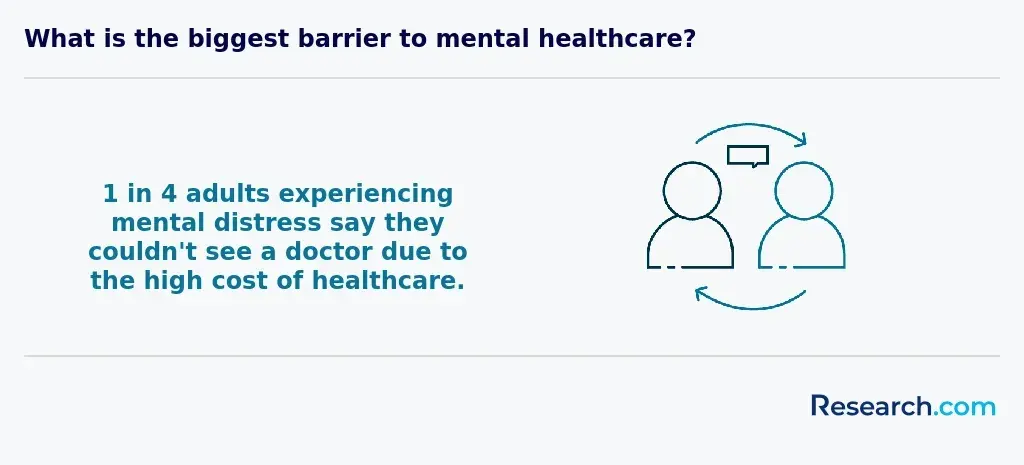
- Understand access barriers. Mental Health America reported in 2024 that one in four adults could not access needed mental health services because of high healthcare costs. Counselors who understand affordability, insurance, transportation, and stigma issues are better prepared to serve clients effectively.
Questions to ask before enrolling in a counseling program
| Question | Why it matters |
| Does the program meet Michigan LPC education requirements? | A degree that does not align with state rules can delay licensure or require extra coursework. |
| Is the program CACREP-accredited or otherwise designed around recognized counseling standards? | Accreditation can affect employer confidence, licensure portability, and training quality. |
| How are practicum and internship placements arranged? | Field placement problems can slow graduation and limit clinical readiness. |
| What are the total tuition, fees, books, technology costs, and commuting costs? | The advertised tuition rate rarely shows the full cost of attendance. |
| What percentage of graduates pursue LLPC and LPC licensure? | Licensure outcomes help show whether the program actually prepares students for the profession. |
| Can I attend part time while working? | Flexible scheduling may be essential for adult learners and career changers. |
Why are practicum and internship hours so important?
Practicum and internship experiences are where counseling students begin applying theory with real clients under supervision. In Michigan, the required minimums are 100 hours of supervised practicum and 600 hours of supervised internship. These experiences are not just boxes to check; they shape your confidence, clinical judgment, ethics, documentation habits, and ability to work with diverse client needs.
Fieldwork is especially important because counseling is a relationship-based profession. Students must learn how to conduct intake sessions, respond to risk, build treatment plans, manage boundaries, document accurately, consult with supervisors, and adjust interventions when clients are not improving.
- It helps students test specialties. A practicum in a school, addiction program, hospital, or outpatient clinic can show which population fits your skills and interests.
- It builds professional references. Supervisors and site directors often become important references for LLPC roles after graduation.
- It exposes students to Michigan-specific needs. Placements may involve urban poverty, rural access barriers, veterans’ mental health, family instability, opioid recovery, youth anxiety, or trauma-informed care.
- It improves employability. Employers want graduates who have already handled real clinical documentation, case consultation, crisis protocols, and client engagement challenges.
Nationally, 18% of U.S. mental health counselors work in outpatient mental health clinics, making this one of the common environments where students may seek training or future employment.
A Michigan counselor who completed fieldwork in Detroit said her practicum initially felt overwhelming: “I had classroom knowledge, but sitting with clients taught me how complex counseling really is. Supervision helped me turn uncertainty into better questions, better documentation, and more thoughtful treatment plans.” Her experience reflects a common lesson: strong field training often determines how prepared graduates feel during the LLPC stage.
The chart below illustrates the largest employers of counselors in the U.S.
How do Michigan licensing board rules affect counseling practice?
Licensing rules determine who may practice, what services counselors can provide, how supervision must be documented, which examinations are accepted, and when a counselor may represent themselves as fully licensed. Michigan counselors should treat the licensing board as the authoritative source for application forms, scope-of-practice updates, renewal rules, and disciplinary standards.
- Education rules define eligibility. Candidates must complete a qualifying graduate counseling program and required clinical training.
- Supervision rules protect clients and new counselors. LLPCs practice under supervision while developing independent clinical competence.
- Examination rules create a consistent competency benchmark. The NCE, NCMHCE, or CRCC Examination verifies readiness for professional practice.
- Scope-of-practice rules reduce legal risk. Counselors must understand what they may and may not do under Michigan law.
Which counseling specializations are available in Michigan?
Mental health counseling is not a single job track. After graduate training, Michigan counselors may focus on a particular population, diagnosis, setting, or service model. The right specialization depends on the clients you want to serve, your tolerance for crisis work, preferred work environment, salary goals, and long-term plans.
| Specialization | Best fit for counselors who want to... | Average annual salary listed |
| Substance Abuse Counseling | Support clients recovering from alcohol, drug, or compulsive behavior problems through relapse prevention, recovery planning, and family support | $42,533 |
| Behavior Disorder Counseling | Work with clients facing ADHD, oppositional defiant disorder, conduct disorder, emotional regulation issues, and social skills challenges | $40,694 per year |
| Counselor Education | Teach, supervise, research, and prepare future counselors in academic or training settings | $63,226 |
| School Counseling | Support students’ academic, social, emotional, and career development in educational settings | $60,790 annually |
Specialization decisions should be practical, not just interest-based. For example, addiction counseling may offer strong community need but can involve relapse risk, court involvement, and crisis work. School counseling can provide a structured academic calendar but requires comfort working with students, parents, administrators, and child protection concerns. Counselor education may require advanced academic preparation and a strong interest in teaching and supervision.
If you are comparing state pathways, Research.com also explains how to become a licensed counselor in Minnesota. Reviewing another state’s requirements can be useful if you expect to relocate or want to understand licensure portability issues before choosing a graduate program.
Is Michigan a good state for mental health counselors?
Michigan can be a strong state for counselors who want meaningful community impact, varied practice settings, and growing demand. It may be less ideal for professionals who expect high early-career earnings, want a low-documentation role, or are not prepared for high-need client populations.
| Factor | What it means for counselors in Michigan |
| Salary | Michigan LPC earnings fall below the national average of $60,080, while the state’s average annual earnings for mental health counselors are $57,560. |
| Cost of living | Michigan’s cost of living is slightly lower than the national average, which can help offset lower average wages. |
| Licensure by endorsement | Out-of-state counselors may seek licensure by endorsement. Applicants with fewer than five years of experience in another state must submit additional documentation beyond Michigan’s standard application requirements. |
| Workforce support | The Michigan Behavioral Health Internship Program provides a stipend for counseling, social work, and psychology students. |
| Telehealth | Telehealth has become a major access tool. In 2021 alone, telehealth services provided 46% of all behavioral healthcare for Medicare beneficiaries in Michigan counties. |
| Community need | Counselors can work across urban, suburban, rural, school-based, healthcare, nonprofit, and private practice settings. |
Michigan is a better fit if you value access-oriented work, can manage documentation demands, and are willing to serve clients who may face economic barriers, insurance limitations, transportation challenges, or complex trauma histories. It may be a more difficult fit if salary is your top priority immediately after graduation.
What is the job demand for mental health counselors in Michigan?
Demand for mental health counselors in Michigan is projected to remain strong. State projections show 21% growth for LPCs from 2020 to 2030, with 1,020 annual job openings during that period, according to ONET OnLine data from 2024.
Hiring demand comes from several sectors, including hospitals, outpatient mental health clinics, community health organizations, substance use treatment centers, schools, private practices, crisis programs, and integrated care teams. Demand is not evenly distributed, however. Rural communities and high-need urban areas may experience more severe access gaps than well-resourced suburban markets.
Michigan’s situation reflects a broader national workforce problem. The Health Resources & Services Administration projected a shortage of 69,610 mental health counselors nationwide in 2024. Addiction counseling showed an even larger anticipated shortage, with 87,630 positions projected.
Students comparing opportunities in other states can review Research.com’s guide on how to become a licensed counselor in New York. State-by-state comparisons are useful because licensure, job markets, salaries, and supervision requirements can differ significantly.
This chart shows the projected workforce shortages for behavioral health jobs across the U.S.
How is substance abuse counseling different in Michigan?
Substance abuse counseling is a specialized behavioral health pathway focused on addiction, recovery, relapse prevention, and co-occurring mental health concerns. Compared with general counseling, this work often involves closer attention to withdrawal risk, overdose prevention, family systems, court or probation involvement, group treatment, medication-assisted treatment coordination, and long-term recovery planning.
This specialization may be a good fit if you are comfortable with structured treatment plans, accountability-based recovery work, interdisciplinary collaboration, and clients who may cycle through relapse and stabilization. It may be a poor fit if you want a lower-crisis role or are not prepared to work with complex trauma, legal involvement, and substance-related medical risks.
Students who want a dedicated roadmap should review Research.com’s guide on how to become a substance abuse counselor in Michigan.
What are affordable online counseling degree pathways?
Online counseling programs can help Michigan students reduce commuting costs, maintain employment, and access programs outside their immediate region. Affordability, however, should never be judged by tuition alone. Students should compare accreditation, licensure alignment, residency requirements, technology fees, field placement support, graduation timelines, and whether the program helps students secure Michigan-approved practicum and internship sites.
Programs with CACREP accreditation may be especially relevant for students who want a curriculum built around recognized counseling standards. Before enrolling, ask the school to confirm in writing how its program aligns with Michigan LPC requirements. For cost-focused comparisons, review Research.com’s guide to the cheapest cacrep-accredited programs online.
What jobs can counseling graduates pursue in Michigan?
A master’s degree in clinical mental health counseling can lead to several counseling and related behavioral health roles. Some jobs require LPC licensure, while others may require additional credentials, a different license, or specialized experience. Always check employer requirements and Michigan licensing rules before assuming one degree qualifies you for every role.
| Career option | Typical focus | Licensure or preparation considerations |
| Mental Health Counselor | Therapy, assessment, treatment planning, client support | Usually requires LLPC or LPC status depending on role and independence level |
| Social Worker | Resource coordination, advocacy, case management, therapy in some licensed roles | May require a social work degree and social work licensure |
| Substance Abuse Counselor | Addiction recovery, relapse prevention, group counseling, treatment planning | A substance abuse counseling degree or specialized addiction training may strengthen preparation |
| Geriatric Counselor | Aging, grief, health transitions, caregiver stress, isolation | Experience with older adults, healthcare systems, and family support is valuable |
| Employee Assistance Program Counselor | Workplace stress, crisis support, short-term counseling, referrals | Employers may prefer licensed counselors with broad clinical experience |
| Military Personnel Counselor | Veteran and military family concerns, PTSD, reintegration, deployment stress | Trauma-informed training and familiarity with veteran systems can be important |
One Michigan counselor described finding her niche with veterans after graduating from the University of Michigan and beginning her career in Detroit: “At first, I was not sure where I fit. Working with veterans helped me understand how counseling can support people carrying experiences that are hard to explain to others. The work can be emotionally heavy, but seeing clients regain stability makes it worthwhile.”
How do LMFT and LMFTA credentials differ?
LMFT and LMFTA credentials are relevant for professionals interested in couples and family therapy rather than general professional counseling. The main distinction is practice status: an associate-level credential typically involves supervised practice, while full licensure allows broader independent practice once state requirements are met. Requirements vary by state, so Michigan candidates should verify the current rules before choosing between counseling and marriage and family therapy pathways.
For a fuller comparison, see Research.com’s explanation of LMFT vs LMFTA key differences.
Can counselors move into school psychology?
Mental health counselors can sometimes move toward school psychology, but it is not usually a simple title change. School psychology focuses on student assessment, learning needs, behavioral interventions, special education processes, prevention, and consultation with educators and families. Counselors considering this transition should expect additional education, certification review, and Michigan-specific credential evaluation.
If your goal is to work in schools but you want assessment and systems-level student support, school psychology may be worth exploring. Learn more through Research.com’s guide, How long does it take to become a school psychologist in Michigan?.
Can counselors transition into social work?
Social work may appeal to counselors who want a stronger role in advocacy, resource navigation, community systems, policy, and case coordination. Although counseling and social work overlap in some clinical settings, they are separate professions with different educational requirements, licensing structures, and scopes of practice.
A counselor who wants to become a social worker should review degree requirements, supervised practice rules, and licensure expectations before assuming prior counseling education will transfer. Research.com’s guide to social worker education requirements in Michigan can help you compare the pathway.
Which academic programs can help prepare Michigan counselors?
The strongest counseling preparation usually combines rigorous coursework, supervised clinical practice, ethical training, faculty mentorship, and field partnerships with local agencies. When comparing schools, do not rely only on reputation or rankings. Look at licensure alignment, practicum support, faculty experience, student advising, cost, graduation timelines, and outcomes for students seeking LLPC or LPC credentials.
Students exploring mental health-related academic options can also review the best psychology schools in Michigan. Psychology programs can be useful preparation for counseling graduate study, but a psychology degree alone does not automatically meet LPC requirements.
How can counselors start a private practice in Michigan?
Private practice can offer more autonomy, flexible scheduling, and the ability to specialize, but it also requires business skills. Counselors must understand legal compliance, informed consent, recordkeeping, insurance billing, marketing, tax planning, referral development, telehealth rules, emergency procedures, and ethical boundaries.
A successful Michigan private practice usually begins with a clear niche. Examples may include trauma, couples and families, anxiety, addiction recovery, veterans, adolescents, perinatal mental health, grief, or culturally responsive counseling. The clearer the niche, the easier it is to build referral relationships and communicate value to clients.
| Private practice decision | What to consider before starting |
| Licensure status | Confirm whether your license permits independent practice or requires supervision. |
| Niche | Choose a population or concern where you have training, demand, and ethical competence. |
| Payment model | Decide whether to accept insurance, offer self-pay, use sliding-scale fees, or combine models. |
| Client acquisition | Build referral networks with physicians, schools, attorneys, community agencies, and other therapists. |
| Risk management | Prepare policies for crisis calls, missed appointments, documentation, confidentiality, and mandated reporting. |
| Technology | Use secure systems for telehealth, scheduling, records, billing, and client communication. |
If you are still deciding how quickly to enter the field, Research.com’s guide to the quickest path to becoming a counselor in Michigan can help you compare timeline options.
What challenges should Michigan counselors expect?
Mental health counseling can be meaningful, but the work is demanding. Michigan counselors may face high caseloads, limited referral options, insurance restrictions, client financial barriers, workforce shortages, and emotional exhaustion. Understanding these pressures before entering the field can help you plan for sustainability.
- Access gaps remain serious. Michigan has 234 mental health shortage areas, which means some communities do not have enough providers to meet local need.
- Burnout risk is real. High caseloads, crisis work, administrative demands, and repeated exposure to trauma can contribute to compassion fatigue.
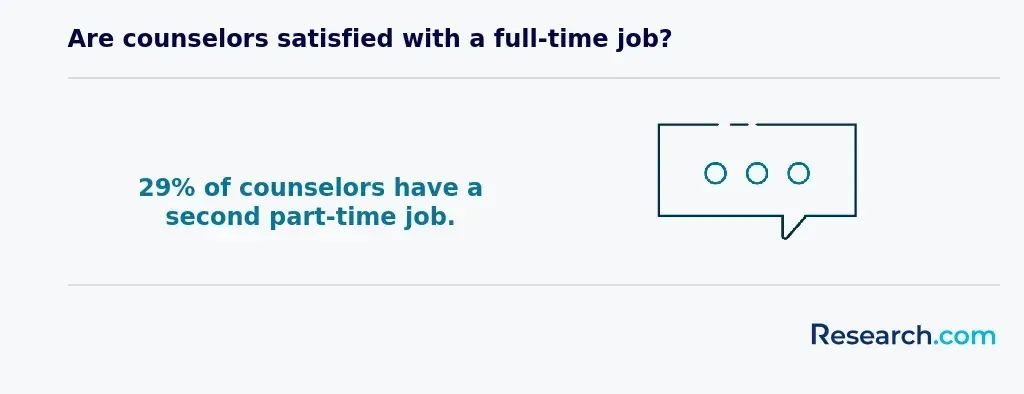
- Salary may feel limiting. Michigan counselor pay can be lower than national averages in some settings. Across the nation, 29% of counselors have second jobs, according to the American Counseling Association in 2024.
- Insurance rules can affect care. Coverage limits, reimbursement rates, authorization requirements, and session caps can complicate treatment planning.
- Rural access barriers affect both clients and providers. Transportation, broadband, stigma, and limited specialty referral options can make care harder to deliver.
- Work-life balance requires intentional boundaries. Counselors need consultation, supervision, peer support, manageable scheduling, and personal mental health practices to remain effective.
Common mistakes aspiring counselors should avoid
| Mistake | Better approach |
| Choosing a graduate program without checking Michigan LPC alignment | Ask the program to document how it meets Michigan licensure requirements before enrolling. |
| Looking only at tuition | Compare total cost, fees, field placement travel, lost work hours, books, and technology needs. |
| Assuming online programs automatically qualify for Michigan licensure | Verify accreditation, practicum rules, internship expectations, and state-specific curriculum requirements. |
| Waiting until graduation to think about supervision | Start networking early with agencies and supervisors who hire LLPC-level clinicians. |
| Ignoring salary variation by setting | Compare community agencies, hospitals, schools, group practices, private practice, and specialized roles. |
| Assuming licensure transfers easily across states | Review endorsement rules before relocating or choosing an out-of-state program. |
What are Michigan’s LPC license requirements?
Michigan’s LPC requirements include graduate counseling education, supervised clinical preparation, post-master’s supervised experience, and passage of an approved examination. Candidates who are still completing supervised experience generally work under the LLPC credential before applying for full LPC status.
Because licensure rules can change, candidates should use the Michigan Board of Counseling as the final authority and keep copies of syllabi, supervision logs, field placement documentation, examination results, and application materials. For a dedicated overview, review Research.com’s guide to the LPC license requirements in Michigan.
What related career paths can counselors consider?
Mental health counselors who want to broaden their career options may consider marriage and family therapy, school counseling, school psychology, social work, addiction counseling, counselor education, program administration, clinical supervision, or private practice. Each path has different licensing rules and may require additional education or supervised experience.
Marriage and family therapy is one related option for professionals who want to focus on couples, families, communication patterns, and relational systems. Research.com explains the pathway in its guide on how to become a marriage and family therapist in Michigan.
What education is required for marriage counseling in Michigan?
Marriage counseling generally requires graduate-level preparation in relationship dynamics, family systems, human development, ethics, diagnosis, therapeutic methods, and supervised clinical practice. Professionals interested in this field should distinguish between LPC practice, marriage and family therapy licensure, and any employer-specific requirements for couples or family counseling roles.
Before choosing this path, compare the curriculum, supervision requirements, and scope of practice with your long-term goals. For more detail, see Research.com’s guide to marriage counselor education requirements in Michigan.
What continuing education and professional resources are available?
Professional development matters even when a renewal rule does not require a specific course load. Michigan LPCs should continue learning through workshops, supervision, consultation groups, conferences, ethics training, cultural competence training, trauma-informed care education, telehealth updates, and specialty certifications where appropriate.
For the renewal information discussed in this guide, Michigan does not mandate LPCs to complete continuing education courses for license renewal, but human trafficking and implicit bias training are required. If you encounter summaries that describe 30 CE hours every two years with at least five hours in ethics, verify the current rule directly with the Michigan Board of Counseling before relying on it for renewal planning.
Counselors can find professional support through local universities, employer-sponsored training, the Michigan Mental Health Counselors Association (MMHCA), the Michigan Counseling Association, the American Counseling Association, peer consultation groups, and online continuing education providers. These resources can help counselors stay current on ethics, documentation, telehealth, evidence-based practices, and Michigan-specific behavioral health needs.
Students who want a step-by-step licensing overview can review Research.com’s guide on how to become a therapist in Michigan.
Can counselors become school counselors in Michigan?
Mental health counselors can transition toward school counseling, but they should expect education-focused requirements. School counseling emphasizes academic planning, student development, college and career readiness, crisis response, family communication, prevention programming, and collaboration with teachers and administrators.
This path may fit counselors who enjoy working with children or adolescents and want to operate within educational systems rather than clinical agencies. It may not be ideal for professionals who prefer long-term psychotherapy with adults or independent private practice. For requirements and career steps, review Research.com’s guide on how to become a school counselor in Michigan.
What Michigan counselors say about their careers
- "Becoming a mental health counselor in Michigan has been deeply meaningful because I get to help people move through painful seasons and see their own progress. The collaboration among professionals here also makes the work feel less isolating." - Leah
- "Practicing in Michigan has stretched me as both a clinician and a person. The clients I serve come from many backgrounds, and their experiences have made me more thoughtful, patient, and committed to this profession." - Warren
- "This career has given me stability, purpose, and a community of colleagues who care about improving mental health access. The emotional demands are real, but client progress keeps me connected to why I chose this field." - Rhiannon
Related Articles for Nearby States
- 2027 How to Become a Mental Health Counselor in Ohio
- 2027 How to Become a Mental Health Counselor in Indiana
- 2027 How to Become a Mental Health Counselor in Wisconsin
- 2027 How to Become a Mental Health Counselor in Illinois
- 2027 How to Become a Mental Health Counselor in Minnesota
- 2027 How to Become a Mental Health Counselor in Pennsylvania
- 2027 How to Become a Mental Health Counselor in Kentucky
- 2027 How to Become a Mental Health Counselor in West Virginia
- 2027 How to Become a Mental Health Counselor in Iowa
- 2027 How to Become a Mental Health Counselor in Missouri
Key Insights
- Michigan’s LPC path requires graduate counseling education, supervised clinical training, an approved examination, and completion of post-master’s supervised experience.
- Most candidates should expect to work as LLPCs before qualifying for full LPC licensure.
- Michigan requires a minimum of 100 hours of supervised practicum and 600 hours of supervised internship during training.
- The state requires at least 3,000 hours of post-master’s supervised experience over at least two years; doctoral graduates must complete at least 1,500 clinical hours in one year.
- Mental health counselor employment in Michigan is projected to grow by 21% from 2020 to 2030, with 1,020 annual job openings during that period.
- Average annual earnings for mental health counselors in Michigan are $57,560, but pay depends heavily on setting, specialty, location, experience, and licensure level.
- Online programs can be worthwhile, but only if they meet Michigan licensure expectations and provide adequate field placement support.
- Students should not choose a program based only on cost or ranking. Accreditation, supervision support, licensure alignment, and total cost matter more.
- Substance abuse counseling, school counseling, counselor education, geriatric counseling, military counseling, and private practice can all offer different career directions.
- The safest next step is to compare Michigan-approved licensure requirements with each program’s curriculum before enrolling.
References:
- American Counseling Association. (2024). Counseling Workforce Survey Report. https://www.counseling.org/resources/research-reports/counseling-workforce-report
- Ellimoottil, C., Zhu, Z., Hi, X., & Van Til, M. (2023, June). Telehealth in Michigan: Insights and date for effective policymaking. Institute for Healthcare Policy & Innovation, University of Michigan. https://mihealthfund.org/wp-content/uploads/2023/06/Telehealth-in-Michigan_Insights-and-Data-for-Effective-Policymaking.pdf
- Health Resources & Services Administration. (2024). Health Workforce Shortage Areas. Retrieved September 2024, from https://data.hrsa.gov/topics/health-workforce/shortage-areas
- KFF. (2023). Mental Health in Michigan. https://www.kff.org/statedata/mental-health-and-substance-use-state-fact-sheets/michigan
- Mental Health America. (2024). The State of Mental Health in America. https://mhanational.org/issues/state-mental-health-america
- Michigan Board of Counseling. (n.d.). Counseling. Licensing and Regulatory Affairs. Retrieved September 2024, from https://www.michigan.gov/lara/bureau-list/bpl/health/hp-lic-health-prof/counseling
- ONET OnLine. (2024, August 9). Mental health counselors. Michigan Employment Trends. Retrieved September 2024, from https://www.onetonline.org/link/localtrends/21-1014.00?st=MI
- U.S. Bureau of Labor Statistics. (2024, April 3). May 2023 state occupational employment and wage estimates - Michigan. Occupational Employment and Wage Statistics. https://www.bls.gov/oes/current/oes_mi.htm
Other Things You Should Know About Mental Health Counseling in Michigan
In 2027, becoming a licensed mental health counselor in Michigan typically takes 6-8 years. This includes completing a bachelor's degree, followed by a master's degree in counseling, and then accruing 3,000 hours of supervised experience, which generally takes 2-3 years.
In 2027, to practice as a mental health counselor in Michigan, a license is required. This includes completing a master's degree in counseling, fulfilling supervised practice hours, and passing the National Counselor Examination (NCE).


