
2027 How to Become a School Counselor in Idaho

Co-Founder and Chief Data Scientist
Becoming a school counselor in Idaho is a graduate-level licensing path, not simply a job application process. Candidates need the right master’s program, supervised K–12 field experience, state certification, and ongoing professional development. The decision matters because Idaho schools are facing rising student support needs, student enrollment is up over 5%, and qualified counselors are expected to help with academic planning, career readiness, crisis response, social-emotional development, and family-school coordination.
This guide explains how to become a school counselor in Idaho in practical terms: what degree to earn, how long the process takes, what certification is required, how license renewal works, what alternative routes may be available, and how salary, job outlook, specialization, and advancement opportunities should influence your decision.
Quick answer: How do you become a school counselor in Idaho?
- To work as a school counselor in Idaho, you generally need a CACREP-accredited master’s degree in school counseling or a closely related counseling field, including at least 700 supervised practicum or internship hours with a K–12 focus.
- Idaho school counseling programs may include preparation in trauma-informed practice, culturally responsive counseling, developmental counseling, college and career readiness, and student mental health support.
- A full-time school counseling master’s program usually takes two to three years, while part-time study may take up to four years. Idaho credentials must be renewed every five years through continuing education.
- What degree do I need to become a school counselor in Idaho?
- Are there school counseling specializations in Idaho?
- How long does it take to complete a school counseling degree in Idaho?
- What certification is required to work as a school counselor in Idaho?
- Can I transfer my Idaho school counseling license between states?
- How often do Idaho school counselors need to renew their credentials?
- What are the alternative pathways to become a school counselor in Idaho?
- What is the average salary of school counselors in Idaho?
- How can school counselors collaborate with school psychologists in Idaho?
- Can pursuing advanced licensure broaden counseling career opportunities beyond K–12?
- What is the job outlook for school counselors in Idaho?
- What are the career advancement opportunities for school counselors in Idaho?
- What challenges do school counselors in Idaho encounter?
What degree do I need to become a school counselor in Idaho?
Idaho school counselors need graduate preparation that combines counseling theory, ethics, assessment, student development, and supervised practice in schools. The most direct route is a master’s degree designed for K–12 school counseling and aligned with Idaho certification expectations.
- Graduate degree requirement: Candidates typically complete a Master of Arts, Master of Education, or similar master’s degree in counseling or school counseling from a regionally accredited institution. Many programs require at least 60 semester credit hours.
- K–12 field placement: Idaho candidates complete at least 700 supervised hours, with at least 600 hours in a K–12 school setting. This experience is where students learn how to support real students, work with families, consult with teachers, and respond to school-based concerns.
- Accreditation alignment: A CACREP-accredited program is often the safest choice because it signals that the curriculum and fieldwork meet recognized counseling education standards. Students should still confirm that a program satisfies Idaho school counselor certification requirements before enrolling.
- Core coursework: Expect classes in counseling theories, group counseling, human development, assessment, ethics, crisis response, multicultural counseling, career development, and school counseling program design.
- Licensure preparation: A qualifying program should prepare graduates to submit transcripts, fieldwork documentation, institutional recommendations, and any required exam results for Idaho certification.
If you are comparing school counseling with broader clinical counseling careers, this foundation can also help you understand related paths such as the path to becoming a counseling psychologist.
| Decision point | What to verify before enrolling | Why it matters |
| Accreditation | Confirm regional accreditation and whether the program is CACREP-accredited. | Accreditation can affect certification eligibility, transferability, and employer confidence. |
| Fieldwork hours | Ask how the program helps students complete at least 700 supervised hours. | Field placement delays can extend your graduation timeline. |
| K–12 placement access | Check whether placements include elementary, middle, and high school exposure. | Idaho school counselors need preparation across grade levels. |
| Certification support | Ask whether the school provides institutional recommendations and exam guidance. | Administrative support can make the licensing process smoother. |
| Format | Compare campus, hybrid, and online options. | Flexible delivery can help working adults, but fieldwork still happens in approved settings. |
Are there school counseling specializations in Idaho?
Yes. School counseling programs in Idaho may offer focused coursework or field experiences that help counselors serve specific student needs. These options are useful because the school counselor role is no longer limited to course scheduling or college applications. Counselors are often part of student support teams that address attendance, behavior, anxiety, trauma, postsecondary planning, bullying, and family stressors.
- School counseling cognate: This is the standard preparation area for working with K–12 students through individual counseling, small groups, classroom lessons, academic planning, and career guidance.
- Trauma-informed counseling: This training helps counselors identify how trauma can affect learning, behavior, attendance, and peer relationships, while using prevention and crisis response strategies.
- Culturally competent counseling: This focus prepares counselors to work respectfully with students from different cultural, linguistic, socioeconomic, and family backgrounds.
- Developmental and lifespan counseling: This area emphasizes how student needs change from childhood through adolescence, including transitions between grade levels and preparation for adulthood.
- Career and college readiness counseling: This specialization supports students with career exploration, course planning, postsecondary goals, vocational options, and assessment-informed decision-making.
Choose a specialization based on the students you most want to serve and the settings where you hope to work. If you want a wider clinical mental health scope outside the school system, compare this route with how to become a mental health counselor.
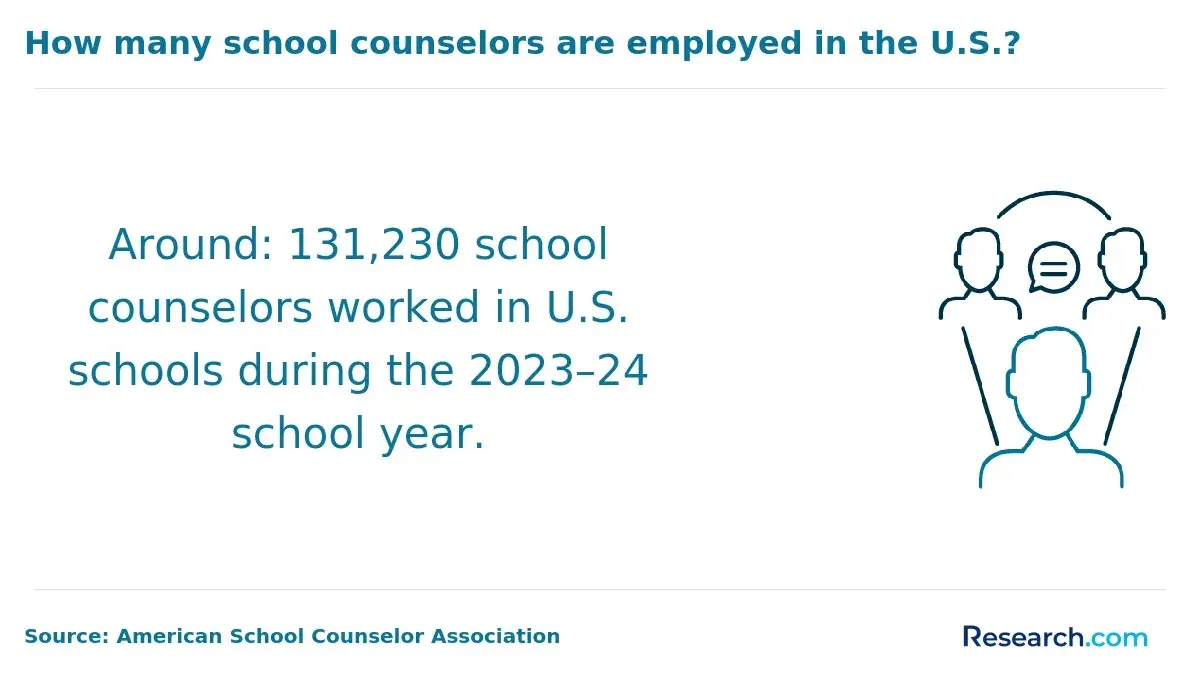
The image below provides national context by showing that there are fewer than 200,000 school counselors across the U.S., which helps explain why school systems continue to focus on counselor preparation and access.
How long does it take to complete a school counseling degree in Idaho?
Most full-time students complete an Idaho school counseling master’s degree in two to three years. Part-time students may need up to four years, especially if they are working, caring for family members, or completing fieldwork around a limited school schedule. The total timeline depends less on classroom coursework alone and more on how quickly you can complete supervised K–12 practicum and internship hours.
- Credit load: Many school counseling master’s programs require 60 graduate credits, which usually fits a two- to three-year full-time plan.
- Supervised experience: Idaho requires at least 700 supervised hours, and programs may require as many as 1,000 hours. Fieldwork can determine when you are eligible to graduate and apply for certification.
- Program format: Online and hybrid programs may make coursework more flexible, but students still need approved in-person school placements.
- Certification steps: After graduation, candidates must complete required documentation, background checks, transcript submission, institutional recommendations, and any required exams before receiving the School Counselor K–12 credential.
- Personal schedule: Employment, commuting distance, rural placement availability, and family responsibilities can lengthen the process.
| Path | Typical timeline | Best fit | Possible drawback |
| Full-time master’s program | Two to three years | Students who can prioritize graduate study and fieldwork. | Less flexibility for full-time workers. |
| Part-time master’s program | Up to four years | Working adults or students with major family responsibilities. | Longer time before certification and full professional salary. |
| Hybrid or online coursework | Varies by course load | Students who need scheduling flexibility but can complete local fieldwork. | Placement coordination may require extra planning. |
| Alternative authorization route | Varies within state rules | Career changers or district-supported candidates. | Requirements must be completed while working under conditional authorization. |
What certification is required to work as a school counselor in Idaho?
To work as a school counselor in Idaho public schools, candidates need the Pupil Service Staff Certificate with a School Counselor Endorsement. The Idaho State Department of Education issues this credential to verify that the counselor has completed the required education, field experience, background review, and professional competency steps.
- State application: Submit the Pupil Service Staff Certificate application with the School Counselor Endorsement, along with required forms and supporting documents.
- Official transcripts: Provide records showing completion of the required graduate degree and school counseling preparation.
- Program verification: Your institution must confirm that you completed an approved school counseling program and required field experiences.
- Background check: Complete fingerprinting and a criminal background review through the state-approved process.
- Supervised K–12 experience: Submit verification of practicum or internship work involving direct service to students in school settings.
- Praxis requirement: Pass the Praxis Professional School Counselor exam, test code 5421 or the updated equivalent, if required for your application route.
- Fee payment: Pay the required non-refundable application fee when submitting your materials.
- Renewal responsibility: Maintain the credential every five years through approved continuing education.
The chart below adds context by showing the types of U.S. institutions that offer CACREP-accredited programs, which can help applicants understand where school counseling preparation is commonly available.
Can I transfer my Idaho school counseling license between states?
An Idaho school counseling credential does not automatically become a license in another state. Counselors who move usually apply through licensure by endorsement or a comparable process in the new state. The receiving state decides whether your Idaho education, exam results, supervised experience, and background clearance meet its standards.
- Endorsement application: Most states require a formal application and processing fee.
- Active Idaho credential: You may need official verification that your Idaho school counseling license is valid and in good standing.
- Graduate transcripts: States commonly request proof that you completed an approved master’s-level school counseling program.
- Exam documentation: You may need to submit Praxis II scores or results from another required state assessment.
- State-specific coursework: Some states require added training in areas such as ethics, state law, special education, or child abuse reporting.
- New background check: A new fingerprinting and criminal record review is often required even if you completed one in Idaho.
- Professional verification: Some states ask for recent employment records, references, or proof of school counseling experience.
| If you plan to move | What to do before relocating |
| Before applying for jobs | Review the destination state’s school counselor certification rules and endorsement process. |
| Before leaving your Idaho district | Request employment verification and keep copies of evaluations or service records if available. |
| Before ordering transcripts | Confirm whether the new state requires sealed, electronic, or direct-from-institution transcripts. |
| Before assuming reciprocity | Ask whether extra coursework, exams, or supervised hours are required. |
How often do Idaho school counselors need to renew their credentials?
Idaho school counselors renew their credentials every five years. Renewal is not a formality; it is how the state confirms that counselors continue to build professional knowledge and remain aligned with current education and student support practices.
- Renewal period: Idaho credentials renew every five years, with the cycle running from September 1 to August 31.
- Continuing education: Counselors complete six semester credits of professional development, and at least three must come from accredited colleges or universities.
- Relevant learning: Renewal coursework should connect to a professional learning plan, district priorities, or endorsement responsibilities.
- Recommended deadline: Submit the renewal application by June 1 of the expiration year to allow time for processing.
- Renewal cost: A non-refundable $75 fee is required, with payment procedures depending on whether the application is online or mailed.
- Submission method: Counselors may renew through the Idaho SDE portal or by mailing the application to the Boise office.
- Background checks: A new background check is not usually required for uninterrupted employment but may be needed after a break in service.
- Certificate mailing: Renewed credentials are sent to the home address on file, so counselors should update address information before applying.
- District documentation: Some districts may request employment verification or internal proof of renewal compliance.
What are the alternative pathways to become a school counselor in Idaho?
Idaho offers options for people who did not begin in a traditional educator preparation route. These pathways can help career changers, counseling professionals, or district-supported candidates move into school counseling while completing remaining requirements. However, alternative routes still require formal education, supervised experience, background clearance, and state approval.
- Alternative Authorization: This interim option can provide a non-renewable certificate valid for three years while the candidate works toward full requirements.
- Post-baccalaureate or master’s preparation: Candidates can complete graduate coursework and a 700-hour supervised practicum, including at least 525 hours in K–12 settings.
- Provisional licensure: A district may request conditional authorization so a candidate can work while finishing exams or coursework.
- Related professional background: Prior work in counseling, education, social services, or youth support may strengthen an application, but it does not replace required school counseling preparation.
- Alternative teacher certification combinations: Some candidates pursue a master’s degree and school counselor certification together, sometimes in as little as one year.
Before choosing an alternative route, confirm that the program and authorization type fit your timeline, district needs, and long-term licensing goals. Reviewing the value of CACREP accreditation can help you avoid programs that do not align well with counseling credential requirements.
| Pathway | Who should consider it | Question to ask first |
| Traditional master’s degree | Students who want the clearest route to certification. | Does this program meet Idaho school counselor endorsement requirements? |
| Alternative Authorization | Candidates with district support who need to work while finishing requirements. | What must I complete within the three-year non-renewable period? |
| Post-baccalaureate program | Degree holders who need counseling-specific graduate preparation. | Will the program arrange or approve my K–12 practicum placement? |
| Provisional licensure | Candidates hired conditionally by a district. | Which exams, courses, or documents are still missing? |
What is the average salary of school counselors in Idaho?
School counselor salary figures in Idaho vary by data source, role definition, district, and location. The article’s cited figures include competitive salaries averaging $55,000, a median salary of approximately $60,000, and average pay of $60,340. Idaho’s median is described as about 15% below the national median of $65,600, but individual earnings can differ significantly by employer and experience level.
- Geographic area: Pay can be higher in metropolitan areas or certain nonmetropolitan regions where demand, funding, or cost of living differs.
- Years of experience: Counselors generally improve earnings as they move from entry-level roles into senior, lead, or specialized positions.
- Education and credentials: A master’s degree is the foundation, while additional certifications or advanced licensure may support higher-value roles.
- District budget: Public school salary schedules, local funding, and benefits packages can affect total compensation.
- Labor demand: Districts with shortages may be more motivated to recruit and retain qualified counselors.
- School type: Public, private, and charter schools may use different salary structures.
- Professional development: Counselors who build expertise in crisis intervention, college readiness, behavioral support, or mental health collaboration may strengthen their advancement options.
| Salary factor | How it can affect earnings | What candidates should compare |
| District salary schedule | Determines base pay and step increases. | Starting salary, annual increases, and placement for graduate credits. |
| Benefits | Can change the real value of a compensation package. | Health insurance, retirement, paid leave, and professional development support. |
| Contract length | Some school roles may follow different work-year structures. | Number of contract days and summer responsibilities. |
| Advancement pathway | Leadership roles may offer higher pay over time. | Lead counselor, department chair, district coordinator, or administrator options. |
How can school counselors collaborate with school psychologists in Idaho?
School counselors and school psychologists serve different but complementary roles. In Idaho schools, collaboration can improve how student needs are identified, documented, and supported. Counselors often focus on academic planning, social-emotional guidance, short-term counseling, classroom lessons, and family communication. School psychologists typically bring deeper training in psychoeducational assessment, eligibility evaluation, behavior intervention, and special education processes.
- Student support teams: Counselors and psychologists can jointly review attendance, behavior, academic progress, and teacher concerns.
- Crisis response: Both professionals may help schools respond to student safety concerns, grief, bullying, or community trauma.
- Referral decisions: Counselors can identify students who may need formal assessment, while psychologists can guide evaluation and eligibility processes.
- Individualized planning: Collaboration helps align counseling supports with individualized education planning when appropriate.
- Clear boundaries: Effective teamwork requires each professional to stay within their training, credential, and legal scope of practice.
If you are interested in a role more focused on assessment and special education evaluation, compare this career with how to become a school psychologist in Idaho.
Can pursuing advanced licensure broaden counseling career opportunities beyond K–12?
Yes. School counselor certification prepares professionals for school-based practice, but advanced clinical licensure can open additional options outside K–12 education. For example, pursuing credentials such as an LPC may allow counselors to work in community agencies, clinical settings, or private practice, depending on Idaho’s scope-of-practice rules and supervision requirements.
This route usually involves additional supervised clinical hours, required examinations, and documentation beyond school counselor certification. It can be worthwhile for counselors who want to provide broader mental health services, but it may not be necessary for professionals who plan to remain focused on school counseling. Review the LPC licensure requirements in Idaho before assuming that school counseling coursework automatically satisfies clinical licensure standards.
What is the job outlook for school counselors in Idaho?
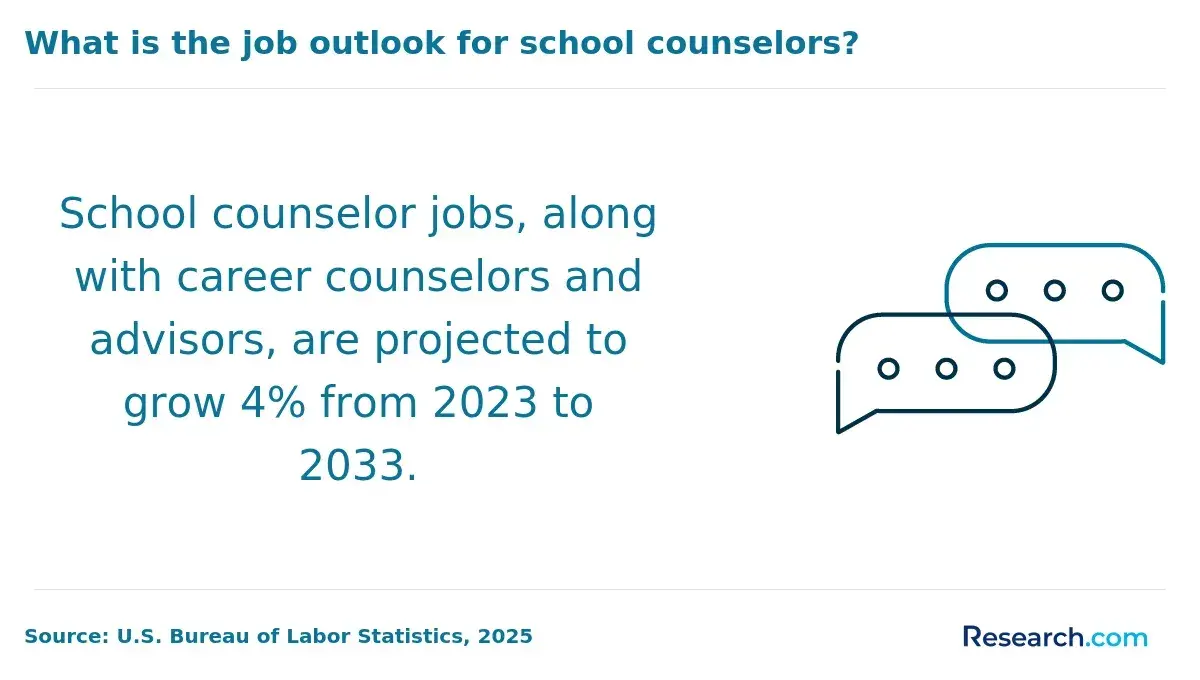
The job outlook for school counselors in Idaho is favorable based on the cited projection of 19.9% growth from 2022 to 2032. That is higher than the national average of 4%. This projected demand is connected to rising student needs, enrollment growth, and the increasing role of schools in academic, career, and mental health support.
- Projected growth: Idaho’s nearly 20% projected growth indicates strong demand for school counseling services over the decade.
- Student enrollment: Growing student populations increase the need for counselors who can support academic planning and social-emotional development.
- Mental health concerns: Schools continue to rely on counselors as part of broader student wellness and crisis response systems.
- Education initiatives: Programs and funding aimed at student outcomes can increase the need for trained counseling professionals.
- Regional differences: Salary and hiring conditions may vary by district, rural or urban location, and local budget.
- National comparison: Idaho’s projected growth is nearly five times the national average, making the state a strong market for qualified candidates.
If cost is a major concern, comparing the most affordable online colleges for counseling degrees can help you identify programs that may reduce debt while still supporting your licensing goals.
Current trends affecting Idaho school counselors
- Greater mental health visibility: Counselors are increasingly expected to recognize anxiety, depression, trauma, and crisis indicators while coordinating referrals when students need services beyond the school setting.
- Career readiness pressure: Families and schools want more guidance on college, trades, workforce pathways, dual enrollment, and postsecondary planning.
- Rural access challenges: Idaho’s geography can make counselor recruitment, student service access, and specialist referrals more difficult in some communities.
- Technology and AI tools: Digital scheduling, early-alert systems, and AI-supported administrative tools may reduce paperwork, but counselors must protect privacy and avoid replacing professional judgment with automated recommendations.
- Interdisciplinary student support: Counselors increasingly work with psychologists, nurses, social workers, administrators, teachers, and community mental health providers.
What are the career advancement opportunities for school counselors in Idaho?
Idaho school counselors can advance by moving into leadership, specialized student support, district-level coordination, clinical licensure, or educator preparation. Advancement usually depends on experience, additional credentials, demonstrated leadership, and the ability to improve student support systems rather than only provide individual services.
- Lead school counselor or department chair: Coordinates counseling services, mentors colleagues, and helps manage schoolwide counseling programs.
- District behavior support coordinator: Develops behavior intervention systems across schools and may require credentials such as Board Certified Behavior Analyst (BCBA).
- School counseling program specialist: Designs, evaluates, and improves counseling services using data, policy knowledge, and program leadership skills.
- School administrator: Moves into assistant principal, principal, or related leadership roles after completing administrative certification and required internships.
- College and career readiness advisor: Focuses on postsecondary preparation, career pathways, workforce planning, and student transition support.
- Mental health specialist: Provides more focused crisis and student wellness support, often requiring additional training or credentials.
- Educator or clinical supervisor: Teaches future counselors or supervises interns, often requiring a doctorate and substantial professional experience.
- Policy and advocacy leader: Works through professional organizations, district committees, or statewide initiatives to shape counseling standards and student support policy.
Professionals considering family systems or clinical specialization may also compare short online MFT programs with Idaho’s counseling licensure requirements before committing to another graduate credential.
| Advancement goal | Best next step | Important caution |
| Lead counselor | Build program management, data reporting, and supervision skills. | Leadership roles may require district-specific experience. |
| Clinical counseling | Review LPC requirements and supervised clinical hour rules. | School counseling certification alone may not authorize private practice. |
| School administration | Complete administrative certification and leadership internships. | This path moves away from direct counseling work. |
| Higher education teaching | Consider doctoral study and supervision experience. | Academic roles can be competitive and may require research experience. |
What do school counselors in Idaho say about their career?
- Working as a school counselor in Idaho has shown me how much students need steady academic and personal support. The demand for counselors gives me the opportunity to do meaningful work every day while building strong relationships in close-knit communities throughout the state. Jonathan
- Idaho schools have allowed me to support students in rural communities and serve families with different needs and backgrounds. The work can be complex, but it has strengthened my commitment to equity and sharpened how I solve problems with students, teachers, and families. Aimee
- School counseling in Idaho has offered both professional growth and personal purpose. Ongoing education and new credentials have helped me take on more responsibility, and the collaborative school environment makes the impact of the work easy to see. Dave
What challenges do school counselors in Idaho encounter?
School counseling can be deeply rewarding, but candidates should understand the workload before entering the field. Idaho counselors may face limited resources, rising student mental health concerns, large caseloads, rural access barriers, and administrative duties that compete with direct student time. The role often requires strong boundaries, clear documentation, collaboration, and the ability to triage needs quickly.
- Limited staffing: Counselors may need to serve many students while coordinating with teachers, families, and outside providers.
- Expanding mental health needs: Schools increasingly need support for anxiety, trauma, crisis response, grief, and social-emotional concerns.
- Administrative workload: Scheduling, testing coordination, data entry, and reporting can reduce time for counseling unless duties are clearly managed.
- Rural service gaps: Some communities may have fewer external mental health providers, making referral coordination more difficult.
- Professional boundaries: Counselors must know when a student’s needs require a school psychologist, clinical therapist, emergency service, or outside agency.
If your priority is entering the counseling workforce efficiently while understanding Idaho’s requirements, review the fastest way to become a counselor in Idaho.
How to choose the right Idaho school counseling program
- Start with certification requirements: Verify that the degree is designed to meet Idaho’s School Counselor K–12 credential expectations.
- Confirm accreditation: Look for regional accreditation and determine whether the program is CACREP-accredited.
- Ask about field placements: Find out who arranges practicum and internship sites, whether rural placements are available, and how hours are tracked.
- Compare total cost, not tuition alone: Include fees, books, travel to field placements, exam fees, background checks, and lost work hours.
- Review exam preparation: Ask how the program prepares students for the Praxis Professional School Counselor exam, test code 5421 or updated equivalent.
- Check graduate outcomes carefully: Ask about certification pass rates, job placement support, district partnerships, and recent graduate roles.
- Evaluate schedule fit: A flexible online program may help with coursework, but K–12 fieldwork still requires availability during school hours.
Common mistakes to avoid
| Mistake | Why it causes problems | Better approach |
| Choosing a program without checking Idaho certification alignment | You may graduate without meeting state endorsement requirements. | Ask the program and Idaho State Department of Education which requirements the degree satisfies. |
| Looking only at tuition | Fees, travel, exams, and fieldwork scheduling can affect the real cost. | Build a full budget before enrolling. |
| Assuming online means fully remote | School counseling programs still require supervised K–12 field experiences. | Confirm local placement options before applying. |
| Ignoring licensure portability | Another state may require extra coursework, exams, or background checks. | Research endorsement rules if you may move after graduation. |
| Assuming school counseling certification equals clinical licensure | Private practice and community mental health roles may require additional credentials. | Compare school counselor certification with LPC requirements early. |
| Relying only on rankings | A highly ranked program may not be the best fit for your schedule, budget, or field placement needs. | Use rankings as one factor, not the final decision-maker. |
Key Insights
- Idaho school counseling is a licensed K–12 profession that usually requires a master’s degree, supervised school-based experience, background clearance, and the Pupil Service Staff Certificate with a School Counselor Endorsement.
- The fastest realistic route is usually a full-time, certification-aligned master’s program completed in two to three years, but part-time students may need up to four years.
- Fieldwork is one of the most important planning issues. Idaho requires at least 700 supervised hours, and some programs may require as many as 1,000 hours.
- Salary figures vary by source and position definition, with cited Idaho figures including $55,000, approximately $60,000, and $60,340. District salary schedules, location, benefits, and experience strongly affect actual compensation.
- The job outlook is strong, with a cited 19.9% projected growth from 2022 to 2032 compared with the national average of 4%.
- Advanced licensure, such as LPC preparation, can expand opportunities beyond K–12 schools, but it usually requires additional clinical training, exams, and supervised hours.
- The best program choice is not simply the cheapest or fastest option. Prioritize Idaho certification alignment, accreditation, practicum support, schedule fit, and long-term career goals.
Related Articles for Nearby States
- 2027 How to Become a School Counselor in Montana
- 2027 How to Become a School Counselor in Washington
- 2027 How to Become a School Counselor in Oregon
- 2027 How to Become a School Counselor in Nevada
- 2027 How to Become a School Counselor in Utah
- 2027 How to Become a School Counselor in Wyoming
- 2027 How to Become a School Counselor in California
- 2027 How to Become a School Counselor in Colorado
- 2027 How to Become a School Counselor in Arizona
- 2027 How to Become a School Counselor in New Mexico
References:
- CACREP. (n.d.). School counseling - CACREP. Retrieved from CACREP
- Counseling Schools. (n.d.). Idaho counseling schools, degrees, and state licensure requirements. Retrieved from Counseling Schools
- Graduate Programs for Educators. (n.d.). How a master’s degree in school counseling can support career advancement. Retrieved from GraduatePrograms
- Idaho State University. (n.d.). School counseling. Retrieved from ISU
- Leadership and Counseling Department, University of Idaho. (n.d.). Retrieved from University of Idaho
- Northwest Nazarene University. (n.d.). Counseling: School Counseling MS. Retrieved from NNU
- Online Counseling Programs. (n.d.). How to become a licensed counselor, including LPC and LCPC pathways, in Idaho. Retrieved from Online Counseling Programs
- Remnant Counselor Collective. (n.d.). Idaho school counselor licensure guide. Retrieved from Remnant Counselor Collective
- School Counselor Certification. (n.d.). How to become a school counselor in Idaho. Retrieved from School Counselor Certification
- Simply Coach. (2024). School counselor certification requirements by state 2024. Retrieved from Simply Coach
Other Things You Need to Know About Becoming a School Counselor in Idaho
Yes, to become a school counselor in Idaho in 2027, candidates must pass the Praxis II School Counselor exam. This exam assesses key counseling skills and knowledge pertinent to the profession. It is a crucial step towards achieving certification in the state.
Idaho requires a master’s degree in school counseling or a closely related field, usually with at least 48 semester credits in counseling coursework for certification. The Idaho State Department of Education reviews transcripts, and candidates must also complete a supervised school counseling internship.


