2027 Is Earning a Psychology Degree Hard?

Co-Founder and Chief Data Scientist
Choosing a psychology degree is not just a choice of major. It is a decision about how much science, writing, research, fieldwork, and graduate training you are willing to take on before reaching your career goal. Some students use psychology as a flexible foundation for careers in human resources, social services, education, business, or research. Others plan to become licensed psychologists, counselors, behavior analysts, or specialists in areas such as forensic, clinical, school, or child psychology.
This guide explains what a psychology degree includes, how difficult it can be, how long each degree level takes, what careers it may lead to, and how to compare online, accelerated, and specialized programs. It is written for prospective students, current psychology majors, career changers, and working adults who want a realistic view of the academic path before committing time and money.
Quick answer: Is a psychology degree worth considering for 2027?
A psychology degree can be worthwhile if your goals match the level of education required for your target role. A bachelor’s degree can support entry-level work in human services, research support, case management, human resources, and related fields. Becoming a licensed psychologist typically requires advanced graduate study, supervised experience, and state licensure. The degree is challenging because students must learn psychological theory, research design, statistics, ethics, and applied skills, but it can be a strong foundation for careers centered on behavior, mental health, learning, organizations, and human development.
Key things you should know about earning a psychology degree for 2027
- A psychology degree is not only about understanding people. Students also study scientific methods, statistical analysis, ethics, brain-behavior relationships, and evidence-based practice.
- Licensed psychologists in the U.S. earn an average salary of $92,740 per year, though actual earnings vary by specialization, setting, education level, licensure, and experience.
- Research experience, internships, practicum placements, and supervised training often matter as much as classroom performance when applying for jobs or graduate programs.
- What is a psychology degree, and what subjects will you study?
- What types of psychology degrees are available for 2027?
- How long does it take to earn a psychology degree?
- How much do psychologists and related professionals earn?
- What skills help psychology students succeed?
- What psychology specializations can you choose?
- Is a psychology degree hard?
- What are the usual requirements to complete a psychology degree?
- What should you check before choosing an online master’s in psychology?
- Are accelerated PsyD programs a smart option?
- What is the job outlook for psychologists?
- How can you complete a psychology degree faster?
- How can psychology students manage stress?
- Should you specialize in forensic psychology?
- What accreditation factors matter in psychology programs?
- Which psychology careers may offer stronger financial returns?
- How can certifications add value to a psychology degree?
- How can ABA training strengthen a psychology career?
- Should you focus on child and adolescent psychology?
- Is an accelerated online master’s in psychology right for career growth?
- Key Insights
What is a psychology degree, and what subjects will you study?
A psychology degree is a college program focused on how people think, feel, learn, develop, relate to others, and respond to biological, social, and environmental influences. Unlike popular portrayals of psychology as only therapy or personality analysis, college-level psychology is grounded in research, measurement, ethics, and scientific reasoning.
Accreditation also matters. In the United States, professional standards are often associated with organizations such as the American Psychological Association, especially for doctoral-level clinical, counseling, and school psychology training. Students should understand that institutional accreditation and programmatic accreditation are different: institutional accreditation applies to the college or university, while programmatic accreditation may apply to specific professional psychology programs.
Most psychology programs include the following core areas:
- Introduction to psychology: A broad overview of major theories, research traditions, biological influences, learning, motivation, emotion, personality, and mental health.
- Developmental psychology: Study of cognitive, emotional, social, and behavioral change from infancy through older adulthood.
- Cognitive psychology: Examination of attention, memory, perception, language, problem-solving, learning, and decision-making.
- Biopsychology or neuroscience: Exploration of how the brain, nervous system, hormones, genetics, and physiology influence behavior.
- Abnormal psychology: Study of psychological disorders, diagnostic concepts, symptoms, treatment approaches, and ethical issues.
- Social psychology: Analysis of how people’s attitudes, choices, relationships, beliefs, and behaviors are shaped by social settings.
- Research methods and statistics: Training in study design, data collection, measurement, statistical interpretation, and evidence-based conclusions.
What psychology is — and what it is not
| Psychology is | Psychology is not |
| A research-based study of behavior and mental processes | Only common-sense advice about people |
| A field that uses data, theory, and ethical standards | A shortcut to becoming a therapist without graduate training |
| A flexible major connected to healthcare, education, business, law, and social services | A guaranteed path to a high salary with only an undergraduate degree |
| A foundation for graduate study in clinical, counseling, school, research, or applied fields | The same as psychiatry, which is a medical pathway |
What types of psychology degrees are available for 2027?
Psychology degrees are offered from associate through doctoral levels. The right level depends on whether you want a broad undergraduate major, an applied support role, a research career, a counseling-related pathway, or licensure as a psychologist. If your main question is whether you need a psychology degree to become a therapist, the answer depends on the type of therapy role, state rules, and graduate program you pursue.
| Degree type | Typical length | Best fit | Common outcomes |
| Associate Degree in Psychology (AA/AS) | 2 years | Students who want a lower-cost starting point before transfer | Entry-level support roles, transfer to a bachelor’s program, psychiatric technician or mental health support pathways |
| Bachelor of Arts in Psychology (BA) | 4 years | Students who want psychology with communication, social science, writing, and liberal arts preparation | Human services, case management, human resources, counseling support, graduate school preparation |
| Bachelor of Science in Psychology (BS) | 4 years | Students interested in research, neuroscience, healthcare, data, or graduate study | Research assistant roles, healthcare-related support roles, graduate or medical school preparation |
| Master of Arts in Psychology (MA) | 2-3 years | Students seeking advanced theory, counseling-related study, or applied psychology training | Counseling-related roles where permitted, organizational consulting, doctoral preparation |
| Master of Science in Psychology (MS) | 2-3 years | Students who want stronger training in research, data analysis, or specialized scientific areas | Research roles, healthcare administration, applied specialist roles, doctoral preparation |
| Doctor of Philosophy in Psychology (Ph.D.) | 4-7 years | Students who want research-intensive doctoral training | Professor, researcher, licensed clinical psychologist when the program and licensure requirements align |
| Doctor of Psychology (Psy.D.) | 4-6 years | Students focused primarily on clinical practice | Clinical psychologist, therapist, mental health practitioner after meeting licensure requirements |
| Specialized Doctorates, such as Ed.D. in Counseling Psychology | 3-6 years | Students focused on education, counseling, schools, or leadership settings | School psychology, educational consulting, counseling leadership, mental health administration |
BA vs. BS in psychology: which should you choose?
A BA usually makes sense if you want a broader curriculum that supports writing-heavy, people-focused, and social science careers. A BS is often better if you expect to pursue research, neuroscience, data-heavy graduate study, healthcare-adjacent roles, or doctoral training. Employers and graduate schools care less about the label alone and more about your coursework, grades, research experience, statistics preparation, internships, and faculty recommendations.
When a psychology degree is not the only route
Some students interested in therapy, behavior intervention, or social services may also compare related pathways. For example, students aiming for applied behavior analysis may review how to become a board certified behavior analyst. Others may find that social work, counseling, education, public health, or human resources better fits their career target.
How long does it take to earn a psychology degree?
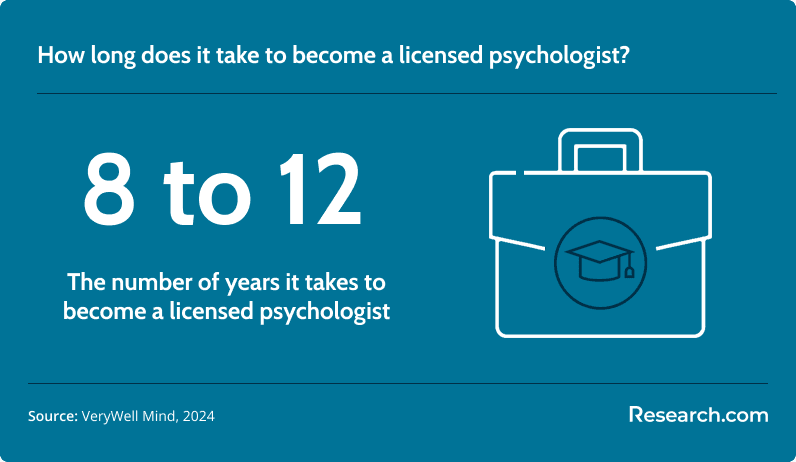
The timeline for a psychology degree depends on degree level, transfer credits, enrollment status, internships, research expectations, and whether the program is accelerated. A bachelor’s degree can be completed faster with transfer credits or year-round study, while doctoral pathways take longer because they include advanced coursework, research, clinical training, internship requirements, and licensure preparation.
- Associate Degree in Psychology: Usually completed in 2 years at a community college. It is commonly used as a transfer pathway into a bachelor’s program.
- Bachelor’s Degree in Psychology: Commonly takes 4 years of full-time study. Part-time students may need additional time.
- Master’s Degree in Psychology: Often requires 2-3 years after the bachelor’s degree, depending on whether the program includes a thesis, practicum, or internship.
- Doctorate in Psychology, including Ph.D. or Psy.D.: Usually takes 4-7 years beyond a bachelor’s or master’s degree, depending on research, practicum, dissertation, and internship requirements.
- Combined Programs: Some accelerated options allow students to complete bachelor’s and master’s study in approximately 5 years. Students who want a more integrated graduate route can also compare combined master’s and PsyD programs.
Students comparing psychology with adjacent helping professions may also look at flexible alternatives such as an online school for social work, especially if their long-term goal involves social services, case management, or clinical social work rather than psychology licensure.
Ways to shorten the timeline without weakening your preparation
| Strategy | How it can help | What to verify first |
| Transfer credits | Reduces duplicated general education or introductory coursework | Whether credits apply to the major, not just electives |
| Summer or intensive terms | Allows students to complete more credits per year | Whether the workload is realistic with work and family responsibilities |
| Accelerated bachelor’s-to-master’s pathway | May shorten the combined undergraduate and graduate timeline | Whether the graduate portion supports your career or licensure goal |
| Online coursework | Can offer scheduling flexibility for working adults | Accreditation, field placement rules, faculty access, and graduate school acceptance |
| Credit by examination | May help fulfill some general education requirements | Institutional policy and maximum allowable exam credits |
How much do psychologists and related professionals earn?
Salary in psychology depends heavily on job title, graduate education, licensure, specialization, work setting, geographic area, and experience. Psychologists earn an average salary of $92,740 per year. Related occupations have different pay levels: marriage and family therapists earn around $58,510, social workers earn around $58,380, mental health counselors earn around $53,710, and school counselors earn around $61,710.
Students should be cautious when estimating return on investment. A bachelor’s degree in psychology alone does not usually lead to the same salary range as licensed doctoral-level psychology roles. Graduate training, supervised practice, certification, and licensure can significantly affect career options. For example, students comparing behavioral intervention paths may find salary differences when reviewing BCBA vs. ABA salary information.
| Occupation | Average annual salary stated | Important context |
| Psychologists | $92,740 | Often requires advanced graduate study and licensure for independent clinical practice |
| Marriage and family therapists | $58,510 | Typically tied to graduate counseling or therapy preparation and state requirements |
| Social workers | $58,380 | Roles vary widely by degree level, licensure, and setting |
| Mental health counselors | $53,710 | Usually requires graduate-level training for licensed counseling roles |
| School counselors | $61,710 | Often requires school counseling credentials and state-specific approval |
Additional credentials can improve credibility in specific practice areas, but they should be selected carefully. Review whether a credential is recognized by employers, licensing boards, or professional organizations before paying for it. Resources on certifications in psychology can help students understand how supplemental training may fit into a resume.
A psychology bachelor’s degree can also be useful outside mental health. For example, students interested in workplace behavior, employee development, and organizational culture may later pursue human resources management. A human resources degree salary can be strong at the management level, with HR managers earning an average of more than $136,000 annually.
What skills help psychology students succeed?
Psychology students need more than curiosity about human behavior. Strong performance usually depends on reading stamina, analytical discipline, ethical judgment, writing ability, and comfort with data. The students who do best are often those who can connect theory to evidence rather than relying only on intuition.
- Critical thinking: You must compare theories, identify weak evidence, evaluate research claims, and avoid unsupported assumptions.
- Research and analytical ability: Psychology students learn to design studies, interpret data, understand statistics, and decide whether findings support a conclusion.
- Clear communication: Papers, presentations, case discussions, research reports, and client-facing settings require precise writing and careful speaking.
- Problem-solving: Applied psychology often involves choosing evidence-based approaches for real situations in schools, clinics, organizations, or communities.
- Empathy and emotional intelligence: Students entering counseling, clinical, school, or social service settings must listen carefully while maintaining professional boundaries.
- Time management: Psychology courses can involve extensive reading, lab assignments, research projects, exams, and group work.
- Ethical awareness: Students must understand confidentiality, informed consent, research ethics, cultural humility, and responsible use of psychological information.
- Data literacy: Even students who do not plan to become researchers need to read graphs, understand findings, and distinguish evidence from opinion.
How to prepare before starting a psychology major
- Take an introductory psychology course before declaring the major if possible.
- Strengthen writing skills because psychology programs often require research papers and literature reviews.
- Do not avoid statistics. It is central to understanding psychological evidence.
- Look for research labs, volunteer roles, peer support programs, or community service experiences early.
- Meet with an advisor to map your degree plan against graduate school or career requirements.
What psychology specializations can you choose?
Psychology specializations let students focus on a specific population, setting, method, or career outcome. The best specialization is not always the one that sounds most interesting; it should also match your preferred work environment, required degree level, licensure path, and tolerance for research, clinical work, or organizational consulting.
| Specialization | What it focuses on | Where professionals may work | Good fit for students who |
| Clinical Psychology | Assessment, diagnosis, and treatment of mental health disorders | Hospitals, private practices, rehabilitation centers, clinics | Want intensive clinical training and are prepared for graduate study and licensure |
| Forensic Psychology | Psychology applied to legal questions, criminal behavior, evaluations, and court-related work | Courts, law enforcement, correctional facilities, legal consulting, research settings | Are interested in law, assessment, ethics, and behavioral evidence |
| Industrial-Organizational Psychology | Workplace behavior, productivity, hiring, leadership, employee well-being, and organizational systems | Companies, consulting firms, HR departments, research groups | Want to apply psychology in business rather than clinical practice |
| Counseling Psychology | Life transitions, relationships, stress, coping, emotional well-being, and personal growth | Schools, community agencies, private practices, counseling centers | Want to support clients through common psychological and life challenges |
| Neuropsychology | Connections between brain function, cognition, emotion, and behavior | Hospitals, rehabilitation centers, research institutions, assessment clinics | Are comfortable with biology, neuroscience, assessment, and advanced training |
| Developmental Psychology | Human growth and change across the lifespan | Research, education, healthcare, policy, community programs | Want to study childhood, adolescence, aging, or lifespan development |
| School Psychology | Student learning, behavior, mental health, assessment, and school-based interventions | K-12 schools, districts, educational agencies, student support teams | Want to work with students, families, teachers, and educational systems |
| Cognitive Psychology | Memory, attention, perception, learning, language, and decision-making | Research labs, universities, technology, user experience, artificial intelligence-related settings | Enjoy experimental research, data, and questions about how people process information |
Students interested in clinical practice should carefully review program accreditation and licensure alignment. For example, those exploring clinical graduate training may compare APA accredited clinical psychology programs online. Students drawn to addiction services might also consider a cheap online substance abuse counseling degree. If your goal is to work with younger populations, review child psychologist requirements before choosing a program.
Is a psychology degree hard?
A psychology degree can be demanding, especially for students who expect it to be mostly discussion-based or intuitive. The challenging parts often include statistics, research methods, scientific writing, heavy reading, ethical reasoning, and exposure to difficult topics such as trauma, mental illness, addiction, family conflict, and crisis situations.
- Research intensity: Students must learn how psychological evidence is produced, tested, and interpreted.
- Statistics and methods: Data analysis can be difficult for students who have avoided math, but it is central to the major.
- Science requirements: BS and graduate programs may include biology, neuroscience, psychophysiology, or advanced quantitative work.
- Long training timeline: Master’s and doctoral pathways require sustained commitment, supervised practice, research, and sometimes comprehensive exams.
- Emotional load: Clinical, counseling, school, forensic, and social service topics can be personally and professionally intense.
- Ongoing learning: Psychology changes as research develops, so students and professionals must keep updating their knowledge.
The degree is manageable for students who build strong routines, seek help early, and treat psychology as a science rather than simply a people-focused major. It is often rewarding for students who enjoy evidence-based thinking, writing, service, and complex questions about behavior.
Employment projections for psychologists show a varied professional landscape. Out of the 221,600 psychologists projected, 87,000 will be clinical and counseling psychologists, 9,100 will be industrial-organizational psychologists, 66,000 will be school psychologists, and 59,400 will be general psychologists and all other. The chart below presents the projected employment distribution for psychologists in 2033 by occupation.
What are the usual requirements to complete a psychology degree?
Psychology degree requirements vary by institution and degree level, but most programs combine foundational coursework, research training, electives, and an applied or culminating experience. Graduate programs usually add supervised fieldwork, comprehensive exams, thesis or dissertation work, and professional preparation.
- Core psychology courses: Common requirements include introductory psychology, research methods, statistics, cognitive psychology, abnormal psychology, developmental psychology, and social psychology.
- Specialization electives: Students may choose courses in forensic psychology, neuropsychology, industrial-organizational psychology, counseling, school psychology, child development, or related fields.
- Laboratory or research experience: Many programs require students to collect data, analyze results, write reports, or participate in faculty-led research.
- Internship or practicum: Applied programs often include supervised experience in schools, clinics, community agencies, research centers, or organizational settings.
- Capstone, thesis, or dissertation: Undergraduate programs may require a final project, while graduate programs may require a thesis or doctoral dissertation based on original research.
- Comprehensive exams: Some graduate programs require exams to demonstrate mastery before advancing or graduating.
- Licensure preparation: Students seeking clinical, counseling, school, or other regulated roles must verify state-specific requirements before enrolling.
Questions to ask before choosing a psychology program
| Question | Why it matters |
| Is the institution properly accredited? | Accreditation affects credit transfer, graduate school admission, financial aid eligibility, and employer recognition. |
| Does the program meet licensure requirements in my state? | Online and out-of-state programs may not automatically satisfy local licensing rules. |
| What research, internship, or practicum opportunities are available? | Hands-on experience can influence graduate admissions and employability. |
| How are online students supported? | Remote learners need access to advising, faculty, library resources, tutoring, placement support, and career services. |
| What are the total costs beyond tuition? | Fees, books, residency requirements, travel, internship expenses, and lost work hours can affect affordability. |
| What do graduates do after completing the program? | Graduate outcomes help you judge whether the program aligns with your career goal. |
What should you check before choosing an online master’s in psychology?
An online master’s in psychology can be a practical option for working adults, career changers, and students who need schedule flexibility. However, convenience should not be the only deciding factor. Before enrolling, check accreditation, curriculum depth, faculty qualifications, practicum or internship expectations, research opportunities, student support, and whether the degree aligns with your intended career path.
Not every online psychology master’s degree leads to licensure, and not every program is designed for clinical practice. Some are research-oriented, some are applied, and others are intended as preparation for doctoral study. Cost also matters, so students comparing tuition-sensitive options can review affordable online master’s degree programs in psychology.
Online master’s in psychology: best fit and caution points
| Choose this option if | Be careful if |
| You need flexibility because of work, caregiving, or location | The program does not clearly explain field placement or licensure alignment |
| You are comfortable with independent study and online communication | You need frequent in-person faculty interaction to stay on track |
| You want research, applied psychology, or doctoral preparation | You assume “psychology master’s” automatically qualifies you for counseling licensure |
| You have confirmed institutional accreditation and program reputation | You are choosing based only on speed or low advertised tuition |
Are accelerated PsyD programs a smart option?
Accelerated PsyD programs are designed for students who want doctoral-level clinical training in a shorter format. These programs can be appealing, but the pace is intense. A compressed schedule may leave less room for part-time work, personal obligations, research exploration, or remediation if a student struggles academically.
Before choosing a faster doctoral route, examine accreditation, internship placement expectations, clinical training hours, faculty supervision, dissertation or doctoral project requirements, and licensure outcomes. Students comparing shortened doctoral pathways can review 3-year PsyD programs to understand how program structures differ.
Accelerated PsyD programs may fit students who:
- Have strong academic preparation in psychology or a closely related field.
- Can manage a heavy course load with limited scheduling flexibility.
- Have already confirmed that the program supports their state licensure goals.
- Prefer clinical practice over a research-intensive Ph.D. pathway.
- Understand that faster completion does not remove internship, supervision, or licensing requirements.
What is the job outlook for psychologists?
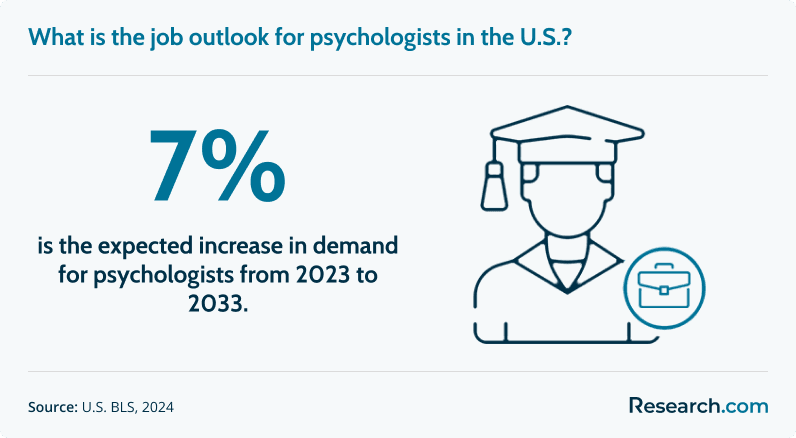
The job outlook for psychologists is favorable, with employment projected to grow by seven percent from 2023 to 2033, which is faster than the average for all occupations. This growth is expected to produce approximately 13,000 job openings each year over the decade, partly because workers move into other occupations or leave the labor force.
Demand for psychological services is expected across schools, hospitals, mental health centers, social service agencies, and other settings. Broader awareness of mental health, student needs, workplace well-being, behavioral health, and psychological assessment supports continued interest in the profession. Still, job prospects vary by specialty, state, licensure status, and level of training.
How can you complete a psychology degree faster?
Fast-tracking a psychology degree requires more than enrolling in the quickest program you can find. The safest approach is to accelerate general education and elective requirements while protecting the quality of psychology coursework, research preparation, and field experience. Students should also confirm that faster formats are accepted by graduate schools, licensing boards, and employers.
Common acceleration strategies include transfer credits, summer terms, online courses, credit-by-examination where allowed, and combined bachelor’s-to-master’s routes. Students comparing faster online options can use this guide on how fast you can get a psychology degree online to evaluate program formats and support services.
Common mistakes when trying to accelerate a psychology degree
| Mistake | Better approach |
| Choosing the shortest program without checking accreditation | Verify institutional accreditation and any required programmatic accreditation first |
| Assuming all credits will transfer | Request a written transfer evaluation before enrolling |
| Overloading every term | Balance speed with GPA, research experience, and mental health |
| Skipping internships or research experience | Build practical experience even if it slightly extends the timeline |
| Ignoring licensure rules | Match your program to your state and career requirements before committing |
How can psychology students manage stress?
Psychology students often study topics that are emotionally heavy while managing reading, exams, statistics assignments, research projects, and fieldwork. Stress management is not a side issue; it directly affects academic performance, retention, and readiness for client-facing or high-responsibility roles.
- Use a weekly planning system: Track readings, deadlines, exams, lab work, practicum hours, and personal commitments in one place.
- Break large assignments into smaller tasks: Literature reviews, research papers, and presentations are easier when divided into source gathering, outlining, drafting, revising, and proofreading.
- Protect study blocks: Set consistent times for coursework and avoid relying on last-minute work before exams or due dates.
- Use support services early: Academic advisors, counseling centers, writing labs, tutoring, disability services, and faculty office hours can prevent small problems from becoming major setbacks.
- Practice short recovery habits: Brief walks, breathing exercises, mindfulness, stretching, and device-free breaks can help reset attention.
- Build a peer network: Study groups and cohort connections can reduce isolation, especially in online programs.
- Be realistic about accelerated pathways: Students exploring the fastest online counseling degree options should compare speed with workload, field placement demands, and licensure requirements.
What graduates say about psychology degrees
-
: "
Psychology gave me a career where the work feels meaningful. Supporting people through difficult moments and seeing progress over time has made the long training path feel worthwhile. – Shane
"
-
: "
Industrial-organizational psychology showed me how useful behavioral science can be in the workplace. I get to help organizations improve collaboration, communication, and employee satisfaction while solving practical business problems. – Jerome
"
-
: "
I entered psychology thinking mainly about classes, but research became the door that changed my plans. Designing studies, sharing findings, and continuing to learn have kept the field intellectually exciting. – Priya
"
Should you specialize in forensic psychology?
Forensic psychology may be a strong fit if you are interested in the intersection of behavior, mental health, law, public safety, assessment, and legal decision-making. This specialization can involve work related to evaluations, expert consultation, correctional settings, criminal behavior research, victim services, competency issues, and legal processes.
It is not the same as crime drama profiling. Real forensic psychology requires careful documentation, ethical judgment, assessment skill, and the ability to communicate clearly in legal contexts. Students who want a cost-conscious graduate pathway can compare options for an affordable online forensic psychology master’s.
What accreditation factors matter in psychology programs?
Accreditation is one of the most important quality checks in psychology education. At minimum, confirm that the college or university has recognized institutional accreditation. For doctoral clinical, counseling, or school psychology pathways, programmatic accreditation can also be critical for internship eligibility, licensure mobility, and employer confidence.
When evaluating programs, ask whether the curriculum matches current professional standards, whether faculty have relevant expertise, how students complete supervised training, and what outcomes graduates achieve. For advanced clinical training, students may compare top APA accredited PsyD programs.
Accreditation checklist
- Confirm institutional accreditation through official sources before applying.
- Check whether your intended profession requires programmatic accreditation.
- Ask whether online students complete any required in-person residencies or field placements.
- Verify whether the program meets licensure requirements in the state where you plan to practice.
- Review graduate outcomes, internship support, and faculty qualifications.
Which psychology careers may offer stronger financial returns?
Financial return in psychology is usually tied to specialization, licensure, graduate education, experience, and setting. Fields such as industrial-organizational psychology, neuropsychology, forensic psychology, and advanced clinical practice may offer stronger earning potential in some contexts because they require specialized expertise. However, no degree can guarantee a particular salary.
Students should compare total program cost, years of training, unpaid or lower-paid supervised experience, licensure requirements, and likely job settings before choosing a pathway. For a deeper comparison, review highest paying careers in psychology.
How can certifications add value to a psychology degree?
Supplementary certifications can help students and professionals demonstrate focused skills, especially in applied areas such as behavior analysis, crisis response, research methods, trauma-informed practice, or organizational training. Certifications are most useful when they are recognized by employers or connected to a clear career goal.
Students interested in applied behavior analysis can compare best online ABA certificate programs as one possible way to add job-relevant behavioral assessment and intervention training. Before enrolling, confirm prerequisites, supervision requirements, exam eligibility, and whether the certificate aligns with your state and career plans.
How can ABA training strengthen a psychology career?
Applied behavior analysis, or ABA, focuses on understanding behavior through observation, data, reinforcement, intervention planning, and measurable outcomes. For psychology students, ABA training can add practical skill in behavior assessment and behavior change, especially for roles involving developmental disabilities, autism services, education, clinical support, and organizational behavior.
Students who want a structured ABA graduate pathway can review top applied behavior analysis graduate programs. The key is to confirm that the program’s coursework, supervision, and credential preparation match the role you want.
Should you focus on child and adolescent psychology?
Child and adolescent psychology is a strong option for students who want to work with children, teens, families, schools, pediatric settings, or community programs. This specialization requires understanding development, family systems, learning, behavior, trauma, assessment, prevention, and age-appropriate intervention strategies.
Because work with minors often involves schools, parents, healthcare providers, and legal or ethical safeguards, students should choose programs with strong supervision and relevant field experiences. Cost-conscious students can compare options for an online master’s in child psychology.
Is an accelerated online master’s in psychology right for career growth?
An accelerated online master’s in psychology may help working professionals gain advanced training more quickly, but it is not the right choice for everyone. It can be useful if you already have strong academic preparation, clear career goals, and enough time each week for intensive coursework. It can be risky if you need a slower pace, extensive clinical placement support, or a program that leads to a specific license and have not verified requirements.
Before enrolling, compare curriculum, workload, faculty access, accreditation, total cost, transfer policies, fieldwork expectations, and career outcomes. Students interested in compressed timelines can review an online master’s in psychology one year guide to understand available program models.
Key Insights
- A psychology degree is best viewed as a science-based pathway into behavior, research, mental health, education, business, and human services, not simply a general “people skills” major.
- Degree level matters. A bachelor’s degree can open entry-level and adjacent career options, while licensed psychologist roles generally require graduate education, supervised training, and state licensure.
- Psychologists earn an average annual salary of $92,740, but earnings vary by specialty, degree level, licensure, employer, and location.
- The job outlook for psychologists is positive, with employment projected to grow by seven percent from 2023 to 2033 and approximately 13,000 openings expected each year over the decade.
- Specializations such as clinical, counseling, forensic, school, industrial-organizational, neuropsychology, ABA, and child and adolescent psychology should be chosen based on required credentials, work setting, and long-term goals.
- Online and accelerated psychology programs can be useful, but students should verify accreditation, field placement support, transfer policies, licensure alignment, and total cost before enrolling.
- The most common mistakes are choosing only by speed or tuition, overlooking accreditation, assuming all online programs meet licensure requirements, and underestimating the importance of research and supervised experience.
Resources:
- U.S. Bureau of Labor Statistics. (2024). Occupational Outlook Handbook: Psychologists. https://www.bls.gov/ooh/life-physical-and-social-science/psychologists.htm#tab-8
- VeryWell Mind. (2024). How Long Does It Take to Become a Psychologist? https://www.verywellmind.com/how-long-does-it-take-to-become-a-psychologist-2794935
Other Things You Should Know About Earning a Psychology Degree
In 2027, earning a psychology degree may be more challenging due to increasingly complex subjects like neuropsychology and data analysis. Programs are adapting to integrate advances in psychological research, making the curriculum more rigorous but also more aligned with current scientific understanding.
Online psychology degree programs can be challenging for busy individuals due to the need for strong time management skills. Balancing work, family, and study often requires disciplined scheduling. However, flexible online formats in 2027 help accommodate varied lifestyles, making degrees more accessible than ever.