2027 Nebraska Psychology Licensure Requirements – How to Become a Psychologist in Nebraska

Co-Founder and Chief Data Scientist
Becoming a licensed psychologist in Nebraska requires more than choosing a psychology major. You need to understand which degree level leads to licensure, whether a program supports your specialty goals, how supervised experience works, what the Nebraska Psychology Board expects, and how costs, exams, and renewal requirements affect your timeline.
This guide is written for students comparing psychology programs in Nebraska, graduates preparing for licensure, and professionals deciding whether psychology, counseling, school psychology, social work, behavior analysis, or another mental health pathway is the better fit. Nebraska currently has 380 psychologists with a Nebraska psychology license serving schools, hospitals, mental health clinics, private practices, and community settings. If you are still comparing closely related roles, you can compare careers in counseling, therapy, and psychology before committing to one licensure route.
Below, you will find a practical overview of Nebraska psychology license requirements, doctoral education expectations, EPPP preparation, renewal rules, top psychology programs in Nebraska for 2027, career alternatives, specializations, financing options, and the questions to ask before enrolling.
Nebraska Psychology License Table of Contents
- Psychology Careers and Licensure in Nebraska: Industry Overview
- Education Needed for a Nebraska Psychology License
- How the Nebraska Psychology License Application and Renewal Process Works
- Top Psychology Programs in Nebraska for 2027
- How to Select the Right Nebraska Psychology Program
- Ways to Pay for Psychology Education and Licensure in Nebraska
- How Business Psychology Fits Nebraska’s Workforce
- Current Trends Affecting Psychology Practice and Licensure in Nebraska
- Psychology Specializations Available in Nebraska
- How Social Work Can Strengthen Mental Health Services in Nebraska
- School Psychology in Nebraska: Challenges and Opportunities
- Criminal Psychology Careers in Nebraska
- Substance Abuse Counseling as a Nebraska Career Path
- Nebraska LPC License Requirements
- How to Build a BCBA Career in Nebraska
- Licensed Professional Counselor Requirements and Opportunities in Nebraska
- Legal and Ethical Issues for Nebraska Psychologists
- Faster Ways to Advance a Counseling Career in Nebraska
Quick Answer: How Do You Become a Licensed Psychologist in Nebraska?
To qualify for a Nebraska psychology license, you generally need a doctoral degree in psychology from an American Psychological Association-accredited program or a program judged equivalent to APA standards, an approved one-year internship, supervised practice under a Nebraska-licensed psychologist, approval from the Nebraska Department of Health and Human Services, and a passing score on the Examination for the Professional Practice of Psychology, known as the EPPP.
A bachelor’s or master’s degree in psychology can prepare you for graduate study or psychology-adjacent roles, but it does not by itself qualify you to practice independently as a licensed psychologist in Nebraska. Students who want a shorter path into mental health practice may want to compare psychology licensure with counseling, social work, school psychology, substance abuse counseling, or applied behavior analysis routes.
| Decision point | What it means for Nebraska students |
| Independent psychologist licensure | Requires doctoral-level training, supervised experience, and the EPPP. |
| Undergraduate psychology degree | Useful for research, human services, business, graduate school preparation, and entry-level roles, but not enough for independent psychology licensure. |
| Program accreditation | APA accreditation or APA-equivalent preparation is central when pursuing psychologist licensure. |
| License maintenance | Nebraska psychologists must complete 24 hours of approved continuing education every two years. |
| Cost planning | Students should budget for tuition, fees, exam preparation, application fees, supervision-related expenses, and renewal costs. |
Overview of the Psychology Industry in Nebraska
Nebraska’s psychology workforce serves clients across urban, rural, educational, medical, correctional, and community-based settings. Demand is shaped by the need for mental health care among older adults, people managing chronic health conditions, students requiring assessment and intervention, and communities seeking more accessible behavioral health support.
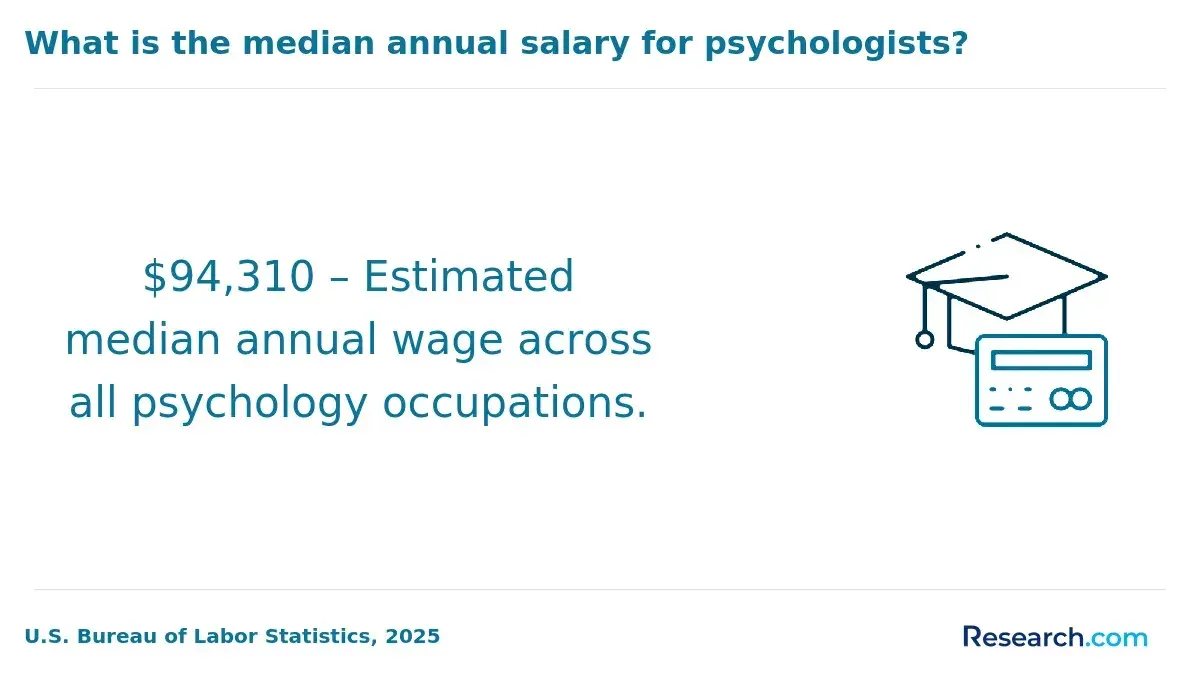
Compensation varies by role, setting, experience, and geographic area. One cited wage figure lists the median annual salary for clinical and counseling psychologists employed after completing Nebraska counseling licensure-related requirements at $106,610. School psychologists are listed at an average of $83,950. Because salary sources may classify roles differently, this guide also notes other cited wage summaries later in the Key Insights section; students should verify current figures with official labor and licensing sources before making financial decisions.
Professional networking is also important in Nebraska. Organizations such as the Nebraska Psychological Association and the Nebraska School Psychologists Association can help students and practitioners find continuing education, advocacy updates, peer connections, and specialty guidance. For example, if you are asking, “what can you do with a sports psychology degree,” professional association events and mentors can clarify whether sport, performance, clinical, school, or counseling pathways best match your goals.
Nebraska also has several colleges and universities offering psychology-related programs. Institutions commonly considered by Nebraska students include the University of Nebraska-Lincoln, Creighton University, the University of Nebraska at Omaha, Nebraska Wesleyan University, and Bellevue University. Program options range from bachelor’s degrees to doctoral study, with some schools offering coursework related to research, behavior, neuroscience, organizational psychology, or the best behavioral science programs.
Nebraska Psychology License Educational Requirements
The core academic requirement for a Nebraska psychology license is a doctoral degree in psychology from a program accredited by the American Psychological Association (APA) or from a program that meets standards considered equivalent to APA expectations. Depending on your circumstances, you may compare campus-based programs with online graduate programs psychology, but licensure-focused students should confirm that any program format supports Nebraska’s licensing requirements.
Psychology doctoral degrees commonly include the Doctor of Philosophy, or PhD, and the Doctor of Psychology, or PsyD. Both pathways typically require at least four years of full-time study after a bachelor’s degree. According to Zippia, 23% of psychologists have PhDs, while 47% have a bachelor’s degree. Students should interpret those figures carefully because holding a psychology-related degree and qualifying for psychologist licensure are not the same thing.
Doctoral psychology programs usually combine advanced coursework, research training, assessment and intervention preparation, supervised clinical or applied experience, and a dissertation or comparable research project. The dissertation requirement demonstrates that the student can design, conduct, interpret, and communicate independent psychological research.
After the doctoral degree, Nebraska licensure applicants must complete a one-year postdoctoral internship in psychology. This supervised experience gives future psychologists the chance to apply doctoral training in real client, school, medical, organizational, or clinical environments while working under qualified oversight.
If your doctorate is not from an APA-accredited program, you may still have a path to licensure, but you should expect additional review. The Nebraska Board of Examiners in Psychology may require documentation showing that your program is equivalent to APA-accredited training. Before enrolling in a non-APA program, ask the school directly how graduates have met Nebraska requirements and request written evidence, not verbal assurances.
Nebraska Psychology License Application and Renewal Process
Nebraska’s psychology licensing process starts with eligibility for provisional licensure. Applicants generally need to satisfy three major conditions before moving forward:
- Doctoral education: The applicant must hold a doctoral degree from an APA-accredited psychology program or from a program considered equivalent to APA standards.
- Internship experience: The applicant must complete a one-year internship accredited by the APA or judged equivalent to that requirement.
- Supervised practice: The applicant must work under the supervision of a psychologist licensed in Nebraska.
After provisional licensure, applicants must pass the Examination for the Professional Practice of Psychology, commonly called the EPPP. The EPPP is a national standardized exam covering core psychology knowledge and professional competencies. Candidates must receive approval from the Department of Health and Human Services before scheduling the exam. The initial fee for a provisional Nebraska psychology license is $50, and the psychologist license initial fee is $183.
How to Prepare for the EPPP
The EPPP is not an exam to approach casually. It covers a broad range of psychological science, ethics, assessment, diagnosis, intervention, biological bases of behavior, social and cultural factors, research methods, and professional practice topics. A strong preparation plan should include content review, timed practice, and test-day strategy.
- Build a realistic study calendar. Work backward from your target test date and assign topics by week. Leave time for review instead of trying to learn everything at the end.
- Use practice exams strategically. Practice tests help you understand pacing, question style, and weak content areas. Review both correct and incorrect answers so you learn the reasoning behind each item.
- Protect sleep before the test. A well-rested mind is better for complex reasoning, memory retrieval, and sustained focus than last-minute cramming.
- Eat for steady energy. Choose a breakfast that will not lead to a rapid energy crash. Complex carbohydrates and protein-rich foods such as oatmeal or eggs can support concentration.
- Do not get stuck on one question. If an item is taking too long, mark it for review and move on. Time management can protect your score as much as content knowledge.
Continuing Education Requirements
Nebraska requires licensed psychologists to complete continuing education so their knowledge and practice remain current. Continuing education may include approved online courses, conferences, workshops, ethics training, specialty training, or other activities relevant to psychological practice.
To renew a psychology license in Nebraska, psychologists must complete 24 hours of approved continuing education every two years (Nebraska Department of Health and Human Services, n.d.). The continuing education should relate to the psychologist’s professional work. The renewal fee for the psychologist license is $183.
License Reciprocity and Interstate Practice
Nebraska participates in PSYPACT, which can support interstate telepsychology and temporary in-person practice for eligible psychologists from participating jurisdictions. Reciprocity does not mean every out-of-state psychologist can automatically practice without review; it means Nebraska has a framework that may reduce duplication for qualified professionals.
Psychologists trained or licensed outside Nebraska, including international applicants, should be prepared to meet Nebraska’s requirements, which may include passing the EPPP, completing a criminal background check, and submitting documentation such as a home-state or home-country license. Before accepting clients in Nebraska, confirm your authorization directly with the appropriate licensing authority.
List of Top Psychology Programs in Nebraska for 2027
Research.com reviewed reliable public information to identify Nebraska institutions offering notable psychology programs for 2027. The analysis considered factors such as academic quality, enrollment information, affordability, licensure preparation indicators, and other relevant program characteristics. Rankings should be used as a starting point, not the only basis for enrollment. Your best choice depends on degree level, career goal, accreditation, cost, delivery format, faculty expertise, and whether the program supports the licensure or graduate pathway you need.
| School | Program level or type | Best fit | Key cost or credit detail |
| University of Nebraska Omaha | PhD in Psychology | Students seeking doctoral research training in industrial/organizational psychology, behavioral neuroscience, or developmental psychology | $353 per credit for in-state students; $849 per credit for out-of-state students |
| Nebraska Wesleyan University | Psychology B.A. or B.S. | Undergraduates preparing for graduate school, research, internships, or applied psychology-related careers | $40,648 per year |
| Doane University | Psychology program | Students interested in human behavior, mental processes, research, and senior-level independent work | $52,106 per year |
| Bellevue University | Bachelor of Science in Psychology | Students wanting flexible online or in-person study with emphasis on scientific inquiry and applied psychological concepts | $339 per credit hour |
| Wayne State College | Bachelor of Arts or Bachelor of Science in Psychology | Students seeking a broad undergraduate foundation in behavior, research, statistics, cognition, physiology, and abnormal psychology | $192 per credit hour |
1. University of Nebraska Omaha
The PhD program in Psychology at the University of Nebraska Omaha is designed for students who want intensive research preparation for academic, research, or applied psychology careers. The program includes concentrations in Industrial/Organizational Psychology, Developmental Psychology, and Neuroscience and Behavior. Students complete advanced psychology coursework, research methods, statistics, practicum experiences, and a dissertation.
- Program length: Up to 10 years
- Tracks or concentrations: Industrial/Organizational Psychology, Behavioral Neuroscience, and Developmental Psychology
- Industrial/Organizational Psychology
- Behavioral Neuroscience
- Developmental Psychology
- Cost per credit: $353 for in-state students and $849 for out-of-state students
- Credits required to graduate: 90 credit hours
- Accreditation: Higher Learning Commission (HLC)
2. Nebraska Wesleyan University
The Psychology B.A. and B.S. options at Nebraska Wesleyan University provide a 36-hour psychology curriculum for students preparing for graduate study, research, applied psychology-related employment, or human services roles. The program includes core study in psychology, research methods, statistics, electives, and a capstone experience such as research, an internship, or another culminating project.
- Program length: Four years
- Tracks or concentrations: Cognitive Psychology, Psychology of Sleep and Dreaming, and Behavioral Neuroscience
- Cognitive Psychology
- Psychology of Sleep and Dreaming
- Behavioral Neuroscience
- Cost per year: $40,648
- Credits required to graduate: 36 hours
- Accreditation: HLC
3. Doane University
The Psychology program at Doane University is a 35-credit program focused on how people think, feel, develop, and behave as individuals and in groups. Coursework can support interests in social, cognitive, abnormal, personality, and developmental psychology. Senior psychology students complete a senior seminar research project, which can be useful preparation for graduate school or research-focused employment.
- Program length: Four years
- Tracks or concentrations: Abnormal Psychology, Social Psychology, and Adult Development
- Abnormal Psychology
- Social Psychology
- Adult Development
- Cost per year: $52,106
- Credits required to graduate: 35 credits
- Accreditation: HLC
4. Bellevue University
The Bellevue University Bachelor of Science in Psychology emphasizes scientific thinking, research literacy, communication, and real-world application of psychological concepts. Students can study online or in person, which may help working adults and transfer students build a more flexible schedule. Coursework introduces psychological theories, research methods, data interpretation, writing, speaking, and interpersonal communication.
- Program length: Four years
- Tracks or concentrations: Biological Psychology, Human Memory and Cognition, and Personality Theory
- Biological Psychology
- Human Memory and Cognition
- Personality Theory
- Cost per credit hour: $339
- Credits required to graduate: 41 credit hours
- Accreditation: HLC
5. Wayne State College
The Wayne State College Bachelor of Arts and Bachelor of Science in Psychology options help students build skills in research, statistical reasoning, critical analysis, and the study of thought, emotion, and behavior. Students also examine biological influences such as the brain, genes, and hormones, along with methods used to understand and treat abnormal psychology.
- Program length: Four years
- Tracks or concentrations: Physiological Psychology, Cognitive Psychology, and Experimental Psychology
- Physiological Psychology
- Cognitive Psychology
- Experimental Psychology
- Cost per credit hour: $192
- Credits required to graduate: 120 credit hours
- Accreditation: HLC
How to Choose the Ideal Psychology Program in Nebraska
The right psychology program is the one that fits your intended license, degree level, budget, schedule, and specialty interests. A high-ranking undergraduate program may be excellent for graduate school preparation but may not be enough if your goal is independent practice. A doctoral program may be necessary for psychologist licensure but may be more time-intensive and expensive than counseling or social work if your goal is direct mental health counseling.
| Factor to check | Why it matters | Questions to ask before enrolling |
| Accreditation | Licensure-focused psychology students need programs that meet recognized educational standards. | Is the program APA-accredited, HLC-accredited, or otherwise accepted for my intended Nebraska license? |
| Degree level | Bachelor’s, master’s, and doctoral degrees lead to different career and licensure options. | Will this degree qualify me for my target role, or will I need more graduate study? |
| Specialization | Clinical, school, industrial-organizational, developmental, forensic, and behavioral paths require different preparation. | Does the program offer faculty, practicum sites, research, and courses in my focus area? |
| Licensure preparation | Not every psychology program is designed for Nebraska psychologist licensure. | What percentage of graduates pursue licensure, internships, doctoral admission, or EPPP preparation? |
| Format | Online, hybrid, part-time, and campus formats affect flexibility and field placement access. | Can I complete required labs, practica, internships, or supervision in my location? |
| Total cost | Tuition is only one part of the investment. | What are the full costs for fees, books, travel, applications, exams, and unpaid fieldwork? |
| Career support | Internships, research labs, advising, and alumni networks can affect your next step. | Does the school help with graduate applications, practicum placements, assistantships, or job searches? |
- Start with the license or role you want. If you want to become a licensed psychologist, confirm doctoral and internship requirements first. If you want to counsel clients sooner, compare counseling, social work, and substance abuse counseling pathways.
- Verify accreditation with official sources. Do not rely only on a brochure or admission conversation. Check whether the program’s accreditation supports Nebraska licensure expectations.
- Compare more than tuition. A lower sticker price may not be the best value if transfer credits are limited, field placement support is weak, or the program does not align with your license goal.
- Look at faculty and applied opportunities. Students interested in neuroscience, school psychology, forensic psychology, or industrial-organizational psychology should review faculty research, labs, practicum sites, and elective availability.
- Use rankings carefully. Rankings can help you create a shortlist, but they cannot tell you whether a specific program fits your schedule, finances, licensing plan, and career direction. For a broader comparison, review the best colleges for psychology in Nebraska.
What Career Opportunities Exist in Psychology Outside Traditional Therapy?
A psychology degree can lead to more than one career path. While licensed clinical work requires advanced credentials, psychology training also develops skills in research, communication, data interpretation, behavior analysis, assessment, and problem solving. Those skills can be useful in business, education, government, legal settings, health care administration, and human services.
| Career area | How psychology applies | Who should consider it |
| Industrial-organizational psychology | Uses psychology to improve hiring, training, performance, leadership, employee satisfaction, and organizational systems. | Students interested in workplace behavior, analytics, consulting, and business outcomes. |
| Human resources and talent development | Applies knowledge of motivation, assessment, communication, and group dynamics to recruiting and employee development. | Psychology graduates who want people-focused business roles without clinical licensure. |
| Market research and consumer behavior | Uses surveys, focus groups, behavioral data, and preference analysis to understand decision-making. | Students who enjoy research design, statistics, communication, and marketing strategy. |
| Forensic psychology | Connects psychological knowledge with legal systems, risk assessment, correctional settings, and criminal behavior analysis. | Students interested in law, public safety, courts, corrections, and mental health assessment. |
These options allow psychology graduates to use behavioral science without necessarily providing therapy. However, some roles, especially forensic, assessment, school-based, or clinical-adjacent positions, may still require graduate education, supervised experience, or specialized credentials.
How Can I Finance My Psychology Education and Licensure in Nebraska?
Psychology education can involve multiple cost layers: undergraduate tuition, graduate tuition, fees, books, research expenses, application fees, exam preparation, licensure fees, and possible relocation or travel for internships and practica. Students should compare total program cost, not just tuition per credit.
Potential funding sources include institutional scholarships, federal grants, assistantships, employer tuition support, professional association scholarships, and loan repayment programs tied to service in underserved areas. Some Nebraska universities may also provide tuition reimbursement options or targeted support for students entering shortage areas. If you are considering an advanced business-focused path, an online PhD industrial organizational psychology may be worth comparing against traditional campus-based doctoral study, especially if you need flexibility.
| Cost or funding issue | What to check |
| Scholarships and grants | Ask whether awards are renewable, need-based, merit-based, or restricted to psychology majors or graduate students. |
| Assistantships | Doctoral students should ask about teaching, research, and clinical assistantships, including tuition remission and workload. |
| Transfer credits | Undergraduate transfer students should confirm how many credits apply to the major and graduation requirements. |
| Licensure fees | Budget for provisional license fees, psychologist license fees, renewal fees, background checks, and exam-related costs. |
| Fieldwork expenses | Practicum and internship placements may affect transportation, schedule flexibility, and income while training. |
The Role of Business Psychology in Nebraska’s Evolving Workforce
Business psychology applies psychological science to workplace behavior, leadership, team performance, employee well-being, selection, training, and organizational change. In Nebraska, this can be relevant to employers in agriculture, technology, health care, manufacturing, financial services, education, and government.
Students drawn to employee behavior, workplace motivation, leadership assessment, organizational data, and performance improvement may want to explore a business psychology degree. This pathway may fit those who want to use psychology in organizations rather than provide individual therapy.
What Are the Emerging Trends in Psychology Licensure and Practice in Nebraska?
Several trends are changing how psychologists and psychology students should plan their careers. Telehealth remains one of the most important. Virtual mental health services expanded significantly during the COVID-19 pandemic, and telepsychology continues to affect access, privacy, documentation, client safety, and interstate practice. Nebraska psychologists who offer remote services must understand state rules, PSYPACT participation, secure technology requirements, informed consent, and emergency planning for clients in different locations.
Artificial intelligence and data analytics are also influencing psychology. AI-supported tools may assist with screening, documentation, administrative workflows, treatment planning, or data interpretation, but they do not replace professional judgment, ethical responsibility, or client-centered care. Psychology students should learn how to evaluate digital tools critically, protect confidentiality, identify bias, and avoid overreliance on automated recommendations. Students at the beginning of their education may use a foundational option such as a 2-year psychology degree online to explore the field before committing to advanced licensure training.
Cultural competence, diversity, equity, and inclusion are also central to current practice. Nebraska psychologists may serve clients from varied racial, cultural, socioeconomic, linguistic, rural, immigrant, veteran, and disability communities. Ethical practice requires more than good intentions; it requires training, consultation, self-awareness, and evidence-informed adaptation to the client’s context.
What Specializations Are Available for Psychologists in Nebraska?
Nebraska psychology students can pursue interests in clinical psychology, counseling psychology, school psychology, developmental psychology, neuroscience, industrial-organizational psychology, forensic psychology, health psychology, and related areas. Some students also move toward marriage and family therapy, which follows a separate licensure pathway and may require an MFT license in Nebraska. The best specialization depends on the population you want to serve, the setting where you want to work, and the license or credential required for that role.
| Specialization | Typical focus | Best fit for students who want to... |
| Clinical psychology | Assessment, diagnosis, treatment, and research related to mental and behavioral health. | Provide psychological services in clinical, hospital, community, or private practice settings. |
| School psychology | Student assessment, learning support, behavior intervention, and school consultation. | Work with children, families, teachers, and school systems. |
| Industrial-organizational psychology | Workplace behavior, selection, training, leadership, productivity, and employee well-being. | Apply psychology in business, consulting, HR, or organizational development. |
| Forensic or criminal psychology | Behavioral analysis, legal contexts, corrections, risk assessment, and justice-related services. | Connect psychology with courts, public safety, or correctional systems. |
| Marriage and family therapy | Relationship dynamics, family systems, couples counseling, and family-based intervention. | Work with couples and families through a therapy-focused licensure route. |
Can Social Work Enhance Mental Health Services in Nebraska?
Social work complements psychology by emphasizing community resources, advocacy, case management, crisis support, systems navigation, and services for vulnerable populations. In underserved Nebraska communities, social workers often help connect clients with housing, health care, benefits, family services, and ongoing mental health support.
Students who want a client-facing career that combines counseling-related skills with community intervention may want to compare psychology with social work. To understand the educational route, review what degree do you need to be a social worker in Nebraska.
What Are the Unique Challenges and Opportunities for School Psychologists in Nebraska?
School psychologists work at the intersection of mental health and education. In Nebraska, they may assess learning and behavioral needs, support individualized interventions, consult with teachers, collaborate with families, and help schools improve academic and social-emotional outcomes.
This role requires knowledge of student development, assessment, special education processes, behavior support, crisis response, and school policy. Rural access, staffing constraints, and changing student mental health needs can create challenges, but they also make school psychologists valuable members of education teams. For a detailed pathway, review how to become a school psychologist in Nebraska.
What Are the Career Prospects for Criminal Psychologists in Nebraska?
Criminal psychology connects behavioral science with criminal justice. Professionals in this area may contribute to behavioral analysis, risk assessment, correctional programming, treatment planning, consultation, or research involving justice-involved populations.
This path requires careful academic planning because roles can differ widely. Some positions require doctoral psychology training, while others may be available through counseling, forensic mental health, corrections, research, or criminal justice preparation. Students should seek internships, research projects, or field experiences in forensic or correctional settings. To explore the route more closely, review how to become a criminal psychologist in Nebraska.
Is Substance Abuse Counseling a Viable Career Path in Nebraska?
Substance abuse counseling is a practical mental health career option for students who want to work directly with individuals and communities affected by addiction, recovery, relapse prevention, and co-occurring behavioral health needs. This field can complement psychology but follows its own credentialing and practice expectations.
Professionals in this area may work in outpatient programs, residential treatment centers, hospitals, correctional programs, community agencies, or prevention initiatives. If you want a more targeted addiction recovery path rather than the longer psychologist licensure route, review how to become a substance abuse counselor in Nebraska.
What Are the Nebraska LPC License Requirements?
The licensed professional counselor pathway is separate from psychologist licensure. In Nebraska, becoming an LPC generally requires a master’s degree from an accredited counseling or related program, supervised clinical experience, a state licensure examination, verified academic records, documentation of clinical hours, a criminal background check, and applicable fees.
LPCs also complete continuing education to maintain professional competency and license standing. This route may be a better fit than doctoral psychology for students who primarily want to provide counseling services and prefer a master’s-level pathway. For a closer look, review Nebraska LPC license requirements.
What Steps Are Necessary to Build a Board Certified Behavior Analyst Career in Nebraska?
A Board Certified Behavior Analyst, or BCBA, uses applied behavior analysis to assess behavior, design interventions, measure outcomes, and support behavior change. This specialization is often used in education, autism services, developmental disability support, behavioral health programs, and organizational settings.
Students interested in this route should complete approved behavior analysis coursework, gain supervised field experience with qualified professionals, and meet examination and state-specific requirements. Because BCBA work is distinct from psychologist licensure, compare credential requirements before choosing a graduate program. For step-by-step guidance, see how to become a BCBA in Nebraska.
What Are the Requirements and Opportunities for Licensed Professional Counselors in Nebraska?
Licensed professional counselors in Nebraska provide mental health counseling through a master’s-level licensure route. This path generally includes an accredited counseling or related graduate degree, supervised clinical practice, examination requirements, an application process, and continuing education.
For students focused on direct counseling rather than psychological testing, research-intensive doctoral training, or independent psychologist licensure, the LPC route can be a strong alternative. Career settings may include community agencies, schools, clinics, private practices, hospitals, and nonprofit organizations. For detailed steps, review how to become an LPC in Nebraska.
What Are the Key Legal and Ethical Considerations for Practicing Psychology in Nebraska?
Nebraska psychologists must follow state law, licensing rules, professional ethics, confidentiality requirements, informed consent standards, documentation expectations, and client safety obligations. Ethical practice includes explaining services clearly, protecting client privacy, using evidence-informed methods, staying within one’s competence, and seeking consultation when cases raise complex clinical, legal, or cultural issues.
Psychologists must also understand mandatory reporting duties, including requirements related to suspected abuse or imminent harm. Telehealth adds further responsibilities involving secure platforms, emergency planning, client location, interstate practice authority, and HIPAA-related privacy protections. Students considering work with children should also understand the special consent, reporting, family, and school-related issues that can arise in child psychology jobs.
Is There a Fast Track to Elevate Your Counseling Career in Nebraska?
Accelerated counseling pathways may use streamlined coursework, integrated fieldwork, intensive schedules, flexible formats, and competency-based assessments to help students move more efficiently toward counseling practice. However, faster does not mean requirements disappear. Any program you consider should still meet Nebraska education, supervision, examination, and continuing education expectations for the license you want.
Before choosing an accelerated route, ask whether the program has appropriate accreditation, how field placements are arranged, whether credits transfer, what support is available for exam preparation, and whether graduates qualify for Nebraska licensure. For more focused planning, review the shortest path to become a counselor in Nebraska.
Common Mistakes to Avoid When Planning a Nebraska Psychology Career
| Mistake | Why it can hurt you | Better approach |
| Choosing a program before choosing a license goal | You may earn credits that do not lead to the credential you actually need. | Start with the role: psychologist, LPC, school psychologist, social worker, BCBA, MFT, or substance abuse counselor. |
| Assuming every psychology degree leads to licensure | Bachelor’s and some master’s programs may not qualify you for independent psychologist practice. | Check Nebraska’s licensing requirements before enrolling. |
| Ignoring accreditation | Licensure boards may require APA accreditation or equivalent preparation for psychologist licensure. | Verify accreditation through official sources and ask for written licensure outcome information. |
| Looking only at tuition | Fees, books, travel, supervision, exam prep, and unpaid internship time can change total cost. | Build a full cost estimate before comparing programs. |
| Assuming online programs automatically qualify for Nebraska licensure | Some online programs may not meet state-specific internship, practicum, or accreditation expectations. | Ask the program and the Nebraska licensing authority whether the degree supports your intended license. |
| Relying only on rankings | A highly ranked school may not offer your specialty, format, or licensure support. | Use rankings as one tool alongside accreditation, outcomes, cost, faculty fit, and field placement support. |
| Treating salary figures as guaranteed outcomes | Pay depends on role, location, setting, experience, and classification. | Use salary data as a planning estimate and verify current labor market information. |
Prepare for Your Nebraska Psychology License
A Nebraska psychology license is a long-term professional goal that requires careful planning. Start by confirming the degree level required for your target role, choosing an appropriate program, identifying qualified supervisors, documenting experience carefully, preparing for the EPPP, and staying connected to professional organizations.
Give yourself enough time to prepare for the licensure exam. Build a study plan, take practice exams, schedule rest, and avoid waiting until the final weeks to review core content. Once licensed, you can pursue clinical, school, research, consulting, or community-based psychology work, or you may decide to explore available counseling careers and related mental health fields that align with your strengths.
Key Insights
- Psychologist licensure in Nebraska is doctoral-level. A bachelor’s or master’s in psychology can be useful, but independent psychologist licensure generally requires a qualifying doctorate, supervised experience, and the EPPP.
- Accreditation should be checked before enrollment. APA accreditation or APA-equivalent preparation matters for psychology licensure; HLC accreditation is also listed for several Nebraska institutions in this guide.
- Salary data should be interpreted carefully. This article cites $106,610 for clinical and counseling psychologists and $83,950 for school psychologists, while another cited wage summary lists clinical and counseling psychologists at $83,040 and school psychologists at $77,650. Always verify current figures with official sources.
- Nebraska license renewal requires continuing education. Licensed psychologists must complete 24 hours of approved continuing education every two years, and the psychologist license renewal fee is $183.
- There are multiple mental health career routes. Psychology, LPC counseling, school psychology, social work, MFT, BCBA, criminal psychology, and substance abuse counseling can lead to different roles, timelines, and credentials.
- Program fit matters more than rankings alone. Compare accreditation, licensure support, specialty options, cost, delivery format, faculty expertise, and field placement access before choosing a Nebraska psychology program.
Related Articles for Nearby States
- 2027 Kansas Psychology Licensure Requirements – How to Become a Psychologist in Kansas
- 2027 South Dakota Psychology Licensure Requirements – How to Become a Psychologist in South Dakota
- 2027 Iowa Psychology Licensure Requirements – How to Become a Psychologist in Iowa
- 2027 Colorado Psychology Licensure Requirements – How to Become a Psychologist in Colorado
- 2027 Missouri Psychology Licensure Requirements – How to Become a Psychologist in Missouri
- 2027 Wyoming Psychology Licensure Requirements – How to Become a Psychologist in Wyoming
- 2027 Minnesota Psychology Licensure Requirements – How to Become a Psychologist in Minnesota
- 2027 Oklahoma Psychology Licensure Requirements – How to Become a Psychologist in Oklahoma
- 2027 North Dakota Psychology Licensure Requirements – How to Become a Psychologist in North Dakota
- 2027 Illinois Psychology Licensure Requirements – How to Become a Psychologist in Illinois
References
- Nebraska Department of Health and Human Services. (n.d.). Psychology. https://dhhs.ne.gov/licensure/Pages/Psychology.aspx
- University of Nebraska Medical Center (2025). The Psychology Workforce in Nebraska. https://www.unmc.edu/bhecn/research-data-policy/2020_2024_psychologist_snapshot.html
- US BLS. (2024). Occupational Employment and Wage Statistics. Area: Nebraska. https://data.bls.gov/oes/#/area/3100000
- Zippia. (2025). Best Colleges and Degrees For Psychologists Zippia. https://www.zippia.com/psychologist-jobs/education
Other Things You Should Know About Nebraska Psychology Licensure Requirements
To become a licensed psychologist in Nebraska, you must earn a doctoral degree in psychology from a program accredited by the American Psychological Association (APA) or an equivalent program. This includes completing a one-year postdoctoral internship in psychology.
To apply for a Nebraska psychology license, you need to:
- Have a doctoral degree in psychology.
- Complete a one-year APA-accredited or equivalent internship.
- Gain a provisional license by meeting the initial requirements.
- Pass the Examination for Professional Practice in Psychology (EPPP).
Submit a completed application form, application fee, fingerprint background check, and other required documents.
Psychologists in Nebraska must renew their licenses every two years. The renewal process involves completing 24 hours of approved continuing education relevant to your practice, submitting a renewal application, and paying a renewal fee of $183.
Licensed psychologists in Nebraska must complete 24 hours of approved continuing education every two years to renew their licenses. Continuing education can include online courses, conferences, workshops, and other relevant activities.