2027 Top Careers To Pursue with a Master's Degree in Clinical Mental Health Counseling

Co-Founder and Chief Data Scientist
Pursuing a master’s degree in clinical mental health counseling (MCMHC) can be a stepping stone to entering an expanding and rewarding field. However, a 2024 survey published by the American Counseling Association revealed that more than 11,000 counselors were concerned about pay inequalities, burnout, and student loan debt. Compared to the national average, the average student loan debt for counselors is 113% higher.
Despite this, the profession offers diverse opportunities across private practice, schools, and hospitals. Read on to explore the top clinical mental health counseling careers for MHMHC holders.
Key things you should know about a master's degree in clinical mental health counseling
- The available roles for MHMHC holders are licensed professional counselors (LPCs), addiction counselors, school counselors, mental health therapists in hospitals or outpatient clinics, or behavioral health consultants in private practice or community organizations.
- The median annual wage for these clinical mental health counseling careers was $59,190 as of May 2024
- The degree takes 2 to 3 years of full-time study to complete, with additional time mandated for licensure exams and clinical hours.
- Top Careers for an MCMHC Top Careers
- What steps do I need to take to start a private practice after an MCMHC? Private Practice
- What is the average salary for an LPC in private practice? Average Salary
- What is the typical salary range for outpatient mental health counselors with a CMHC degree? What is the typical salary range for outpatient mental health counselors with a CMHC degree?
- What are the clinical responsibilities of hospital mental health counselors compared to outpatient roles? Hospital Mental Health Roles
- What is the average pay for hospital mental health counselors with a CMHC degree? What is the average pay for hospital mental health counselors with a CMHC degree?
- How different is addiction counseling work (SUD) from general clinical mental health counseling? SUD vs. General Clinical Mental Health
- What is the salary and job outlook for addiction counselors with a CMHC degree? What is the salary and job outlook for addiction counselors with a CMHC degree?
- What does a college mental health counselor do day-to-day? College Mental Health Counseling
- How competitive are school counseling jobs? How competitive are school counseling jobs?
- What are the most affordable online counseling degree options? What are the most affordable online counseling degree options?
- What skills do counseling graduates need to move into behavioral health administration? Core Skills
- What is the salary range for program managers and clinical supervisors with a CMHC degree? What is the salary range for program managers and clinical supervisors with a CMHC degree?
Choosing a career after a master’s in clinical mental health counseling is not just about finding a counseling job. It is about deciding what kind of clients you want to serve, how much clinical intensity you can handle, whether you want licensure and private practice, and how much business or administrative responsibility you eventually want. This 2026 guide explains the main clinical mental health counseling career paths, how salaries differ by setting, what private practice requires, and how to compare outpatient, hospital, school, college, addiction, and leadership roles.
Use this guide if you are considering an MCMHC program, nearing graduation, preparing for licensure, or deciding whether counseling, supervision, administration, or private practice is the right long-term direction.
Quick answer: What can you do with a master’s in clinical mental health counseling?
With a master’s in clinical mental health counseling, graduates commonly pursue roles such as mental health counselor, crisis counselor, substance abuse counselor, school-based counselor, college mental health counselor, case manager, hospital mental health counselor, outpatient therapist, clinical supervisor, program manager, or private practice counselor. Most clinical roles require state licensure, supervised clinical hours, an exam, and continuing education. Salaries vary widely by setting, location, experience, licensure status, specialization, and whether the counselor works for an employer or operates a private practice.
Common Careers for MCMHC Graduates
A master’s in clinical mental health counseling prepares graduates for direct client care, crisis support, community mental health work, substance use treatment, school or college counseling environments, and leadership roles in behavioral health organizations. The best fit depends on your preferred population, work pace, tolerance for crisis work, and whether you want a traditional employer-based role or a future private practice.
Community mental health roles are especially important because they connect individuals and families with therapy, crisis services, housing support, healthcare coordination, and recovery resources. Graduates may work in public health agencies, nonprofit organizations, hospitals, outpatient clinics, residential programs, schools, and community mental health centers.
| Career path | Typical setting | Best fit for graduates who want... | Important consideration |
| Mental health counselor | Outpatient clinics, community agencies, group practices, private practice | Ongoing therapy with individuals, couples, or families | Licensure is usually required for independent clinical practice |
| Crisis counselor | Hotlines, emergency services, crisis centers, hospitals, community response teams | Fast-paced intervention and short-term stabilization | Work can involve high emotional intensity and safety planning |
| Substance abuse counselor | Rehabilitation centers, outpatient programs, hospitals, community clinics | Addiction recovery, relapse prevention, and co-occurring disorder support | Some employers may require substance use-specific credentials in addition to counseling licensure |
| School-based counselor | K-12 schools and school-linked mental health programs | Supporting students’ academic, social, emotional, and developmental needs | Credential requirements may differ from clinical mental health licensure |
| Case manager | Community mental health agencies, nonprofits, public health programs | Coordinating resources and helping clients navigate systems | The role may be less therapy-focused and more service coordination-focused |
| Program manager or clinical supervisor | Behavioral health organizations, agencies, hospitals, government programs | Leadership, staff development, operations, quality improvement, and program oversight | Usually requires substantial clinical experience and strong administrative skills |
Mental health counselor
Mental health counselors provide therapy and emotional support to people experiencing concerns such as anxiety, depression, trauma, grief, relationship stress, life transitions, and substance-related challenges. Their work may include intake assessments, diagnosis when permitted by state scope of practice, treatment planning, documentation, individual therapy, group therapy, family sessions, and coordination with other providers.
This path is a strong fit for students who want sustained therapeutic relationships and broad clinical training. If you are still comparing program formats, Research.com’s guide to the best online master’s in counseling programs with no GRE requirement can help you evaluate programs that may reduce admissions barriers while still requiring strong clinical preparation.
Crisis counselor
Crisis counselors support people experiencing immediate psychological distress, safety concerns, suicidal ideation, panic, trauma exposure, or other urgent emotional emergencies. Their priority is stabilization: assessing risk, de-escalating the situation, creating a short-term safety plan, and connecting the person with appropriate follow-up care.
This career suits graduates who can make decisions under pressure, communicate clearly during emergencies, and work with multidisciplinary teams. Because the role often overlaps with disaster response, public safety, and coordinated community care, it shares some decision-making demands with roles described in Research.com’s guide to emergency management bachelor’s degree jobs.
Substance abuse counselor
Substance abuse counselors help clients reduce harmful substance use, maintain recovery, identify triggers, manage cravings, repair relationships, and prevent relapse. Many work in residential treatment programs, hospitals, outpatient clinics, community agencies, or integrated behavioral health settings.
Common approaches include motivational interviewing, Cognitive Behavioral Therapy, relapse prevention planning, group counseling, psychoeducation, and support for co-occurring mental health disorders. This path is often best for graduates who are comfortable with structured treatment models, recovery planning, and collaboration with medical or peer-support professionals.
School-based counselor
School-based counselors support students’ academic, social, emotional, and behavioral development. Their work may include individual counseling, small-group counseling, classroom lessons, crisis support, parent meetings, teacher consultation, bullying prevention, attendance support, and college or career readiness activities.
Students should pay close attention to credential requirements because school counseling and clinical mental health counseling can involve different licenses or certifications depending on the state and employer. If you are comparing additional training options, the difference between a graduate certificate and a master’s degree matters because a certificate may build targeted skills but may not replace the degree required for licensure or school employment.
Case manager
Case managers in community mental health help clients with complex needs access care, benefits, housing, transportation, medication management support, employment services, crisis resources, and social services. They often serve clients with serious mental illness, unstable housing, limited family support, or multiple healthcare needs.
This role is valuable for graduates who want to advocate for clients and reduce barriers to care. It may involve less formal psychotherapy than a licensed counselor role, but it can provide essential experience in behavioral health systems, documentation, care coordination, and client advocacy.
How to Start a Private Practice After an MCMHC
Starting a counseling private practice requires more than clinical skill. You must meet state licensure rules, understand your scope of practice, protect client privacy, manage billing and taxes, market ethically, maintain records, and plan for slow or uneven income during the early stage. The process should begin with your state counseling board, not with office space or branding.
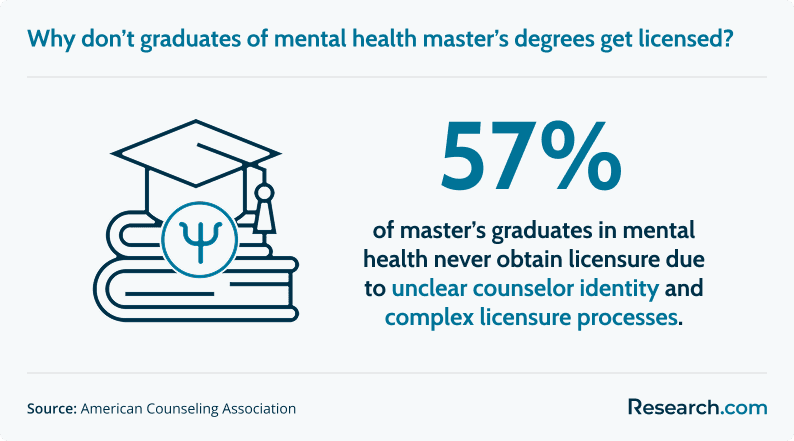
- Confirm your state licensure pathway. Most graduates must complete supervised post-master’s clinical hours, pass a required exam, and satisfy state-specific rules before practicing independently as an LPC, LMHC, or similarly titled licensed counselor.
- Clarify your niche and referral base. Decide whether you will focus on anxiety, trauma, couples, adolescents, substance use, grief, perinatal mental health, telehealth, or another area. A clear niche makes referrals and marketing easier.
- Create a realistic business plan. Include your service model, fees, estimated expenses, insurance participation strategy, telehealth policies, office needs, documentation system, and financial goals.
- Set up legal and financial systems. Register the business as required, open a business bank account, obtain professional liability insurance, choose accounting tools, and understand tax obligations. If you are comparing the academic structure of prerequisite or continuing education coursework, this guide to lower-division and upper-division classes can help clarify course levels.
- Build ethical marketing channels. Create a professional website, maintain accurate directory profiles, develop referral relationships, and communicate your services clearly without promising outcomes. Graduates interested in online visibility can also review career options connected to social media degree pathways to better understand digital marketing roles and skills.
- Prepare compliant paperwork and workflows. Use informed consent forms, privacy notices, emergency procedures, recordkeeping policies, cancellation policies, telehealth agreements, and referral protocols that match legal and ethical standards.
- Plan for consultation and supervision. Even after independent licensure, consultation helps protect client care and reduces professional isolation, especially when handling trauma, crisis, high-risk clients, or complex diagnoses.
| Private practice decision | Why it matters | Question to ask before proceeding |
| Insurance-based or self-pay | Affects income timing, paperwork, client access, and administrative burden | Do I understand reimbursement, credentialing, billing, and claim denials? |
| Telehealth, in-person, or hybrid | Impacts overhead, licensing rules, emergency planning, and client reach | Am I legally allowed to serve clients in their location? |
| Solo practice or group practice | Changes autonomy, referral flow, supervision, revenue split, and expenses | Do I want independence or shared infrastructure? |
| Generalist or niche practice | Influences referrals, training needs, and marketing clarity | What population and clinical issues am I most prepared to treat? |
Average Salary for an LPC in Private Practice
According to ZipRecruiter’s 2025 figures, LPCs in private practice earn a national average annual salary of about $71,915. Reported earnings range from $58,500 to $80,000 annually, while some private practice LPCs earn up to $101,000 per year.
Location can make a major difference. In California, LPCs in private practice can earn between $55,000 and $130,000. In states with lower living costs, average income may be lower, but expenses such as rent, payroll, insurance, and marketing may also differ.
Private practice can offer higher earning potential than some agency roles, but gross income is not the same as take-home pay. Counselors must account for office rent, telehealth platforms, liability insurance, billing tools, taxes, marketing, continuing education, consultation, unpaid administrative time, and gaps caused by cancellations or seasonal demand.
Typical Salary Range for Outpatient Mental Health Counselors With a CMHC Degree
Substance abuse, behavioral disorder, and mental health counselors earned $59,190 in May 2024. This figure is an average, not a guaranteed salary. Actual pay can vary based on licensure, specialization, employer type, geographic demand, years of experience, caseload structure, and whether the counselor provides general therapy or specialized services.
Outpatient counselors who build expertise in high-need areas may be able to command higher fees or qualify for stronger compensation packages, especially after licensure. If you are comparing adjacent clinical pathways, Research.com’s guide to LCPC vs. LCSW degree programs explains how counseling and social work routes can differ in training, scope, and career direction.
Hospital vs. Outpatient Mental Health Counseling: How the Responsibilities Differ
Hospital mental health counselors usually focus on acute needs, immediate stabilization, discharge planning, and collaboration with medical teams. Outpatient counselors generally provide longer-term therapy, prevention, coping skills development, and treatment for clients who are stable enough to attend scheduled sessions outside a hospital setting.
| Area of work | Hospital mental health counselor | Outpatient mental health counselor |
| Primary focus | Stabilization, safety assessment, crisis response, discharge planning | Ongoing therapy, treatment planning, symptom management, long-term goals |
| Client acuity | Often high, urgent, or medically complex | Usually scheduled, less acute, and managed over time |
| Team structure | Works closely with psychiatrists, physicians, nurses, social workers, and discharge planners | May coordinate with physicians, psychiatrists, family members, schools, or community providers |
| Therapy format | Brief, focused, and stabilization-oriented | Individual, group, family, or couples therapy over multiple sessions |
| Best fit for | Counselors comfortable with urgency, risk assessment, and medical collaboration | Counselors who prefer sustained therapeutic relationships and planned care |
Hospital Mental Health Counselors
- Crisis intervention and acute care: Hospital counselors may support patients experiencing suicidal ideation, psychosis, severe distress, trauma exposure, or other urgent concerns. They assess risk, help stabilize the patient, and coordinate next steps.
- Multidisciplinary teamwork: Hospital-based counselors collaborate with physicians, psychiatrists, nurses, social workers, and other professionals so that psychological, medical, safety, and discharge needs are addressed together.
- Short-term treatment: Interventions are often brief and goal-directed. Counselors may provide individual or group support, prepare patients for discharge, and connect them with outpatient care.
Outpatient Mental Health Counselors
- Ongoing therapeutic care: Outpatient counselors meet with clients regularly to address mental health symptoms, relationship concerns, trauma, stress, grief, substance use, or life changes.
- Assessment and treatment planning: They gather client history, identify goals, develop treatment plans, document progress, and adjust interventions as client needs change.
- Prevention and maintenance: Outpatient counseling often emphasizes coping skills, relapse prevention, emotional regulation, resilience, and early intervention before symptoms worsen.
Understanding the conditions outpatient counselors commonly encounter helps explain why their work remains central to behavioral healthcare. The chart below shows prevalent mental health illnesses among U.S. adults and provides context for the kinds of concerns outpatient professionals may address.
Average Pay for Hospital Mental Health Counselors With a CMHC Degree
Hospital mental health counselors with an MCMHC generally earn between $47,000 and $72,500 per year, while top earners can reach up to $100,000 annually. These numbers reflect reported compensation for counselors working in hospital environments and may vary by location, licensure, role level, department, and employer.
Hospital-based counselors may earn slightly more because of the intensity and complexity of the work. They can make about $10,000 more per year than counselors working in substance abuse facilities.
The higher pay potential should be weighed against the demands of hospital practice. Counselors may handle high-risk clients, rapid assessments, trauma exposure, complex discharge planning, and frequent collaboration with medical teams. Students comparing graduate program structures may also want to understand how a Master of Arts differs from a Master of Science degree before choosing a counseling program.
Addiction Counseling vs. General Clinical Mental Health Counseling
Addiction counseling focuses specifically on substance use disorders, recovery, relapse prevention, cravings, triggers, co-occurring mental health needs, and the behavioral patterns connected to substance use. General clinical mental health counseling covers a broader range of conditions, including anxiety, depression, trauma, grief, relationship distress, personality disorders, and life adjustment concerns.
Clinical focus
Addiction counselors work with clients whose primary treatment goal often involves reducing or stopping substance use and maintaining recovery. General clinical mental health counselors may treat substance-related issues, but their caseload is usually broader and may include clients whose main concerns are not addiction-related.
Addiction treatment can be more structured and may involve relapse prevention plans, recovery supports, family education, group work, and coordination with medical or residential care. General counseling may involve longer-term therapeutic exploration, coping skills, trauma work, relationship repair, or symptom management across many diagnostic categories.
Treatment methods
Addiction counselors commonly use Cognitive Behavioral Therapy and Motivational Interviewing to address ambivalence, cravings, triggers, relapse risk, and behavioral change. They may also facilitate recovery groups and coordinate care with medical providers, peer specialists, or residential treatment teams.
General mental health counselors may use a wider range of modalities, including family therapy, psychodynamic approaches, mindfulness-based techniques, trauma-informed interventions, and skills-based counseling. The appropriate method depends on the client’s diagnosis, goals, risk level, cultural context, and treatment setting.
Work setting and structure
Addiction counselors often work in inpatient rehabilitation centers, outpatient substance use programs, hospitals, correctional settings, or community recovery programs. Their work may be tied to detoxification, intensive treatment, relapse prevention, or court-ordered care.
General clinical mental health counselors may work in private practices, community agencies, schools, hospitals, employee assistance programs, or outpatient clinics. Their schedules may allow for longer-term client relationships, but they still need strong risk assessment and referral skills.
Salary and Job Outlook for Addiction Counselors With a CMHC Degree
Addiction counselors with a CMHC credential can earn $59,190 per year. More experienced counselors, professionals with a master’s degree and appropriate licensure, and counselors in higher-demand areas can earn $70,000 to $90,000 or more annually.
The expected job growth for these clinical mental health counseling careers is 17% until 2034. Demand is connected to factors such as the opioid epidemic and changes in healthcare policy, but job opportunities will still vary by state, employer, funding, licensure, and specialization.
What College Mental Health Counselors Do Day to Day
College mental health counselors support students dealing with academic pressure, anxiety, depression, relationship concerns, identity development, trauma, family stress, substance use, loneliness, and crisis situations. Their work combines therapy, outreach, prevention, referral coordination, and collaboration with campus partners.
- Individual counseling: Counselors meet with students one-on-one to assess concerns, set goals, provide short-term or ongoing support, and teach coping strategies.
- Crisis intervention: They respond when students experience suicidal ideation, severe emotional distress, panic, trauma, or urgent safety concerns.
- Group therapy and workshops: Counselors may lead groups on stress management, grief, anxiety, relationships, identity, mindfulness, or adjustment to college life.
- Campus collaboration: They coordinate with student affairs, faculty, residence life, academic advisors, disability services, and health services while respecting privacy rules.
- Case management and referrals: When students need specialized or longer-term care, counselors help connect them with off-campus providers or higher levels of treatment.
- Prevention and outreach: Counselors support awareness campaigns, trainings, presentations, and mental health education designed to reduce stigma and encourage help-seeking.
How Competitive Are School Counseling Jobs?
The BLS projects 4% employment growth for school and career counselors from 2024 to 2034, which matches the average growth rate for all occupations. Competition can still be affected by district budgets, staffing decisions, expiring grants, and local demand.
Some states and districts face more severe shortages than others. Arizona had a poor student-to-school counselor ratio during the 2022-23 school year, when each counselor served 667 students, more than double the recommended ratio. Minnesota reported a counselor-to-student ratio of 1:544 during the same period.
For job seekers, this means the market is not uniform. A district with documented shortages may have stronger demand, while another district may delay hiring because of budget pressure. Candidates should check state credential requirements, district funding trends, bilingual or specialized service needs, and whether a role is school counseling, school-based mental health counseling, or a hybrid position.
Most Affordable Online Counseling Degree Options
Affordability matters because counseling careers often require a master’s degree, supervised clinical experience, exams, licensure fees, and continuing education after graduation. When comparing online clinical mental health counseling programs, do not look only at tuition. Review total program cost, fees, residency requirements, practicum and internship placement support, accreditation, financial aid, transfer credit policies, and whether the program meets licensure requirements in your state.
Students comparing lower-cost options can use Research.com’s guide to the most affordable online counseling degree programs as a starting point, but they should still confirm accreditation and state licensure alignment before enrolling.
How to Choose the Right MCMHC Career Path
The strongest career choice is usually the one that matches your clinical interests, desired work setting, income expectations, supervision needs, and tolerance for crisis or administrative work. A high-paying role is not automatically the best choice if the schedule, caseload, or emotional demands are not sustainable.
| If you want... | Consider... | Be careful about... |
| Long-term therapeutic relationships | Outpatient counseling, group practice, private practice | Assuming private practice income is immediate or guaranteed |
| Fast-paced clinical work | Crisis counseling, hospital counseling, emergency behavioral health | Underestimating burnout risk and secondary trauma |
| Student-focused work | School counseling, college counseling, school-based mental health | Confusing school counseling certification with clinical counseling licensure |
| Addiction and recovery work | Substance abuse counseling, residential treatment, outpatient SUD programs | Ignoring additional substance use credential requirements |
| Leadership and systems change | Clinical supervision, program management, behavioral health administration | Moving into management before building enough clinical credibility |
Current Trends Affecting Clinical Mental Health Counseling Careers
Several trends are shaping counseling careers in 2026. Telehealth remains an important service model, but counselors must understand state licensing rules, emergency procedures, privacy standards, and whether they can treat clients located in another jurisdiction. Integrated care is also growing in importance as behavioral health services are increasingly coordinated with primary care, hospitals, schools, and community programs.
Employers also expect counselors to be comfortable with electronic health records, documentation standards, outcome tracking, and interdisciplinary communication. AI tools may support scheduling, documentation workflows, or administrative tasks, but they do not replace ethical clinical judgment, diagnosis, therapeutic alliance, crisis assessment, or licensure requirements. Counselors should treat technology as a support tool, not as a substitute for professional responsibility.
Common Mistakes to Avoid When Planning a Counseling Career
- Choosing a program without checking accreditation and licensure alignment: A degree may be academically valid but still fail to meet your state’s counseling licensure requirements.
- Looking only at tuition: Include fees, residencies, books, travel, exam costs, supervision expenses, and lost work time when estimating total cost.
- Assuming all online programs work in every state: Online delivery does not guarantee that a program satisfies your state board’s curriculum, practicum, or internship rules.
- Ignoring supervision quality: Your supervised experience shapes your clinical judgment, confidence, and future employability.
- Entering private practice too early: Independent practice requires clinical maturity, risk management skills, referral relationships, business systems, and consultation support.
- Relying only on rankings: Rankings can be useful, but licensure fit, field placement support, faculty expertise, affordability, and graduation requirements matter more for career readiness.
- Overlooking business and compliance skills: Counselors in leadership or private practice need budgeting, documentation, privacy, billing, and data security awareness. Those interested in financial operations may review accelerated online taxation management programs, while professionals focused on privacy and systems protection can explore online cybersecurity bootcamps.
Skills Counseling Graduates Need for Behavioral Health Administration
Counselors who want to move into behavioral health administration need both clinical credibility and management ability. Administrative roles require leaders who understand client care, staff supervision, compliance, budgets, quality improvement, program evaluation, and organizational strategy.
- Leadership and staff management: Administrators guide counselors, therapists, case managers, support staff, and supervisors while setting goals and maintaining service quality.
- Budgeting and resource management: Leaders must understand funding, staffing costs, reimbursement limits, grant requirements, and efficient resource allocation.
- Healthcare regulation and compliance: Behavioral health administrators must monitor privacy rules, documentation standards, accreditation requirements, ethical obligations, and state or federal regulations.
- Program development and evaluation: They design services, track outcomes, review utilization, identify gaps, and adjust programs based on client needs and organizational goals.
- Communication and collaboration: Administrators explain policies, coordinate with funders, support clinical teams, and work with community partners.
- Crisis management and problem-solving: Leaders must respond to client crises, staffing problems, safety concerns, complaints, and operational disruptions.
- Data analysis and reporting: Administrators review performance data, prepare reports, support funding requests, and use evidence to improve programs.
Salary Range for Program Managers and Clinical Supervisors With a CMHC Degree
Leadership roles in behavioral health typically pay more than entry-level clinical positions because they involve supervision, operations, compliance, staff development, program design, and accountability for service quality. Compensation still depends on employer type, region, experience, licensure, and organizational size.
Mental Health Program Manager
- Average salary: Approximately $93,589, or about $45 per hour.
- High earners: Up to $140,500 annually.
- Industry variation: Professionals in government roles with a doctorate in behavioral health leadership earn an average of $99,000.
Clinical Supervisor
- Average salary: Approximately $79,349, or about $38.15 per hour.
- High earners: Up to $109,000 annually.
- Industry variation: Clinical supervisors in the social services sector have an average salary of $50,109.
What Clinical Mental Health Counselors Say About Their Master’s Degrees
- : "My counseling master’s program helped me grow both personally and professionally. Practicum gave me the chance to work with clients while applying the theories, ethics, and techniques I studied in class. That experience made me feel more prepared to support people in meaningful ways. — Erica"
- : "The strongest part of my program was the combination of faculty support, peer discussion, and real conversations about counseling approaches and ethical challenges. The work is demanding, but helping clients move forward is deeply rewarding. — Jada"
- : "Clinical mental health counseling training taught me how to approach complex emotional situations with empathy, structure, and professionalism. The curriculum challenged me, but it also gave me the tools and confidence to serve clients with care. — Sandra"
Questions to Ask Before Choosing an MCMHC Program or Career Track
- Does the program meet licensure requirements in the state where I plan to practice?
- Is the program properly accredited, and does the accreditation matter for my state board or employer?
- How are practicum and internship placements arranged?
- What populations and specialties does the program prepare students to serve?
- How much supervised experience will I need after graduation before independent licensure?
- Do I want crisis work, long-term therapy, school-based work, addiction counseling, college counseling, hospital care, or administration?
- What salary range is realistic in my location and preferred setting?
- Would I prefer employer-based stability or the autonomy and business responsibility of private practice?
- What continuing education, certifications, or supervision training might help me advance?
References
- American Counseling Association. (2024). Counseling Workforce Report. Retrieved September 23, 2025, from American Counseling Association counseling workforce report.
- American Psychosocial Oncology Society. (n.d.). Clinical Mental Health Counselor Overview. Retrieved September 23, 2025, from American Psychosocial Oncology Society outpatient counselor overview.
- BLS. (2025, August 28). Rehabilitation Counselors. Retrieved September 23, 2025, from BLS rehabilitation counselors profile.
- BLS. (2025, August 28). Substance Abuse, Behavioral Disorder, and Mental Health Counselors. Retrieved September 23, 2025, from BLS substance abuse, behavioral disorder, and mental health counselors profile.
- Indeed. (2025, July 16). Mental Health Counselor Job Description: Top Duties and Qualifications. Retrieved September 23, 2025, from Indeed mental health counselor job description.
Key Insights
- An MCMHC can lead to outpatient therapy, hospital counseling, crisis work, addiction counseling, school or college counseling, case management, supervision, administration, or private practice.
- Licensure is the central career requirement for independent clinical practice. Always verify state-specific rules before choosing a program or job path.
- Private practice can increase earning potential, but counselors must manage taxes, insurance, marketing, documentation, cancellations, compliance, and business operations.
- Outpatient counseling is usually longer-term and relationship-based, while hospital counseling is more acute, crisis-focused, and team-based.
- Addiction counseling requires strong skills in relapse prevention, motivational interviewing, co-occurring disorders, and structured treatment planning.
- School counseling demand varies by state and district. National growth is projected at 4% from 2024 to 2034, but local shortages and budget constraints can change job competitiveness.
- Leadership roles such as program manager and clinical supervisor can offer higher compensation, but they require management, compliance, budgeting, staff development, and data skills in addition to clinical experience.
- The best counseling career path is the one that fits your licensure goals, preferred client population, emotional capacity, salary expectations, and desired level of autonomy.
Other Things You Should Know About a Master's Degree in Clinical Mental Health Counseling
The National Certified Counselor (NCC) credential from the National Board for Certified Counselors is the most widely recognized certification after a master’s degree. It requires an accredited graduate degree, a passing score on the NCE, and completion of the NBCC application process.
Clinical mental health counselors in 2027 must engage in continuing education to maintain licensure. Requirements vary by state, with most requiring 20-40 hours every two years, including specific topics like ethics. Check your state's counseling board for precise details.
Licensure requirements for clinical mental health counselors in 2027 typically include completing a CACREP-accredited Master's program, passing the National Counselor Examination (NCE), and fulfilling supervised clinical experience hours, which vary by state. Applicants must also adhere to specific state board regulations to achieve full licensure.