2027 Nursing Degree Return-on-Investment Planning: Costs, Work Hours, Career Goals, and Uncertainty
Audited and Verified:
Our Editorial and Data Verification Process
Research.com uses government datasets, official education statistics and primary institutional information to support its career and degree guides. Our review process checks factual accuracy, occupational definitions, source dates and the requirements associated with the credentials discussed.
How This Article Was Fact-Checked
Our editorial team verifies salary estimates, employment projections, education requirements and program information against original data providers and official organizations. Salary figures are checked against the relevant occupational definitions and reporting periods. Information about licensure, accreditation and required in-person training is reviewed separately.
Fact-checked and verified on:

Co-Founder and Chief Data Scientist
A nursing program can improve your career options while putting pressure on your income and schedule before you earn a license or new credential. The decision is especially difficult if you must reduce paid work to attend labs and clinical rotations.
This guide is for prospective nursing students and working nurses comparing further education. It shows how to estimate total costs, test whether a pathway fits your career goal, and plan for delays or earnings that differ from your expectations - so you can decide whether to enroll, choose another route, or wait.
Key Things You Should Know
- Nursing degree ROI depends on total education costs and lost earnings, not tuition alone; a lower-priced program can cost more if it requires a longer break from work.
- The U.S. Bureau of Labor Statistics reported a $93,600 median annual wage for registered nurses in May 2024, but that occupation-wide figure is not a new graduate's expected pay or a return guaranteed by any degree.
- Compare a realistic completion and licensure date, local job offers, required work-hour reductions, and a delay scenario before borrowing or leaving a job.
What Is the Return on Investment of a Nursing Degree?
Return on investment, or ROI, asks whether the benefits of a nursing education justify its costs for your intended role. The comparison is between realistic alternatives - not necessarily between a nursing salary and no salary. A career changer should compare nursing with their current earnings; an RN considering another degree should compare likely outcomes with and without that degree.
A useful starting calculation is total investment = tuition and required expenses + earnings forgone while studying − grants and assistance you can reasonably count on. Then compare your estimated increase in after-tax annual earnings with that investment. Dividing investment by the annual increase produces a rough payback period, not a true financial return: it omits loan interest, raises, retirement contributions, and the timing of payments. If the new role pays no more, payback through wages alone may never occur, even when the education has other value.
For example, if a hypothetical student spends $24,000 out of pocket and gives up $16,000 in earnings, the initial investment is $40,000. An after-tax earnings increase of $8,000 a year suggests a five-year simple payback after the increase begins. A six-month delay in entering that role or additional loan interest lengthens it. Replace every illustrative figure with your own school charges, work schedule, financing terms, and plausible job offers.
For an employed RN, a modest wage difference may make an expensive graduate route hard to justify financially unless it is required for the target role or supported by an employer. Use lower-cost online BSN-to-MSN degree routes as comparison candidates, then verify the actual award, entry requirements, clinical obligations, and total cost.
How Much Does Nursing School Cost, Including Tuition and Other Expenses?
Ask each school for a written, term-by-term estimate based on the credits you will actually need. Published tuition can exclude fees and extra terms; a transfer-credit decision, part-time schedule, or repeated course can change the total. The following cost categories help expose differences between seemingly similar offers.
| Cost category | What to include in your estimate | Common source of uncertainty |
| School charges | Tuition by credit or term, mandatory fees, labs, simulation, and technology | Tuition changes or an additional enrollment term |
| Participation costs | Books, software, equipment, scrubs, health documentation, and background checks | Requirements that differ by clinical site |
| Attendance costs | Commuting, parking, childcare, and any campus-visit lodging | Clinical locations and shift assignments |
| Entry-to-practice costs | Examination, license application, and related requirements | State-specific charges and eligibility steps |
| Opportunity and financing costs | Reduced earnings, lost benefits, loan interest, and repayment obligations | Actual study hours and time until employment |
Separate grants from loans: loans can make enrollment possible but do not reduce the price you ultimately pay. Confirm whether scholarships renew, whether employer assistance requires continued employment, and which expenses aid covers. If you are considering an advanced specialty, psychiatric NP program affordability comparisons can provide candidates, but compare their complete track costs and placement expenses rather than advertised tuition alone.
How Long Does It Take to Earn a Nursing Degree and Start Working?
The financially relevant timeline runs from your first prerequisite through the point when you can earn income in the intended role. Prelicensure ADN and BSN routes, accelerated options, and postlicensure study have different starting points. A prior bachelor's degree may make an accelerated BSN possible, but it does not automatically satisfy science prerequisites. An RN-to-BSN student already licensed as an RN may be able to keep working while studying.
Build a timeline that includes prerequisite availability, admission cycles, the nursing-course sequence, clinical placement, graduation, examination eligibility where applicable, state licensing, and hiring. A program's advertised length often excludes some of these steps. Ask whether a missed clinical course delays progression by one term or a full year, and whether part-time enrollment is permitted throughout the sequence.
Shorter is not automatically less costly: compressed study may require a larger reduction in paid hours. That matters when reviewing accelerated DNP program comparisons; confirm the specific track, prerequisite preparation, practice requirements, and the number of terms you would personally need.
Choose the credential required for the job you want, then compare the least costly eligible ways to reach it. These routes serve different starting points and should not be ranked by degree level alone.
| Your starting point and goal | Routes worth comparing | Key ROI test |
| Not an RN; seeking initial RN practice | Approved ADN/ASN or prelicensure BSN; accelerated BSN if eligible | Time to licensure and earnings versus total cost and work disruption |
| Licensed RN; seeking a bachelor's credential | RN-to-BSN, including employer-supported options | Whether the degree changes access to desired jobs enough to justify its cost |
| Licensed RN; seeking a different nursing role | Relevant MSN, DNP, certificate, or employer training | Whether the role requires formal education or could be reached through experience and targeted training |
| Seeking an APRN role | Graduate program in the specific role and population focus | Certification and state eligibility, clinical access, and likely local job offers |
A non-nursing bachelor's degree does not grant an RN license, while an RN-to-MSN pathway generally assumes an existing RN license. Likewise, an MSN or DNP in leadership is not automatically nurse practitioner preparation. If you are entering nursing for the first time, nursing program options for first-time nursing students are a starting point for checking which programs actually prepare graduates for initial licensure.
Online coursework can reduce commuting and offer more control over when you study. It does not eliminate supervised clinical experiences, skills assessments, simulation, or required campus visits when the program calls for them. Campus-based instruction may make scheduled labs and peer contact more predictable, but travel and fixed class times can increase household costs.
Compare the weekly calendar, not the format label. Request sample schedules showing live sessions, on-site days, clinical shift lengths, placement geography, and notice given before assignments. A working parent or student with a fixed job schedule should ask what happens if clinical hours conflict with work or caregiving. For an existing RN, comparing RN-to-BSN practice expectations may help identify different formats; confirm each school's actual fieldwork, project, and attendance rules before assuming a route has no in-person obligations.
For a prelicensure program, establish whether its graduates can meet initial RN or LPN/LVN licensing requirements in the state where you intend to practice. Check the state board of nursing's program status and eligibility rules directly. Also verify the institution's accreditation, the nursing program's applicable accreditation - such as ACEN or CCNE, where relevant - and any jurisdictional limits on enrollment or clinical placement. These are different forms of recognition; one does not substitute for another.
Graduation does not itself confer a license. A prelicensure graduate must meet the board's requirements, including the applicable NCLEX examination. An APRN candidate must separately confirm the program's role and population focus, national certification eligibility, and state authorization. Even a non-APRN graduate program can require substantial supervised practice or project work: leadership-focused online DNP program comparisons should not be read as a promise that no practice-related requirements apply.
Prelicensure study typically connects anatomy, physiology, pharmacology, health assessment, and nursing care with clinical judgment, communication, documentation, and patient safety. Students practice in labs or simulation and provide supervised care at approved clinical sites. These experiences build toward assessed competence; neither classroom completion nor simulation alone proves readiness for independent practice.
Clinical requirements also affect ROI because placements can restrict paid work and add travel or childcare costs. Graduate preparation varies by goal: an APRN track needs appropriate supervised experiences for its role and population, while an education or leadership track has different objectives. If clinical-site access is a concern, family nurse practitioner programs with placement services are worth investigating. Ask what the service actually guarantees, which locations it covers, and who is responsible if a placement falls through.
Admission rules can change both your timeline and your budget. Prelicensure applicants may need specified science courses with labs, minimum grades, an entrance assessment, or a separate application to the nursing major. A second-degree applicant should obtain an official prerequisite review rather than assuming prior coursework qualifies. Clinical-site screening requirements may arise after academic admission.
Postlicensure programs may require an active RN license, a particular prior degree, and relevant experience; advanced-practice tracks can have further conditions. Check course age, accepted lab formats, application deadlines, and whether admission guarantees a place in the nursing-course sequence. For graduate applicants, comparing prerequisite policies in DNP programs can help frame questions, but only the receiving program can decide whether your specific record meets its requirements.
Registered nurses work across hospitals, ambulatory care, home health, and other settings, with schedules and physical demands that differ substantially. Hospital positions may involve nights, weekends, holidays, and long shifts; an outpatient opening may offer more regular hours but require particular experience. Include the schedule you would accept - not just the highest wage you can find - in your ROI estimate.
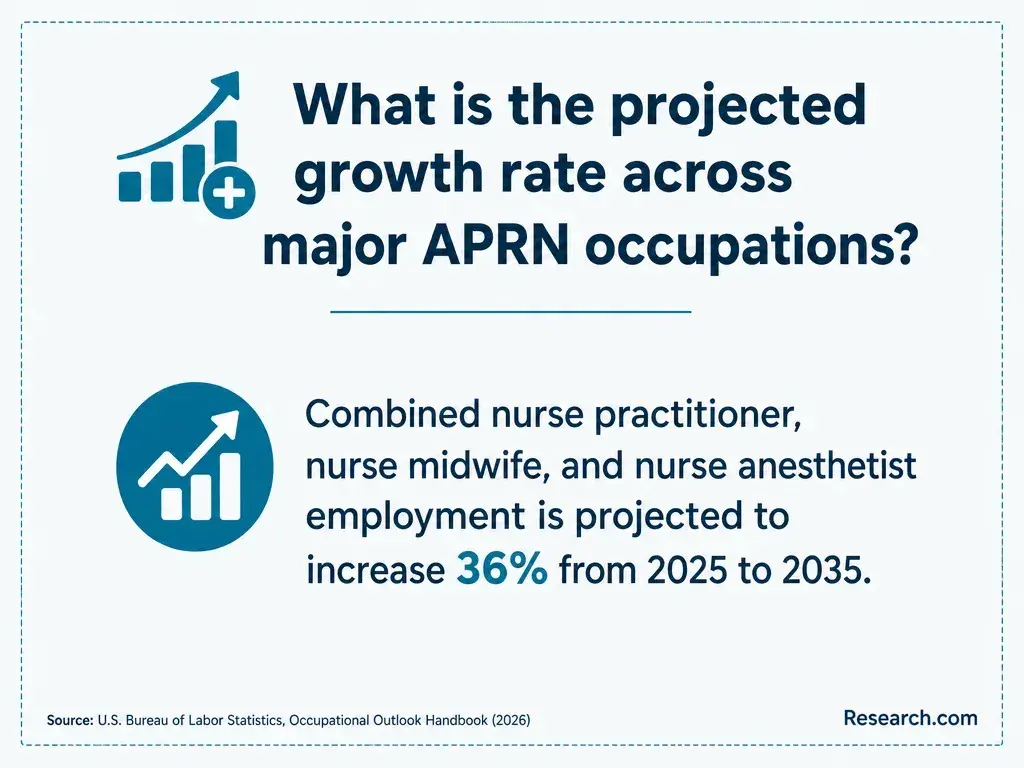
The U.S. Bureau of Labor Statistics reported a $93,600 median annual wage for registered nurses in May 2024 and projected 5% RN employment growth from 2024 to 2034. These occupation-wide measures describe neither first-year pay nor a specific local vacancy. Ask employers about starting base pay, differential eligibility, benefits, orientation, and the experience required for your preferred unit. Do not count overtime or a promotion as certain income.
Advanced-practice jobs require preparation beyond initial RN licensure, and their schedules vary by specialty and employer. A short course of study is not a shortcut around role-specific clinical or certification requirements; when reviewing short-format PMHNP master's options, compare eligibility and local hiring conditions as carefully as duration.
How Can You Compare Nursing Programs, Job Demand, and Financial Uncertainty?
Make one worksheet per eligible program, using the same assumptions for each. This prevents an attractive tuition figure or salary headline from hiding a longer route to work. The comparison is most useful when it includes a plausible setback rather than assuming admission, on-time completion, and immediate hiring.
Use this sequence to turn program and labor-market information into a decision:
- Define the exact job, required license or credential, acceptable schedule, and geographic area.
- Get written answers on credits accepted toward the nursing sequence, total charges, clinical scheduling, placement responsibility, and recent program outcomes; check how outcomes are defined and which cohort they cover.
- Estimate work hours you can sustain each term and calculate lost earnings and benefits, alongside borrowing costs and household expenses.
- Compare local entry-level postings and, where possible, actual offers; separate base pay from uncertain overtime or differentials.
- Run an on-time case and a delay case with an extra term, additional costs, and later earnings; decide what debt payment remains affordable in both.
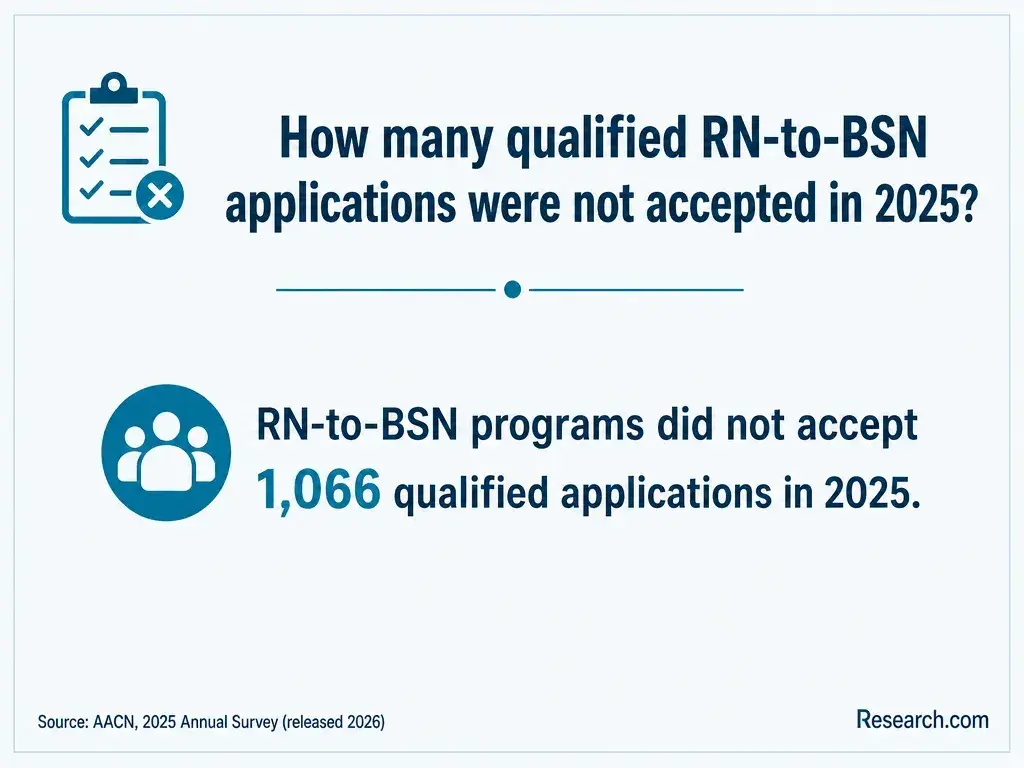
Published job growth supports a broad demand assessment, but it cannot tell you how many suitable positions will be open near graduation. Similarly, a program's NCLEX pass rate needs a reporting year and cohort size to be meaningful. If admission uncertainty is the main obstacle, planning applications to accessible nursing schools can broaden your shortlist; confirm approval, eligibility, and costs before applying. Enroll when the pathway meets your career requirements and the delay case remains manageable. Otherwise, consider a lower-cost eligible route, continued employment while completing prerequisites, or postponement.
Other Things You Should Know About Nursing
Yes. Compare employer retirement contributions and vesting rules along with wages, health coverage, and any benefits you would lose while studying. Their value depends on how long you expect to stay.
Treat it as a possible benefit, not guaranteed savings. Eligibility depends on your loans, repayment plan, qualifying employment, and applicable program rules. Model affordability without forgiveness first.
Ask when reimbursement is paid, which expenses qualify, whether grades or continued employment are required, and whether you must repay assistance if you leave. Keep the terms in writing.
There is no universal amount. Build a reserve around your essential household expenses and the risks your plan exposes, such as reduced shifts, childcare changes, or a delayed clinical placement, before committing cash to tuition.
- NCLEX Pass Rates - California Board of Registered Nursing https://www.rn.ca.gov/education/passrates.shtml
- The Nursing Workforce - The Future of Nursing 2020-2030 https://www.ncbi.nlm.nih.gov/books/NBK573922/
- HERC: Opportunity Costs | va.gov https://www.herc.research.va.gov/include/page.asp
- Employer-offered educational assistance programs can help pay for college | Internal Revenue Service https://www.irs.gov/newsroom/employer-offered-educational-assistance-programs-can-help-pay-for-college
- Annual Earnings by Educational Attainment - COE https://nces.ed.gov/programs/coe/indicator/cba/annual-earnings
- NCLEX Annual Pass Rate - Nursing - DSPS - Wisconsin.gov https://dsps.wi.gov/a-z-boards-and-councils-list/nursing/nclex-pass-rate/
- Types of Financial Aid: Grants, Work-Study, and Loans | studentaid.gov https://studentaid.gov/understand-aid/types
- ADN vs BSN Explained: Career and Salary Differences | University of San Diego Online Degrees https://onlinedegrees.sandiego.edu/adn-or-bsn/
- ADN vs. BSN: Differences, Salary & Why a BSN Matters for Nurses | Nevada State University https://nevadastate.edu/son/rn-bsn/adn-vs-bsn-key-differences-and-why-a-bachelors-degree-matters-for-nurses/
- Office of Institutional Research and Effectiveness | Georgia College & State University https://irout.gcsu.edu/iestuach/SACS-1001.7b.html