2027 Online Teaching Degree Programs With No Application Fee and Rolling Admissions

Co-Founder and Chief Data Scientist
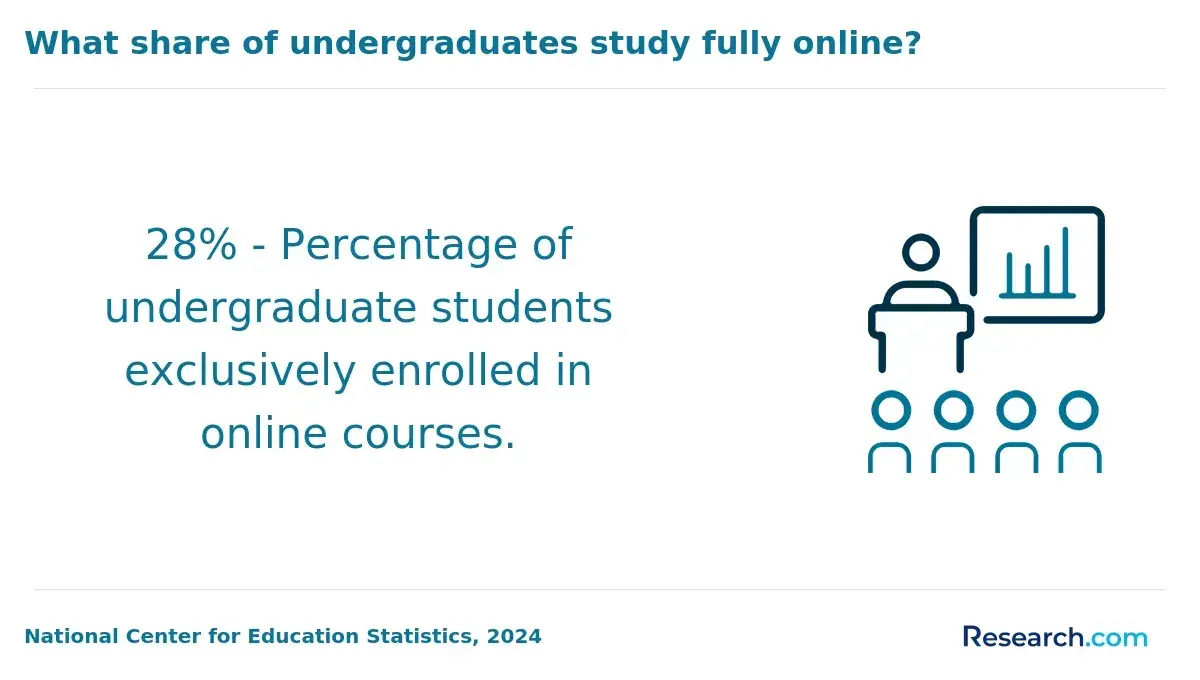
Choosing an online teaching degree can feel urgent when you want to start quickly but do not want to pay to apply. The National Center for Education Statistics reported that about 53% of postsecondary students took at least one distance education course in fall 2022, showing how normal online study has become. This guide is for future teachers, career changers, and working educators comparing no-fee, rolling-admission options. You will learn which programs to check, what "rolling" really means, and how to judge total cost, accreditation, licensure fit, and long-term value.
Key Things You Should Know
- No-application-fee programs can reduce upfront risk, but the savings are usually small compared with tuition; College Board's 2024 Trends in College Pricing reported average published 2024-25 tuition and fees of $11,610 at public four-year institutions for in-state students and $43,350 at private nonprofit four-year institutions.
- Rolling admissions means schools review applications as they arrive, but students still need to watch start-date cutoffs, financial aid deadlines, field-placement requirements, and course availability.
- Career value depends more on accreditation, state licensure alignment, supervised teaching requirements, transfer-credit policy, and total program cost than on whether the school waives a $0-to-modest application fee.
Which Online Teaching Degree Programs Have No Application Fee and Rolling Admissions?
Several online education schools publish no application fee and rolling or continuous admissions policies, but students should verify each policy before applying because fee waivers, start dates, and licensure pathways can change. The strongest options are not simply the easiest to apply to; they are the programs that match your credential goal, state requirements, budget, and schedule.
The table below summarizes examples of U.S. institutions that commonly offer online teaching or education-related degrees with no application fee and flexible admissions. Use it as a shortlist for comparison, not as a substitute for checking the current admissions page and speaking with the program directly.
| Institution | Examples of online teaching or education programs | Application-fee position to verify | Admissions and start-date pattern | Best fit |
| Southern New Hampshire University | Education, curriculum, special education, and related online degrees | Publishes no application fee | Rolling admission with multiple online terms | Students who want broad online support services and frequent starts |
| National University | Teaching credentials, education degrees, and master's-level education programs | Publishes no application fee | Year-round admissions with frequent course starts | Career changers and working adults who need accelerated course pacing |
| American College of Education | Education, teaching, leadership, curriculum, and special education programs | Publishes no application fee | Multiple starts throughout the year | Licensed educators seeking graduate education or endorsement-oriented pathways |
| Purdue Global | Education-related bachelor's and graduate programs, depending on availability | Publishes no application fee for many applicants | Multiple online starts with continuous admissions support | Adult learners comparing transfer credit and online flexibility |
| Walden University | Education specialist, master's, doctoral, and educator-focused programs | Publishes no application fee | Rolling admissions with recurring start dates | Educators seeking advanced credentials, leadership, or specialization |
| Liberty University | Elementary education, special education, teaching, and education administration programs | Often promotes free online application options; confirm by program | Rolling admission with several online terms | Students seeking faith-based online education options |
| Grand Canyon University | Teaching, early childhood, elementary education, special education, and education leadership programs | Often publishes no application fee for online applicants; confirm by program | Rolling admission with scheduled online starts | Students comparing licensure and non-licensure teaching tracks |
| University of the Cumberlands | Teacher leader, MAT, education specialist, and education administration programs | Publishes no application fee for many online programs; confirm by level | Multiple start dates with rolling review | Graduate students seeking educator advancement pathways |
Before choosing a teaching program, compare it with the broader market for online degrees. Students still exploring fields can review good majors in college to see whether teaching aligns with their salary expectations, work style, and long-term career goals.
The most important distinction is whether the program leads to initial teacher licensure, adds an endorsement, supports license renewal, or provides a non-licensure education degree. A no-fee application is useful only if the credential actually supports the classroom, school leadership, curriculum design, or instructional role you want.
How Does Rolling Admission Work for Online Teaching Degree Programs?
Rolling admission means a school reviews applications as they are completed instead of waiting for one final deadline. For online teaching degrees, this can shorten the time between deciding to enroll and starting classes, but it does not mean every applicant can begin immediately.
The table below explains how rolling admissions compares with fixed-deadline admissions. This matters because teaching programs often have extra timing constraints tied to clinical practice, background checks, state testing, or supervised fieldwork.
| Admissions model | How applications are reviewed | Typical advantage | Common limitation | What teaching students should check |
| Rolling admission | Applications are reviewed as files become complete | More flexibility and faster decisions | Seats, courses, and field-placement windows may still fill | Next eligible start date, clinical deadlines, and financial aid cutoff dates |
| Priority rolling admission | Applications are reviewed continuously, but early applicants get first consideration for aid or space | Better chance to access preferred terms or scholarships | Late applicants may have fewer options | Priority dates for scholarships, practica, and cohort placement |
| Fixed-deadline admission | Applications are reviewed after a set date | Clear planning calendar and cohort structure | Less flexibility if you miss the deadline | Whether a later term would delay student teaching or licensure testing |
Rolling admissions can be especially valuable for working adults because it allows them to apply when transcripts, references, and employer schedules are ready. The trade-off is that a later application may push student teaching, practicum placement, or state-test preparation into a different term.
A common mistake is assuming "rolling" means "no deadline." In practice, most schools still set file-completion dates before each start. A complete application usually includes transcripts, test scores if required, proof of previous degree completion for graduate programs, and any program-specific forms.
How Much Can Students Save by Choosing an Online Teaching Degree With No Application Fee?
A no-application-fee teaching degree saves money upfront, but it rarely determines whether a program is affordable overall. The real financial decision is whether the waived fee fits within a lower total cost, strong transfer-credit policy, realistic completion timeline, and credential outcome that supports your career goal.
Application fees at colleges are often modest compared with tuition, textbooks, technology fees, background checks, testing costs, and supervised teaching expenses. College Board's 2024 pricing data shows why this matters: the average published tuition and fees for 2024-25 were $11,610 for in-state students at public four-year institutions and $43,350 at private nonprofit four-year institutions. A waived application fee helps, but tuition differences can outweigh it quickly.
The table below shows how to think about application-fee savings in context. The point is not that no-fee programs are unimportant, but that the application fee should be treated as one part of the full enrollment cost.
| Cost item | Why it matters | How to compare programs |
| Application fee | Reduces the cost of exploring multiple schools | Confirm whether the fee is always waived or only waived through a promotion |
| Tuition per credit | Usually the largest direct cost | Multiply by required credits and ask whether tuition differs by residency |
| Program and technology fees | Can raise the real cost of online study | Ask for a full fee schedule before enrolling |
| Books and course materials | May vary by term and course format | Ask whether digital materials are included or billed separately |
| Licensure testing and background checks | Common in teacher-preparation pathways | Check state testing, fingerprinting, and clearance requirements |
| Student teaching or practicum costs | May affect work hours and transportation | Ask how placements are arranged and whether local placement is available |
Students comparing teaching against other service-oriented fields should also look at opportunity cost and time to completion. For example, someone considering school-based support roles may compare teaching with an accelerated social work degree, especially if their long-term goal involves counseling, family support, or community services rather than classroom instruction.
The safest financial approach is to apply to several no-fee programs only after you have screened them for accreditation, licensure fit, total cost, and transfer credit. Applying widely is useful when it helps you compare real offers, not when it distracts you with schools that do not match your credential goal.
What Are the Admission Requirements for No-Fee Online Teaching Degree Programs?
Admission requirements vary by degree level and by whether the program leads to initial teacher licensure. Undergraduate teaching programs usually evaluate high school completion, transfer credits, and general education readiness, while graduate programs usually require a bachelor's degree and may require prior teaching experience or a current license.
Most no-fee online teaching programs still require a complete academic file. The following items are common because schools need to confirm readiness, eligibility, and licensure alignment before placing students in education coursework.
- Official transcripts from high school, prior colleges, or degree-granting institutions, depending on the level of study
- Minimum GPA or conditional-admission review, especially for graduate teaching and educator-preparation programs
- Proof of bachelor's degree for master's, post-baccalaureate, specialist, or doctoral education programs
- Current teaching license for programs designed for licensed educators, such as many leadership, endorsement, or advanced practice tracks
- Statement of purpose, resume, or professional goals essay for programs that evaluate teaching commitment and classroom readiness
- Background check, fingerprinting, or clearance steps before field experiences or student teaching
- State testing, prerequisite coursework, or content-area requirements for licensure-track programs
A key red flag is a school that describes admission as easy but does not clearly explain whether the degree leads to teacher certification. Some online education degrees are excellent for professional development, curriculum work, or leadership, but they may not qualify a student for initial classroom licensure.
Applicants should also ask whether admissions requirements differ by state. Teacher preparation is tied to state rules, so an online program may be available nationally while licensure eligibility, field placement, or test requirements vary based on where the student plans to teach.
When Should Students Apply to Online Teaching Degree Programs With Rolling Admissions?
Students should apply as soon as they can submit a complete, accurate file for the start term they want. In rolling admissions, applying early usually improves planning flexibility because it leaves more time to resolve transcript delays, financial aid processing, background checks, and field-placement questions.
The timeline below is practical for most online teaching applicants. It is especially useful for career changers and working adults who need to coordinate employment, childcare, testing, or relocation around a start date.
- Eight to twelve weeks before the desired start date, confirm that the program still has no application fee and accepts rolling applications for your intended term.
- Six to ten weeks before the start date, request official transcripts from every prior institution because transcript processing can take longer than expected.
- Five to eight weeks before the start date, ask admissions whether your state is approved for enrollment, field placement, and licensure preparation.
- Four to six weeks before the start date, complete the FAFSA and check whether scholarships, employer tuition benefits, or institutional aid have separate priority deadlines.
- Three to five weeks before the start date, submit all application materials and confirm that your file is complete rather than merely started.
- Two to four weeks before classes, review transfer-credit evaluation, tuition bill, course schedule, technology requirements, and any background-check instructions.
Do not wait simply because a school accepts applications year-round. Rolling admissions can create a false sense of unlimited time, but online sections, financial aid processing, and school-based placements still run on calendars.
Students comparing multiple professional pathways can borrow a useful lesson from other online graduate markets: speed matters only when it does not compromise fit. Lists of top masters in social work programs, for example, often emphasize accreditation, supervised practice, and licensure alignment for the same reason teaching applicants should.
How Can Students Strengthen an Online Teaching Degree Application?
A strong application shows that you understand the demands of teaching, can handle online coursework, and meet the program's academic and state-specific requirements. Rolling admissions may reduce deadline pressure, but it does not make quality unimportant.
Use the steps below to strengthen your file before submitting. They are designed to prevent the most common rolling-admission problem: applying quickly but incompletely.
- Match the program to your exact goal, such as initial elementary licensure, special education endorsement, curriculum design, instructional technology, or education leadership.
- Request transcripts early and review them for missing grades, unresolved transfer credits, or prerequisite gaps.
- Write a focused statement that explains why you want to teach, which learners you want to serve, and how your experience prepares you for the program.
- Choose references who can speak to communication, reliability, leadership, tutoring, mentoring, childcare, training, or classroom-related experience.
- Document relevant experience, including substitute teaching, paraprofessional work, coaching, youth programs, military training, corporate instruction, or volunteer education roles.
- Ask whether a low GPA can be offset by recent coursework, professional experience, conditional admission, or a graduate certificate pathway.
- Confirm whether your application is complete in the student portal and save written confirmation of any fee waiver or no-fee policy.
For licensure-track programs, field readiness can matter as much as academic readiness. Schools may need to determine whether placements are available near you and whether your state allows the institution to supervise clinical experiences there.
One mistake to avoid is submitting the same generic essay to every program. A better essay connects your career goal to the specific degree structure, grade level, content area, or educator pathway offered by that school.
Are Online Teaching Degree Programs With No Application Fees Accredited and Legitimate?
Many no-fee, rolling-admission online teaching programs are legitimate, but those features do not prove quality. Accreditation and state authorization are the first checks because they affect financial aid eligibility, transferability, licensure preparation, and employer recognition.
For U.S. students, institutional accreditation should come from an accreditor recognized by the U.S. Department of Education or the Council for Higher Education Accreditation. For teacher-preparation programs, students should also check whether the program is approved by the relevant state education agency and whether specialized education accreditation, such as CAEP accreditation, applies to the school or program.
Use the following red-flag checklist before applying or enrolling. These signs do not always mean a program is poor, but they should prompt more questions before you commit time or money.
- The school advertises "teacher certification" but does not identify the state, license area, grade band, or testing requirements.
- The admissions page is clear about free applications but vague about tuition, fees, refund policies, or total program cost.
- The program says online students can complete fieldwork anywhere but does not explain placement approval, supervision, or background-check rules.
- The institution lacks recognized accreditation or makes accreditation claims that are difficult to verify through official accreditor databases.
- The program promises fast employment, guaranteed licensure, or automatic salary increases.
- Admissions advisors pressure students to enroll before transfer credits, financial aid, or licensure eligibility are confirmed in writing.
Legitimate online teaching programs can still differ sharply in outcomes and suitability. A non-licensure master's in education may be valuable for an experienced teacher seeking advancement, while a career changer usually needs an approved initial-licensure pathway with supervised teaching.
How Do Financial Aid and Total Costs Compare Among Online Teaching Degree Programs?
Financial aid and total costs can vary more than application fees. A no-fee application may let you compare several schools for free, but the better financial question is how much you will pay after transfer credit, institutional aid, employer benefits, required fees, and loan interest.
The U.S. Department of Education set 2024-25 federal Direct Loan interest rates at 6.53% for undergraduate Direct Loans and 8.08% for graduate Direct Unsubsidized Loans. That difference matters because many online teaching students are graduate or post-baccalaureate learners; borrowing at the graduate level can make total repayment cost higher even when tuition seems manageable.
The table below highlights major financial aid and cost factors to compare before enrolling. These categories are more useful than focusing only on the application fee because they affect the real out-of-pocket and long-term cost of the degree.
| Cost or aid factor | Why it affects total cost | Question to ask the school |
| Transfer credits | Accepted credits can reduce required coursework | How many credits can I transfer, and when will I receive an official evaluation? |
| Tuition model | Per-credit, flat-rate, and subscription models produce different costs | What is the estimated total program cost at my expected pace? |
| Institutional scholarships | Some aid has priority dates even when admission is rolling | What scholarship deadlines apply to my start term? |
| Employer tuition assistance | Can reduce out-of-pocket cost for working adults | Does the billing schedule work with employer reimbursement? |
| Federal aid eligibility | Accreditation and enrollment intensity affect aid options | Is this program eligible for federal student aid at my enrollment level? |
| Licensure-related expenses | Testing, background checks, and placement costs may not be included in tuition | Which certification expenses should I budget for separately? |
Students focused on graduate-level affordability should compare teaching programs with other low-cost online pathways to understand how tuition models differ. Researching affordable master degree programs can help establish a benchmark for per-credit pricing, fees, and realistic completion timelines.
Do not assume the lowest tuition is automatically the best ROI. A slightly more expensive program may be a better investment if it accepts more transfer credit, aligns clearly with your state license, offers strong placement support, or lets you finish without delaying student teaching.
Which Students Benefit Most From No-Fee, Rolling-Admission Online Teaching Degrees?
No-fee, rolling-admission online teaching degrees are most helpful for students who need flexibility without adding unnecessary upfront costs. They are especially useful when a student is comparing multiple schools, changing careers, returning after a break, or trying to enter a term that begins soon.
The students below tend to benefit most because rolling admissions solves a real timing or access problem for them. The value is strongest when flexibility is paired with accreditation, licensure fit, and manageable total cost.
- Working adults who need to apply around job schedules, family responsibilities, or employer tuition-assistance cycles
- Career changers who want to compare licensure-track and non-licensure education pathways before committing
- Transfer students who need multiple credit evaluations before choosing the most cost-effective option
- Licensed teachers seeking endorsements, leadership preparation, salary-lane movement, or professional development
- Students who missed a fixed deadline at another institution but are academically ready to begin soon
- Applicants who want to compare financial aid packages without paying several application fees
Students who are still unsure whether teaching is the right field should slow down before applying widely, even when applications are free. Teaching requires comfort with lesson planning, communication, classroom management, assessment, child development, and collaboration with families and colleagues.
Labor market data can help frame the decision, but it should not be treated as a guarantee. The Bureau of Labor Statistics reported May 2024 median annual wages of $64,580 for high school teachers and $62,310 for kindergarten and elementary school teachers, except special education. These figures help students set expectations, but actual pay depends heavily on state, district, union contract, grade level, subject area, degree level, and years of experience.
How Should Students Choose Among No-Fee Online Teaching Degree Programs?
Students should choose among no-fee online teaching degrees by ranking programs on credential fit first, total cost second, and admissions convenience third. Free applications and rolling review are valuable screening advantages, but they should not outweigh accreditation, licensure alignment, field-placement support, and graduation requirements.
Use the following decision process when comparing programs. It keeps the focus on outcomes rather than marketing language.
- Define your target role, such as elementary teacher, special education teacher, secondary content teacher, instructional coordinator, curriculum designer, education administrator, or licensed teacher seeking advancement.
- Separate licensure and non-licensure programs, then remove any option that does not match your state's requirements for the role you want.
- Verify institutional accreditation, state authorization, and any teacher-preparation approval that applies to your license area.
- Request total-cost estimates that include tuition, fees, books, technology, testing, background checks, and field-experience expenses.
- Compare transfer-credit evaluations before enrolling, not after, because transfer policy can change both cost and completion time.
- Ask how rolling admissions works for your exact start date, including file-completion cutoffs, financial aid deadlines, and course availability.
- Review online format requirements, including synchronous class meetings, residency expectations, fieldwork, student teaching, and local placement rules.
- Choose the program that best balances credential value, affordability, flexibility, student support, and realistic completion time.
A good final question is: "Would I still consider this program if it charged an application fee?" If the answer is no, the program may be attractive mainly because it is easy to apply to, not because it is the best educational investment.
Prospective students comparing education with business or operations careers should also consider how different online degrees translate into job roles. For instance, someone drawn to school operations, training systems, or organizational leadership may want to compare teaching pathways with an MBA operations management online before deciding which credential best fits their long-term plan.
Other Things You Should Know About Teaching
Yes, but only if the program is designed and approved for initial teacher licensure in the state where you plan to teach. Many online education degrees are non-licensure programs, so always confirm the license area, grade band, required tests, and student teaching requirements before enrolling.
Licensure-track students usually need supervised field experiences or student teaching, even if coursework is online. Schools may help arrange local placements, but approval depends on state rules, school-district cooperation, and program requirements.
Not always. Many teachers enter the classroom with a bachelor's degree and approved teacher-preparation program. A master's degree may be useful for career advancement, specialization, salary-lane movement, or leadership roles, but requirements vary by state and employer.
Students typically need a reliable computer, high-speed internet, webcam, microphone, learning-management-system access, and the ability to submit video, lesson plans, or teaching demonstrations. Some programs may require live online sessions or specific software for assessments and fieldwork documentation.
References
- Top 40 Universities without Application Fees for International Students https://abroadin.com/blog/universities-without-application-fees/
- Online Teacher Certification Programs | Get Certified with American Board https://www.americanboard.org/programs-and-prices/
- Best Accredited Online Universities in 2025 https://www.study.eu/article/best-accredited-online-universities
- Universities in USA Without Application Fee (2026 Guide) https://northcypruseducation.com/blog/universities-in-usa-without-application-fee-study-abroad-without-application-fee/
- 5 Teacher Certification Programs That Take Less Than a Year https://www.invest529.com/articles-webinars/5-teacher-certification-programs-that-take-less-than-a-year
- The Case for Graduate Application Fees | Liaison https://www.liaisonedu.com/resources/blog/the-case-for-graduate-application-fees-blog/
- Application Fees: 3 Key Principles To Consider Before Charging https://edualto.com/insights/eduardo/application-fees-key-principles-before-charging
- Rolling Admissions Explained: How It Works and When You Should Apply https://riseglobaleducation.com/blogs/rolling-admissions-explained-how-it-works-and-when-you-should-apply
- Online Teacher Certification Program for International Candidates https://moreland.edu/teacher-certification-program-online/international-candidates
- Grad Schools with No Application Fees https://www.onlinemastersdegrees.org/best-programs/no-application-fees/