2027 Fastest Accredited Online Teaching Degree Programs That Accept Transfer Credits

Co-Founder and Chief Data Scientist
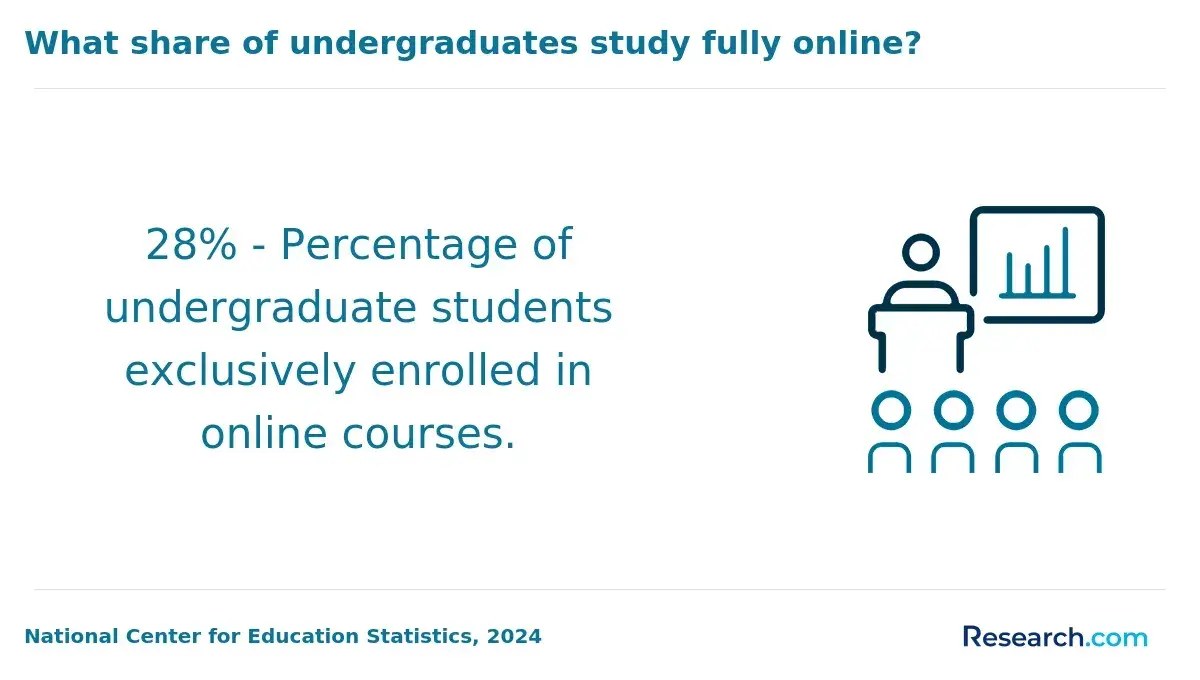
The fastest path to an accredited online teaching degree usually depends less on the school's advertised speed and more on how many of your previous credits actually apply to the degree. NCES reported in its 2024 distance education data that more than half of U.S. postsecondary students took at least one online course, making online degree completion a mainstream option.
This guide is for transfer students, adult learners, paraprofessionals, and degree completers who want the quickest legitimate route to graduation while checking accreditation, licensure fit, transfer policies, cost, and realistic timelines.
Key Things You Should Know
- The fastest accredited online teaching-related bachelor's routes are usually degree-completion or competency-based programs that accept up to about 75% to 90 credits of a 120-credit degree, but licensure programs may still require student teaching, field placements, and state-specific exams.
- For a student with 60 to 90 applicable transfer credits, a realistic accelerated timeline is often 12 to 24 months; finishing faster is most plausible in non-licensure education studies or competency-based programs where prior coursework and demonstrated skills cover many requirements.
- The most transfer-friendly options commonly include WGU, SNHU, Liberty University, University of Arizona Global Campus, Purdue Global, and some public university degree-completion programs, but the best choice depends on whether you need initial teacher licensure or a broader education degree.
What Are the Fastest Accredited Online Teaching Degree Programs That Accept Transfer Credits?
Fast accredited online teaching degree programs that accept transfer credits fall into two broad categories: licensure-focused programs that prepare candidates for classroom teaching certification, and non-licensure education programs that support roles in childcare, training, education administration support, tutoring, instructional support, or graduate study. The fastest program for you is the one that accepts many credits and applies them to required general education, major, elective, and professional education courses.
Students comparing teaching with other good majors in college should pay close attention to this distinction: a teaching degree tied to state licensure usually has less flexibility than a general education studies degree because states require supervised fieldwork and approved pedagogy coursework.
The table below summarizes common fast online teaching-related degree pathways and when each one tends to be the quickest legitimate option.
| Program type | Best fit | Why it can be fast | Main limitation |
| Competency-based online teaching degree | Adult learners with prior college credits, classroom experience, or strong independent-study skills | Students may move through mastered material faster than a traditional term schedule allows | Clinical practice and licensure requirements can still set a minimum timeline |
| Online degree-completion education program | Transfer students with an associate degree or 60+ credits | Many programs are built around upper-division coursework after general education is complete | Credits must match the major plan, not merely appear on a transcript |
| Accelerated 7- or 8-week course format | Students who can handle concentrated coursework while working | Shorter sessions allow multiple start dates and faster credit accumulation | Workload is compressed, and taking too many courses at once can hurt performance |
| Online education studies degree | Students who want education-related work but do not need initial teacher licensure | Often has more elective space and fewer clinical placement barriers | Usually does not qualify graduates for a public school teaching license by itself |
| Public university transfer pathway | Community college graduates following a state articulation agreement | Associate degree credits may transfer cleanly into junior standing | May be limited to residents, approved partner colleges, or specific licensure areas |
Examples of accredited online institutions that often appear in transfer-friendly searches include Western Governors University, Southern New Hampshire University, Liberty University, University of Arizona Global Campus, Purdue Global, Arizona State University Online, and selected public universities with online teacher-preparation completion tracks. These schools are not interchangeable.
WGU's competency-based model may be fastest for self-directed students, while SNHU or University of Arizona Global Campus may be faster for non-licensure education studies students with many electives. Public university licensure pathways may be slower but stronger if your goal is a state teaching credential.
A practical shortlist should start with your goal. If you need to become a licensed elementary, special education, or secondary teacher, prioritize state-approved educator preparation. If you already work in education and want a bachelor's for advancement, a non-licensure education studies degree may be quicker. If you plan to pursue graduate teacher certification later, confirm that the bachelor's degree will meet prerequisite and GPA expectations.
How Fast Can You Complete an Online Teaching Degree With Transfer Credits?
A student with substantial transfer credit can often complete an online teaching-related bachelor's degree in 12 to 24 months, but the fastest advertised timeline is not always realistic. The deciding factors are the number of applicable credits, the course schedule, required clinical hours, student teaching, test preparation, and whether the program is competency-based or term-based.
The table below shows realistic completion ranges by transfer-credit level. These are planning ranges, not guarantees, because each school's evaluation can move credits into different requirement categories.
| Applicable transfer credits | Approximate credits remaining in a 120-credit degree | Likely pace for motivated online students | Fastest realistic scenario |
| 0 to 30 credits | 90 to 120 credits | 3 to 4 years | Shorter only with heavy course loads, summer enrollment, or competency-based acceleration |
| 31 to 60 credits | 60 to 89 credits | 2 to 3 years | About 18 to 24 months if courses are available year-round and sequencing is flexible |
| 61 to 90 credits | 30 to 59 credits | 12 to 24 months | About 12 months for non-licensure or highly flexible programs; longer for licensure |
| 90+ accepted credits | Usually at least 30 institutional credits remain | 9 to 18 months | Only possible when major, residency, and capstone requirements are all available quickly |
The most common mistake is assuming that "90 credits accepted" means "only 30 easy credits left." A school may accept credits as electives but still require you to complete education methods courses, classroom management, reading instruction, assessment, special education law, content-area pedagogy, or a student-teaching semester.
Use this sequence when estimating your own fastest timeline before enrolling:
- Request an unofficial transfer review from each school using all previous college transcripts, military records, exam scores, and training documentation.
- Ask how many credits apply to general education, major requirements, electives, and upper-division requirements separately.
- Identify courses that are offered only once or twice per year because these can slow graduation even if you have many credits.
- Confirm whether student teaching, practicum hours, or field placements can be completed near your home and whether they require daytime availability.
- Ask for a term-by-term graduation plan showing the earliest possible completion date and a more realistic working-adult schedule.
Acceleration looks different by field. For example, an accelerated social work degree can still be constrained by field-placement rules, much like a teaching licensure degree can be constrained by clinical practice. In both cases, the professional requirement is often the real speed limit.
How Many Transfer Credits Can You Apply Toward an Online Teaching Degree?
Many online bachelor's programs advertise transfer maximums of 75% of the degree or up to 90 credits toward a 120-credit bachelor's degree. That policy can be valuable, but it is only the first layer. The more important question is how many of those credits satisfy the teaching degree's required courses.
The table below compares common transfer-credit policies at transfer-friendly online institutions. Policies can change by catalog year and program, so students should always request a written evaluation before committing.
| Institution or model | Common bachelor's transfer maximum | What to verify for teaching-related programs | Speed implication |
| Western Governors University | Often up to 75% of the program | Which competencies are cleared and whether licensure clinical requirements remain | Potentially very fast for independent learners, but student teaching can extend the timeline |
| Southern New Hampshire University | Up to 90 credits toward many bachelor's degrees | Whether the program is licensure or non-licensure and how education electives transfer | Strong for degree completion when credits fit general education and electives |
| Liberty University | Often up to 75% of a bachelor's degree | Residency rules, upper-level major coursework, and state licensure alignment | Accelerated 8-week terms can help, but professional requirements still matter |
| University of Arizona Global Campus | Up to 90 approved transfer credits in many bachelor's programs | Whether the education degree meets your career goal if it is non-licensure | Can be efficient for education-related roles outside initial public school licensure |
| Purdue Global | Often up to 75% of degree requirements, depending on program and credit system | Quarter-credit conversion, prior learning options, and program-specific requirements | May reduce cost and time for students with prior learning documentation |
| Public university online completion pathway | Varies, often strongest for articulated associate degrees | State-approved educator preparation, content prerequisites, and field placement rules | May be slower but often better aligned with in-state teacher licensure |
There are three different transfer-credit numbers to understand. First, accepted credits are credits the institution recognizes as college-level. Second, applicable credits are credits that count toward your specific degree plan. Third, remaining credits are the courses you still must complete at the new school to satisfy residency, upper-division, major, and graduation requirements.
For teaching degrees, applicable credits are especially important because state-approved programs often require very specific coursework. A general psychology course might satisfy a social science requirement, but it may not replace educational psychology. A speech class might transfer, but it may not satisfy a teacher communication requirement. A child development course may count for early childhood education but not for secondary math education.
How Can You Verify Accreditation for Fast Online Teaching Degree Programs?
Accreditation is the quality-control checkpoint that separates a legitimate fast online teaching degree from a risky shortcut. For U.S. students, the baseline is institutional accreditation from an accreditor recognized by the U.S. Department of Education or the Council for Higher Education Accreditation. For teacher licensure, program approval by the relevant state education agency is often just as important.
Use the following checks before you apply, especially if a program advertises unusually fast completion or unusually generous credit awards:
- Confirm institutional accreditation through the U.S. Department of Education's accreditation database or the school's official accreditation page.
- Verify whether the teaching program is state-approved for initial licensure in the state where you want to teach.
- Check whether the program has specialized educator-preparation recognition, such as CAEP accreditation or state-recognized teacher preparation approval, when relevant.
- Ask whether online students are eligible for the same licensure recommendation as campus students in the same program.
- Confirm field placement availability in your location before enrolling, not after you complete coursework.
- Review state testing, background check, GPA, and content-area requirements that may sit outside the degree plan.
Red flags include vague accreditation language, pressure to enroll before a transcript evaluation, promises of automatic licensure in every state, refusal to provide a written degree plan, or a transfer policy that sounds generous but excludes most education major requirements. A fast program should be able to explain exactly how credits transfer, how licensure works, and what requirements remain.
Accreditation also affects financial aid and future mobility. Federal financial aid generally requires attendance at an eligible accredited institution, and graduate schools commonly expect a bachelor's degree from an accredited college or university. If you may later pursue a master's in education, counseling, leadership, or special education, accreditation is not optional.
Which Types of Transfer Credits Can Count Toward an Online Teaching Degree?
Transfer credits can come from more than traditional college courses. For teaching students, the most useful credits are usually lower-division general education courses, subject-area coursework, education prerequisites, electives, and documented professional learning that the school evaluates for college credit.
The following credit sources may reduce your remaining coursework, but each one must be evaluated under the receiving school's policy:
- Regionally accredited college credits from community colleges, four-year universities, or previous online programs.
- Associate degrees that satisfy general education blocks under state articulation or institutional transfer agreements.
- Subject-area coursework such as math, science, English, history, or foreign language credits for secondary education pathways.
- Education-related courses such as child development, educational psychology, introduction to education, or exceptional learners, if they match the new program's outcomes.
- Standardized exam credit such as CLEP, DSST, Advanced Placement, or International Baccalaureate, when accepted by the school.
- Military training evaluated through ACE recommendations, especially for general education, leadership, communication, or elective credit.
- Professional certifications, workplace training, childcare credentials, or paraprofessional development that qualify for prior learning assessment.
The strongest transfer students usually have organized documentation. Save syllabi, course descriptions, exam score reports, professional certificates, military transcripts, and training records. If a school questions whether a course matches a requirement, a syllabus with learning outcomes and assignments can sometimes make the difference between major credit and elective credit.
Be cautious with old credits. General education credits may remain usable for many years, but technology, science, child development, special education law, and professional education courses may have recency expectations. Schools may also require a minimum grade, often a C or higher, for credits to transfer.
How Do Residency and Major Requirements Affect Transfer Credits for an Online Teaching Degree?
Residency requirements determine how many credits you must complete through the institution awarding the degree. Major requirements determine which specific courses you must complete for the teaching program. Together, these rules can prevent a student from graduating immediately even after transferring a large number of credits.
A common bachelor's residency rule is 30 institutional credits, though some schools use a percentage requirement such as 25% of the degree. For a 120-credit bachelor's degree, that means a student who transfers 90 credits may still need at least 30 credits at the new institution. If the program also requires upper-division education courses, a capstone, or supervised teaching, those requirements usually cannot be waived by unrelated transfer electives.
The table below explains the policy areas that most often affect transfer students in online teaching programs.
| Policy area | What it means | Why it affects speed |
| Institutional residency | Minimum credits that must be completed at the degree-granting school | Creates a floor for remaining coursework even with many transfer credits |
| Upper-division requirement | Minimum junior- and senior-level credits required for graduation | Lower-division community college credits may not satisfy advanced major requirements |
| Major core | Required education, pedagogy, assessment, and classroom management courses | Often must be completed in sequence and may not be replaceable with electives |
| Clinical practice | Practicum, observation, or student teaching in a classroom setting | Requires scheduling, background checks, placement approval, and daytime availability |
| State licensure alignment | Program approval for a specific teaching credential and state | May require extra exams, content courses, or state-specific coursework |
The best way to avoid surprises is to ask schools for a requirement-by-requirement transfer map. Do not settle for a total transfer-credit estimate alone. A helpful advisor should be able to show which credits meet general education, which meet the education major, which count as electives, and which requirements remain locked because of residency or licensure rules.
Students should also ask whether the school limits transfer credits after enrollment. Some institutions require approval before taking outside courses once you become a student. If you plan to complete a missing math, science, or general education course elsewhere to save money, get written permission first.
Can Prior Learning, CLEP, Military Training, or Certifications Help You Finish an Online Teaching Degree Faster?
Prior learning credit can help some students finish faster, especially paraprofessionals, childcare workers, military students, substitute teachers, corporate trainers, and adults with documented professional development. However, prior learning is not automatic credit. It must be evaluated, and it is more likely to apply to electives or general education than to licensure-critical teaching methods courses.
These options are worth asking about if you want to reduce time and cost:
- CLEP exams can sometimes satisfy general education subjects such as college composition, history, psychology, mathematics, or natural sciences.
- DSST exams may help adult learners and military students earn credit in areas such as public speaking, education foundations, or social science, depending on school policy.
- ACE-evaluated military training may apply to leadership, communication, health, technology, or elective requirements.
- Prior learning assessment portfolios may convert documented work experience into credit if the student proves college-level learning.
- Child Development Associate credentials, early childhood training, emergency medical training, language credentials, or technology certifications may receive credit at some institutions.
The trade-off is time. Preparing a portfolio or studying for exams can save tuition, but it may delay your start if you wait too long. CLEP and DSST are most useful when a school confirms in advance that a specific exam will meet a specific remaining requirement. Portfolio credit is most useful when you have strong documentation and a clear evaluator rubric.
For teacher licensure students, prior learning rarely replaces student teaching because states expect supervised classroom performance under an approved program. It may still shorten the path by clearing electives, general education, or prerequisite coursework so you can focus on professional preparation.
How Much Does a Fast Online Teaching Degree Cost After Transfer Credits and Financial Aid?
The cost of a fast online teaching degree depends on how many credits remain, the tuition rate, fees, books, exam costs, background checks, student teaching requirements, and financial aid. Transfer credits can reduce cost substantially because you pay only for the credits or subscription terms you still need, but a lower advertised tuition rate is not always cheaper if the program accepts fewer applicable credits.
College Board's 2024 pricing data listed average published tuition and fees for the 2024-25 academic year at $11,610 for in-state students at public four-year institutions and $43,350 at private nonprofit four-year institutions. For transfer students, the key takeaway is that avoiding even one extra semester can matter financially, but only if the faster program is accredited and aligned with your licensure or career goal.
Most students should compare costs using remaining credits rather than full-degree sticker price. The following cost categories are the ones most likely to change your final total:
- Per-credit tuition or term-based tuition after transfer credits are applied.
- Technology, online learning, graduation, transcript, and student service fees.
- Textbooks, course materials, assessment platforms, and teaching supplies.
- Teacher licensure exams, background checks, fingerprinting, and state application fees.
- Transportation or schedule costs for practicum and student teaching placements.
- Lost income if clinical practice requires unpaid daytime availability.
- Financial aid eligibility, employer tuition assistance, scholarships, grants, and military education benefits.
Students considering graduate study after the bachelor's should also compare longer-term affordability. Researching affordable master degree programs can help you decide whether to choose the cheapest bachelor's route now or preserve flexibility for a future licensure, leadership, special education, or curriculum-focused graduate program.
A simple way to compare schools is to ask each one for a net-cost estimate based on your transfer evaluation. The most useful estimate should show remaining credits, tuition, required fees, expected aid, payment schedule, and the earliest realistic completion date. If one program costs slightly more but saves a full semester and meets licensure requirements, it may be the better value. If a cheaper program does not lead to the credential you need, it may cost more in the long run.
How Do Accelerated, Competency-Based, and Self-Paced Online Teaching Degree Programs Compare?
Accelerated, competency-based, and self-paced online teaching degree programs all promise flexibility, but they work differently. The fastest option depends on your learning style, work schedule, prior credits, and whether you need supervised licensure requirements.
The table below compares the major online formats so you can match the program model to your situation rather than choosing based on speed claims alone.
| Format | How it works | Who may finish fastest | Potential drawback |
| Accelerated term-based | Courses run in short sessions, often 7 or 8 weeks | Students who can handle concentrated deadlines and year-round enrollment | Fast pacing can be stressful, especially with work or family obligations |
| Competency-based | Students progress by demonstrating mastery of required competencies | Self-directed learners with prior knowledge and strong writing or assessment skills | Requires discipline, and not every requirement can be accelerated |
| Self-paced course model | Students complete coursework within a flexible time window | Students with unpredictable schedules who can work ahead independently | Too much flexibility can lead to procrastination without strong planning |
| Cohort-based licensure program | Students move through a structured sequence with peers | Students who need predictable scheduling and licensure support | Usually less flexible for transfer students and may take longer |
| Public university completion pathway | Upper-division courses are designed for transfer students | Associate degree graduates in approved transfer pathways | Course sequencing and field placements may limit acceleration |
Competency-based education is often the fastest for experienced adults, but it is not effortless. Students must pass assessments, submit projects, and document mastery. Accelerated term programs can be faster for students who prefer weekly structure. Self-paced courses can work well for disciplined learners but can backfire for students who need external deadlines.
Other fields show the same pattern. An MBA operations management online program may offer flexible pacing for working adults, but completion still depends on prerequisites, course sequencing, and workload. Teaching degrees add another layer because clinical practice and state educator approval may restrict how quickly the final stage can be completed.
The best format is the one you can sustain. If you work full time, care for family, or need daytime hours for student teaching, a slightly slower plan may be more realistic than an aggressive schedule that risks withdrawal, failed courses, or financial aid problems.
Are Fast Accredited Online Teaching Degrees Respected by Employers and Graduate Schools?
Fast accredited online teaching degrees can be respected by employers and graduate schools when they come from properly accredited institutions and, for teaching roles, meet state educator-preparation requirements. Employers generally care more about accreditation, licensure eligibility, classroom readiness, and evidence of skills than whether coursework was completed online.
For public school teaching jobs, the essential question is not simply whether the degree is online. It is whether the program leads to the license, endorsement, or certification required by the state and grade level. For private schools, charter schools, tutoring companies, education nonprofits, and training roles, requirements can vary more widely, but accreditation and relevant experience still matter.
BLS May 2024 wage data placed the median annual wage for elementary school teachers, except special education, at $64,090. This figure should not be read as a guaranteed outcome; pay varies by state, district salary schedule, union contract, degree level, endorsements, and years of experience. For transfer students, the practical point is that finishing faster may help you enter or advance in the field sooner, but the degree must be accepted for the role you want.
Graduate schools usually evaluate whether your bachelor's degree came from an accredited institution, whether you completed prerequisites, and whether your GPA meets admission standards. If you are comparing teaching with adjacent human-service paths, reviewing top master's in social work programs can also illustrate how graduate fields use accreditation, fieldwork, and prerequisites to protect professional standards.
Before enrolling, ask these employer- and graduate-school-focused questions:
- Does this program lead to initial teacher licensure in the state where I plan to work?
- If I move states, what reciprocity or additional testing requirements may apply?
- Will my transcript show the same degree title as the campus or traditional program, if one exists?
- Does the school provide licensure exam pass-rate information or student teaching placement support?
- Will this bachelor's degree meet admission expectations for the graduate program I may want later?
A fast program is respected when it is transparent, accredited, appropriately rigorous, and aligned with your outcome. A program becomes risky when it promises speed without explaining licensure, fieldwork, transfer application, or graduate-school recognition.
Other Things You Should Know About Teaching
No. Coursework may be online, but student teaching normally happens in an approved school setting under supervision. Many online programs help arrange placements near the student's location, but availability depends on state rules, district cooperation, background checks, and program approval.
Credits do not usually "expire" automatically, but schools can set recency rules for certain subjects. Older general education credits may transfer more easily than older technology, science, special education, or professional education courses. Always ask for a course-by-course evaluation.
Usually not in a public school role that requires state certification. A non-licensure education degree may support jobs in childcare, tutoring, training, education services, or graduate preparation, but initial public school teaching typically requires a state-approved educator preparation program.
Not automatically. Choose the school that applies the most credits to your actual degree requirements, meets accreditation and licensure needs, fits your schedule, and provides a clear remaining-course plan. A lower transfer total can still be better if it leads directly to the credential you need.
References
- Transfer Credit | ACE https://ace.edu/tuition-and-admissions/transfer-credit/
- Best Online Schools for Transferring Credits [2026 Guide] https://www.straighterline.com/blog/transfer-best-online-schools-for-transferring-credits
- Top Online Schools That Accept Transfer Credits https://www.edvisorly.com/student-guides/online-schools-that-accept-transfer-credits
- How long does it take to complete a course and get my clock hours and/or credits? https://www.modelteaching.com/faq-items/how-long-does-it-take-to-complete-a-course-and-get-my-clock-hours-and-or-credits
- Choosing an Online School as a Transfer Student | OEDb.org https://www.oedb.org/advice/choosing-an-online-school-for-transfer-students/