2027 Cheapest Accredited Online Health Communication Degree Programs: Tuition, Fees, and Financial Aid

Co-Founder and Chief Data Scientist
Choosing an affordable online health communication degree is harder than comparing tuition rates. College Board's 2024 Trends in College Pricing reported average published tuition and fees of $11,610 at public four-year in-state institutions and $43,350 at private nonprofit four-year institutions, making net price and financial aid more important than sticker price.
This guide is for prospective undergraduate and graduate students comparing accredited online health communication options, mandatory fees, transfer-credit savings, FAFSA eligibility, and scholarships so they can identify genuinely affordable programs and avoid hidden costs.
Key Things You Should Know
- Among widely available accredited online options with a clear health communication focus, Southern New Hampshire University's online BA in Communication with a healthcare communication concentration is one of the lowest advertised undergraduate options at about $330 per credit, while Lasell University and the University of Illinois Urbana-Champaign are among the lower-cost graduate options based on published per-credit tuition.
- The cheapest advertised tuition is not always the cheapest degree: total cost depends on mandatory online fees, credit requirements, transfer limits, residency requirements, books, graduation fees, and whether aid reduces the student's net price.
- FAFSA-eligible students at accredited institutions may use federal grants and loans; the maximum Federal Pell Grant remains $7,395 for eligible students, but scholarships, employer tuition benefits, and transfer credits can reduce out-of-pocket cost more than a small tuition difference.
What Are the Cheapest Accredited Online Health Communication Degree Programs?
The cheapest accredited online health communication degree depends on whether you need a bachelor's degree, a master's degree, or a communication degree with a health communication concentration. For most students, the best first screen is not "lowest per-credit tuition," but "lowest realistic cost to completion after transfer credits, required credits, mandatory fees, and financial aid."
The table below compares accredited online programs that publicly identify health communication, healthcare communication, or closely related health-focused communication study within the degree. Tuition can change by term, so use these figures as a comparison starting point and confirm current tuition, fees, and aid eligibility before enrolling.
| Institution | Online degree or health communication focus | Institutional accreditation | Published tuition basis | Estimated tuition before fees and aid | Affordability note |
| Southern New Hampshire University | BA in Communication with healthcare communication concentration | New England Commission of Higher Education | About $330 per undergraduate credit | About $39,600 for 120 credits before transfer credits | Strong low-cost option for bachelor's students, especially if transfer credits reduce the remaining credit load. |
| Purdue Global | BS in Communication with health communication concentration | Higher Learning Commission | About $371 per quarter credit | About $66,780 for 180 quarter credits before transfer credits | May be cost-effective for students using transfer, prior learning, military, or employer benefits. |
| Lasell University | MS in Communication with health communication concentration | New England Commission of Higher Education | About $681 per graduate credit | About $24,516 for 36 credits before fees and aid | One of the lower estimated graduate tuition totals among health communication-focused master's options. |
| University of Illinois Urbana-Champaign | Online MS in Health Communication | Higher Learning Commission | About $770 per graduate credit | About $24,640 for 32 credits before fees and aid | Low total graduate tuition because the program is shorter than many 36-credit master's degrees. |
| Queens University of Charlotte | Online MA in Communication with healthcare communication focus | Southern Association of Colleges and Schools Commission on Colleges | About $700 per graduate credit | About $25,200 for 36 credits before fees and aid | Competitive graduate tuition, but students should confirm program fees and course sequencing. |
| Boston University | MS in Health Communication | New England Commission of Higher Education | About $1,058 per graduate credit | About $33,856 for 32 credits before fees and aid | Higher tuition than the lowest-cost options, but the shorter credit requirement helps contain total tuition. |
| Northwestern University | MS in Health Communication | Higher Learning Commission | Course-based graduate tuition | Often above $50,000 before fees and aid | Not typically the cheapest option, but may appeal to students prioritizing brand, network, and specialized curriculum. |
For a bachelor's degree, SNHU is often the most affordable nationally accessible option in this comparison before aid, especially for students who bring substantial transfer credits. For a master's degree, Lasell University and the University of Illinois Urbana-Champaign are strong low-total-tuition candidates because their per-credit rates and required credit loads are comparatively lower.
Students who are still deciding between health communication and clinical healthcare pathways should compare total education requirements before committing. For example, professional clinical routes such as PharmD programs usually involve different accreditation rules, licensure expectations, and total cost structures than communication-focused degrees.
How Were the Cheapest Online Health Communication Degree Programs Ranked?
The programs above were ranked primarily by estimated tuition to completion, not by advertised tuition alone. That matters because a $330-per-credit bachelor's program can still cost more than a higher per-credit graduate program if it requires far more credits, and a program with slightly higher tuition may become cheaper after scholarships, transfer credits, or employer reimbursement.
The ranking logic used the following factors in order of importance. These criteria are meant to help students reproduce the comparison with any school they are considering.
- Accreditation first: only institutionally accredited U.S. colleges and universities were considered because accreditation affects credit transfer, employer acceptance, graduate admission, and federal aid eligibility.
- Clear health communication fit: programs needed a health communication, healthcare communication, health-focused strategic communication, or comparable concentration within an online degree.
- Estimated tuition to completion: per-credit tuition was multiplied by the required number of credits, with quarter credits and semester credits treated according to each school's published structure.
- Mandatory cost transparency: schools with clearer tuition and fee information were easier to compare than programs that require inquiry forms before disclosing cost.
- Cost-saving flexibility: transfer-credit policies, part-time study options, employer benefits, military benefits, and prior-learning options were considered because they can reduce net price.
- Value context: the ranking did not treat low cost as the only measure of quality; students should also compare curriculum, faculty expertise, student support, completion data, and career relevance.
A key limitation is that tuition and fees can change every academic year, and some schools publish program-specific fees separately from tuition. Before enrolling, ask each school for a written cost-of-attendance estimate based on your exact transfer credits, residency status, start term, and enrollment pace.
How Can You Verify the Accreditation of an Online Health Communication Degree Program?
Accreditation is the first affordability filter because an unaccredited or poorly recognized program can limit financial aid, transfer credits, graduate school admission, and employer acceptance. For health communication, institutional accreditation is usually the key requirement; unlike nursing, pharmacy, medicine, or counseling, health communication degrees typically do not require a specialized programmatic accreditor for most non-licensed communication roles.
Use this checklist before applying or paying an enrollment deposit. It helps separate legitimate online programs from programs that simply look affordable.
- Search the institution in the U.S. Department of Education's Database of Accredited Postsecondary Institutions and Programs or the accreditor's own directory.
- Confirm the listed accreditor is recognized for institutional accreditation and that the school's status is active, not probationary, withdrawn, or expired.
- Check whether the online degree is offered by the same accredited institution named in the directory, not by an unrelated third-party training provider.
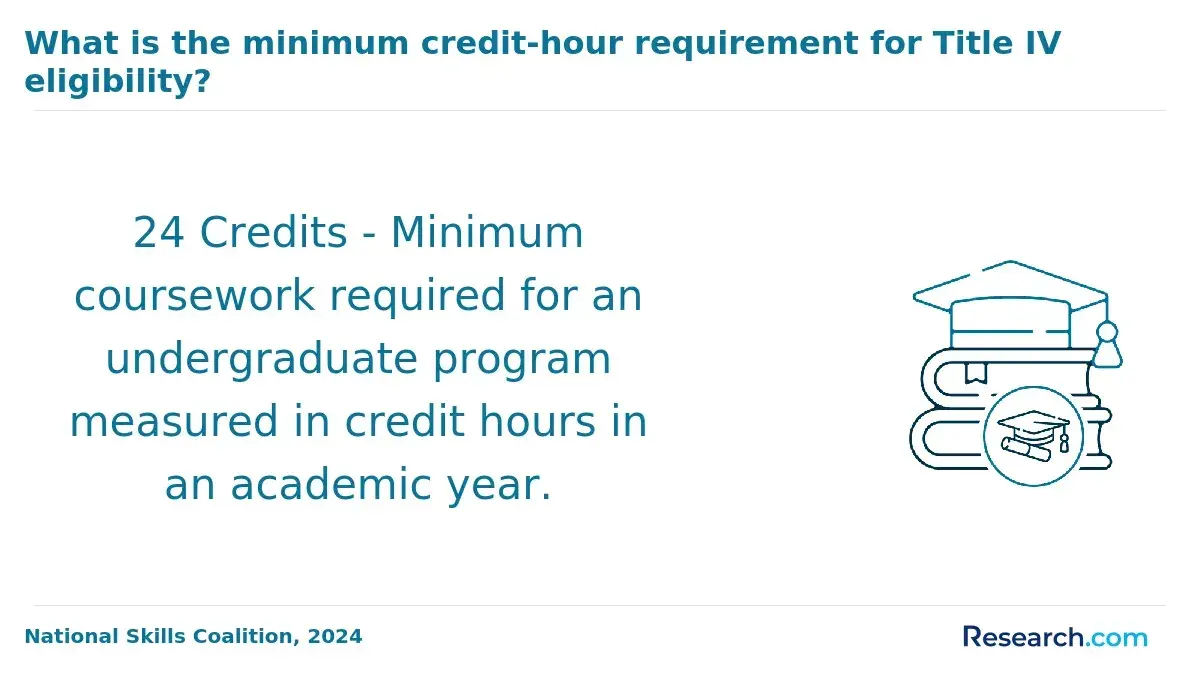
- Ask the school whether the specific online health communication degree is eligible for Title IV federal financial aid.
- Verify that credits earned online appear on the transcript the same way as credits earned on campus, if that matters for graduate school or employer review.
- For career goals in public health, healthcare administration, patient advocacy, or clinical education, ask employers or graduate programs whether the degree meets their preferred preparation.
The table below clarifies the accreditation terms students often confuse. Understanding the difference can prevent costly enrollment mistakes.
| Term | What it means | Why it matters for cost |
| Institutional accreditation | The college or university is reviewed by a recognized accrediting agency. | Usually required for federal financial aid, transfer credit acceptance, and graduate school recognition. |
| Programmatic accreditation | A specific degree program is reviewed by a field-specific accreditor. | Important in licensed health fields, but usually not required for general health communication careers. |
| Title IV eligibility | The school and program may participate in federal student aid programs. | Determines whether eligible students can use Pell Grants, Direct Loans, and some campus-based aid. |
| State authorization | The institution is authorized to offer online education to students in a particular state. | Can affect whether you are allowed to enroll from your state and may matter for complaint processes. |
A common red flag is a school advertising "accredited" without naming the accreditor. Another is a program that pushes students to enroll quickly before providing a full cost-of-attendance estimate and financial aid package.
How Much Does an Accredited Online Health Communication Degree Really Cost?
The real cost of an accredited online health communication degree is the total cost of attendance minus grants, scholarships, employer benefits, tuition discounts, and other aid that does not need to be repaid. Tuition is only one line item; the number that matters most is net price.
Students should separate four cost terms that schools often present differently. The table below shows how each term affects affordability decisions.
| Cost term | What it includes | How to use it when comparing programs |
| Tuition | The instructional charge, usually per credit, per course, per term, or per subscription period. | Use it to estimate the base cost, but never stop the comparison there. |
| Mandatory fees | Technology, online learning, student services, registration, library, graduation, or course-specific fees. | Add these to tuition because they are not optional. |
| Total program cost | Tuition plus required fees, books, software, supplies, and other school-billed or education-related expenses. | Use this to compare the real cost before financial aid. |
| Net price | Total cost of attendance minus grants and scholarships. | Use this as the best estimate of what you may need to pay through savings, work income, payment plans, or loans. |
A simple bachelor's-degree estimate illustrates why credit count matters. A 120-credit program at $330 per credit starts at $39,600 in tuition before fees and aid, but a student transferring 60 accepted credits would reduce remaining tuition to about $19,800 before fees and aid. The school with the lowest tuition rate may not be the lowest net price if another school accepts more transfer credits or awards more grant aid.
For graduate students, required credits are especially important. A 32-credit master's at $770 per credit is about $24,640 before fees, while a 36-credit master's at $700 per credit is about $25,200 before fees. In that example, the lower per-credit rate does not create the lower tuition total.
Before comparing final offers, ask each school for the following written estimates. These questions help uncover costs that may not appear in the main tuition table.
- How many credits will I need after my transfer evaluation is complete?
- Which fees are mandatory for online students every term?
- Are there course-specific fees for capstones, internships, portfolios, simulations, or technology platforms?
- What is the estimated cost of books, software, subscriptions, and required hardware?
- Will my tuition rate change if I study part time, stop out, or take courses across academic years?
- What aid is gift aid, what aid is a loan, and what aid is renewable?
Which Tuition Models Make Online Health Communication Degree Programs More Affordable?
Online health communication programs use several pricing models, and each one rewards a different kind of student. A working adult taking one course at a time may benefit from simple per-credit tuition, while a student who can move quickly may save with flat-rate or accelerated study.
The table below compares the main tuition models you may see in online communication and health-related programs. Use it to match the pricing model to your schedule, transfer credits, and ability to complete courses consistently.
| Tuition model | How it works | Best fit | Cost risk |
| Per-credit tuition | You pay for each credit attempted. | Part-time students, students balancing work and family, and students who want predictable course-by-course billing. | Total cost rises if you need extra electives, repeat courses, or lose transfer credits. |
| Flat-rate full-time tuition | You pay one term rate for a credit range. | Students who can take heavier course loads without lowering performance. | Not cost-effective if you enroll below the credit threshold or withdraw from courses. |
| Subscription or competency-based tuition | You pay for a set period and complete as much approved coursework as possible. | Experienced students with strong writing, research, and self-management skills. | Savings disappear if you progress slowly or need extensive instructor support. |
| Military, employer, or partner tuition | A reduced rate applies through military status, employer partnership, or organizational affiliation. | Students whose workplace or service status qualifies for a verified discount. | Discounts may not stack with scholarships or may end if employment changes. |
| Accelerated terms | Courses run in shorter sessions, allowing faster completion. | Motivated students who can handle compressed deadlines. | Repeating or dropping accelerated courses can erase the savings. |
Accelerated formats can reduce opportunity cost because students may finish sooner and return to full career momentum faster. Students comparing shorter completion pathways may also want to understand how fast track degrees structure course loads, transfer policies, and time-to-completion trade-offs.
The affordability question is not simply "Which model is cheapest?" It is "Which model is cheapest for the pace I can realistically sustain?" If you work full time, a slower per-credit program with fewer withdrawals may cost less than an aggressive accelerated plan that leads to repeated courses.
What Fees and Hidden Costs Should Online Health Communication Degree Students Expect?
Online degrees can reduce commuting and relocation costs, but they are not fee-free. Many schools charge online learning, technology, registration, student service, graduation, and course material fees that are separate from tuition.
The most useful way to compare fees is to group them by whether they are required, recurring, or avoidable. The table below shows common costs that can change the real price of an online health communication degree.
| Cost category | Examples | Why it matters |
| Mandatory institutional fees | Technology fee, online course fee, student services fee, registration fee | These must be included in total program cost because students cannot opt out. |
| Course-specific costs | Digital textbooks, media tools, research software, portfolio platforms, proctoring | Communication courses may require publishing, analytics, video, or design tools. |
| One-time degree costs | Application fee, transcript fee, graduation fee, commencement fee | Small individual fees can still affect cash flow near enrollment and graduation. |
| Experience-related costs | Internship travel, background checks for healthcare sites, professional memberships | Some health-focused placements may have requirements beyond online coursework. |
| Living and opportunity costs | Reduced work hours, childcare, internet upgrades, equipment | These may not be billed by the school but still affect affordability. |
Several mistakes commonly lead students to underestimate online degree costs. Avoiding them can save more than choosing a program with a slightly lower tuition rate.
- Do not compare only per-credit tuition; compare tuition plus mandatory fees for the number of credits you personally need.
- Do not assume online students pay no campus fees; some institutions charge online students for student services, libraries, or technology.
- Do not ignore course material costs; health communication courses may use digital media, analytics, or campaign-planning tools.
- Do not assume part-time enrollment is cheaper overall; it may extend fees across more terms and delay graduation.
- Do not enroll before receiving a transfer-credit evaluation if transfer savings are central to your budget.
A practical test is to ask the bursar or student accounts office for a sample bill for one full-time term and one part-time term. If a school cannot clearly explain mandatory charges, treat that as a cost-transparency warning sign.
How Does FAFSA and Federal Financial Aid Work for Online Health Communication Degree Programs?
Online students can often use the same federal financial aid as campus students if the school is Title IV eligible, the student meets federal eligibility rules, and the program itself qualifies for aid. Accreditation helps, but accreditation alone does not automatically mean every online program is eligible for FAFSA-based aid.
The FAFSA is the gateway to federal grants, federal student loans, and many state or institutional awards. The maximum Federal Pell Grant is $7,395 for eligible students, which means low-income undergraduate students should compare net price after Pell and institutional grants rather than relying on sticker tuition.
Use this sequence to evaluate federal aid before committing to an online health communication program. It keeps the financial aid process tied to the actual program cost.
- Confirm the school's federal school code and Title IV eligibility before submitting enrollment forms.
- Submit the FAFSA as early as possible because some state and institutional grants have priority deadlines.
- List each school you are seriously considering so you can compare aid offers.
- Review the financial aid offer line by line and separate grants, scholarships, work-study, subsidized loans, unsubsidized loans, and private loans.
- Ask whether your enrollment level affects aid because half-time, three-quarter-time, and full-time status can change eligibility.
- Compare the remaining net price after gift aid, not the total aid package, because loans must be repaid.
Federal loans can help students cover gaps, but they are not discounts. Undergraduate annual Direct Loan limits vary by dependency status and year in school, while graduate students may generally borrow more through federal unsubsidized loans, subject to federal rules. Borrow only after estimating monthly repayment under realistic income scenarios.
Which Scholarships, Grants, and Tuition Benefits Can Help Pay for an Online Health Communication Degree?
Scholarships and grants reduce net price because they usually do not need to be repaid. Employer tuition assistance can be equally valuable for students already working in hospitals, insurers, public health agencies, nonprofits, pharmaceutical companies, communications teams, or community health organizations.
The table below summarizes common funding sources for online health communication students. The best strategy is to combine several modest awards rather than searching only for one large scholarship.
| Funding source | Who may qualify | Cost impact | Key question to ask |
| Federal Pell Grant | Eligible undergraduate students with financial need | Can substantially reduce net price at lower-tuition bachelor's programs | Is the program Title IV eligible and what is my Pell amount based on enrollment level? |
| State grants | Residents who meet state eligibility rules | Can lower in-state public university costs or approved private college costs | Does online enrollment qualify under my state's rules? |
| Institutional scholarships | Students meeting school criteria such as GPA, transfer status, military status, or need | Can make a higher-tuition school competitive on net price | Is the award renewable and what GPA or credit load is required? |
| Employer tuition assistance | Employees at participating organizations | May cover a fixed amount per year or reimburse completed courses | Must I repay the benefit if I leave the employer? |
| Professional association scholarships | Students pursuing communication, public health, marketing, journalism, or healthcare leadership | Often smaller, but useful for books, fees, or term balances | Does the award apply to online students and part-time students? |
| Military and veteran education benefits | Eligible service members, veterans, spouses, or dependents | Can significantly reduce or cover tuition depending on benefit level | How does the school certify online credits and fees? |
Students working in healthcare settings should ask human resources whether communication, patient education, public affairs, community outreach, or public health coursework qualifies for tuition reimbursement. Those comparing health communication with direct-care career paths may also review online associate nursing programs to understand how aid and employer benefits may differ in clinical programs.
Scholarships are not all equal. A one-time $1,000 award helps, but a renewable $1,000 annual award over four years has a much larger effect. Always ask whether awards apply to summer terms, part-time study, graduate study, online courses, and repeated courses.
Can Transfer Credits, Prior Learning, and Competency-Based Study Lower the Cost of an Online Health Communication Degree?
Transfer credits are often the largest cost-saving tool for bachelor's students because they reduce the number of credits billed by the new school. Prior learning credit can also help experienced professionals earn credit for documented training, certifications, military education, workplace learning, or portfolio-based assessment, depending on institutional policy.
Use the following steps before choosing a program if transfer savings are part of your affordability plan. These steps help you avoid assuming credits will transfer before the school confirms them.
- Request official transcripts from every college previously attended, even if credits are old or incomplete.
- Ask for a formal transfer-credit evaluation before committing to a start date.
- Confirm how many credits apply to general education, major requirements, electives, and upper-division requirements.
- Ask about residency requirements, which determine how many credits must be completed at the degree-granting institution.
- Check whether prior learning assessment, military credit, professional certificates, or employer training can count toward electives.
- Calculate the remaining tuition using accepted credits, not credits attempted at previous schools.
Transfer policy can change the cheapest choice. If School A charges $330 per credit but accepts only 45 credits, and School B charges $371 per credit but accepts 75 credits, School B may require fewer remaining credits and could cost less overall.
Graduate students usually have fewer transfer opportunities, but they should still ask about previously earned graduate credits, certificate-to-master's pathways, and time limits on transfer work. Students comparing advanced healthcare education models can see similar transfer and progression questions in online MSN to DNP programs, where prior graduate preparation can affect total credits and cost.
Competency-based programs can be affordable for students who already write well, manage deadlines independently, and understand healthcare or communication workplaces. They are less ideal for students who need frequent instructor structure, because savings depend on completing enough work within each paid term.
How Should Students Compare the Net Price, Quality, and Return on Investment of Online Health Communication Degree Programs?
The best-value online health communication degree is the accredited program that meets your career goal at the lowest reasonable net price, not necessarily the school with the lowest advertised tuition. Return on investment depends on cost, time to completion, career relevance, employer recognition, and whether the degree helps you qualify for roles you actually want.
Health communication can support roles in patient education, healthcare marketing, public relations, community outreach, health campaigns, nonprofit communication, medical writing support, and internal communication for healthcare organizations. The U.S. Bureau of Labor Statistics reported a 2024 median pay of about $66,750 for public relations specialists, a related communication occupation; this is not a guaranteed outcome, but it gives students a labor-market benchmark when comparing program cost to potential career paths.
The table below shows how to compare a cheap program with a higher-cost program in a way that includes both price and value. Use it after you have financial aid offers and transfer evaluations from each school.
| Comparison factor | Low-cost program may be better when | Higher-cost program may be worth considering when |
| Net price | Gift aid, transfer credits, and low fees produce the lowest remaining balance. | Scholarships or employer benefits bring the net price close to lower-cost competitors. |
| Curriculum fit | The program includes healthcare messaging, campaign strategy, research methods, ethics, and digital communication. | The program has specialized health communication courses directly aligned with your target role. |
| Flexibility | Asynchronous courses fit your work schedule and reduce withdrawal risk. | Cohort, live, or intensive formats provide stronger networking or faculty interaction you will actually use. |
| Career support | The school offers advising, portfolio development, internship support, and alumni resources at a low cost. | The program has stronger employer connections in your desired healthcare market. |
| Completion likelihood | The pace is realistic and the school accepts enough transfer credits to keep momentum. | The higher-cost school offers better support that reduces the risk of stopping out. |
Before enrolling, compare programs with a decision checklist rather than a tuition chart alone. This process helps avoid common red flags and keeps the focus on net price and career fit.
- Choose only institutionally accredited schools and verify the accreditation independently.
- Compare total program cost after mandatory fees, not tuition alone.
- Use your personal transfer-credit evaluation to calculate remaining credits.
- Separate gift aid from loans in every financial aid offer.
- Confirm whether scholarships, grants, and tuition discounts are renewable.
- Review course requirements for healthcare-specific content, research methods, ethics, writing, digital media, and campaign evaluation.
- Ask about internships, capstones, portfolios, and employer-facing career support.
- Consider whether a slightly higher-cost program offers better completion odds, stronger networking, or a curriculum better aligned with your goal.
Students comparing health communication with licensed or advanced practice healthcare roles should be especially careful about ROI assumptions. Programs such as accelerated PMHNP programs involve different prerequisites, clinical requirements, licensure pathways, and salary benchmarks, so their costs should not be compared directly with non-licensed communication degrees.
Other Things You Should Know About Health Communication
No. Health communication focuses on how health information is created, delivered, understood, and evaluated. Public health is broader and may include epidemiology, biostatistics, policy, environmental health, and community health practice. The two fields overlap in health campaigns, patient education, risk communication, and community outreach.
Usually no. Health communication degrees generally prepare students for communication, education, outreach, marketing, advocacy, or administrative roles rather than licensed clinical practice. If your target job requires licensure, confirm the exact degree, supervised experience, exam, and state requirements before enrolling.
Often, yes. A graduate certificate usually requires fewer credits than a master's degree, so the total tuition may be lower. However, a certificate may not provide the same advancement value if an employer specifically requires a master's degree, so compare both cost and credential expectations.
Many employers accept online degrees from properly accredited institutions, especially when the program builds relevant skills in writing, digital communication, healthcare messaging, research, and campaign evaluation. Employer perception depends more on accreditation, school reputation, portfolio quality, experience, and job fit than on whether courses were online.
References
- Health Communication https://www.mnsu.edu/programs/health-communication/
- Pennsylvania https://www.publichealth.org/online-degrees/pennsylvania/
- Accredited Online Studies UK - United Kingdom | Online Studies https://int-edulink.com/online-studies/
- Accreditation for Online Colleges and Healthcare Education https://www.edumed.org/resources/accreditation-for-online-colleges/
- Costs of Online and Campus Colleges | University of Phoenix https://www.phoenix.edu/blog/comparing-the-costs-of-online-and-campus-colleges.html
- Health Communication https://www.fastweb.com/directory/scholarships-for-health-communication-majors
- 2025 Most Affordable Online MPH Programs https://www.onlineu.com/most-affordable-colleges/public-health-masters-degrees
- Health Plan Accreditation - NCQA https://www.ncqa.org/programs/health-plans/health-plan-accreditation-hpa/
- Who Accredits MHA Programs? https://www.mhaonline.com/faq/who-accredits-online-mha-programs
- Financial Aid For Online Colleges https://www.affordablecollegesonline.org/financial-aid/financial-aid-for-online-colleges/