2027 Online Health Communication Degree Programs With Monthly Tuition Payment Plans

Co-Founder and Chief Data Scientist
Paying several thousand dollars at the start of a term can keep an otherwise suitable online Health Communication degree out of reach. Monthly tuition payment plans divide an eligible term balance into scheduled installments, usually after financial aid is applied. For context, College Board reported average published 2024-25 tuition and fees of $11,610 at public four-year in-state institutions and $43,350 at private nonprofit four-year institutions. This guide helps prospective students compare plans, estimate cash flow, identify excluded costs, and decide whether installments fit their budget better than loans or upfront payment.
Key Things to Know About Health Communication Programs with Monthly Tuition Payments
- Monthly plans are available at many colleges that offer online communication, public health, or health-focused communication pathways, but the plan is usually administered institution-wide rather than attached to one specific major.
- A $11,610 annual tuition-and-fee figure equals about $1,161 per month when split across two five-month academic-term plans; actual installments depend on enrolled credits, aid, deposits, and the school's schedule.
- Payment plans commonly spread a term balance over three to six installments, do not usually replace financial aid, and may add enrollment, late-payment, returned-payment, or reinstatement fees.
Which online Health Communication degree programs have monthly tuition payment plans?
There is no single national directory of online Health Communication degrees with installment billing. In practice, applicants should look for an online bachelor's or master's program in Health Communication, Communication Studies with a health communication emphasis, public health communication, health education, or a closely related field, then verify the institution's current student-account payment-plan page.
The examples below show the kinds of programs and institutional payment-plan arrangements worth investigating. Program delivery, concentration availability, tuition, enrollment windows, and installment terms can change, so confirmation from the bursar or student accounts office before depositing is essential.
| Program type to search for | Potential school-level payment-plan arrangement | What to verify before applying |
| Online bachelor's in communication with a health communication emphasis | Institutional tuition installment plan for the semester or term | Whether online students and degree-completion students are eligible |
| Online master's in communication or strategic communication with health-focused coursework | Graduate tuition payment plan after registration | Whether the plan covers accelerated sessions and summer terms |
| Online public health or health education degree with communication coursework | Semester-based or term-based installment billing | Whether program fees, practicum costs, and course materials are included |
| Online interdisciplinary health communication certificate or graduate pathway | Shorter payment schedule tied to the certificate session | Whether a short session allows enough installments to be useful |
Start with the program page, then search the school site for "payment plan," "tuition installment plan," "student accounts," or "bursar." Ask for terms in writing, especially if the program uses eight-week sessions or multiple start dates. A school may offer monthly payments for standard semesters but not for every online format.
If you are comparing health-related graduate education more broadly, the financing timeline can differ substantially for clinical programs such as PharmD programs, which may have larger clinical, technology, or professional expenses than a communication-focused degree.
How much do online Health Communication degree programs typically cost?
Online Health Communication tuition varies more by institution, degree level, residency policy, and transfer credit than by the payment plan itself. A bachelor's program may charge per credit, while a master's program may charge per course or per credit; mandatory fees can be separate. College Board's 2024-25 average published tuition and fees were $11,610 for public four-year in-state students and $43,350 for private nonprofit four-year students. These broad benchmarks are not prices for Health Communication programs, but they provide a useful starting point for evaluating a school's quote.
For a monthly-budget estimate, use the amount due for one billing period rather than the entire degree price. The comparison below illustrates how the same term balance changes with the number of scheduled installments; it does not represent a quoted price from a particular program.
| Illustrative term balance after aid | Three payments | Four payments | Five payments |
| $3,000 | $1,000 per payment | $750 per payment | $600 per payment |
| $5,000 | $1,667 per payment | $1,250 per payment | $1,000 per payment |
| $7,500 | $2,500 per payment | $1,875 per payment | $1,500 per payment |
Request a written cost of attendance or program estimate that separates tuition, required fees, books, technology, and any field-experience expenses. Compare the net term balance after grants, scholarships, employer benefits, and accepted loans - not merely the advertised per-credit price.
Students considering an accelerated path should also examine workload and billing cadence. Fast track degrees can reduce time to completion, but compressed terms may leave fewer months to pay each balance.
How common are monthly tuition payment plans among Health Communication programs?
Monthly payment plans are common as an institutional billing service, but schools do not consistently label them as a feature of an individual Health Communication program. This means a program can be fully online while its payment plan still follows the university's standard fall, spring, summer, or session-based calendar.
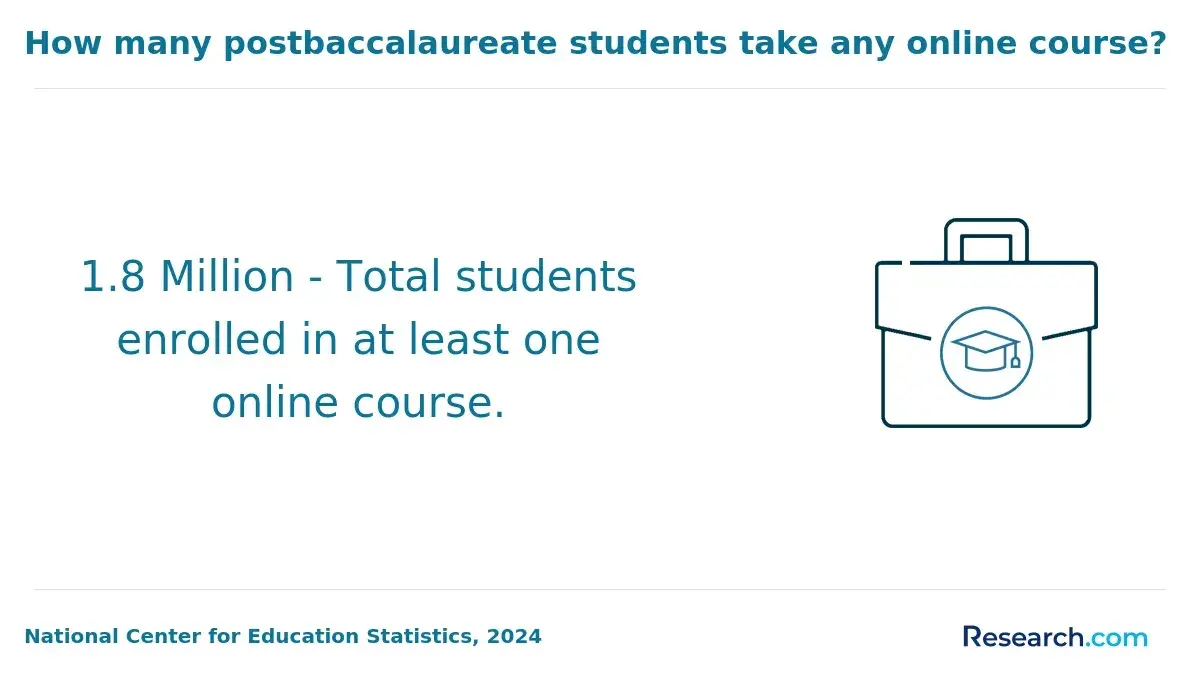
Availability tends to be strongest at institutions with centralized student-account systems and large online enrollments. The U.S. Department of Education's National Center for Education Statistics reported that 54% of postsecondary students were enrolled in at least one distance education course in fall 2022. That scale helps explain why many institutions maintain online billing and installment tools, though it does not mean every online program offers identical terms.
To assess availability, contact both admissions and student accounts. Admissions can confirm the program format; student accounts can confirm whether your specific student type, term, and balance qualify for installments. Do not rely solely on a general statement that a school "offers payment plans."
For comparison, clinical graduate pathways can have different enrollment calendars and expense categories. Students reviewing online MSN to DNP programs should similarly confirm that a payment plan applies to graduate clinical fees and not only tuition.
Can monthly tuition plans make paying for Health Communication degrees more attainable?
Yes, a monthly plan can make a Health Communication degree more attainable when you have dependable income during the term and need to spread a remaining balance over several due dates. It changes the timing of payment, not the school's tuition charge. For many students, the practical benefit is avoiding one large beginning-of-term payment while keeping the balance within a short repayment period.
Monthly payments tend to work best for students who can cover the full term balance from expected earnings, savings, or employer support by the last installment. They can be particularly useful when financial aid covers part of tuition but leaves a manageable remainder.
The following comparison highlights when each method is generally more suitable. It is a decision guide, not a substitute for reviewing aid eligibility or loan terms.
| Payment approach | Often a good fit when | Main trade-off |
| Monthly tuition plan | You can pay the balance within the term from predictable cash flow | Missed installments can trigger holds, fees, or deregistration |
| Pay tuition upfront | You have available funds and the school offers an upfront-payment discount, if any | Requires more cash before classes begin |
| Federal student loan | You need to spread eligible education costs beyond one term and understand borrowing consequences | Interest and repayment obligations may increase long-term cost |
| Employer tuition assistance | Your employer offers eligible reimbursement or direct billing | Reimbursement may arrive after you pay, and employment conditions may apply |
Avoid relying on a monthly plan if each installment would require credit-card debt, uncertain gig income, or borrowing from a new lender every month. In that situation, ask the financial aid office whether grants, scholarships, federal aid, employer billing, a reduced course load, or a later start date would create a more sustainable plan.
Health communication can overlap with patient education and behavioral health settings, but a communication degree is distinct from advanced nursing preparation. Those exploring a clinical psychiatric route can compare the separate requirements of accelerated PMHNP programs.
Does monthly payment plans have an effect on the overall cost of Health Communication degrees?
A monthly payment plan usually does not change base tuition or the number of credits required for a Health Communication degree. Its direct cost is typically an enrollment or administrative fee, if the school charges one, plus any late, returned-payment, or reinstatement fees. Unlike a loan, a standard school installment plan often does not charge interest, but that must be confirmed in the agreement.
The cost question is therefore broader than the plan fee. A plan can become more expensive if it causes late charges, prevents registration for the next term, or leads you to use high-interest credit to make installments. Conversely, an interest-free plan with a modest disclosed enrollment fee may cost less than borrowing a short-term balance.
Before choosing, calculate the complete out-of-pocket impact in this order:
- Subtract confirmed grants, scholarships, employer payments, and accepted aid from the term's billed charges.
- Add the plan enrollment fee, required deposit, and any payment-processing charge disclosed by the school.
- Compare the resulting installment amount with your reliable monthly income after essential expenses.
- Compare that total with the estimated interest and repayment consequences of any loan you would otherwise use.
A common mistake is comparing only the monthly installment to a loan's monthly payment. A payment plan is generally repaid over the current term, while a student loan may be repaid over years. Compare total cost, due dates, and the consequences of falling behind - not just the smallest monthly number.
Do monthly payment plans affect your financial aid eligibility for Health Communication programs?
Enrolling in a monthly tuition plan does not ordinarily determine eligibility for federal financial aid. Eligibility is generally based on factors such as FAFSA information, enrollment status, satisfactory academic progress, citizenship or eligible noncitizen status, and program eligibility. However, the timing of aid disbursement directly affects the amount you need to place on a payment plan.
Federal Student Aid advises students to complete the FAFSA each year they seek federal aid. For a Health Communication student, the key operational issue is whether the school applies expected aid to the account before calculating installments or requires payments until funds disburse. Some schools recalculate the plan after aid posts; others require a revised agreement.
Before enrolling in a plan, ask these questions in writing:
- Will pending grants, scholarships, and accepted federal loans reduce my installment balance before the first payment is due?
- What happens if my aid is delayed, revised, or canceled after I join the plan?
- Does dropping a course, withdrawing, or changing enrollment status create an immediate balance due?
- Can I adjust or cancel the payment plan after my final aid award is posted?
Do not decline potentially suitable need-based or federal aid merely because a payment plan is available. First compare the short-term affordability of installments with the long-term cost and obligations of borrowing. A financial aid counselor can explain school-specific rules but cannot promise an award until eligibility is finalized.
Is there a deposit required before starting Health Communication monthly payment plans?
Often, yes. Schools may require a down payment when you enroll in a tuition plan, while others collect the first installment immediately and treat that payment as the initial amount due. The required amount can be a fixed sum, a percentage of the balance, or simply the first scheduled installment. It varies by institution, enrollment date, term length, and outstanding balance.
Earlier enrollment often gives students more installments and a lower payment per due date. Waiting until classes begin can mean a larger initial payment because fewer billing dates remain. A plan might also require a separate nonrefundable enrollment fee even when the deposit itself is credited toward tuition.
Ask student accounts for a sample schedule based on your actual anticipated balance. Confirm the first payment date, deposit amount, whether the deposit is refundable after withdrawal, and what happens if financial aid arrives after you have paid it.
Students moving through healthcare education at different levels should not assume deposits are comparable across programs. For example, admissions, clinical, and compliance expenses can materially change the upfront amount in online associate nursing programs.
Are there fees not covered by monthly tuition payment plans for Health Communication programs?
Yes. A payment plan may cover tuition and some mandatory institutional charges, but it may exclude costs billed separately or paid directly to third parties. The distinction matters because excluded expenses can be due before a course begins even if your tuition balance is divided into installments.
Review the account statement and program materials for the items below. They are common categories to verify, not fees that every Health Communication program charges.
| Expense category | May be included in tuition installments? | What to confirm |
| Tuition and standard institutional fees | Often included | Whether all mandatory per-credit and online-learning fees are part of the plan balance |
| Plan enrollment fee | Often excluded | Amount, refundability, and whether it is charged each term |
| Books, subscriptions, and course materials | Often excluded | Whether materials are billed by the school or purchased separately |
| Technology, proctoring, or equipment | Varies | Whether costs are charged to your student account or directly by a vendor |
| Practicum, travel, background-check, or immunization costs | Often excluded | Whether the curriculum includes experiential requirements and their payment deadlines |
| Late and returned-payment charges | Not covered | Fee amount, grace period, and consequences of a missed payment |
A frequent error is treating the payment-plan balance as the complete cost of attendance. Build a separate reserve for materials and required technology, particularly if the program uses specialized communication software, proctored assessments, or field-based assignments.
What should you look for in payment plan terms for Health Communication programs?
A useful payment plan is transparent, realistic for your cash flow, and aligned with the program calendar. Read the agreement before accepting it, including linked student-account policies. Marketing language such as "easy payments" does not answer the practical questions of how much is due, when it is due, and what happens if circumstances change.
Use the following checklist when comparing plans from more than one school:
- Number of installments, first due date, final due date, and whether payments are monthly or tied to shorter sessions
- Required deposit or first payment, plus whether enrollment later in the term reduces the number of available installments
- Enrollment, service, processing, late-payment, returned-payment, cancellation, and reinstatement fees
- Whether the plan is interest-free and whether a credit card creates separate processing charges or interest through the card issuer
- Charges included in the plan and costs that remain due outside the installment schedule
- How pending and disbursed financial aid changes the balance and whether the schedule is recalculated automatically
- Consequences of a missed payment, including account holds, class cancellation, transcript holds, collection activity, or loss of future plan eligibility
- Withdrawal, course-drop, and refund rules if your enrollment changes after payments begin
Request a written answer if any term is unclear. Keep a copy of the agreement, itemized bill, aid notice, and payment confirmations. This documentation is especially important if an aid adjustment or administrative error changes the amount due.
How do you know if online Health Communication degrees with monthly payments are right for you?
An online Health Communication degree with monthly payments is a strong fit when the program meets your academic and career goals, the institution is appropriately accredited, and the full term balance can be paid from reliable resources without high-cost borrowing. Payment flexibility should be a selection factor, not the primary reason to choose a program with weak curriculum, unclear student support, or unsuitable outcomes.
First, confirm that the degree supports your intended work. Health communication graduates may pursue roles in patient education, health promotion, public health outreach, healthcare marketing, community engagement, communications, or advocacy; employer requirements differ. If a role requires a professional license or clinical credential, verify that a communication degree alone is sufficient before enrolling.
Then use this short decision process:
- Compare accredited online programs for curriculum, transfer-credit policy, course format, student services, total net price, and career relevance.
- Estimate your balance for each term after confirmed aid and employer support, then divide it by the actual number of installments offered.
- Test the payment against your budget with room for books, emergencies, and a possible aid delay.
- Choose the plan only if you can meet every due date without depending on revolving credit or uncertain income.
- Choose upfront payment, a different enrollment pace, employer support, or carefully considered aid if the installment is still unaffordable.
The best choice is not always the plan with the lowest first payment. A slightly higher monthly amount at a lower-priced school may be more manageable overall than a longer schedule at a program with higher tuition and more fees. Confirm the academic fit first, then use payment terms to protect your budget.
Other Things You Should Know About Health Communication
Employer recognition generally depends more on the institution's accreditation, curriculum, relevant experience, and your demonstrated communication skills than on whether coursework was online. Review job postings in your target field and ask each program how it supports internships, portfolio development, and career services.
Many programs evaluate transfer credit, but policies vary by school and course equivalency. Submit official transcripts early and ask for a written transfer evaluation before relying on an estimated completion timeline or payment budget.
Often, yes, but reimbursement usually does not eliminate your initial obligation to the school. Ask whether the employer pays the institution directly, whether deferred billing is available, and when reimbursement is expected relative to installment due dates.
Confirm institutional accreditation through the school and the U.S. Department of Education's accreditation resources. Health Communication programs do not always have a separate programmatic accreditor, so also assess faculty expertise, curriculum, student support, and alignment with your intended career path.
References
- Admissions: Online Tuition | Full Sail University https://www.fullsail.edu/admissions/tuition-online
- Online Medical Assistant Program With Financial Aid (2026) https://www.clinicalskillsinstitute.com/post/online-medical-assistant-program-with-financial-aid
- Scholarships and Financial Aid for Healthcare Students: How to Fund Your Education https://explorehealthcareers.org/resources/scholarship-financial-aid/
- Financing Your Degree https://aspph.org/student-journey/financing-your-degree/
- Tuition and Costs | Point Park University | Pittsburgh, PA https://www.pointpark.edu/admissions/tuitioncosts/tuition/index
- Online Health Information Management Degrees: Top Schools https://www.edumed.org/online-schools/health-information-management-degrees/
- Online Colleges with Tuition Payment Plans https://mycollegeguide.org/online-colleges-with-monthly-payment-plans/
- 2025 Most Affordable Online MPH Programs https://www.onlineu.com/most-affordable-colleges/public-health-masters-degrees
- Online Health Information Technology Degree | Affordable Entrepreneurship Degree - USCI https://www.uscareerinstitute.edu/online-health-information-technology-associate-degree
- Monthly Payment Plan https://www.umgc.edu/current-students/finances/payments/monthly-payment-plan