2027 Online Health Communication Degree Programs With No Personal Statement or Admissions Essay Required

Co-Founder and Chief Data Scientist
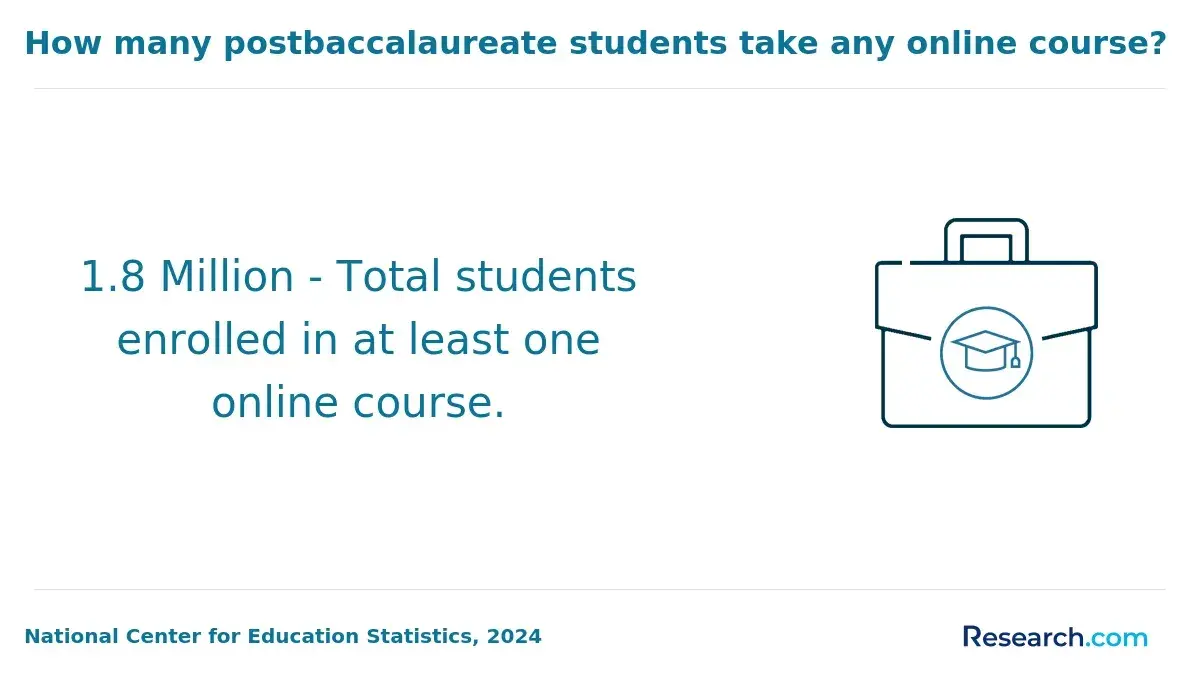
An admissions essay can slow down an otherwise straightforward college application, especially for working adults, transfer students, and applicants returning to school. In the U.S., 54% of postsecondary students took at least one distance education course in 2022, according to NCES data published in 2024, showing why flexible online pathways matter. No-essay health communication programs remove one writing requirement, but they may still review transcripts, GPA, prerequisites, and residency records. This guide explains how to identify a genuine no-essay policy, compare program quality, estimate costs, and apply with confidence.
Key Things You Should Know
- A true no-essay policy means the standard admission application does not require a personal statement; it does not mean automatic, open, or guaranteed admission, because transcripts, GPA minimums, prerequisites, and identity or residency documentation may still be reviewed.
- "Essay-optional" lets applicants submit writing to add context, while "essay-waived" usually means an essay was removed for a specific applicant group, term, or condition; honors programs, scholarships, and competitive tracks may still require written responses.
- Choose on outcomes as well as convenience: NCES reported that 54% of U.S. postsecondary students took at least one distance education course in 2022, but online delivery and a short application do not replace institutional accreditation, transparent tuition, relevant coursework, or career support.
What Does No Personal Statement or Admissions Essay Required Mean for Online Health Communication Degree Programs?
For an online health communication degree, "no personal statement or admissions essay required" generally means that the school does not ask for a narrative explaining your goals, background, or readiness as part of its standard admission file. You may be able to submit an application, official or unofficial transcripts, and other required records without drafting a long essay.
A no-essay policy applies only to the application component the school identifies. It does not necessarily remove writing from placement reviews, scholarship applications, appeals, internship applications, or competitive program progression. Confirm the policy for your degree level, start term, campus or online format, and applicant category before treating an essay as unnecessary.
| Term | What it usually means | What an applicant should confirm |
| No essay required | No personal statement is part of the standard admission application. | Whether transfer, international, conditional-admission, or scholarship forms have separate writing requirements. |
| Essay-optional | The essay is not mandatory, but the institution may consider one if submitted. | Whether an essay can explain a low GPA, academic gap, or unusual prerequisite record. |
| Essay-waived | An essay requirement is removed under a stated policy or for a defined group. | The waiver's eligibility rules, term, expiration date, and whether it applies to the online program. |
| Open admission | Admission is broadly accessible, often with baseline eligibility requirements. | Whether enrollment in the institution differs from admission to a major, upper-division track, or clinical experience. |
The distinction matters because a program can be no-essay and still selective. Conversely, a college with broad admission may require a separate application before students can enter a specialized communication or public health concentration.
What Admissions Requirements Do Online Health Communication Degree Programs Use Instead of an Essay?
Schools commonly replace an essay with objective records that help them assess prior academic preparation and eligibility. Requirements vary by institution and degree level, so the published admissions page for the exact online program should control your decision.
The following items are common in no-essay applications and deserve the same attention as an essay would.
- Completed institutional or common application with personal and contact information.
- High school transcript, GED record, or college transcripts, depending on whether you are a first-time or transfer applicant.
- Minimum cumulative or transferable-credit GPA, which may differ for general admission and admission to the major.
- Proof of prerequisite completion, particularly for statistics, introductory communication, English composition, biology, psychology, or public health courses.
- Standardized test scores only when the institution still requires them or when an applicant chooses to submit them under a test-optional policy.
- Proof of English proficiency, residency, immunization, or identity when applicable to the applicant and institution.
- Recommendation letters, résumé, interview, portfolio, or short-answer responses when required for a particular pathway.
Test-optional and no-essay are separate policies. A college may not require SAT or ACT scores but still require a statement, or it may eliminate the essay while maintaining transcript-based review. If your grades do not fully reflect your ability, ask whether the school accepts an optional statement, résumé, or additional context; do not assume unsolicited materials will be reviewed.
For many bachelor's applicants, the transcript becomes the central evidence of readiness. Check whether the stated GPA is a minimum to apply, a minimum for direct admission to the major, or simply a benchmark for competitive review. Missing a prerequisite can lead to provisional admission, additional coursework, or denial even when no essay is required.
Who Is a Good Fit for Online Health Communication Degree Programs With No Admissions Essay?
A no-essay pathway can fit applicants with a solid academic record who want an efficient application process and whose goals align with health education, patient communication, public health messaging, community outreach, digital content, or healthcare marketing. It can be especially practical for adults balancing work or caregiving, students applying to several institutions, and transfer applicants with established college credit.
It may also appeal to learners exploring adjacent healthcare education routes. Students whose goals are direct patient care rather than communication may want to compare options such as online associate nursing programs, which follow different admissions, clinical, and licensure expectations.
A simplified application is less suitable when a written statement would substantially strengthen your case. Applicants with a low or inconsistent GPA, a long academic break, disciplinary history, limited coursework, or a major career change may benefit from schools that invite contextual writing. An optional essay can give admissions staff information that a transcript cannot show, provided the school confirms it will consider it.
Health communication work typically rewards clear writing, audience awareness, cultural humility, ethical judgment, digital communication skills, and the ability to translate complex health information accurately. You do not need an admissions essay to develop or demonstrate those skills, but you should expect coursework to involve research, presentations, campaigns, reports, and evidence-based messaging.
What Is the Difference Between No-Essay, Essay-Optional, and Essay-Waived Health Communication Degree Admissions?
The labels can sound interchangeable, but they create different application strategies. Read the wording on the institution's current admissions page rather than relying on third-party listings, old social media posts, or a general college policy that may not apply to the online program.
This comparison shows when writing may still be useful or required.
| Admission policy | Is standard essay submission required? | Best use for applicants | Important limitation |
| No essay | No | Apply efficiently when required records already represent your preparation well. | Other writing, including scholarship prompts, may be separate. |
| Essay-optional | No | Submit a concise, relevant statement only if it adds meaningful context. | An optional essay may not offset missing prerequisites or a GPA below the published minimum. |
| Essay-waived | Usually no for eligible applicants | Use the waiver if you clearly meet its terms. | The policy may be limited by applicant type, entry term, partnership, or promotional period. |
| Essay required | Yes | Explain fit, goals, preparation, or circumstances in a structured review process. | Requirements may differ between undergraduate, graduate, and special-program applications. |
Do not confuse an essay waiver with a permanent institution-wide rule. A waiver may apply only to students with a specified transfer-credit total, applicants using a particular application platform, or students admitted for one term. Save a copy of the policy or obtain written confirmation from admissions if the wording is unclear.
One common mistake is declining an optional essay when the transcript needs explanation. Another is submitting a generic essay simply because it is allowed. If the essay is optional, use it only to address relevant circumstances, connect your experience to health communication, or clarify academic readiness without repeating facts already visible in your record.
Are Online Health Communication Degree Programs With No Admissions Essay Easier to Get Into?
Not necessarily. Removing an essay reduces application time and may make the process less writing-intensive, but it does not reveal the school's academic standards, capacity limits, transfer-credit rules, or progression requirements. A school can make decisions primarily from grades, completed coursework, and administrative eligibility checks.
Applicants should separate application simplicity from admission selectivity. Direct admission to a university may differ from entry into an upper-division major, a capstone sequence, an internship placement, or a competitive scholarship program. Ask whether admission is guaranteed after meeting published minimums or whether the program conducts holistic or space-available review.
Career outcomes should also drive the decision. The U.S. Bureau of Labor Statistics projects employment for public relations specialists to grow 5% from 2024 to 2034. This is a broad communications occupation rather than a health communication-specific outcome, but it suggests a continuing need for professionals who can shape clear, credible messages; students should still review local demand and the specific roles a program prepares them for.
If speed is your highest priority, compare program calendars, transfer evaluation timelines, and course sequencing instead of choosing solely by essay policy. Some learners may also consider fast track degrees, but acceleration can increase weekly workload and may not be appropriate when foundational communication or public health courses are still needed.
How Can You Verify Accreditation and Quality in No-Essay Online Health Communication Degree Programs?
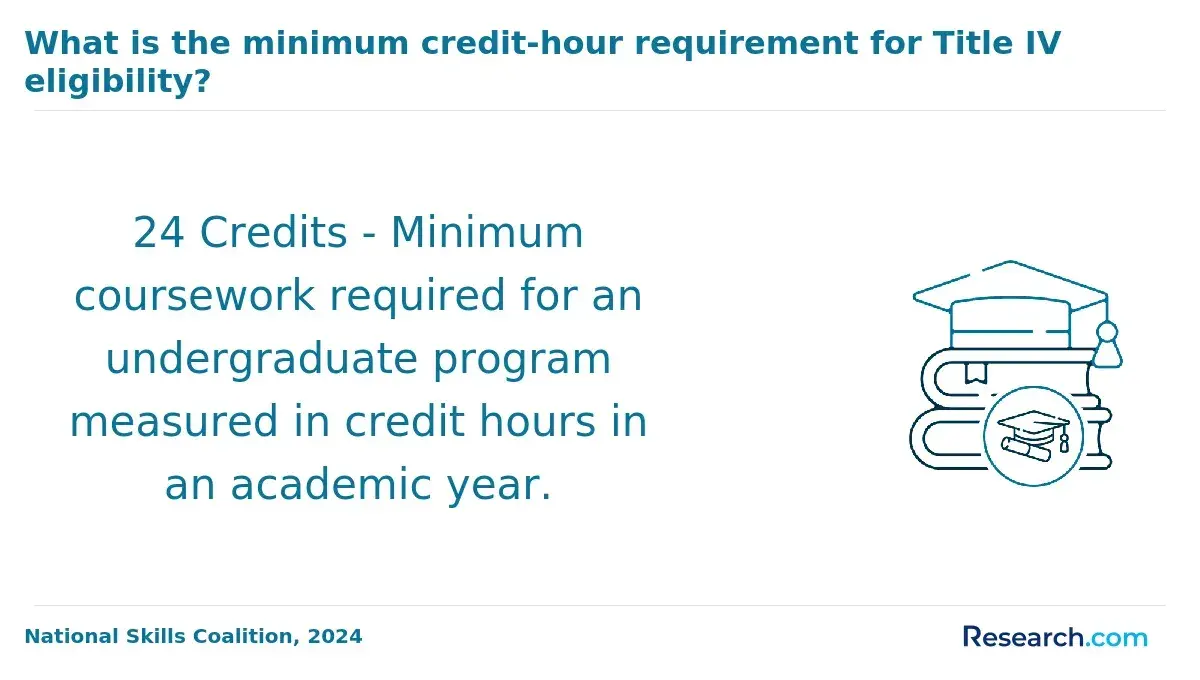
Verify quality independently of admissions convenience. For most health communication bachelor's programs, the essential check is whether the college or university holds recognized institutional accreditation. Institutional accreditation supports transfer-credit review, federal aid eligibility when other requirements are met, and employer confidence in the degree; it is not the same as specialized accreditation.
Start by confirming the institution's accreditation status through the U.S. Department of Education or the Council for Higher Education Accreditation databases. Then review the exact degree page and catalog for the major name, curriculum, faculty credentials, online course format, internship options, graduation requirements, and whether the credential appears on the transcript as an online degree or simply as the awarded degree.
Use this quality screen before paying an application fee or committing to enrollment.
- Confirm that the accreditor is recognized and that the institution's status is current, not merely described as "licensed," "authorized," or "approved."
- Read the curriculum for health literacy, ethics, research methods, digital communication, public health, intercultural communication, and evaluation of health campaigns.
- Ask whether online students can access advising, library databases, tutoring, disability services, career support, and internship assistance.
- Check whether internships are optional, required, virtual, locally arranged, or subject to separate screening and site availability.
- Request the total estimated program cost, including technology, course-material, graduation, proctoring, and experiential-learning fees.
- Review retention, graduation, debt, and earnings disclosures where the school publishes them, while recognizing that outcomes can vary by student and role.
Be cautious when a school highlights "easy admission" more prominently than curriculum, faculty, accreditation, or cost. A legitimate program should be able to provide clear answers about who awards the degree, what students learn, and what support online learners receive.
How Does the Application Process Work for Online Health Communication Degree Programs With No Personal Statement?
The process is often shorter because there is no personal statement to draft, revise, and submit, but applicants should allow time for transcript delivery and transfer evaluation. Many institutions review files only after all required documents arrive, so a completed online form alone may not start an admission decision.
Follow these steps to avoid treating a no-essay policy as a no-document policy.
- Locate the admissions page for the exact online health communication degree, degree level, and intended start term.
- Record the stated essay policy and check separate requirements for transfers, international applicants, conditional admission, scholarships, and honors opportunities.
- Create an application account, select the correct major and online modality, and provide accurate educational history.
- Order or upload transcripts according to the school's instructions, including records from every previously attended college when required.
- Complete any prerequisite, residency, financial aid, placement, or identity-verification steps before the deadline.
- Monitor the applicant portal for missing items, transfer-credit evaluations, requests for clarification, and an admission decision.
- After admission, compare your degree audit with the catalog before registering so you understand remaining credits and course sequencing.
Keep copies of submissions and note the name and date of any admissions guidance you receive. Schools can request additional documentation when records conflict, a prerequisite needs verification, or residency classification is incomplete. That request is not necessarily a reversal of the no-essay policy.
Students considering advanced healthcare leadership routes should recognize that admissions can become more documentation-heavy at the graduate level. For example, online MSN to DNP programs commonly involve professional and clinical eligibility considerations that differ substantially from undergraduate health communication admission.
Can Transfer and Adult Students Apply to Online Health Communication Degree Programs Without an Essay?
Yes, many no-essay policies include transfer and adult applicants, but eligibility is not automatic. Transfer applicants are often reviewed on college-level GPA, transferable-credit totals, course equivalencies, and whether all prior institutions are disclosed. Adult students may qualify under the same rules as other applicants or under a separate returning-student process.
The most important question is whether the program's no-essay statement applies to your applicant category. A school may waive a first-year essay but request a short explanation from a student with a long enrollment gap, a prior degree, or an academic issue. Likewise, a transfer student can be admitted to the institution while needing additional lower-division credits before beginning advanced health communication coursework.
Before applying, transfer and adult learners should gather complete records and ask targeted questions.
- Which transcripts are required, including withdrawn, dual-enrollment, military, or previously completed certificate coursework?
- What is the minimum transfer GPA, and is it calculated from all attempted credits or only transferable credits?
- How many credits can transfer toward the degree, and how many must be completed through the institution?
- Which communication, public health, science, statistics, or writing courses meet major prerequisites?
- Does prior learning assessment, employer training, military experience, or credit by examination apply to degree requirements?
- Will a no-essay policy remain in effect if the transfer evaluation identifies a gap or places the applicant in conditional admission?
Applicants changing from clinical fields into communication should compare the degree's role alignment carefully. Those seeking pharmacy practice, for instance, need a professional pathway such as PharmD programs rather than a communication degree, because health communication does not qualify a graduate for pharmacist licensure.
Do No-Essay Online Health Communication Degree Programs Affect Tuition, Financial Aid, or Scholarships?
No-essay admission policies do not inherently make tuition lower or financial aid more available. Tuition is generally determined by the institution, residency classification, credit load, delivery format, and fees, not by whether an admissions essay is required. Compare net cost rather than assuming an easy application indicates an affordable program.
Financial aid eligibility usually depends on completing the FAFSA, meeting citizenship or eligible-noncitizen rules, maintaining satisfactory academic progress, and enrolling in an eligible program at an eligible institution. Admission is only one part of the process. A student may be accepted without an essay but still need to provide tax-related information, verification documents, or enrollment confirmation for aid processing.
Scholarships are a frequent exception. Institutional merit awards, departmental awards, honors programs, and external scholarships may request short answers, recommendation letters, résumés, or personal essays even when regular admission does not. Do not skip scholarship opportunities because you assume the no-essay policy covers them.
When evaluating cost, request a written estimate that separates per-credit tuition from mandatory fees and identifies whether online students pay different rates. Also ask whether grants and scholarships renew automatically, what GPA is required to keep them, and whether transfer credits reduce total tuition but affect the number of credits needed for institutional aid.
How Should You Compare Online Health Communication Degree Programs With No Admissions Essay?
Use no-essay admission as an initial filter, not a final selection criterion. The best option is the program that combines an accessible application with credible accreditation, a curriculum matched to your goal, manageable net cost, and a schedule you can complete successfully.
Compare each finalist using the factors below, then request answers in writing when a policy is unclear.
| Comparison factor | What to examine | Why it matters |
| Essay policy | Whether no-essay status applies to your degree level, applicant type, term, and online format. | Prevents surprises after you begin an application. |
| Admission standards | GPA, transcripts, prerequisites, test-score policy, conditional admission, and major-entry rules. | Shows whether you meet requirements beyond the essay. |
| Academic fit | Courses in health literacy, digital strategy, public health, research, ethics, and campaign evaluation. | Connects learning to intended roles and skills. |
| Online experience | Live versus asynchronous classes, group work, exam proctoring, technology requirements, and support hours. | Determines whether the format fits work and family obligations. |
| Cost and aid | Total estimated price, transfer credit, fees, FAFSA eligibility, scholarship renewal, and payment plans. | Supports a realistic debt and budget decision. |
| Career preparation | Internships, employer relationships, portfolio projects, career coaching, and alumni outcomes. | Helps distinguish a credential from a program with applied experience. |
Ask admissions staff whether the essay policy applies to scholarships and whether additional written materials can be requested after initial review. Ask an academic advisor to map transferred credits against graduation requirements before you enroll. Finally, speak with career services about likely entry roles such as health educator support, community outreach coordinator, communications assistant, patient education content specialist, or healthcare marketing assistant; job titles and qualification expectations vary by employer.
If your long-term goal is psychiatric advanced practice nursing, compare that pathway separately from communication training. Accelerated PMHNP programs are designed around nursing preparation, supervised clinical education, and certification-oriented requirements that a health communication degree does not replace.
Other Things You Should Know About Health Communication
Not always. Policies may differ for first-time students, transfers, international applicants, returning students, graduate applicants, and applicants seeking conditional admission. Confirm the rule for your exact applicant category and start term.
Yes. A school may request clarification about academic records, residency, disciplinary disclosures, prerequisite completion, or unusual circumstances. That is different from making a standard personal statement mandatory for all applicants.
Yes. Scholarship, honors, leadership, and departmental applications often use separate selection criteria and may require essays, short responses, recommendations, or résumés.
Depending on coursework and experience, graduates may pursue communication, outreach, education, content, marketing, and public health support roles in healthcare organizations, nonprofits, agencies, insurers, or government settings. Some roles may prefer a portfolio, internship experience, graduate education, or specialized technical skills.
References
- Non-Traditional Medical School Personal Statement (2026) https://gradpilot.com/news/non-traditional-medical-school-personal-statement-guide
- Health Communication https://www.fastweb.com/directory/scholarships-for-health-communication-majors
- Online Master's in Health Communication Programs in 2025 https://www.mastersincommunications.org/online-health-communication/
- Master's in Communication Programs: Advice on Applying, Personal Statements https://www.mastersincommunications.com/features/advice-for-applying-to-graduate-programs
- Med School Personal Statements for Different Application Platforms - Collegiate Gateway https://collegiategateway.com/med-school-personal-statements-for-different-application-platforms-2/
- Online Health Science Degrees with Financial Aid https://www.edumed.org/online-schools/health-science-degrees/financial-aid/
- 2025 Most Affordable Online MPH Programs https://www.onlineu.com/most-affordable-colleges/public-health-masters-degrees
- 2026 Medical School Personal Statement Ultimate Guide (220+ Examples) - Shemmassian Academic Consulting https://www.shemmassianconsulting.com/blog/medical-school-personal-statement-analysis
- Admissions Requirements | Pacific Oaks College https://www.pacificoaks.edu/admissions/admissions-requirements/
- Do I need to Write a Different Essay for Each Application? https://medicalschoolhq.net/adg-38-do-i-need-to-write-a-different-essay-for-each-application/