2027 Online Health Communication Degree Programs With No Letters of Recommendation Required

Co-Founder and Chief Data Scientist
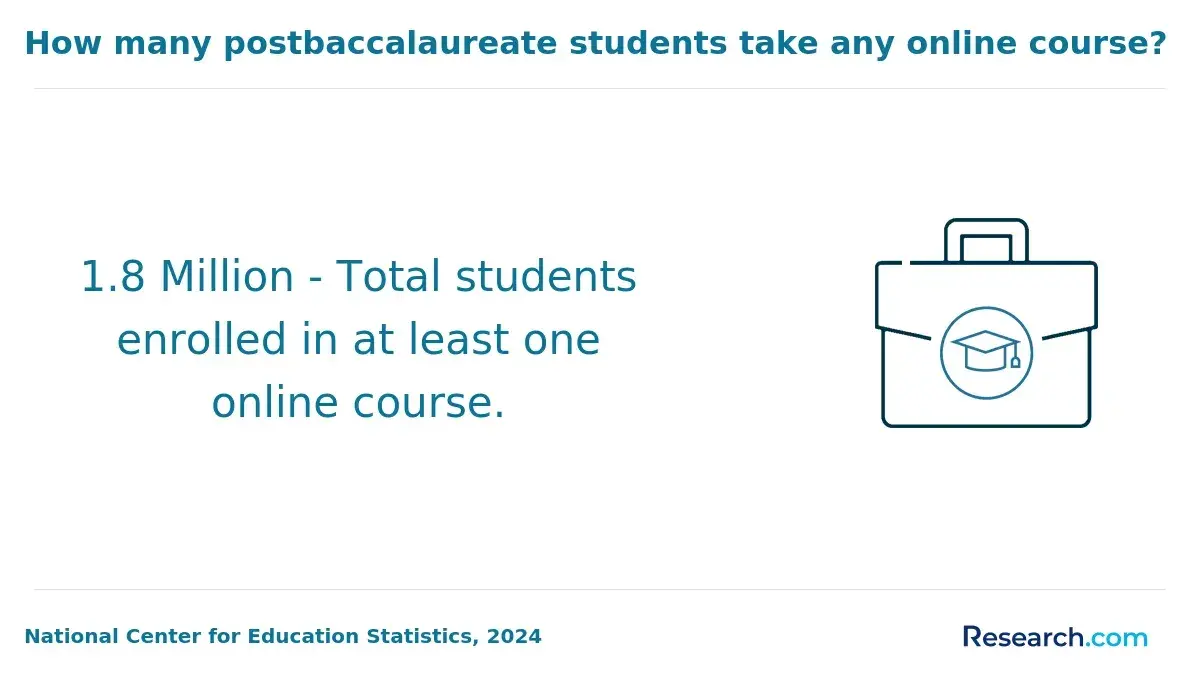
Applicants who lack recent academic or professional references may find recommendation letters a needless barrier to an online health communication degree. Programs with streamlined admissions can be a practical option, but "no letters required" does not mean no standards. National Center for Education Statistics data show that 26.5% of U.S. postsecondary students enrolled exclusively in distance education in fall 2022, underscoring the established role of online study. This guide explains how to find legitimate programs, confirm current requirements, compare costs and outcomes, and apply strategically.
Key Things You Should Know
- "No letters of recommendation required" means the published application for the specific online health communication program does not require references; it is different from letters being optional, waived for some applicants, or requested after review.
- Programs may instead assess official transcripts, minimum GPA, a personal statement, resume, prerequisite coursework, and English-language proficiency when applicable; simplified paperwork does not mean automatic admission.
- Compare institutional accreditation, total tuition and fees, curriculum, faculty, student support, and career alignment before enrolling; the U.S. Bureau of Labor Statistics reports a $63,000 median annual wage for health education specialists in 2024, but health communication degree outcomes vary by role and experience.
Which Online Health Communication Degree Programs Require No Letters of Recommendation?
Fully online degrees titled exactly "health communication" are less common than broader communication, public health, health education, healthcare administration, or strategic communication programs that include health communication coursework. Because admissions pages and program tracks can change, there is no reliable permanent national list of programs that never require letters. The most dependable answer comes from the program's current graduate or undergraduate application checklist.
Look first for online bachelor's-completion programs, communication degrees with healthcare-related electives, and professionally oriented master's programs. These formats may use transcript-based or experience-based review more often than research-intensive graduate programs, where faculty references remain common. A school may also have different requirements for its online and campus cohorts.
The distinctions below prevent a frequent application mistake: treating any mention of a waiver as a universal no-reference policy.
| Published admissions wording | What it usually means | What an applicant should do |
| "Letters of recommendation are not required" | No letters are part of the standard application. | Save or print the current program page and submit the remaining required materials. |
| "Letters are optional" | Applicants may submit letters, but the school may consider them if provided. | Decide whether a strong, relevant reference adds useful evidence. |
| "Letters waived for applicants meeting criteria" | The waiver depends on GPA, prior degree, work history, or another condition. | Confirm in writing that you personally qualify before applying. |
| "References may be requested" | The program can seek additional information during review. | Prepare potential references even if you do not upload letters initially. |
Do not assume that an institution's general online admission page applies to a health communication concentration. Verify the degree level, start term, delivery format, and applicant category. Students exploring a clinical pharmacy route rather than communication-focused health education can also compare PharmD programs, which have distinct prerequisite and professional-entry requirements.
What Are the Admission Requirements for Online Health Communication Degree Programs With No Recommendation Letters?
Requirements depend heavily on degree level. Bachelor's programs commonly review high school records or college transfer transcripts. Master's programs usually require an accredited bachelor's degree and may expect evidence that the applicant can handle graduate-level reading, research, and writing. A no-letter policy removes one document, not the school's responsibility to assess academic readiness.
Applicants should expect some combination of the following materials, then compare each item with the program's application page for their intended term.
- Official transcripts from all previously attended colleges or universities.
- A minimum cumulative GPA or a separate GPA standard for the most recent coursework.
- An online application, application fee or fee-waiver request, and identity or residency information.
- A personal statement, goal statement, or short-answer response about academic and professional interests.
- A resume or curriculum vitae, particularly for graduate or degree-completion applicants.
- Prerequisite courses in writing, communication, statistics, public health, biology, or social science when the curriculum requires them.
- Standardized test scores only if the program still requires them; many programs are test-optional, but policies differ.
- English-language proficiency documentation for applicants who must meet that requirement.
Ask admissions whether the posted GPA is a minimum for consideration or a competitive benchmark. Also ask whether a low GPA can be addressed through a statement, recent coursework, relevant health-sector experience, or conditional admission. Obtain answers by email so that you have a dated record of the policy.
Are Online Health Communication Programs With No Letters of Recommendation Easier to Get Into?
Not necessarily. A program can eliminate recommendation letters to reduce administrative friction for working adults, transfer students, and applicants who have been away from school, while still maintaining standards through transcript review, writing assessments, prerequisites, or enrollment capacity. The absence of letters is an admissions-process feature, not a measure of academic rigor or selectivity.
Recommendation letters can provide context about collaboration, writing, and professional judgment. When they are not required, an admissions team may place more weight on the evidence you submit directly. That can benefit applicants with a clear academic record and relevant work history, but it can disadvantage applicants whose transcripts need context unless the application includes a strong statement or optional materials.
Use the school's published acceptance information carefully. Institution-wide acceptance rates, when available, rarely reveal the selectivity of one online concentration. Instead, compare minimum requirements, prerequisite expectations, cohort size, faculty review process, and whether admission is rolling, term-based, or capacity-limited.
A streamlined option is a good fit for an applicant who can document readiness through records and experience. It may be a poor fit for someone seeking a research-intensive graduate program, doctoral preparation, or a pathway where faculty endorsements are important evidence of scholarly potential.
What Do Online Health Communication Programs Evaluate Instead of Letters of Recommendation?
Admissions reviewers typically assemble a broader picture from documents that are more standardized and easier for applicants to provide. For health communication, they may look for evidence of clear writing, ethical judgment, audience awareness, research literacy, and familiarity with healthcare or public-health settings.
This comparison shows how common application materials can demonstrate qualities that a recommender might otherwise describe.
| Alternative material | What it can show | How to make it stronger |
| Transcripts | Academic preparation, consistency, and performance in relevant courses | Highlight recent success in writing, research, statistics, health, or communication coursework. |
| Personal statement | Career purpose, writing ability, and fit with the curriculum | Connect a specific experience and goal to named course topics or learning outcomes. |
| Resume | Work history, leadership, and healthcare exposure | Use results-focused descriptions of patient education, outreach, content, or stakeholder communication work. |
| Writing sample or essay | Ability to explain complex health information responsibly | Use credible evidence, identify the audience, and avoid unsupported health claims. |
| Prerequisite completion | Readiness for required methods or health-science content | Complete missing courses early and retain course descriptions if transfer evaluation is needed. |
If letters are optional, submit them only when they are specific and current. A detailed letter from a supervisor who can describe your health education, outreach, communications, or project-management work can add value; a generic endorsement usually adds little. Never ask a friend or family member to pose as a professional reference.
How Can You Tell if an Online Health Communication Degree With No Recommendation Requirement Is Accredited and Legitimate?
Start with institutional accreditation. A legitimate degree-granting college or university should hold accreditation recognized by the U.S. Department of Education or the Council for Higher Education Accreditation. Institutional accreditation matters for federal financial aid, transfer-credit review, and employer confidence. Health communication itself does not usually have one universal programmatic accreditor comparable to those used by licensed clinical professions.
Verify more than a logo on a school website. The following checks help distinguish a transparent program from one that relies on vague claims.
- Find the institution in the federal Database of Accredited Postsecondary Institutions and Programs or the accreditor's own directory.
- Confirm that the exact online degree, concentration, and credential level appear in the university catalog.
- Review faculty biographies for relevant communication, public health, health education, research, or clinical expertise.
- Read the curriculum for health literacy, risk communication, ethics, audience research, digital communication, and evaluation skills rather than relying on the degree title alone.
- Confirm how online students receive advising, library access, disability services, technical support, and career assistance.
- Ask for the full tuition schedule, refund policy, transfer-credit policy, and any state authorization information before paying a deposit.
Red flags include pressure to enroll immediately, unclear total pricing, no identifiable faculty, promises of guaranteed employment, vague accreditation language, or a school that will not provide its catalog. Employers generally focus on the institution, degree relevance, skills, and experience rather than whether an application included recommendation letters.
How Much Do Online Health Communication Degree Programs With No Letters of Recommendation Cost?
No-recommendation admissions do not inherently make a program cheaper. Cost is determined by institutional sector, residency rules, credit requirements, delivery fees, transfer credit, and whether the program charges a flat online rate. Use the net price after grants and scholarships, not only the advertised tuition per credit, when comparing options.
For context, the National Center for Education Statistics reported average published undergraduate tuition, fees, room, and board of $24,030 at public four-year institutions for students living off campus in 2023-24. An online student may avoid housing and commuting costs, but still needs to budget for tuition, technology, books, proctoring, and occasional required travel. That national average is not a price quote for an online health communication degree.
Ask each school for a written estimate based on your transfer credits and enrollment pace. A transparent estimate should separate tuition from mandatory fees and explain whether the rate can change after enrollment. If you are comparing advanced nursing education with health communication, online MSN to DNP programs have different clinical, practicum, and cost considerations.
To estimate your likely total, multiply the number of credits you still need by the current per-credit rate, then add required program and technology charges. Subtract only aid you have a reasonable basis to expect, such as confirmed employer tuition assistance or an awarded grant. Avoid borrowing based solely on a projected salary or an unverified promise of promotion.
Can You Get Financial Aid for an Online Health Communication Degree With Streamlined Admissions?
Yes. Admissions requirements and financial-aid eligibility are separate processes. Students in an eligible online program at an accredited institution may be considered for federal aid by filing the Free Application for Federal Student Aid, commonly called the FAFSA. Eligibility depends on factors including citizenship or eligible noncitizen status, satisfactory academic progress, enrollment level, prior borrowing, and the school's participation in federal aid programs.
Start financial planning before accepting admission. This sequence helps prevent a gap between an application decision and an enrollment bill.
- Submit the FAFSA early and review the school's financial-aid offer for grants, work-study eligibility, loans, and unmet costs.
- Ask whether online students pay the same tuition and receive the same institutional scholarships as campus students.
- Check employer benefits if you work in a hospital, insurer, nonprofit, public-health agency, or health technology organization.
- Confirm whether part-time enrollment changes aid eligibility, scholarship renewal, or your completion timeline.
- Borrow only after comparing federal loan terms with your expected budget and realistic career plan.
Private scholarships may consider academic achievement, community involvement, public-health interests, or employment goals, and they may still request references even when the degree program does not. Read each scholarship's requirements separately. A streamlined school application does not override a funder's selection criteria.
How Long Does an Online Health Communication Degree With No Letters of Recommendation Take to Complete?
Admission paperwork does not determine completion time. Program length depends on degree level, transferred credits, course sequencing, practicum requirements, and whether students attend full time or part time. A bachelor's degree commonly requires about 120 total credits, while many master's programs require roughly 30 to 36 credits, though the exact curriculum controls.
Online formats can offer multiple starts, asynchronous coursework, or accelerated terms, which may help working students schedule study around employment. They do not remove the workload. Accelerated courses cover material in fewer weeks and can require more reading, writing, and project work each week.
This timeline comparison can help applicants separate the credential they need from the speed they hope to achieve.
| Pathway | Typical starting point | Main factor affecting time to completion |
| Bachelor's completion degree | Prior college credits or an associate degree | How many general education and major credits transfer. |
| Four-year bachelor's degree | High school diploma or limited prior college work | Full 120-credit curriculum, course availability, and enrollment intensity. |
| Master's degree | Completed bachelor's degree | Required core sequence, capstone, and part-time versus full-time attendance. |
| Graduate certificate | Usually a bachelor's degree | Focused credit requirement and whether courses apply later to a degree. |
Before choosing a compressed schedule, ask whether courses are offered every term, whether a capstone can delay graduation, and whether a leave of absence affects catalog requirements. Learners seeking a broadly accelerated academic route can review fast track degrees, while recognizing that acceleration should not take priority over curriculum fit and affordability.
Can You Transfer Credits Into an Online Health Communication Degree Program With No Recommendation Letters?
Often, yes. Transfer evaluation is generally independent of recommendation-letter requirements. Schools commonly review official transcripts, course titles, credit hours, grades, institutional accreditation, and course equivalencies. Some may request syllabi for courses that do not have an established equivalency.
Transfer credit can reduce both cost and time, but do not assume every course will apply to the major. General education courses may transfer more readily than specialized communication, public-health, methods, or capstone requirements. Many schools also set limits on the age of certain courses, the minimum transferable grade, and the number of credits that must be completed in residence.
Take these steps before committing to a school.
- Send official transcripts for a preliminary or formal evaluation before enrolling whenever possible.
- Request a written degree plan showing accepted credits, remaining requirements, and the catalog year that applies to you.
- Keep syllabi, assignments, and course descriptions for specialized classes that may need faculty review.
- Ask whether transfer credits affect financial-aid enrollment status, graduation residency requirements, or eligibility for honors and scholarships.
- Confirm whether previously completed health, nursing, or allied-health coursework supports your intended communication pathway.
Students changing from a nursing pathway should compare credits carefully because clinical coursework may satisfy electives but not communication-major requirements. For context on entry-level nursing education formats, see online associate nursing programs; nursing licensure preparation and health communication education serve different professional purposes.
How Should You Compare Online Health Communication Degree Programs That Do Not Require Letters of Recommendation?
Compare programs as career investments, not merely as easy applications. Health communication can support work in patient education, public-health outreach, healthcare content, advocacy, community engagement, communications coordination, and health promotion. Duties often include translating complex information for defined audiences, supporting campaigns, coordinating stakeholders, evaluating communication materials, and using data responsibly. Specific job titles and hiring standards vary by employer.
The U.S. Bureau of Labor Statistics projects 7% employment growth for health education specialists from 2023 to 2033. This is useful labor-market context for applicants interested in health education and promotion, but it does not measure all health communication jobs or guarantee an outcome from a particular degree. Build a program comparison around the skills and experience your target roles require.
Use this decision framework to compare final contenders side by side.
| Comparison factor | What to verify | Why it matters |
| Admission policy | Whether letters are truly not required for your degree, term, and applicant type | Prevents surprises after you begin the application. |
| Accreditation and authorization | Recognized institutional accreditation and eligibility to enroll from your state | Supports aid access, transferability, and institutional legitimacy. |
| Curriculum | Health literacy, digital strategy, research, ethics, audience analysis, and evaluation | Shows whether courses build relevant, transferable communication skills. |
| Experiential learning | Internship, capstone, client project, practicum, or portfolio opportunities | Can help you show employers applied work rather than coursework alone. |
| Total cost | Tuition, fees, books, technology, transfer credit, and aid | Gives a more realistic affordability comparison than tuition alone. |
| Career fit | Relevant electives, alumni outcomes, and support for your target sector | Helps avoid choosing a convenient program that does not support your goals. |
Before applying, contact admissions with a short list of questions: Are letters required for my application type? Which materials are evaluated most heavily? What is the full estimated cost after transfer credit? Is any residency or synchronous attendance required? What career services and portfolio support are available to online students?
Consider alternatives when your goal requires a different credential. For example, psychiatric-mental-health nurse practitioner preparation is a clinical advanced-practice route with its own licensure and practicum standards; compare accelerated PMHNP programs only if that clinical role, rather than health communication, matches your intended career.
Other Things You Should Know About Health Communication
Yes, many online programs are designed for adult and working learners. You may still need official transcripts, and a resume or statement can be especially important for explaining relevant work experience and current goals.
Only submit them if the application explicitly permits optional materials. Unrequested documents may not be reviewed, and a concise, targeted personal statement may be more useful than generic references.
Explain the audience or health issue you want to address, connect your prior education or work to that goal, and identify skills you want to develop. Use specific examples and avoid unsupported medical claims or broad statements about wanting to help people.
Check requirements when you create your application, shortly before submission, and after any term or program change. Save the program webpage and email admissions to confirm unclear points, especially whether letters are not required for your applicant category.
References
- Admissions Requirements for Master's in Communication Programs (Campus, Online) https://www.mastersincommunications.com/faqs/admissions-requirements
- What career is right for me? | ASVAB Career Exploration Program https://www.asvabprogram.com/media-center-article/Student/college-letters-of-recommendation
- Admission Requirements Studying Medicine in the Philippines: Medical Schools https://3d-universal.com/en/blogs/admission-requirements-studying-medicine-in-the-philippines.html
- Bachelor of Science in Public Health Program Online - RGU SVG BSPH - Richmond Gabriel University https://richmondgu.org/bachelors-in-public-health-program/
- 2025 Most Affordable Online MPH Programs https://www.onlineu.com/most-affordable-colleges/public-health-masters-degrees
- 2025's Top Online MPH Programs with No GRE Requirement https://www.onlinemastersdegrees.org/best-programs/public-health-mph/no-gre/
- Online Health Science Degrees with Financial Aid https://www.edumed.org/online-schools/health-science-degrees/financial-aid/
- Does the Letter of Recommendation Still Matter in College Admissions? https://www.saraharberson.com/blog/letter-of-recommendation-still-matter-college-admissions
- College Admissions Rec Letters are a Waste of Time - Tex Admissions https://www.texadmissions.com/blog/2025/5/1/college-admissions-recommendation-letters-are-a-waste-of-time