2027 Online Health Communication Degree Programs With No Application Fee and Rolling Admissions

Co-Founder and Chief Data Scientist
Applying to an online health communication degree can feel urgent when start dates, tuition, transcripts, and work schedules all collide. The payoff can be meaningful: the U.S. Bureau of Labor Statistics reported a May 2024 median wage of $69,780 for public relations specialists, a role that can include healthcare messaging and patient-facing communication.
This guide is for prospective students who want flexible admissions without wasting money on weak-fit applications. You will learn how no-fee applications and rolling admissions work, when they help, and how to compare programs by cost, credibility, flexibility, and career value.
Key Things You Should Know
- No application fee usually saves only the upfront application charge; it does not prove a program is low-cost, since tuition, technology fees, transfer-credit limits, and financial aid terms drive the real price.
- Rolling admissions can shorten the wait for an admission decision, but students still need to watch start-date cutoffs, course availability, FAFSA and scholarship deadlines, and transcript-processing timelines.
- Health communication careers often overlap with public relations, patient education, digital health content, public health campaigns, and healthcare marketing; BLS May 2024 wage data for public relations specialists was $69,780, but outcomes vary by role, location, experience, and employer.
Which Online Health Communication Degree Programs Have No Application Fee and Rolling Admissions?
The short answer is that fully online health communication programs with both a clearly advertised $0 application fee and rolling admissions are relatively limited, so students should search beyond the exact phrase "health communication." Relevant programs may sit inside communication, strategic communication, health education, public health, health promotion, or healthcare administration departments.
The table below shows common online pathways students should compare when looking for no-fee, rolling-admission health communication study. Because schools can change fees, start dates, and admission policies, verify each item directly with the admissions office before applying.
| Program pathway | How it may fit health communication goals | Admissions flexibility to verify | Best-fit student | Main caution |
| Online BA or BS in Communication with a health communication concentration | Focuses on audience analysis, media writing, campaigns, healthcare messaging, and communication ethics | $0 application fee, rolling review, multiple annual starts, online coursework | Students seeking entry-level communication, outreach, or healthcare marketing roles | Confirm that the health communication concentration is available online and not campus-only |
| Online MS in Health Education and Communication | Combines health promotion, communication strategy, behavior-change messaging, and program planning | No-fee application policies, frequent start dates, rolling or open enrollment processes | Working adults moving into patient education, public health messaging, or nonprofit health programs | Some programs emphasize health education more than media or strategic communication |
| Online MA or MS in Strategic Communication with healthcare electives | Builds skills in campaign strategy, analytics, stakeholder messaging, crisis communication, and digital content | Application-fee waiver availability, rolling graduate review, term-based starts | Students aiming for healthcare PR, hospital communications, advocacy, or digital health roles | Healthcare coursework may be elective rather than a formal concentration |
| Online public health degree with communication, health promotion, or community health courses | Connects population health, prevention messaging, community outreach, and public information campaigns | No-fee application or fee-waiver options, rolling admissions, asynchronous format | Students more interested in public health campaigns than corporate healthcare marketing | Public health programs may require statistics, fieldwork, or practicum components |
A strong shortlist should include both "exact match" programs and close substitutes, especially if your goal is healthcare content strategy, patient education, community outreach, or health marketing rather than a narrowly titled credential. Students considering broader healthcare education options may also compare communication-focused degrees with clinical or pharmacy pathways such as PharmD programs, but those lead to very different licensure and career outcomes.
Before treating a program as a match, ask admissions three specific questions: whether the application fee is automatically waived or requires a code, whether applications are reviewed continuously or only after priority dates, and whether your preferred concentration is offered in the online format.
How Does Rolling Admission Work for Online Health Communication Degree Programs?
Rolling admission means a school reviews applications as they arrive instead of waiting for one final deadline. For online health communication students, this can reduce uncertainty because you may receive a decision earlier and align enrollment with work, caregiving, military service, or transfer-credit planning.
Rolling admission does not mean there are no deadlines. Most online programs still set cutoffs for each term, and seats, financial aid processing, course registration, and orientation may close before the first day of class.
This comparison shows how rolling admissions differ from fixed-deadline admissions and why the distinction matters when planning an online degree.
| Admissions model | How applications are reviewed | Typical student advantage | Possible downside | Best strategy |
| Rolling admission | Applications are reviewed as they are completed | Earlier decisions and more flexibility around start dates | Popular terms or courses may fill before late applicants submit materials | Apply as soon as transcripts and required documents are ready |
| Priority rolling admission | Applications are reviewed continuously, but early applicants may receive preferred consideration | Flexibility plus better access to aid, advising, or course planning | Students may miss scholarships by waiting too long | Submit before the priority date even if later applications are accepted |
| Fixed-deadline admission | Applications are reviewed after a posted deadline | Clear planning date and consistent review timeline | Less useful for students who need a near-term start | Build a calendar backward from the deadline |
Rolling admission can be especially useful for adult learners, but it rewards preparation. A complete application submitted early is usually more useful than a rushed application submitted just because the school is still accepting files.
To confirm that a program is truly rolling, use this quick verification process before you spend time gathering materials:
- Ask whether applications are reviewed immediately after completion or held until a committee date.
- Request the next three online start dates and the final document deadline for each one.
- Confirm whether the health communication concentration, electives, or practicum options are available for your intended start term.
- Ask whether admission, financial aid, and course registration have separate deadlines.
- Save written confirmation of the application-fee policy and start-date cutoff in case the website changes.
How Much Can Students Save by Choosing an Online Health Communication Degree With No Application Fee?
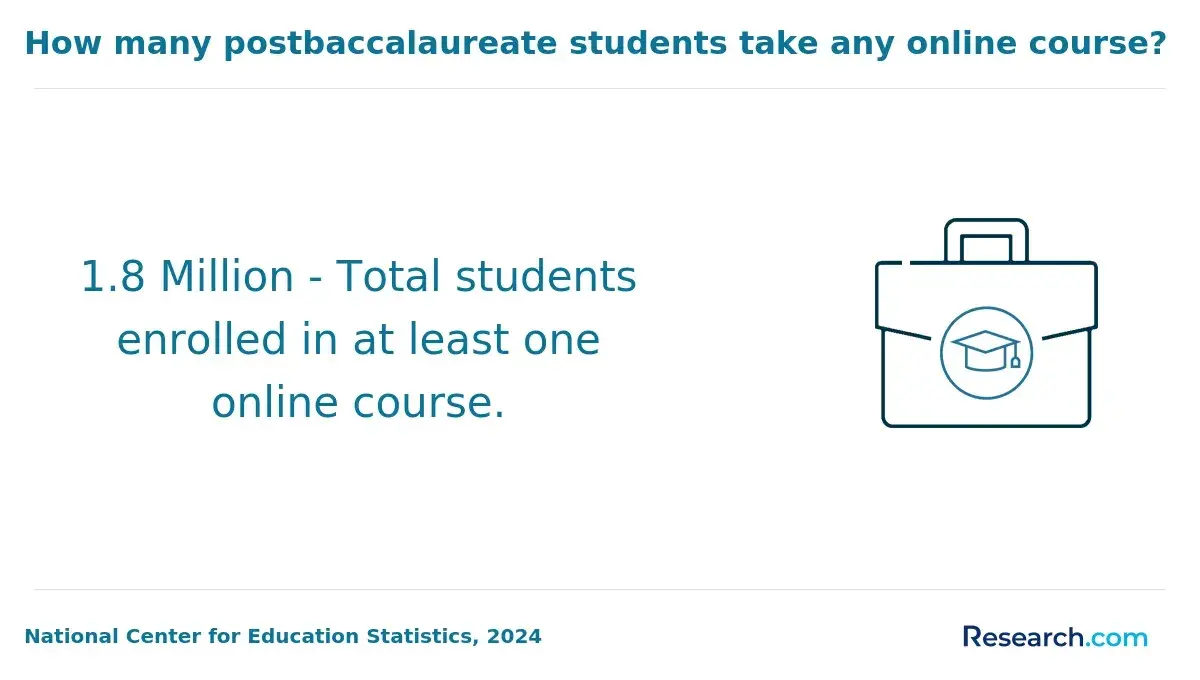
A no-application-fee policy can save money at the start of the process, especially if you are comparing several schools. However, the application fee is usually a small part of the total cost of an online degree, so the larger savings often come from lower tuition, transfer credits, employer tuition assistance, and avoiding extra semesters.
Students often make the mistake of treating a waived fee as proof of affordability. A program with a $0 application fee but higher tuition can cost more than a program that charges an application fee but offers better transfer-credit acceptance or lower per-credit pricing.
The table below separates application-stage savings from the costs that usually matter more over the life of the degree.
| Cost item | When it appears | Why it matters | How to evaluate it |
| Application fee | Before admission | Reduces the cost of applying to multiple programs | Confirm whether it is always $0 or only waived during promotions |
| Tuition per credit | Throughout enrollment | Usually the largest direct program cost | Multiply tuition by required credits after transfer evaluation |
| Technology or online learning fees | Each term or course | Can add recurring costs beyond tuition | Ask for a full fee schedule, not only tuition |
| Transcript fees | During application | Paid to prior schools and usually not waived by the new institution | Budget for every college previously attended |
| Lost transfer credits | After credit evaluation | Can force students to retake courses and extend time to graduation | Request an unofficial transfer review before enrolling when possible |
If you apply to four no-fee programs instead of four programs charging application fees, the upfront savings can be useful, but it should not outweigh a difference of several credits or a higher tuition rate. The better financial question is: "Which program gets me to the credential I need with the fewest unnecessary credits, reasonable debt, and credible outcomes?"
What Are the Admission Requirements for No-Fee Online Health Communication Degree Programs?
Admission requirements vary by degree level, but no-fee programs are not automatically easier or less legitimate. The fee policy affects the cost of applying; it does not remove academic standards, transcript requirements, English proficiency rules, or graduate-level prerequisites.
The table below summarizes common requirements by program type so students can avoid incomplete applications, one of the most common problems in rolling-admission processes.
| Degree level | Common admission requirements | Possible health communication-specific expectations | What to verify |
| Bachelor's degree | High school transcript or GED, prior college transcripts, application form, possible minimum GPA | Introductory writing, communication, statistics, or general education coursework | Transfer-credit limits, online concentration availability, and whether SAT or ACT scores are optional |
| Bachelor's completion program | Previous college credits, official transcripts, minimum transferable GPA, placement requirements | Prerequisites in composition, social science, or communication may be preferred | How many credits apply to major, general education, and electives |
| Master's degree | Bachelor's degree, official transcripts, resume, statement of purpose, possible recommendations | Writing sample, communication background, public health experience, or statistics readiness | Whether GRE scores are required, optional, or not accepted |
| Graduate certificate | Bachelor's degree or current graduate enrollment, transcripts, short application | Healthcare, public health, marketing, or communication experience may strengthen the file | Whether certificate credits can later transfer into a master's program |
Applicants should prepare for admissions in layers. First, satisfy the school's baseline requirements. Then show why health communication fits your goals through writing samples, healthcare experience, volunteer work, communications projects, or evidence of digital media skills.
Because online health communication programs often attract working adults, admissions teams may value professional context. Experience in patient access, healthcare administration, social services, marketing, journalism, community outreach, nonprofit work, or public health can help explain your readiness even if your previous major was unrelated.
When Should Students Apply to Online Health Communication Degree Programs With Rolling Admissions?
Students should apply as soon as they can submit a complete, accurate application, not simply as late as the school allows. Rolling admissions gives flexibility, but applying early can improve access to advising, course registration, transfer evaluation, employer reimbursement paperwork, and financial aid processing.
A useful planning window is to begin preparation several months before your target start date. Students comparing flexible online schedules may also look at broader fast-track degrees, but acceleration only helps if the course load is realistic and the credits apply cleanly to your goal.
Use the following timeline to avoid the most common rolling-admission mistake: waiting so long that the program is technically open but your preferred start date is no longer practical.
- Three to four months before the target term, request unofficial transcript reviews and confirm whether the application fee is currently waived.
- Two to three months before the target term, order official transcripts, update your resume, and draft your statement of purpose.
- Six to eight weeks before the target term, submit the application and follow up on missing documents.
- Four to six weeks before the target term, complete financial aid steps, employer tuition-benefit forms, and scholarship applications.
- Two to four weeks before the target term, register for courses, complete orientation, and confirm technology requirements.
Traditional deadlines may be better if a program has stronger outcomes, lower total cost, a better healthcare communication curriculum, or more relevant faculty expertise. Rolling admission is a convenience feature, not a substitute for academic fit.
How Can Students Strengthen an Online Health Communication Degree Application?
A strong application connects your background to the communication problems healthcare organizations actually face: patient understanding, misinformation, digital engagement, cultural responsiveness, crisis messaging, health literacy, and ethical use of data. This is especially important for applicants who do not have a prior communication or healthcare degree.
Use your application materials to show both writing ability and career direction. Health communication is practical and audience-centered, so evidence of real projects can matter.
- Use the statement of purpose to explain the specific health communication setting you want to enter, such as hospital communications, public health campaigns, patient education, health technology, advocacy, or healthcare marketing.
- Highlight writing, research, media, analytics, and presentation experience, even if it came from work, volunteering, military service, student organizations, or caregiving roles.
- If a writing sample is optional, submit one that shows clear organization, evidence-based reasoning, and the ability to explain complex health or social topics to a public audience.
- Ask recommenders to discuss reliability, communication judgment, audience awareness, and ability to complete online coursework, not only general character.
- Address academic weaknesses directly if your transcript has gaps, withdrawals, or a low term GPA, and explain what has changed since then.
Students should also avoid overusing generic statements about "helping people." A better application explains the communication problem you want to solve, the audience you hope to serve, and why the program's courses match that goal.
Are Online Health Communication Degree Programs With No Application Fees Accredited and Legitimate?
Yes, many legitimate online programs charge no application fee or offer fee waivers, but students must verify accreditation before enrolling. Accreditation is more important than the application fee because it affects financial aid eligibility, transferability, employer recognition, and graduate-school options.
For health communication degrees, institutional accreditation is the baseline. Unlike nursing, pharmacy, counseling, or medicine, health communication usually does not require a professional license. That makes program quality, curriculum relevance, and employer-recognized skills especially important. In contrast, clinical programs such as PharmD programs require specialized accreditation and licensure pathways that health communication degrees generally do not.
The table below explains what to check before trusting a no-fee online program.
| Quality check | Why it matters | Red flag | Safer approach |
| Institutional accreditation | Supports federal financial aid eligibility and general academic recognition | The school uses vague language such as "internationally approved" without recognized U.S. accreditation | Confirm accreditation through official federal or accreditor databases |
| Online authorization | Schools must be allowed to serve students in specific states | The school cannot confirm whether it enrolls students from your state | Ask admissions about state authorization before applying |
| Curriculum fit | Health communication requires applied communication, health literacy, ethics, research, and digital strategy | The program has only one loosely related elective | Review the full degree plan, not only marketing pages |
| Faculty and support | Online students need advising, writing support, library access, and career guidance | Admissions cannot explain who teaches core courses or how online students get support | Ask for faculty profiles and online student-service details |
A no-fee application can be student-friendly, but high-pressure enrollment tactics are not. Be cautious if an advisor pushes you to enroll before you receive a transfer-credit review, cost estimate, program plan, or accreditation confirmation.
How Do Financial Aid and Total Costs Compare Among Online Health Communication Degree Programs?
Total cost depends on tuition, required credits, transfer credits, fees, books, course load, and how long you remain enrolled. Financial aid can help, but debt should be evaluated carefully because health communication salaries vary widely by role and market.
Federal borrowing costs also matter. For loans first disbursed during the 2024-2025 award year, the fixed interest rate was 6.53% for Direct Subsidized and Unsubsidized Loans for undergraduate students and 8.08% for Direct Unsubsidized Loans for graduate students. That means graduate students should be especially careful about borrowing for programs that do not clearly improve their career path.
The table below shows the cost categories students should compare across programs before deciding that a no-fee application makes one option more affordable.
| Cost or aid factor | Why it changes total price | Question to ask the school |
| Required credits after transfer | More accepted credits can reduce tuition and time to completion | How many of my credits apply to the major, electives, and general education? |
| Per-credit tuition | Small per-credit differences can become meaningful across a full degree | Is tuition the same for in-state, out-of-state, and online students? |
| Mandatory fees | Technology, graduation, assessment, and course fees can add costs beyond tuition | Can I see a full estimated cost of attendance for online students? |
| Scholarships | Scholarship deadlines may be earlier than rolling admission deadlines | What scholarship deadlines apply to my start term? |
| Employer tuition assistance | Healthcare employers may reimburse approved coursework | Will the program provide itemized billing and grade documentation for reimbursement? |
| Pace and course load | Part-time enrollment may be easier to manage but can extend time in school | How many courses do working adults typically take per term? |
Students already working in healthcare should compare communication degrees with other healthcare advancement routes, including nursing leadership pathways such as online MSN to DNP programs, only if those alternatives match their credentials and licensure goals. A communication degree may be a better fit for roles centered on messaging, education, marketing, and public engagement rather than clinical practice.
The best affordability test is not whether the application is free. It is whether the program's total cost is reasonable for the jobs you are targeting, the credits you still need, and the amount you would need to borrow.
Which Students Benefit Most From No-Fee, Rolling-Admission Online Health Communication Degrees?
No-fee, rolling-admission programs are most useful for students who need flexibility and want to compare several options without paying to apply. They are especially helpful when a student is qualified but unsure which school will accept the most transfer credits or offer the best online schedule.
These features may be especially valuable for several types of students:
- Working adults who need to start during a specific employer reimbursement cycle or around changing work shifts.
- Transfer students who want multiple credit evaluations before committing to one school.
- Healthcare employees moving from patient access, scheduling, administration, outreach, or support roles into communications-focused positions.
- Military-connected students who need flexible start dates because of relocation, deployment, or benefit timing.
- Students testing whether a communication, public health, or healthcare administration pathway offers the best fit before paying application fees.
These programs are not automatically the best choice for every student. If your goal is direct patient care, licensure, or bedside practice, a health communication degree may not meet the requirement. Students at the beginning of a nursing pathway, for example, may need to compare online associate nursing programs instead of communication-focused degrees.
Students should avoid choosing a program primarily because it is free to apply if the curriculum is too general, the tuition is high, the school accepts few transfer credits, or the online format does not match their schedule. Flexibility helps most when the academic and career fit are already strong.
How Should Students Choose Among No-Fee Online Health Communication Degree Programs?
The best program is the one that fits your career target, accepts appropriate transfer credit, offers credible online support, and keeps total cost aligned with likely outcomes. A $0 application fee and rolling admissions should make comparison easier, not replace comparison.
Use this decision process before enrolling in any online health communication program:
- Define the target role first, such as healthcare communications specialist, patient education coordinator, public health campaign associate, health content strategist, hospital PR assistant, or nonprofit outreach manager.
- Match the curriculum to that role by checking for courses in health literacy, campaign planning, research methods, digital media, ethics, intercultural communication, crisis communication, and data-informed messaging.
- Request a written transfer-credit evaluation and estimate your remaining credits before comparing tuition.
- Confirm whether courses are asynchronous, synchronous, hybrid, or residency-based, especially if you work irregular healthcare shifts.
- Compare career support, internship or project options, portfolio development, faculty expertise, and alumni outcomes.
- Ask whether financial aid and scholarships have earlier deadlines than admission.
- Choose the program that offers the best combination of cost, credibility, flexibility, and career relevance, not simply the easiest application.
Students should also consider whether a different healthcare pathway better matches their long-term goal. For example, someone drawn to behavioral health diagnosis and treatment would need a clinical nursing route such as accelerated PMHNP programs, while someone focused on messaging, education, advocacy, and public engagement may be better served by health communication.
A smart final shortlist usually includes three categories: one lower-cost option, one strongest curriculum fit, and one most flexible start-date option. If the same program wins across all three, it is likely a strong candidate. If not, prioritize the factor most closely tied to your career goal and financial limits.
Other Things You Should Know About Health Communication
No. Public health is a broad field focused on population health, prevention, policy, epidemiology, and community programs. Health communication is more focused on how health information is created, delivered, understood, and acted on by specific audiences.
Possible roles include healthcare communications specialist, patient education coordinator, public health outreach associate, health content writer, hospital marketing assistant, advocacy campaign coordinator, and health literacy program assistant. Job titles vary widely by employer.
Usually no. Many students come from communication, marketing, public health, social science, journalism, administration, or nonprofit backgrounds. Clinical experience can help in some healthcare settings, but it is not normally required for communication-focused roles.
AI tools are increasingly used for drafting, content planning, audience research, and message testing, but human judgment remains important. Health communication professionals still need accuracy, ethics, privacy awareness, cultural sensitivity, and the ability to verify health information before publication.
References
- Industry Insights - Legacy Education https://legacyed.com/industry-insights/
- Readiness to enter the workforce: perceptions of health ... https://researchportal.murdoch.edu.au/esploro/fulltext/journalArticle/Readiness-to-enter-the-workforce-perceptions/991005757832607891
- Online Colleges No Application Fee: Schools With No Fees to Apply https://www.top10onlinecolleges.org/with-no-application-fee/
- Online Health Science Degrees with Financial Aid https://www.edumed.org/online-schools/health-science-degrees/financial-aid/
- COM Admissions Requirements https://catalog.chsu.edu/com-admissions-requirements
- Financial Aid For Online Colleges https://www.affordablecollegesonline.org/financial-aid/financial-aid-for-online-colleges/
- 2025 Best Military-Friendly Online Colleges https://www.onlineu.com/online-schools/military-friendly
- All Master's in Health Communication Programs (2025 Update) https://www.mastersincommunications.com/specializations/health-communication