2027 Accredited Online Health Communication Degree Programs for Working Adults: Flexible, Part-Time, and Self-Paced Options

Co-Founder and Chief Data Scientist
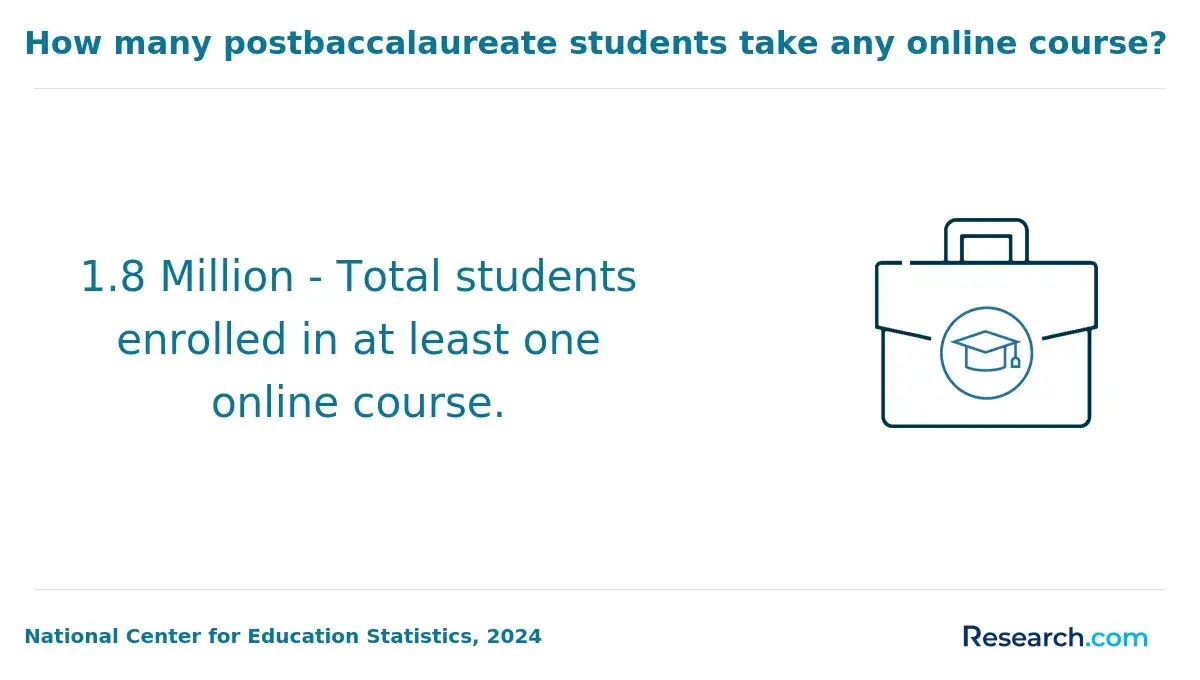
Choosing an accredited online health communication degree while working full time is mostly a scheduling, cost, and credibility decision. NCES distance education data released in 2024 shows that more than half of U. S. undergraduates took at least one online course, confirming that flexible study is now mainstream rather than unusual. This guide is for adults comparing online bachelor's or graduate health communication programs. You will learn how accreditation, part-time pacing, self-paced courses, transfer credits, tuition, and career outcomes affect whether a program fits your work schedule and long-term goals.
Key Things You Should Know
- Accreditation should be nonnegotiable: choose a school with recognized institutional accreditation, then check whether related program-level accreditation matters for your goals, such as public health, journalism, or healthcare administration pathways.
- Working adults often do best with 6 to 9 credits per term; a typical 3-credit online course may require about 8 to 12 hours per week, while transfer-friendly bachelor's programs may accept 60 to 90 credits and shorten the path substantially.
- Cost varies widely, but 2024-25 College Board data places average published tuition and fees at $11,610 for in-state public four-year colleges and $43,350 for private nonprofit four-year colleges, before grants, employer aid, transfer credits, and online fees.
What Is an Accredited Online Health Communication Degree Program and Why Does Accreditation Matter?
An accredited online health communication degree program teaches students how to design, deliver, evaluate, and manage communication in healthcare and public health settings. Coursework may cover patient education, health campaigns, risk communication, health literacy, digital media, research methods, organizational communication, ethics, and communication for diverse communities.
The degree is often offered as a bachelor's in communication with a health communication concentration, a bachelor's in health communication, a master's in health communication, or a related communication, public health, or health promotion program with health communication coursework. For working adults, the most important question is not only whether the program is online, but whether it is accredited, realistically flexible, and aligned with the career path you want.
Accreditation matters because it affects financial aid eligibility, credit transfer, graduate school admission, and employer recognition. In the U.S., the baseline credential to verify is institutional accreditation from an accreditor recognized by the U.S. Department of Education or the Council for Higher Education Accreditation. Health communication itself usually does not require a single specialized accreditor, but related fields may have additional signals of quality.
The table below shows how different forms of accreditation or quality review may matter depending on your intended pathway. Use it to separate required credibility from optional indicators that may still be useful.
| Accreditation or Quality Signal | What It Means | Why It Matters for Working Adults |
| Institutional accreditation | The college or university has been reviewed as a whole by a recognized accrediting body. | Usually required for federal financial aid, smoother credit transfer, and employer acceptance. |
| CEPH accreditation | Applies to certain public health programs and schools of public health. | Useful if you want a public health communication, health promotion, or population health career path. |
| ACEJMC accreditation | Applies to some journalism and mass communication programs. | Helpful if your focus is media, strategic communication, reporting, or campaign work. |
| Employer or graduate-school recognition | The program's reputation with local health systems, agencies, nonprofits, or graduate programs. | Important if you plan to use the degree for advancement, career change, or admission to a future master's program. |
Health communication is not the same as clinical training. It typically does not prepare you for licensure as a nurse, pharmacist, physician assistant, or nurse practitioner. If your goal is a licensed clinical pathway, compare clinical programs separately; for example, students exploring pharmacy careers should review accredited PharmD programs rather than assuming a communication degree will meet clinical practice requirements.
Before applying, verify accreditation directly rather than relying only on marketing language. Follow these steps to reduce risk:
- Search the school's name in the U.S. Department of Education Database of Accredited Postsecondary Institutions and Programs or CHEA directory.
- Confirm that the exact campus, online division, or institution name matches the program you are considering.
- Ask admissions whether online students receive the same transcript and degree designation as campus students.
- If the program is housed in public health, journalism, communication, or healthcare administration, ask whether any program-level accreditation applies.
- Check transfer-credit policies before enrolling, especially if you already have college credits or professional training.
Which Flexible Health Communication Degree Formats Are Best for Working Adults: Part-Time, Full-Time, or Self-Paced?
The best format depends on how predictable your work schedule is, how quickly you want to finish, and how much structure you need to stay on track. "Online" does not automatically mean "self-paced." Many online health communication programs still use weekly deadlines, group projects, discussion boards, live sessions, or fixed term calendars.
For working adults, the most common formats are asynchronous part-time study, synchronous online classes, accelerated terms, and self-paced or competency-based courses. The comparison below summarizes the practical trade-offs.
| Format | Typical Fit | Main Advantage | Main Trade-Off |
| Part-time asynchronous | Adults working full time, caregivers, military students, shift workers | Weekly flexibility without needing to attend live classes | Progress is slower than full-time enrollment |
| Full-time online | Students who can reduce work hours or have strong schedule control | Faster completion and often more financial aid eligibility | Can create a heavy weekly workload |
| Self-paced or competency-based | Experienced adults who can study independently and move quickly through familiar material | Potential to accelerate if you already know the content | Requires strong self-management and may have subscription-term deadlines |
| Synchronous online | Students who want live interaction and a predictable class rhythm | More direct contact with faculty and classmates | Less flexible for rotating shifts, travel, or family duties |
| Accelerated 7- or 8-week courses | Adults who prefer focusing on fewer courses at a time | Allows steady progress in shorter blocks | Assignments can feel compressed, especially during busy work seasons |
Part-time study is often the safest choice if you work full time and cannot predict overtime, caregiving needs, or travel. Full-time study can make sense if you have strong support at home, employer flexibility, or a deadline for promotion or graduate admission. Self-paced formats can be powerful, but they are not always easier; they shift more responsibility onto you.
Use the following decision path before choosing a format:
- Estimate your weekly study time honestly, including reading, writing, group work, discussion posts, and research assignments.
- Ask whether courses are asynchronous, synchronous, or mixed, and request examples of weekly deadlines.
- Confirm whether exams require proctoring at set times or can be completed within a window.
- Check whether self-paced courses have maximum completion limits, subscription terms, or minimum progress requirements.
- Choose the fastest format you can sustain without risking failed courses, repeated tuition, or burnout.
A common mistake is assuming that a self-paced program means no deadlines. Many self-paced programs still require completion within a term, billing period, or maximum enrollment window. Another mistake is enrolling full time because it looks cheaper per year, even though dropping or failing courses can make the total cost higher.
What Are the Admission Requirements for Accredited Online Health Communication Degree Programs?
Admission requirements vary by degree level. Bachelor's programs are usually more accessible for adults with some college credit, while master's programs often expect a completed bachelor's degree and evidence that you can handle graduate-level writing, research, and applied communication work.
The table below outlines common admission requirements by program level. Always check the school's official requirements because minimum GPA, test policies, and transfer rules can differ significantly.
| Program Level | Common Admission Requirements | Working Adult Considerations |
| Bachelor's degree | High school diploma or GED, transcripts, application, possible personal statement, placement requirements if needed | Best for adults without a completed bachelor's degree or those changing into healthcare communication from another field. |
| Bachelor's completion program | Prior college credits, minimum GPA, general education completion, official transcripts | Often the most efficient option if you already have an associate degree or substantial transfer credit. |
| Master's degree | Accredited bachelor's degree, transcripts, resume, statement of purpose, recommendations, writing sample in some cases | Best for professionals seeking advancement in healthcare, public health, communication, marketing, or nonprofit leadership. |
| Graduate certificate | Bachelor's degree or current graduate enrollment, transcript, short application | Useful if you need targeted health communication skills without committing to a full degree. |
Many online programs are designed for adults who did not follow a traditional residential college path. That can make admissions more flexible, but it does not remove the need to submit complete records. If you have attended several colleges, request official transcripts early because delays can affect transfer evaluations and financial aid packaging.
Applicants with healthcare experience may have an advantage when writing personal statements because they can connect the degree to real workplace communication needs, such as patient education, provider messaging, community outreach, or crisis response. Clinical experience is not usually required, but it can help you clarify your goals.
If you are comparing communication degrees with clinical healthcare entry routes, keep the requirements separate. For instance, admissions criteria for online associate nursing programs typically involve science prerequisites and clinical placement expectations that do not apply to most health communication degrees.
Before applying, ask admissions advisors these questions:
- How many transfer credits can be applied to the major, general education, and elective requirements?
- Are adult learners evaluated for prior learning, military credit, workplace training, or professional certifications?
- Are live class meetings required, and if so, are recordings available?
- Does the program require a minimum grade in major courses for progression or graduation?
- Can I begin in multiple terms during the year, or is admission cohort-based?
How Much Does an Online Health Communication Degree Cost, and What Financial Aid Options Are Available?
The cost of an online health communication degree depends on tuition rate, transfer credits, fees, books, course load, and how long you remain enrolled. Published tuition is only the starting point. College Board's 2024-25 data lists average published tuition and fees at $11,610 for in-state public four-year institutions and $43,350 for private nonprofit four-year institutions, which shows why school type and residency rules can strongly affect total price.
Online students should also look beyond the per-credit rate. Some programs charge online learning fees, technology fees, graduation fees, proctoring fees, internship insurance fees, or out-of-state tuition. A lower tuition rate can become less competitive if transfer credits are limited or if required courses are offered infrequently.
The table below summarizes the cost factors that most often change the real price for working adults. Use it to compare total cost, not just advertised tuition.
| Cost Factor | Why It Matters | Question to Ask |
| Per-credit tuition | Determines the base cost of each course. | Is the online rate the same for in-state and out-of-state students? |
| Transfer credit acceptance | Can reduce the number of credits you must pay for. | Will I receive an official transfer evaluation before committing? |
| Program fees | Can add costs not shown in the headline tuition rate. | What mandatory fees apply to online students each term? |
| Course sequencing | Delays can add extra terms of tuition and fees. | Are required courses available every term or only once per year? |
| Books and software | Communication courses may require media tools, research databases, or campaign software. | Are materials included, open-source, or billed separately? |
| Lost work time | Live sessions, internships, or intensive projects may affect earnings. | Can required experiences be completed outside standard business hours? |
Most accredited institutions can participate in federal financial aid if the student and program meet eligibility rules. Aid may include Pell Grants for eligible undergraduates, federal student loans, state grants, institutional scholarships, military education benefits, and employer tuition assistance. Graduate students usually rely more heavily on loans, scholarships, assistantships, or employer support.
To estimate affordability, take these practical steps before enrolling:
- Complete the FAFSA if you plan to use federal, state, or institutional aid.
- Ask for a full cost-of-attendance estimate for online students, not just tuition.
- Request an official transfer-credit review before comparing total program costs.
- Check whether your employer reimburses tuition for communication, public health, marketing, or healthcare administration coursework.
- Compare payment plans, scholarship deadlines, and satisfactory academic progress rules.
Adults already working in healthcare should ask whether employer education benefits apply to nonclinical degrees. Some hospitals and health systems cover communication, leadership, informatics, or population health coursework because those skills support patient experience and organizational goals. If you are comparing advanced clinical degrees as a separate investment, cost structures for online MSN to DNP programs can look very different because they may include clinical hours, practicum coordination, and graduate-level nursing fees.
The biggest red flag is choosing a program based only on the lowest listed tuition. A more expensive program that accepts more transfer credits, offers predictable course rotations, and includes strong advising may cost less in the end than a cheaper program that extends your timeline.
How Long Does It Take to Complete an Online Health Communication Degree, and Can Transfer Credits Help You Graduate Faster?
Completion time depends on degree level, course load, term structure, transfer credits, and whether the program is self-paced or cohort-based. A traditional bachelor's degree usually requires about 120 credits, while a master's degree often requires about 30 to 42 credits. Adults with prior college coursework may finish much faster if the school accepts credits toward general education, electives, or major requirements.
For planning purposes, think in terms of sustainable weekly workload. A 3-credit online course often requires substantial reading, writing, discussion, and project work. If you take two courses at once while working full time, you may need to protect several evenings or weekend blocks every week.
The table below gives a practical comparison of common enrollment patterns. Exact timelines vary, but this helps working adults match pace with available time.
| Enrollment Pattern | Common Course Load | Typical Use Case | Timeline Impact |
| Part-time bachelor's | 1 to 2 courses per term | Full-time workers, caregivers, students returning after a long break | Slower, but often more sustainable |
| Full-time bachelor's | 4 to 5 courses per term | Students with reduced work hours or strong support systems | Faster, but higher weekly workload |
| Bachelor's completion | Varies after transfer evaluation | Adults with an associate degree or many prior credits | Can significantly shorten completion time |
| Part-time master's | 1 course per term or session | Professionals balancing work and graduate study | Often extends the degree but reduces overload |
| Accelerated or self-paced | Variable, often based on shorter terms or competencies | Highly self-directed students with relevant experience | Can shorten time if progress is steady |
Transfer credits can be one of the biggest time-saving tools for adult learners. However, schools may limit how many credits transfer, how old credits can be, and whether prior courses satisfy major requirements. Communication, English, psychology, sociology, statistics, public speaking, biology, public health, and general education courses are often worth evaluating.
To maximize transfer credit, follow this sequence:
- Collect official transcripts from every college you attended, even if you completed only one course.
- Ask for a written transfer evaluation that separates general education, electives, prerequisites, and major credits.
- Confirm the minimum number of credits you must complete at the new institution.
- Ask whether prior learning assessment, military credit, CLEP, DSST, or portfolio credit is available.
- Compare projected graduation dates after transfer review, not before.
Accelerated study can be valuable when it is realistic. Adults interested in faster completion models can also compare broader fast track degrees to understand how shorter terms, transfer credits, and competency-based formats affect workload and pacing.
A common mistake is enrolling in a program before seeing how credits apply. If a school accepts credits only as electives, you may still need many major or general education courses. That can turn an expected degree-completion program into a much longer commitment.
What Should You Look for When Comparing Accredited Online Health Communication Degree Programs?
A strong online health communication program should combine recognized accreditation, relevant curriculum, flexible scheduling, transparent costs, and career-focused support. The best choice is not always the fastest or cheapest program; it is the program that fits your schedule while helping you build marketable communication skills for healthcare and public health settings.
Start by comparing programs across the criteria that affect both quality and adult-learner fit. The table below can help you focus on factors that change the actual student experience.
| Comparison Factor | What Strong Programs Provide | Red Flag |
| Accreditation | Recognized institutional accreditation and clear disclosure of any program-level accreditation. | Vague claims such as "nationally recognized" without a verifiable accreditor. |
| Curriculum | Courses in health messaging, health literacy, campaign design, research, ethics, and digital communication. | Generic communication courses with little healthcare or public health application. |
| Flexibility | Clear information about asynchronous work, live sessions, deadlines, and term length. | Marketing that says "flexible" but does not explain attendance or deadline rules. |
| Faculty experience | Faculty with healthcare, public health, strategic communication, research, or media expertise. | No faculty profiles or limited evidence of field relevance. |
| Career alignment | Projects, portfolios, internships, capstones, or employer-connected assignments. | No examples of graduate outcomes, applied projects, or career support. |
| Student support | Online advising, library access, writing help, tutoring, tech support, and career services. | Support available only during business hours or mainly for campus students. |
After narrowing your list, ask each school for specifics. General promises are less useful than written policies and sample schedules.
- Can I see a sample part-time plan from enrollment through graduation?
- How many courses are fully asynchronous, and how many require live attendance?
- How often are required major courses offered online?
- What is the average class size in upper-division or graduate health communication courses?
- Do students complete a portfolio, campaign plan, research project, internship, or capstone?
- Which career services are available to online students after graduation?
Pay close attention to curriculum fit. A student interested in hospital patient experience may need different courses than someone focused on public health campaigns, pharmaceutical communication, nonprofit outreach, or healthcare marketing. If you already work in healthcare, look for assignments that can connect to your current role, such as redesigning patient materials, evaluating a communication campaign, or analyzing health literacy barriers.
One useful rule is to avoid programs that cannot explain how online adults progress term by term. If advising is vague before you enroll, it may not improve after tuition is paid.
What Career Opportunities and Salary Potential Can You Expect With a Health Communication Degree?
A health communication degree can support roles in healthcare organizations, public health agencies, nonprofits, universities, insurance companies, consulting firms, pharmaceutical organizations, community programs, and media or marketing teams. It is especially relevant for people who want to translate complex health information into messages that patients, families, communities, employees, or policymakers can understand and use.
Salary depends on role, degree level, experience, employer type, location, and whether the position is communication-focused, public-health-focused, or management-focused. BLS May 2024 wage data places the median annual wage for public relations specialists at $69,780, a useful benchmark for communication roles that may include healthcare messaging, media relations, and campaign work. This figure should be treated as a labor-market reference, not a promise for health communication graduates.
The table below connects common health communication career paths with typical responsibilities. It is designed to help working adults decide whether the degree matches the work they want to do.
| Career Path | Typical Responsibilities | How the Degree Helps |
| Health communication specialist | Create patient education materials, campaign messages, newsletters, web content, and internal communications. | Builds skills in audience analysis, health literacy, message design, and ethical communication. |
| Public health outreach coordinator | Support community programs, prevention campaigns, stakeholder communication, and event messaging. | Connects communication strategy with public health goals and community engagement. |
| Patient experience or engagement specialist | Improve patient-facing materials, survey communication, service recovery messaging, and care navigation content. | Strengthens patient-centered communication and plain-language writing. |
| Healthcare marketing coordinator | Develop service-line campaigns, digital content, brand messaging, and provider-facing materials. | Combines strategic communication, healthcare context, and media planning. |
| Medical or health content writer | Write consumer health content, educational articles, scripts, brochures, and digital resources. | Supports accurate, accessible, and audience-specific health messaging. |
| Risk or crisis communication assistant | Help prepare messages for outbreaks, recalls, emergencies, policy changes, or organizational crises. | Develops skills in rapid, ethical, and evidence-informed communication. |
Health communication can also complement clinical or administrative experience. A nurse, allied health professional, health educator, or clinic manager may use the degree to move toward patient education, training, communications, quality improvement, or community outreach. However, the degree is usually not a substitute for clinical licensure or advanced practice credentials.
If your long-term goal is a licensed advanced practice role, compare that route separately. For example, accelerated PMHNP programs are designed for a different outcome than health communication programs because they focus on psychiatric-mental health nurse practitioner preparation and clinical practice requirements.
The degree may be worth it if you want to move into healthcare communication, strengthen your writing and campaign skills, or add healthcare context to an existing communication background. It may not be the best fit if your primary goal is bedside care, diagnosis, prescribing, or a clinical license.
How Can Working Adults Balance a Health Communication Degree With Full-Time Work and Family Responsibilities?
Balancing work, family, and online study requires more than motivation. It requires a realistic course load, predictable study blocks, early communication with instructors, and a plan for high-demand weeks. Health communication courses often involve writing, research, presentations, campaign projects, and discussion-based analysis, so the workload can be steady even when there are no exams.
The most sustainable plan is usually built backward from your real calendar. If your job has seasonal peaks, rotating shifts, school-year family obligations, or caregiving responsibilities, choose a course load that leaves room for disruptions.
Use this planning process before the term starts:
- Map work shifts, commute time, family duties, appointments, and rest time before adding coursework.
- Reserve recurring weekly study blocks rather than waiting for "free time."
- Review every syllabus during the first week and note major papers, presentations, exams, and group deadlines.
- Tell instructors early if your work schedule includes travel, rotating shifts, or emergency coverage.
- Use smaller weekday blocks for reading and discussion posts, then longer weekend blocks for papers and projects.
- Reassess your course load after the first term instead of assuming you must keep the same pace.
Part-time enrollment is not a sign of lower ambition. For many adults, it is the strategy that prevents failed courses, repeated tuition, and burnout. If you are supporting a family or working in a demanding healthcare environment, one course at a time may be the most efficient path because it protects your GPA and persistence.
Watch for these common balance-related mistakes:
- Taking two accelerated courses at once without reducing work or family commitments.
- Ignoring group project expectations that may require coordination across time zones.
- Assuming asynchronous courses can be completed entirely on weekends.
- Waiting until a crisis to ask for extensions, accommodations, or advising help.
- Choosing a program with required live meetings that conflict with shift work.
A good program for working adults should make expectations visible before you enroll. If you cannot get a sample syllabus, course calendar, or part-time pathway, keep asking questions.
What Student Support Services and Online Learning Resources Should You Expect From a Health Communication Degree Program?
Student support can determine whether an online program is truly workable for adults. Strong support is not just a nice feature; it affects course planning, writing quality, technology access, internship readiness, and persistence through difficult terms.
Online health communication students should expect access to the same core academic resources as campus students, delivered in ways that fit remote schedules. This is especially important for adults who study after work hours or on weekends.
The table below identifies support services that matter most in an online health communication program and why they affect adult learners.
| Support Service | Why It Matters | What to Verify |
| Academic advising | Helps you choose courses in the right order and avoid graduation delays. | Availability for evening, virtual, or asynchronous appointments. |
| Writing center | Health communication programs are writing-intensive. | Online paper review, citation help, and support for graduate-level writing. |
| Library services | Research assignments require credible health, communication, and public health sources. | Remote database access, librarian chat, and research guides. |
| Technology support | Online courses depend on learning platforms, video tools, and digital submissions. | Hours of support, response times, and help during evenings or weekends. |
| Career services | Helps connect coursework to resumes, portfolios, internships, and job searches. | Online career coaching, mock interviews, resume reviews, and alumni access. |
| Accessibility services | Ensures eligible students receive approved accommodations. | Process for online testing accommodations, captioning, and assistive technology. |
Because health communication often requires portfolio-style work, ask whether students receive guidance on saving and presenting projects. A strong portfolio may include campaign plans, patient education materials, social media strategy, plain-language rewrites, research briefs, or crisis communication plans. These samples can be useful when applying for communication roles in healthcare and public health.
Before enrolling, confirm support quality with specific questions:
- Are online students assigned a dedicated advisor who understands the health communication curriculum?
- Can I access writing and library help outside standard weekday business hours?
- Does career services help online students identify healthcare communication roles and internships?
- Are faculty office hours available virtually?
- What happens if I need to pause enrollment for work, health, military, or family reasons?
A red flag is a program that treats online students as an afterthought. If resources exist only on campus or only during hours when you are working, the program may be less flexible than it appears.
Do Online Health Communication Degree Programs Include Internships, Practicums, or Other Hands-On Learning Requirements?
Some online health communication programs include internships, practicums, capstones, service-learning projects, applied research, or campaign-development courses. Others use simulated projects or workplace-based assignments instead of formal placements. The requirement depends on degree level, school policy, and whether the program is housed in communication, public health, or another department.
Hands-on learning can be valuable because health communication is an applied field. Employers may want to see that you can write for real audiences, evaluate communication barriers, work with stakeholders, and produce materials that are accurate, ethical, and accessible.
The table below explains common applied learning formats and how they may affect working adults.
| Applied Learning Format | What It Usually Involves | Working Adult Impact |
| Internship | Supervised experience with a healthcare, public health, nonprofit, media, or communication organization. | May require scheduled hours, background checks, or daytime availability. |
| Practicum | Applied fieldwork connected to program outcomes, often with reflection or faculty supervision. | Can be useful but may need employer cooperation if completed at your workplace. |
| Capstone project | Major final project such as a campaign plan, communication audit, research report, or portfolio. | Often more flexible than an internship because work can be completed online. |
| Workplace-based project | Project completed using a problem from your current job or organization. | Highly practical, but may require permission to use workplace information. |
| Simulation or case study | Structured project based on realistic healthcare communication scenarios. | Flexible for remote students, though less direct than field placement. |
If a program requires an internship, do not assume the school will automatically place you near your home. Ask how placements are approved, whether remote internships are allowed, whether your current employer can serve as a site, and whether hours can be completed outside normal business hours.
Use these questions to avoid surprises:
- Is an internship, practicum, capstone, or portfolio required for graduation?
- How many hours are required, and over what time period?
- Can I complete the requirement at my current workplace?
- Are remote or evening placements allowed?
- Who is responsible for finding and approving the site?
- Are there extra costs for background checks, liability insurance, travel, or software?
Hands-on requirements are not automatically a drawback. For career changers, an internship or applied project can provide evidence of field readiness. For adults already working in healthcare, a flexible capstone may be more practical because it can connect academic work to an existing organizational problem.
Other Things You Should Know About Health Communication
It can be both. Some programs emphasize strategic communication, media, writing, and campaigns, while others lean toward public health, health behavior, and community outreach. Review the course list carefully to see which side is stronger.
Usually no. Healthcare experience can help you connect coursework to real problems, but many programs accept students from communication, business, education, marketing, social science, or general studies backgrounds.
It can support remote-friendly roles such as content writing, digital communication, campaign coordination, social media strategy, and patient education design. Remote work depends on the employer, job duties, experience level, and portfolio quality.
A certificate may be enough if you already have a degree and need targeted health communication skills. A full degree is usually better if you need a bachelor's credential, want broader career mobility, or plan to pursue graduate study later.
References
- What is Health Communication? Careers in Health Communication https://www.mastersincommunications.com/faqs/what-is-health-communication
- The Need of Accreditation in Online Degree Programs https://www.onlinecu.in/blog/cu/the-importance-of-accreditation-in-online-degree-programs.php
- Accreditation for eLearning Solution Providers https://www.qahe.org/accreditation-for-elearning-solution-providers/
- Benefits of Flexible Scheduling Options https://www.mranet.org/resource/benefits-flexible-scheduling-options
- Understanding Flexible Schedules for Modern Workplaces https://www.njcpa.org/article/2024/12/04/understanding-flexible-schedules-for-modern-workplaces
- Examples and Benefits of Flexible Work Schedules : persowerk: Zeitarbeit & Personalvermittlung https://persowerk.com/en/blog/examples-and-benefits-of-flexible-work-schedules/
- Best Online Degrees for Working Adults in 2026 https://www.straighterline.com/blog/degreecompletion-best-online-degrees-for-working-adults-in-2026
- Links | ECLBS EU Council of Business Schools https://www.eclbs.eu/list
- Accreditation and Endorsement | FEDIP https://www.fedip.org/educators
- chea newsroom https://www.chea.org/