2027 Fastest Accredited Online Agriculture Programs: Accelerated Degrees and Completion Times

Co-Founder and Chief Data Scientist
Choosing the fastest online agriculture degree is not just about finding the shortest advertised timeline. USDA Economic Research Service data shows agriculture, food, and related industries supported 10.4% of U.S. employment in 2023, making flexible training valuable for working adults and transfer students.
This guide explains which accredited online agriculture programs can be completed quickly, what "accelerated" really means, and how credits, prerequisites, course load, labs, internships, and fieldwork can change your actual graduation date.
Key Things You Should Know
- The fastest realistic path is usually a bachelor's-completion program: students entering with 60 to 90 transferable credits may finish an accredited online agriculture bachelor's degree in about 12 to 24 months, while first-time students usually need closer to four years.
- Accelerated agriculture programs often use 7-week or 8-week courses, year-round enrollment, generous transfer policies, or asynchronous online classes; shorter terms move faster but typically do not reduce the total workload.
- Many regionally accredited bachelor's programs require about 120 semester credits, or 180 quarter credits at quarter-system schools, and some accept up to 90 transfer credits toward the degree.
Which Colleges Offer the Fastest Accredited Online Agriculture Programs?
The fastest accredited online agriculture programs are usually not labeled simply as "accelerated." Instead, speed comes from transfer-friendly bachelor's completion structures, short academic terms, multiple start dates, and flexible online delivery.
The table below compares online agriculture-related programs that can support faster completion when students already have college credits or can study year-round.
| College | Online agriculture program | What can make it faster? | Realistic fastest-fit student | Accreditation to verify |
| University of Tennessee at Martin | Online Bachelor of Science in Agriculture | Designed for online completion with transfer-credit evaluation and upper-division agriculture coursework | A student with an associate degree or substantial general education credit may be able to finish much faster than a first-time student | Institutional accreditation through SACSCOC |
| Fort Hays State University | Online Bachelor of Science in Agricultural Business | Online degree pathway with business and agriculture coursework that may fit working adults | A transfer student who has completed lower-division general education and math requirements | Institutional accreditation through the Higher Learning Commission |
| Oregon State University Ecampus | Online Bachelor of Science in Agricultural Sciences | Quarter-system scheduling, multiple terms, and a 180-quarter-credit structure equivalent to a standard bachelor's load | A student who wants broad agricultural sciences coursework and can handle frequent term starts | Institutional accreditation through NWCCU |
| University of Arkansas | Online Bachelor of Science in Agricultural Business | Online major requirements paired with transfer-friendly bachelor's planning | A student aiming for agribusiness, farm management, sales, or supply-chain roles | Institutional accreditation through the Higher Learning Commission |
| Tarleton State University | Online agribusiness-related bachelor's pathway | Applied agriculture and business coursework offered through a public university system | A Texas or transfer student who wants an online route tied to agricultural operations and business | Institutional accreditation through SACSCOC |
| Colorado State University Online | Online agricultural business bachelor's-related pathway | Flexible online delivery from a land-grant university with agriculture and business course options | A student prioritizing brand recognition, applied coursework, and asynchronous study | Institutional accreditation through the Higher Learning Commission |
For most students, the "fastest" choice is the program that accepts the most usable credits toward the exact major, not the school with the shortest marketing language. Before applying, ask each college for an unofficial transfer review, a remaining-course map, and the earliest possible graduation term based on your specific transcript.
Students who are still comparing majors may also want to evaluate broader flexible degrees, such as an online interdisciplinary studies degree ranking affordable, if they have many credits that do not fit neatly into an agriculture major.
How Long Does It Take to Complete an Accredited Online Agriculture Degree?
An accredited online agriculture degree can take anywhere from under one year for a certificate to about four years for a full bachelor's degree from scratch. In this topic, "completion time" means the time from enrollment in the program to finishing all remaining requirements, not the time it takes to earn every credit from the beginning of college.
The table below summarizes common online agriculture credentials and the timelines students are most likely to see. Use it to separate true accelerated completion from normal full-time study.
| Credential type | Typical credit load | Fastest realistic completion | Typical completion | Best for |
| Undergraduate certificate in agriculture, agribusiness, or sustainable agriculture | About 12 to 30 credits | One to three terms | 6 to 12 months | Students seeking a focused credential without a full degree |
| Associate degree in agriculture or agribusiness | About 60 semester credits | 12 to 18 months with heavy enrollment or prior credit | 2 years | Students entering technician, farm management, or transfer pathways |
| Bachelor's-completion agriculture degree | Usually 30 to 60 remaining credits after transfer | 12 to 24 months | 2 to 3 years | Students with an associate degree or previous college coursework |
| Full bachelor's degree from first enrollment | About 120 semester credits or 180 quarter credits | 3 years with year-round study and heavy loads | 4 years | First-time students who need general education, prerequisites, and major courses |
| Online master's in agriculture, agribusiness, or agricultural education | About 30 to 36 graduate credits | 12 to 18 months | 2 years | Professionals seeking advancement, extension, teaching, or leadership roles |
Shorter timelines are most realistic when courses are offered frequently and in the right sequence. A student may be academically capable of taking four courses at once, but if a required soil science, statistics, agribusiness finance, or capstone course is offered only once per year, the calendar can still control the graduation date.
How Do Accelerated and Competency-Based Online Agriculture Programs Work?
Accelerated online agriculture programs compress the academic calendar rather than shrinking the degree. A 3-credit course in an 8-week term can require roughly the same total reading, projects, exams, and discussion work as a 16-week course, but the deadlines arrive twice as fast.
Competency-based agriculture bachelor's programs are less common than competency-based business or technology degrees, but some students can still use self-paced or prior-learning options for general education and electives before transferring them into an agriculture program. The formats below explain how speed is usually created.
| Format | How it works | Speed advantage | Main trade-off |
| 7-week or 8-week courses | Students complete one course in half a traditional semester | More courses can be completed per year | Weekly workload is intense |
| Year-round enrollment | Students take fall, spring, and summer courses | Summer terms can reduce idle time | Less time for work peaks, internships, or family obligations |
| Asynchronous online delivery | Coursework is completed without required live class meetings | Better fit for working adults and rural students | Requires strong self-management |
| Bachelor's-completion model | Students transfer lower-division credits and finish major coursework online | Can reduce time to 12 to 24 months | Only works if transferred credits apply cleanly |
| Competency-based or self-paced courses | Students progress by demonstrating mastery | Experienced students may move faster through familiar material | May not be available for specialized agriculture labs or upper-division courses |
To use an accelerated format well, students should confirm how many courses they can take per term and whether required classes are available every session. A practical sequence usually looks like this:
- Request a transcript evaluation before enrolling so the school can identify remaining credits.
- Ask for a term-by-term degree plan that includes all prerequisites, major courses, electives, and capstone requirements.
- Confirm whether summer courses are guaranteed or only offered when enrollment is sufficient.
- Start with a manageable first accelerated term before adding more courses.
- Build field projects, internships, or seasonal agricultural obligations into the timeline before committing to a graduation date.
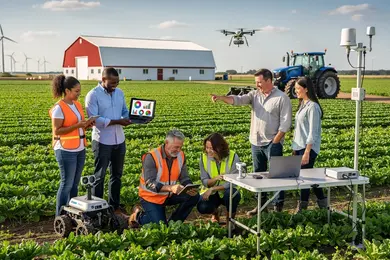
Technology is also changing agriculture coursework. Precision agriculture, farm data systems, drones, sensors, and automation are increasingly relevant, so students interested in the digital side of agriculture may also compare an online AI degree with an agriculture major that includes data, GIS, or agribusiness analytics electives.
Accreditation is the first filter for any fast online agriculture degree. A program that is quick but not properly accredited can create problems with federal financial aid, transfer credits, graduate school admission, employer review, and professional certification.
For most agriculture degrees, the essential requirement is institutional accreditation from an agency recognized by the U.S. Department of Education or the Council for Higher Education Accreditation. Programmatic accreditation may matter in specialized areas, especially if the degree leads to engineering, teacher licensure, veterinary technology, or another regulated pathway.
| Program type | Accreditation or approval to check | Why it matters |
| General agriculture, agricultural sciences, agribusiness, crop science, or sustainable agriculture bachelor's degree | Institutional accreditation | Usually the key requirement for aid eligibility, transfer review, and graduate admission |
| Agricultural engineering or biological engineering | ABET accreditation when applicable | May affect engineering licensure, employer review, and graduate engineering pathways |
| Agricultural education leading to teacher certification | State education approval and, where relevant, educator-preparation accreditation | Teacher licensure rules vary by state and can add student teaching requirements |
| Veterinary technology or animal health technician programs | AVMA CVTEA accreditation when applicable | Often required for credentialing exams and state practice rules |
| Graduate agriculture, extension, or agribusiness programs | Institutional accreditation and any employer-required approval | Important for promotion, doctoral admission, or public-sector roles |
Students should verify accreditation directly through official databases rather than relying only on a program page. If a school emphasizes speed but is vague about accreditation, transferability, or eligibility for federal aid, treat that as a serious warning sign.
Transfer credit is often the single biggest factor in finishing an online agriculture degree quickly. Many bachelor's programs require about 120 semester credits, so a student who transfers 60 credits may have roughly half the degree left, while a student who transfers 90 applicable credits may need only the final major, residency, and capstone requirements.
The table below shows how transfer status can change the timeline. These are planning ranges, not promises, because each college decides how previous courses apply to its curriculum.
| Credits accepted toward the degree | Approximate credits remaining | Possible fast timeline | What can still slow completion? |
| 0 credits | About 120 semester credits | 3 to 4 years with full-time year-round study | General education, math placement, science prerequisites, and course sequencing |
| 30 credits | About 90 semester credits | 2.5 to 3 years | Credits may count as electives rather than major requirements |
| 60 credits | About 60 semester credits | 18 to 24 months | Upper-division agriculture courses and residency requirements |
| 90 credits | About 30 semester credits | 12 to 18 months | Capstone, internship, minimum major credits, and course availability |
Prior learning may also help, but it is usually more limited than standard transfer credit. Schools may award credit for military training, industry certifications, portfolio review, standardized exams, or documented professional experience in farm management, agribusiness, equipment operations, food systems, or natural resources.
Use this sequence before choosing a program, because it can prevent the common mistake of assuming all credits will transfer:
- Send transcripts from every college attended, including community colleges and dual-enrollment coursework.
- Ask whether accepted credits apply to general education, electives, prerequisites, or the agriculture major itself.
- Confirm the maximum number of transfer credits and the minimum number of credits that must be completed at the school.
- Ask whether prior learning credit can satisfy major requirements or only free electives.
- Get the remaining degree plan in writing before enrolling full time.
The same transfer-credit logic applies across many accelerated online fields; for example, students comparing the fastest online psychology degree will also find that prior coursework, residency rules, and course sequencing often matter more than the advertised pace.
Admission requirements for accelerated online agriculture programs are usually straightforward, but missing documents or prerequisites can delay your first term. Requirements differ by school, degree level, and whether the program is a full bachelor's degree or a completion pathway.
Most applicants should expect a combination of academic records, identity or residency information, and program-specific prerequisites. The items below are especially important because each one can affect how quickly you start and how many courses you can take immediately:
- High school diploma, GED, or previous college transcript for undergraduate admission.
- Official transcripts from all colleges attended for transfer evaluation.
- Minimum GPA requirements, often higher for upper-division transfer or teacher-preparation pathways.
- Placement or prerequisite requirements in math, biology, chemistry, statistics, economics, or composition.
- Application deadlines tied to fall, spring, summer, or shorter 7-week and 8-week sessions.
- Possible background checks, field-placement approvals, or state-specific forms for agricultural education or youth-facing experiences.
Start dates can be a major speed advantage. Programs with five or six entry points per year may let you begin quickly, while programs that admit only for fall or spring can add months even if the coursework itself is online.
Before applying, ask admissions advisors direct timeline questions rather than broad questions about flexibility. Useful questions include whether all required courses are available online, whether new students can start in summer, whether accelerated terms are optional or required, and whether the school will reserve seats in required major courses for online students.
A fast online agriculture degree can cost less if it reduces extra semesters, housing, commuting, or lost work time, but speed does not automatically make a program cheaper. Tuition, fees, transfer credits, course repeats, books, technology, lab materials, internships, and summer enrollment all affect the total cost.
College Board's 2024 Trends in College Pricing reported the following published tuition and fee averages for the 2024-25 academic year, which provide useful context when comparing online agriculture programs:
- Public four-year in-state average: $11,610
- Public four-year out-of-state average: $30,780
- Private nonprofit four-year average: $43,350
Those figures are broad national benchmarks, not agriculture-specific prices. Many online public universities charge by the credit, and some offer the same online rate to in-state and out-of-state students. The table below shows which cost categories to compare before deciding whether the fastest program is also the best value.
| Cost factor | Why it matters for accelerated students | Question to ask |
| Per-credit tuition | Most online programs bill each course separately | Is tuition different for online, in-state, and out-of-state students? |
| Transfer credits | Accepted credits reduce the number of credits you must pay for | How many credits apply directly to the agriculture major? |
| Summer enrollment | Year-round study can shorten the calendar but add near-term cost | Are summer courses priced differently? |
| Online fees | Technology, proctoring, course, or distance-learning fees can add up | What is the total cost per course after fees? |
| Fieldwork or lab expenses | Some courses may require local projects, travel, supplies, or site approvals | Are there required in-person experiences? |
| Financial aid pace rules | Aid depends on enrollment intensity and satisfactory academic progress | How will accelerated terms affect aid disbursement? |
Federal financial aid may be available if the institution is eligible and the student meets aid requirements. Students should complete the FAFSA, compare net price rather than sticker price, and ask whether scholarships, employer tuition assistance, military benefits, or state workforce grants can apply to online agriculture coursework.
If you are comparing agriculture with business-oriented graduate pathways, cost structures can look very different from bachelor's pricing; for example, an affordable online MBA human resources program may use cohort, per-credit, or flat-rate pricing that is not directly comparable to an undergraduate agriculture degree.
Many students can work full time while earning an online agriculture degree, but accelerated formats require careful planning. A single 8-week class may be manageable with a full-time job; three accelerated courses at once can become difficult, especially during planting, harvest, calving, travel, or other seasonal work periods.
The table below compares common enrollment patterns for working adults. It can help you choose speed without creating a schedule that leads to dropped courses or lower performance.
| Enrollment pace | Typical course load | Timeline effect | Best fit |
| Part time | 1 course per term | Slowest but most sustainable | Students with full-time work, caregiving, or seasonal farm obligations |
| Moderate accelerated | 2 courses per 8-week term or 3 to 4 courses per semester | Can support steady year-round progress | Organized working adults with predictable schedules |
| Full time | 12 or more credits per semester, or equivalent accelerated load | Can keep a bachelor's-completion plan near 12 to 24 months | Students with strong transfer credit and flexible work hours |
| Heavy overload | More than full-time enrollment | May shorten the calendar if courses are available | Students with strong academic preparation and limited outside obligations |
Students who want to move quickly while working should build a weekly schedule before the first term starts. Block time for reading, labs or field observations, discussion posts, group projects, exams, and unexpected farm or work demands.
Workload planning is also important in other online professional degrees with field expectations; students comparing agriculture with MSW online programs, for instance, should pay close attention to how internships, practicums, or supervised experiences affect weekly availability.
Accredited online agriculture degrees are generally evaluated by employers and graduate schools based on the institution, curriculum, skills, experience, and accreditation-not simply on whether classes were online. A transcript from a properly accredited university usually does not need to identify every course as online, though policies vary by school.
Employer expectations in agriculture are becoming more applied and technical. Agribusiness, crop consulting, food systems, extension, conservation, equipment technology, precision agriculture, and farm management roles may value coursework in business, soils, plant science, animal science, data tools, economics, communication, and regulatory compliance.
Career outcomes vary widely because agriculture degrees lead to many different paths. A graduate working in farm management, agricultural sales, crop advising, food production, extension support, natural resources, or graduate study may face different salary ranges, travel demands, licensing expectations, and advancement paths.
Graduate schools generally care most about accredited coursework, GPA, prerequisite completion, recommendations, research or professional experience, and fit with the intended field.
If you plan to pursue a master's degree, veterinary school, teaching licensure, or another regulated pathway, confirm prerequisites early because a fast bachelor's plan can leave out courses that later become necessary.
How Should You Compare the Fastest Accredited Online Agriculture Programs?
The best fast online agriculture program is the one that helps you graduate quickly without losing accreditation, affordability, course quality, or career fit. Do not choose only by the shortest advertised timeline; choose by the shortest verified timeline for your transcript and goals.
Use the following comparison process before enrolling. These steps focus on the factors most likely to change your real completion date.
- Verify institutional accreditation and any programmatic approval required for your career path.
- Request a transcript review that shows exactly which credits transfer and how they apply.
- Ask for a term-by-term plan with course names, prerequisites, summer availability, and the earliest graduation term.
- Compare total program cost after transfer credits, fees, books, lab expenses, and summer tuition.
- Check whether the agriculture courses you need are fully online or require campus visits, local fieldwork, or approved sites.
- Confirm the maximum course load allowed in accelerated terms and whether advisor approval is required.
- Ask about internship, capstone, practicum, or student-teaching requirements that could add time.
- Match electives to your goal, such as agribusiness, crop science, animal systems, sustainable agriculture, education, or food systems.
Common mistakes can turn a fast plan into a delayed one. Watch for these red flags before committing to a program:
- Assuming "accelerated" means easier or fewer total credits.
- Choosing a school before receiving a written transfer-credit evaluation.
- Ignoring prerequisite chains in science, math, statistics, economics, or upper-division agriculture courses.
- Overlooking residency rules that require a minimum number of credits at the graduating institution.
- Assuming every required course is offered every term.
- Forgetting that internships, capstones, field observations, or student teaching may follow fixed schedules.
- Comparing tuition rates without including online fees and the cost of credits that do not transfer.
- Selecting the fastest program even though its electives do not match the intended career path.
A slower program may be the better choice if it offers stronger advising, better transfer alignment, more relevant electives, local employer connections, or a schedule you can sustain. Fast graduation is valuable only if the degree still supports your next step.
Other Things You Should Know About Agriculture
It is possible only for students who already have most degree requirements completed and whose credits transfer cleanly. Most one-year finishers would need around 90 applicable credits, all prerequisites complete, and access to the remaining courses in the right sequence.
Some are fully online, but others may require local field projects, internships, labs, proctored exams, student teaching, or occasional campus activities. Always ask whether "online" means fully remote for every required course in your concentration.
Yes. Many accredited programs award prior learning assessment credit, and military training may be evaluated through ACE recommendations or the Joint Services Transcript. Schools usually cap transfer and prior-learning credits at 60 to 90 semester hours for a bachelor’s degree, which can shorten completion time.
Usually no. Farming or agribusiness experience can help with applied projects and prior-learning review, but most undergraduate programs are designed for both new students and working adults with agricultural interests.
- Accelerated Degrees: A Reliable Pathway to Education and Career Advancement https://www.qahe.org/article/accelerated-degrees-a-reliable-pathway-to-education-and-career-advancement/
- 2025's Fastest Online Master’s Degrees & Accelerated Programs https://www.onlinemastersdegrees.org/features/fastest-online-masters-degrees/
- Financial Aid For Online Colleges https://www.affordablecollegesonline.org/financial-aid/financial-aid-for-online-colleges/
- Impact of open and distance learning on agricultural ... https://horizonepublishing.com/index.php/PST/article/download/7505/version/8415/6378/45763
- How Digital Accreditation Protects Students in Online Learning https://iacde.org/iacde-insights/how-digital-accreditation-protects-students-in-online-learning/
- FINANCING OPTIONS https://agriskills.net/financing/
- Types of Financial Aid for Online Colleges https://www.umassglobal.edu/blog-news/types-financial-aid-online-colleges
- Cost & Financial Aid https://www.semesteratsea.org/financial-aid/
- Online or Distance Learning Programs in Agriculture - Agriculture Journal IJOEAR Blog https://ijoear.com/blog/online-or-distance-learning-programs-in-agriculture
- Department of Agricultural Sciences https://mycatalog.txstate.edu/undergraduate/science-engineering/agriculturalsciences/