2027 Best Accredited Online Agriculture Degree Programs: Compare Tuition, Admissions, and Career Outcomes

Co-Founder and Chief Data Scientist
Choosing an online agriculture degree is a cost, schedule, and career decision-not just a school search. Agriculture, food, and related industries supported about 22.1 million U.S. jobs and contributed roughly $1.5 trillion to U.S. GDP in recent USDA reporting, which makes trained agriculture professionals important across farming, food systems, technology, sustainability, and agribusiness.
This guide is for first-time students, transfer students, and working adults comparing accredited online programs. You'll learn how to weigh tuition, admissions, accreditation, flexibility, aid, and career outcomes so you can choose a program with stronger long-term fit.
Key Things You Should Know
- Best overall value usually comes from regionally accredited public universities with transparent per-credit tuition, generous transfer-credit policies, and agriculture-specific coursework tied to agribusiness, crop science, soil science, sustainability, or agricultural education.
- Cost comparisons should include total credits, online fees, residency rules, books, required travel, and transfer credits; College Board's 2024-25 benchmark shows average published tuition and fees of $11,610 for public in-state students versus $43,350 at private nonprofit institutions.
- Career outcomes vary by specialization: agriculture graduates may pursue farm management, agribusiness, extension, conservation, food systems, sales, or technical roles, while advanced scientific and research positions often require graduate study.
Which Accredited Online Agriculture Degree Programs Offer the Best Overall Value?
The best accredited online agriculture degree program is not automatically the cheapest or most selective option. Value comes from the combination of recognized accreditation, reasonable total cost, transfer-credit efficiency, relevant concentrations, strong student support, and a format that lets you finish without pausing work or family obligations.
For most students, public land-grant universities and regionally accredited state universities are the strongest starting point because they often combine applied agriculture coursework with lower tuition than many private institutions. However, a higher-cost program can still be a better investment if it offers the exact specialization, internship access, employer network, or degree-completion structure you need.
The table below highlights common types of accredited online agriculture programs and how to compare them. Use it as a decision guide rather than a fixed ranking, since tuition, concentrations, and availability change by academic year.
| Program type | Typical strengths | Best fit | Value caution |
| Public land-grant online agriculture bachelor's programs | Broad agriculture curriculum, extension connections, applied science orientation, recognized public-university brand | Students seeking agribusiness, crop science, soil science, animal systems, sustainability, or agricultural education pathways | Some courses may require approved local fieldwork, seasonal projects, or limited on-campus experiences |
| Online agribusiness bachelor's programs | Business, economics, farm management, commodity markets, finance, and supply-chain coursework | Working adults in farming, agricultural sales, equipment, banking, insurance, or food distribution | May provide less lab-based science preparation for graduate research roles |
| Online agricultural science or agricultural studies programs | Flexible interdisciplinary curriculum across production, environment, policy, and communication | Transfer students who need a broad, career-completion degree | Students should confirm whether the concentration matches their target job market |
| Online natural resources, soil, or environmental agriculture programs | Conservation, land use, soil health, water, rangeland, and sustainability emphasis | Students targeting conservation districts, extension, environmental consulting, or land management roles | Some employers may prefer additional GIS, statistics, or field-methods coursework |
Examples of institutions students often compare include Oregon State University Ecampus, Kansas State University Online, Colorado State University Online, Fort Hays State University Online, and other regionally accredited public universities with agriculture, agribusiness, or natural resources options. Before applying, confirm the exact degree name, delivery format, tuition rate, state authorization, transfer-credit rules, and whether any campus or field component is required.
A practical way to define "best value" is to ask whether the program helps you finish efficiently. A slightly higher per-credit price may cost less overall if the school accepts more transfer credits, offers year-round courses, and avoids hidden travel requirements.
What Accreditation Should Students Look for in an Online Agriculture Degree Program?
Accreditation is the first filter for any online agriculture degree. It affects federal financial aid eligibility, transfer-credit acceptance, graduate school options, employer confidence, and whether your degree is recognized as coming from a legitimate institution.
At minimum, choose a college or university that holds institutional accreditation from a U.S. accreditor recognized by the U.S. Department of Education or the Council for Higher Education Accreditation. For online agriculture degrees, this is usually regional institutional accreditation from bodies such as HLC, SACSCOC, NWCCU, MSCHE, WSCUC, or NECHE, depending on the school's location.
Agriculture degrees do not always require specialized programmatic accreditation in the same way nursing, engineering, or teacher education programs often do. Still, specialized recognition can matter for certain tracks. For example, agricultural education students should verify teacher-preparation approval in the state where they plan to seek licensure, while food science, environmental, or engineering-adjacent programs may have additional employer or graduate-school expectations.
Use this checklist before you treat any online agriculture program as a serious option:
- Confirm institutional accreditation on the school's official accreditation page and in recognized accreditation databases.
- Verify that the online degree title on the admissions page matches the degree listed in the academic catalog.
- Ask whether the program has state authorization to enroll students in your state.
- For agricultural education, ask whether the program leads to teacher licensure in your state or only provides academic preparation.
- For science-heavy career goals, ask whether the curriculum includes labs, field methods, statistics, GIS, or research preparation needed for graduate study.
A common mistake is assuming that "accredited" means every program outcome is approved for every career. Accreditation confirms institutional legitimacy, but licensure, certification, and employer requirements can still vary by state, role, and industry sector.
How Do Tuition Costs Compare Across Accredited Online Agriculture Degree Programs?
Tuition for accredited online agriculture degree programs varies widely because schools use different pricing models. Some public universities charge one online rate to all students, while others use in-state and out-of-state tuition, technology fees, course fees, or distance-learning fees.
National tuition benchmarks help put online program prices in context. College Board's 2024-25 data lists average published tuition and fees at $11,610 for public in-state students, $30,780 for public out-of-state students, and $43,350 for private nonprofit colleges. Online agriculture students should use those figures as a comparison point, not as a prediction of their bill, because online pricing may differ from campus pricing.
The table below shows how different pricing structures affect the final cost of an online agriculture degree. The most important number is not tuition per credit alone; it is the total amount you must pay after transfer credits, fees, aid, and required experiences are included.
| Cost factor | How it affects online agriculture students | What to ask before enrolling |
| Per-credit tuition | Determines the baseline cost for each course and can differ by residency or online status | Is online tuition the same for in-state and out-of-state students? |
| Transfer credits | Can reduce total cost substantially if prior college, military, or community college credits apply to the major | How many credits can transfer into the agriculture major, not just electives? |
| Online and course fees | Technology, distance-learning, lab, proctoring, or course-material fees can add to the advertised price | Are all required fees included in the tuition estimate? |
| Fieldwork or travel | Some agriculture courses may require local site projects, internships, or short campus visits | Are there any required in-person experiences, and who pays for travel? |
| Time to completion | Longer enrollment can increase fees and delay earnings or promotion opportunities | Can I take enough online courses each term to graduate on my timeline? |
To make a fair comparison, build a simple total-cost estimate. Multiply the number of credits you still need by the school's per-credit rate, then add mandatory fees, estimated materials, travel, and any course-specific costs. If one school accepts 30 more transfer credits than another, it may be cheaper even when its per-credit tuition is higher.
Students should also avoid the red flag of comparing only first-year cost. Many online agriculture students enter with transfer credits, so the better question is: "What will it cost me to complete the degree from where I am now?"
Admissions competitiveness varies by institution, degree level, and whether the program is designed for first-time students or degree-completion learners. Many online agriculture bachelor's programs are accessible to qualified applicants, but that does not mean they lack rigor. Agriculture programs often expect students to handle science, economics, business, communication, and applied problem-solving coursework.
For undergraduate programs, admissions teams commonly review high school completion or prior college records, GPA, transfer credits, prerequisite coursework, and readiness for online learning. Some programs may be test-optional, while others may ask for standardized test scores from first-year applicants depending on institutional policy.
The table below summarizes common admissions expectations. Requirements change, so always confirm with the current catalog and admissions office before applying.
| Applicant type | Common requirements | What improves fit |
| First-time bachelor's student | High school transcript or equivalent, application, possible test scores, minimum GPA policy | Strong math, biology, environmental science, business, or agriculture coursework |
| Transfer student | College transcripts, minimum transferable GPA, credit evaluation, prerequisite review | Completed general education courses and introductory science, economics, or business classes |
| Returning adult learner | Prior college transcripts, work history may be considered informally, academic-readiness review | A clear completion plan and realistic course load |
| Graduate applicant | Bachelor's degree, transcripts, resume, statement of purpose, references, possible prerequisite coursework | Relevant professional experience, research interest, or technical background |
If you are comparing agriculture with other fields that have different admissions cultures, resources on MSW online programs can help you see how professional-program admissions may emphasize mission fit, experience, and prerequisites differently from agriculture or agribusiness degrees.
Admissions flexibility should not be confused with low academic quality. Online agriculture programs may admit a broad range of students because agriculture serves diverse learners, including farm operators, military students, rural residents, working adults, and transfer students. The real question is whether the program offers enough academic support and course availability for admitted students to finish.
The most flexible online agriculture programs are usually asynchronous, transfer-friendly, and available year-round. Asynchronous courses let students watch lectures, complete assignments, and participate in discussions on a weekly schedule rather than attending live classes at fixed times.
Flexibility matters because agriculture students often work around seasonal production cycles, family responsibilities, fieldwork, military service, or full-time jobs. A program that looks convenient during admissions may become difficult if required courses are offered only once per year or if major courses have live attendance requirements during work hours.
Use the following format comparison to decide what will realistically fit your schedule:
| Format | How it works | Best for | Possible drawback |
| Fully asynchronous online | Coursework is completed online with weekly deadlines and no required live class meetings | Working adults, rural students, military students, and students in seasonal agriculture jobs | Requires strong time management and self-direction |
| Synchronous online | Students attend live virtual class sessions at scheduled times | Students who want real-time discussion and instructor interaction | Can be difficult across time zones or work shifts |
| Hybrid or low-residency | Most coursework is online, but some labs, fieldwork, or campus visits are required | Students who want hands-on learning and can travel when needed | Travel, lodging, and missed work can raise total cost |
| Degree-completion online | Designed for students who already have general education or associate-degree credits | Transfer students seeking a faster bachelor's pathway | May not serve first-time college students as well |
Students exploring different online formats can compare agriculture programs with fields that commonly use accelerated or flexible delivery, such as the fastest online psychology degree options. The useful lesson is not that one field is better, but that course sequencing and transfer acceptance often matter more than the marketing phrase "online."
Before enrolling, ask for a full course rotation plan. If a required crop science, agribusiness, soil science, or capstone course is offered only in one term, your graduation timeline may depend on careful scheduling.
Strong student support can make the difference between enrolling and graduating. Online agriculture students often need both general online-learning support and major-specific advising because agriculture curricula may combine science, business, policy, communication, and field-based assignments.
The most useful support services are those that remove predictable barriers: unclear transfer credits, weak course planning, limited tutoring, lack of career direction, and difficulty finding local experiential learning. Students should ask about support before applying, not after they are struggling.
Look for programs that provide these services in a way online students can actually use:
- Dedicated academic advising for agriculture or natural resources majors, not only general enrollment advising.
- Transfer-credit evaluation before enrollment so you know which credits apply to the major.
- Online tutoring for statistics, biology, chemistry, economics, accounting, writing, and data analysis.
- Career services with agriculture-specific resume support, employer connections, internship guidance, and interview preparation.
- Faculty access through virtual office hours, discussion boards, email, or scheduled advising appointments.
- Library database access for agriculture journals, market reports, extension publications, and research tools.
- Technical support during evenings or weekends if coursework is asynchronous.
A major red flag is a program that provides strong campus services but cannot explain how online students access them. If you live far from campus, ask whether advising, tutoring, career coaching, and library support are available remotely and during hours that match your schedule.
Another practical question is whether the program helps students connect coursework to their local region. Agriculture is place-based, so assignments that can be completed through local farms, agribusinesses, conservation agencies, extension offices, or food-system organizations may be more valuable than generic online projects.
Students in accredited online agriculture degree programs may qualify for many of the same aid options as campus students, provided the institution participates in federal student aid and the student meets eligibility requirements. Accreditation matters here because federal grants and loans generally require enrollment at an eligible accredited institution.
Financial aid should be compared after total cost is calculated. A school with higher tuition may become more affordable if it offers stronger scholarships, accepts more transfer credits, or provides employer tuition partnerships. Conversely, a lower advertised tuition rate may be less attractive if fees are high or the program requires travel.
Common aid sources include the following:
- Federal Pell Grants for eligible undergraduate students based on financial need.
- Federal Direct Loans, which must be repaid and should be borrowed carefully.
- State grants or scholarships for residents attending eligible institutions.
- Institutional scholarships for transfer students, adult learners, agriculture majors, or online students.
- Departmental agriculture scholarships funded by alumni, commodity groups, farm organizations, or donors.
- Employer tuition assistance for students working in agribusiness, food production, equipment, insurance, banking, logistics, or government agencies.
- Veterans and military education benefits for eligible students and dependents.
Federal financial aid has changed in recent aid cycles because of FAFSA simplification, so students should apply early and review school-specific priority deadlines. The key decision is not just how much aid is offered, but how much of that aid is grants or scholarships versus loans.
If affordability is your top priority across several career paths, comparing agriculture with an online interdisciplinary studies degree ranking affordable pathway can help you think more broadly about transfer credits, degree completion, and return on investment.
Before accepting an offer, ask the financial aid office for a written estimate that separates tuition, mandatory fees, books, expected travel, grants, scholarships, loans, and out-of-pocket costs. This makes it easier to compare schools using net price instead of advertised tuition.
An accredited online agriculture degree can support careers in production agriculture, agribusiness, food systems, extension, conservation, agricultural sales, agricultural finance, farm management, sustainability, and technical services. The right outcome depends heavily on specialization, experience, location, internships, and whether the student pursues graduate education.
A bachelor's degree is often useful for supervisory, management, business, sales, and applied technical roles. Research-intensive positions in plant science, soil science, food science, animal science, or agricultural economics may require a master's degree or doctorate, especially in government research, university research, or advanced private-sector roles.
The table below connects common online agriculture concentrations with possible career directions. These are career pathways, not guaranteed outcomes.
| Degree focus | Common career directions | Skills employers may value |
| Agribusiness | Farm management, agricultural sales, commodity marketing, lending, insurance, supply chain, cooperative management | Finance, economics, communication, data interpretation, negotiation, operations |
| Agricultural science | Production support, extension support, technical services, farm operations, agricultural consulting support | Crop and animal systems, problem-solving, field observation, communication, safety awareness |
| Crop, soil, or plant science | Soil conservation, crop advising, seed or input sales, field technician roles, graduate study preparation | Soil health, plant physiology, pest management, statistics, GIS, sampling methods |
| Natural resources or sustainable agriculture | Conservation, land management, water quality, rangeland support, environmental agriculture roles | Ecology, policy, mapping, field methods, stakeholder communication |
| Agricultural education or communication | Teaching where licensed, extension outreach, agricultural communication, youth programming, public information | Instruction, writing, presentation, curriculum design, community engagement |
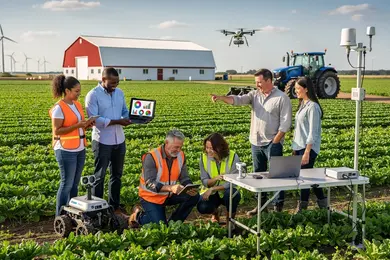
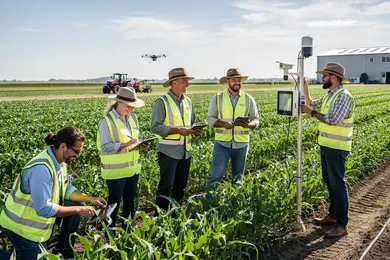
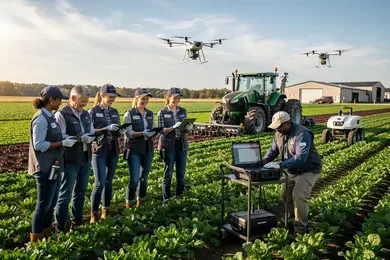
Current labor-market trends make technical fluency increasingly important. Precision agriculture, sensors, drones, data platforms, automation, and AI-supported decision tools are changing how farms and agribusinesses manage inputs, labor, risk, and sustainability. Students who want a more technology-heavy path may also compare agriculture with an online AI degree, especially if their long-term goal is agricultural technology, analytics, or automation.
When reviewing career outcomes, look for evidence rather than promises. Useful indicators include internship placement, employer partnerships, alumni examples, graduate-school placement, career services for online students, and whether faculty have current industry or extension connections.
Online and campus-based agriculture degrees can lead to similar academic credentials when they come from the same accredited institution and share the same curriculum standards. The main differences involve flexibility, access to facilities, peer interaction, field learning, and cost structure.
Online programs are often best for students who already work in agriculture, live far from a university, have family obligations, or bring transfer credits. Campus programs may be stronger for students who want frequent lab access, campus farms, research assistantships, student clubs, judging teams, or daily faculty interaction.
The table below compares the practical trade-offs that matter most before enrollment.
| Factor | Online agriculture degree | Campus-based agriculture degree |
| Schedule | More flexible, especially in asynchronous programs | More structured with fixed class times |
| Hands-on learning | May use local field projects, internships, virtual labs, or short residencies | Often provides easier access to labs, farms, greenhouses, and research sites |
| Networking | Requires intentional use of virtual events, internships, faculty contact, and local industry connections | Often easier through clubs, campus events, faculty labs, and peer groups |
| Cost | May reduce relocation and commuting costs, but online fees and travel requirements vary | May include housing, commuting, parking, and campus-based fees |
| Best student fit | Working adults, transfer students, rural learners, military students, and self-directed learners | First-time students who want immersive campus life and frequent in-person support |
Students comparing several career-oriented online degrees may find it useful to examine how other fields balance flexibility and employer relevance, such as an affordable online MBA human resources pathway. The broader lesson is that online value depends on curriculum quality, support, networking, and outcomes-not delivery mode alone.
Neither format is automatically better. Choose online if flexibility is the deciding factor and you can access meaningful field experiences locally. Choose campus if hands-on facilities, research access, and in-person agricultural networks are central to your goals.
How Should Students Choose the Best Accredited Online Agriculture Degree Program?
The best program is the one that fits your career goal, budget, learning style, transfer history, and timeline. A strong choice should be accredited, affordable after aid, academically relevant, transparent about requirements, and realistic for your weekly schedule.
Use a structured comparison process rather than relying only on rankings or school reputation. This step-by-step approach helps prevent common mistakes such as overlooking fees, choosing the wrong concentration, or assuming every online program has the same level of support.
- Define your target outcome first, such as agribusiness management, farm operations, crop advising, conservation, agricultural education, food systems, or graduate study.
- Shortlist only accredited institutions and verify state authorization for your location.
- Compare the exact degree title, major requirements, concentrations, electives, and capstone or internship expectations.
- Request an unofficial transfer-credit review before committing if you have prior college credit.
- Calculate total completion cost, including credits remaining, fees, materials, travel, and likely time to graduation.
- Ask for the course rotation so you can confirm that required online courses are offered when you need them.
- Review online student support, including advising, tutoring, career services, library access, and technology support.
- Compare career evidence such as internships, employer connections, alumni pathways, faculty expertise, and graduate-school preparation.
- Speak with an admissions counselor and, if possible, a faculty member in your intended concentration.
- Choose the program that offers the strongest combination of fit, affordability, flexibility, and credible outcomes.
As a final test, ask yourself whether the program helps you answer three questions clearly: "What job or next step am I preparing for?", "What will the degree cost me to complete?", and "What evidence shows online students succeed here?" If a school cannot answer those questions directly, keep comparing.
Other Things You Should Know About Agriculture
Yes, depending on the program. Agribusiness, agricultural studies, sustainability, and policy-oriented programs may be easier to complete fully online, while crop, soil, animal, or natural resources courses may require local field observations, approved site work, or occasional in-person experiences.
An associate degree can support entry-level or technical roles in production, equipment, agribusiness support, or farm operations. A bachelor's degree is more useful for management, sales, consulting support, conservation, extension-related work, or graduate school preparation.
Many accredited online agriculture degrees require at least one virtual or hybrid lab component, especially in soil science, plant science, or animal science. Programs often use remote lab kits, simulation software, or local fieldwork, and some courses require documented lab hours before graduation.
It can, if the curriculum includes the prerequisites expected by graduate programs. Students aiming for research-based master's or doctoral programs should prioritize science, statistics, research methods, lab or field experience, and faculty mentoring.
- Application for Master’s in Organic Agriculture and Food Systems https://dein-studium.uni-hohenheim.de/en/applying-and-enrollment/applying/application-for-masters-in-organic-agriculture-and-food-systems
- Online or Distance Learning Programs in Agriculture - Agriculture Journal IJOEAR Blog https://ijoear.com/blog/online-or-distance-learning-programs-in-agriculture
- Top 10 Best Universities for Agriculture in Europe in 2026 https://www.study.eu/article/top-10-best-universities-for-agriculture-in-europe
- Most Popular Online Agriculture Degrees 2025 https://www.onlineu.com/degrees/agriculture