2027 Mechanical Engineering Career Paths With the Best Advancement Potential

Co-Founder and Chief Data Scientist
Choosing a mechanical engineering path is no longer just about designing machines; it is about deciding where your skills can grow into senior technical, management, or innovation roles. The U. S. Bureau of Labor Statistics reports a May 2024 median annual wage of $102,320 for mechanical engineers, with faster-than-average projected employment growth from 2023 to 2033. This guide is for students, career changers, and early-career engineers who want to compare specialties, degrees, online options, certifications, and advancement routes before investing time and money in a program or career move.
Key Things You Should Know
- Mechanical engineering advancement is strongest in roles that combine core engineering knowledge with systems design, automation, energy, aerospace, manufacturing leadership, or product-development strategy.
- The May 2024 median wage for mechanical engineers was $102,320, while architectural and engineering managers had a much higher median wage of $167,740, showing why leadership preparation matters.
- ABET-accredited bachelor's programs are the safest foundation for engineering licensure, while master's degrees, PE licensure, Six Sigma, project management, and industry credentials can accelerate movement into senior roles.
What are the mechanical engineering career paths with the strongest advancement potential?
The mechanical engineering career paths with the best advancement potential are the ones that let engineers move from task execution into systems ownership, technical decision-making, team leadership, or business impact. Early-career mechanical engineers often begin in design, testing, quality, manufacturing, or field engineering, but advancement usually comes from specializing in a high-value domain and learning to manage risk, budgets, people, and cross-functional projects.
The table below compares major advancement paths by the type of work involved and the kind of long-term role each path can lead to. Use it to identify whether you are more interested in deep technical expertise, management, product innovation, or operations leadership.
| Career path | Typical work | Strong advancement route | Best fit for |
| Mechanical design and product development | Designing components, assemblies, prototypes, and manufacturable products | Senior design engineer, principal engineer, product engineering manager | Students who like CAD, materials, testing, and customer-focused problem solving |
| Manufacturing and process engineering | Improving production lines, tooling, quality, automation, and cost efficiency | Manufacturing engineering manager, operations leader, plant engineering director | Engineers who enjoy practical systems, troubleshooting, and measurable performance gains |
| Robotics, automation, and mechatronics | Integrating mechanical systems with controls, sensors, software, and electronics | Automation lead, robotics systems engineer, technical program manager | Students interested in smart machines, AI-enabled equipment, and advanced manufacturing |
| Aerospace and defense systems | Working on propulsion, structures, thermal systems, test systems, and reliability | Systems engineer, chief engineer, program engineering manager | Engineers comfortable with regulation, documentation, safety, and complex project cycles |
| Energy, HVAC, and sustainability engineering | Designing thermal systems, building systems, energy systems, and efficiency upgrades | Energy manager, facilities engineering director, consulting engineering principal | Engineers who want stable demand tied to buildings, infrastructure, and decarbonization |
| Engineering management and technical leadership | Supervising teams, schedules, budgets, vendors, risk, and strategic technical decisions | Engineering manager, director of engineering, VP of engineering | Engineers who want to influence both technology and business outcomes |
The strongest path depends on your preferred work style. If you like solving hard technical problems, a principal engineer track may fit better than management. If you enjoy coordinating people, budgets, vendors, and product roadmaps, engineering management may offer more room to grow.
What education and degree level do you need for advanced mechanical engineering roles?
Most advanced mechanical engineering roles begin with a bachelor's degree in mechanical engineering or a closely related engineering field. For licensure, public-sector work, consulting, and many safety-critical roles, an ABET-accredited bachelor's degree is the most portable option because it aligns with the standard education pathway for the Fundamentals of Engineering and Professional Engineer licensing process.
The right degree level depends on whether your goal is entry, specialization, research, or leadership. The comparison below shows how different credentials usually fit into career progression.
| Education level | Typical role preparation | Advancement value | Important limitation |
| Associate degree or engineering technology credential | Technician, CAD, testing, maintenance, manufacturing support | Can build hands-on experience and transfer into a bachelor's program | May not qualify for many mechanical engineer titles or licensure pathways |
| Bachelor's in mechanical engineering | Entry-level mechanical engineer, design engineer, manufacturing engineer, test engineer | Primary foundation for long-term engineering advancement | Program accreditation and internship access matter significantly |
| Master's in mechanical engineering | Advanced design, thermal systems, robotics, aerospace, materials, or research-heavy roles | Can help with specialization, senior technical roles, and competitive industries | Best ROI when aligned with a specific technical or leadership goal |
| Master's in engineering management or MBA | Project leadership, product leadership, operations, technical management | Useful for engineers moving toward budgets, teams, strategy, or executive roles | Less useful if you want to remain a deep technical specialist |
| Doctorate in mechanical engineering | Research, university teaching, advanced R&D, national lab or specialized industry roles | Strong for research leadership and highly specialized innovation work | Long timeline makes it unnecessary for many industry management paths |
A practical rule is to start with the minimum credential that opens the role you want, then add graduate study when it solves a specific problem. For example, a master's in robotics makes sense if you are targeting automation or autonomous systems, while an MBA may be more useful if you already have technical credibility and want to move into product or operations leadership.
Which mechanical engineering specialties offer the highest salaries and leadership opportunities?
The highest advancement potential in mechanical engineering often appears in specialties connected to capital-intensive systems, regulated industries, automation, energy infrastructure, and technical management. Salary should not be the only deciding factor, but it is useful when comparing the payoff of additional education, relocation, certification, or graduate study.
The table below uses May 2024 U.S. wage data from the Bureau of Labor Statistics for related occupational categories where mechanical engineers commonly build careers. These figures describe broad labor-market medians, not guaranteed earnings for a specific graduate or program.
| Specialty or leadership direction | Related BLS occupation | May 2024 median annual wage | Why advancement can be strong |
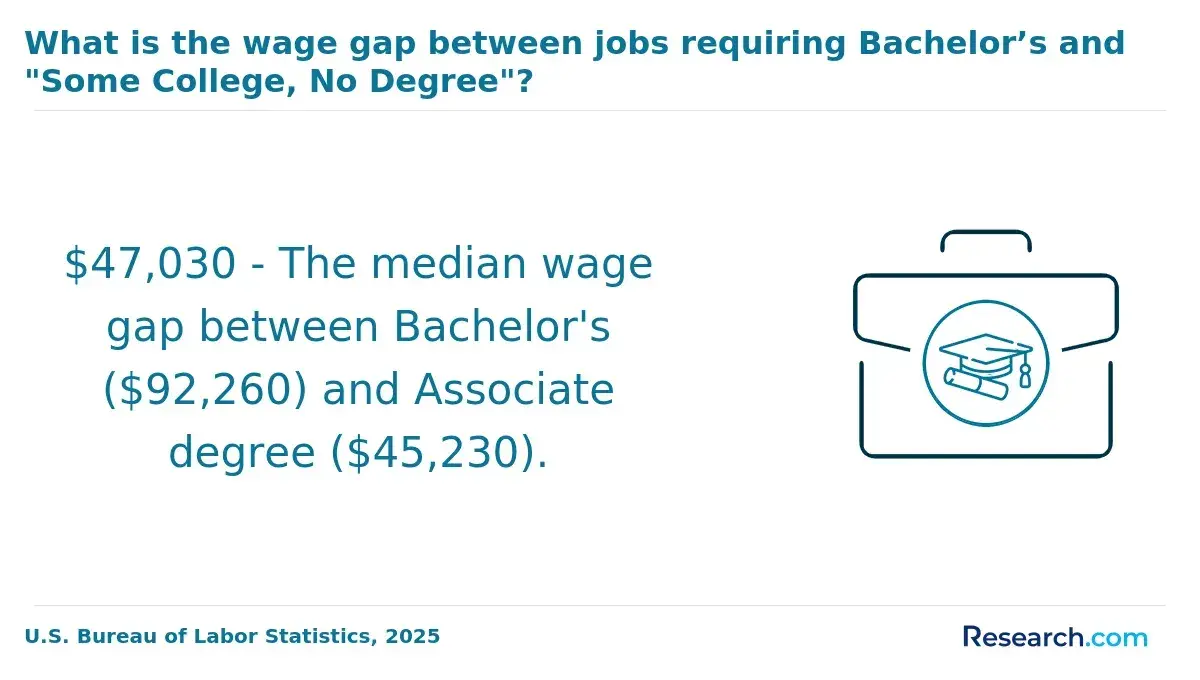
| Engineering management | Architectural and engineering managers | $167,740 | Combines technical judgment with hiring, budgets, project risk, and product or infrastructure strategy |
| Aerospace systems | Aerospace engineers | $134,830 | Requires systems thinking, compliance, testing discipline, and advanced design knowledge |
| Mechanical engineering core roles | Mechanical engineers | $102,320 | Broad entry point into design, manufacturing, energy, robotics, and product-development leadership |
| Materials and product reliability | Materials engineers | $104,100 | Supports high-value work in aerospace, medical devices, batteries, manufacturing, and failure analysis |
| Industrial production leadership | Industrial production managers | $122,090 | Rewards engineers who understand manufacturing systems, quality, labor, automation, and cost control |
Mechanical engineers who want to work at the boundary of machines, electronics, controls, and power systems may also benefit from comparing adjacent programs, including military friendly online electrical engineering degree programs, especially if their long-term goal is automation, electric vehicles, robotics, or embedded systems.
The best salary strategy is not simply to choose the highest-paying specialty on paper. Advancement is more likely when your specialty matches your strengths, gives you visible project ownership, and exists in industries that continue to invest in complex engineered systems.
How do online mechanical engineering programs compare to campus-based options for career growth?
Online mechanical engineering programs can support career growth when they are accredited, technically rigorous, and designed for students who need flexibility. Campus-based programs may still have advantages in hands-on labs, research access, faculty relationships, and recruiting pipelines, especially for students entering engineering for the first time.
The table below compares online and campus-based formats from a career-growth perspective. The goal is not to declare one format universally better, but to show when each format is the smarter choice.
| Decision factor | Online mechanical engineering program | Campus-based mechanical engineering program |
| Best for | Working adults, military-connected students, transfer students, and learners who need schedule flexibility | Traditional full-time students, students seeking intensive lab access, and learners who want a residential engineering network |
| Hands-on learning | May use at-home kits, simulation tools, local labs, short residencies, or partner facilities | Usually offers direct access to machine shops, makerspaces, research labs, and in-person design studios |
| Career networking | Depends heavily on virtual career services, employer partnerships, alumni access, and student initiative | Often stronger for internships, career fairs, undergraduate research, and student engineering teams |
| Flexibility | Stronger for students balancing work, family, military service, or relocation constraints | Stronger for students who can attend full time and want a structured academic environment |
| Risk to check | Accreditation, lab requirements, residency costs, exam proctoring, and employer recognition | Total cost, commuting or housing expenses, course scheduling, and time away from work |
Online study makes the most sense when you already have discipline, workplace access to engineering environments, or transfer credits that reduce completion time. Campus study may be better if you need intensive mentoring, want to join design competitions, or are targeting employers that recruit heavily from specific engineering schools.
What accredited mechanical engineering programs best support long-term career advancement?
Accreditation is one of the most important filters when choosing a mechanical engineering program for long-term advancement. For engineering degrees in the United States, ABET accreditation is especially important because it signals that the program meets recognized standards in math, science, engineering design, faculty qualifications, continuous improvement, and student outcomes.
The best programs for advancement are not always the most famous or expensive. They are the programs that combine accreditation with strong labs, employer connections, design projects, advising, and evidence that students can move into internships, graduate study, licensure pathways, or engineering roles.
When comparing accredited programs, look for features that directly support career growth rather than relying only on rankings. The following criteria can help you separate a strong program from one that only looks appealing in a brochure.
- ABET accreditation for the specific mechanical engineering program, not just general institutional accreditation.
- Senior capstone projects sponsored by employers, research groups, community partners, or industry clients.
- Accessible labs in thermodynamics, fluids, materials, controls, manufacturing, and mechanical design.
- Career services that publish internship support, employer relationships, engineering career fairs, and alumni mentoring options.
- Faculty or research strengths that match your target specialty, such as robotics, energy systems, aerospace, biomechanics, or advanced manufacturing.
- Clear transfer-credit policies and advising for students coming from community colleges, military training, or prior STEM coursework.
Students interested in mechanical design for agriculture, animal-health technology, or equipment used in food systems may also compare engineering pathways with an accredited online animal science degree to decide whether they want to focus on engineered systems, biological systems, or the intersection of both.
What core mechanical engineering coursework builds skills for senior and managerial roles?
Core mechanical engineering coursework matters because senior engineers and managers must understand how design decisions affect safety, cost, manufacturability, performance, maintenance, and long-term reliability. A strong program should build both analytical depth and practical design judgment.
The most career-relevant coursework usually falls into several skill areas. These subjects are especially useful for students who want to move beyond entry-level tasks into senior technical or managerial responsibility.
- Statics, dynamics, and mechanics of materials build the foundation for analyzing structures, loads, stress, vibration, fatigue, and failure.
- Thermodynamics, heat transfer, and fluid mechanics prepare students for energy systems, engines, HVAC, aerospace, manufacturing, and thermal management.
- Machine design and computer-aided design develop the ability to create parts and assemblies that can be manufactured, tested, maintained, and improved.
- Manufacturing processes and quality engineering teach how products move from design intent to repeatable production.
- Controls, instrumentation, and mechatronics prepare students for robotics, automation, autonomous systems, and smart equipment.
- Engineering economics and project management help future leaders make trade-offs among cost, schedule, risk, technical performance, and customer needs.
- Capstone design builds the communication, documentation, teamwork, and stakeholder-management skills employers expect in higher-level roles.
Students should pay attention to how coursework is delivered, not just the course titles. A program with open-ended projects, iterative testing, design reviews, and cross-disciplinary teamwork will usually prepare students better for advancement than a program that relies mostly on isolated problem sets.
How do admission requirements and program length impact mechanical engineering career progression?
Admission requirements and program length affect career progression because they shape when you can enter the workforce, how much debt or opportunity cost you take on, and whether you qualify for internships, licensure, or graduate study. Mechanical engineering is sequential, so missing prerequisites in calculus, physics, chemistry, or programming can extend the timeline.
The table below outlines common timelines and admissions considerations. Actual requirements vary by institution, so students should confirm details directly with each school before enrolling.
| Program type | Typical length | Common admissions requirements | Career progression impact |
| Bachelor's degree, first-time student | About 4 years full time | High school diploma or equivalent, math readiness, science coursework, transcripts, and sometimes test scores or engineering-specific admission | Direct route into entry-level engineering roles and internships if the program is accredited and well connected |
| Transfer pathway from community college | Often 2 years plus 2 to 3 years after transfer | College GPA, calculus, physics, chemistry, engineering graphics, and transfer articulation requirements | Can reduce cost, but poor course alignment may delay graduation |
| Online or hybrid bachelor's completion | Varies based on transfer credits and lab format | Prior college credit, prerequisite math and science, technology requirements, and possible lab residencies | Helpful for working adults, but students must verify ABET status and lab logistics |
| Master's degree | About 1 to 2 years full time, longer part time | Engineering bachelor's degree, transcripts, recommendations, statement of purpose, and sometimes GRE scores | Useful for specialization, research roles, or movement into senior technical work |
Applicants who are drawn to biomechanics, human movement, or product design for sports and rehabilitation should compare mechanical engineering with exercise science degrees online; the better choice depends on whether they want to engineer devices and systems or focus primarily on health, movement, and performance.
The most common timing mistake is assuming that a faster program is automatically better. An accelerated option can be valuable, but not if it skips labs, weakens design experience, limits internships, or fails to meet accreditation needs for your target role.
What is the job outlook for mechanical engineers in high-growth industries and emerging fields?
The job outlook for mechanical engineers is strong in fields where employers need people who can design, improve, automate, test, and maintain complex physical systems. The Bureau of Labor Statistics projects mechanical engineer employment to grow faster than the average for all occupations from 2023 to 2033, with about 19,800 openings each year on average. For students, that means the market is broad, but the strongest opportunities will still favor those with relevant software, design, manufacturing, and systems skills.
High-growth and emerging areas are reshaping what mechanical engineers are expected to know. AI-assisted design, simulation, additive manufacturing, digital twins, robotics, electrification, renewable energy systems, and advanced materials are increasing the value of engineers who can combine traditional mechanical fundamentals with data, controls, and software-aware thinking.
Mechanical engineers interested in sustainability, climate resilience, and environmental systems may also explore adjacent options such as jobs for environmental science majors to compare engineering-focused roles with policy, conservation, compliance, and environmental analysis careers.
Industries with strong long-term relevance for mechanical engineers include advanced manufacturing, aerospace and defense, energy systems, medical devices, semiconductor equipment, electric vehicles, building systems, robotics, and logistics automation. Students should not choose an industry only because it sounds innovative; they should check whether it offers internships, entry-level roles, geographic access, and a clear path from junior engineer to senior engineer or manager.
Which certifications, licenses, and professional memberships boost mechanical engineering career advancement?
Certifications, licenses, and memberships can strengthen advancement, but they are not interchangeable. A license may be legally important for certain engineering services, while a certification usually signals a skill set to employers. Professional memberships help with networking, continuing education, conferences, and visibility in a specialty.
The table below summarizes common credentials and organizations that can support career progression. Requirements can change, and licensure rules vary by state, so students should verify current rules through the relevant board or credentialing body.
| Credential or membership | Best for | Advancement value | Important note |
| Engineer-in-Training or Engineering Intern status | Early-career engineers pursuing licensure | Shows progress after passing the FE exam | Often part of the path toward PE licensure |
| Professional Engineer license | Consulting, public infrastructure, stamped engineering work, and leadership in regulated settings | Can expand authority, credibility, and eligibility for senior roles | State requirements vary and usually include education, exams, and supervised experience |
| Project Management Professional | Engineers leading schedules, budgets, vendors, and cross-functional teams | Useful for program, project, and engineering management roles | Best after gaining real project experience |
| Six Sigma Green Belt or Black Belt | Manufacturing, quality, operations, and process improvement | Signals ability to reduce defects, improve processes, and use data-driven methods | Value depends on employer recognition and project experience |
| Certified Manufacturing Engineer | Manufacturing and production engineering | Supports advancement in manufacturing systems, tooling, and process leadership | Most useful when paired with hands-on manufacturing experience |
| ASME membership | Mechanical engineers across many specialties | Provides technical resources, conferences, networking, and professional identity | Membership alone is less valuable than active participation |
| SAE International membership | Automotive, mobility, aerospace, and vehicle systems | Useful for students and professionals in transportation and mobility engineering | Student design competitions can be especially valuable |
A smart credential strategy starts with your target role. A PE license may matter more in consulting and building systems, while Six Sigma may matter more in manufacturing, and project management may matter more once you are already leading teams or product launches.
How should students evaluate and choose a mechanical engineering program aligned with their career goals?
Choosing a mechanical engineering program should start with the career outcome you want, not with rankings alone. A prestigious program that lacks your target specialty, costs too much, or offers limited flexibility may be a poor fit, while a less famous accredited program with strong internships and labs may produce better momentum.
Use the following steps to evaluate programs in a practical order. This sequence helps you avoid choosing a school based only on marketing, location, or price.
- Define your target path, such as aerospace, robotics, HVAC, manufacturing, energy systems, product design, or engineering management.
- Confirm ABET accreditation for the exact mechanical engineering program and delivery format you plan to complete.
- Compare total cost, including tuition, fees, software, lab travel, housing, commuting, lost work time, and financing costs.
- Review the curriculum for labs, capstone design, simulation tools, manufacturing exposure, controls, technical electives, and project work.
- Ask about internship placement, employer partnerships, co-op options, undergraduate research, student engineering teams, and alumni outcomes.
- Check whether credits transfer cleanly if you are coming from community college, military training, or another STEM program.
- Evaluate academic support, tutoring, advising, mental health resources, career coaching, and access to faculty.
- Ask whether the program supports your next step, such as FE exam preparation, graduate school, licensure, or employer-sponsored advancement.
Cost deserves special attention because published tuition can hide the real price of attendance. The College Board reported 2024-25 average published tuition and fees of $11,610 for in-state students at public four-year institutions, $30,780 for out-of-state students at public four-year institutions, and $43,350 at private nonprofit four-year institutions. Those figures do not decide ROI by themselves, but they show why scholarships, transfer credits, co-ops, and time to completion can materially change the value of a degree.
Common mistakes include choosing a non-ABET program when licensure may matter, assuming all online engineering degrees include the same lab access, ignoring transfer-credit limits, focusing only on tuition rather than total cost, and selecting a specialty without checking local or national employer demand. The better approach is to match program structure, accreditation, cost, and experiential learning to the roles you actually want.
Other Things You Should Know About Mechanical Engineering
Certifications like the Professional Engineer (PE) license or Six Sigma can significantly boost career advancement for mechanical engineers in 2027. These credentials demonstrate expertise and commitment, potentially leading to higher-level roles and increased salary opportunities.
In 2027, industries like renewable energy, robotics, and aerospace offer significant advancement opportunities for mechanical engineers. These sectors are rapidly evolving, providing roles where professionals can innovate and progress into leadership positions, driven by sustainability trends and technological advancements.
The Professional Engineer, or PE, license improves promotion prospects on public projects in 2027. It is issued by state boards after an ABET-accredited degree, the FE exam, four years of supervised experience, and the PE exam. Many engineering-management roles and government contracts prefer licensed engineers.
References
- Seven essential skills for your mechanical engineering career - Academic and Future Workforce https://blogs.sw.siemens.com/academic/seven-essential-skills-mechanical-engineering-career/
- How to Become a Senior Mechanical Engineer - oiliuna.ie https://oiliuna.ie/how-to-become-a-senior-mechanical-engineer/
- Exploring Long-Term Career Possibilities for Design & Mechanical Engineers - NTMA Machinist Career College https://ntmamcc.org/exploring-long-term-career-possibilities-for-design-mechanical-engineers/
- Best Mechanical Engineering Specializations & Salaries https://applyuni.com/blog/en/best-mechanical-engineering-specializations/
- Top Jobs for a Mechanical Engineer in 2026 https://www.stonebridge.uk.com/blog/engineering/jobs-for-a-mechanical-engineer-or/
- Mechanical Engineer Certifications: Best Credentials to Advance Your Career | Teal https://www.tealhq.com/career-paths/mechanical-engineer-certifications
- The 7 Key Skills Every Mechanical Engineer Must Update by 2026 - Arveng Training & Engineering https://arvengtraining.com/en/mechanical-engineer-skills-2026/
- Mechanical Engineer https://augstudy.com/careers/mechanical-engineer/
- Which Engineering Field Pays the Most? Navigating High-Paying Careers - iLearn Engineering® https://www.ilearnengineering.com/online-engineering-courses/which-engineering-field-pays-the-most-navigating-high-paying-careers
- Mechanical Engineering Jobs in Demand by 2030 | CADD https://caddcentre.com/blog/mechanical-engineering-jobs-in-demand-by-2030/