2027 Online Mechanical Engineering Degrees That Prepare Students for Long-Term Professional Growth

Co-Founder and Chief Data Scientist
Choosing an online mechanical engineering degree is a high-stakes decision because the field blends rigorous math, lab-based design, software, and professional licensing considerations. The U. S. Bureau of Labor Statistics reported a $102,320 median annual wage for mechanical engineers in May 2024, making program quality and accreditation especially important. This guide is for prospective undergraduates, transfer students, working adults, and engineers considering graduate study. You will learn how online programs work, what they cost, which credentials matter, and how to choose a degree that supports durable career growth.
Key Things You Should Know
- For bachelor's students who may pursue Professional Engineer licensure, ABET accreditation is one of the most important program checks; many online mechanical engineering options are hybrid because labs and design work still require verified hands-on experiences.
- Mechanical engineers had a $102,320 national median annual wage in May 2024, according to the U.S. Bureau of Labor Statistics, but earnings vary by industry, location, experience, security clearance, and graduate education.
- Cost and timeline vary widely. A full bachelor's degree commonly takes about four years before transfer credit, while master's programs often take one to three years; compare total tuition, fees, travel for labs, software, and employer reimbursement before enrolling.
What is an online mechanical engineering degree and how does it compare to campus programs?
An online mechanical engineering degree is a college program that teaches the analysis, design, testing, and improvement of mechanical systems through a distance-learning format. Students study topics such as statics, dynamics, thermodynamics, fluid mechanics, materials, machine design, controls, manufacturing, and computer-aided design. The "online" label usually refers to lecture delivery, advising, assignments, and some simulations; it does not mean the program is free of labs, projects, or proctored assessments.
The main difference between online and campus study is delivery, not the engineering standard expected of students. A credible online program should still require mathematical rigor, faculty interaction, design work, lab documentation, and engineering ethics. Students comparing mechanical engineering with broader online engineering degrees should look carefully at the exact major name because engineering, engineering technology, mechanical engineering technology, and mechanical engineering can lead to different licensing and employer outcomes.
The comparison below shows where online and campus programs tend to differ most. Use it to decide whether online learning fits your schedule, learning style, and career objective.
| Factor | Online mechanical engineering degree | Campus mechanical engineering degree | Decision implication |
| Lecture format | Usually asynchronous or live online, with recorded lectures and digital assignments | Usually in-person lectures and scheduled class meetings | Online study works best for disciplined students who can manage weekly problem sets without daily classroom structure. |
| Labs | May use mailed lab kits, simulation tools, local proctoring, short campus residencies, or partner facilities | Typically completed in campus laboratories | Verify lab requirements before enrolling, especially if travel is difficult. |
| Design projects | Often completed in virtual teams with remote collaboration tools and periodic presentations | Often completed in campus teams with access to makerspaces and machine shops | Ask how the program documents design experience for employers and licensure boards. |
| Networking | Requires intentional outreach through online office hours, career fairs, alumni groups, and internships | More spontaneous access to faculty, labs, clubs, and recruiters | Online students should plan networking early rather than waiting until graduation. |
| Flexibility | Stronger fit for working adults, military students, caregivers, and students far from campus | Stronger fit for students who want daily in-person structure and campus facilities | The better option depends on access, schedule, and the student's need for hands-on campus resources. |
Online mechanical engineering is not easier than campus study. In many cases, it demands more self-direction because students must schedule labs, collaborate remotely, and keep pace with demanding quantitative coursework while balancing work or family responsibilities.
How do online mechanical engineering degrees prepare students for long-term career growth?
A strong mechanical engineering program prepares students for long-term growth by building transferable engineering judgment, not just familiarity with one tool or industry. Mechanical engineers can move across automotive, aerospace, energy, robotics, manufacturing, HVAC, biomedical devices, product design, and defense because the core principles of force, heat, motion, materials, and systems modeling appear in many settings.
The best online programs support growth in three ways: they teach durable fundamentals, require applied design work, and expose students to modern digital engineering workflows. That matters because employers increasingly expect mechanical engineers to work with simulation, automation, additive manufacturing, sensors, data analysis, and cross-functional product teams.
Students interested in deeper computational research may eventually compare engineering graduate pathways with adjacent options such as a data science doctorate online, particularly if they want to specialize in AI-driven modeling, predictive maintenance, or autonomous systems.
Long-term growth usually comes from stacking experience and credentials over time. The pathway below summarizes how a degree can support progression without implying that every graduate follows the same route.
| Career stage | Typical focus | How the degree helps | Growth strategy |
| Student or career changer | Math, physics, programming, CAD, engineering fundamentals, lab reports | Builds the technical foundation needed for internships and entry-level design or analysis roles | Prioritize ABET status, project quality, and internship access. |
| Entry-level engineer | Design support, testing, documentation, calculations, manufacturing support | Provides the vocabulary and analytical methods needed to work under senior engineers | Develop a portfolio of design, simulation, and test projects. |
| Mid-career engineer | System ownership, vendor coordination, design reviews, cost and reliability trade-offs | Supports broader technical decision-making and possible graduate specialization | Build expertise in a domain such as thermal systems, robotics, quality, energy, or aerospace. |
| Senior engineer or technical lead | Architecture decisions, mentorship, risk management, standards, client communication | Provides a foundation for leadership, licensure, and advanced technical roles | Consider PE licensure, a master's degree, management training, or specialized certifications. |
Students should choose online mechanical engineering when they need flexibility but still want a rigorous engineering credential. They should consider a different path if they dislike advanced math, cannot commit to scheduled labs or proctored exams, or mainly want a quick credential for technician-level work.
Which U.S. online mechanical engineering programs are accredited and academically reputable?
Accreditation should be the first filter, not an afterthought. At the institutional level, the college or university should be accredited by a recognized accreditor. At the program level, ABET accreditation is especially important for bachelor's degrees in engineering because many state licensing boards and employers use it as a quality benchmark.
For undergraduate mechanical engineering, students should verify the program directly in ABET's public database before applying because accreditation status can change and may apply only to a specific campus, delivery mode, degree title, or catalog year. For master's degrees, ABET accreditation is less commonly the central issue; academic reputation, faculty expertise, research depth, employer recognition, and fit with specialization become more important.
The table below lists examples of U.S. online or distance-accessible mechanical engineering options that prospective students commonly evaluate. Treat it as a starting point, not a substitute for checking current accreditation, residency, and state authorization details with the school.
| Institution | Online mechanical engineering option | Accreditation or reputation note | Best-fit student |
| University of North Dakota | Online Bachelor of Science in Mechanical Engineering | Known for distance engineering delivery; students should confirm current ABET status for the specific degree | Undergraduates who need an online path with structured engineering labs and design work |
| The University of Alabama | Distance-accessible Bachelor of Science in Mechanical Engineering | Students should verify current ABET coverage and any in-person requirements before enrolling | Transfer students and working adults seeking a traditional mechanical engineering bachelor's from a public university |
| Purdue University | Online Master of Science in Mechanical Engineering | Large, well-known engineering college with strong employer recognition | Engineers seeking advanced technical depth while remaining employed |
| Penn State World Campus | Online mechanical engineering graduate options | Established online division of a major research university | Professionals who want graduate coursework with a recognized university brand |
| North Carolina State University | Online Master of Science in Mechanical Engineering | Research university with engineering strength and distance graduate offerings | Engineers seeking advanced analysis, thermal, mechanical systems, or related coursework |
| University of Florida EDGE | Online graduate engineering courses and mechanical engineering pathways | Public research university with established distance engineering delivery | Working engineers seeking flexible graduate-level coursework |
A reputable program should be transparent about accreditation, faculty credentials, lab expectations, outcomes, tuition, transfer credit, and student support. Be cautious if a school makes broad career promises, hides residency requirements, uses a degree title that sounds like engineering but is actually engineering technology, or cannot explain whether the program supports PE licensure preparation.
What admission requirements and prerequisites do online mechanical engineering degrees typically have?
Admission requirements depend on degree level. Bachelor's programs usually evaluate high school preparation or transfer coursework, while master's programs usually require an engineering or closely related STEM bachelor's degree. Mechanical engineering is math-intensive, so prerequisites matter more than they do in many other online majors.
For bachelor's applicants, schools often look for readiness in calculus, physics, chemistry, and college-level writing. Transfer students may need completed calculus sequences, calculus-based physics, and introductory engineering courses before entering upper-division mechanical engineering classes. Students who are missing prerequisites may still be admitted to the university but not yet to the major.
The most common requirements are listed below. Use this list to identify gaps before applying, since missing prerequisites can add time and cost.
- High school diploma, GED, or prior college record for bachelor's admission
- College algebra, trigonometry, pre-calculus, or calculus readiness, depending on placement
- Calculus-based physics and chemistry for many transfer or upper-division applicants
- Official transcripts from every prior college attended
- Minimum GPA requirements that may be higher for engineering than for general university admission
- For graduate programs, a bachelor's degree in mechanical engineering or a related field such as aerospace, civil, electrical, materials, or applied physics
- For some master's programs, prerequisite undergraduate courses in thermodynamics, fluid mechanics, mechanics of materials, dynamics, and differential equations
- Resume, statement of purpose, recommendation letters, and sometimes GRE scores for graduate admission
Applicants should not assume that "online" means open admission. Selective programs may expect the same quantitative background as campus programs. If you are changing careers from a non-engineering field, ask whether the school offers a bridge plan, post-baccalaureate prerequisites, or conditional admission.
What core courses and technical skills are covered in online mechanical engineering curricula?
Mechanical engineering curricula are built around how physical systems move, transfer heat, withstand loads, convert energy, and perform under real-world constraints. A bachelor's program emphasizes fundamentals and design readiness, while a master's program usually deepens specialization in areas such as thermal sciences, solid mechanics, controls, robotics, manufacturing, or computational modeling.
Students should review the curriculum map rather than just the course catalog. The sequence matters because later courses depend on earlier math, physics, and mechanics foundations. The table below summarizes common curriculum areas and the skills they support.
| Curriculum area | Common courses | Skills developed | Why it matters professionally |
| Engineering fundamentals | Statics, dynamics, mechanics of materials, engineering graphics | Free-body diagrams, stress analysis, motion analysis, technical drawings | Supports design calculations, failure analysis, and safe mechanical system development |
| Thermal and fluid systems | Thermodynamics, heat transfer, fluid mechanics | Energy balances, heat exchanger analysis, flow modeling, pump and turbine basics | Applies to HVAC, power, aerospace, automotive, process systems, and energy roles |
| Design and manufacturing | Machine design, manufacturing processes, senior design, CAD | Part design, tolerancing, prototyping, design for manufacturability | Prepares students to move from calculations to products and systems that can be built |
| Controls and mechatronics | System dynamics, control systems, instrumentation, robotics electives | Feedback control, sensors, actuators, data acquisition, automation basics | Useful in robotics, autonomous systems, manufacturing automation, and smart products |
| Computational tools | Programming, numerical methods, finite element analysis, computational fluid dynamics electives | Modeling, simulation, data interpretation, software-assisted engineering analysis | Increasingly important as employers use digital twins, simulation-led design, and AI-assisted workflows |
Beyond courses, students should graduate with evidence of applied ability. Useful proof includes CAD models, simulation reports, lab notebooks, test plans, capstone design documentation, code samples, and presentations that explain engineering trade-offs clearly.
How long do online mechanical engineering degrees take and what do they cost?
Timeline depends on degree level, transfer credit, course load, prerequisites, and lab scheduling. A first-time bachelor's student should generally plan for about four years of full-time study, while transfer students may finish faster if their calculus, physics, general education, and introductory engineering courses apply cleanly. Online master's students often take one to three years, with working professionals commonly choosing a part-time pace.
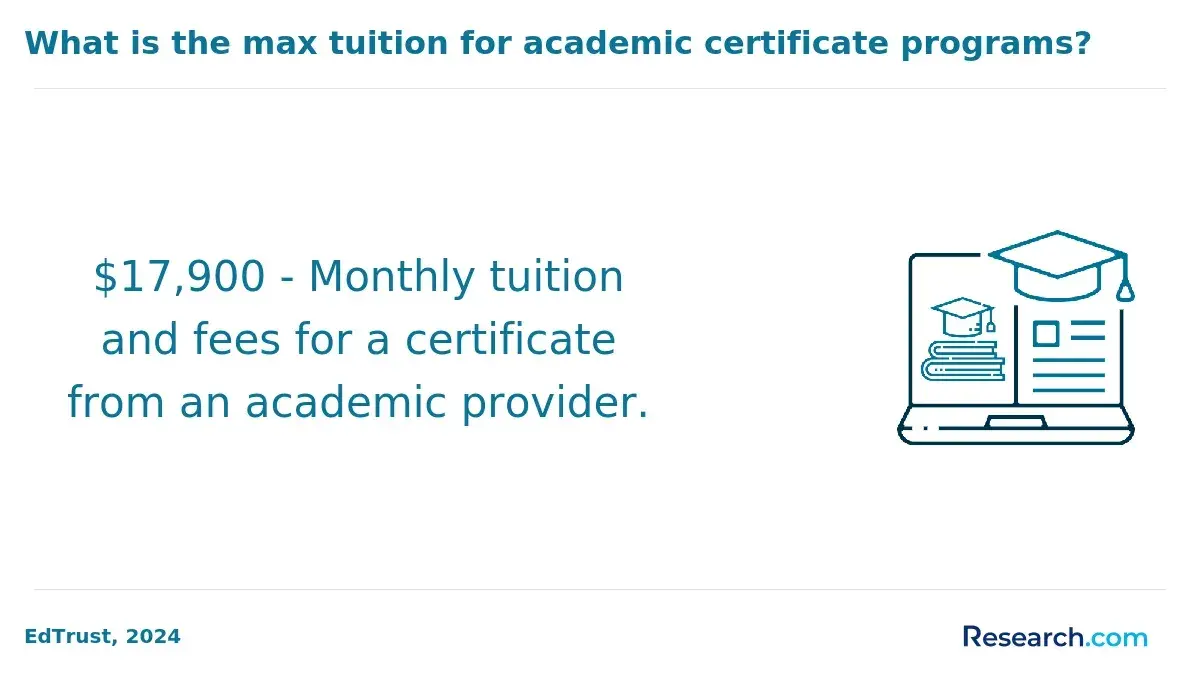
Cost requires a broader view than tuition alone. The College Board's 2024 Trends in College Pricing reported the following average published tuition and fees for full-time undergraduates, which can help students benchmark public and private options before comparing program-specific charges:
- $11,610 for in-state students at public four-year institutions
- $30,780 for out-of-state students at public four-year institutions
- $43,350 for private nonprofit four-year institutions
These figures are broad national benchmarks, not mechanical-engineering-specific prices. Online students should also include technology fees, proctoring fees, lab kits, software, travel for required residencies, books, exam costs, and lost income if they reduce work hours.
The table below summarizes common cost drivers. It helps separate a program that looks inexpensive from one that is actually affordable after all requirements are included.
| Cost factor | Why it matters | Question to ask the school |
| Tuition model | Some schools charge per credit, while others use flat-rate terms or separate online rates | Is online tuition different from campus tuition, and does residency status affect it? |
| Transfer credit | Accepted credits can reduce both cost and time | Will you provide a written transfer evaluation before I commit? |
| Lab and residency expenses | Travel, lodging, lab kits, and missed work can add meaningful costs | How many in-person visits are required, and when are they scheduled? |
| Software and hardware | CAD, simulation, programming, and proctoring tools may require a capable computer | Which software licenses are included, and what computer specifications are required? |
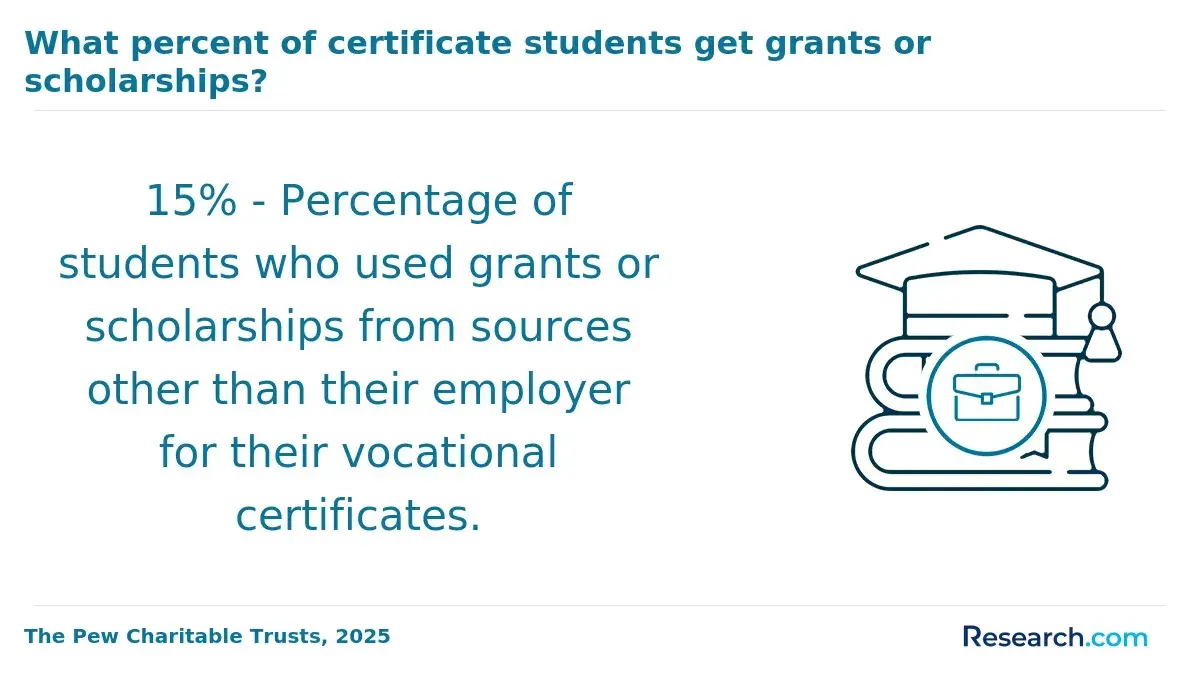
| Financial aid and employer support | Grants, loans, scholarships, military benefits, and tuition assistance can change net price | Which aid options apply to online engineering students specifically? |
The most affordable option is not always the best value. A slightly higher-cost program may be worth considering if it has ABET accreditation, stronger lab support, better transfer policies, employer recognition, and career services that help students secure internships or promotions.
What mechanical engineering career paths can graduates pursue with an online degree?
Graduates of credible online mechanical engineering programs can pursue many of the same paths as campus graduates, especially when the degree title, accreditation, projects, and experience align with employer expectations. Mechanical engineering is broad, so students should choose electives and projects that point toward a target industry.
Common paths include product design, manufacturing engineering, thermal systems, HVAC, energy systems, aerospace, automotive, robotics, quality engineering, test engineering, reliability engineering, and systems engineering. Students interested in human movement, prosthetics, sports equipment, or rehabilitation technology may also compare engineering with health-focused options such as the best online exercise science degree, since biomechanics careers can sit at the intersection of mechanical systems and human performance.
The table below connects career paths with typical responsibilities. It can help students choose electives, internships, and portfolio projects that match their target roles.
| Career path | Typical responsibilities | Useful preparation |
| Mechanical design engineer | Create parts and assemblies, run design calculations, prepare drawings, support prototypes | CAD, machine design, materials, tolerancing, capstone design |
| Manufacturing engineer | Improve production processes, reduce defects, design tooling, support automation | Manufacturing processes, quality methods, lean systems, robotics basics |
| Thermal or fluids engineer | Analyze heat transfer, fluid flow, cooling systems, pumps, turbines, or energy systems | Thermodynamics, fluid mechanics, heat transfer, simulation tools |
| Test engineer | Develop test plans, collect data, validate designs, troubleshoot failures | Instrumentation, statistics, lab methods, technical writing |
| Robotics or mechatronics engineer | Integrate mechanical components with sensors, actuators, controls, and software | Controls, programming, electronics fundamentals, system dynamics |
| Reliability or quality engineer | Investigate failures, improve durability, document compliance, support continuous improvement | Statistics, materials, failure analysis, quality systems |
An online degree is most powerful when paired with experience. Internships, co-ops, undergraduate research, military technical experience, maker projects, or employer-sponsored projects can help online students show that they can apply engineering principles beyond a virtual classroom.
What salary ranges and earning potential can mechanical engineers expect over time?
Mechanical engineering compensation depends on experience, industry, geography, degree level, licensing, security clearance, and the complexity of the systems an engineer supports. The most reliable national benchmark is the U.S. Bureau of Labor Statistics, which reported a $102,320 median annual wage for mechanical engineers in May 2024. That figure is a midpoint, not a guarantee; many early-career roles pay below the median, while experienced engineers in specialized or high-cost markets may earn more.
The BLS also projected 11% employment growth for mechanical engineers from 2023 to 2033, which is faster than the average for all occupations. For students, the practical meaning is that the field has broad demand, but competition can still be strong for preferred industries such as aerospace, robotics, clean energy, and advanced manufacturing.
The table below explains how earning potential commonly changes over a career. It avoids treating salary as automatic because individual outcomes depend on skill, employer, region, and economic conditions.
| Career phase | Common compensation position | What tends to improve earning potential |
| Entry-level | Often below the national median while engineers build supervised experience | Internships, co-ops, strong CAD and analysis portfolio, relevant industry projects |
| Early to mid-career | May approach or exceed the national median as responsibility increases | Owning subsystems, passing the FE exam, developing simulation or manufacturing expertise |
| Experienced engineer | Often tied to specialization, leadership, industry, and location | PE licensure where relevant, master's study, project leadership, high-demand domain expertise |
| Senior technical or management track | Can vary widely based on organization size and role scope | Technical authority, cross-functional leadership, budgeting, client communication, advanced credentials |
Students evaluating return on investment should compare expected debt with realistic entry-level opportunities in their target region. A lower-cost accredited program can be a strong choice if it provides the same licensing pathway and employer-recognized preparation as a more expensive option.
How is hands-on lab work, design projects, and internships handled in online programs?
Hands-on work is the biggest practical question in online mechanical engineering. Engineering programs must teach students how to measure, test, build, document, and troubleshoot physical systems, so high-quality online degrees use structured methods to verify applied learning.
Programs may combine several approaches. Before enrolling, ask exactly how each lab course works, whether travel is required, and how the school evaluates student work.
- Short campus residencies where online students complete intensive lab sessions over several days
- Mailed lab kits for circuits, sensors, materials demonstrations, measurements, or controls exercises
- Remote-access laboratories where students control equipment through a web interface
- Simulation-based labs using CAD, finite element analysis, computational fluid dynamics, or system modeling software
- Local proctored labs or approved partner facilities, when available
- Team-based capstone projects completed through online collaboration, prototype documentation, testing reports, and video demonstrations
Internships and co-ops are usually not "online" in the same way courses are. Students often find positions near where they live, with support from the university's career office. Working adults may be able to use employer-based projects if the school approves the scope, supervision, and learning outcomes.
To avoid surprises, students should take the following steps before accepting admission:
- Request a term-by-term plan showing every lab, residency, and proctored requirement.
- Ask whether lab travel is mandatory, optional, or replaceable with local arrangements.
- Confirm whether senior design projects require team meetings at fixed times.
- Ask how online students access career fairs, internship listings, and employer recruiting.
- Find out whether the program allows workplace projects to count toward design or elective requirements.
A red flag is any program that minimizes hands-on work or cannot explain how students complete labs. Mechanical engineering is an applied discipline; credible online programs make practical experience visible, documented, and assessable.
How can students evaluate and choose a high-quality online mechanical engineering program?
The best program is the one that matches your goal, schedule, budget, and licensing needs while maintaining credible engineering standards. Do not choose based only on ranking, brand name, or the lowest advertised tuition. A strong decision comes from checking evidence.
Use the following evaluation steps to compare programs. The same disciplined approach can help when comparing other online fields, whether you are evaluating engineering or a library degree, but mechanical engineering requires extra attention to labs, ABET status, and prerequisites.
- Verify institutional accreditation and, for bachelor's engineering programs, confirm ABET accreditation for the exact degree title and delivery format.
- Ask for a written transfer-credit evaluation before enrolling if you have prior college coursework.
- Review the curriculum sequence to make sure prerequisites, labs, and capstone courses fit your timeline.
- Compare total cost, including fees, travel, software, books, lab kits, and possible lost work hours.
- Ask how online students access tutoring, faculty office hours, engineering software, library resources, disability services, and career advising.
- Review faculty expertise and elective depth in your target area, such as robotics, manufacturing, thermal systems, or aerospace.
- Request information on internship support, employer partnerships, career outcomes, and alumni networks.
- Confirm whether the program meets requirements relevant to your state, employer, military benefit, visa status, or licensure goal.
Common mistakes include assuming all online engineering degrees are equivalent, confusing engineering technology with engineering, ignoring in-person lab requirements, borrowing based on optimistic salary assumptions, and waiting too long to pursue internships. A better approach is to build a shortlist, compare written program details side by side, and speak with both admissions and department-level engineering advisors.
A high-quality online mechanical engineering degree should make you more employable, but it should also make you more adaptable. Prioritize programs that teach fundamentals, require serious design work, support modern engineering tools, and give you a clear route to experience.
Other Things You Should Know About Mechanical Engineering
In 2027, online mechanical engineering programs often offer preparatory courses and resources to ease the transition for students who have been out of school. These might include refresher courses in math and foundational engineering concepts to better equip students for the curriculum.
Most students need a reliable laptop or desktop that can run CAD, simulation, programming, spreadsheet, and proctoring software. Requirements vary by school, so ask for the official hardware specifications before buying a computer.
Usually no. Certificates can help build targeted skills in CAD, additive manufacturing, quality, or data analysis, but they generally do not replace an accredited engineering degree for roles that require full engineering preparation.
Some can, especially in part-time programs, but the workload is significant. Students working full time should start with a realistic course load, plan around lab requirements, and avoid stacking multiple math-heavy or lab-heavy courses in the same term.
References
- Mechanical Engineering https://www.ualberta.ca/en/undergraduate-programs/bachelor-of-science-in-mechanical-engineering-mechanical-engineering.html
- Online Programs Search https://amspub.abet.org/aps/online-search
- How to Become a Mechanical Engineer - Degree & Steps https://www.onlineengineeringprograms.com/faq/how-to-become-a-mechanical-engineer
- Online Mechanical Engineering Degrees 2025 https://www.affordablecollegesonline.org/degrees/engineering-programs/mechanical-engineering/
- Quality Without Compromise: How to Maintain Standards & Elevate Learning in Online Lab Courses https://www.scienceinteractive.com/blog/2025/quality-without-compromise-how-to-maintain-standards-elevate-learning-in-online-lab-courses/
- What Classes Do Mechanical Engineers Take In College? https://www.grace.edu/what-classes-do-mechanical-engineers-take-in-college/
- How to Evaluate If an Engineering Program Is a Good Fit - Your College-Bound Kid https://yourcollegeboundkid.com/2023/03/10/how-to-evaluate-if-an-engineering-program-is-a-good-fit/
- 2025 Best Online Mechanical Engineering Degrees https://www.onlineu.com/degrees/mechanical-engineering
- Top Mechanical Engineering Courses | Best Courses for Mechanical Engineers https://skill-lync.com/mechanical-engineering-courses
- Seven essential skills for your mechanical engineering career - Academic and Future Workforce https://blogs.sw.siemens.com/academic/seven-essential-skills-mechanical-engineering-career/