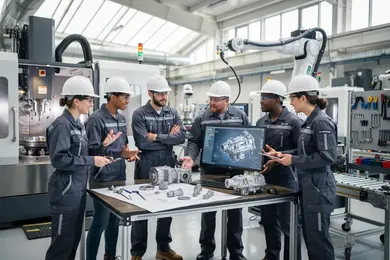
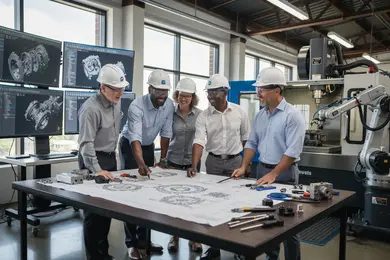
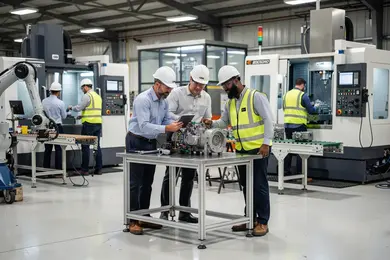
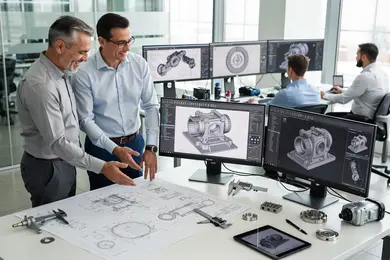
2027 Online Mechanical Engineering Degrees That Help Build Design Analysis Skills

Co-Founder and Chief Data Scientist
Choosing an online mechanical engineering degree is really a decision about whether the program can help you model, test, and improve real products before they are built. That matters because the U. S. Bureau of Labor Statistics projects mechanical engineering employment to grow 11% from 2023 to 2033, faster than the average for all occupations. This guide is for working adults, transfer students, and engineers considering online study. You will learn how to compare programs, software training, accreditation, cost, career fit, and design-focused outcomes before enrolling.
Key Things You Should Know
- For bachelor's programs, ABET accreditation is the key quality signal if you may later pursue PE licensure; for master's programs, institutional accreditation, faculty depth, and design-analysis coursework usually matter more.
- Design analysis skills are built through mechanics, CAD, finite element analysis, computational methods, thermal-fluid analysis, optimization, prototyping, and capstone projects-not through CAD training alone.
- The BLS reported a May 2024 median annual wage of $102,320 for mechanical engineers, but outcomes vary by industry, location, experience, security clearance, software skills, and whether the role is design, testing, manufacturing, or management focused.
What is an online mechanical engineering degree focused on design analysis skills?
An online mechanical engineering degree focused on design analysis is a bachelor's or graduate engineering program that teaches students how to evaluate whether a component, machine, thermal system, or product design will perform safely and efficiently under expected conditions. The "design" part involves creating or improving a product concept. The "analysis" part involves using math, physics, simulation, testing data, and engineering judgment to predict performance, identify failure risks, and make better design choices.
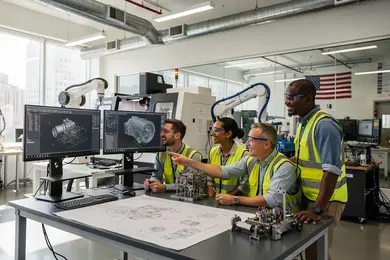
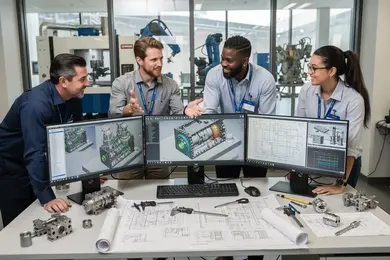
In practice, this means students learn to move beyond drawing parts in CAD. They study stress, strain, vibration, heat transfer, fluid flow, materials behavior, manufacturing constraints, tolerances, and cost trade-offs. A strong program connects theory to tools such as 3D modeling, finite element analysis, computational fluid dynamics, MATLAB or Python, and design optimization.
This degree path is a good fit if you want to work in product development, aerospace, automotive, energy systems, robotics, medical devices, HVAC, manufacturing equipment, or advanced materials. It may be less suitable if you mainly want a short software credential, a technician role, or a broad business-oriented engineering management credential without intensive mechanics and analysis coursework.
Students comparing engineering fields should also think about the type of problems they want to solve. Mechanical engineering is centered on machines, motion, energy, structures, and manufacturing. Students more interested in ecosystems, water systems, or sustainability compliance may want to compare this path with options such as the cheapest online environmental science degree before committing to a mechanical curriculum.
How do online mechanical engineering programs compare to campus-based options for design analysis?
Online mechanical engineering programs can be rigorous, but they are not identical to campus programs. The best online options use recorded and live lectures, remote simulation software, virtual office hours, proctored exams, team-based design projects, and sometimes short campus labs or approved local lab arrangements. The main question is not whether the program is online; it is whether the program gives you enough hands-on, computational, and faculty-supervised design work.
The table below summarizes the main trade-offs. Use it to decide whether online, campus-based, or hybrid study fits your learning style, schedule, and design-analysis goals.
| Format | Best fit | Design analysis strengths | Potential limitations |
| Fully online | Working adults, military students, remote learners, and students with strong self-management skills | Flexible access to simulation tools, recorded lectures, and asynchronous problem-solving practice | May have fewer in-person machine shop, wind tunnel, or materials lab experiences |
| Hybrid online | Students who can travel occasionally for labs, exams, or intensives | Combines online theory with concentrated hands-on testing or fabrication experience | Travel costs and scheduling can reduce flexibility |
| Campus-based | Students who want daily access to labs, clubs, research groups, and faculty | Stronger access to physical prototyping, student design teams, and lab equipment | Less flexible for full-time workers and students outside the region |
Online study can work especially well for design analysis because much of modern engineering analysis is computational. Employers increasingly expect engineers to use simulation, digital twins, model-based design, and automated design iteration. However, students who learn best through physical labs, machine shop work, and face-to-face team projects should look for hybrid options or campus programs with stronger facilities access.
A common mistake is assuming that an online engineering degree is automatically easier or weaker. A better approach is to inspect the curriculum, lab requirements, capstone projects, software access, faculty engineering expertise, and accreditation status. If those are strong, the online format can be a practical route to a serious engineering education.
Which U.S. schools offer accredited online mechanical engineering degrees in design analysis?
Several U.S. universities offer online or mostly online mechanical engineering degrees, but availability changes and programs may include lab visits, proctored exams, or residency requirements. For bachelor's degrees, students should verify ABET Engineering Accreditation Commission status directly with the school and ABET before enrolling. For master's degrees, ABET is typically less central because accreditation is generally applied at the bachelor's level in engineering, while institutional accreditation and graduate faculty quality become more important.
The table below gives examples of U.S. online mechanical engineering options to investigate. It is not a ranking, and students should confirm current delivery format, accreditation, tuition, and state authorization before applying.
| School | Online mechanical engineering option | Credential level | Accreditation note to verify |
| Arizona State University | Online BSE in Engineering, Mechanical Engineering | Bachelor's | ABET EAC status for the specific program |
| University of North Dakota | Online BS in Mechanical Engineering | Bachelor's | ABET EAC status and any required in-person components |
| University of Alabama | Distance BS in Mechanical Engineering | Bachelor's | ABET EAC status and lab or campus attendance requirements |
| Purdue University | Online MS in Mechanical Engineering | Master's | Institutional accreditation, graduate engineering faculty, and course availability |
| Penn State World Campus | Online mechanical engineering graduate degree options | Master's | Institutional accreditation and alignment with design, modeling, or analysis goals |
| University of Illinois Urbana-Champaign | Online mechanical engineering graduate study options | Master's | Institutional accreditation, research fit, and graduate course sequencing |
When comparing schools, do not rely only on the program title. A degree called "mechanical engineering," "engineering," "mechanical engineering technology," or "manufacturing engineering" can lead to different licensure, graduate school, and employer outcomes. Mechanical engineering technology programs may be excellent for applied roles, but they are not always treated the same as mechanical engineering degrees for PE licensing or design engineer positions.
If your interests overlap with environmental systems, energy efficiency, or sustainability, it can also help to review career differences through resources such as what can I do with an environmental science degree. That comparison can clarify whether you want to design mechanical systems or work more directly in environmental policy, field science, compliance, or conservation.
What courses and software tools build strong design analysis skills in these programs?
Strong design analysis programs blend engineering fundamentals with software-enabled problem solving. The most valuable courses are not just tool tutorials; they teach students how to select assumptions, validate models, interpret output, and recognize when simulation results are misleading.
The table below shows the course areas and tools that most directly support design-analysis competency. Use it to scan a curriculum and see whether a program is preparing you for real engineering work rather than only general technical knowledge.
| Course or skill area | What it teaches | Common tools or methods | Why it matters in design roles |
| Statics, dynamics, and mechanics of materials | Forces, motion, stress, strain, deflection, and failure behavior | Free-body diagrams, beam analysis, fatigue calculations | Helps engineers judge whether parts can survive real loads |
| CAD and parametric modeling | 3D part modeling, assemblies, drawings, and design revisions | SolidWorks, Creo, CATIA, Autodesk Inventor, Siemens NX | Creates the design geometry used for manufacturing and simulation |
| Finite element analysis | Numerical stress, vibration, thermal, and structural simulation | ANSYS, Abaqus, Nastran, SolidWorks Simulation | Supports design decisions before prototypes are built |
| Thermal-fluid sciences | Heat transfer, thermodynamics, and fluid flow | CFD tools, MATLAB, Python, EES | Important for HVAC, turbines, engines, batteries, and cooling systems |
| Manufacturing and materials | Material selection, machining, additive manufacturing, and process limits | DFM, tolerance analysis, materials databases | Prevents designs that are strong in theory but impractical to produce |
| Capstone design | Team design, testing, documentation, and presentation | Project management tools, CAD, simulation, prototypes | Provides portfolio evidence for internships and entry-level jobs |
Students should look for assignments that require model validation, sensitivity studies, and design trade-off explanations. For example, a strong FEA project asks not only "What is the maximum stress?" but also "Is the mesh appropriate, are the boundary conditions realistic, and how would the design change if the material or load changed?"
AI-assisted design is also becoming more relevant. Generative design, topology optimization, simulation automation, and code-assisted modeling can help engineers test more concepts quickly. Still, employers need engineers who understand the physics behind the model. AI tools can accelerate analysis, but they do not replace engineering judgment, documentation, or safety responsibility.
What admission requirements apply to online mechanical engineering bachelor's and master's programs?
Admission requirements differ sharply between online bachelor's and master's programs. Bachelor's programs evaluate college readiness and math preparation, while master's programs usually expect an engineering background, prerequisite coursework, and evidence that the applicant can handle graduate-level mechanics, analysis, and computation.
Before applying, students should map their background to the level of degree they are pursuing. The table below summarizes common requirements and what they mean for applicants.
| Program level | Common admission requirements | Design-analysis readiness signal | Possible gap to address |
| Online bachelor's in mechanical engineering | High school diploma or equivalent, transcripts, math placement, prior college records if transferring | Calculus readiness and strong grades in algebra, trigonometry, physics, or prior STEM courses | May need precalculus, calculus, chemistry, or physics before core engineering courses |
| Online bachelor's completion pathway | Transfer credits, prior calculus and science courses, minimum GPA, general education completion | Successful completion of lower-division engineering prerequisites | Transfer credits may not match the sequence required by the engineering school |
| Online master's in mechanical engineering | ABET or equivalent engineering bachelor's degree, transcripts, GPA threshold, resume, statement of purpose, recommendations | Prior coursework in mechanics, thermodynamics, fluids, differential equations, and numerical methods | Students from non-ME fields may need bridge courses before advanced analysis courses |
Applicants can reduce delays by checking prerequisites before submitting an application. This is especially important in engineering because courses are often sequenced. Missing calculus, physics, or mechanics can postpone progress by a semester or more, even if the student is admitted.
A practical application checklist should include the following steps. These help prevent the most common enrollment surprises for online engineering students.
- Request an official transfer credit evaluation before assuming previous math, science, or engineering credits will apply.
- Ask whether online students have access to the same engineering software, tutoring, advising, and career services as campus students.
- Confirm whether labs, exams, internships, or capstone presentations require campus travel.
- For master's programs, ask whether design analysis courses are offered every term or only on a rotating schedule.
- If PE licensure is a future goal, confirm how the degree is treated by the relevant state licensing board.
How long do online mechanical engineering degrees take, and what do they cost?
Online mechanical engineering bachelor's degrees commonly take about four years for first-time full-time students, while transfer students may finish sooner depending on accepted credits. Online master's programs often take one to three years, depending on whether the student studies full time, part time, or while working. Engineering sequences can be less flexible than some majors because math, physics, lab, and design courses build on each other.
Cost depends on residency, public versus private tuition, transfer credits, fees, software, books, travel for labs, and the number of credits required. The College Board's 2024 Trends in College Pricing reported average published tuition and fees of $11,610 for in-state students at public four-year institutions, $30,780 for out-of-state students at public four-year institutions, and $43,350 at private nonprofit four-year institutions for 2024-25. These figures are not mechanical-engineering-specific, but they help students benchmark whether a program's tuition is unusually low, typical, or high.
The table below organizes the main cost and timeline variables. Use it to compare total program cost instead of focusing only on the advertised tuition rate.
| Factor | Why it matters | Question to ask the school |
| Transfer credit | Accepted credits can reduce both time and tuition | How many prior credits apply directly to the engineering degree plan? |
| Residency pricing | Some public universities charge different online rates for in-state and out-of-state students | Is the online tuition rate the same for all U.S. students? |
| Engineering fees | Labs, software, proctoring, and technology fees can raise the real cost | What mandatory fees are charged beyond tuition? |
| Course rotation | Missing a prerequisite or a course offered once per year can delay graduation | How often are required upper-division mechanical engineering courses offered online? |
| Campus visits | Travel for labs or intensives can add costs for remote students | Are any in-person labs, exams, or presentations required? |
Students trying to manage cost should compare net price, not just sticker price. Employer tuition assistance, military education benefits, transfer credits, scholarships, and part-time pacing can change affordability. However, part-time study may delay graduation and career transition, so the lower short-term payment can come with an opportunity cost.
If affordability is your top priority and you are still comparing STEM fields, it may be useful to look at how tuition varies across related online science programs, including animal science degrees online. The goal is not to substitute one field for another, but to understand how lab requirements, transfer policies, and online delivery affect total cost across technical majors.
What mechanical engineering careers rely heavily on design analysis competencies?
Design analysis skills are useful in any role where products, machines, parts, or energy systems must be tested before they are built or deployed. These careers usually require engineers to combine physics, modeling, manufacturing awareness, and communication with non-engineers.
The table below connects common design-focused mechanical engineering roles with the analysis responsibilities employers often expect. Use it to identify which courses, projects, and internships will be most relevant to your target job.
| Career path | Typical design-analysis responsibilities | Helpful preparation |
| Mechanical design engineer | Create parts and assemblies, perform load checks, update drawings, coordinate with manufacturing | CAD, mechanics of materials, GD&T, tolerance analysis, capstone design |
| Product development engineer | Turn requirements into prototypes, test performance, refine designs, document trade-offs | Design methods, prototyping, FEA, materials, project management |
| CAE or simulation engineer | Build finite element or fluid models, validate simulations, interpret results for design teams | FEA, CFD, numerical methods, Python or MATLAB, model validation |
| Thermal systems engineer | Analyze heat transfer, cooling, energy efficiency, and fluid behavior | Thermodynamics, heat transfer, fluids, CFD, instrumentation |
| Manufacturing engineer | Evaluate manufacturability, tooling, process capability, and design-for-production issues | Manufacturing processes, materials, quality methods, DFM, Six Sigma basics |
| Test engineer | Plan experiments, collect data, compare test results with models, support design changes | Experimental methods, sensors, statistics, data analysis, technical writing |
Entry-level candidates can stand out by building a portfolio that shows how they think. A good portfolio does not need confidential employer projects. It can include class capstones, personal CAD models, simulation comparisons, test reports, or a design notebook that explains assumptions and results.
Students should avoid the mistake of building only a gallery of attractive CAD renderings. Employers hiring for analysis-heavy roles want evidence that you can justify design choices. A stronger portfolio shows loads, constraints, material selection, mesh checks, factor of safety, test data, and the reason a design changed.
What salary ranges and advancement opportunities exist for design-focused mechanical engineers?
Mechanical engineering salaries vary by industry, geography, degree level, experience, clearance requirements, and software specialization. The most reliable way to use salary data is as a benchmark, not a promise. A new graduate in a lower-cost region may start below national medians, while an experienced simulation engineer in aerospace, energy, or advanced manufacturing may exceed them.
The U.S. Bureau of Labor Statistics reported a May 2024 median annual wage of $102,320 for mechanical engineers. For readers, this means the occupation can support a strong return on education when the program is reasonably priced and aligned with employer needs, but it does not remove the importance of internships, portfolio quality, location, and industry choice.
The table below shows how advancement often works for design-focused mechanical engineers. Titles vary by employer, but the progression usually moves from task-level design work to technical ownership, project leadership, or management.
| Career stage | Common focus | How design analysis supports advancement |
| Entry-level engineer | CAD updates, calculations, test support, documentation | Shows accuracy, fundamentals, and ability to follow engineering standards |
| Design or analysis engineer | Component ownership, FEA or CFD studies, design reviews | Demonstrates judgment, model validation, and ability to reduce design risk |
| Senior engineer | System-level trade-offs, mentoring, technical decisions | Connects simulation, testing, cost, manufacturability, and customer requirements |
| Lead engineer or engineering manager | Project planning, cross-functional coordination, technical approval | Uses analysis to guide teams, schedules, budgets, and risk decisions |
Graduate study can help with advancement when it builds deeper expertise in simulation, robotics, thermal systems, materials, aerospace, energy, or product development. A master's degree may be especially useful for CAE, research and development, or specialized technical leadership roles. It may be less necessary for students who can gain strong design experience through internships, co-ops, employer training, and portfolio projects.
Some students comparing professional online degrees also look at fields outside engineering, such as a masters of library science online. That comparison can be useful if you are weighing technical design work against information science, data organization, archives, or public-service career paths.
How can students evaluate the quality and accreditation of online mechanical engineering programs?
Program quality matters more than marketing language. A polished online platform does not automatically mean the degree has the engineering depth, accreditation, faculty support, or career relevance needed for design-analysis roles. Students should verify the academic and professional signals that employers, graduate schools, and licensing boards recognize.
The most important quality check for an online bachelor's in mechanical engineering is ABET Engineering Accreditation Commission accreditation for the specific program. Institutional accreditation is also essential because it affects federal financial aid eligibility, transfer credit, and general academic legitimacy. For graduate programs, students should look closely at institutional accreditation, faculty credentials, course rigor, thesis or project options, and whether the curriculum supports their target specialty.
Use the following evaluation steps before enrolling. These checks can help you avoid expensive mistakes that are difficult to fix after you start.
- Confirm the exact degree title and accreditation status on the school's official program page and, for bachelor's programs, through ABET's program lookup.
- Ask for a complete degree plan that shows prerequisites, course rotations, lab expectations, and capstone requirements.
- Review syllabi for design, FEA, thermal-fluid, manufacturing, and capstone courses to see whether students complete serious analysis projects.
- Ask whether online students receive licensed access to required engineering software or must buy it separately.
- Request job placement, internship, co-op, or alumni outcome information, but treat it as context rather than a guaranteed result.
- Check whether the program is authorized to enroll students in your state if you live outside the university's home state.
Red flags include vague accreditation claims, no visible engineering faculty, no upper-division design sequence, no capstone project, unclear lab policies, poor transfer transparency, and admissions staff who cannot explain whether the program supports PE licensure. A lower price can be attractive, but a program that does not match your career goal may cost more in lost time than it saves in tuition.
What certifications, licenses, or professional standards apply to mechanical engineers in design roles?
Mechanical engineers in design roles may not always need a license, but professional standards and credentials can affect credibility, job eligibility, and advancement. Requirements vary by state, employer, industry, and whether the engineer offers services directly to the public.
PE licensure is the most formal credential for engineers whose work affects public safety or who need to sign and seal engineering documents. The typical path includes graduating from an accredited engineering program, passing the Fundamentals of Engineering exam, gaining supervised engineering experience, and passing the Principles and Practice of Engineering exam. State boards set the final rules, so students should confirm requirements before choosing a degree.
Several non-licensure credentials can also support design-focused roles. The right choice depends on your target industry and whether you need stronger proof of CAD, analysis, quality, or manufacturing skills.
- FE exam: Useful for students and early-career engineers who may pursue PE licensure later.
- PE license: Important for certain consulting, public infrastructure, HVAC, energy, safety-critical, or regulated engineering work.
- CAD certifications: SolidWorks, Autodesk, Siemens, PTC, or similar credentials can help demonstrate tool proficiency for design roles.
- GD&T and ASME Y14.5 training: Valuable for engineers who create drawings, tolerances, and manufacturing documentation.
- Six Sigma or quality credentials: Helpful for manufacturing, process improvement, reliability, and production engineering roles.
- NAFEMS or simulation-focused training: Relevant for engineers who want to deepen finite element analysis, CFD, or model validation practice.
Students should be careful not to collect credentials without a strategy. A CAD certificate can help with an entry-level design role, but it does not replace an engineering degree for roles requiring mechanical analysis. A PE license can be powerful in certain industries, but it may be less central in product design roles where employer standards, internal review, and specialized software expertise matter more.
Other Things You Should Know About Mechanical Engineering
Yes. Many online students complete local internships, co-ops, or employer-based projects, but they need to plan early because engineering internships often recruit months in advance. Ask the school whether career services, Handshake access, employer fairs, and faculty recommendations are available to online students.
Usually, yes, although exact requirements vary. CAD, simulation, and numerical computing tools may require a Windows laptop with a strong processor, dedicated graphics, and sufficient memory. Some schools provide remote computer labs or cloud software access, so check technical requirements before buying equipment.
Online mechanical engineering degrees in 2027 remain math-intensive, focusing on calculus, linear algebra, and statistics. Programs often offer resources like tutoring and flexible schedules to support working adults, helping them manage coursework alongside personal and professional commitments.
Yes, especially if the program includes controls, mechatronics, dynamics, programming, sensors, and design projects. Students targeting robotics should add electives or projects in control systems, Python or C++, embedded systems, machine design, and automation hardware.
References
- 100 Best Instructional Design Software & Tools in 2026 https://aicoursecreator.eskilled.io/blog/100-best-instructional-design-software-and-tools-2026/
- Online Mechanical Engineering Degrees 2025 https://www.affordablecollegesonline.org/degrees/engineering-programs/mechanical-engineering/
- Mechanical Design Engineer: how to become one and Job openings | Baglioni https://baglionispa.com/en/mechanical-design-engineer-how-to-become-one-and-career-opportunities/
- Design Engineer Certifications: Best Credentials to Advance Your Career | Teal https://www.tealhq.com/career-paths/design-engineer-certifications
- Mechanical Engineering: Complete Guide to Careers, Applications, and Industry Excellence https://lotusworks.com/mechanical-engineering/
- The 7 Key Skills Every Mechanical Engineer Must Update by 2026 - Arveng Training & Engineering https://arvengtraining.com/en/mechanical-engineer-skills-2026/
- Qualification Checker https://www.internationalengineeringalliance.org/for-engineers/qualification-checker
- Top 10 Highest Paying Jobs in Mechanical Engineering | CADD https://caddcentre.com/blog/top-10-high-paying-jobs-in-mechanical-engineering/
- 10 Best System Design Courses for Engineers (2026) https://rockstardeveloperuniversity.com/best-system-design-courses/
- 40 Different Types of Engineering Degrees https://typesofengineeringdegrees.org/