2027 Best Online Bachelor's in Mechanical Engineering With Strong Student Support

Co-Founder and Chief Data Scientist
Choosing an online mechanical engineering bachelor's is a high-stakes decision because the degree must combine rigorous labs, ABET-aligned coursework, and support that keeps you progressing. The field is also timely: the U. S. Bureau of Labor Statistics projects mechanical engineer employment to grow 9% from 2024 to 2034. This guide is for working adults, transfer students, military learners, and first-time students comparing flexible programs. You'll learn how to judge quality, accreditation, student services, costs, timelines, and career fit before enrolling.
Key Things You Should Know
- The strongest online mechanical engineering bachelor's programs are usually ABET-accredited or clearly aligned with ABET expectations, include real engineering labs, and provide dedicated advising, tutoring, career support, and transfer-credit help.
- Cost varies widely, but 2024-25 College Board figures show average published tuition and fees of $11,610 for in-state public four-year students, $30,780 for out-of-state public students, and $43,350 for private nonprofit students, so residency and transfer credits can materially affect ROI.
- The median annual wage for mechanical engineers was $102,320 in May 2024, according to BLS data, but outcomes depend on industry, location, internships, licensure path, portfolio strength, and whether the degree meets employer expectations.
What is an online bachelor's in mechanical engineering and who is it best for?
An online bachelor's in mechanical engineering is an undergraduate engineering degree that teaches students how to design, analyze, test, and improve machines, energy systems, manufacturing processes, thermal systems, materials, and mechanical components. In a high-quality program, the "online" label usually refers to lecture delivery, advising, assignments, simulations, and collaboration tools. The engineering work itself still requires hands-on labs, design projects, proctored assessments, and sometimes short campus visits or approved local lab arrangements.
This degree is best for students who want a broad engineering foundation rather than a narrow technician credential. It can fit working adults who need asynchronous coursework, military students who relocate, transfer students with prior calculus or physics credits, and learners who live far from an engineering campus. It is less ideal for students who want a fully self-paced program with no labs, no group design work, or minimal math.
If you are comparing a mechanical engineering online degree, the key question is not whether online learning is "easier." It is whether the program gives you the same engineering competencies, documentation, and support structure employers and graduate schools expect.
Use the comparison below to decide whether this path matches your goal before you narrow your school list.
| Student goal | Online mechanical engineering fit | Reason |
| Become a mechanical design, manufacturing, energy, robotics, or systems engineer | Strong fit | The degree covers engineering science, design, analysis, and applied problem-solving across many industries. |
| Move from technician work into engineering roles | Potentially strong fit | Prior work experience can help, but students should confirm transfer credits and whether employers require an ABET-accredited engineering degree. |
| Earn a quick credential with limited math | Weak fit | Mechanical engineering requires calculus, physics, differential equations, mechanics, and design analysis. |
| Work in maintenance, drafting, or applied technology roles | Maybe | A mechanical engineering technology program may be more practical if the goal is applied operations rather than engineering design authority. |
How do online mechanical engineering degrees compare to on-campus programs in quality and outcomes?
A strong online mechanical engineering program can be comparable to an on-campus program when it has the same faculty oversight, learning outcomes, accreditation status, lab expectations, and senior design requirements. The main difference is delivery: online students often complete lectures remotely, interact through learning platforms, and use virtual office hours, while labs may be completed through mailed kits, simulation tools, local proctoring, partner facilities, or short campus residencies.
The biggest quality risk is assuming that every online engineering program is equivalent. Mechanical engineering is more constrained than many online majors because lab safety, design validation, team projects, and engineering accreditation matter. A low-support program can leave students struggling in calculus, physics, and mechanics even if the course catalog looks impressive.
The table below summarizes the trade-offs that matter most when comparing online and campus options.
| Factor | Online bachelor's in mechanical engineering | On-campus bachelor's in mechanical engineering |
| Flexibility | Often better for working adults because lectures and assignments may be asynchronous | Less flexible because courses, labs, and office hours are usually scheduled in person |
| Labs and design work | Can be strong if the program has verified lab kits, residencies, or approved lab sites | Usually easier to access physical labs, machine shops, and design studios |
| Peer networking | Depends heavily on team projects, cohorts, discussion tools, and student organizations | Often more organic through campus clubs, labs, and project teams |
| Career services | Can be strong if the school offers online resume reviews, employer events, and internship support | Often stronger for local recruiting and campus career fairs |
| Best for | Students who need flexibility but can handle structured technical work | Students who want daily in-person access to labs, faculty, and engineering clubs |
For outcomes, employers usually care less about whether lectures were online and more about accreditation, project evidence, internships, technical skills, and your ability to solve engineering problems. If two programs are similar in accreditation and curriculum, choose the one with stronger advising, clearer lab logistics, better internship support, and fewer barriers to completing the degree.
Which online mechanical engineering bachelor's programs offer the strongest student support services?
The best-supported online mechanical engineering programs are not simply the ones with the most attractive websites. They are the programs that make difficult engineering courses survivable for remote students through proactive advising, technical tutoring, lab planning, transfer evaluation, faculty access, career coaching, and clear communication about expectations.
Because support services change, students should verify current offerings directly with each school. The examples below illustrate the kinds of support features to look for in well-known online or distance engineering options rather than serving as a fixed ranking.
| Program type or example | Support strengths to verify | Best-fit student |
| University of North Dakota online mechanical engineering pathway | Engineering advising, online tutoring access, distance student services, lab planning, and career resources | Students seeking a long-running distance engineering option with structured academic support |
| University of Alabama distance mechanical engineering option | Transfer advising, faculty-led coursework, student success support, and access to university career services | Transfer students and working adults who want a public university engineering pathway |
| Online engineering programs at large public universities | Robust tutoring centers, libraries, disability services, veteran support, and employer networks | Students who value institutional scale and broad support offices |
| Online mechanical engineering technology or applied engineering programs | Applied project support, career-aligned advising, and flexible scheduling | Students aiming for applied technical, manufacturing, operations, or engineering technology roles |
Before calling a program "best," ask how support works when a student is actually struggling. A strong program should be able to explain how quickly advisors respond, how tutoring is delivered for calculus and mechanics, what happens if a lab kit is delayed, and how online students access internships or senior design teams.
Use this short checklist when speaking with admissions or academic departments. It focuses on the support features that most directly affect persistence in a demanding engineering degree.
- Ask whether online students have a dedicated engineering advisor or a general online enrollment counselor.
- Confirm that tutoring is available for calculus, physics, statics, dynamics, thermodynamics, fluid mechanics, and design software.
- Request details on lab formats, campus visits, required equipment, and any extra fees.
- Ask how online students join capstone design teams and whether projects are employer-sponsored or faculty-led.
- Check whether career services include internship search help, resume reviews for engineering roles, mock interviews, and virtual employer events.
How can I verify that an online mechanical engineering program is properly accredited?
Accreditation is one of the most important checks for an online mechanical engineering bachelor's because it affects employer confidence, graduate school review, transferability, and the path toward professional engineering licensure. At minimum, the institution should hold recognized institutional accreditation. For engineering, students should also check whether the specific bachelor's program is accredited by ABET's Engineering Accreditation Commission or whether it is an engineering technology program accredited under a different ABET commission.
Do not rely only on broad phrases such as "accredited university" or "industry-aligned curriculum." Those statements may be true but incomplete. The important detail is whether the exact program name and degree level are accredited and whether that accreditation applies to online students.
Follow these steps before you apply or pay an enrollment deposit.
- Look up the exact program name on the school's academic catalog page, not only the marketing page.
- Check the ABET accredited program search for the exact institution, degree title, and accreditation commission.
- Confirm whether the program is mechanical engineering, mechanical engineering technology, engineering with a mechanical concentration, or another related title.
- Ask the department whether online students complete the same accredited curriculum and capstone requirements as campus students.
- If licensure may matter, contact your state engineering board to confirm education expectations for the Engineer in Training or Professional Engineer pathway.
A common mistake is treating engineering and engineering technology as interchangeable. Both can be valuable, but they may lead to different job postings, licensure interpretations, and graduate school options. If your goal is to become a licensed Professional Engineer, work in regulated design, or qualify for roles that specifically require an ABET-accredited engineering degree, verify this point in writing.
What courses and concentrations are typically included in an online mechanical engineering curriculum?
An online mechanical engineering curriculum usually begins with math and science foundations, then moves into engineering mechanics, thermal-fluid systems, materials, design, controls, manufacturing, and a capstone project. The workload is sequential, meaning weak preparation in calculus or physics can slow progress in later courses.
The table below shows common curriculum areas and why each matters for career preparation.
| Curriculum area | Typical courses | Why it matters |
| Math and science foundation | Calculus, differential equations, physics, chemistry, statistics | Builds the analytical base used in mechanics, thermal systems, and modeling |
| Engineering mechanics | Statics, dynamics, mechanics of materials, machine design | Prepares students to analyze forces, motion, stress, failure, and mechanical components |
| Thermal and fluid systems | Thermodynamics, heat transfer, fluid mechanics, energy systems | Supports work in HVAC, aerospace, automotive, energy, and process industries |
| Design and manufacturing | Computer-aided design, manufacturing processes, materials, product design | Develops practical design judgment and production awareness |
| Controls and systems | Instrumentation, control systems, mechatronics, system dynamics | Connects mechanical systems with sensors, automation, and modern equipment |
| Capstone or senior design | Team-based design project, prototype development, testing, technical reporting | Creates evidence of engineering problem-solving that can support job applications |
Concentrations vary by school, and online programs may offer fewer electives than large campus departments. Common focus areas include robotics, aerospace systems, manufacturing, energy systems, automotive engineering, materials, mechatronics, and computational design. If a concentration is central to your career goal, confirm how often the electives are offered online and whether prerequisites could delay graduation.
Students also increasingly encounter digital tools such as CAD, finite element analysis, MATLAB, Python, simulation platforms, and data-informed design workflows. This does not turn the degree into a software major, but it does mean graduates benefit from being comfortable with modeling, automation, and engineering data. Students who later move into computational research or analytics-heavy engineering leadership may eventually compare advanced options such as an online doctorate data science, but that is a specialized next step rather than a requirement for entry-level mechanical engineering work.
What are the admission requirements for online bachelor's programs in mechanical engineering?
Admission requirements vary by school, but mechanical engineering programs are usually more selective in prerequisites than many online bachelor's degrees. Schools want evidence that students can handle calculus-based physics, advanced math, and technical problem-solving. Some programs admit first-year students directly, while others are degree-completion pathways for students who already have college credits.
Most applicants should expect requirements in the areas below. Exact thresholds, test policies, and transfer rules vary by institution.
- High school diploma, GED, or prior college record showing readiness for undergraduate study.
- Completed or placement-ready math, often including precalculus or calculus readiness.
- Science preparation, especially physics and chemistry for students entering the full engineering sequence.
- Official transcripts from all prior institutions, including community colleges and military training records when applicable.
- Minimum GPA requirements for university admission and sometimes higher GPA requirements for engineering major admission.
- English proficiency documentation for applicants whose prior education was not in English.
- Application materials such as forms, fees, personal statements, or advisor consultations, depending on the school.
Transfer students should pay special attention to course equivalency. A general physics course may not satisfy a calculus-based physics requirement, and a drafting course may not replace an engineering graphics or design requirement. Before enrolling, request a formal transfer evaluation and ask which remaining courses are offered online in the terms you need.
The most avoidable admissions mistake is starting at a school because it accepts many credits, only to discover later that key engineering prerequisites did not transfer into the major. For mechanical engineering, "credits accepted" and "credits applied to degree requirements" are not the same thing.
How long does an online mechanical engineering bachelor's take, and what does it cost?
A full bachelor's in mechanical engineering typically requires about 120 to 130 credits and often takes four years of full-time study. Online students may take longer if they study part time, need prerequisites, repeat sequential courses, or wait for limited lab or elective offerings. Transfer students with strong math, physics, and general education credits may finish faster, but engineering course sequences still set the pace.
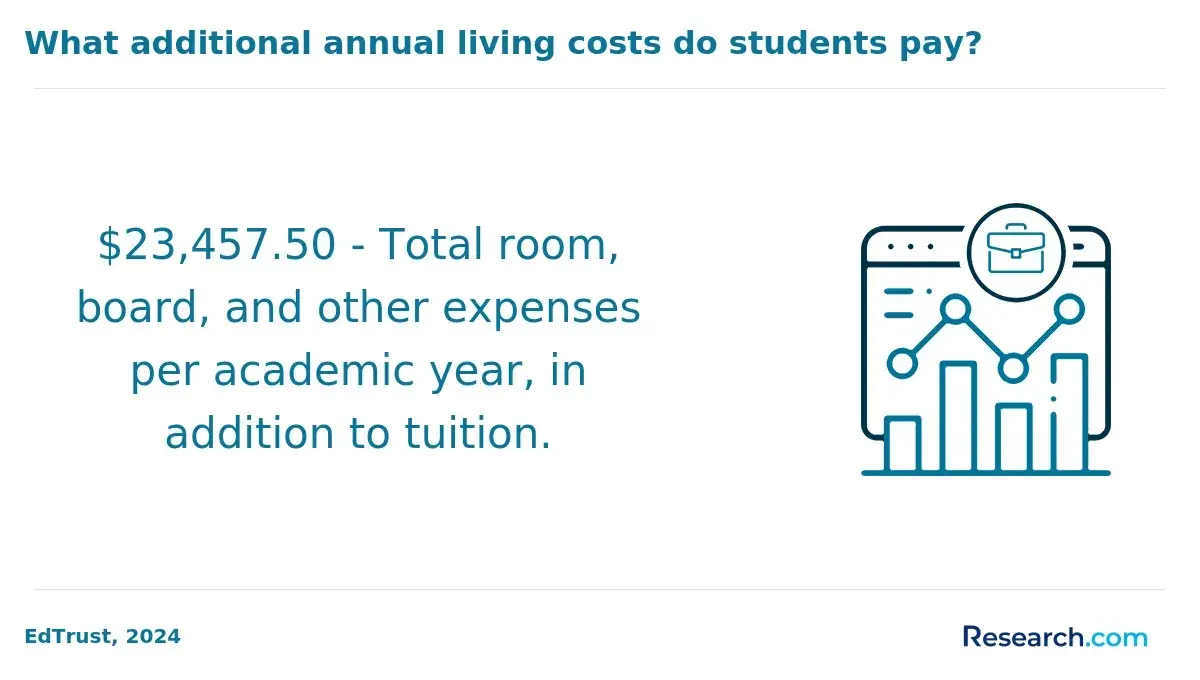
Cost depends on tuition rate, residency, transfer credits, technology fees, lab fees, textbooks, software, travel for labs, and whether the student can keep working while enrolled. College Board's 2024-25 national figures show average published tuition and fees of $11,610 for in-state students at public four-year institutions, $30,780 for out-of-state public students, and $43,350 for private nonprofit institutions. These are broad benchmarks, not program quotes, but they show why residency classification and total credits remaining can be more important than sticker price alone.
Online students should budget for the following cost categories because engineering programs can include expenses beyond standard tuition.
- Tuition charged per credit, per term, or under a flat-rate model.
- Online learning fees, engineering course fees, or distance education fees.
- Lab kits, approved lab materials, safety equipment, or travel for required campus sessions.
- Computer hardware capable of running engineering software such as CAD or simulation tools.
- Textbooks, digital access codes, exam proctoring, and software licenses not covered by the institution.
- Opportunity cost, especially if course intensity requires reducing work hours.
Students comparing STEM degrees should use the same total-cost lens across majors. For example, the cost of computer science degree options may look different because computer science usually has fewer physical lab requirements, while mechanical engineering may involve lab kits, equipment, or short residencies.
To reduce cost, prioritize regionally available public options, maximize community college transfer credits before upper-division engineering courses, submit the FAFSA, ask about employer tuition assistance, and confirm whether military, veteran, or adult learner benefits apply. Avoid choosing purely on lowest tuition if the program lacks accreditation clarity, core course availability, or adequate academic support.
What career paths and job roles can a mechanical engineering bachelor's lead to?
A bachelor's in mechanical engineering is one of the broadest engineering credentials. Graduates may work in product design, energy, aerospace, automotive, manufacturing, robotics, HVAC, defense, medical devices, materials, consulting, and industrial systems. The degree can also support roles that combine mechanical knowledge with project management, quality systems, technical sales, or operations.
The table below connects common job roles with the kind of work graduates may perform. Job titles vary by employer, and some roles require industry experience, security clearance, licensure, or graduate study.
| Career path | Typical responsibilities | Skills that matter |
| Mechanical design engineer | Design components, create models, analyze tolerances, test prototypes | CAD, mechanics of materials, machine design, technical documentation |
| Manufacturing engineer | Improve production processes, reduce defects, support tooling and automation | Lean methods, materials, process control, manufacturing systems |
| Thermal or energy engineer | Analyze heat transfer, energy efficiency, HVAC, power, or fluid systems | Thermodynamics, fluid mechanics, heat transfer, simulation |
| Robotics or mechatronics engineer | Integrate mechanical systems with sensors, controls, and automation | Controls, programming basics, electromechanical systems, testing |
| Quality or reliability engineer | Evaluate failures, improve product reliability, manage quality standards | Statistics, root-cause analysis, materials, regulatory awareness |
| Project engineer | Coordinate technical tasks, budgets, schedules, vendors, and cross-functional teams | Communication, systems thinking, design review, project coordination |
AI and automation are changing how mechanical engineers work, but they are not eliminating the need for engineering judgment. Employers increasingly value graduates who can use simulation, interpret data, automate repetitive analysis, and communicate design trade-offs. A student who builds a portfolio of CAD models, analysis reports, lab results, and capstone documentation can often present stronger evidence than a transcript alone.
Mechanical engineering can also intersect with less obvious sectors such as agriculture, biomedical devices, environmental systems, and animal facilities that use ventilation, processing, robotics, and equipment design. If you are comparing engineering with other applied science paths, reviewing options such as animal science degrees online can help clarify whether you prefer designing systems or working primarily with biological production and animal care.
What salary ranges and job outlook can mechanical engineering graduates expect?
Salary depends on role, region, industry, experience, clearance requirements, licensure, and technical specialization. According to BLS wage data, the median annual wage for mechanical engineers was $102,320 in May 2024. Readers should treat that as a national midpoint for the occupation, not a guaranteed starting salary for every graduate.
Entry-level roles may pay less than the median, especially in lower-cost regions or generalist positions. Specialized sectors such as aerospace, energy, semiconductor manufacturing, defense, automation, and advanced manufacturing may offer higher compensation when candidates bring relevant internships, software skills, or domain knowledge. Location also matters because engineering wages often reflect local employer concentration and cost of living.
The job outlook is favorable relative to many occupations. BLS projects 9% employment growth for mechanical engineers from 2024 to 2034, which suggests continued demand tied to manufacturing modernization, automation, energy systems, transportation, and product development. This projection is useful for understanding market direction, but it does not remove competition for desirable roles or internships.
Students can improve their employment prospects by building evidence before graduation. Focus on practical accomplishments that employers can evaluate.
- Complete internships, co-ops, research projects, or employer-sponsored capstones whenever possible.
- Build a portfolio with CAD models, design calculations, test results, prototypes, and clear technical explanations.
- Learn tools commonly listed in job postings, such as SolidWorks, AutoCAD, MATLAB, Python, ANSYS, or similar platforms.
- Consider the Fundamentals of Engineering exam if professional licensure may support your long-term goals.
- Join engineering societies, student project teams, or local professional groups to expand your network.
The main salary mistake is comparing degree programs only by median pay for the occupation. A better ROI estimate includes your total cost, time to finish, debt, ability to work while studying, internship access, and whether the curriculum matches the industries hiring in your region.
How can working adults evaluate student support, flexibility, and fit in online programs?
Working adults should evaluate online mechanical engineering programs differently from traditional first-year campus students. Flexibility matters, but so does predictability. A program that allows asynchronous lectures but requires daytime labs, limited course rotations, or inflexible group meetings may be difficult for someone with full-time work or caregiving responsibilities.
Start by mapping your weekly capacity honestly. Engineering courses are time-intensive, and math-heavy classes can require steady practice rather than weekend cramming. If you can only study part time, ask whether the school publishes a realistic part-time plan that preserves prerequisite sequencing.
Use these questions when comparing programs. They focus on fit, not marketing claims.
- Are lectures asynchronous, synchronous, or mixed, and are required live sessions offered outside standard work hours?
- How are labs completed, and what travel, equipment, or scheduling obligations should I expect?
- Will I have an engineering faculty advisor, a professional academic advisor, or both?
- How quickly do instructors and tutors respond when online students need help in technical courses?
- Can I pause or reduce course load without losing my place in a sequence?
- Are internships, co-ops, or project experiences realistic for online students who work full time?
- What is the school's process for disability accommodations, military deployment interruptions, or employer tuition paperwork?
Watch for red flags. Be cautious if a program cannot clearly explain accreditation, avoids details about labs, promises unusually fast completion for students without prerequisites, provides only enrollment-focused advising, or will not put transfer evaluations in writing. Also be careful with programs that advertise low tuition but have limited upper-division engineering courses online.
The best fit is usually the program that balances four things: credible accreditation, manageable schedule, strong technical support, and a total cost you can justify. Rankings can help you build an initial list, but your final choice should come from verified program details and your own constraints.
Other Things You Should Know About Mechanical Engineering
It is math-heavy, but adult learners can succeed if they refresh algebra, trigonometry, and precalculus before starting calculus. The risk is not age; it is entering the sequence without enough preparation or time for weekly practice.
Usually yes. Many programs use CAD, simulation, coding, or data analysis tools that require more computing power than a basic laptop. Ask the department for current hardware specifications before buying equipment.
Some students do, especially on a part-time plan. Full-time work plus full-time engineering study is difficult because labs, problem sets, projects, and exams require consistent time. A slower plan may be more realistic and less risky.
The 2027 online Bachelor's in Mechanical Engineering programs known for strong student support include those at Arizona State University and Penn State World Campus. They offer flexible scheduling, comprehensive academic advising, accessible tutoring services, and career counseling to aid student success.
References
- 2025 Best Online Mechanical Engineering Degrees https://www.onlineu.com/degrees/mechanical-engineering
- Campus vs Online Engineering Degrees - What Employers Think https://www.itcareerfinder.com/brain-food/blog/entry/what-employers-think-about-online-engineering-degrees.html
- Online Mechanical Engineering Degrees 2025 https://www.affordablecollegesonline.org/degrees/engineering-programs/mechanical-engineering/
- The Voice of the Online Student Framework – Recommendations for Student Support - OJDLA https://ojdla.com/articles/the-voice-of-the-online-student-framework-recommendations-for-student-support
- Is Your Online Degree Legitimate? How to Verify Private University Approval https://matchtocollege.com/blog/verify-private-university-online-degree-approval
- Find Programs - ABET https://www.abet.org/accreditation/find-programs/