2027 Online Mechanical Engineering Degrees for Students Who Want Manufacturing Systems Careers

Co-Founder and Chief Data Scientist
Choosing an online mechanical engineering degree is a high-stakes decision if your goal is to work in advanced manufacturing, automation, production systems, or robotics-enabled plants. The field is expanding, the U.S. Bureau of Labor Statistics projects mechanical engineer employment to grow 11% from 2023 to 2033, faster than average.
This guide is for students comparing online programs, career changers with technical backgrounds, and working adults who need flexibility. You will learn how these degrees work, what they cost, which credentials matter, and how to choose a program that fits manufacturing systems careers.
Key Things You Should Know
- For manufacturing systems careers, prioritize ABET-accredited mechanical engineering programs or clearly accredited graduate programs with coursework in automation, manufacturing processes, systems engineering, quality, CAD/CAM, robotics, and data-driven production.
- BLS data shows mechanical engineers had a median annual wage of $102,320 in May 2024, but manufacturing-focused pay varies by role, industry, region, experience, and whether the job is engineering, operations, quality, or management oriented.
- Online formats can work well for working adults, but students should verify lab delivery, proctored exams, transfer credit limits, internship or capstone expectations, total tuition, and whether the program supports FE exam preparation or employer tuition assistance.
What is an online mechanical engineering degree focused on manufacturing systems?
An online mechanical engineering degree focused on manufacturing systems teaches students how products are designed, made, tested, improved, and scaled in industrial environments. It combines the core mechanical engineering foundation-statics, dynamics, thermodynamics, fluids, materials, machine design, and controls-with manufacturing-specific topics such as production planning, automation, quality engineering, robotics, CAD/CAM, lean systems, and process optimization.
This path is different from a general mechanical engineering degree only in emphasis. A general program may prepare students for broad roles in energy, aerospace, automotive, HVAC, product design, or consulting. A manufacturing systems-focused path uses that same engineering base but applies it to factories, production lines, supply chains, smart manufacturing, and industrial equipment.
Students who search for an online degree in mechanical engineering should pay close attention to whether the program is a bachelor's completion option, a full bachelor's degree, a master's degree, or a professional engineering management-style program. These options can lead to different outcomes.
The degree usually fits students who want to work with physical systems rather than only software or business operations. It can be especially useful for people who enjoy solving practical problems such as reducing scrap rates, improving production speed, selecting materials, designing fixtures, troubleshooting machines, or integrating sensors and controls into manufacturing workflows.
At the bachelor's level, the degree is typically the entry credential for mechanical engineering roles. At the master's level, it may help engineers move into advanced manufacturing, automation, technical leadership, research and development, or systems integration roles. A graduate certificate can be useful for targeted upskilling, but it usually does not replace an engineering degree for positions that require a mechanical engineering background.
| Program type | Best fit | Manufacturing systems value | Important limitation |
| Bachelor's in mechanical engineering | Students seeking entry-level engineering roles | Builds the core engineering foundation employers commonly expect | Online availability is more limited because of lab requirements |
| Bachelor's completion program | Transfer students with prior math, science, and engineering credits | Can shorten the path if prerequisites are already complete | May require many accepted transfer credits before admission |
| Master's in mechanical engineering or manufacturing engineering | Engineers seeking specialization or advancement | Can deepen skills in automation, controls, design, modeling, or production systems | Usually requires an engineering or closely related STEM background |
| Graduate certificate | Working professionals needing focused skills | Useful for robotics, quality, additive manufacturing, or systems topics | May not qualify candidates for engineering roles requiring a degree |
How do online mechanical engineering programs compare to campus options for manufacturing careers?
Online and campus mechanical engineering programs can cover the same academic content, but the student experience differs. For manufacturing careers, the biggest differences are lab access, equipment exposure, networking, scheduling, and the way projects are completed.
Online programs work best when they are designed intentionally for engineering students rather than simply recording campus lectures. Strong programs use remote labs, simulation software, mailed lab kits, virtual collaboration tools, local proctoring, industry-based projects, and occasional campus visits when hands-on work is unavoidable.
The table below summarizes the main decision points. Use it to decide whether online study fits your current life, learning style, and career goals.
| Factor | Online mechanical engineering | Campus mechanical engineering | Best choice when... |
| Schedule | Often more flexible for working adults | More structured weekly schedule | Online fits students balancing work or family; campus fits students who want fixed routines |
| Labs | May use remote labs, simulations, kits, or short residencies | Usually offers direct access to campus equipment | Campus may be better for students who want frequent hands-on lab time |
| Manufacturing equipment exposure | Depends heavily on program design and local employer access | May include machine shops, robotics labs, or makerspaces | Online can work well if the student is already employed in a technical environment |
| Networking | Requires more initiative through virtual events and employer projects | Easier access to clubs, labs, faculty, and peers | Campus can be stronger for traditional students seeking internships |
| Cost control | May reduce relocation and commuting costs | May provide more campus resources included in fees | Online can be more economical if tuition is comparable and the student keeps working |
Online study is often a good fit for technicians, military students, manufacturing employees, and transfer students who already have some exposure to industrial systems. It may be less ideal for students who need extensive in-person academic support, want a traditional campus engineering experience, or have no access to any hands-on technical environment.
A common mistake is assuming "online" automatically means easier. Mechanical engineering remains math-heavy and project-intensive regardless of delivery mode. Students should expect calculus, physics, mechanics, thermodynamics, design work, and time-consuming problem sets.
Which accredited schools offer online mechanical engineering degrees in manufacturing systems?
Accredited online mechanical engineering options exist, but students should understand that fully online ABET-accredited bachelor's programs are less common than online graduate engineering programs. Manufacturing systems may appear as a concentration, a set of electives, a graduate certificate, a systems engineering track, or a manufacturing engineering degree rather than a program titled exactly "online mechanical engineering manufacturing systems."
When comparing schools, start with accreditation rather than marketing language. Institutional accreditation confirms that the college or university meets broad academic standards. Programmatic accreditation, especially ABET accreditation for engineering bachelor's programs, is often important for engineering credibility, employer recognition, and future licensure pathways.
The following examples show the types of U.S. schools and program structures students commonly encounter. Always confirm current accreditation status, modality, tuition, and curriculum directly with the school before applying.
| School or program type | Typical online option | Manufacturing systems relevance | What to verify |
| Public research university | Online master's in mechanical engineering, systems engineering, or industrial engineering | Often offers electives in controls, robotics, materials, optimization, and advanced manufacturing | Whether manufacturing electives are available online every year |
| Engineering-focused university | Online bachelor's completion or graduate engineering program | May include applied design, production, CAD/CAM, automation, or quality topics | Transfer credit rules and required in-person labs |
| State university with distance engineering | Online mechanical engineering bachelor's or master's pathway | Can be practical for in-state students and working adults | ABET status for the exact bachelor's program, not just the campus program |
| Manufacturing or industrial engineering program | Online manufacturing engineering, industrial engineering, or engineering management degree | May align closely with production systems, lean operations, and process improvement | Whether the degree qualifies for the specific engineering roles the student wants |
Students should not rely only on rankings or name recognition. A well-known university may still have limited online manufacturing electives, while a less famous public institution may offer a stronger fit for working manufacturing professionals.
Before shortlisting a school, ask whether the program includes a capstone tied to manufacturing, whether students can use workplace projects, whether software licenses are included, and whether faculty have experience in manufacturing, automation, robotics, materials, or industrial systems.
What courses and concentrations are included in a manufacturing-focused mechanical engineering curriculum?
A manufacturing-focused mechanical engineering curriculum has two layers: the engineering core and the manufacturing systems specialization. The core builds the analytical foundation, while the specialization shows students how to apply that foundation to production environments.
At the undergraduate level, students usually move from math and science prerequisites into engineering science and then into design and manufacturing applications. At the graduate level, students often choose advanced electives based on career goals, such as automation, materials processing, computational modeling, or quality systems.
These are the course areas most likely to matter for manufacturing systems careers:
- Engineering fundamentals: calculus, differential equations, physics, statics, dynamics, mechanics of materials, thermodynamics, fluid mechanics, heat transfer, and electrical systems for mechanical engineers.
- Design and modeling: computer-aided design, geometric dimensioning and tolerancing, machine design, finite element analysis, product development, and design for manufacturability.
- Manufacturing processes: machining, casting, forming, welding, polymer processing, additive manufacturing, materials selection, process planning, and production tooling.
- Automation and controls: sensors, actuators, feedback control, robotics, mechatronics, programmable logic controllers, industrial automation, and machine vision fundamentals.
- Systems and operations: production systems, facility layout, lean manufacturing, quality engineering, reliability, supply chain coordination, safety, and process optimization.
- Data and digital manufacturing: simulation, digital twins, statistical process control, industrial internet of things, manufacturing analytics, and AI-assisted process monitoring.
Manufacturing systems is increasingly data-connected. That does not mean mechanical engineers must become software engineers, but it does mean they benefit from understanding programming basics, sensor data, automation logic, and analytics. Students who discover they prefer software-heavy work may also compare a computer science online degree with mechanical engineering before committing to a path.
For students aiming at advanced manufacturing roles, electives matter. A transcript with robotics, controls, manufacturing processes, and quality engineering sends a clearer signal to employers than a broad program with no production-oriented coursework.
What admission requirements and prerequisites do online mechanical engineering programs have?
Admission requirements depend on the degree level. Mechanical engineering is sequential, so schools usually care about whether applicants are ready for calculus-based engineering coursework. This is especially important for online students because weak prerequisites can make an already demanding program much harder.
For bachelor's programs, applicants typically need a high school diploma or equivalent, transcripts, college-level readiness in math and science, and sometimes prior college credits if the program is a degree-completion pathway. Transfer students may need completed calculus, physics, chemistry, and introductory engineering courses before they can enter upper-division mechanical engineering classes.
For master's programs, applicants commonly need a bachelor's degree in mechanical engineering or a closely related engineering field. Students from physics, mathematics, engineering technology, or other STEM backgrounds may be admitted conditionally, but they might need bridge courses in mechanics, thermodynamics, or design.
Before applying, students should prepare the materials and checks that engineering admissions teams commonly review:
- Confirm the exact math prerequisites, including calculus sequence, differential equations, and calculus-based physics.
- Ask whether transfer credits must come from regionally accredited institutions and whether engineering courses have age limits.
- Check whether the online program requires campus visits, lab intensives, proctored exams, or synchronous class meetings.
- Review software and hardware requirements, including CAD tools, simulation packages, webcam proctoring, and computing power.
- For graduate programs, prepare a resume that highlights engineering, manufacturing, technical, military, or project experience.
- Ask whether the program accepts students without an engineering bachelor's degree and what bridge coursework is required.
A major red flag is a program that makes engineering sound quick and effortless. Mechanical engineering requires a serious time commitment, and reputable programs are usually transparent about prerequisite chains, lab expectations, and workload.
How long do online mechanical engineering degrees take and what do they cost?
Program length depends on the credential and how many credits a student already has. A full bachelor's degree usually takes about four years of full-time study, while a transfer-friendly completion pathway may take two to three years after prerequisites. A master's degree commonly takes one and a half to three years, depending on course load and whether the student chooses a thesis, project, or coursework-only option.
Cost varies widely by institution, residency, transfer credit, and fees. For national context, the College Board reported average published tuition and fees of $11,610 for in-state students at public four-year institutions in 2024-25. That figure is not specific to engineering or online programs, but it helps students understand why residency status and public university options can heavily affect total cost.
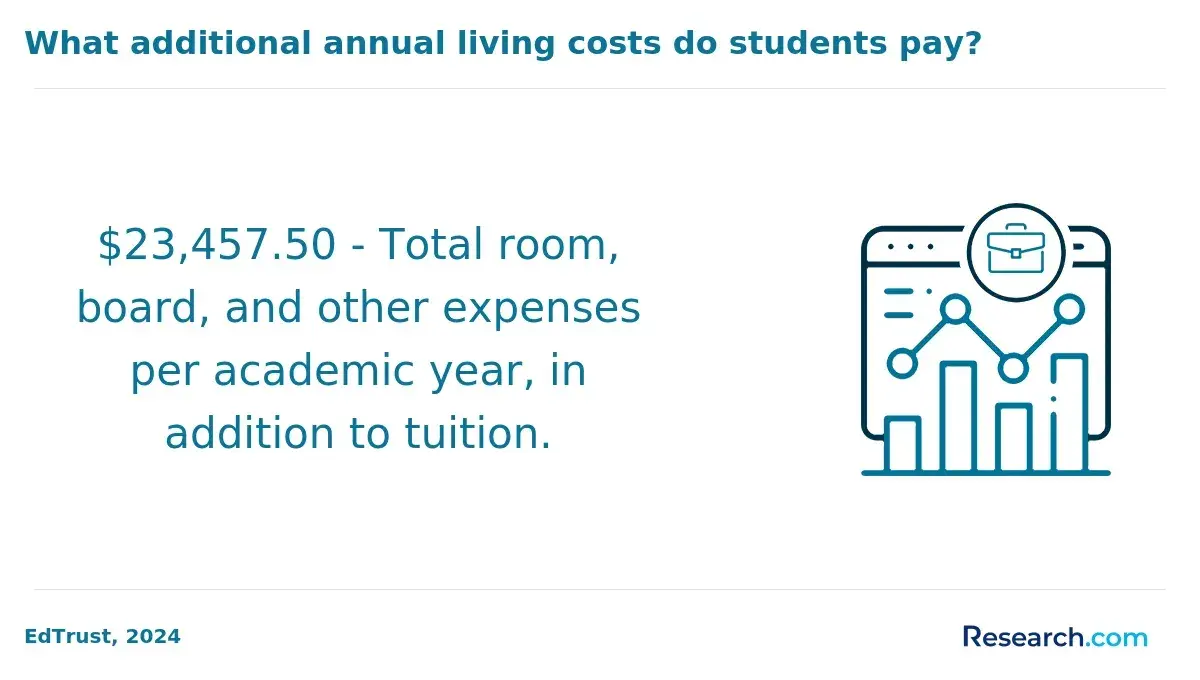
Students comparing affordability should list all direct and indirect costs, not just tuition. Online learners may save on housing or commuting, but they can still face technology fees, lab kits, software costs, proctoring fees, and required visits.
- Tuition: per-credit pricing, flat-rate tuition, in-state versus out-of-state rates, and whether online students pay a separate e-campus rate.
- Fees: engineering course fees, online learning fees, proctoring charges, graduation fees, lab kit fees, and student services fees.
- Materials and technology: textbooks, CAD software, simulation tools, calculator, computer upgrades, webcam, and stable high-speed internet.
- Residency or lab travel: transportation, lodging, and missed work if the program requires short campus sessions.
- Opportunity cost: reduced work hours, delayed advancement, or time spent away from overtime and shift premiums.
The table below gives a practical cost-and-time comparison by credential type. It is meant for planning, not as a price quote from any individual school.
| Credential | Typical time to complete | Cost drivers | Best fit |
| Bachelor's degree | About four years full time | Residency status, engineering fees, lab requirements, transfer credits | Students seeking entry-level engineering roles |
| Bachelor's completion pathway | About two to three years after prerequisites | Accepted transfer credits, upper-division tuition, required labs | Students with prior college coursework or associate degrees |
| Master's degree | About one and a half to three years | Graduate tuition, employer reimbursement, thesis or project requirements | Engineers seeking specialization or promotion |
| Graduate certificate | Often less than one year to about one year | Number of credits, whether courses can later transfer into a master's | Professionals needing targeted skills without a full degree |
To reduce cost, students should compare public online options, ask about transfer credit, check employer tuition assistance, complete prerequisites at accredited community colleges when allowed, and avoid taking courses that will not count toward the degree. The cheapest program is not always the best value if it lacks accreditation, has limited engineering support, or does not offer manufacturing-relevant electives.
What manufacturing systems careers can you pursue with this mechanical engineering degree?
A manufacturing-focused mechanical engineering degree can lead to roles that connect design, production, automation, quality, and operations. The best fit depends on whether the student prefers hands-on equipment work, analytical modeling, process improvement, product development, or leadership.
Many graduates begin in entry-level engineering roles and then specialize after gaining plant, product, or process experience. Students already working as technicians may use the degree to move from maintenance, machining, quality inspection, or production support into engineering roles, although employer policies vary.
The following table outlines common manufacturing systems career paths and how they differ. Use it to match your interests with the type of work each role usually involves.
| Career path | Typical responsibilities | Strong fit for students who like... | Common advancement route |
| Manufacturing engineer | Improves production processes, tooling, layouts, and work instructions | Solving practical plant-floor problems | Senior manufacturing engineer or engineering manager |
| Mechanical design engineer | Designs components, assemblies, fixtures, and equipment | CAD, analysis, product design, and prototyping | Lead design engineer or product development manager |
| Automation or controls engineer | Integrates sensors, controls, robotics, and automated equipment | Mechatronics, programming logic, and troubleshooting | Automation lead or systems integration manager |
| Quality engineer | Analyzes defects, validates processes, manages root-cause investigations, and improves reliability | Data, standards, testing, and continuous improvement | Quality manager or reliability engineering lead |
| Process engineer | Optimizes production methods, cycle times, yields, materials, and equipment performance | Experimentation, measurement, and efficiency improvement | Senior process engineer or operations leader |
| Industrial or systems engineer | Improves workflow, capacity, ergonomics, cost, and production systems | Operations analysis and system-level optimization | Operations excellence or supply chain leadership |
Manufacturing systems careers can also intersect with sustainability, energy efficiency, materials recovery, and environmental compliance. Students who are more interested in environmental policy, ecology, or conservation than machines and production systems may want to compare this path with what jobs can you get with an environmental science degree.
Students should also consider industry fit. Automotive, aerospace, medical devices, electronics, energy equipment, food processing, defense, and industrial machinery can all use manufacturing systems skills, but each industry has different standards, documentation requirements, safety expectations, and hiring preferences.
What are typical salaries for mechanical engineers working in manufacturing systems roles?
Salary depends on job title, industry, location, experience, degree level, and whether the role involves engineering design, plant operations, automation, or management. The most useful way to think about pay is to compare related occupational categories rather than assume one degree leads to one fixed salary.
The U.S. Bureau of Labor Statistics reported a median annual wage of $102,320 for mechanical engineers in May 2024. This is a national median across industries, not a guarantee for new graduates or for every manufacturing role. Entry-level roles may pay less, while experienced engineers in high-cost regions, regulated industries, automation, or leadership positions may have higher compensation.
The table below compares role categories that often overlap with manufacturing systems work. It helps students understand where mechanical engineering fits in the broader production and operations labor market.
| Role category | How it connects to manufacturing systems | Salary interpretation |
| Mechanical engineer | Designs, analyzes, tests, and improves mechanical products, equipment, and systems | Useful benchmark for degree-aligned engineering roles |
| Industrial engineer | Improves workflows, production systems, capacity, costs, and efficiency | Relevant when the job focuses more on systems optimization than machine design |
| Quality engineer | Uses testing, statistics, documentation, and root-cause analysis to improve products and processes | Pay may vary by industry and certification expectations |
| Automation or controls engineer | Works with robotics, controls, sensors, equipment integration, and troubleshooting | Compensation can depend strongly on programming, controls, and commissioning experience |
| Engineering manager | Leads engineering teams, budgets, projects, and technical strategy | Usually requires several years of engineering experience beyond the degree |
Students evaluating return on investment should compare expected debt to likely early-career earnings, not only midcareer salaries. A student using employer tuition assistance while continuing to work may have a very different ROI than a student borrowing heavily for a private program.
It is also wise to look at regional manufacturing clusters. Areas with aerospace, automotive, semiconductor, medical device, defense, or advanced materials employers may offer more relevant opportunities, but they may also have higher living costs and stronger competition.
What is the job outlook and industry demand for manufacturing systems engineers?
Demand for manufacturing systems engineers is shaped by automation, reshoring, supply chain resilience, electrification, robotics, additive manufacturing, and the need to modernize aging production systems. Employers increasingly want engineers who can connect mechanical design with data, controls, quality, and operations.
BLS projects mechanical engineer employment to grow 11% from 2023 to 2033. For students, the practical takeaway is that mechanical engineering remains a broad and resilient field, but the strongest opportunities may go to candidates who combine core engineering ability with modern manufacturing tools such as simulation, robotics, sensors, and process analytics.
Several trends are especially important for students choosing courses and projects:
- Smart manufacturing: factories are using more connected machines, sensors, dashboards, and predictive maintenance tools, which increases the value of engineers who understand both equipment and data.
- Automation and robotics: repetitive and high-precision production tasks increasingly rely on robots, machine vision, and programmable systems, making controls and mechatronics coursework more valuable.
- Additive manufacturing: 3D printing is moving beyond prototyping in some industries, so materials knowledge and design for additive manufacturing can strengthen a student's profile.
- Supply chain redesign: manufacturers are looking for more resilient production networks, which creates demand for engineers who can improve capacity, flexibility, and process reliability.
- Quality and compliance: industries such as aerospace, medical devices, and automotive need engineers who can document processes, validate designs, and manage risk.
AI is changing the work, but it is not eliminating the need for mechanical judgment. AI tools can assist with design exploration, defect detection, scheduling, predictive maintenance, and documentation. Engineers still need to understand physical constraints, safety, materials, tolerances, manufacturing feasibility, and ethical responsibility.
Students who want to stay competitive should build a portfolio of applied projects. Examples include a CAD fixture design, a simulated production line, a process improvement case study, a robotics integration concept, a quality control analysis, or a capstone tied to a real manufacturing problem.
How can students evaluate and choose a reputable online mechanical engineering program?
The best online mechanical engineering program is not always the cheapest, fastest, or most famous. It is the program that matches your career goal, academic background, budget, schedule, and need for hands-on engineering preparation.
Start by defining the outcome you want. A student seeking a first engineering job should prioritize ABET accreditation and strong undergraduate fundamentals. A working engineer seeking promotion may prioritize graduate electives, faculty expertise, employer reimbursement, and flexible pacing. A technician moving into engineering should focus on transfer credits, prerequisite support, and applied projects.
Use the following steps before enrolling:
- Verify institutional accreditation through recognized accrediting bodies and confirm whether the exact engineering program has ABET accreditation when that matters for your goal.
- Map the curriculum against your target roles, looking specifically for manufacturing processes, controls, robotics, CAD/CAM, quality, materials, and capstone work.
- Ask how labs are delivered, including whether students use remote labs, simulations, mailed kits, local facilities, or required campus visits.
- Calculate total cost, including fees, software, lab kits, travel, books, transfer credit losses, and any reduction in work hours.
- Request information about career support, employer partnerships, internship options, alumni outcomes, and manufacturing-related projects.
- Check course frequency so you know whether required electives are offered often enough to graduate on your intended timeline.
- Ask whether credits from certificates or prior graduate courses can stack into a degree if you may continue later.
- Speak with admissions, an engineering advisor, and ideally a current student or graduate before committing.
Red flags include vague accreditation claims, unclear lab requirements, no published curriculum, limited access to engineering faculty, aggressive enrollment pressure, unusually short timelines for a rigorous engineering degree, and poor transparency about total costs.
Some students discover that mechanical engineering is not the best fit after comparing goals. If you are more interested in biological production systems, livestock technology, or agricultural operations than mechanical design and manufacturing equipment, an online bachelors in animal science may be a more relevant applied science route.
Finally, do not choose a program based only on convenience. Online flexibility is valuable, but engineering credibility depends on curriculum quality, accreditation, faculty expertise, technical rigor, and whether the program gives you evidence of real skills you can show employers.
Other Things You Should Know About Mechanical Engineering
Online mechanical engineering programs in 2027 offer flexible schedules and diverse resources. While some students find the lack of face-to-face interaction challenging, others appreciate the convenience and self-paced learning. Success largely depends on personal learning preferences and time-management skills.
It is possible, especially in part-time programs, but the workload can be heavy. Students working full time should ask advisors about recommended course loads and avoid stacking multiple difficult technical courses in the same term.
Useful skills include CAD, basic programming, data analysis, technical writing, teamwork, project documentation, safety awareness, and hands-on troubleshooting. A small portfolio of class projects, work projects, or capstone examples can help students explain their abilities to employers.
References
- System Engineer Job Growth in 2024 https://mrinetwork.com/hiring-talent-strategy/system-engineer-job-growth-in-2024/
- Online Mechanical Engineering Degrees 2025 https://www.affordablecollegesonline.org/degrees/engineering-programs/mechanical-engineering/
- Program: Mechanical Engineering, B.S.M.E. (Manufacturing Concentration) - University of Hartford https://catalog.hartford.edu/preview_program.php
- 2025 Best Online Mechanical Engineering Degrees https://www.onlineu.com/degrees/mechanical-engineering
- Occupation Profile for Manufacturing Engineers | CareerOneStop https://www.careeronestop.org/Toolkit/Careers/Occupations/occupation-profile.aspx