2027 Online Mechanical Engineering Degrees for Students Who Want Product Development Careers

Co-Founder and Chief Data Scientist
Choosing an online mechanical engineering degree is really a question about career fit, accreditation, labs, and return on investment. Product development roles now demand CAD, simulation, prototyping, materials knowledge, and cross-functional teamwork, while the U. S. Bureau of Labor Statistics projects mechanical engineer employment to grow 11% from 2023 to 2033. This guide is for students comparing online options and career changers who want design-focused engineering work. You will learn how programs work, what to verify before enrolling, and how to choose a degree that supports product development goals.
Key Things You Should Know
- For product development careers, the safest online mechanical engineering path is usually an ABET-accredited bachelor's degree or a relevant engineering master's degree built around CAD, design, materials, manufacturing, simulation, and capstone projects.
- Licensure is not required for every product development job, but students who may want Professional Engineer credentials should confirm state board rules before enrolling; ABET accreditation is often central to the FE-to-PE pathway.
- According to May 2024 BLS wage data, mechanical engineers had a median annual wage of $102,320, but product development pay varies by industry, location, degree level, portfolio strength, and experience with tools such as CAD, FEA, PLM, and rapid prototyping.
What are online mechanical engineering degrees for product development careers?
Online mechanical engineering degrees are college programs that teach the math, science, design, and engineering principles used to create mechanical systems and physical products. For product development careers, the strongest programs do more than cover theory; they help students learn how ideas become manufacturable, testable, cost-aware products.
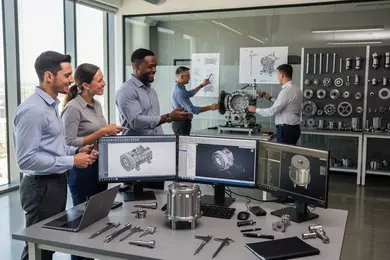
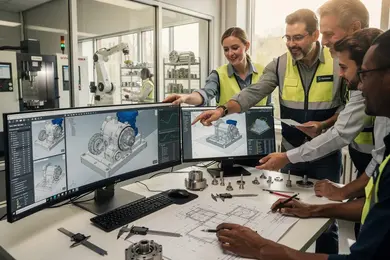
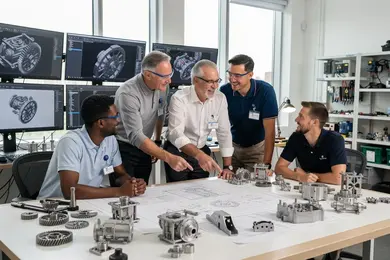
Product development engineers often work on consumer products, medical devices, vehicles, robotics, energy systems, aerospace components, manufacturing equipment, or electromechanical devices. Their work may include concept development, 3D modeling, tolerance analysis, material selection, design reviews, prototype testing, failure analysis, supplier communication, and documentation for manufacturing.
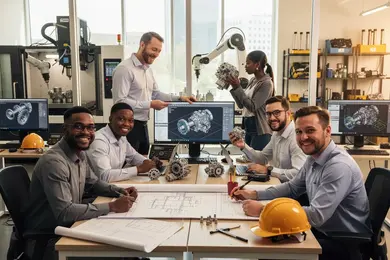
An online format can make engineering education more accessible to working adults, military learners, transfer students, and students who do not live near a campus-based program. However, mechanical engineering is lab- and design-intensive, so the best online programs are not "self-study only." They typically combine live or recorded lectures, remote software access, local or mailed lab kits, simulation tools, campus residencies, team projects, and faculty-supervised design work.
If you are comparing a broad engineering online degree with a mechanical engineering program, pay close attention to specialization. Product development is usually better supported by mechanical engineering, manufacturing engineering, mechatronics, or systems-focused engineering than by a general engineering curriculum with limited design depth.
The table below compares common degree options so you can match the credential to your starting point and career goal.
| Option | Best fit | Product development value | Main caution |
| Online bachelor's in mechanical engineering | Students seeking entry-level engineering roles | Provides the core engineering foundation employers expect for design, testing, manufacturing, and analysis roles | ABET accreditation and lab quality matter heavily |
| Online bachelor's in engineering technology | Students who prefer applied, hands-on technical work | Can support manufacturing, CAD, testing, quality, or application engineering roles | May not satisfy all engineering licensure or design-engineer job requirements |
| Online master's in mechanical engineering | Engineers or related STEM graduates seeking advancement | Can deepen expertise in design optimization, thermal systems, robotics, materials, or simulation | Often assumes prior engineering coursework |
| Online certificate in CAD, manufacturing, or product design | Students adding targeted skills to an existing degree | Useful for portfolio-building and software readiness | Usually not a substitute for an engineering degree when jobs require one |
A mechanical engineering degree is most worthwhile when your goal involves engineering responsibility for physical products: calculations, design decisions, testing, safety, manufacturability, and technical trade-offs. It may be less suitable if you primarily want industrial design, UX design, coding-only work, or business product management without engineering analysis.
Are online mechanical engineering degrees ABET-accredited?
Some online mechanical engineering degrees are ABET-accredited, but not all are. ABET accreditation is a program-level review, meaning the accreditation applies to a specific degree program, not automatically to every engineering program at a university. A school may be regionally accredited and still offer an online engineering program that is not ABET-accredited.
For bachelor's-level mechanical engineering, ABET accreditation is one of the most important quality checks. It signals that the curriculum, faculty qualifications, student outcomes, assessment practices, and continuous improvement processes have been reviewed against recognized engineering education standards. For students who want product development roles, it can also reassure employers that the program covers core mechanical engineering fundamentals rather than only software training or design tools.
ABET is especially important if you may pursue engineering licensure later. Many state boards use ABET-accredited engineering degrees as the clearest educational pathway for the Fundamentals of Engineering exam, engineering experience requirements, and eventual Professional Engineer licensure. Requirements vary, so you should verify with your target state board rather than relying only on admissions materials.
Master's programs are different. Many engineering master's degrees are not ABET-accredited because ABET accreditation is more common and more consequential at the undergraduate engineering level. A non-ABET master's degree from a reputable university may still be valuable for career advancement, especially if your undergraduate degree already satisfies licensure or employer requirements.
Before enrolling, check accreditation in a step-by-step way rather than assuming the word "engineering" is enough:
- Confirm institutional accreditation through an agency recognized by the U.S. Department of Education or the Council for Higher Education Accreditation.
- Search ABET's public database for the exact program name, degree level, campus or delivery format, and accreditation dates.
- Ask whether online students receive the same ABET-accredited curriculum as campus students, including labs and capstone requirements.
- Save written confirmation from the program if you are planning for licensure, employer tuition assistance, or graduate school transfer.
A common mistake is confusing "ABET-aligned," "designed around ABET outcomes," or "engineering-based" with actual ABET accreditation. Those phrases may describe curriculum intent, but they are not the same as verified accreditation.

Do online mechanical engineering programs meet licensure requirements?
Online mechanical engineering programs can meet licensure requirements, but the answer depends on the program, the degree level, your prior education, and the state where you plan to become licensed. Licensure is regulated by state engineering boards, not by universities alone.
Many product development engineers never become licensed because they work in private industry under employer supervision and do not offer engineering services directly to the public. However, licensure can matter in consulting, public infrastructure, certain regulated industries, forensic engineering, government contracting, or roles where you must sign and seal engineering documents.
The typical Professional Engineer pathway includes an engineering degree, the Fundamentals of Engineering exam, qualifying work experience, and the Principles and Practice of Engineering exam. ABET-accredited bachelor's degrees often provide the most direct education route, but states may offer alternative pathways for non-ABET degrees, foreign degrees, graduate degrees, or additional experience. Those alternatives can take longer or involve extra documentation.
If licensure may be part of your long-term plan, use the following checklist before you apply:
- Identify the state where you are most likely to seek licensure, even if you study online from another state.
- Review that state board's education rules for ABET-accredited engineering degrees, engineering technology degrees, and graduate degrees.
- Ask the program whether its graduates are eligible to sit for the FE exam in your target state.
- Confirm whether online labs, transfer credits, and prior military or technical credits affect licensure eligibility.
- Keep syllabi, transcripts, lab descriptions, and project documentation in case a board requests a course-by-course review.
The main trade-off is flexibility versus certainty. A flexible online program may be convenient, but if it lacks ABET accreditation or has unclear state-board acceptance, it can create friction later. If you are unsure whether you will need licensure, choosing the most licensure-compatible degree you can reasonably afford is usually the lower-risk option.
What courses are in an online mechanical engineering curriculum?
An online mechanical engineering curriculum usually starts with math and science, then moves into engineering fundamentals, design methods, analysis tools, and advanced electives. For product development, the most useful programs connect these subjects to real design decisions: what to build, how it behaves, how it fails, how it is manufactured, and how it can be improved.
Students who are still comparing STEM pathways should note that mechanical engineering is more hardware- and physics-focused than fields such as computer science or analytics. A student interested in advanced modeling or AI-heavy research might also explore a data science PhD online, but product development roles usually require direct preparation in mechanics, materials, manufacturing, and design validation.
The table below summarizes common curriculum areas and why they matter for product development work.
| Curriculum area | Common courses | Why it matters for product development |
| Math and science foundation | Calculus, differential equations, physics, chemistry, statistics | Builds the analytical base needed to model motion, heat, stress, reliability, and uncertainty |
| Mechanical engineering core | Statics, dynamics, thermodynamics, fluid mechanics, heat transfer, mechanics of materials | Helps students predict how parts and systems behave under real operating conditions |
| Design and manufacturing | Machine design, CAD, design for manufacturing, manufacturing processes, materials selection | Connects concepts to manufacturable products, cost constraints, tolerances, and production methods |
| Analysis and simulation | Finite element analysis, computational tools, numerical methods, control systems | Supports virtual testing, optimization, troubleshooting, and performance prediction before prototyping |
| Professional practice | Engineering ethics, technical communication, project management, capstone design | Prepares students to work in cross-functional teams and document engineering decisions clearly |
Current product development work is being shaped by AI-assisted design, generative design tools, additive manufacturing, digital twins, and model-based systems engineering. These tools do not eliminate the need for mechanical fundamentals; they make fundamentals more important because engineers still need to judge whether a model, simulation, or AI-generated option is physically sound and manufacturable.
When reviewing a curriculum, look for evidence that students use industry-relevant tools rather than only reading about them. Strong signs include access to CAD software, simulation assignments, design reviews, manufacturing case studies, lab reports, and a capstone project with constraints similar to real product work.
How do online mechanical engineering programs handle labs and design projects?
Mechanical engineering cannot be taught fully through lectures alone. Labs and design projects are where students learn measurement, uncertainty, failure modes, iteration, safety, communication, and the difference between a calculation that works on paper and a product that performs in the real world.
Online programs usually handle labs through a mix of remote, local, and campus-based formats. The right model depends on the course. A circuits or instrumentation lab may use shipped hardware kits; a manufacturing or materials lab may require campus intensives or approved local facilities; a design course may rely on CAD, simulation, prototype videos, and team documentation.
The table below compares common lab delivery models so you can identify the trade-offs before enrolling.
| Lab or project model | How it works | Best use | Trade-off |
| At-home lab kits | Students receive equipment for measurements, controls, electronics, or basic experiments | Introductory labs, instrumentation, data collection | May not replace access to large machines or advanced test equipment |
| Simulation-based labs | Students use software to model stress, heat, motion, fluid flow, or manufacturing constraints | FEA, CFD concepts, design optimization, virtual prototyping | Students still need to understand assumptions and model limitations |
| Campus residencies | Students attend short in-person sessions for intensive labs or design reviews | Materials testing, manufacturing processes, senior design milestones | Requires travel, scheduling flexibility, and added expenses |
| Local proctored labs or partnerships | Students complete approved work through local facilities, employers, or partner institutions | Working students with access to engineering equipment | Approval requirements can be strict and should be confirmed early |
| Team capstone projects | Students collaborate online to design, analyze, build, test, and present a solution | Product development readiness and portfolio evidence | Requires strong communication and project management |
Before choosing a program, ask for concrete examples of recent student projects. A strong product development capstone should show problem definition, requirements, concept generation, engineering analysis, design trade-offs, prototype or validation methods, and final recommendations. A weak project may look more like a research paper than an engineering design experience.
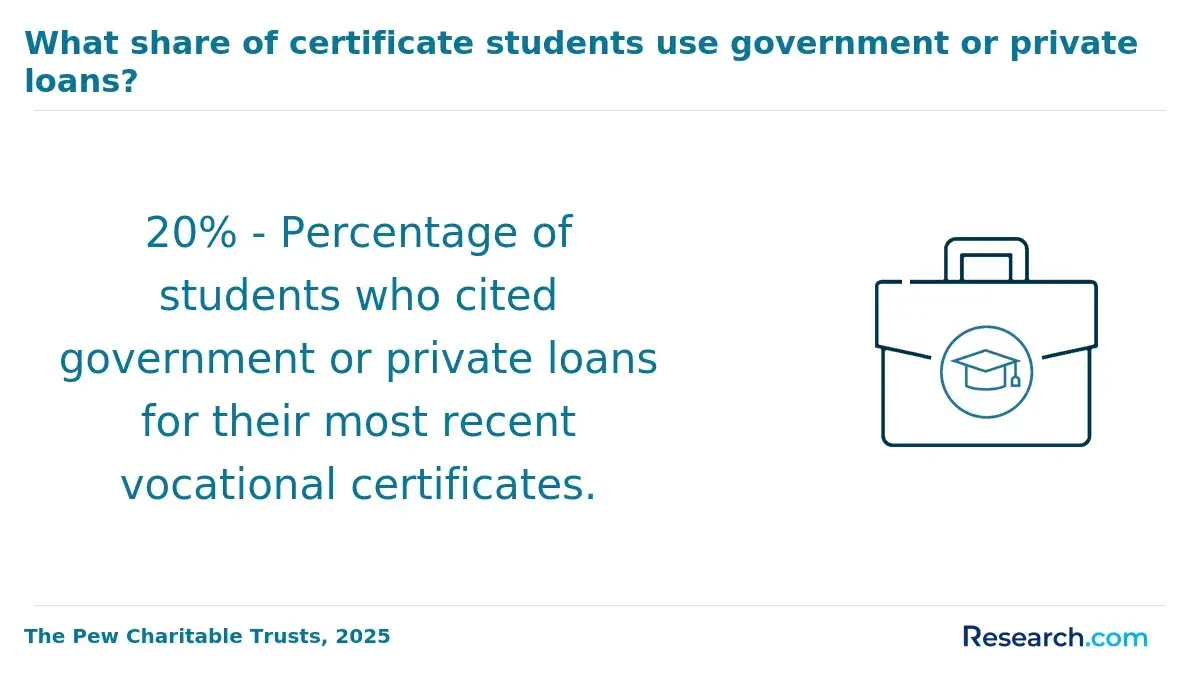
Also budget for lab-related costs. Some online programs charge technology fees, lab kit fees, software fees, travel expenses, or shipping costs that do not appear in the headline tuition rate. The College Board's 2024-25 national averages show that published tuition and fees vary widely by sector, with in-state public four-year pricing far below private nonprofit pricing; for online engineering students, the more useful comparison is total program cost after transfer credits, fees, travel, and employer aid.
What admission requirements do online mechanical engineering programs have?
Admission requirements vary by school and degree level, but online mechanical engineering programs are usually more selective than many general online majors because students must be ready for calculus, physics, and rigorous problem-solving. Some programs admit first-year students directly, while others require applicants to complete lower-division math and science courses before entering the engineering major.
Bachelor's applicants commonly need a high school diploma or equivalent, transcripts, math preparation through precalculus or calculus readiness, lab science coursework, and sometimes placement tests. Transfer applicants may need completed calculus, physics, chemistry, computer programming, or introductory engineering courses with minimum grades. Graduate applicants usually need a bachelor's degree in mechanical engineering or a closely related field; students from other STEM backgrounds may need prerequisites.
STEM admissions expectations differ by field. For example, an online animal science degree may emphasize biology and agricultural science preparation, while mechanical engineering typically requires deeper readiness in calculus-based physics, mechanics, and engineering analysis.
Use this checklist to prepare a stronger application and avoid delays:
- Complete or refresh calculus, physics, and basic programming before applying if your academic record is older or uneven.
- Request a transfer credit evaluation early, especially for community college, military, international, or engineering technology credits.
- Ask whether admission to the university is separate from admission to the mechanical engineering major.
- Confirm minimum grades for prerequisites because engineering programs often require higher grades in math, science, and core engineering courses.
- Prepare a short statement that connects your experience to product development, design, manufacturing, robotics, energy, automotive, aerospace, or another target area.
A common mistake is assuming that online admission means easier coursework. In reputable programs, online students should meet the same learning outcomes as campus students. If a program advertises mechanical engineering without clear math prerequisites, labs, faculty qualifications, or design requirements, treat that as a red flag and ask more questions.
How long does an online mechanical engineering degree take?
An online bachelor's degree in mechanical engineering typically takes about four years of full-time study for first-time students, but transfer credits, course sequencing, prerequisites, and lab availability can change the timeline. Part-time students often need longer because calculus, physics, and engineering courses must be taken in a specific order.
Online master's programs are usually shorter, often designed for working engineers who study part time. However, a master's degree is not a shortcut into engineering if you lack the undergraduate foundation. Students from physics, mathematics, engineering technology, or other STEM backgrounds may need bridge courses before taking graduate mechanical engineering classes.
The table below shows realistic timeline patterns for different types of students.
| Student profile | Typical path | Timeline factor to watch |
| First-time bachelor's student | General education, calculus, science, engineering core, labs, capstone | Course sequencing can make missed prerequisites costly |
| Community college transfer student | Transfers lower-division courses, then completes upper-division engineering work | Not all technical credits apply to engineering requirements |
| Working adult studying part time | Takes fewer courses each term while maintaining employment | Labs, group projects, and prerequisite chains may extend completion time |
| Engineering graduate student | Completes advanced coursework, project, thesis, or exam option | Prerequisites and employer workload can affect pace |
The fastest option is not always the best option. Accelerated programs can work well for students with strong transfer credits and flexible schedules, but mechanical engineering courses are cumulative. Taking statics, dynamics, thermodynamics, materials, and design courses too quickly can weaken understanding and reduce your ability to perform in interviews or capstone projects.
To estimate your real timeline, ask the program for a degree map based on your completed credits, not a generic catalog plan. You should also ask how often upper-division engineering courses are offered, whether labs are available every term, and whether capstone projects start only once or twice per year.
What jobs can you get with a mechanical engineering degree?
A mechanical engineering degree can lead to product development roles as well as broader engineering positions in design, testing, manufacturing, quality, energy, robotics, aerospace, automotive, medical devices, consumer goods, and industrial equipment. The title "product development engineer" is common, but employers may use different names for similar work.
For students focused on product development, the key is to build evidence of design ability. Employers often look for a mix of coursework, CAD proficiency, analysis skills, prototype or lab experience, internship experience, and a portfolio that shows how you solve engineering problems.
The table below connects common job titles to the type of work they usually involve.
| Job title | Typical responsibilities | Helpful preparation |
| Product development engineer | Turns customer or market needs into engineered product concepts, prototypes, tests, and production-ready designs | CAD, materials, DFM, testing, capstone design, technical communication |
| Mechanical design engineer | Creates and improves mechanical parts, assemblies, mechanisms, and drawings | 3D modeling, machine design, tolerancing, FEA, manufacturing processes |
| Test engineer | Plans experiments, validates product performance, analyzes failures, and documents results | Instrumentation, statistics, lab methods, data analysis, reliability concepts |
| Manufacturing engineer | Improves production processes, tooling, fixtures, quality, throughput, and cost | Manufacturing systems, lean methods, materials, automation, process validation |
| Applications engineer | Helps customers apply technical products, evaluates requirements, and supports sales or implementation teams | Mechanical fundamentals, communication, problem-solving, customer-facing experience |
| Robotics or mechatronics engineer | Works on systems combining mechanical components, sensors, controls, and software | Dynamics, controls, programming, electronics, CAD, systems thinking |
Entry-level candidates often start as associate engineers, CAD designers, test engineers, manufacturing engineers, or design engineers. Advancement may lead to senior engineer, lead engineer, project engineer, engineering manager, product manager, systems engineer, or technical specialist roles.
AI and automation are changing the work, but they are not removing the need for engineering judgment. Tools can generate design options, automate simulations, and accelerate documentation, yet engineers still need to define requirements, check assumptions, evaluate safety, understand failure modes, and make trade-offs among cost, performance, manufacturability, sustainability, and user needs.
How much do product development engineers earn?
Product development engineer pay depends on role scope, industry, region, degree level, experience, and technical toolset. Because "product development engineer" is not a single standardized BLS occupation, the best official benchmark is often the broader mechanical engineer category, supplemented by employer-specific salary research when you compare jobs.
The U.S. Bureau of Labor Statistics reported a median annual wage of $102,320 for mechanical engineers in May 2024. This figure is useful because many product development engineering roles fall within mechanical engineering, but it should not be read as a guaranteed starting salary. Entry-level roles, high-cost metro areas, defense or aerospace work, medical device employers, automotive suppliers, and consumer product companies may all pay differently.
Salary potential is also affected by the kind of product development work you do. Engineers who combine mechanical design with simulation, controls, embedded systems, manufacturing knowledge, or regulated product experience may have access to more specialized roles. On the other hand, candidates with only classroom exposure and no portfolio, internship, lab, or capstone evidence may face a tougher entry-level search.
The table below explains major factors that influence earnings and how students can interpret them when evaluating ROI.
| Factor | How it affects pay | What it means for students |
| Industry | Aerospace, medical devices, energy, semiconductor equipment, and advanced manufacturing may differ from consumer goods or local manufacturing markets | Research target employers before choosing electives |
| Location | High-cost engineering hubs may offer higher pay but also higher living costs | Compare salary against housing, commuting, and relocation costs |
| Experience | Internships, co-ops, capstones, and prior technical work can improve entry-level competitiveness | Choose programs that help you build project evidence |
| Technical skills | CAD, FEA, testing, GD&T, PLM, Python, controls, and manufacturing skills can strengthen job fit | Do not rely on the degree title alone |
| Licensure or graduate study | PE licensure or a master's degree may matter in some industries but not all product companies | Match credentials to the sector you want |
When calculating return on investment, compare total program cost with realistic job-market outcomes, not best-case salaries. Include tuition, fees, software, lab kits, travel, lost work time, loan interest, and the time needed to complete prerequisites. Federal student loan rates for 2024-25 reached 6.53% for undergraduate Direct Loans and 8.08% for graduate Direct Unsubsidized Loans, so borrowing more than necessary can meaningfully affect long-term ROI.
How do you choose a reputable online mechanical engineering program?
Choosing a reputable online mechanical engineering program means checking whether the degree can actually support your career goal, not just whether the school is recognizable or affordable. Product development is skills-based and evidence-driven, so the program should help you build technical competence, design experience, and credible credentials.
Students comparing education options should also be clear about field fit. For example, online MLIS programs are designed for information, library, and archival careers, while mechanical engineering programs are built around physical systems, product design, testing, and manufacturing. The right degree is the one aligned with the work you actually want to do.
Use the following steps to evaluate programs before applying:
- Verify institutional accreditation and, for bachelor's programs, confirm whether the exact mechanical engineering program is ABET-accredited.
- Ask how labs are completed, what equipment or software is required, and whether any campus visits are mandatory.
- Review the curriculum for product development essentials such as CAD, mechanics, materials, manufacturing, simulation, testing, and capstone design.
- Request examples of student projects, capstone outcomes, employer partnerships, internship support, and career placement resources.
- Compare total cost, including tuition, fees, software, lab kits, travel, transfer-credit limits, and the financial impact of part-time versus full-time study.
- Ask whether online students have access to faculty office hours, tutoring, engineering clubs, design teams, career advising, and alumni networks.
- Confirm how often required courses are offered so you do not lose time waiting for a prerequisite or capstone sequence.
Several red flags should prompt deeper investigation. Be cautious if a program cannot clearly explain accreditation, avoids questions about labs, advertises extremely fast completion without reviewing your transcripts, has limited faculty information, lacks upper-division engineering depth, or provides no evidence of design projects. Also avoid choosing only by ranking or tuition; a low-cost program that delays graduation or does not support your career target may cost more in the long run.
The best online mechanical engineering program for product development is usually the one that balances credibility, affordability, flexibility, and hands-on design evidence. If you can graduate with a strong foundation, documented projects, relevant software skills, and a clear understanding of licensure implications, the online format can be a practical route into engineering work.
Other Things You Should Know About Mechanical Engineering
No. Mechanical engineering relies more on spatial reasoning, math, physics, CAD modeling, and problem-solving than artistic drawing. Being able to sketch ideas helps, but technical drawings are usually created with engineering software and governed by standards.
A mechanical engineering portfolio can be highly beneficial for online students pursuing product development careers. It showcases skills, projects, and design capabilities, making graduates more competitive in the job market. Even for online degrees, a well-prepared portfolio demonstrates hands-on experience and practical application of learned concepts.
Yes, at least at a practical level. Python, MATLAB, or similar tools can help with data analysis, automation, simulation, controls, and testing. Product development engineers do not always code full time, but programming can make them more effective.
Usually, no. Many product development engineers enter the field with a bachelor's degree. A master's degree can be valuable for specialized work in robotics, thermal systems, advanced materials, controls, or simulation, but it should match a specific career goal.
References
- How Long to Become a Mechanical Engineer? | University of Bridgeport https://www.bridgeport.edu/news/time-to-become-a-mechanical-engineer/
- How to Become a Mechanical Engineer - Degree & Steps https://www.onlineengineeringprograms.com/faq/how-to-become-a-mechanical-engineer
- Product Development Engineer Salary (Actual 2026 | Projected 2027) https://www.velvetjobs.com/salaries/product-development-engineer-salary
- Mechanical Engineering https://www.m3design.com/position/mechanical-engineer/
- What jobs can you do with a mechanical engineering degree? https://targetjobs.co.uk/careers-advice/engineering/what-jobs-can-you-do-mechanical-engineering-degree
- Online Mechanical Engineering Degrees 2025 https://www.affordablecollegesonline.org/degrees/engineering-programs/mechanical-engineering/
- Find Programs - ABET https://www.abet.org/accreditation/find-programs/
- Online ABET-Accredited Engineering Degree Guide - Educating Engineers https://educatingengineers.com/online-engineering-schools/abet-accredited-degree/
- Online courses for mechanical engineering students to join https://www.skyfilabs.com/blog/top-online-courses-for-mechanical-engineering-students
- 2025 Best Online Mechanical Engineering Degrees https://www.onlineu.com/degrees/mechanical-engineering