2027 Online Mechanical Engineering Degrees for Students Re-entering College

Co-Founder and Chief Data Scientist
Returning to college for mechanical engineering is a high-stakes decision because the degree is rigorous, lab-based, and closely tied to employer expectations. The payoff can be strong: the U. S. Bureau of Labor Statistics reported a 2024 median pay of $102,320 for mechanical engineers. This guide is for adults with prior college, military training, technical work, or a long education gap who want to understand online options. You will learn how accreditation, transfer credits, cost, curriculum, and career outcomes should shape your decision before you enroll.
Key Things You Should Know
- Online mechanical engineering bachelor's degrees are usually not "online-only"; ABET-accredited programs commonly include labs, design projects, proctored exams, or short campus residencies because mechanical engineering is hands-on.
- Cost varies widely. College Board data for 2024-25 lists average published tuition and fees at $11,610 for in-state public four-year students, $30,780 for out-of-state public students, and $43,350 for private nonprofit students before aid.
- The labor market is favorable but not automatic. BLS data shows mechanical engineers had 2024 median pay of $102,320, while employment is projected to grow 9% from 2024 to 2034.
What is an online mechanical engineering degree and how does it work for returning students?
An online mechanical engineering degree is a bachelor's program that teaches the same core engineering foundations as a campus program-calculus, physics, materials, thermodynamics, mechanics, machine design, controls, and capstone design-but delivers many lectures, assignments, simulations, and discussions through a learning platform. For returning students, the main advantage is flexibility: you may be able to keep working while completing courses part time, transfer prior credits, and plan labs around work or family responsibilities.
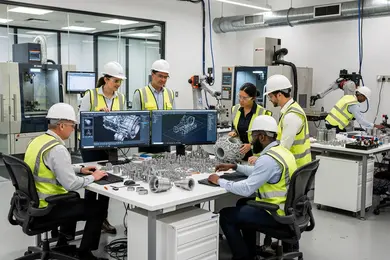
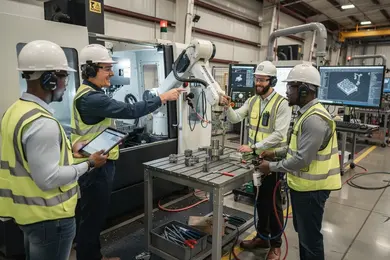
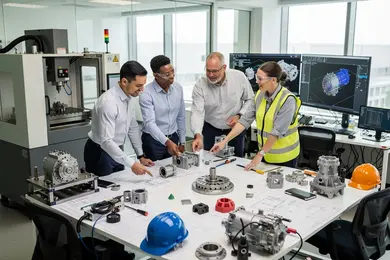
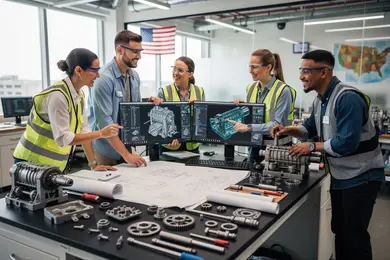
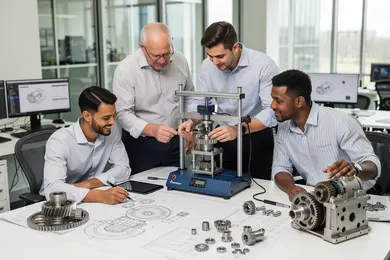
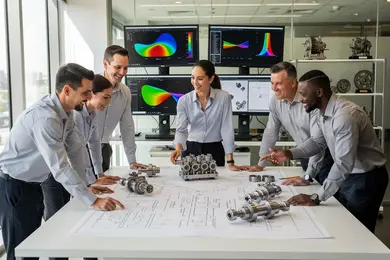
Mechanical engineering is different from many online majors because it depends on physical systems. Even when lectures are online, schools may require lab kits, remote instrumentation, approved local lab sites, synchronous design meetings, proctored testing, or short in-person sessions. That does not make the degree less legitimate; it means the program is trying to preserve the applied training employers expect.
If you are comparing broader online engineering degrees, mechanical engineering is typically one of the more mathematically intensive and lab-heavy choices. It can be a strong fit for adults who enjoy solving physical design problems, improving products, working with manufacturing processes, or analyzing energy and motion.
The table below summarizes how online mechanical engineering formats usually work. This helps returning students avoid assuming every "online" program has the same schedule or campus requirements.
| Program format | How it usually works | Best fit for returning students |
| Fully online coursework with required labs | Lectures and assignments are online, but labs may use kits, simulations, remote equipment, or scheduled in-person sessions. | Students who need flexibility but can plan ahead for technical lab requirements. |
| Hybrid program | Some courses are online, while labs, exams, or design studios require campus attendance. | Students living within commuting distance of the school or able to travel occasionally. |
| Degree-completion program | Upper-division engineering courses are offered after students complete lower-division math, science, and general education elsewhere. | Adults with an associate degree, prior college credits, or community college transfer coursework. |
| Online engineering technology program | Focuses more on applied systems, production, testing, and implementation than theoretical engineering analysis. | Technicians or manufacturing professionals who want advancement but may not need a traditional engineering design role. |
The key is to match the format to your life. A program that is excellent for a full-time student may be unrealistic for a working parent if labs are offered only during weekday business hours.
Are online mechanical engineering degrees respected and properly accredited in the United States?
An online mechanical engineering degree can be respected in the United States when it comes from a properly accredited institution and, ideally, an ABET-accredited engineering program. Employers usually care less about whether lectures were delivered online and more about whether the curriculum, labs, faculty, design experience, and outcomes meet recognized engineering standards.
There are two accreditation layers to check. Institutional accreditation applies to the college or university as a whole and affects federal financial aid eligibility, transfer credit recognition, and general legitimacy. Programmatic accreditation, especially from ABET's Engineering Accreditation Commission for mechanical engineering, is often the more important signal for engineering employers and future licensure.
ABET accreditation matters because many state engineering boards use it when evaluating eligibility for the Fundamentals of Engineering exam and, later, Professional Engineer licensure. Requirements vary by state, so returning students who may want to become licensed should check the state board before enrolling, not after graduation.
The table below shows the difference between common accreditation terms. Understanding these distinctions can prevent a costly mistake.
| Credential or approval | What it means | Why it matters |
| Institutional accreditation | The college meets recognized standards as an institution. | Important for financial aid, credit transfer, graduate school review, and employer confidence. |
| ABET program accreditation | The specific engineering program meets discipline-based engineering standards. | Often important for mechanical engineering employment, graduate study, and PE licensure pathways. |
| State authorization | The school is allowed to offer distance education to students in your state. | Important because some online programs cannot enroll students from every state. |
| Professional licensure alignment | The program supports requirements for exams or licensure in a particular state. | Important if you plan to pursue Engineer in Training or Professional Engineer status. |
A respected program should make accreditation easy to verify. If admissions staff avoid direct answers, use vague language such as "ABET-style curriculum," or cannot tell you whether the mechanical engineering program itself is accredited, treat that as a serious red flag.
How do online mechanical engineering programs compare to on-campus programs for adult learners?
Online mechanical engineering programs can be more workable for adult learners, but they are not automatically easier. The academic expectations are usually comparable to campus programs, especially in ABET-accredited options. The real difference is how the program handles time, labs, collaboration, advising, and access to equipment.
For returning students, the online advantage is scheduling control. You may be able to watch lectures after work, complete assignments around family obligations, and stay employed while studying. The trade-off is that you must be disciplined, comfortable with remote collaboration, and proactive about getting help when calculus, physics, or engineering analysis becomes difficult.
The comparison below highlights the practical differences that matter most to adults re-entering college. Use it to decide whether online, hybrid, or campus study fits your constraints.
| Decision factor | Online or hybrid mechanical engineering | On-campus mechanical engineering |
| Schedule flexibility | Often stronger, especially for lectures and assignments. | Usually less flexible because classes and labs meet at fixed times. |
| Lab access | May require lab kits, simulations, local arrangements, or campus visits. | Usually easier access to machine shops, testing equipment, and in-person lab support. |
| Peer interaction | Depends heavily on discussion boards, video meetings, and group project tools. | More spontaneous peer support, study groups, and design-team interaction. |
| Work compatibility | Often better for part-time students and employed adults. | Can be difficult for students working full time unless evening options exist. |
| Self-management demands | High; students must track deadlines and seek support early. | Still high, but campus routines can provide more structure. |
If you need a degree that is entirely asynchronous and light on labs, mechanical engineering may not be the easiest online major. Adults who want a more reading- and research-centered online path sometimes compare fields such as a library degree, but that choice leads to a very different labor market. Mechanical engineering is best for students who specifically want technical design, manufacturing, energy, robotics, aerospace, automotive, or product-development work.
What prior education or experience do you need to re-enter college for mechanical engineering?
Returning students enter online mechanical engineering programs from several starting points. Some have no college credit, while others bring an associate degree, military technical training, trade experience, or credits from a previous major. Your starting point affects admissions, time to graduation, cost, and the amount of math remediation you may need.
Most bachelor's programs expect readiness for college algebra, trigonometry, and eventually calculus-based physics. If you have been away from school for years, math placement is often the most important early checkpoint. A strong work history in machining, HVAC, maintenance, CAD drafting, quality control, or manufacturing can help you understand engineering applications, but it usually does not replace required calculus, physics, or engineering science courses.
The table below shows common re-entry profiles and the issues each student should check before applying. It can help you estimate how much preparation you may need.
| Returning student profile | Likely advantage | What to verify before enrolling |
| Some college, no degree | General education or introductory STEM credits may transfer. | Whether credits are still accepted and whether math or science courses meet current program requirements. |
| Associate degree holder | May enter as a transfer student with lower-division work complete. | Whether the associate degree is aligned with engineering, not only general studies. |
| Engineering technician or manufacturing worker | Practical knowledge of systems, tools, testing, and production. | Whether the program awards credit for prior learning or requires all engineering courses in sequence. |
| Military or veteran student | Technical training, discipline, and possible education benefits. | How military credits transfer and whether the school has veteran support for online learners. |
| Career changer from another field | Maturity, work experience, and clearer career goals. | Whether prerequisite math and science courses must be completed before admission to the major. |
Before applying, returning students should take a practical sequence of steps rather than guessing where they stand. These actions can reduce wasted credits and prevent surprise prerequisite delays.
- Request official transcripts from every college you previously attended, even if the grades were poor or the credits are old.
- Ask each target school for a preliminary transfer evaluation that separates accepted credits from credits that apply directly to the engineering major.
- Review the math sequence carefully, because starting below calculus can add semesters to the degree plan.
- Ask whether prior work, military, or technical training can count as elective credit, lab credit, or only general credit.
- Confirm whether you must apply separately to the university and then to the mechanical engineering major.
If your interest in science is strong but you are less drawn to calculus-heavy design work, consider whether another applied pathway would fit better. For example, a nutritionist degree may suit students more interested in health, food systems, and wellness than machines, materials, and thermal systems.
What courses and technical skills are typically covered in an online mechanical engineering curriculum?
An online mechanical engineering curriculum is built around math, science, analysis, design, and experimentation. The goal is not just to teach software or formulas; it is to train students to model physical systems, test assumptions, evaluate safety and performance, and design workable solutions under constraints.
Most programs move from foundations to advanced engineering applications. Returning students should pay special attention to course sequencing because many engineering classes have strict prerequisites. Missing one math or physics course can delay later courses that are offered only once per year.
The table below summarizes common curriculum areas and the skills they support. This can help you connect course names to career relevance.
| Curriculum area | Typical courses | Skills developed |
| Math and science foundation | Calculus, differential equations, chemistry, calculus-based physics | Quantitative modeling, problem solving, and scientific reasoning. |
| Engineering mechanics | Statics, dynamics, mechanics of materials | Analyzing forces, motion, stress, strain, and structural behavior. |
| Thermal and fluid systems | Thermodynamics, heat transfer, fluid mechanics | Understanding energy conversion, cooling, combustion, pumps, and flow systems. |
| Design and manufacturing | Machine design, CAD, manufacturing processes, senior capstone | Creating, testing, documenting, and improving mechanical products or systems. |
| Controls and mechatronics | Control systems, instrumentation, robotics, sensors | Working with automated systems, feedback loops, and electromechanical devices. |
| Professional practice | Engineering economics, ethics, technical communication, project management | Making responsible decisions, communicating with teams, and evaluating trade-offs. |
Current mechanical engineering programs are also adapting to industry trends. Employers increasingly value experience with simulation, data analysis, additive manufacturing, automation, sustainability, and digital product development. Artificial intelligence is not replacing mechanical engineers outright, but AI-assisted design, generative modeling, predictive maintenance, and simulation automation are changing how engineers test ideas and shorten design cycles.
Returning students should build a portfolio as they study. Useful portfolio evidence can include CAD models, simulation reports, lab writeups, design notebooks, manufacturing process analyses, capstone documentation, and examples of technical communication. A portfolio is especially valuable for online students because it gives employers concrete proof of hands-on competence.
How long do online mechanical engineering degrees take and what do they cost?
A bachelor's degree in mechanical engineering usually requires about 120 to 130 credits, but the calendar time depends on transfer credits, math placement, course sequencing, and whether you study full time or part time. A first-time full-time student may finish in about four years, while returning students studying part time commonly need longer, especially if they must complete prerequisite math or science courses first.
Cost is highly variable, so students should compare total program cost instead of only per-credit tuition. College Board's 2024-25 pricing data reports average published tuition and fees of:
- $11,610 for in-state students at public four-year institutions
- $30,780 for out-of-state students at public four-year institutions
- $43,350 for students at private nonprofit four-year institutions
Those figures are averages before grants, scholarships, employer tuition assistance, veterans benefits, or transfer-credit savings. They also do not capture all engineering-specific expenses, such as lab kits, software, testing fees, travel for campus sessions, textbooks, hardware, or proctoring.
The table below shows the major factors that affect timeline and cost. Use it to identify where you may be able to save time or reduce debt.
| Factor | How it affects time | How it affects cost |
| Transfer credits | Can shorten general education or prerequisite requirements if accepted into the degree plan. | May reduce the number of credits you must pay for at the four-year institution. |
| Math placement | Starting below calculus can add one or more terms before engineering coursework begins. | Additional prerequisite courses can increase tuition and delay graduation. |
| Part-time enrollment | Extends the calendar timeline but may fit work and family responsibilities. | Can reduce the need to borrow for living expenses if you remain employed. |
| Residency requirements | Campus visits or scheduled labs may require advance planning. | Travel, lodging, and missed work can add hidden costs. |
| Course availability | Sequential courses offered once per year can delay progress if missed. | Delays may increase fees, living costs, and opportunity cost. |
To judge affordability, ask each school for a degree plan based on your actual transcripts. A low per-credit rate is not always cheaper if the program accepts fewer transfer credits, requires expensive travel, or forces you into extra prerequisite coursework.
What mechanical engineering careers can you pursue with an online bachelor's degree?
An online bachelor's degree from a credible mechanical engineering program can prepare students for many of the same entry-level roles as a campus degree, particularly when the program includes rigorous labs, design projects, and ABET accreditation. The strongest opportunities usually align with design, manufacturing, testing, energy systems, product development, quality, robotics, and operations.
Mechanical engineers often work across industries rather than in one narrow sector. They may design components, analyze failures, improve production systems, test prototypes, model thermal performance, support automation, or coordinate design changes with suppliers and manufacturing teams.
The table below connects common job titles to typical responsibilities. Exact duties vary by employer, industry, and experience level.
| Career path | Typical responsibilities | Industries that commonly hire |
| Mechanical design engineer | Create and refine parts, assemblies, drawings, and product specifications. | Manufacturing, consumer products, aerospace, automotive, medical devices. |
| Manufacturing engineer | Improve production processes, tooling, quality, workflow, and efficiency. | Industrial manufacturing, electronics, automotive, defense, packaging. |
| Test engineer | Plan tests, collect data, evaluate performance, and document results. | Aerospace, energy, product development, machinery, transportation. |
| HVAC or energy systems engineer | Analyze heating, cooling, ventilation, energy efficiency, and building systems. | Construction, facilities, consulting engineering, energy services. |
| Quality engineer | Investigate defects, improve inspection processes, and support compliance. | Manufacturing, aerospace, medical devices, automotive, supply chain. |
| Robotics or automation engineer | Support automated equipment, sensors, actuators, controls, and production systems. | Advanced manufacturing, warehousing, automotive, electronics. |
Some students use mechanical engineering as a technical foundation for adjacent fields. If your interests lean toward sustainability, climate systems, conservation technology, or environmental compliance, it can be useful to compare mechanical roles with jobs for environmental science majors. The overlap may appear in energy efficiency, emissions reduction, water systems equipment, and sustainable manufacturing, but the degrees prepare students for different types of work.
A mechanical engineering bachelor's degree is usually not the only credential that matters. Internships, co-ops, senior projects, CAD skills, lab competence, and industry-specific software can strongly influence entry-level competitiveness. Returning students who already have technical work experience should translate that experience into engineering language on their resume, emphasizing troubleshooting, measurements, documentation, safety, process improvement, and cross-functional teamwork.
What salary ranges and earning potential can mechanical engineers expect over time?
Mechanical engineering can offer strong earning potential, but salary depends on region, industry, employer size, security clearance, licensure, graduate education, technical specialization, and experience. No degree guarantees a specific income, and online students should be cautious about schools that imply otherwise.
The U.S. Bureau of Labor Statistics reported a 2024 median annual wage of $102,320 for mechanical engineers. For returning students, that number is useful as a midpoint, not a promise: some entry-level roles may pay less, while experienced engineers in high-demand industries or high-cost regions may earn more.
The table below shows how earning potential often changes over a career. It uses role progression rather than guaranteed salary figures because advancement depends heavily on performance, industry, and location.
| Career stage | Common role examples | What usually drives higher pay |
| Entry level | Mechanical engineer I, design engineer, manufacturing engineer, test engineer | ABET-aligned degree, internships, CAD skills, strong projects, and practical lab experience. |
| Early career | Project engineer, product engineer, quality engineer, systems support engineer | Independent problem solving, cross-functional communication, manufacturing knowledge, and reliability. |
| Midcareer | Senior mechanical engineer, lead design engineer, automation engineer | Specialized technical expertise, project ownership, mentoring, and business impact. |
| Advanced career | Engineering manager, principal engineer, technical program manager | Leadership, high-stakes design decisions, budget responsibility, licensure, or advanced credentials. |
Returning students should evaluate salary potential against total cost and time out of the workforce. A lower-cost program that preserves employment and accepts transfer credits may produce a better personal return than a more expensive program with the same employment target. On the other hand, the cheapest option is not a bargain if it lacks ABET accreditation, weakens licensure options, or does not provide meaningful design and lab experience.
What is the job outlook for mechanical engineers and related roles in the U.S.?
The U.S. outlook for mechanical engineers is favorable. The Bureau of Labor Statistics projects employment for mechanical engineers to grow 9% from 2024 to 2034, which is faster than the average for all occupations. For students re-entering college, this suggests continued demand, but it does not remove the need to choose a reputable program and develop current technical skills.
Demand is shaped by several trends. Advanced manufacturing, automation, clean energy systems, robotics, electrified transportation, aerospace modernization, medical devices, and infrastructure upgrades all rely on mechanical engineering knowledge. At the same time, employers increasingly expect engineers to work with digital tools, simulation, data, sensors, and multidisciplinary teams.
The table below summarizes job-market signals that can influence your program choice. These trends should guide electives, projects, and skill-building while you are enrolled.
| Labor market trend | Why it matters | Skills to prioritize |
| Automation and robotics | Manufacturers are investing in systems that improve throughput, safety, and consistency. | Controls, sensors, mechatronics, manufacturing systems, troubleshooting. |
| Energy efficiency and electrification | Organizations need engineers who can improve thermal systems, equipment efficiency, and mechanical performance. | Thermodynamics, heat transfer, fluid mechanics, energy modeling. |
| Digital design and simulation | Employers use modeling tools to reduce prototyping time and test designs earlier. | CAD, finite element analysis, computational fluid dynamics, data interpretation. |
| Supply chain and manufacturability | Design decisions must account for cost, materials, production constraints, and reliability. | Design for manufacturability, materials, quality systems, engineering economics. |
| AI-assisted engineering workflows | AI tools can accelerate drafting, analysis setup, documentation, and design exploration. | Critical review, simulation validation, prompt-aware workflows, engineering judgment. |
Online students should not wait until graduation to respond to these trends. Choose electives, capstone projects, and internships that show you can apply mechanical fundamentals to current employer problems. A degree opens the door, but evidence of applied skill helps you compete.
How can returning students choose a reputable online mechanical engineering program?
Choosing a reputable online mechanical engineering program requires more than scanning rankings or looking for the lowest tuition. Returning students need to verify accreditation, transfer credit, lab expectations, course sequencing, faculty access, career support, and total cost. The best program is the one that fits your goals, schedule, finances, and licensure needs without compromising engineering quality.
Start by narrowing your list to schools that are transparent about outcomes and requirements. Then ask direct questions before applying. A good admissions or engineering advisor should be able to explain exactly how your prior credits apply and what online students must do for labs, exams, advising, and capstone work.
Use the following checklist when comparing programs. These steps are especially important for adults who cannot afford to lose time on credits that do not count.
- Verify institutional accreditation through recognized accreditor information and confirm that the mechanical engineering program itself has the accreditation status you need.
- Ask whether the program is ABET-accredited for mechanical engineering, engineering technology, or another discipline, because these are not interchangeable.
- Request a written transfer-credit evaluation before committing, including which credits apply to the major rather than only to electives.
- Confirm all in-person requirements, including labs, exams, orientations, residencies, and capstone presentations.
- Ask how often required courses are offered and whether part-time students can follow a predictable sequence.
- Compare total cost, including fees, software, lab kits, travel, books, proctoring, and any repeated prerequisites.
- Review career support for online students, including internship help, employer connections, resume review, and access to engineering career fairs.
- Check whether the curriculum supports your intended field, such as manufacturing, robotics, aerospace, energy systems, HVAC, or product design.
Red flags deserve serious attention. Be cautious if a school will not provide written answers about accreditation, promises unusually fast completion without reviewing your transcripts, markets engineering without real lab or design requirements, or emphasizes enrollment urgency over academic fit. Also be careful with programs that sound like mechanical engineering but are actually general engineering, engineering management, or engineering technology if your goal is a traditional mechanical engineering role.
The table below shows common mistakes and better alternatives. It can help you make a decision based on evidence rather than marketing language.
| Common mistake | Why it can hurt you | Better approach |
| Choosing only by lowest tuition | Hidden fees, poor transfer acceptance, or weak labs can increase total cost and reduce value. | Compare total cost and academic fit after a transcript review. |
| Ignoring ABET status | May limit licensure options or reduce employer confidence in some engineering roles. | Verify programmatic accreditation for the exact degree title. |
| Assuming online means self-paced | Engineering courses often have strict weekly deadlines, labs, and group projects. | Ask for a sample schedule and course sequence. |
| Overlooking math readiness | Weak math preparation can delay progress and make upper-level courses harder. | Refresh algebra, trigonometry, and calculus before or during admission planning. |
| Skipping career outcome questions | A degree may not align with your target industry or location. | Ask where graduates work and what support online students receive. |
Finally, compare this degree with your actual career target. Mechanical engineering is a strong investment for students who want design, systems, manufacturing, energy, or automation careers. It may not be the best fit if you want a faster credential, minimal math, fully asynchronous study, or a nontechnical career change.
Other Things You Should Know About Mechanical Engineering
Possibly. Many returning students recover academically, but engineering programs may require minimum GPAs for transfer admission, prerequisite courses, or admission to the major. If your old grades are weak, start by retaking key math or science courses, earning strong recent grades, and asking schools how they evaluate older coursework.
Internships are not always mandatory, but they are highly valuable. They help online students prove hands-on ability, build employer contacts, and apply classroom concepts to real engineering problems. If you are already employed in a technical setting, ask whether your current work can support projects, references, or internship-equivalent experience.
To succeed in a 2027 online mechanical engineering degree program despite past poor grades, focus on bridging knowledge gaps through foundational courses, utilize online resources effectively, and engage with peer or mentor support. Consistent effort and seeking additional academic help can also contribute significantly to success.
A master's degree can help in specialized areas such as robotics, aerospace, thermal systems, advanced manufacturing, or research-focused roles. However, many students should first gain work experience and clarify their specialization. A graduate degree makes the most sense when it supports a specific career move, employer requirement, or technical niche.
References
- What Degree Do You Need to be A Mechanical Engineer? https://www.onlineu.com/resources/college-planning/what-degree-to-be-a-mechanical-engineer
- Mechanical Engineer Qualifications | University of Bridgeport https://www.bridgeport.edu/news/qualifications-to-become-a-mechanical-engineer/
- Mechanical Engineering Salary Guide 2026 https://turn2engineering.com/mechanical-engineering/mechanical-engineering-salary
- Online Mechanical Engineering Degrees 2025 https://www.affordablecollegesonline.org/degrees/engineering-programs/mechanical-engineering/