2027 Online Mechanical Engineering Degrees That Prepare Students for Testing, Validation, and Quality Work

Co-Founder and Chief Data Scientist
Choosing an online mechanical engineering degree is harder when your goal is testing, validation, or quality work-not just general design. These roles matter as manufacturers rely more on simulation, automation, sensors, and documented product performance. The U. S. Bureau of Labor Statistics reported a $102,320 median annual wage for mechanical engineers in 2024, making program choice a high-stakes investment. This guide explains accreditation, online labs, coursework, admissions, cost, career paths, and salary context so you can compare programs with clearer ROI and fewer surprises.
Key Things You Should Know
- For testing, validation, and quality roles, prioritize an online mechanical engineering program with EAC/ABET accreditation, required lab work, design projects, statistics, instrumentation, and documented hands-on or remote lab access.
- Mechanical engineers had a 2024 median annual wage of $102,320, but quality-focused roles vary by industry, location, security clearance, manufacturing environment, and whether the job is closer to engineering, inspection, reliability, or management.
- College Board data for 2024-2025 shows published tuition and fees averaging $11,610 for in-state public four-year institutions, $30,780 for out-of-state public institutions, and $43,350 for private nonprofit four-year institutions, so total cost should be compared before assuming online is cheaper.
What is an online mechanical engineering degree focused on testing, validation, and quality?
An online mechanical engineering degree focused on testing, validation, and quality is a mechanical engineering program that prepares students to prove whether products, parts, systems, and processes work as intended. The degree still covers the core mechanical engineering body of knowledge: calculus, physics, statics, dynamics, thermodynamics, fluid mechanics, materials, machine design, controls, and computer-aided engineering. The difference is that students should look for electives, labs, and projects tied to measurement, experimental design, reliability, manufacturing quality, product verification, and failure analysis.
In industry, testing means collecting performance data under controlled conditions. Validation means confirming that a product or system meets user needs and operating requirements. Verification means checking whether engineering specifications were met. Quality work focuses on reducing defects, controlling variation, documenting compliance, and improving processes. These activities are common in automotive, aerospace, medical devices, defense, energy, electronics, robotics, HVAC, and advanced manufacturing.
This degree path is best for students who like evidence-based problem solving. Instead of only asking, "Can we design this part?" testing and validation engineers ask, "How do we know it will survive vibration, heat, fatigue, load, corrosion, misuse, or repeated operation?" That mindset requires both engineering fundamentals and disciplined documentation.
Students comparing related fields should also understand the boundary between mechanical systems and environmental systems. For example, an environmental engineer degree online may focus more on water, air, remediation, and environmental compliance, while mechanical engineering testing usually centers on machines, structures, thermal systems, product durability, and manufactured components.
The degree can be a strong fit if you want roles that combine analysis, lab work, troubleshooting, supplier quality, manufacturing support, or product launch responsibilities. It may be a weaker fit if you want a fully software-focused job, a technician role that does not require engineering theory, or a management credential without intensive math and science.
How do online mechanical engineering programs compare to campus-based options for quality work?
Online mechanical engineering programs can prepare students for quality work, but they differ sharply from campus-based programs in how labs, teamwork, and equipment access are delivered. The key question is not whether the lectures are online; it is whether the program gives students credible ways to practice measurement, testing, data analysis, design review, and engineering communication.
The table below compares online and campus-based formats on the factors that matter most for students targeting testing, validation, and quality roles.
| Program factor | Online mechanical engineering degree | Campus-based mechanical engineering degree | Decision takeaway |
| Lab access | May use mailed lab kits, remote instrumentation, simulation, local proctors, short residencies, or transfer labs | Usually offers direct access to campus equipment, machine shops, test frames, wind tunnels, and instrumentation labs | Online can work, but applicants should verify exactly how required labs are completed |
| Schedule flexibility | Often better for working adults, military students, transfer students, and caregivers | Usually more fixed, with daytime labs and in-person project meetings | Online is often stronger for students who need employment continuity |
| Team design projects | May rely on virtual collaboration, local fabrication, or periodic campus visits | Often easier for hands-on prototyping and team testing | Ask how capstone projects are built, tested, and assessed |
| Career networking | Can be strong if the program has employer partnerships, career services, and active faculty contact | May offer more spontaneous networking through labs, clubs, and campus recruiting | Online students should plan intentionally for internships and professional contacts |
| Best-fit student | Self-directed, organized, comfortable with digital tools, and able to arrange lab or internship experiences | Prefers structured in-person support, frequent lab access, and face-to-face collaboration | Choose the format that matches your learning style and access to engineering work experience |
For testing and validation careers, campus programs may have an advantage when students need frequent access to specialized equipment. However, online programs can be practical when the school has a mature lab model and the student can gain hands-on experience through internships, current employment, co-ops, makerspaces, military technical work, or employer-sponsored projects.
One mistake is assuming every STEM field has the same online learning constraints. A student considering an online geoscience degree, for instance, may evaluate fieldwork and mapping access, while a mechanical engineering student should focus more on instrumentation, fabrication, measurement uncertainty, and physical testing.
Which accreditation and ABET standards should online mechanical engineering degrees meet?
Accreditation is one of the most important filters for online mechanical engineering degrees. In the United States, institutional accreditation applies to the college or university as a whole, while programmatic engineering accreditation is typically handled by ABET. For mechanical engineering, the most relevant credential is usually accreditation by ABET's Engineering Accreditation Commission, often written as EAC/ABET.
ABET accreditation matters because it signals that a program has been reviewed against accepted engineering education standards. Employers that hire mechanical engineers for regulated, safety-critical, defense, aerospace, public infrastructure, or licensure-track work may prefer or require an ABET-accredited engineering degree. It can also matter for future professional engineering licensure, although requirements vary by state board.
Students should verify several accreditation details before enrolling. These checks help avoid programs that sound engineering-related but may not support the same career or licensure options.
- Confirm that the institution has recognized institutional accreditation from a U.S. accreditor accepted for federal financial aid purposes.
- Search ABET's public database for the exact program name, degree level, campus or online designation, and accreditation dates.
- Make sure the credential is a Bachelor of Science in Mechanical Engineering or a clearly equivalent engineering degree if your goal is mechanical engineer roles.
- Ask whether online students graduate from the same ABET-accredited program as campus students or from a separate non-accredited track.
- If professional engineering licensure is a goal, check your state licensing board before enrolling because education, exam, and experience rules vary.
ABET standards are outcome-based. In practical terms, students should expect the curriculum to develop abilities in engineering design, experimentation, data interpretation, teamwork, communication, ethics, problem solving, and application of science and mathematics. For testing and quality work, the experimentation and data interpretation outcomes are especially important because employers need engineers who can defend conclusions with evidence, not just run software or follow checklists.
A common red flag is a program marketed as "mechanical engineering technology" when the student wants a traditional mechanical engineering role. Engineering technology degrees can be valuable, especially for applied manufacturing, testing, and technical operations roles, but they are not always treated the same as engineering degrees by employers, graduate schools, or licensing boards. The distinction is not about prestige; it is about fit.
What courses and lab experiences cover testing, validation, and quality in these programs?
A strong testing, validation, and quality curriculum connects theory to measurement. Students should not only learn equations; they should learn how to design a test, select sensors, quantify uncertainty, interpret noisy data, document results, and recommend corrective action.
The table below summarizes courses and learning experiences that are especially relevant to mechanical testing and quality careers.
| Course or experience | Why it matters for testing, validation, and quality | What students should look for |
| Engineering statistics and probability | Supports sampling, process capability, reliability, tolerance decisions, and test planning | Coverage of statistical process control, design of experiments, and measurement variation |
| Materials science and failure analysis | Helps explain fracture, fatigue, corrosion, wear, and heat-treatment problems | Labs or projects involving microscopy, hardness, tensile testing, or failure documentation |
| Instrumentation and measurement systems | Builds skill in sensors, data acquisition, calibration, uncertainty, and signal quality | Hands-on or remote work with strain gauges, thermocouples, accelerometers, pressure sensors, or DAQ systems |
| Mechanical design and machine elements | Connects performance requirements to parts, assemblies, loads, tolerances, and safety factors | Design reviews, tolerance analysis, finite element analysis, and prototype testing |
| Thermal-fluid labs | Prepares students to test pumps, heat exchangers, HVAC equipment, engines, and flow systems | Experiments with temperature, pressure, flow rate, efficiency, and uncertainty analysis |
| Manufacturing processes and quality systems | Links product design to production variation, inspection, and root-cause analysis | Exposure to GD&T, metrology, lean manufacturing, Six Sigma concepts, and corrective action reports |
| Controls, mechatronics, or robotics | Supports validation of automated systems, actuators, sensors, and embedded mechanical devices | Projects involving feedback control, testing scripts, motor systems, or automated data collection |
| Capstone design | Shows whether students can define requirements, build or simulate a solution, test it, and communicate trade-offs | A final project with verification plans, performance metrics, design reviews, and documented test results |
Online students should ask detailed questions about lab delivery before they commit. A vague promise of "virtual labs" is not enough for a field where employers value hands-on evidence and practical troubleshooting.
Useful lab-related questions include the following:
- Are lab kits shipped to students, or are students required to attend campus residencies?
- Which experiments use physical equipment rather than simulation only?
- How are calibration, measurement uncertainty, and safety procedures assessed?
- Can students complete lab work near their location through approved partner institutions or employers?
- Do capstone projects require building and testing a physical prototype, or is simulation acceptable?
- What software is used for CAD, FEA, CFD, statistics, data acquisition, and quality documentation?
Simulation is valuable, especially in modern validation work, but it should not completely replace physical testing. Employers increasingly use digital twins, finite element models, automated test rigs, and AI-assisted data analysis, yet engineers still need to understand when a model is wrong, when a sensor is misread, and when a test setup does not match real operating conditions.
What admission requirements and prior math and science preparation do applicants need?
Online mechanical engineering degrees are mathematically demanding. Most bachelor's programs expect applicants to be ready for college-level calculus and calculus-based physics early in the curriculum. Students who enter underprepared can still succeed, but they may need prerequisite courses, placement testing, or a longer timeline.
Typical bachelor's admission requirements vary by school, but applicants should be prepared for these common expectations:
- High school diploma, GED, or equivalent credential
- Strong preparation in algebra, trigonometry, precalculus, chemistry, and physics
- Placement into calculus or completion of prerequisite math courses
- Official transcripts from high school and any colleges attended
- Minimum GPA requirements, which may be higher for engineering than for general admission
- Possible SAT or ACT scores, depending on the school's current testing policy
- For transfer students, completed calculus, physics, chemistry, and general education courses may be reviewed for equivalency
Master's programs are different. They usually require a bachelor's degree in mechanical engineering or a closely related engineering field. Applicants from physics, engineering technology, mathematics, or another engineering discipline may need bridge coursework in mechanics, thermodynamics, fluids, materials, or design.
Students aiming for testing, validation, and quality roles should not treat prerequisites as boxes to check. Calculus helps with modeling change and system behavior. Physics supports mechanics, energy, motion, and vibration. Statistics supports test planning and quality decisions. Programming helps with data acquisition, automation, and analysis. These subjects show up directly in the work.
If your academic background is uneven, the smartest path is often staged rather than rushed. Complete missing math and science courses at a regionally accredited community college, earn strong grades, and confirm transferability in writing before applying. This can reduce cost and improve readiness, but only if the credits fit the engineering program's degree plan.
Common admission mistakes include underestimating calculus, assuming all transfer credits will count toward engineering requirements, and choosing a program that accepts the student quickly but does not provide enough academic support. A faster admission decision is not always a better engineering pathway.
How long do online mechanical engineering degrees take, and what do they cost?
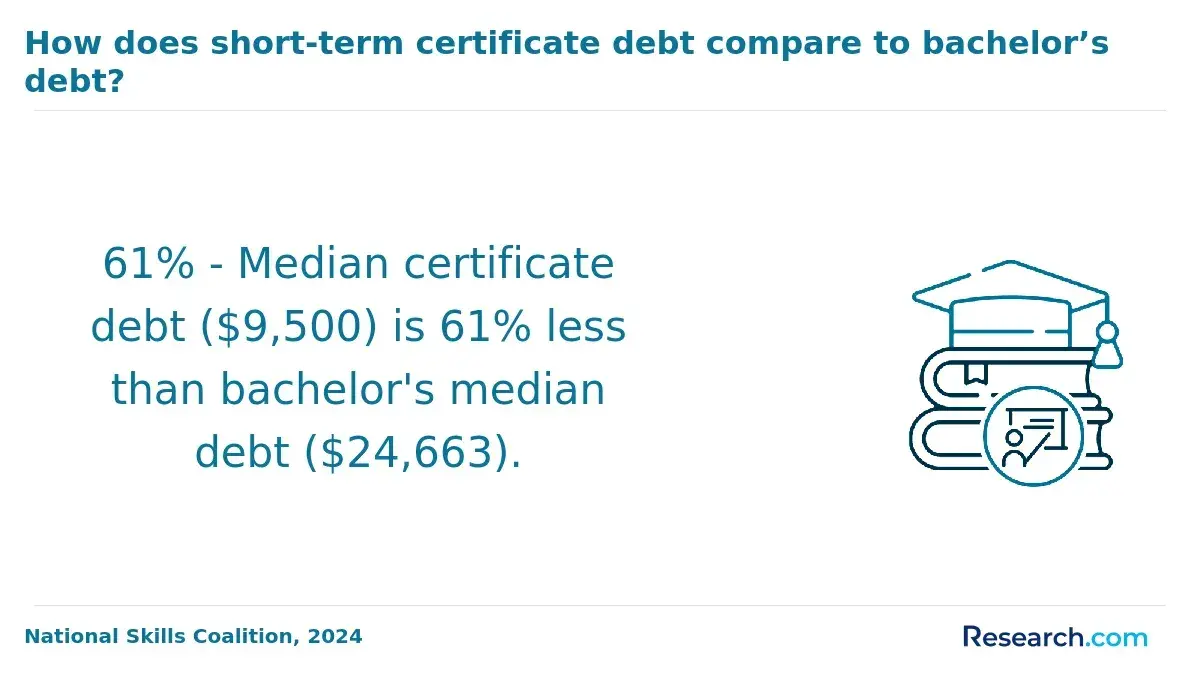
Completion time depends on degree level, transfer credits, course load, prerequisites, and lab scheduling. A first-time bachelor's student usually needs about four years of full-time study. Part-time online students may take longer, especially if they are working full time or taking sequential math, science, and engineering courses that must be completed in order. Transfer students with an associate degree may finish faster, but mechanical engineering programs often have strict course sequencing that limits acceleration.
Cost is equally variable. College Board reported 2024-2025 published tuition and fees averaging $11,610 for in-state public four-year institutions, $30,780 for out-of-state public institutions, and $43,350 for private nonprofit four-year institutions. These figures are not online-program prices, but they provide a useful benchmark: students should compare total cost, not just the per-credit rate advertised on a program page.
When comparing online mechanical engineering programs, calculate the full cost of attendance rather than tuition alone. Important cost categories include the following:
- Tuition per credit or per term
- Engineering program fees, lab fees, technology fees, and distance education fees
- Required campus visits, travel, lodging, and time away from work
- Lab kits, tools, safety equipment, and shipping costs
- CAD, simulation, statistics, or data acquisition software costs if not included
- Textbooks, digital course materials, exam proctoring, and graduation fees
- Opportunity cost if the course load reduces work hours
The table below shows how different enrollment paths commonly affect time and cost planning.
| Student path | Typical timeline | Cost consideration | Best fit |
| First-time bachelor's student | Often about four years full time, longer part time | Highest total credit requirement; general education and prerequisites included | Students starting directly after high school or changing fields early |
| Community college transfer student | Often two to three additional years after transfer, depending on course match | Can lower cost if calculus, physics, chemistry, and general education transfer cleanly | Cost-conscious students who plan carefully with transfer guides |
| Working adult with prior credits | Highly variable | May save through transfer credit, employer tuition assistance, or part-time enrollment | Students with technical experience who need scheduling flexibility |
| Engineering technology graduate pursuing engineering | Variable and sometimes longer than expected | Some applied courses may not substitute for calculus-based engineering requirements | Technicians seeking engineer roles who confirm credit transfer before enrolling |
| Master's student | Often one to three years depending on full-time or part-time status | Lower credit count than a bachelor's degree but higher per-credit tuition may apply | Engineers seeking specialization in quality, reliability, simulation, systems, or manufacturing |
To reduce cost risk, request an official degree audit before enrolling. Ask the school to identify exactly which credits apply to the major, which prerequisites remain, how often required courses are offered, and whether online students pay separate fees. A low tuition rate can become less attractive if missing prerequisites add extra terms.
What careers in testing, validation, and quality can graduates pursue?
Graduates can pursue roles across the product life cycle, especially where physical performance, safety, reliability, manufacturability, and documentation matter. Some jobs are titled "mechanical engineer," while others use titles such as test engineer, validation engineer, quality engineer, manufacturing engineer, reliability engineer, or product development engineer.
The table below outlines common career options and how they connect to testing, validation, and quality work.
| Role | Typical responsibilities | Useful preparation |
| Mechanical test engineer | Plans and runs mechanical, thermal, vibration, fatigue, pressure, or durability tests; analyzes results; writes reports | Instrumentation, statistics, mechanics, materials, lab safety, data analysis |
| Validation engineer | Confirms that products or systems meet requirements and real-world use conditions before release | Requirements management, test protocols, documentation, systems thinking, reliability |
| Quality engineer | Investigates defects, improves processes, supports audits, manages corrective actions, and works with suppliers or production teams | Statistical process control, root-cause analysis, GD&T, manufacturing, quality systems |
| Reliability engineer | Studies failure rates, life-cycle performance, stress conditions, and maintenance or warranty trends | Probability, reliability modeling, failure analysis, fatigue, accelerated life testing |
| Manufacturing engineer | Improves production processes, tooling, assembly methods, inspection plans, and throughput | Manufacturing processes, lean methods, fixtures, metrology, process capability |
| Product development engineer | Designs products, builds prototypes, reviews test results, and refines designs before production | CAD, FEA, design for manufacturability, test planning, materials, communication |
| Supplier quality engineer | Evaluates supplier processes, investigates nonconforming parts, reviews inspection data, and supports qualification | Auditing, measurement systems, drawings, specifications, corrective action systems |
Students should build a portfolio that proves job readiness. For testing and quality roles, a portfolio can be more persuasive when it includes test plans, plots, uncertainty analysis, failure photos, CAD models, fixture designs, root-cause summaries, and concise technical reports.
Several credentials can strengthen a mechanical engineering background, especially after some work experience. Students should view certifications as complements to the degree, not substitutes for core engineering education.
- Six Sigma Green Belt or Black Belt for process improvement and variation reduction
- ASQ Certified Quality Engineer for experienced professionals in quality engineering
- Certified Reliability Engineer for professionals working with failure modes, life testing, and reliability systems
- GD&T training for roles involving drawings, tolerances, inspection, and manufacturing communication
- FE exam preparation for graduates considering the professional engineering licensure pathway
Career fit also depends on whether you want to work with machines, biological systems, human performance, or natural resources. Students comparing applied science payoffs outside engineering sometimes review resources such as online animal science degree salary information, but mechanical engineering quality roles generally require a more math-intensive engineering curriculum.
What salary ranges and advancement opportunities exist in mechanical testing and quality roles?
Salary potential in testing, validation, and quality work depends on job title, industry, location, experience, degree level, and whether the role is classified as engineering, technician, inspection, quality management, or operations support. The clearest broad benchmark is the mechanical engineering occupation itself: the U.S. Bureau of Labor Statistics reported a 2024 median annual wage of $102,320 for mechanical engineers. This number should be treated as a midpoint across many industries, not a promise for new graduates or for every quality-related title.
Quality-focused roles can sit in several labor categories. A test engineer at an aerospace company, a validation engineer in medical devices, a manufacturing quality engineer at an automotive supplier, and a quality inspector in a production plant may have very different pay ranges even though all touch product quality. Engineering roles typically require deeper analysis and design authority than inspection roles, which can affect compensation and advancement.
The table below shows how advancement often works in mechanical testing and quality careers.
| Career stage | Common focus | Skills that support advancement |
| Entry level | Test execution, data collection, inspection support, documentation, CAD updates, basic analysis | Measurement discipline, Excel or Python, lab safety, technical writing, drawing interpretation |
| Early career engineer | Test planning, fixture design, root-cause analysis, supplier issue support, process improvement | Statistics, GD&T, FEA basics, design reviews, corrective action methods |
| Mid-career specialist | Validation strategy, reliability testing, failure analysis, quality systems, product launch support | Systems thinking, cross-functional communication, advanced analysis, regulatory documentation |
| Senior engineer or lead | Program-level decisions, risk assessment, test architecture, mentoring, customer or auditor communication | Leadership, project management, design verification planning, cost-risk trade-off analysis |
| Manager or technical expert | Team leadership, quality strategy, validation standards, supplier development, executive reporting | People management, quality management systems, business judgment, certification or graduate study |
Students evaluating salary should ask schools for career outcome data by major, not just university-wide employment rates. The most useful information includes employer names, job titles, geographic markets, internship participation, co-op access, and whether graduates enter engineering roles or technician roles.
Do not assume a higher-cost program automatically leads to a higher salary. ROI depends on net price after aid, transfer credits, time to graduation, work experience, internship access, accreditation, and local employer demand. A lower-cost ABET-accredited program with strong labs and internships may be a better investment than a more expensive option with weak hands-on requirements.
How strong is the job outlook for mechanical engineers in testing and validation fields?
The job outlook for mechanical engineers is solid, particularly because mechanical systems remain central to manufacturing, energy, transportation, automation, aerospace, medical devices, and advanced materials. The U.S. Bureau of Labor Statistics projected 11% employment growth for mechanical engineers from 2023 to 2033 in its current occupational outlook, which is faster than the average for all occupations. For students, this suggests healthy broad demand, but not equal demand in every region or specialty.
Testing and validation work is being shaped by several current trends. Companies are using more simulation and automated data collection, but physical testing remains necessary for safety, compliance, warranty risk, customer acceptance, and product launch. AI can help detect patterns in test data, but engineers still need to decide whether data is valid, whether the test represents real use, and whether a design change is justified.
Demand can be especially strong where products are complex, regulated, expensive to fail, or difficult to repair after release. Aerospace, defense, electric vehicles, batteries, robotics, semiconductor equipment, HVAC, energy systems, and medical devices all rely on engineers who can connect requirements, tests, risk, and documentation.
Students should prepare for a labor market that rewards hybrid skill sets. The strongest candidates often combine mechanical engineering fundamentals with data analysis, sensors, automation, manufacturing knowledge, and clear technical writing. Employers may not expect entry-level graduates to be experts, but they do expect them to learn quickly, document carefully, and work across design, production, suppliers, and customers.
The outlook is weaker for students who avoid hands-on learning or treat quality as paperwork only. Modern quality work is increasingly analytical. Root-cause analysis, process capability, measurement system analysis, reliability modeling, and automated inspection all require comfort with data and engineering judgment.
How can students evaluate and choose a reputable online mechanical engineering program?
Choosing a reputable online mechanical engineering program requires more than comparing tuition and convenience. The best choice is the program that matches your career target, offers credible lab and project work, has appropriate accreditation, and can realistically be completed within your budget and schedule.
Use the following steps to evaluate programs before applying or enrolling:
- Start with accreditation: verify institutional accreditation and EAC/ABET status for the exact mechanical engineering program.
- Map the curriculum to your goal: look for testing, validation, quality, manufacturing, instrumentation, statistics, reliability, and design verification content.
- Examine lab delivery: ask which labs are physical, remote, simulated, residential, employer-based, or transfer-based.
- Request a degree audit: confirm transfer credits, remaining prerequisites, course sequence, and expected graduation timeline in writing.
- Compare total cost: include tuition, fees, lab kits, software, travel, proctoring, books, and lost work time.
- Ask about internships and co-ops: find out whether online students receive the same career support and employer access as campus students.
- Review faculty and industry ties: look for faculty with mechanical testing, manufacturing, quality, aerospace, energy, robotics, or product development experience.
- Check student support: confirm tutoring, advising, lab help, software access, career coaching, and peer collaboration options.
- Evaluate outcomes carefully: request job titles, employer examples, FE exam support, graduate school placement, and alumni career paths.
- Watch for red flags: avoid programs that cannot explain accreditation, labs, transfer rules, or career outcomes clearly.
The table below highlights common mistakes and better alternatives for students comparing online mechanical engineering degrees.
| Common mistake | Why it creates risk | Better approach |
| Choosing the cheapest listed tuition | Fees, missing prerequisites, travel, and delayed graduation can raise total cost | Compare total cost through graduation |
| Ignoring ABET accreditation | Some employers, graduate programs, and licensing boards may treat the degree differently | Verify the exact program in ABET's database |
| Assuming online labs are equivalent | Lab quality varies widely across programs | Ask for detailed lab methods, equipment lists, and residency requirements |
| Relying only on rankings | Rankings may not measure fit for testing, validation, or quality work | Compare curriculum, labs, outcomes, cost, and support |
| Skipping internships | Testing and quality employers value practical evidence and workplace judgment | Plan early for co-ops, internships, employer projects, or research |
| Confusing engineering and engineering technology | The degrees may lead to different roles and licensure options | Match the credential to the jobs you want |
Students should also be honest about fit. If you are most interested in human movement, performance testing, biomechanics coaching, or health-related exercise data, an online sports science degree may align better than mechanical engineering. If you want to design, test, validate, and improve mechanical products or systems, mechanical engineering remains the more direct path.
A strong final shortlist should include no more than a few programs that meet your non-negotiables. For most testing and quality-focused students, those non-negotiables are ABET alignment, rigorous labs, transfer clarity, reasonable total cost, relevant electives, and access to internships or applied projects.
Other Things You Should Know About Mechanical Engineering
Yes, if the program provides the required engineering curriculum, labs, design work, and appropriate accreditation for your goals. For traditional mechanical engineer roles, an EAC/ABET-accredited mechanical engineering degree is usually the safest choice.
Not always. Many entry-level roles are available with a bachelor's degree in mechanical engineering. A master's degree can help for advanced simulation, reliability, systems engineering, research-heavy roles, or promotion into specialized technical leadership.
Studying mechanical engineering online in 2027 can be comparably challenging as traditional on-campus programs. Online programs offer flexible learning environments, but students must be self-disciplined to manage and absorb complex materials independently. Interactive tools and virtual labs increasingly enhance hands-on learning and engagement in online settings.
It depends on your industry and long-term plans. The FE exam is most relevant if you may pursue professional engineering licensure. It may be less important in some private manufacturing roles, but passing it can still signal strong engineering fundamentals.
References
- Online Mechanical Engineering Degrees 2025 https://www.affordablecollegesonline.org/degrees/engineering-programs/mechanical-engineering/
- Accreditation - ABET https://www.abet.org/accreditation/
- Seminars for Software Quality Engineering https://www.software-quality-academy.com/en/
- Quality Assurance (QA) Prog. | IT Expert System | Chicago, Scaumburg, Naperville https://www.itexps.net/quality-analysis
- Quality Assurance Jobs: 9 High-Paying Career Paths https://myjobspace.co/quality-assurance-jobs-9-high-paying-career-paths/
- How to Evaluate If an Engineering Program Is a Good Fit - Your College-Bound Kid https://yourcollegeboundkid.com/2023/03/10/how-to-evaluate-if-an-engineering-program-is-a-good-fit/
- Software Testing & Quality Assurance - Toronto Innovation College https://torontoinnovationcollege.ca/software-testing-quality-assurance/
- 2025 Best Online Mechanical Engineering Degrees https://www.onlineu.com/degrees/mechanical-engineering
- Software Testing Quality Assurance Course & Training -uCertify https://www.ucertify.com/p/software-testing-quality-assurance.html
- Top 10 Highest Paying Jobs in Mechanical Engineering | CADD https://caddcentre.com/blog/top-10-high-paying-jobs-in-mechanical-engineering/