2027 Best Online Mechanical Engineering Degrees for Future Mechanical Engineers

Co-Founder and Chief Data Scientist
Choosing an online mechanical engineering degree is a high-stakes decision because the field is technical, regulated in some roles, and strongly tied to hands-on design skills. The U.S. Bureau of Labor Statistics reports a May 2024 median pay of $102,320 for mechanical engineers, making program quality, accreditation, and career fit especially important.
This guide is for future engineers, transfer students, working adults, and career changers comparing online options. You will learn how online programs work, what they cost, how ABET affects licensure, and which path best supports your goals.
Key Things You Should Know
- For bachelor's programs, ABET accreditation is one of the most important filters because it can affect FE exam eligibility, PE licensure pathways, employer screening, and graduate school options.
- Online mechanical engineering degrees can match campus programs academically, but the best ones clearly explain labs, design projects, proctored exams, software access, internships, and any required campus visits.
- Cost and outcomes vary widely. College Board's 2024-25 data puts average published tuition and fees at $11,610 for in-state public four-year colleges and $43,350 for private nonprofit four-year colleges, so total program cost matters more than sticker tuition alone.
What is an online mechanical engineering degree and how does it compare to campus programs?
An online mechanical engineering degree is a college program that teaches the same core engineering science used in machine design, manufacturing, thermal systems, robotics, automotive systems, aerospace components, energy systems, and product development. In a strong online program, lectures, assignments, simulations, discussion boards, and exams are delivered through a learning platform, while labs and design work may use mailed lab kits, simulation tools, remote labs, local lab arrangements, or short campus residencies.
The biggest question is not whether "online" is legitimate, it is whether the program can prove equivalent academic rigor, credible lab experience, and employer-recognized accreditation. Students comparing mechanical engineering with related engineering options may also look at a veteran friendly online electrical engineering degree if their interests lean toward circuits, power systems, electronics, or controls rather than mechanical systems.
The table below summarizes the main decision differences. Use it to identify which format fits your schedule, learning style, and career goal rather than assuming one format is always better.
| Factor | Online mechanical engineering degree | Campus mechanical engineering degree | Best fit |
| Schedule | Often asynchronous or hybrid, with deadlines each week | Fixed class times and in-person labs | Online fits working adults; campus fits students who want a traditional schedule |
| Labs and design | May use remote labs, simulations, kits, local sites, or short residencies | Usually uses campus lab spaces and machine shops | Campus may be easier for students who want frequent hands-on lab access |
| Peer interaction | Virtual teams, video meetings, discussion boards, online capstones | Face-to-face teams, clubs, labs, design competitions | Online students should check how team projects are organized |
| Employer perception | Strong when the school is accredited and the transcript does not signal a weaker credential | Generally familiar to employers | Accreditation, portfolio quality, internships, and projects matter more than delivery format |
| Flexibility | Higher flexibility, especially for part-time students | Lower flexibility but more campus resources | Online works best for disciplined students with reliable study time |
A good online degree is not a shortcut. Mechanical engineering is math-intensive and project-heavy, so students should expect calculus, physics, engineering analysis, computer-aided design, materials, thermodynamics, fluid mechanics, and a substantial senior design or capstone experience.
How do I choose the best accredited online mechanical engineering program in the U.S.?
The best accredited online mechanical engineering program is the one that aligns with your goal: entry-level engineering employment, PE licensure, graduate study, a promotion, or a specialty such as robotics, manufacturing, energy, aerospace, or thermal systems. Start with accreditation and curriculum, then compare cost, scheduling, student support, transfer credit, and career outcomes.
Before contacting admissions, use this decision sequence to avoid wasting time on programs that do not match your needs.
- Confirm institutional accreditation through a recognized accreditor so the degree is eligible for federal financial aid and commonly accepted for transfer or graduate admission.
- For bachelor's degrees, check whether the specific mechanical engineering program is ABET-accredited, not just whether the university is accredited.
- Review how required labs, proctored exams, team projects, and the capstone are completed by online students.
- Ask whether the diploma and transcript identify the delivery mode and whether online students have access to the same advising, tutoring, software, libraries, and career services.
- Compare total cost, including tuition, technology fees, software, lab kits, travel for residencies, exam proctoring, and books.
- Look for evidence of career preparation, such as internship support, employer partnerships, engineering clubs, FE exam preparation, and project portfolio development.
The table below helps you compare program types. It is especially useful if you are deciding between a first engineering degree, a completion pathway, and a graduate credential.
| Program type | Typical student | Main advantage | Main caution |
| Online bachelor's in mechanical engineering | Students seeking entry-level engineering roles | Provides the broadest foundation for mechanical engineering practice | ABET status and lab delivery should be verified carefully |
| Online bachelor's completion program | Transfer students with calculus, physics, and general education credits | Can reduce time and cost if credits transfer cleanly | Upper-division course sequencing may still take multiple years |
| Online master's in mechanical engineering | Engineers or STEM graduates seeking specialization | Supports advancement into technical leadership or specialized roles | May not replace an ABET bachelor's degree for licensure in some pathways |
| Online engineering technology degree | Students who prefer applied manufacturing, testing, or operations roles | Often more practice-oriented | May not meet the same licensure or engineering role expectations as mechanical engineering |
| Graduate certificate | Working professionals needing focused upskilling | Shorter and cheaper than a full degree | Usually not enough for entry-level mechanical engineering roles by itself |
Common red flags include unclear accreditation language, no transparent lab plan, vague claims about career outcomes, unusually light math requirements, pressure-heavy admissions tactics, and transfer policies that are not provided in writing. If a school cannot explain exactly how online students complete experiments, design reviews, and team projects, keep comparing.
What are the admission requirements for online mechanical engineering bachelor's and master's degrees?
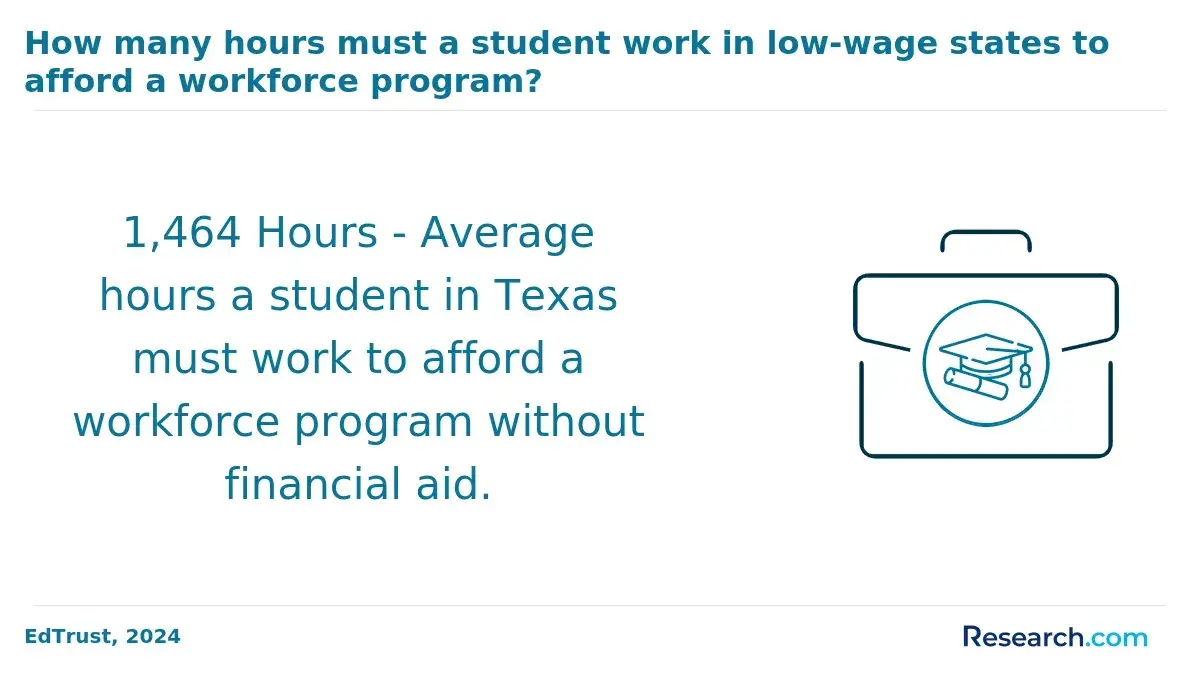
Admission requirements depend on whether you are applying to a bachelor's, transfer-completion, or master's program. Mechanical engineering programs are more sequential than many online degrees because calculus, physics, chemistry, and engineering fundamentals build on each other. Missing one prerequisite can delay progress by a semester or more.
The table below shows common requirements by degree level. Individual schools may add placement tests, minimum grades in technical courses, or prerequisite review before allowing students into upper-division engineering courses.
| Degree level | Common admission requirements | What applicants should prepare |
| Online bachelor's | High school diploma or equivalent, transcripts, math readiness, science preparation, application form | Strong preparation in algebra, trigonometry, pre-calculus, physics, and chemistry |
| Transfer or completion bachelor's | College transcripts, minimum GPA, completed calculus and lab science prerequisites, transfer credit evaluation | Course syllabi may help when schools evaluate engineering or science transfer credits |
| Online master's | Bachelor's degree in mechanical engineering or a related field, technical GPA review, resume, statement of purpose, recommendations | Applicants from adjacent STEM fields may need bridge courses in mechanics, thermodynamics, or mathematics |
| Nondegree or certificate pathway | Bachelor's degree or department permission, depending on course level | Useful for testing graduate-level study before committing to a full master's program |
If you are a career changer, do not underestimate prerequisite planning. A student with a non-STEM bachelor's may need community college courses in calculus, physics, chemistry, and programming before becoming competitive for an engineering program. This can still be a smart route, but it should be priced and scheduled as part of the full degree plan.
Ask admissions advisors for specific answers before enrolling. These questions can prevent expensive surprises.
- Which of my prior credits apply to the mechanical engineering major, not just to general electives?
- What minimum grade is required for calculus, physics, chemistry, and engineering prerequisites?
- Are any courses offered only once per year, and what happens if I miss one?
- Do online students have the same access to undergraduate research, internships, tutoring, and engineering advising?
- Can I take prerequisite courses at a community college after admission, or must they be completed through the university?
What coursework and technical skills are covered in an online mechanical engineering curriculum?
An online mechanical engineering curriculum combines engineering science, design practice, computing, and applied problem-solving. The goal is to help students model physical systems, design components, evaluate materials, understand energy transfer, and make decisions under cost, safety, and performance constraints.
Mechanical engineering is also being reshaped by AI-assisted design, digital twins, advanced manufacturing, sensors, and data-driven maintenance. Students who become interested in deeper machine learning or analytics research after engineering school sometimes compare engineering graduate study with an online PhD data science, but most mechanical engineering roles still require a strong foundation in mechanics, design, and physical systems.
The table below connects common courses to the skills employers typically expect. Use it to judge whether a program is broad enough for mechanical engineering work rather than narrowly focused on software or management.
| Course area | What students learn | Career relevance |
| Calculus, differential equations, and statistics | Mathematical modeling, uncertainty, optimization, and engineering analysis | Used in simulation, testing, controls, and design calculations |
| Physics, statics, dynamics, and mechanics of materials | Forces, motion, stress, strain, failure, and structural behavior | Core for machine design, aerospace components, vehicles, and equipment |
| Thermodynamics, heat transfer, and fluid mechanics | Energy conversion, heat flow, pumps, turbines, HVAC, and fluid systems | Important for energy, manufacturing, automotive, aerospace, and building systems |
| Materials science and manufacturing | Material selection, production methods, quality, tolerances, and failure modes | Supports product design, production engineering, and quality roles |
| CAD, CAE, simulation, and programming | 3D modeling, finite element analysis, numerical methods, and automation | Helps students build a technical portfolio for design and analysis roles |
| Controls, mechatronics, and instrumentation | Sensors, feedback, system response, testing, and automation | Relevant to robotics, manufacturing systems, vehicles, and smart products |
| Senior design or capstone | Team-based engineering design from requirements to prototype or analysis | Often the strongest portfolio evidence for entry-level applicants |
The best online programs make technical skill development visible. Look for projects that produce design reports, CAD models, simulations, test plans, prototypes, or presentations you can discuss in interviews. A transcript alone is rarely as persuasive as a clear portfolio showing what you can build, analyze, and improve.
How long do online mechanical engineering degrees take, and can I study part time?
An online mechanical engineering bachelor's degree usually takes about four years for full-time first-time students, but transfer credits, course sequencing, and part-time enrollment can change the timeline significantly. Master's programs commonly take about one to three years, depending on whether the student studies full time, part time, or chooses a thesis, project, or coursework-only format.
The table below gives practical timeline expectations. It is not a guarantee, but it helps you estimate how scheduling choices affect graduation.
| Enrollment path | Typical time range | Best for | Trade-off |
| Full-time bachelor's | About 4 years | Students who can prioritize school heavily | Less compatible with full-time work |
| Part-time bachelor's | Often 5 to 7 years | Working adults and caregivers | Longer exposure to tuition changes and course sequencing issues |
| Transfer-completion bachelor's | Often 2 to 4 years after prerequisites | Students with strong prior STEM credits | Credit loss can extend the timeline |
| Full-time master's | About 1 to 2 years | Recent graduates or students with employer support | May be difficult while working full time |
| Part-time master's | About 2 to 3 years or longer | Practicing engineers | Requires sustained time management over multiple terms |
Part-time study can be a smart choice if it lets you keep income, use employer tuition assistance, and apply coursework at work. The risk is momentum, mechanical engineering courses are cumulative, so long gaps between calculus, physics, and engineering analysis can make later courses harder.
To keep a part-time plan realistic, build the schedule around course prerequisites rather than around convenience alone.
- Map every required course by prerequisite chain, especially calculus, physics, statics, dynamics, thermodynamics, and capstone.
- Ask which upper-division courses are offered every term and which are offered only once per academic year.
- Limit heavy technical combinations if you are working full time, such as taking fluid mechanics, heat transfer, and a lab-intensive course together.
- Plan for short campus visits, proctored exams, lab kits, or software setup before the term starts.
- Revisit your plan with an engineering advisor every semester because one missed prerequisite can delay multiple later courses.
What does ABET accreditation mean for online mechanical engineering degrees and careers?
ABET accreditation means that an engineering program has been reviewed against recognized standards for curriculum, faculty, facilities, student outcomes, continuous improvement, and institutional support. For online mechanical engineering bachelor's programs, ABET is especially important because it helps show that the delivery format still meets expectations for engineering education.
ABET matters most when you want broad career mobility, plan to pursue Professional Engineer licensure, may work in public safety-related roles, or want to reduce uncertainty with employers and graduate schools. Some employers may hire graduates from non-ABET programs, especially for technical sales, manufacturing operations, quality, or adjacent roles, but an ABET-accredited mechanical engineering degree is the safer choice for traditional engineering practice.
Use this accreditation checklist before applying. It focuses on details that students often miss when reading marketing pages.
- Verify the exact program name, degree level, and campus or online modality listed in accreditation information.
- Do not assume that a university's institutional accreditation means its mechanical engineering program is ABET-accredited.
- Check whether accreditation applies to engineering or engineering technology, because these are not always treated the same for licensure or employer screening.
- Ask whether recent program changes, new online delivery models, or teach-out arrangements affect your entering class.
- For PE licensure goals, confirm requirements with the state licensing board where you plan to practice.
A common mistake is choosing a cheaper or faster program without checking whether it supports long-term licensure. If you are certain you will never need PE licensure, a non-ABET path might still have value in some technical or managerial contexts. If you are unsure, ABET accreditation protects more options.
What are typical tuition costs, fees, and financial aid options for online mechanical engineering?
Tuition for online mechanical engineering depends on institution type, residency rules, transfer credits, program length, fees, and whether the school charges online students a different rate. College Board's 2024-25 data lists average published tuition and fees of $11,610 for in-state public four-year institutions and $43,350 for private nonprofit four-year institutions.
That gap matters, but the lowest annual sticker price is not always the lowest total cost if credits do not transfer or required courses extend your timeline. Use these current cost benchmarks as a starting point, then calculate your own total program cost with the school's official tuition and fee schedule.
- $11,610 average published in-state tuition and fees at public four-year colleges for 2024-25.
- $30,780 average published out-of-state tuition and fees at public four-year colleges for 2024-25.
- $43,350 average published tuition and fees at private nonprofit four-year colleges for 2024-25.
- $7,395 maximum Federal Pell Grant award for the 2024-25 award year for eligible undergraduate students.
Students comparing online degree affordability across fields may notice that engineering can carry extra costs for software, labs, and proctoring that are less common in some programs, such as the best library science programs. For mechanical engineering, always ask for a full fee breakdown before assuming an online format will be cheaper.
The table below shows cost factors that are easy to overlook. These items can change the real price of an online engineering degree even when tuition looks competitive.
| Cost factor | Why it matters | What to ask the school |
| Transfer credit acceptance | Lost credits can add semesters of tuition | Will I receive a written degree audit before enrolling? |
| Engineering course fees | Labs, software, and equipment may add charges | Which courses have extra fees and how much are they? |
| Residency requirements | Short campus visits can add travel and lodging costs | Are any in-person labs, orientations, or exams required? |
| Software and hardware | CAD, simulation, and computing tools may require a capable computer | Which software licenses are included in tuition? |
| Course availability | Delayed courses can increase living and opportunity costs | How often are required upper-division courses offered? |
| Employer tuition assistance | Can reduce out-of-pocket costs for working adults | Does the program support employer billing or reimbursement documentation? |
Financial aid may include federal grants, federal student loans, scholarships, state aid, military education benefits, employer tuition assistance, and paid internships or co-ops. To control debt, prioritize accredited public options, maximize transfer credits, apply for department scholarships, and avoid borrowing for expenses that can be covered through part-time work or employer support.
What mechanical engineering careers can I pursue with an online degree?
An online mechanical engineering degree can prepare students for many of the same career paths as a campus degree, assuming the program is rigorous, accredited where needed, and supported by strong projects or internships. Mechanical engineers work on products and systems involving motion, energy, heat, materials, manufacturing, automation, and reliability.
The table below summarizes common career directions. Actual job titles vary by industry, and entry-level roles may be called engineer I, associate engineer, design engineer, test engineer, or manufacturing engineer.
| Career path | Typical responsibilities | Useful preparation |
| Mechanical design engineer | Create and evaluate components, assemblies, drawings, tolerances, and design changes | CAD, mechanics of materials, machine design, design for manufacturing |
| Manufacturing engineer | Improve production processes, tooling, quality, efficiency, and safety | Manufacturing methods, statistics, automation, lean practices |
| Test or validation engineer | Plan experiments, collect data, validate performance, and troubleshoot failures | Instrumentation, statistics, lab methods, technical writing |
| Thermal or fluids engineer | Analyze heat transfer, HVAC, pumps, turbines, cooling systems, and energy performance | Thermodynamics, fluid mechanics, heat transfer, simulation |
| Robotics or mechatronics engineer | Integrate mechanical systems with sensors, actuators, controls, and software | Controls, programming, electronics basics, dynamics |
| Product development engineer | Move products from concept through prototype, testing, cost review, and launch | Design, materials, project management, communication |
| Reliability or quality engineer | Analyze failures, improve reliability, manage quality systems, and reduce defects | Materials, statistics, testing, root-cause analysis |
Mechanical engineering is a good fit if you enjoy applied math, physical systems, design trade-offs, troubleshooting, and building things that must work safely in the real world. It may not be the best fit if you dislike calculus and physics, want a program with minimal labs, or prefer work centered mainly on people, policy, writing, or information organization. If you discover that you are more interested in research collections, archives, data organization, or information access than mechanical systems, exploring what is library science may clarify a different professional direction.
To improve employability while studying online, focus on evidence. Employers often want to see what you can do, not just what courses you completed.
- Build a portfolio with CAD models, simulations, design reports, test plans, and capstone documentation.
- Pursue internships, co-ops, or part-time technical roles even if they extend the degree timeline.
- Join engineering societies, design competitions, or virtual project teams to offset the networking limitations of online study.
- Practice technical communication because engineers must explain trade-offs, assumptions, risks, and results to non-specialists.
- Learn industry tools used in your target field, such as CAD, finite element analysis, MATLAB or Python, data acquisition tools, and product lifecycle management systems.
What is the salary outlook for mechanical engineers with online degrees in the U.S.?
The salary outlook for mechanical engineers is strong relative to many occupations, but it varies by industry, location, experience, education level, security clearance, licensure, and technical specialization. The U.S. Bureau of Labor Statistics reports a May 2024 median annual wage of $102,320 for mechanical engineers. Treat that as a labor-market midpoint, not a promise, entry-level offers can be lower, while specialized or senior roles may exceed it.
The table below provides a practical salary context for related paths. It helps readers understand why job title and industry matter as much as the degree format.
| Role or path | Salary context | How to interpret it |
| Mechanical engineer | May 2024 median annual wage: $102,320 | Useful benchmark for traditional mechanical engineering roles |
| Entry-level engineering roles | Often below the occupation median | Projects, internships, location, and technical tools can influence competitiveness |
| Specialized thermal, robotics, aerospace, or advanced manufacturing roles | May vary above or below the median depending on employer and region | Specialization can help, but it should match real hiring demand |
| Engineering management path | Usually requires experience beyond the degree | A master's degree may support advancement, but leadership results and industry knowledge also matter |
| Engineering technology or technician-adjacent roles | May not follow the same salary pattern as mechanical engineer roles | Check job descriptions carefully if the degree is engineering technology rather than engineering |
Job growth is also favorable. BLS projects employment of mechanical engineers to grow 11% from 2023 to 2033, which suggests steady demand across manufacturing, automation, energy, transportation, and product development. For students, the takeaway is not that every graduate will have the same outcome, but that a strong engineering foundation remains relevant in industries adopting automation, AI-assisted design, and advanced manufacturing.
For return on investment, compare your expected total cost with realistic job targets in your region. A lower-cost ABET-accredited public program may offer excellent value, but a more expensive program can still make sense if it provides strong transfer credit, employer connections, flexible scheduling, and a specialization aligned with your career path.
Are there licensing, PE exam, or certification requirements for mechanical engineers with online degrees?
Not every mechanical engineer needs a Professional Engineer license, but licensure can be important for roles involving public safety, consulting, signing and sealing engineering documents, government projects, building systems, or independent practice. Requirements vary by state, so students should verify rules with the licensing board where they plan to work.
The typical PE pathway follows a sequence. Requirements can differ, but this is the general structure many students should understand before choosing a degree.
- Earn an engineering degree, preferably from an ABET-accredited program if PE licensure is a possible goal.
- Pass the Fundamentals of Engineering exam to become an Engineer Intern or Engineer-in-Training, depending on state terminology.
- Gain qualifying supervised engineering experience, commonly under a licensed PE when required by the state board.
- Pass the Principles and Practice of Engineering exam in a relevant discipline after meeting experience requirements.
- Maintain the license through renewal and continuing education if required by the state.
Certifications are different from licensure. A license grants legal authority for certain engineering practice, a certification usually demonstrates skill in a tool, process, or specialty. Depending on your goals, useful credentials may include CAD certifications, Six Sigma, project management, welding inspection, reliability, manufacturing, safety, or software-specific credentials.
The biggest mistake is assuming that any online engineering degree automatically satisfies licensing rules. If PE licensure may matter later, choose an ABET-accredited bachelor's program when possible, document your experience carefully, and check state board requirements before enrolling.
Other Things You Should Know About Mechanical Engineering
Sometimes, but the format varies by school. Some programs use remote labs, simulations, lab kits, local testing sites, or short campus residencies. Ask for a course-by-course lab plan before enrolling.
Usually, yes. CAD, simulation, programming, and analysis tools can require more computing power than a basic laptop provides. Check the program's hardware and software specifications before buying equipment.
Internships are very important because they provide hands-on experience, references, and project examples for interviews. Online students should start searching early and ask whether the school supports remote learners with internship placement or employer connections.
The difficulty of an online versus on-campus mechanical engineering program is influenced by individual learning styles, time management skills, access to resources, and the effectiveness of digital learning platforms. Successful online learners often possess strong self-discipline and are comfortable leveraging technology for virtual labs and collaboration.
References
- 2025 Best Online Mechanical Engineering Degrees https://www.onlineu.com/degrees/mechanical-engineering
- Licensure Process - Florida Board of Professional Engineers https://fbpe.org/licensure/licensure-process/
- ABET Accreditation Explained: Guide for Engineering Students https://ahsanrahman.com/abet-accreditation-explained/
- Online Mechanical Engineering Degrees 2025 https://www.affordablecollegesonline.org/degrees/engineering-programs/mechanical-engineering/
- Accreditation - ABET https://www.abet.org/accreditation/