2027 Online Mechanical Engineering Degrees With Real-World Applied Design Projects

Co-Founder and Chief Data Scientist
Choosing an online mechanical engineering degree is a high-stakes decision because employers still expect graduates to design, test, model, and troubleshoot real systems. The U. S. Bureau of Labor Statistics reports a $99,510 median pay for mechanical engineers and 11% projected job growth, based on its 2024 Occupational Outlook Handbook. This guide is for students comparing online, hybrid, and campus programs. You will learn how applied design projects work online, which accreditation signals matter, what programs cost, and how to choose a degree that fits your career goals.
Key Things You Should Know
- ABET accreditation is most important at the bachelor's level because it can affect eligibility for engineering licensure, graduate study, and some employer screening processes.
- Online mechanical engineering programs can include real design work through CAD, simulation, mailed lab kits, remote instrumentation, short campus residencies, and industry-sponsored capstone projects.
- BLS 2024 data places mechanical engineers at a $99,510 median annual wage with 11% projected employment growth, but outcomes vary by industry, location, experience, and technical portfolio.
What is an online mechanical engineering degree with real-world applied design projects?
An online mechanical engineering degree with real-world applied design projects is a bachelor's or master's program that teaches mechanical systems through remote coursework plus practical engineering work. Students study mechanics, thermodynamics, materials, fluid systems, controls, manufacturing, and product design, then apply those concepts to projects such as machine components, energy systems, robotics assemblies, thermal devices, vehicle subsystems, or manufacturing workflows.
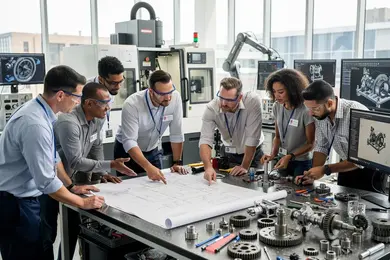
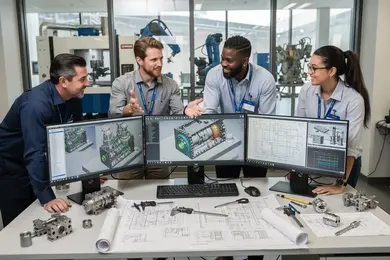
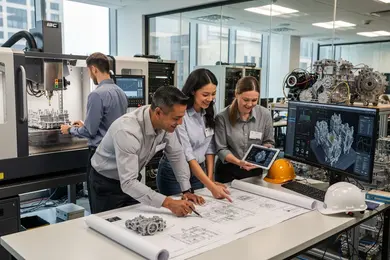
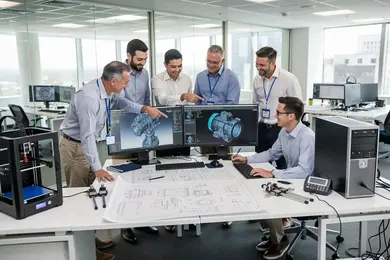
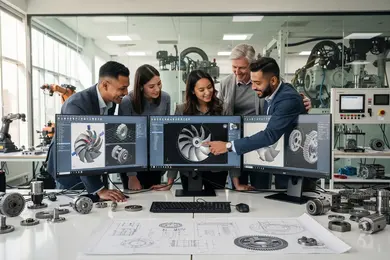
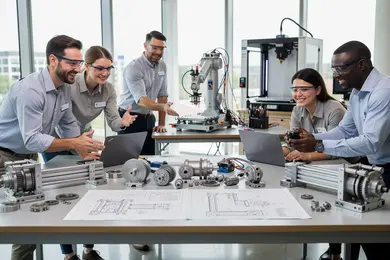
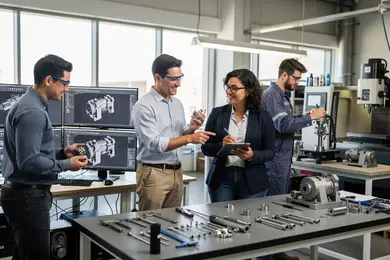
The phrase real-world applied design projects matters because mechanical engineering is not only about solving equations. Employers often look for evidence that students can define a problem, use constraints, create CAD models, run simulations, build or test prototypes, document design decisions, and communicate trade-offs. In strong programs, projects become portfolio evidence, not just class assignments.
Online mechanical engineering is usually best for students who are disciplined, comfortable with math and physics, and able to manage project timelines without daily in-person structure. It can work especially well for military students, working technicians, transfer students, and early-career engineers seeking a master's degree. It may be less suitable for students who need constant access to machine shops, want a highly residential college experience, or struggle to learn quantitative subjects independently.
Students who are mainly interested in biological systems, food science, or patient-centered wellness may find a different STEM path more relevant than machine design; for example, an online nutritionist degree is usually aligned with nutrition science rather than mechanical systems engineering.
The main degree options differ in purpose and career level. The table below summarizes how online mechanical engineering credentials typically compare so you can match the program type to your starting point.
| Credential | Best fit | Typical focus | Important caution |
| Online bachelor's in mechanical engineering | Students seeking entry-level mechanical engineering roles | Foundational engineering science, labs, design sequence, capstone | ABET accreditation is especially important to verify |
| Online bachelor's in mechanical engineering technology | Students interested in applied testing, manufacturing, operations, or technical implementation | Applied systems, equipment, manufacturing processes, technical design | It may not be treated the same as a mechanical engineering degree by all employers or licensing boards |
| Online master's in mechanical engineering | Engineers or STEM graduates seeking specialization or advancement | Advanced analysis, thermal systems, controls, robotics, materials, simulation | Many programs assume prior engineering coursework |
| Graduate certificate | Professionals who need a targeted skill upgrade | Specific topics such as additive manufacturing, CAD/CAE, controls, or energy systems | It is not a substitute for an engineering degree when a role requires one |
How do online mechanical engineering programs compare to campus-based options for design-focused learning?
Online and campus-based mechanical engineering programs can cover the same theory, but the learning experience differs most in labs, teamwork, access to equipment, and instructor interaction. For design-focused students, the question is not whether the program is online; it is whether the program gives you enough structured practice with tools, testing, iteration, and feedback.
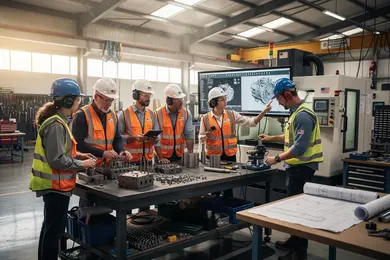
Campus programs offer easier access to machine shops, wind tunnels, materials labs, student competition teams, and in-person prototyping spaces. Online programs offer flexibility and may let students continue working while building engineering credentials. The trade-off is that online students must be more proactive about arranging workspace, collaborating virtually, and documenting projects in a portfolio.
The table below compares the decision factors that matter most when evaluating design-focused learning in each format.
| Factor | Online mechanical engineering | Campus-based mechanical engineering | How to decide |
| Design projects | Often completed through CAD, simulation, team platforms, home kits, and capstone deliverables | Often supported by in-person studios, makerspaces, and shop access | Ask for examples of recent student projects before applying |
| Labs | May use remote labs, mailed kits, virtual instrumentation, or required residencies | Usually conducted in scheduled campus labs | Check whether lab work is synchronous, asynchronous, or in person |
| Teamwork | Requires strong remote collaboration and documentation habits | Benefits from frequent in-person meetings | Look for programs that teach project management, not just technical content |
| Flexibility | Often better for working adults and military students | Often better for students who can study full time on campus | Match the format to your weekly schedule and support needs |
| Career networking | May rely more on virtual career services, internships near home, and employer projects | May offer stronger physical recruiting events and lab-based faculty networking | Ask how online students access internships, career fairs, and alumni networks |
Students comparing engineering fields should also recognize that costs and lab requirements vary by discipline. For example, someone mainly interested in circuits, power systems, or embedded hardware may want to compare mechanical programs with the cheapest online electrical engineering degree options before committing.
For design-focused learning, online is usually a strong option when the program has accredited coursework, clear lab delivery methods, required team projects, instructor feedback on design iterations, and access to standard engineering software. Campus may be better if your goal depends heavily on hands-on fabrication, motorsports teams, robotics clubs, or daily use of specialized physical equipment.
Which U.S. online mechanical engineering degrees are ABET-accredited and industry-recognized?
In the United States, the most important external quality signal for undergraduate engineering programs is ABET accreditation through the Engineering Accreditation Commission. ABET evaluates whether a program meets recognized standards for engineering curriculum, faculty, continuous improvement, student outcomes, and institutional support. Accreditation can change, so students should verify a program directly in the ABET Accredited Program Search before enrolling.
For mechanical engineering, ABET accreditation is especially important if you may pursue the Fundamentals of Engineering exam, Professional Engineer licensure, government engineering roles, defense contractors, or employers with strict degree-screening requirements. Master's programs in mechanical engineering are often offered by respected engineering schools but are not typically evaluated in the same way as bachelor's programs for ABET purposes.
The table below identifies examples of U.S. online or distance-accessible mechanical engineering-related programs that prospective students commonly review. Because delivery format, state authorization, and accreditation status can change, use this as a starting point rather than a final enrollment decision.
| Institution | Online mechanical engineering-related option | Accreditation or recognition point | Best-fit student |
| University of Alabama | Bachelor of Science in Mechanical Engineering delivered online with required lab arrangements | Designed to align with the university's ABET-accredited mechanical engineering program; verify current status by program name | Students seeking an online pathway to a traditional mechanical engineering bachelor's degree |
| University of North Dakota | Online Bachelor of Science in Mechanical Engineering | UND has long offered distance engineering programs; verify current ABET status and any on-campus requirements | Students who want a distance format with structured engineering labs and design work |
| Arizona State University | Online mechanical engineering or mechanical engineering systems pathway, depending on catalog year | ASU engineering programs are widely recognized; confirm the exact degree title and ABET listing before applying | Students who want a large public university with broad online infrastructure |
| Old Dominion University | Online mechanical engineering technology-related degree completion options | Technology programs may have different ABET commission status than engineering programs | Transfer students aiming for applied technical, manufacturing, or systems roles |
| Purdue University, Stanford University, University of Illinois, and other major engineering schools | Online master's-level mechanical engineering or engineering specialization options | Industry recognition is often based on school reputation, faculty strength, and graduate-level curriculum rather than ABET bachelor's accreditation | Working engineers seeking advanced technical depth or career mobility |
A common mistake is assuming that a university's overall accreditation, rankings, or engineering reputation automatically means the specific online mechanical engineering degree is ABET-accredited. Always check the exact program title, degree level, campus or online designation, and accreditation commission.
If a school lists a similar but different degree, such as mechanical engineering technology, confirm how employers and licensing boards in your target field treat that credential.
What core mechanical engineering and design courses do online programs typically include?
Online mechanical engineering programs typically include the same core technical sequence as campus programs. Students move from math and science foundations into engineering analysis, then into design, testing, and capstone work. The best programs connect these courses so students learn not only formulas but also how decisions affect safety, cost, performance, manufacturability, and sustainability.
The table below summarizes common course areas and why each matters for applied design projects.
| Course area | What students learn | How it supports design work |
| Calculus, differential equations, and numerical methods | Mathematical modeling of changing systems | Helps students predict motion, heat transfer, vibration, and system behavior |
| Physics and chemistry | Forces, energy, matter, and material behavior | Builds the science foundation for mechanical systems |
| Statics and dynamics | Forces on stationary and moving bodies | Supports structural design, mechanisms, robotics, and vehicle systems |
| Mechanics of materials | Stress, strain, deformation, and failure | Helps students choose dimensions and materials safely |
| Thermodynamics and heat transfer | Energy conversion, engines, refrigeration, and thermal management | Supports HVAC, power, electronics cooling, and energy-system design |
| Fluid mechanics | Behavior of liquids and gases | Applies to pumps, turbines, aerodynamics, piping, and biomedical devices |
| CAD, CAE, and engineering graphics | 3D modeling, drawings, tolerances, and simulation workflows | Creates portfolio-ready evidence of design skill |
| Manufacturing and materials processing | Machining, casting, additive manufacturing, quality, and process selection | Connects design choices to real production constraints |
| Controls, mechatronics, and instrumentation | Sensors, feedback systems, automation, and data acquisition | Supports robotics, smart products, and automated equipment |
| Senior design or capstone | Team-based problem solving under constraints | Demonstrates readiness for applied engineering work |
Current engineering education is also being reshaped by AI-assisted design, digital twins, additive manufacturing, and simulation-led product development. These tools do not remove the need for engineering fundamentals; they make fundamentals more important because students must judge whether software output is physically realistic, safe, and manufacturable.
Before choosing a program, review sample syllabi to see whether design projects appear throughout the curriculum or only at the end. A stronger sequence usually introduces CAD early, adds analysis and testing in the middle years, and ends with a capstone that requires trade-off analysis, documentation, and presentation to technical reviewers.
How do online mechanical engineering students complete labs, CAD work, and hands-on design projects remotely?
Online mechanical engineering students complete hands-on work through a mix of digital and physical methods. The strongest programs are transparent about which labs are fully remote, which use home equipment, which require synchronous attendance, and whether students must travel for intensive lab sessions.
Because mechanical engineering depends on measurement and iteration, students should understand how remote labs are delivered before enrolling. Common models include the following:
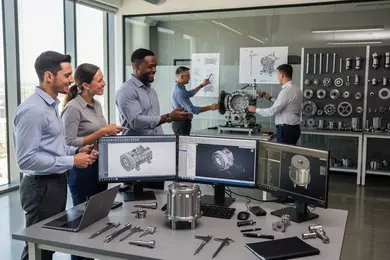
- CAD and simulation assignments: Students use tools such as SolidWorks, AutoCAD, MATLAB, ANSYS, Python, or similar platforms to model geometry, simulate loads, analyze heat flow, or evaluate design alternatives.
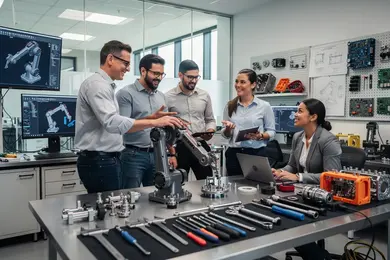
- Mailed lab kits: Programs may send sensors, materials, small mechanical components, circuits, or measurement tools so students can collect real data at home.
- Remote-access laboratories: Students connect to university equipment through online interfaces, run experiments, and analyze live or recorded data.
- Local proctored or partner-site work: Some programs allow students to complete approved lab activities near home with documentation and instructor oversight.
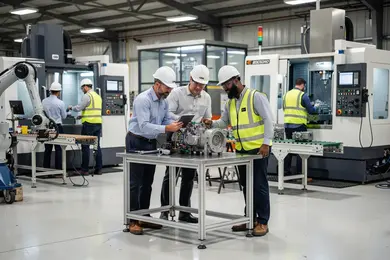
- Short campus residencies: Certain programs require concentrated visits for labs, testing, fabrication, or final design presentations.
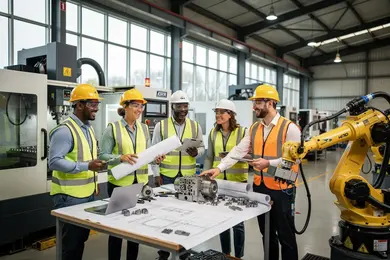
- Industry-sponsored projects: Teams may work with companies or community partners to solve defined engineering problems under real constraints.
A good online design project should have clear requirements, constraints, iteration, testing or validation, and technical communication. A weak project may ask students only to submit a model or calculation without explaining assumptions, alternatives, limitations, or performance results.
Students can strengthen remote project work by building a simple but professional engineering portfolio. The most useful portfolio entries show the problem, design requirements, sketches or concepts, CAD images, analysis results, prototype photos if available, test data, final recommendations, and lessons learned. Employers do not need every homework file; they need evidence that you can think and communicate like an engineer.
What are typical admission requirements for online bachelor's and master's mechanical engineering programs?
Admission requirements vary by degree level, school selectivity, and whether the program is designed for first-year students, transfer students, or working professionals. Mechanical engineering is math-heavy, so admissions teams often look closely at calculus readiness, physics preparation, prior engineering coursework, and academic performance in technical subjects.
The table below summarizes typical requirements so applicants can identify gaps before they apply.
| Program level | Typical academic requirements | Common supporting materials | What to check carefully |
| Online bachelor's for first-year students | High school diploma or equivalent, strong math preparation, physics or chemistry recommended | Transcripts, test scores if required, application essays, placement assessments | Whether you can start directly in calculus or need prerequisite math |
| Online bachelor's degree-completion program | Transfer credits in calculus, physics, chemistry, general education, and introductory engineering | College transcripts, course descriptions, transfer evaluation | How many credits transfer into the major rather than only as electives |
| Online master's in mechanical engineering | Bachelor's degree in mechanical engineering or a closely related engineering field | Transcripts, resume, statement of purpose, recommendations, GRE if required | Whether bridge courses are required for non-ME applicants |
| Graduate certificate | Bachelor's degree or relevant technical background, depending on the certificate | Resume, transcripts, professional experience documentation | Whether credits can later apply to a master's degree |
Applicants can improve their readiness before applying by focusing on the academic bottlenecks that most often delay engineering students. The following steps are especially useful for transfer and adult learners:
- Complete calculus and calculus-based physics as early as possible if the target program accepts transfer coursework.
- Ask for a preliminary transfer-credit review before committing to a school.
- Confirm whether labs must be completed through the university or can transfer from another institution.
- Prepare a short technical resume that lists CAD tools, programming, manufacturing exposure, military technical work, internships, or technician experience.
- Ask whether online students have the same faculty access, tutoring, advising, and career services as campus students.
Students exploring science-oriented online degrees should make sure the curriculum matches their preferred type of problem solving. For instance, an engineering applicant who is actually more interested in earth systems, environmental fieldwork, or resource exploration may want to compare mechanical engineering with an online geology degree before choosing a path.
How long do online mechanical engineering degrees take, and what do they cost?
An online bachelor's in mechanical engineering typically takes about four years for full-time first-year students, but transfer students may finish faster depending on accepted credits and course sequencing. Part-time students often need longer because engineering courses have prerequisites that cannot always be taken out of order. Online master's programs commonly take one to three years, depending on course load, thesis requirements, and employer or family obligations.
Cost is harder to compare than advertised tuition suggests. According to College Board's 2024 Trends in College Pricing and Student Aid, published tuition and fees for public four-year in-state students averaged $11,610 for the academic year. That figure is a useful benchmark, but engineering students should still compare program-specific tuition, online fees, lab fees, software, travel requirements, and how many credits they must actually complete at the institution.
Engineering programs can be less compressible than some other online degrees because prerequisites, labs, and capstones are sequenced carefully. If speed is your top priority and you are comparing broader science or health-related options, an accelerated exercise science degree online may illustrate how other fields sometimes offer more flexible acceleration than mechanical engineering can responsibly provide.
When schools publish specific tuition, compare the total cost of completion rather than the per-credit price alone. Key cost categories usually include the following:
- Tuition per credit or per term
- Mandatory online learning, technology, or distance education fees
- Engineering lab fees, lab kits, or equipment deposits
- CAD, simulation, programming, or proctoring costs not covered by the school
- Travel and lodging for any required campus residencies
- Textbooks, standards, calculators, safety equipment, or materials
- Lost income if the program requires reduced work hours
The table below shows how timeline and cost trade-offs usually work in online mechanical engineering programs.
| Path | Typical time commitment | Cost advantage | Possible trade-off |
| Full-time online bachelor's | Usually the fastest bachelor's route if prerequisites are taken on schedule | May reduce time-to-degree | Hard to balance with full-time work due to labs and technical workload |
| Part-time online bachelor's | Often longer because of course sequencing | Allows continued employment | Delayed graduation can increase opportunity cost |
| Transfer-based bachelor's completion | Can shorten the path if math, science, and engineering credits transfer well | Community college credits may reduce total tuition | Poor transfer alignment can erase expected savings |
| Online master's while working | Often one to three years | Employer tuition assistance may help | Workload can be intense during project-heavy courses |
| Graduate certificate first | Often shorter than a full master's | Lower upfront commitment | May not deliver the same career mobility as a full degree |
To reduce cost risk, ask each school for a written degree plan, transfer-credit estimate, total program cost estimate, and list of required in-person components. A low tuition rate is not automatically the cheapest route if few credits transfer or if travel requirements are frequent.
What entry-level and advanced careers can an online mechanical engineering degree lead to?
An online mechanical engineering degree can lead to roles in product development, manufacturing, energy, aerospace, automotive systems, HVAC, robotics, biomedical devices, materials, defense, and industrial equipment. Career options depend on degree level, internship experience, software skills, location, and whether the degree is engineering or engineering technology.
The table below maps common career paths to responsibilities and preparation level. It is meant to help you connect the degree to actual work, not to imply that every graduate qualifies automatically for every title.
| Career path | Typical responsibilities | Common preparation | Portfolio or experience that helps |
| Mechanical engineer | Design, analyze, test, and improve mechanical systems or components | ABET-accredited bachelor's in mechanical engineering often preferred | CAD models, simulation work, capstone projects, internships |
| Product design engineer | Develop products from concept through testing and manufacturability review | Bachelor's in mechanical engineering or related field | Design portfolio, prototyping, tolerance analysis, user-centered constraints |
| Manufacturing engineer | Improve production processes, tooling, quality, and workflow | Mechanical engineering, industrial engineering, or engineering technology background | Lean, CAD/CAM, process documentation, plant or technician experience |
| HVAC or thermal systems engineer | Design or evaluate heating, cooling, ventilation, and energy systems | Mechanical engineering degree with thermal-fluid coursework | Thermodynamics projects, energy modeling, building systems exposure |
| Robotics or automation engineer | Integrate mechanical systems, sensors, controls, and automated equipment | Mechanical engineering plus controls, programming, or mechatronics | Controls projects, Python or MATLAB, microcontrollers, robotics builds |
| Aerospace or automotive engineer | Work on propulsion, structures, thermal systems, vehicles, or subsystems | Mechanical engineering with industry-specific electives or internships | Simulation, fluids, materials, vehicle or aerospace design projects |
| Engineering manager or technical lead | Coordinate projects, budgets, teams, design reviews, and technical decisions | Engineering experience plus graduate study or leadership training | Project ownership, communication, cross-functional leadership |
Entry-level applicants should not rely on the degree alone. Mechanical engineering hiring often rewards visible technical evidence, so students should pursue internships, co-ops, undergraduate research, student design competitions, open-source engineering projects, technician roles, or employer-sponsored capstones when available.
A common mistake is choosing the broadest-sounding degree without checking whether it fits the target job. For example, a student who wants licensed mechanical design work may need a different path than a student who wants manufacturing operations or CAD technician roles. Read job postings in your target region before enrolling and note which degree titles, software tools, certifications, and experience levels appear repeatedly.
What salary ranges and job outlook can mechanical engineers expect in the United States?
Mechanical engineering remains a broad and resilient field because mechanical systems appear in energy, transportation, manufacturing, construction, automation, defense, and consumer products. BLS 2024 Occupational Outlook Handbook data reports a $99,510 median annual wage for mechanical engineers and projects 11% employment growth for the occupation. That growth outlook is stronger than many occupations, but it should be used as a labor-market indicator rather than a personal salary prediction.
Pay varies by industry, region, experience, security clearance, licensure, graduate education, and technical specialization. Students who build skills in simulation, automation, thermal systems, additive manufacturing, data analysis, and design-for-manufacturing may be better positioned for modern engineering roles, but salaries are never guaranteed by the degree alone.
The table below summarizes how mechanical engineering career stages often differ. The ranges are described qualitatively because employer pay bands vary widely across U.S. markets.
| Career stage | Typical role profile | What tends to influence pay | What to build next |
| Entry level | Engineer I, design engineer, manufacturing engineer, test engineer | Internships, ABET degree, location, software skills, industry | Portfolio, FE exam if relevant, mentorship, project documentation |
| Early to mid-career | Project engineer, product engineer, systems engineer, thermal engineer | Project ownership, specialized tools, domain knowledge, cross-functional experience | Advanced simulation, controls, manufacturing, or industry specialization |
| Advanced technical | Senior engineer, principal engineer, subject-matter expert | Depth of expertise, patents, regulated-industry experience, complex design responsibility | Graduate coursework, publications, standards knowledge, leadership in design reviews |
| Leadership | Engineering manager, program manager, technical director | Team leadership, budgeting, stakeholder management, business impact | Management training, systems thinking, communication, financial literacy |
AI and automation are changing mechanical engineering tasks, especially early concept generation, simulation setup, drafting assistance, predictive maintenance, and manufacturing optimization. Rather than replacing engineering judgment, these tools increase the value of professionals who can define constraints, validate outputs, understand failure modes, and communicate risk clearly.
Students interested in licensure should research state requirements early. Many mechanical engineers work without a Professional Engineer license, but PE licensure can matter in building systems, public safety, consulting, government work, and roles where engineers sign or seal designs. Requirements vary by state and usually involve education, exams, and supervised experience.
How can prospective students evaluate and choose a reputable online mechanical engineering program?
Choosing a reputable online mechanical engineering program requires more than comparing tuition, rankings, or brand names. The right program should fit your career goal, learning style, schedule, budget, accreditation needs, and access to hands-on design work. A reputable program should also be transparent about outcomes, lab delivery, faculty qualifications, transfer credit, and student support.
Use the following steps to evaluate programs before applying or paying an enrollment deposit:
- Verify institutional accreditation and, for bachelor's mechanical engineering programs, check the exact program name in the ABET database.
- Ask how labs are completed, including whether any campus visits, mailed kits, remote equipment sessions, or local proctors are required.
- Request examples of recent capstone or applied design projects completed by online students.
- Confirm which CAD, simulation, programming, and analysis tools students use and whether licenses are included in tuition.
- Compare total completion cost, not just per-credit tuition, including fees, software, travel, and transfer-credit loss.
- Review faculty access, tutoring, advising, and technical support for online students.
- Ask how online students access internships, co-ops, employer projects, career fairs, and alumni networks.
- Read job postings for your target roles and compare their requirements with the curriculum.
- Check whether the program supports FE exam preparation if licensure may matter to your career.
- Talk to current students or recent graduates if the school can connect you with them.
Watch for red flags that can create financial or career problems later. These include vague accreditation language, no clear lab plan, limited design coursework, high-pressure admissions tactics, unclear transfer policies, missing faculty information, and promises about jobs or salaries. A trustworthy school should answer detailed questions directly and in writing.
The smartest choice is the program that gives you credible accreditation, real design practice, manageable cost, and a clear route to the roles you actually want. If a program is affordable but lacks recognized accreditation or meaningful applied projects, it may not deliver the professional value you need.
Other Things You Should Know About Mechanical Engineering
Possibly, but it depends on the exact degree, ABET status, state licensing rules, exams, and supervised experience. If PE licensure may matter to your career, verify requirements with your state board before enrolling.
Many employers focus on accreditation, school reputation, technical skills, internships, and project experience rather than delivery format alone. The degree should clearly state the credential earned and provide evidence of rigorous engineering work.
For an online mechanical engineering program, a computer with a multi-core processor like Intel i5 or i7, at least 16GB of RAM, and a dedicated graphics card is recommended. This setup can efficiently handle CAD software and simulations commonly required in applied design projects.
References
- Online ABET-Accredited Engineering Degree Guide - Educating Engineers https://educatingengineers.com/online-engineering-schools/abet-accredited-degree/
- Campus vs Online Engineering Degrees - What Employers Think https://www.itcareerfinder.com/brain-food/blog/entry/what-employers-think-about-online-engineering-degrees.html
- Latest CAD mini projects for mechanical engineering students https://www.skyfilabs.com/blog/best-cad-based-mechanical-engineering-mini-projects
- Online Mechanical Engineering Degrees 2025 https://www.affordablecollegesonline.org/degrees/engineering-programs/mechanical-engineering/
- Online Programs Search https://amspub.abet.org/aps/online-search
- What Classes Do Mechanical Engineers Take In College? https://www.grace.edu/what-classes-do-mechanical-engineers-take-in-college/
- How to Evaluate If an Engineering Program Is a Good Fit - Your College-Bound Kid https://yourcollegeboundkid.com/2023/03/10/how-to-evaluate-if-an-engineering-program-is-a-good-fit/
- Design Automation for Mechanical Engineers: 7 Real Examples - GaugeHow – Mechanical Engineering Skills Platform https://gaugehow.com/blog/design-automation-for-mechanical-engineers
- A COMPARATIVE ANALYSIS OF DESIGN AND ... https://www.designsociety.org/download-publication/46826/a_comparative_analysis_of_design_and_manufacture_teaching_in_mechanical_engineering
- Find Programs - ABET https://www.abet.org/accreditation/find-programs/