2027 Online Mechanical Engineering Degrees With Capstone Support for Working Adults

Co-Founder and Chief Data Scientist
Choosing an online mechanical engineering degree is a high-stakes decision for working adults because the program must fit around a job while still meeting engineering rigor. The U. S. Bureau of Labor Statistics reports a 2024 median pay of $102,320 for mechanical engineers, making program quality, accreditation, and capstone support especially important. This guide explains how online formats work, what admissions and costs look like, how capstone projects are managed remotely, and how to evaluate whether a program aligns with your career goals, schedule, and return on investment.
Key Things You Should Know
- For U.S. mechanical engineering bachelor's programs, ABET Engineering Accreditation Commission accreditation is the key quality signal because many employers, graduate programs, and licensing boards use it as a benchmark.
- Working adults should compare total program cost, not tuition alone; College Board's 2024 data shows published tuition and fees averaging $11,610 for in-state public four-year institutions and $43,350 for private nonprofit four-year institutions.
- Mechanical engineers had a 2024 median annual wage of $102,320, but outcomes vary by industry, location, experience, security clearance needs, software skills, and whether the role requires licensure.
What is an online mechanical engineering degree with a capstone for working adults?
An online mechanical engineering degree is a bachelor's or master's program that delivers most coursework through a learning platform while preserving the technical requirements of engineering education. For working adults, the most practical programs combine asynchronous lectures, scheduled virtual labs or design meetings, remote simulation tools, transfer-credit pathways, and advising that understands nontraditional student schedules.
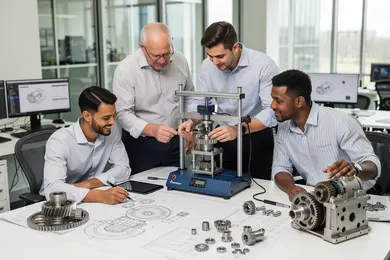
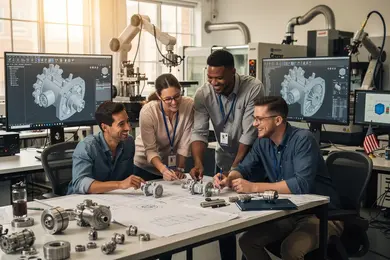
The capstone is the culminating design experience. In a mechanical engineering program, it usually requires students to define a real engineering problem, model possible solutions, build or simulate a prototype, test performance, document trade-offs, and present results. A strong capstone does more than satisfy a graduation requirement; it gives working adults a portfolio project they can discuss with employers.
Students comparing an online mechanical engineering degree should pay close attention to whether the program is fully online, mostly online with short campus visits, or hybrid with required labs. "Online" can mean very different things depending on the school, especially in engineering fields where design, experimentation, and team collaboration matter.
This format tends to fit adults who already have some college credit, military training, technical work experience, or an associate degree in engineering technology, pre-engineering, physics, or mathematics. It may be less suitable for students who need daily in-person tutoring, prefer hands-on labs every week, or cannot commit predictable time to advanced math and design work.
How do online mechanical engineering programs compare to campus-based options for flexibility and rigor?
Online mechanical engineering programs can be just as academically rigorous as campus programs when they use the same faculty standards, accreditation expectations, assessments, and design requirements. The main difference is not the level of difficulty; it is how students access lectures, labs, teamwork, office hours, and capstone supervision.
The table below summarizes the trade-offs that matter most to working adults. Use it to decide whether flexibility or in-person structure is the stronger priority for your situation.
| Factor | Online mechanical engineering program | Campus-based mechanical engineering program |
| Schedule fit | Often better for full-time workers because lectures may be asynchronous and advising may be virtual. | Better for students who can attend daytime classes, labs, and team meetings on campus. |
| Academic rigor | Can be equivalent when the curriculum, faculty expectations, and accreditation standards match campus requirements. | Rigor is usually visible through in-person labs, exams, design reviews, and faculty interaction. |
| Lab access | May use lab kits, simulations, local proctors, partner facilities, or short residencies. | Usually provides direct access to campus labs, machine shops, and testing equipment. |
| Networking | Requires more intentional effort through virtual teams, professional societies, employer projects, and alumni outreach. | Networking may happen more naturally through clubs, labs, research groups, and campus recruiting. |
| Best fit | Working adults, military learners, caregivers, and transfer students who need geographic flexibility. | Students who want daily campus access, undergraduate research, or intensive hands-on design spaces. |
Online learning can reduce commuting and relocation costs, but it does not reduce the need for time management. A realistic schedule for a working adult often means taking fewer credits per term, planning capstone milestones early, and using employer support when the final design project overlaps with workplace engineering problems.
Which accreditation standards should online mechanical engineering degrees meet in the United States?
In the United States, the most important program-level accreditation for a mechanical engineering bachelor's degree is accreditation by the Engineering Accreditation Commission of ABET. ABET accreditation signals that a program has been reviewed for faculty qualifications, curriculum depth, student outcomes, continuous improvement, engineering design, and institutional support.
Accreditation matters because mechanical engineering is a profession where public safety, technical competence, and design accountability are central. It can affect eligibility for the Fundamentals of Engineering exam in some states, employer screening, graduate school admission, and long-term professional engineering licensure pathways.
Before enrolling, students should verify several layers of quality assurance rather than relying on a school's marketing language. These checks are especially important for online programs because delivery format can differ from the campus version.
- Confirm that the institution is accredited by a recognized institutional accreditor.
- Check whether the specific mechanical engineering program, not just the university, is ABET EAC-accredited.
- Ask whether the online pathway appears under the same accredited program listing or has separate requirements.
- Review whether required labs, exams, and capstone work can be completed from your state or location.
- If licensure matters to your career plan, contact your state engineering board before enrolling.
A common mistake is assuming that "engineering technology," "mechanical engineering technology," and "mechanical engineering" are interchangeable. They can lead to overlapping careers, but they are not always treated the same for licensure, graduate study, or design-engineer roles.
What prerequisites and admission requirements do online mechanical engineering programs typically have?
Online mechanical engineering programs usually expect applicants to show readiness for calculus-based engineering study. This is why admissions reviews often focus less on general interest and more on completed math, science, and foundational engineering coursework.
Requirements vary by school and degree level, but working adults should be prepared to document both academic preparation and schedule readiness. The following requirements are common across many U.S. programs.
- High school diploma, GED, or prior college transcript showing transferable credit.
- College algebra, trigonometry, precalculus, or calculus placement depending on program entry point.
- Prior coursework in physics, chemistry, computer programming, engineering graphics, or statics for upper-division transfer programs.
- Minimum GPA requirements that may differ for first-year, transfer, and readmission applicants.
- Official transcripts from all colleges attended, including community college and military credit sources.
- English proficiency documentation for applicants educated in another language.
- For graduate programs, a bachelor's degree in mechanical engineering or a closely related engineering field may be required.
Transfer students should ask for a course-by-course evaluation before committing. An associate degree can shorten the timeline, but only if calculus, physics, engineering mechanics, and general education courses transfer cleanly into the bachelor's plan.
Students who are missing prerequisites should not automatically rule out engineering. A community college sequence in calculus, physics, and introductory engineering can be a lower-cost way to test readiness before entering a more expensive upper-division online program.
How long do online mechanical engineering degrees take and what do they cost?
A bachelor's degree in mechanical engineering typically requires about 120 to 130 credits. Full-time students may finish in about four years, while working adults often take longer because they enroll part time, pause for work demands, or need additional prerequisites before upper-division engineering courses.
Costs vary widely by residency status, institution type, transfer credit, lab fees, and whether the program charges online tuition differently from campus tuition. College Board's 2024 data places average published tuition and fees at $11,610 for in-state students at public four-year institutions, which gives working adults a useful benchmark when comparing public online options.
The table below shows common timeline and cost variables. It is not a price quote; it is a framework for identifying what will actually change your out-of-pocket cost and completion date.
| Variable | How it affects time | How it affects cost |
| Transfer credits | Can reduce the number of remaining semesters if credits apply to required courses. | Can lower total tuition, but only when credits count toward the degree plan. |
| Part-time enrollment | Extends completion time but may make the program sustainable with full-time work. | Can spread payments over more terms, though fees may accumulate. |
| Residency status | Usually does not affect pace. | Can significantly affect public university tuition if out-of-state rates apply. |
| Lab or residency requirements | May require planning around travel or employer leave. | Adds possible costs for travel, lodging, equipment, or local proctoring. |
| Employer tuition assistance | May influence how many courses a student takes each term. | Can reduce net cost, but annual caps and grade requirements often apply. |
To estimate affordability, compare the full cost of attendance rather than the advertised per-credit rate. Include tuition, mandatory fees, textbooks, software, lab kits, travel for any residencies, lost wages if you reduce work hours, and interest if you borrow.
What core courses and capstone project experiences are included in online mechanical engineering curricula?
Mechanical engineering curricula are built around applied math, physical science, engineering mechanics, design, computation, and experimentation. Online programs may deliver lectures digitally, but students should still expect demanding quantitative assignments and team-based design work.
The curriculum usually progresses from foundational theory to applied design. These course areas help students build the skills needed for thermal systems, manufacturing, robotics, energy systems, product design, and mechanical analysis roles.
- Calculus, differential equations, linear algebra, and numerical methods.
- Physics, chemistry, and materials science.
- Statics, dynamics, mechanics of materials, and machine design.
- Thermodynamics, fluid mechanics, heat transfer, and energy systems.
- Computer-aided design, simulation, programming, controls, and instrumentation.
- Manufacturing processes, quality systems, engineering economics, and project management.
- Technical communication, engineering ethics, safety, and design documentation.
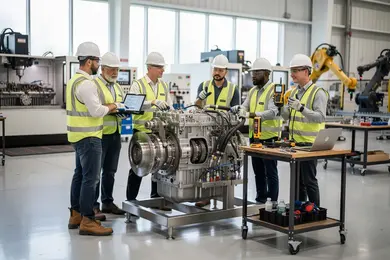
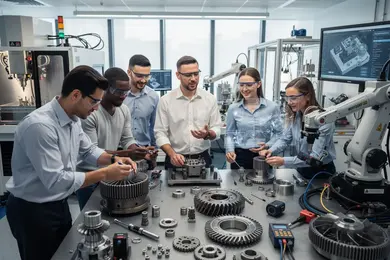
The capstone usually asks students to integrate several of these areas into one substantial project. A working adult might design a fixture that improves production throughput, model a heat exchanger, develop a robotic subsystem, evaluate a failure mode, or prototype a device that solves a real operational problem.
AI-enabled design tools, simulation platforms, and data-driven manufacturing are becoming more visible in engineering work. Students interested in advanced analytics may also compare related data science degrees, but mechanical engineering remains the stronger fit when the goal is to design, test, and improve physical systems.
How do online mechanical engineering programs support capstone projects for working professionals?
Capstone support is one of the biggest differences between a strong online engineering program and a weak one. Working adults need structure, faculty access, clear milestones, and realistic project scopes because capstone work often competes with job deadlines and family responsibilities.
Strong programs make the capstone manageable without lowering expectations. Look for support mechanisms that help students complete design work, collaborate with teammates, and document results in a professional way.
- Early project planning, ideally one or two terms before the final capstone course begins.
- Faculty mentors with mechanical engineering expertise relevant to the project area.
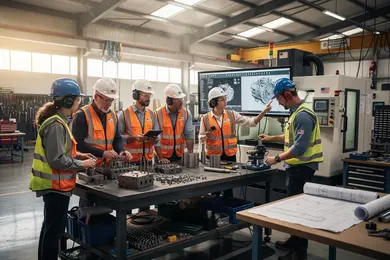
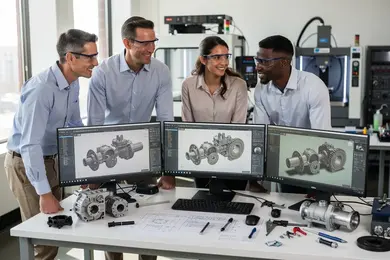
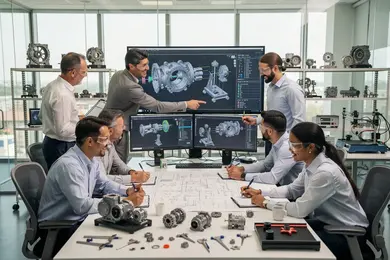
- Virtual design reviews using CAD models, simulations, test data, and engineering reports.
- Clear policies for employer-sponsored projects, confidentiality, intellectual property, and safety approval.
- Access to approved software for modeling, simulation, data analysis, and technical documentation.
- Options for remote testing, mailed components, local fabrication, campus residencies, or workplace-based validation.
- Team collaboration tools that support version control, meeting records, task tracking, and peer accountability.
Working adults should ask whether they can use a workplace problem as a capstone topic. This can create a stronger portfolio outcome, but it requires written approval from the employer and the school, especially when proprietary data, safety standards, or equipment access are involved.
A red flag is a program that describes the capstone only as a final paper. Mechanical engineering capstones should involve design decisions, analysis, constraints, testing or validation, and professional presentation, even when the work is completed remotely.
What mechanical engineering careers can graduates pursue and in which industries?
Mechanical engineering graduates can pursue roles that involve designing, analyzing, testing, manufacturing, maintaining, or improving mechanical systems. The degree is broad, which is useful for working adults who want career mobility across industries rather than training for only one narrow job title.
The table below connects common career paths with the type of work graduates may encounter. Actual job titles depend on the employer, industry, location, and whether the role is entry-level or requires experience.
| Career path | Typical responsibilities | Common industries |
| Mechanical design engineer | Creates CAD models, selects materials, evaluates tolerances, and improves product designs. | Manufacturing, consumer products, aerospace, automotive, medical devices. |
| Manufacturing engineer | Improves production processes, tooling, quality, automation, and workflow efficiency. | Industrial manufacturing, electronics, automotive, defense, energy equipment. |
| Thermal or fluids engineer | Analyzes heat transfer, fluid flow, HVAC systems, combustion, or energy performance. | Energy, aerospace, building systems, power generation, semiconductor manufacturing. |
| Test engineer | Develops test plans, collects performance data, evaluates failures, and documents results. | Automotive, aerospace, robotics, defense, product development. |
| Reliability or quality engineer | Investigates failures, improves quality systems, and supports compliance or safety goals. | Medical devices, manufacturing, transportation, energy, regulated industries. |
Mechanical engineering can also intersect with sustainability, education, and environmental systems, but students should compare degree fit carefully. If your interests lean more toward environmental policy, conservation, or teaching-related pathways, reviewing resources on jobs with elementary education and environmental science degree can help clarify whether a different academic route is more appropriate.
Career advancement often depends on combining the degree with industry-specific tools and credentials. Examples include CAD certifications, Six Sigma training, project management experience, security clearance eligibility, or a Professional Engineer license for roles involving public engineering services.
What salary ranges and job outlook can mechanical engineers expect in the United States?
The U.S. Bureau of Labor Statistics reports that mechanical engineers had a 2024 median annual wage of $102,320. Median wage is not a starting salary and not a guarantee; it represents the midpoint across workers with different experience levels, industries, regions, and responsibilities.
The BLS also projects employment for mechanical engineers to grow 11% from 2023 to 2033, which is faster than the average for all occupations. For students, this suggests a healthy national outlook, but hiring still depends on local industry presence, internship experience, technical software skills, and the condition of sectors such as manufacturing, aerospace, energy, and transportation.
Salary potential varies because mechanical engineering is used in many markets. A design role in a small local manufacturer may pay differently from a defense, semiconductor, aerospace, or energy role that requires specialized simulation tools, clearance eligibility, or years of testing experience.
Working adults should evaluate return on investment using a conservative approach. Compare expected debt, time to completion, current earnings, likely entry point after graduation, and whether your employer offers advancement for completing an accredited engineering degree.
How can students evaluate and choose a reputable online mechanical engineering program?
The best online mechanical engineering program is not simply the cheapest, fastest, or highest-ranked option. It is the program that meets accreditation expectations, fits your schedule, supports capstone completion, accepts the right transfer credits, and aligns with your career goal.
Use a structured evaluation process before applying. This reduces the risk of choosing a program that looks convenient but creates problems later with licensure, transfer credit, labs, or employer recognition.
- Verify institutional accreditation and ABET EAC accreditation for the specific mechanical engineering program.
- Request a written transfer-credit evaluation before estimating your graduation date.
- Ask how labs are completed, including whether travel, kits, local facilities, or proctored exams are required.
- Review capstone expectations, faculty mentoring, team formation, software access, and employer-sponsored project policies.
- Calculate total cost of attendance, including fees, equipment, software, travel, and financing costs.
- Ask about career services for online students, including resume reviews, employer connections, and alumni networking.
- Confirm whether the program satisfies your state's requirements if you plan to pursue engineering licensure.
Common mistakes include choosing a non-ABET program without understanding the trade-offs, assuming all credits will transfer, ignoring lab logistics, and focusing only on tuition instead of completion cost. Another mistake is choosing a degree based on general prestige rather than fit; the same decision discipline applies when asking questions such as is a library science degree worth it, because value depends on career goals, credential expectations, and realistic outcomes.
A reputable program should be transparent. If admissions staff cannot clearly explain accreditation, lab requirements, capstone structure, total cost, transfer credit, and licensure considerations, treat that as a sign to keep comparing options.
Other Things You Should Know About Mechanical Engineering
By 2026, online mechanical engineering students should master software like AutoCAD, SolidWorks, and MATLAB. Additionally, proficiency in coding languages such as Python and C++ is valuable as these tools enhance design, simulation, and analysis skills crucial for the industry.
Internships are not always required, but they can be very valuable. Working adults may be able to use current technical employment, co-op experience, military experience, or employer-sponsored projects to demonstrate applied skills, depending on the program's policies.
Mechanical engineering usually places more emphasis on calculus-based theory, analysis, and design, while engineering technology is often more applied and implementation-focused. Neither is automatically better; the right choice depends on whether you want design-engineer, technologist, manufacturing, or hands-on technical roles.
References
- How to Evaluate If an Engineering Program Is a Good Fit - Your College-Bound Kid https://yourcollegeboundkid.com/2023/03/10/how-to-evaluate-if-an-engineering-program-is-a-good-fit/
- Online Mechanical Engineering Degrees 2025 https://www.affordablecollegesonline.org/degrees/engineering-programs/mechanical-engineering/
- Engineering capstone courses help students transition from school to work https://researchoutreach.org/articles/engineering-capstone-courses-help-students-transition-school-work/
- Accreditation - ABET https://www.abet.org/accreditation/
- Mechanical Engineering Capstone - School of Science, Technology, Engineering & Mathematics https://www.uwb.edu/stem/undergraduate/majors/mechanical/capstone
- Undergraduate Program - Mechanical Engineering https://mechanical.mines.edu/undergraduate-program/
- High School Engineering Curriculum Grades 9-12 | PLTW https://www.pltw.org/curriculum/pltw-engineering
- What jobs can you do with a mechanical engineering degree? https://targetjobs.co.uk/careers-advice/engineering/what-jobs-can-you-do-mechanical-engineering-degree