2027 Online Mechanical Engineering Degrees That Help Build Engineering Communication Skills

Co-Founder and Chief Data Scientist
Choosing an online mechanical engineering degree is not just about learning thermodynamics, design, and controls; it is also about learning how to explain technical decisions clearly. The U. S. Bureau of Labor Statistics reported a May 2024 median annual wage of $102,320 for mechanical engineers, making program quality and career fit important financial decisions. This guide is for prospective undergraduates, working technicians, military learners, and career changers who want a flexible engineering path. You will learn how to compare accreditation, communication training, costs, timelines, admissions, and career outcomes before enrolling.
Key Things You Should Know
- For bachelor's programs, ABET accreditation is the clearest signal that an online mechanical engineering curriculum meets recognized engineering standards; for master's programs, institutional accreditation and employer recognition matter more because ABET usually accredits undergraduate engineering programs.
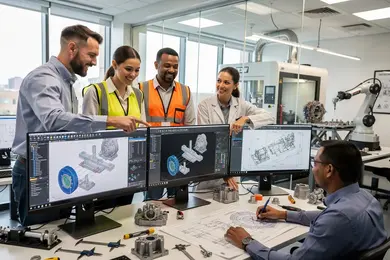
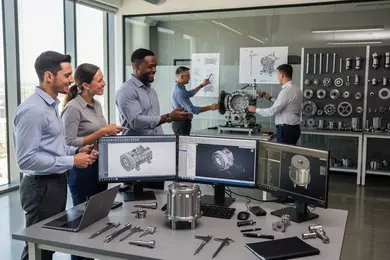
- Communication skills are built through lab reports, design reviews, CAD documentation, capstone presentations, peer collaboration, and client-style project briefs, not only through standalone writing courses.
- Mechanical engineers had a May 2024 median annual wage of $102,320, but outcomes vary by industry, region, experience, clearance requirements, and whether graduates can communicate design trade-offs to technical and nontechnical stakeholders.
What is an online mechanical engineering degree that builds engineering communication skills?
An online mechanical engineering degree is a bachelor's or graduate program delivered mostly or fully through digital coursework, remote labs, simulation tools, recorded lectures, live sessions, and project-based assignments. The degree covers mechanical systems, materials, manufacturing, dynamics, fluids, heat transfer, controls, design, and engineering analysis.
A program that builds engineering communication skills intentionally teaches students how to document calculations, defend design choices, write technical reports, collaborate across disciplines, and present recommendations to audiences who may not share the same technical background.
This matters because mechanical engineers rarely work alone. They communicate with electrical engineers, software teams, manufacturing specialists, finance leaders, safety reviewers, clients, suppliers, and regulators. A strong online program should therefore train students to convert complex analysis into clear decisions.
The degree is usually a good fit for learners who want engineering roles in product design, energy systems, aerospace, robotics, manufacturing, HVAC, automotive technology, or advanced materials. It may be a poor fit for students who dislike advanced math, want a short nondegree credential, or need a hands-on shop environment every day.
Those learners may prefer engineering technology, drafting, mechatronics certificates, or a campus-based program with more physical lab access.
The table below summarizes common online mechanical engineering degree types and how each usually supports communication development. Use it to match the credential level to your current education and career target.
| Degree type | Typical learner | Communication training emphasis | Best fit |
| Online Bachelor of Science in Mechanical Engineering | First-time engineering students or transfer students | Lab reports, design documentation, team projects, capstone presentations | Entry-level mechanical engineering roles that require an engineering degree |
| Online Bachelor of Science in Mechanical Engineering Technology | Hands-on learners focused on applied systems | Technical documentation, test procedures, manufacturing reports, applied project communication | Engineering technologist, manufacturing, quality, and field-support roles |
| Online Master of Science in Mechanical Engineering | Engineers seeking specialization or advancement | Research writing, design justification, advanced project proposals, technical presentations | Specialist, senior engineer, research-oriented, or leadership-track roles |
| Online Master of Engineering in Mechanical Engineering | Working professionals focused on practice | Industry reports, systems-level decision memos, project communication, stakeholder briefings | Applied engineering leadership, product development, and technical management paths |
How do online mechanical engineering programs compare to on-campus options for communication training?
Online and on-campus mechanical engineering programs can teach communication well, but they do it differently. Campus programs may offer more spontaneous interaction in labs and design studios, while online programs often require more deliberate written communication because students coordinate across time zones, learning platforms, shared files, and virtual meetings.
The comparison below shows how communication training commonly differs by format. The better option depends on whether you need maximum flexibility, physical lab immersion, or structured face-to-face teamwork.
| Training area | Online mechanical engineering programs | On-campus mechanical engineering programs | Decision takeaway |
| Team communication | Often uses discussion boards, video meetings, shared CAD files, project management tools, and written status updates | Often uses in-person design meetings, lab sessions, and informal collaboration | Online programs can be strong for workplace-style remote collaboration if projects are well designed |
| Technical writing | Usually emphasizes written submissions, lab reports, design memos, and recorded presentations | Usually combines written work with in-class discussion and live critique | Online formats may give students more practice producing clear written documentation |
| Lab communication | May use lab kits, simulation data, remote instrumentation, or short campus residencies | Often uses scheduled physical labs and direct equipment access | Students seeking extensive equipment time should ask detailed lab-access questions before enrolling online |
| Presentation skills | May use recorded video presentations, live virtual reviews, and digital design portfolios | Often uses live classroom presentations and poster sessions | Both formats can work, but online students should look for frequent feedback on presentation quality |
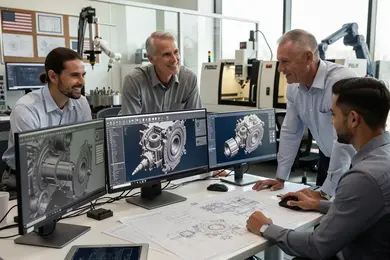
The strongest online programs make collaboration visible. They grade not only the final design but also meeting notes, version control, peer evaluations, design rationale, and final technical briefings. That structure helps students practice the kind of communication expected in distributed engineering teams.
Common mistakes include assuming online means less interaction, choosing a program with no team-based design sequence, or overlooking whether presentations are graded by engineering faculty. A practical way to avoid these mistakes is to request sample syllabi for design, lab, and capstone courses before applying.
Which U.S. online mechanical engineering degrees are accredited and industry-recognized?
Accreditation is one of the most important quality checks for online mechanical engineering degrees. For U.S. bachelor's-level engineering programs, look for programmatic accreditation from the Engineering Accreditation Commission of ABET. For engineering technology programs, look for Engineering Technology Accreditation Commission of ABET accreditation. Regional or institutional accreditation also matters because it affects federal financial aid eligibility, credit transfer, and graduate school recognition.
The table below explains the main recognition signals and what they mean for decision-making. Always confirm current status through the school and the accreditor before enrolling because accreditation status can change.
| Recognition signal | Why it matters | What to verify |
| ABET accreditation for a bachelor's engineering program | Shows that the curriculum, faculty, outcomes assessment, and continuous improvement process meet recognized engineering standards | Confirm the exact program name, campus or online delivery designation if listed, and accreditation commission |
| Institutional accreditation | Supports federal aid access, transferability, and basic institutional quality review | Confirm the institution is accredited by an agency recognized by the U.S. Department of Education |
| Employer and industry recognition | Important for online master's programs, where ABET is less commonly the deciding factor | Ask whether graduates work in your target industries and whether employers recruit from the program |
| Professional licensure alignment | Important for students who may pursue the Fundamentals of Engineering exam and eventual Professional Engineer licensure | Check state engineering board requirements because licensure rules vary |
Examples of U.S. institutions that have offered online or distance mechanical engineering pathways include public research universities and engineering schools with established distance-learning operations. However, the safest approach is not to rely on a school list alone. Search the exact degree title, confirm ABET status where relevant, and ask admissions whether online students receive the same diploma language as campus students.
A red flag is a school that markets "engineering" heavily but awards a degree in a different field than you expected. Mechanical engineering, mechanical engineering technology, manufacturing engineering, industrial technology, and applied engineering can lead to different roles. None is automatically better, but the credential must match the job postings, licensure goals, and graduate programs you care about.
What core courses teach technical writing and engineering communication in these programs?
Engineering communication is not limited to one "technical writing" class. In strong online mechanical engineering programs, communication is embedded across the curriculum so students learn to explain assumptions, document uncertainty, report test results, and justify design trade-offs.
The table below shows common courses or learning experiences that build communication skills and the kind of workplace communication each supports.
| Course or experience | Communication skill developed | Typical student output |
| Introduction to engineering design | Explaining design requirements and early concepts | Design briefs, sketches, team updates, concept selection reports |
| Engineering graphics and CAD | Communicating dimensions, assemblies, tolerances, and design intent visually | Drawings, CAD models, bills of materials, design annotations |
| Materials science | Justifying material selection based on performance, cost, and failure risk | Material comparison reports and failure analysis summaries |
| Thermodynamics and heat transfer labs | Reporting experimental results and interpreting performance data | Lab reports, plots, uncertainty analysis, executive summaries |
| Fluid mechanics | Explaining flow behavior, model assumptions, and system constraints | Calculation memos, simulation summaries, design recommendations |
| Controls and instrumentation | Documenting sensor data, system response, and test procedures | Test plans, control diagrams, troubleshooting notes |
| Senior capstone or graduate project | Presenting an integrated engineering solution to faculty, peers, or industry sponsors | Final reports, oral presentations, prototypes, posters, recorded briefings |
Students should look for assignments that require multiple communication modes. A useful technical writer can produce a report, but a strong engineering communicator can also create a slide deck, explain a calculation during a design review, document a CAD change, and summarize risk for a nontechnical manager.
Before enrolling, ask whether writing feedback comes from engineering faculty, writing specialists, industry reviewers, or peers. Programs that combine technical accuracy feedback with clarity feedback tend to prepare students better for real engineering work.
How do online mechanical engineering curricula integrate team projects and virtual collaboration?
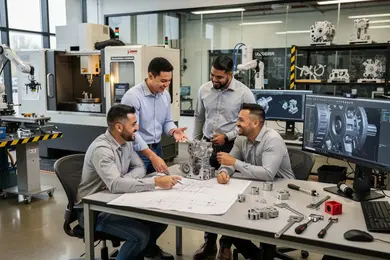
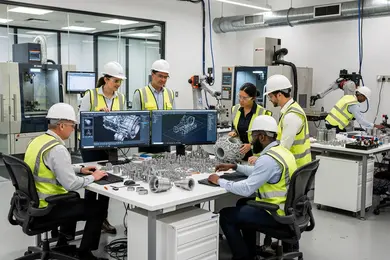
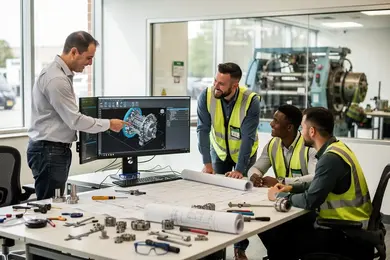
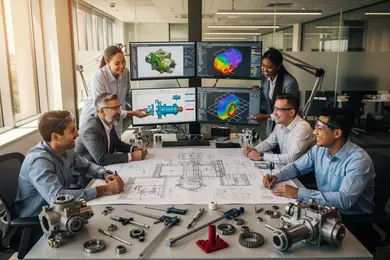
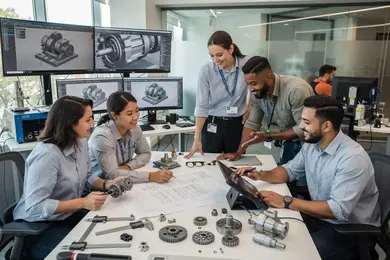
Online mechanical engineering programs integrate teamwork through structured virtual collaboration. Instead of relying on hallway conversations or shared lab benches, students may use learning management systems, cloud CAD tools, version-controlled documents, simulation platforms, video conferencing, and project boards. This can mirror modern engineering workplaces, where product teams often coordinate across offices, suppliers, time zones, and hybrid schedules.
Strong team-based curricula usually include a sequence of collaboration expectations. These elements matter because they reveal whether a program teaches communication intentionally or simply assigns group work.
- Defined team roles, such as project lead, analysis lead, documentation lead, testing lead, or presentation lead
- Regular design checkpoints where students explain progress, risks, constraints, and next steps
- Shared engineering documentation, including requirements lists, assumptions logs, design decision records, and meeting notes
- Peer evaluations that measure contribution quality, responsiveness, and communication professionalism
- Final presentations or design reviews that require students to defend technical decisions with evidence
Virtual collaboration is especially valuable for students who plan to work in aerospace, automotive, manufacturing, energy, defense contracting, or robotics, where multidisciplinary teams are common. The trade-off is that online learners must be proactive. If a teammate is unresponsive or a project schedule slips, students need to communicate early and professionally rather than waiting for the final deadline.
A common mistake is choosing the most flexible program without checking whether it has synchronous project milestones. Fully asynchronous courses can be convenient, but students still need enough real-time interaction to practice design reviews, technical questioning, and team decision-making.
What admission requirements do online mechanical engineering programs typically have for applicants?
Admission requirements vary by degree level, school selectivity, and whether the program is designed for first-time students, transfer students, or working engineers. Mechanical engineering is math-intensive, so admissions teams usually look closely at calculus readiness, physics background, prior engineering coursework, and academic discipline.
The table below summarizes typical requirements by applicant type. Use it to identify what you may need to complete before applying.
| Applicant type | Common admission requirements | What to prepare |
| First-time bachelor's applicant | High school diploma or equivalent, transcripts, math and science preparation, application essays or short responses | Algebra, trigonometry, precalculus or calculus readiness, physics exposure, and clear reasons for choosing engineering |
| Transfer bachelor's applicant | College transcripts, minimum GPA, completed calculus and science prerequisites, possible course-by-course credit review | Syllabi for prior engineering courses, official transcripts, and a transfer plan that avoids repeating credits |
| Online master's applicant | ABET-accredited or closely related engineering bachelor's degree, transcripts, minimum GPA, resume, recommendations, and sometimes GRE scores | Evidence of engineering fundamentals, professional experience, statement of purpose, and target specialization |
| Engineering technology or applied pathway applicant | Technical background, associate degree or transfer credits, math readiness, and work experience in some cases | Documentation of technical coursework, certifications, military training, or relevant employment |
Applicants with military experience should ask how the school evaluates Joint Services Transcript credits, prior technical training, and deployment-related scheduling needs. Learners comparing engineering options for service members may also find it useful to review online electrical engineering degrees for veterans, especially if they are deciding between mechanical and electrical systems careers.
To strengthen an application, complete prerequisite math before applying, gather syllabi for transfer review, and write a focused statement that connects your experience to mechanical engineering goals. If your GPA is weaker, recent success in calculus, physics, or engineering mechanics can help show readiness.
How long do online mechanical engineering degrees take and what do they cost?
Program length depends on degree level, transfer credits, enrollment pace, prerequisites, and whether labs or capstones have fixed schedules. A full bachelor's degree commonly requires about 120 credits, while online master's programs often require about 30 to 36 credits. Part-time students should expect a longer timeline, but they may be able to keep working and reduce borrowing.
The table below outlines common timelines and cost drivers. It is meant to help you compare total cost, not just advertised tuition.
| Program path | Typical completion time | Main cost factors | Best value strategy |
| Full online bachelor's in mechanical engineering | About 4 to 6 years, depending on pace and transfer credits | Tuition, lab fees, software, proctoring, textbooks, equipment, and possible residency travel | Transfer lower-division credits carefully and confirm ABET status before committing |
| Bachelor's completion pathway | About 2 to 4 years after significant transfer credit | Upper-division engineering tuition, prerequisite gaps, and course sequencing | Get a written transfer evaluation before enrolling |
| Online master's in mechanical engineering | About 1.5 to 3 years | Graduate tuition, employer reimbursement rules, software, and project costs | Use employer tuition assistance and choose electives tied to advancement goals |
| Part-time working-professional path | Often 3 or more years for graduate study, longer for bachelor's study | Extended fees, course availability, and opportunity cost | Plan around course rotations so delayed prerequisites do not add extra semesters |
For broader tuition context, the College Board's 2024 pricing data reported average published tuition and fees of $11,610 for in-state students at public four-year institutions and $43,350 at private nonprofit four-year institutions. Online mechanical engineering programs can be above or below those figures depending on residency rules, per-credit pricing, engineering fees, and transfer credit policy.
Cost comparison should include more than tuition. Prospective students should review total program cost, software access, required computer specifications, lab kits, travel for residencies, graduation fees, and whether courses are charged at in-state, out-of-state, or flat online rates.
Readers comparing how online programs present tuition and fees in other fields can also review this guide to an online bachelors in animal science as a useful example of how non-tuition costs can affect planning.
To reduce cost, ask these questions before enrolling.
- Will the school provide a written transfer-credit estimate before I commit?
- Are online students charged in-state, out-of-state, or a separate online tuition rate?
- Are lab kits, software licenses, proctoring, and residency travel included in the published cost?
- Does my employer offer tuition reimbursement, and does the program meet reimbursement rules?
- Can I complete prerequisites at a community college without delaying upper-division engineering courses?
What mechanical engineering careers rely most on strong engineering communication skills?
Strong engineering communication skills matter most in roles where mechanical engineers must translate analysis into decisions. These roles often involve design reviews, risk trade-offs, supplier coordination, test reporting, customer requirements, or cross-functional product development.
The table below shows career paths where communication is especially important. It also explains what graduates may communicate on the job.
| Career path | Why communication matters | Common communication tasks |
| Product design engineer | Design choices affect cost, performance, manufacturability, and user safety | Design reviews, CAD documentation, tolerance explanations, change requests |
| Manufacturing engineer | Production teams need clear instructions, process controls, and root-cause analysis | Work instructions, failure reports, process improvement presentations |
| Test engineer | Test results must be defensible and understandable to design, quality, and management teams | Test plans, data summaries, validation reports, nonconformance documentation |
| HVAC or energy systems engineer | Clients and facility teams need practical explanations of system performance and trade-offs | Load calculations, energy reports, client presentations, compliance documentation |
| Aerospace or defense mechanical engineer | Projects often involve strict documentation, multidisciplinary teams, and safety-critical reviews | Requirements traceability, design justification, risk reviews, supplier coordination |
| Engineering project manager | Technical schedules, budgets, risks, and stakeholder expectations must stay aligned | Status reports, meeting facilitation, executive briefings, project documentation |
Communication also matters more as mechanical engineering intersects with automation, simulation, artificial intelligence, and data-driven product development. Engineers who can explain model assumptions, data limitations, and design uncertainty are better positioned to work with software and analytics teams.
Students interested in more data-heavy technical roles may want to compare mechanical engineering with a data science degree online before deciding which path fits their strengths.
Graduates who want leadership roles should build a portfolio that includes not only designs but also concise reports, presentation slides, test summaries, and examples of cross-functional collaboration. Employers often evaluate communication through interviews, writing samples, design discussions, and behavioral questions about team conflict.
What salary ranges and job outlook can graduates with strong communication skills expect?
Salary varies by role, employer, industry, region, degree level, experience, and security clearance requirements. Communication skills do not guarantee a specific salary, but they can influence how effectively an engineer leads projects, earns trust, documents decisions, and moves into roles with broader responsibility.
For salary context, the U.S. Bureau of Labor Statistics reported a May 2024 median annual wage of $102,320 for mechanical engineers. That figure is a national midpoint, not an entry-level promise, so students should compare it with regional job postings and internship opportunities in their target industry.
The table below connects communication-intensive career directions with salary context and advancement considerations. Use it to think about long-term fit rather than chasing a single salary number.
| Role category | Salary context | Communication-related advancement factor |
| Entry-level mechanical engineer | Often below the national median while the engineer builds experience | Clear design notes, professional email habits, and strong lab or test reporting help new engineers earn responsibility |
| Mid-level design, test, or manufacturing engineer | May approach or exceed the national median depending on industry and location | Engineers who explain trade-offs well are more likely to lead design reviews and coordinate cross-functional work |
| Senior engineer or technical lead | Compensation often reflects specialization, project scope, and employer needs | Technical leadership depends heavily on mentoring, decision documentation, stakeholder communication, and risk explanation |
| Engineering manager or project leader | Often requires both engineering credibility and management ability | Presentation, negotiation, planning, and executive communication become central to the role |
The job outlook is also favorable but not automatic. BLS projections released in 2024 showed mechanical engineer employment projected to grow 11% from 2023 to 2033, faster than the average for all occupations. For students, this means opportunities may be strongest when the degree is paired with internships, CAD and simulation skills, industry-relevant projects, and evidence of strong communication.
AI and automation are changing mechanical engineering work, but they are not eliminating the need for engineers who can communicate. Simulation tools, generative design, digital twins, and automated reporting can accelerate analysis, yet humans still need to define requirements, validate assumptions, explain uncertainty, and make accountable decisions.
How can students evaluate and choose a reputable online mechanical engineering program?
Choosing a reputable online mechanical engineering program requires more than comparing rankings or tuition. The best program for you should match your target credential, licensure plans, learning style, budget, schedule, and career market.
Use the following steps to compare programs in a practical order. This sequence helps prevent expensive mistakes before you submit deposits or take out loans.
- Confirm the exact degree name and whether it is mechanical engineering, mechanical engineering technology, manufacturing engineering, or another related field.
- Check institutional accreditation and, for bachelor's engineering programs, verify ABET accreditation for the exact program when licensure or traditional engineering roles are important.
- Request sample syllabi for labs, design courses, and capstone projects to see how writing, presentations, and team communication are graded.
- Ask whether online students complete remote labs, lab kits, simulations, campus residencies, or local proctored labs.
- Get a written transfer-credit evaluation before enrolling, especially if you have community college, military, or previous engineering credits.
- Compare total cost, including tuition, fees, software, hardware, lab equipment, proctoring, and travel.
- Ask about internship support, career services, employer partnerships, alumni outcomes, and whether online students can join engineering clubs or design competitions.
- Review course rotation and prerequisite sequencing so one unavailable class does not delay graduation by a full term or year.
Students should also watch for red flags. Be cautious if a program avoids answering accreditation questions, promises unrealistic job outcomes, provides no engineering faculty information, has weak lab descriptions, or will not explain how online students complete team design work. A lower tuition price is not a bargain if the program does not support your career goal.
Accreditation rules differ across disciplines, so it can help to see how other fields handle program quality. For example, students comparing professional online credentials may notice that an online library science degree uses field-specific recognition standards that differ from engineering. The lesson is the same: verify the accreditation that matters for the profession you want.
The smartest choice is usually the program that offers the right accreditation, transparent costs, strong design communication training, realistic scheduling, and clear alignment with your intended role. If two programs look similar, choose the one that gives you better access to faculty feedback, capstone mentoring, internships, and documented project work you can show employers.
Other Things You Should Know About Mechanical Engineering
Possibly, but it depends on the program and your state board. Many licensure paths require an ABET-accredited engineering degree, passing exam scores, qualifying work experience, and board approval. Always check your state's engineering licensure requirements before enrolling.
Usually, yes. Programs may require a computer capable of running CAD, simulation, programming, and data analysis tools. Some schools provide software licenses, while others require students to meet hardware specifications before upper-division courses.
Online mechanical engineering degrees in 2027 incorporate courses focused on technical writing, presentations, and team-based projects. These programs leverage virtual collaboration tools, enhancing students' ability to communicate complex ideas effectively, a vital skill for engineers working in diverse and globalized environments.
Many employers focus on accreditation, school reputation, technical skills, internships, projects, and interview performance rather than delivery format alone. An online degree is stronger when it includes rigorous labs, team design projects, clear faculty interaction, and a portfolio of engineering work.
References
- Find Programs - ABET https://www.abet.org/accreditation/find-programs/
- Do mechanical engineering students thrive with collaboration? | Student Voice AI https://www.studentvoice.ai/blog/collaborative-opportunities-in-mechanical-engineering-courses/
- Top Skills Employers Look for In Mechanical Engineers https://solidprofessor.com/blog/top-skills-employers-look-for-in-mechanical-engineers/
- Seven essential skills for your mechanical engineering career - Academic and Future Workforce https://blogs.sw.siemens.com/academic/seven-essential-skills-mechanical-engineering-career/
- Communication and creativity ranked highest skills for future manufacturing engineers https://www.imeche.org/news/news-article/communication-and-creativity-ranked-highest-skills-for-future-manufacturing-engineers
- Soft Skills in Mechanical Engineering https://www.rhinorecruitment.com/resources/all-resources/view/18/soft-skills-in-mechanical-engineering.aspx
- How to Evaluate If an Engineering Program Is a Good Fit - Your College-Bound Kid https://yourcollegeboundkid.com/2023/03/10/how-to-evaluate-if-an-engineering-program-is-a-good-fit/
- How Do Engineers Collaborate? A Guide to Streamlined Teamwork and Innovation https://www.jamasoftware.com/requirements-management-guide/systems-engineering/how-do-engineers-collaborate-a-guide-to-streamlined-teamwork-and-innovation/
- Engineering School Admissions Requirements - GPA, GRE, SAT https://www.onlineengineeringprograms.com/faq/admissions-requirements-for-engineering-school
- Online Mechanical Engineering Degrees 2026: Costs & Salary Compared https://www.fernstudi.net/en/onlinestudies/technology/mechanical-engineering