2027 Engineering Careers Growing Fast in Design, Energy, and Automation

Co-Founder and Chief Data Scientist
Choosing a mechanical engineering path now means weighing design, clean energy, robotics, AI-assisted manufacturing, and long-term degree ROI. The U. S. Bureau of Labor Statistics projects mechanical engineer employment to grow 11% from 2023 to 2033, much faster than the average for all occupations. This guide is for students, career changers, and working technicians comparing engineering programs and career options. You will learn which roles are expanding, what education and skills matter, how online and campus programs differ, and how to choose a program that fits your goals.
Key Things You Should Know
- Mechanical engineering careers are expanding fastest where physical systems meet software: robotics, automation, renewable energy, advanced manufacturing, electric vehicles, HVAC efficiency, and computer-aided product design.
- The BLS reported a May 2024 median annual wage of $102,320 for mechanical engineers, but salaries vary by industry, region, experience, security clearance, and specialization.
- For most entry-level mechanical engineering roles in the U.S., the strongest starting point is an ABET-accredited bachelor's degree, supported by CAD, simulation, programming, controls, manufacturing, and hands-on project experience.
What mechanical engineering careers are growing fastest in design, energy, and automation?
Mechanical engineering is the discipline of designing, analyzing, building, and improving machines and physical systems. The fastest-growing career paths are not limited to traditional machine design. Employers increasingly want engineers who can connect mechanics with electronics, software, energy systems, sensors, and data.
The BLS projection of 11% employment growth for mechanical engineers from 2023 to 2033 reflects demand across manufacturing, transportation, energy, and technology. For students, the practical takeaway is that broad mechanical fundamentals still matter, but career momentum is strongest when those fundamentals are paired with digital tools and emerging-technology experience.
The table below compares mechanical engineering career directions that are especially relevant to design, energy, and automation. Use it to identify which path best matches your interests, not as a guarantee of job availability in every local market.
| Career direction | Typical work | Why demand is rising | Best-fit student profile |
| Mechanical design engineer | Creates parts, assemblies, prototypes, and technical drawings using CAD and simulation tools. | Companies need faster product cycles, lighter materials, and manufacturable designs. | Strong spatial reasoning, CAD interest, and attention to detail. |
| Robotics and automation engineer | Develops automated production systems, robotic workcells, motion systems, and sensor-integrated equipment. | Manufacturers are using automation to improve productivity, quality, and safety. | Interest in controls, programming, mechatronics, and factory systems. |
| Renewable energy engineer | Works on wind, solar, geothermal, battery thermal systems, hydrogen equipment, or grid-supporting mechanical systems. | Clean-energy deployment requires engineers who understand heat transfer, fluids, materials, and reliability. | Motivated by sustainability, infrastructure, and applied physics. |
| Advanced manufacturing engineer | Improves production lines, additive manufacturing processes, tooling, quality systems, and digital manufacturing workflows. | U.S. manufacturers are investing in reshoring, automation, and smart factories. | Hands-on problem solver who likes production environments. |
| Thermal systems engineer | Designs HVAC, cooling, energy recovery, electronics cooling, and industrial heat-transfer systems. | Buildings, data centers, electric vehicles, and industrial facilities need better energy efficiency. | Strong in thermodynamics, heat transfer, and systems thinking. |
A design-focused role usually fits students who enjoy building and improving products. An energy role fits students who want their work tied to sustainability, infrastructure, and efficiency. Automation is best for students who are comfortable combining mechanical systems with sensors, controls, and software.
What degrees and skills do you need to start a mechanical engineering career?
The standard entry route is a bachelor's degree in mechanical engineering or a closely related engineering field. Some students begin with an associate degree in engineering technology, CAD, manufacturing, or mechatronics, but many engineering roles that involve licensed engineering work or advanced design responsibility still prefer or require a four-year engineering degree.
Students who want broader electromechanical preparation may also explore controls, circuits, and power systems through online electrical engineering courses USA, especially if they are targeting robotics, automation, electric vehicles, or energy systems. Mechanical and electrical engineering increasingly overlap in these areas.
The table below shows how common education options compare. It can help you decide whether to pursue a full engineering degree, a shorter technical credential, or graduate study.
| Path | Typical purpose | Best for | Limitations to check |
| Associate degree or technical diploma | CAD drafting, technician work, manufacturing support, or transfer preparation. | Students seeking a lower-cost start or hands-on technical roles. | May not qualify for many engineer-title positions without a bachelor's degree. |
| Bachelor's in mechanical engineering | Core preparation for entry-level mechanical engineering roles. | Students seeking design, energy, automation, manufacturing, or R&D roles. | Requires strong math, physics, lab, and design coursework. |
| Bachelor's in mechanical engineering technology | Applied engineering practice, testing, production, and implementation. | Students who prefer hands-on application over theory-heavy analysis. | Some employers distinguish engineering technology from engineering for design or licensure tracks. |
| Master's in mechanical engineering | Advanced specialization in robotics, thermal systems, materials, design, or energy. | Engineers seeking technical depth, research roles, or advancement. | ROI depends on employer tuition support, specialization, and career goals. |
| Graduate certificate | Focused upskilling in automation, additive manufacturing, systems engineering, or energy. | Working professionals who need targeted skills without a full degree. | May not substitute for an accredited engineering degree. |
Beyond the degree title, employers look for evidence that you can solve real engineering problems. The most useful skills often combine theory, software, and hands-on experience.
- Design and modeling: CAD, geometric dimensioning and tolerancing, finite element analysis, design for manufacturing, and rapid prototyping.
- Energy and thermal systems: thermodynamics, heat transfer, fluid mechanics, HVAC principles, energy modeling, and system efficiency.
- Automation and controls: sensors, actuators, PLC basics, robotics, control theory, Python or MATLAB, and data acquisition.
- Manufacturing: machining, additive manufacturing, quality control, lean methods, materials selection, and process improvement.
- Professional skills: technical writing, teamwork, project management, ethics, safety, and communication with non-engineers.
A common mistake is treating software skills as optional. CAD alone is no longer enough for many competitive roles. Students who can model a system, test it, analyze the data, and explain trade-offs are better positioned for design, energy, and automation work.
How does mechanical engineering prepare you for jobs in renewable energy and sustainability?
Mechanical engineering is central to renewable energy and sustainability because many clean-energy challenges are physical-system challenges. Wind turbines, solar trackers, battery enclosures, heat pumps, geothermal systems, hydrogen equipment, and efficient buildings all depend on mechanics, heat transfer, fluids, materials, controls, and reliability engineering.
The BLS reported that wind turbine service technicians are projected to grow 60% from 2023 to 2033. That occupation is not the same as mechanical engineering, but it signals how quickly wind infrastructure is expanding and why engineers with energy-system knowledge may find opportunities in design, testing, operations, and reliability.
Mechanical engineering prepares students for sustainability work in several practical ways. These areas are worth looking for when comparing programs or electives.
- Energy conversion: coursework in thermodynamics and heat transfer helps students understand engines, turbines, heat pumps, refrigeration, and power-generation equipment.
- Fluid systems: fluid mechanics supports work on wind energy, pumps, piping, hydraulics, cooling, and water-energy systems.
- Materials and durability: materials courses help engineers select components that can survive fatigue, corrosion, temperature changes, and harsh operating environments.
- Life-cycle thinking: design courses can teach students to consider energy use, repairability, manufacturing waste, and end-of-life impacts.
- Controls and monitoring: automation skills support predictive maintenance, grid-interactive systems, and efficient building operations.
This path is a strong fit if you want applied technical work with environmental impact. It may be less ideal if you want policy-only sustainability work, community planning, or environmental law; those goals may align better with environmental science, public policy, or urban planning programs.
What is the typical curriculum in a mechanical engineering program focused on design and automation?
A mechanical engineering curriculum focused on design and automation usually starts with math, physics, chemistry, computing, and introductory engineering. It then moves into mechanics, materials, thermodynamics, fluids, manufacturing, controls, labs, and capstone design.
The table below summarizes typical subject areas and why each matters. Course names vary by school, but reputable programs should build both analytical depth and applied design experience.
| Curriculum area | Common courses or experiences | Career relevance |
| Foundations | Calculus, differential equations, physics, chemistry, computing, statistics. | Provides the math and science needed for engineering analysis. |
| Mechanical core | Statics, dynamics, mechanics of materials, machine design, materials science. | Supports product design, failure analysis, and structural decision-making. |
| Thermal and fluid systems | Thermodynamics, heat transfer, fluid mechanics, energy systems. | Prepares students for HVAC, renewable energy, vehicles, data centers, and industrial systems. |
| Design and manufacturing | CAD, manufacturing processes, prototyping, additive manufacturing, design projects. | Builds the ability to turn ideas into manufacturable products. |
| Automation and mechatronics | Controls, sensors, robotics, instrumentation, programming, lab automation. | Supports robotics, smart manufacturing, and electromechanical systems. |
| Capstone and labs | Team design project, testing, technical reports, presentations. | Shows employers that students can complete realistic engineering work. |
Students interested in automation should not wait until senior year to build technical depth. A practical preparation sequence can help you graduate with a stronger portfolio.
- Learn CAD well enough to create assemblies, drawings, tolerances, and design revisions.
- Add one analysis tool, such as finite element analysis, computational fluid dynamics, MATLAB, or Python-based modeling.
- Complete hands-on work through a lab, makerspace, robotics team, Formula SAE, internship, co-op, or manufacturing project.
- Document projects with design requirements, calculations, test results, failures, and improvements.
- Choose electives that support your target role, such as controls for automation, heat transfer for energy, or materials for product design.
The most valuable curriculum is not the one with the longest course list. It is the one that gives students repeated practice defining problems, building prototypes, testing results, and making evidence-based design decisions.
How do online mechanical engineering programs compare with campus-based options?
Online mechanical engineering programs can be convenient, but the format deserves careful review because engineering is lab-intensive. Some programs deliver lectures online while requiring short campus residencies, local proctored labs, mailed lab kits, simulation-based labs, or partnerships with nearby facilities. Fully online options are more common at the master's level than at the undergraduate level.
Students comparing online programs across fields should remember that each discipline has different hands-on requirements. For example, an online dietitian degree may involve supervised practice expectations, while mechanical engineering programs must show that students can complete engineering labs, design work, and team-based technical projects.
The table below explains when online, campus-based, or hybrid mechanical engineering study may make sense. Use it to match the format to your schedule, learning style, and career stage.
| Format | Advantages | Trade-offs | Best fit |
| Campus-based bachelor's | Direct access to labs, makerspaces, faculty, design teams, and recruiting events. | Less flexible for working adults and may require relocation or commuting. | Traditional undergraduates and students who want maximum hands-on access. |
| Hybrid bachelor's | Combines online coursework with scheduled labs or campus sessions. | Requires planning for travel, lab blocks, and in-person assessments. | Students who need flexibility but still want structured lab experience. |
| Online master's | Often designed for working engineers and may allow specialization without leaving a job. | May be less suitable for students who need extensive lab access or career-changing fundamentals. | Engineers seeking advancement, specialization, or employer-supported education. |
| Online certificate | Focused, shorter, and often practical for upskilling. | Usually narrower than a degree and may not satisfy degree requirements. | Professionals targeting a specific skill such as robotics, CAD, or systems engineering. |
Before enrolling online, ask how labs are completed, whether the program is ABET-accredited if you need an undergraduate engineering credential, how team projects work, what software is required, and whether career services support remote students. A red flag is a program that advertises engineering preparation but cannot clearly explain lab access, accreditation status, transfer policies, or employer connections.
What accreditation should mechanical engineering programs have in the United States?
In the United States, the most important program-level accreditation for an entry-level mechanical engineering bachelor's degree is ABET accreditation through the Engineering Accreditation Commission. ABET accreditation signals that a program has met recognized standards for curriculum, faculty, facilities, student outcomes, continuous improvement, and engineering practice.
Accreditation matters because many employers recognize ABET-accredited engineering degrees, and state engineering boards often use ABET status when evaluating eligibility for the Fundamentals of Engineering exam and later Professional Engineer licensure. Requirements can vary by state, so students who may pursue licensure should check the rules in the state where they expect to practice.
When reviewing accreditation, do not stop at the institution's general accreditation. Engineering students should verify both institutional accreditation and program-specific ABET status when it applies.
- Check the exact program name: "Mechanical Engineering" and "Mechanical Engineering Technology" may be accredited under different ABET commissions and may lead to different employer or licensing interpretations.
- Confirm the campus or delivery location: ABET status may apply to a specific campus or format, not automatically to every location or online version.
- Review the accreditation date: New programs may be seeking accreditation, but students should understand the risk before enrolling.
- Ask about licensure preparation: If Professional Engineer licensure is a goal, ask how the program prepares students for the FE exam and whether graduates commonly pursue it.
For graduate programs, ABET is less commonly the deciding factor because ABET accreditation primarily matters at the undergraduate level. A master's program should still come from a reputable, institutionally accredited university with faculty, research, and industry connections aligned with your specialization.
What are the admission requirements and program length for mechanical engineering degrees?
Admission requirements depend on the degree level and school selectivity. Mechanical engineering is math-intensive, so programs often look closely at readiness for calculus, physics, and analytical problem-solving. Students who are not calculus-ready may still have options, but they should expect prerequisite courses that can extend the timeline.
Program length varies by starting point, transfer credits, and course load. The table below gives typical U.S. timelines so you can estimate how long the path may take before comparing individual schools.
| Program type | Typical length | Common admission expectations | Planning note |
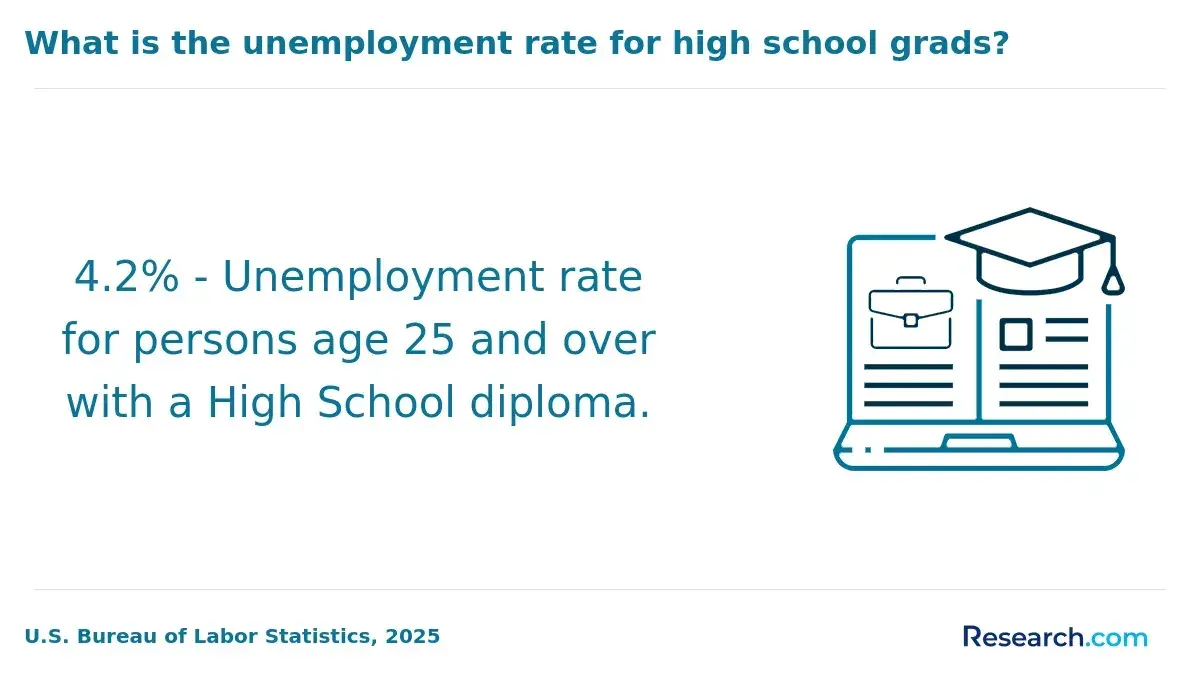
| Associate or pre-engineering transfer path | About 2 years full time | High school diploma or equivalent, placement testing, math readiness. | Confirm transfer agreements before enrolling. |
| Bachelor's in mechanical engineering | About 4 years full time | High school diploma, strong math and science preparation, transcripts, and sometimes test scores or essays. | Co-ops, prerequisites, or part-time study can extend completion time. |
| Master's in mechanical engineering | About 1 to 2 years full time | Engineering or related bachelor's degree, transcripts, recommendations, statement of purpose, and sometimes GRE scores. | Non-engineering applicants may need bridge courses. |
| Graduate certificate | Often less than 1 year to 18 months | Bachelor's degree or technical background, depending on the school. | Best for targeted upskilling rather than entry into engineering from scratch. |
Application requirements are not just administrative hurdles. They indicate how prepared you are for the workload. Before applying, students should take several practical steps.
- Review the first-year math sequence and confirm whether you are ready for calculus.
- Ask how transfer credits are evaluated, especially for physics, calculus, engineering graphics, and programming.
- Compare total cost, including software, lab fees, commuting, housing, tools, and lost work time.
- Ask whether co-ops or internships are built into the plan of study or require an extra term.
- Confirm whether online or hybrid courses have required campus visits, synchronous sessions, or proctored exams.
Students exploring other graduate fields should also compare admission expectations carefully. For example, online MLIS programs typically evaluate a different academic background than mechanical engineering programs, which usually require stronger preparation in math, physics, and engineering fundamentals.
What are the salary ranges for mechanical engineers in design, energy, and automation fields?
Mechanical engineering salaries depend heavily on industry, location, experience, technical specialization, and whether a role involves design authority, manufacturing responsibility, project leadership, or security-sensitive work. The BLS reported a May 2024 median annual wage of $102,320 for mechanical engineers, which is a useful national benchmark but not a promise for any individual graduate.
The table below provides salary context by career direction rather than exact employer offers. Use it to understand which factors tend to push compensation up or down.
| Field | Typical salary drivers | What can raise earning potential | What to watch |
| Mechanical design | Product complexity, CAD and simulation depth, industry, and design responsibility. | Strong portfolio, FEA skills, GD&T, materials knowledge, and manufacturability experience. | Entry-level drafting-heavy roles may pay less than engineer-level design positions. |
| Energy and sustainability | Infrastructure scale, thermal expertise, regulatory environment, and project responsibility. | Energy modeling, HVAC systems, heat transfer, project experience, and PE licensure for some roles. | Titles vary widely; some roles are closer to facilities engineering or project management. |
| Automation and robotics | Controls knowledge, programming, industrial systems experience, and uptime responsibility. | PLC exposure, Python or MATLAB, robotics labs, mechatronics projects, and manufacturing experience. | Some automation jobs require travel, plant-floor support, or after-hours troubleshooting. |
| Advanced manufacturing | Production scale, quality responsibility, process ownership, and industry specialization. | Lean methods, additive manufacturing, quality systems, and hands-on shop-floor experience. | Work may be tied to production schedules and plant location. |
Salary comparisons are most useful when paired with cost and risk. A higher-cost degree may be reasonable if it provides strong co-op access, ABET accreditation, employer recruiting, and relevant labs. A lower-cost path may be smarter if it preserves transfer options and leads to the same accredited credential. Avoid assuming that a school's brand alone will determine salary outcomes.
What is the job outlook for mechanical engineers working in emerging technologies?
The job outlook is strongest for mechanical engineers who can contribute to emerging technologies without losing core engineering judgment. AI, digital twins, additive manufacturing, electric vehicles, energy storage, smart factories, and predictive maintenance are changing how engineers design and operate physical systems.
The BLS projects about 19,800 openings for mechanical engineers each year, on average, from 2023 to 2033. This includes growth and replacement needs, so students should read it as evidence of ongoing demand rather than a guarantee that every specialization or region will hire at the same pace.
Emerging technology is changing employer expectations in several practical ways. Students preparing now should focus on durable skills that transfer across tools and industries.
- AI-assisted design: engineers may use generative design, simulation automation, or optimization tools, but they still need to validate assumptions and safety constraints.
- Digital twins: products and facilities increasingly use virtual models connected to operating data, requiring comfort with sensors, data, and system behavior.
- Advanced manufacturing: additive manufacturing and automated inspection are expanding the need for engineers who understand both materials and production constraints.
- Electrification: electric vehicles, batteries, heat pumps, and grid-supporting systems increase demand for thermal management and electromechanical integration.
- Predictive maintenance: factories and energy systems use vibration, temperature, and operational data to reduce downtime and improve reliability.
Some mechanical engineers strengthen their automation or AI profile through data-focused graduate study. If your goal is analytics-heavy manufacturing, predictive maintenance, or machine learning for physical systems, comparing options such as the cheapest masters in data science can help you decide whether a data credential is a better fit than a traditional mechanical engineering master's.
A smart strategy is to avoid chasing every new tool. Instead, build a foundation in mechanics, design, controls, and experimentation, then add software skills that support a clear career direction.
How can students choose a reputable mechanical engineering program aligned with their career goals?
Choosing a mechanical engineering program is a career decision as much as an academic one. A reputable program should help you build technical competence, complete meaningful projects, access internships or co-ops, and graduate with a credential employers understand.
Use the following steps to compare programs in a practical way. This process is more reliable than choosing based only on ranking lists or tuition headlines.
- Start with your target role --design, energy, automation, manufacturing, aerospace, automotive, HVAC, robotics, or graduate research.
- Verify ABET accreditation for the exact undergraduate program, campus, and format you are considering.
- Review required labs, capstone projects, makerspaces, and software access, not just course titles.
- Ask for recent internship, co-op, employer, and graduate-school outcomes related to mechanical engineering.
- Compare total cost after grants, scholarships, transfer credits, commuting, housing, tools, fees, and time away from work.
- Check whether electives and faculty expertise match your intended specialization.
- Ask current students how often they interact with faculty, use labs, and receive help finding internships.
The table below highlights common mistakes and better alternatives. It can help you avoid decisions that look convenient at enrollment but create problems later.
| Common mistake | Why it can hurt | Better approach |
| Choosing without checking ABET status | It may affect employer recognition or licensure pathways. | Verify program-level accreditation before applying. |
| Focusing only on tuition | Fees, housing, software, tools, and delayed graduation can change total cost. | Compare full cost of attendance and time to completion. |
| Ignoring labs and projects | Engineering employers value proof of applied problem-solving. | Review capstone, lab access, design teams, and internship support. |
| Assuming online automatically fits engineering | Some online formats may not provide enough hands-on experience for your goals. | Ask exactly how labs, exams, and team design work are completed. |
| Choosing a specialization too late | You may miss key electives, internships, or project opportunities. | Map electives and projects to your target role by sophomore or junior year. |
If you are not sure mechanical engineering is the right fit, compare it against adjacent paths. Electrical engineering may fit students drawn to circuits and power systems, industrial engineering may fit process optimization, computer science may fit software-first goals, and engineering technology may fit hands-on implementation. The best program is the one that matches your preferred work, academic strengths, financial situation, and long-term credential needs.
Other Things You Should Know About Mechanical Engineering
Yes, for students who want to work with physical systems. AI can speed up modeling, optimization, documentation, and simulation, but engineers still need to define requirements, check safety, validate results, and make trade-off decisions. The strongest preparation combines engineering fundamentals with practical software skills.
Not always. Many mechanical engineers in manufacturing, product design, robotics, and private industry work without a PE license. Licensure is more important in roles that serve the public or involve signing off on systems such as HVAC, energy infrastructure, or building-related mechanical designs. Requirements vary by state.
AI is reshaping mechanical engineering careers by automating routine tasks, thus allowing engineers to focus on innovative design and problem-solving in energy systems and automation processes. This shift requires engineers to adapt to new technologies and continuously update their skill set to stay relevant.
Take the strongest math and physics courses available, learn basic programming, join robotics or design competitions if possible, and build hands-on projects. CAD, 3D printing, machining, electronics, or repair experience can help you understand whether you enjoy the work before committing to the major.
References
- Mechanical Design, Manufacturing and AutomationBachelor's Program https://www.qdc.edu.cn/en/major/infobk/44
- Top 10 Highest Paying Jobs in Mechanical Engineering | CADD https://caddcentre.com/blog/top-10-high-paying-jobs-in-mechanical-engineering/
- Mechanical Engineering Careers, Degrees And Vocational Qualifications — Born To Engineer https://www.borntoengineer.com/resources/mechanical-engineering-careers-degrees-and-vocational-qualifications
- Top Jobs for a Mechanical Engineer in 2026 https://www.stonebridge.uk.com/blog/engineering/jobs-for-a-mechanical-engineer-or/
- Undergraduate MajorMechanical Design, Manufacturing and Automation-CUGB https://en.cugb.edu.cn/SET/40971.jhtml
- Design Automation for Mechanical Engineers: 7 Real Examples - GaugeHow – Mechanical Engineering Skills Platform https://gaugehow.com/blog/design-automation-for-mechanical-engineers
- How to prepare for a career in renewable energy? – Clean Energy 4 Africa https://cleanenergy4africa.org/how-to-prepare-for-a-career-in-renewable-energy/
- Renewable Energy Engineer: Empowering Sustainable Futures https://enable.green/esg-roles/green-energy-careers/renewable-energy-engineer-job-description/
- How Long to Become a Mechanical Engineer? | University of Bridgeport https://www.bridgeport.edu/news/time-to-become-a-mechanical-engineer/
- Bachelor Mechanical Engineering https://www.tue.nl/en/education/bachelor-college/bachelor-mechanical-engineering