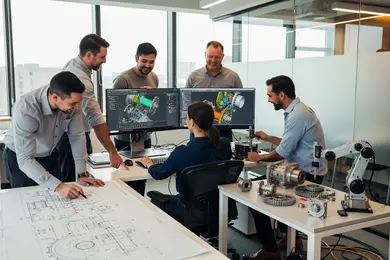
2027 Mechanical Engineering Roles at the Center of AI-Assisted Design and Simulation

Co-Founder and Chief Data Scientist
Mechanical engineers now face a bigger choice than learning CAD alone, whether to build careers around AI-assisted design, simulation, and optimization. The latest U.S. Bureau of Labor Statistics outlook projects 11% growth for mechanical engineers from 2023 to 2033, signaling strong demand for engineers who can combine physics, modeling, and data-driven tools.
This guide is for students, working engineers, and career changers who want to understand the roles, degrees, costs, credentials, and salary context behind this shift so they can choose a smarter education or career path.
Key Things You Should Know
- AI-assisted mechanical engineering is strongest for people who can combine mechanical fundamentals with simulation, data analysis, Python or MATLAB, and validation, it is not a replacement for engineering judgment.
- The BLS reported a May 2024 median annual wage of $102,320 for mechanical engineers, while advanced simulation, robotics, aerospace, automotive, energy, and manufacturing roles may vary widely by employer and location.
- For U.S. bachelor's programs, ABET accreditation is the key quality signal for cost planning, College Board's 2024 data lists average published tuition and fees of $11,610 for in-state public four-year colleges and $43,350 for private nonprofit four-year colleges.
What mechanical engineering roles are emerging in AI-assisted design and simulation?
AI-assisted design and simulation refers to the use of machine learning, generative design, surrogate modeling, optimization algorithms, and automated simulation workflows to help engineers create, test, and refine mechanical systems faster. These tools do not remove the need for mechanics, thermodynamics, materials science, or manufacturing knowledge; they make those fundamentals more valuable because engineers must judge whether AI-generated outputs are safe, feasible, and manufacturable.
The emerging roles are not always advertised with "AI" in the job title. Many appear under simulation, product development, digital engineering, robotics, manufacturing, or systems engineering. The table below summarizes common role directions and what they usually require.
| Role direction | Typical responsibilities | Best-fit background | AI-assisted tools or methods |
| AI-assisted design engineer | Uses generative design, topology optimization, and CAD automation to create lighter, stronger, or more efficient components. | Mechanical design, CAD, materials, manufacturing methods | Generative design, parametric modeling, design-space exploration |
| Simulation and CAE engineer | Builds and validates finite element, computational fluid dynamics, thermal, or multibody simulation models. | Mechanics, numerical methods, FEA, CFD, testing | Surrogate models, automated meshing, simulation pipelines |
| Digital twin engineer | Connects sensor data, physics models, and operational data to monitor real equipment or predict performance. | Mechanical systems, controls, data analytics, IoT | Predictive modeling, anomaly detection, real-time simulation |
| Robotics and mechatronics engineer | Designs electromechanical systems that integrate actuators, sensors, control algorithms, and machine perception. | Mechanical engineering, controls, embedded systems | Reinforcement learning, computer vision, motion planning |
| Manufacturing optimization engineer | Improves production quality, throughput, toolpath planning, additive manufacturing, or maintenance strategy. | Manufacturing systems, quality, operations, materials | Predictive maintenance, process optimization, computer vision inspection |
These roles are a good fit if you enjoy both physical systems and analytical problem-solving. They may be a poor fit if you want a purely software-based AI career with little exposure to hardware, testing, manufacturing limits, or safety constraints.
A practical way to evaluate a job description is to look for three signals: whether the role requires physical modeling, whether it expects programming or data skills, and whether the employer validates models against test data. Strong AI-assisted engineering jobs usually include all three.
How is AI transforming mechanical engineering workflows in modeling, testing, and optimization?
AI is changing mechanical engineering by reducing repetitive iteration, improving prediction speed, and helping teams explore more design alternatives before building prototypes. The important limitation is that AI tools are only as reliable as the assumptions, training data, boundary conditions, and validation methods behind them.
In traditional workflows, engineers often create a design, simulate it, modify it, and test a small number of alternatives. AI-assisted workflows expand that loop. Engineers can define performance goals, constraints, materials, loads, and manufacturing requirements, then let optimization tools suggest candidate designs. The engineer still decides which design is safe, cost-effective, and realistic to produce.
The workflow changes below are especially important for students and professionals deciding which skills to build next.
- Modeling: AI can automate geometry cleanup, mesh generation, parameter sweeps, and early-stage design exploration, but engineers must still understand whether the model represents the physical system correctly.
- Testing: Machine learning can help identify anomalies in sensor data, predict failure patterns, and reduce the number of physical tests, but critical products still require physical validation and regulatory documentation.
- Optimization: Algorithms can search a large design space for weight, stress, thermal, vibration, cost, or efficiency targets, but the final choice must consider manufacturability, reliability, maintenance, and safety.
- Documentation: AI can assist with reports, requirements tracing, and simulation summaries, but engineers remain responsible for traceability, assumptions, version control, and review.
A common mistake is assuming that faster simulation means better engineering. Faster iteration only helps when the model is accurate, the objective is well-defined, and the results are checked against physics and test data. Students should therefore prioritize fundamentals before chasing tool-specific shortcuts.
AI-assisted simulation is most valuable when it helps engineers ask better design questions, not when it encourages them to accept visually convincing results without validation.
What degrees and specializations prepare you for AI-focused mechanical engineering careers?
The most direct preparation is still a mechanical engineering bachelor's degree with strong coursework in mechanics, design, thermofluids, controls, computation, and laboratory testing. A mechanical engineering degree becomes more relevant to AI-assisted work when it offers electives or projects in machine learning, robotics, simulation, advanced manufacturing, or data-driven engineering.
Different degree levels make sense for different goals. The table below compares common options so you can match the credential to your timeline, budget, and career target.
| Education path | Who it fits | Typical career use | Main trade-off |
| Bachelor's in Mechanical Engineering | First-time engineering students and career changers seeking entry-level engineering eligibility | Design engineer, test engineer, manufacturing engineer, junior simulation engineer | Broadest foundation, but AI specialization may require electives, projects, or graduate study |
| Master's in Mechanical Engineering | Engineers who want deeper simulation, robotics, controls, or computational mechanics training | CAE engineer, advanced product development engineer, thermal-fluid simulation engineer | Stronger technical depth, but may be less useful if it lacks hands-on projects or research |
| Master's in Robotics, Mechatronics, or Systems Engineering | Students targeting autonomous systems, electromechanical design, or control-heavy roles | Robotics engineer, controls engineer, mechatronics engineer | Excellent for smart systems, but may be narrower than a traditional mechanical engineering track |
| Graduate certificate in AI, data analytics, or simulation | Working engineers who already have a strong engineering foundation | Upskilling for AI-assisted workflows, digital twins, or data-driven testing | Faster and cheaper than a degree, but may not substitute for a required engineering credential |
| PhD in Mechanical Engineering or Computational Engineering | Students aiming for research, advanced R&D, academia, or algorithm development | Research scientist, advanced simulation specialist, computational mechanics researcher | Deepest expertise, but longer time commitment and narrower labor-market fit |
Choose a bachelor's degree if you need the core engineering credential for entry-level roles. Choose a master's degree if you already understand mechanical fundamentals and want to specialize in computational design, simulation, robotics, or AI-enabled product development. Choose a certificate if your main need is targeted upskilling rather than a full credential.
Red flags include programs that market "AI engineering" heavily but do not show mechanical labs, design projects, engineering faculty, ABET status for undergraduate engineering, or access to simulation software. A strong program should show how AI is integrated into real mechanical engineering work, not presented as a standalone buzzword.
What core courses cover AI, machine learning, and simulation in mechanical engineering programs?
AI-focused mechanical engineering programs should build from physics and mathematics into computation. If a program skips the engineering base and jumps straight to software tools, it may not prepare you to evaluate whether a simulation result is physically credible.
The strongest course plans usually combine traditional mechanical engineering subjects with data and computing electives. The table below shows the course areas to look for and why each matters.
| Course area | Why it matters for AI-assisted design and simulation | What to look for in projects |
| Statics, dynamics, and mechanics of materials | Provides the foundation for stress, deformation, vibration, and failure analysis. | Load-path analysis, structural validation, failure comparison |
| Thermodynamics, heat transfer, and fluid mechanics | Supports thermal systems, energy systems, CFD, HVAC, propulsion, and cooling design. | Thermal modeling, fluid-flow prediction, experimental validation |
| Finite element analysis and computational mechanics | Prepares students to build, solve, and interpret simulation models. | Mesh convergence, boundary condition testing, model correlation |
| Machine learning for engineers | Teaches supervised learning, regression, classification, uncertainty, and model evaluation for engineering data. | Predictive maintenance, surrogate modeling, sensor-based prediction |
| Optimization and numerical methods | Supports design-space exploration and algorithmic decision-making. | Topology optimization, parameter sweeps, multi-objective trade-offs |
| Controls, robotics, or mechatronics | Connects mechanical systems with sensors, actuators, feedback, and automation. | Robot motion, control tuning, electromechanical prototypes |
| Design for manufacturing and additive manufacturing | Ensures AI-generated designs can actually be produced, inspected, and maintained. | 3D printing constraints, tolerance analysis, cost-aware redesign |
Students should also look for software exposure, but not let software names drive the whole decision. Employers value tools such as CAD, FEA, CFD, MATLAB, Python, and product lifecycle platforms, yet the more durable skill is the ability to explain assumptions, constraints, and validation choices.
Before enrolling, ask the department for sample syllabi and recent capstone project titles. Strong signs include projects with physical prototypes, simulation-to-test comparison, code repositories, industry sponsors, or documented design reviews.
How do online mechanical engineering programs compare to campus options for AI training?
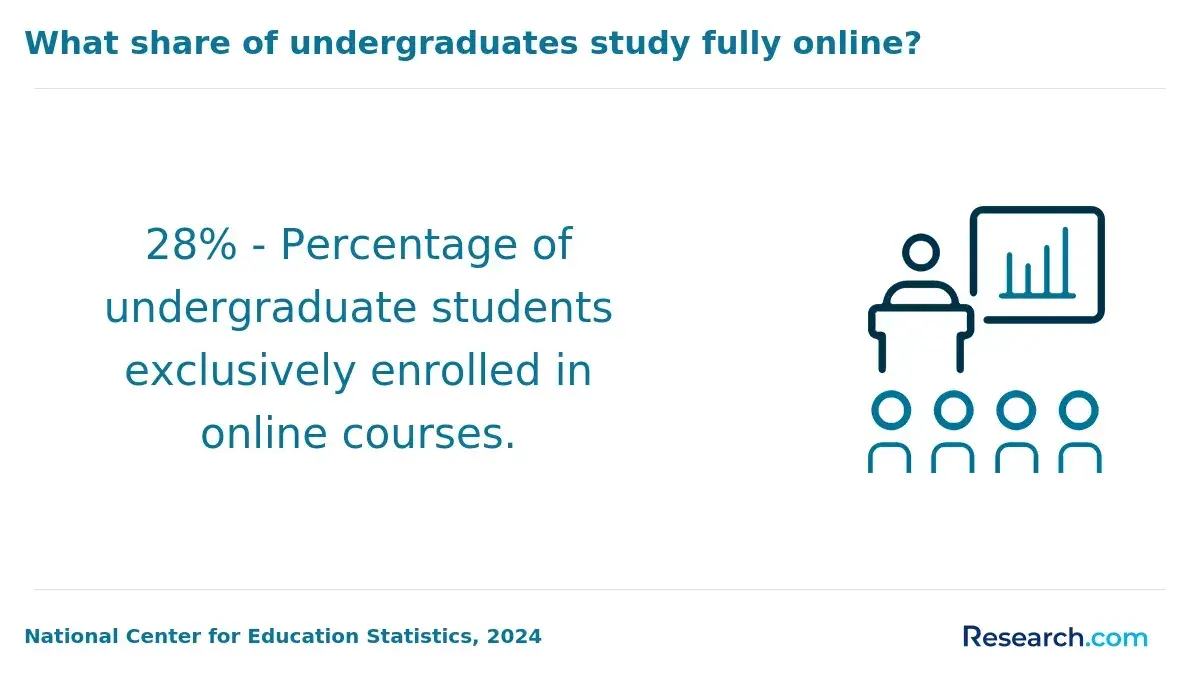
Online mechanical engineering programs can work well for students who need flexibility, especially at the graduate level, but the format matters. AI-assisted simulation courses can translate well online because much of the work happens in software. Laboratory, prototyping, machining, robotics, and testing experiences are harder to replicate unless the program offers campus intensives, local lab arrangements, mailed lab kits, or employer-based projects.
Students considering a broader computing pivot may also compare engineering programs with an online masters in data science. That route can be useful for analytics-heavy careers, but it may not replace a mechanical engineering credential for roles that require design responsibility, product testing, or engineering licensure pathways.
The table below highlights the major decision differences between online and campus formats for AI-oriented mechanical engineering training.
| Factor | Online format | Campus format | Best choice when... |
| Simulation and coding coursework | Often strong if students receive licensed software access and remote computing resources. | Strong when paired with lab and faculty research access. | Online works well for working engineers focused on CAE, data, or modeling. |
| Hands-on labs and prototyping | Varies widely; may require short residencies or local arrangements. | Usually easier access to labs, machine shops, robotics spaces, and testing equipment. | Campus is better for students needing extensive hardware experience. |
| Networking and recruiting | Depends on virtual career services, employer partnerships, and cohort design. | Often stronger for internships, research assistantships, and local industry access. | Campus may help traditional undergraduates build early networks. |
| Schedule flexibility | Usually better for working adults and military students. | Usually better for full-time students who can attend scheduled labs and team projects. | Online is better when leaving work is not realistic. |
| Program risk | Higher if the program lacks clear lab plans, accreditation information, or software support. | Higher if the student pays more for campus access they do not use. | The best format is the one that supports the projects you need for your target role. |
To choose wisely, request specifics rather than relying on the word "online." Ask whether simulation software is included, how labs are completed, whether remote students can join research or capstone teams, and how the program documents hands-on outcomes for employers.
What accreditation should AI-oriented mechanical engineering programs have in the United States?
For U.S. mechanical engineering bachelor's programs, ABET accreditation is the most important accreditation signal. ABET evaluates engineering programs against criteria such as curriculum, faculty, facilities, student outcomes, continuous improvement, and institutional support. AI-oriented electives do not remove the need for this engineering quality benchmark.
Accreditation matters because some employers, graduate schools, and licensing boards use it as a screening factor. It is especially important if you may later pursue the Fundamentals of Engineering exam, Engineer in Training status, or Professional Engineer licensure. Requirements can vary by state, so students should verify rules with the relevant state licensing board before enrolling.
Use the following checklist when evaluating accreditation and quality signals. These steps are worth doing before you submit an application or pay a deposit.
- Confirm the institution is institutionally accredited by an agency recognized by the U.S. Department of Education.
- Check whether the specific mechanical engineering bachelor's program is ABET-accredited, not just whether the university has other accredited programs.
- Review whether the AI, robotics, simulation, or data science content appears in official catalogs rather than only marketing pages.
- Ask how online or hybrid students complete required labs, design projects, and proctored assessments.
- Verify whether the program supports FE exam preparation if licensure may matter in your future industry.
A common mistake is assuming that a school's general reputation automatically covers every program format and location. Accreditation can differ by degree level, campus, delivery mode, and program name, so always verify the exact program you plan to complete.
What are typical admission requirements for mechanical engineering programs emphasizing AI tools?
Admission requirements depend on degree level, selectivity, transfer status, and whether the program is offered through an engineering college. AI-focused tracks may add expectations in programming, calculus, statistics, or prior engineering coursework, but they typically still evaluate applicants on standard engineering readiness.
Applicants who are comparing several online science or engineering options can use the same discipline-specific verification mindset they would use for an accredited online animal science degree: check the exact curriculum, lab expectations, faculty qualifications, and accreditation details instead of assuming all online STEM programs operate the same way.
The table below summarizes common admission expectations by program level. Exact requirements vary, so treat this as a planning guide rather than a substitute for the school's catalog.
| Program level | Common academic requirements | Common supporting materials | AI-related preparation that helps |
| Bachelor's degree | High school diploma or equivalent, strong math and science preparation, calculus readiness | Transcript, application form, test scores if required, essays for some schools | Introductory programming, physics, robotics club, CAD portfolio, math placement readiness |
| Transfer bachelor's pathway | College credits in calculus, physics, chemistry, and general education; minimum GPA set by the school | College transcripts, course descriptions, transfer credit evaluation | Completed calculus sequence, programming course, engineering graphics or CAD |
| Master's degree | Bachelor's degree in mechanical engineering or a related field; prerequisite engineering courses if from another major | Resume, statement of purpose, recommendations, transcripts, sometimes GRE scores | FEA, CFD, controls, numerical methods, Python, MATLAB, statistics, research or design projects |
| Graduate certificate | Bachelor's degree or professional engineering experience, depending on the school | Transcript, resume, short statement, possible prerequisite review | Engineering software experience, data analysis, workplace projects involving simulation or testing |
To strengthen an application, focus on evidence of engineering readiness rather than vague interest in AI. Good evidence includes a CAD model portfolio, coding samples, a capstone or competition project, lab reports, internship work, or a clear statement explaining how AI-assisted tools connect to mechanical design and validation.
One red flag is a program that admits students into an AI-heavy engineering track without explaining prerequisite gaps. If you lack calculus, physics, or mechanics, ask whether the school offers bridge courses and whether taking them will add time or cost.
How long do AI-focused mechanical engineering degrees take, and what do they cost?
Most bachelor's degrees in mechanical engineering take about four years of full-time study, while master's degrees often take one to two years full time or longer part time. Graduate certificates may take a few months to a year, depending on credit load and course availability. AI-focused content usually does not shorten the engineering pathway; it changes the electives, projects, and software expectations.
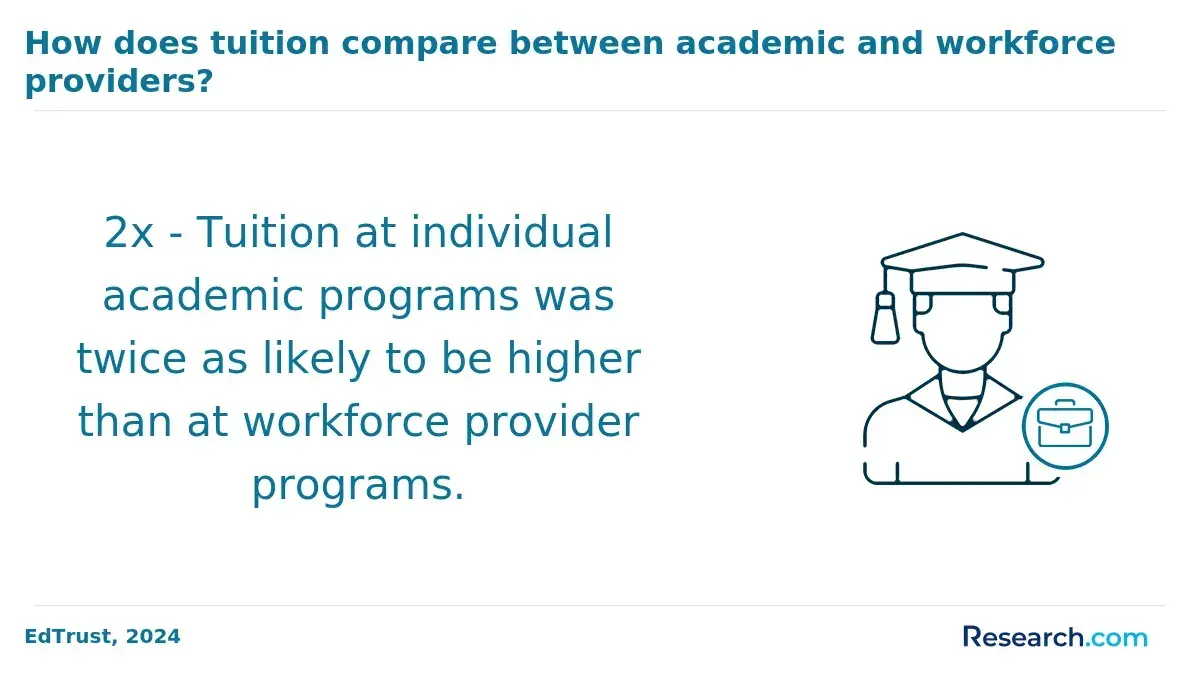
Cost varies by institution, residency, transfer credit, delivery format, and whether the student studies full time or part time. For a useful benchmark, College Board's 2024 Trends in College Pricing reported average published tuition and fees of $11,610 for in-state students at public four-year institutions and $43,350 at private nonprofit four-year institutions for 2024-25. Those figures do not capture every fee, housing expense, software cost, or scholarship, but they help frame the scale of the decision.
Students comparing unrelated online graduate pathways, such as a librarian degree online, should be careful not to compare tuition alone. Engineering programs may carry different lab, software, equipment, computing, or residency costs that affect the total price.
The table below shows common time and cost considerations by credential type. Use it to identify where your biggest financial risk may appear.
| Credential | Typical time commitment | Major cost drivers | Best cost-control strategy |
| Bachelor's in Mechanical Engineering | About four years full time; longer if part time or if prerequisites are missing | Tuition, fees, housing, lab fees, software, textbooks, delayed earnings | Use transfer credits carefully, compare public in-state options, and confirm course sequencing |
| Master's in Mechanical Engineering | Often one to two years full time; two to three years part time | Graduate tuition, employer reimbursement limits, software access, research or project fees | Choose a program aligned with your target specialization and ask about assistantships or employer aid |
| Graduate certificate | Often shorter than a degree, depending on credit count | Per-credit tuition, technology fees, prerequisite courses | Pick stackable certificates only if credits can apply to a future degree you actually want |
| Doctoral program | Several years, depending on research progress | Opportunity cost, funding availability, research fit | Prioritize funded offers and strong advisor fit over brand alone |
Before enrolling, calculate total cost of attendance, not just tuition. Include fees, software, commuting or residency expenses, lost work hours, loan interest, and the cost of repeating prerequisites. Also ask whether courses are offered every term; a low-cost program can become expensive if limited scheduling delays graduation.
What salary ranges and career paths exist for mechanical engineers using AI-assisted tools?
Mechanical engineers using AI-assisted design and simulation tools may work in automotive, aerospace, defense, energy, robotics, medical devices, HVAC, manufacturing, consumer products, or advanced materials. Salary depends on role, location, industry, degree level, security clearance needs, and the complexity of the systems involved.
The U.S. Bureau of Labor Statistics reported a May 2024 median annual wage of $102,320 for mechanical engineers. Readers should treat this as a broad labor-market benchmark, not a promise for any individual graduate. Entry-level roles, high-cost metropolitan areas, specialized simulation jobs, and senior R&D positions can differ substantially.
The table below outlines common career paths and how AI-assisted skills may influence progression.
| Career stage | Common titles | Primary responsibilities | AI-assisted skill focus |
| Entry level | Design engineer, test engineer, manufacturing engineer, junior CAE engineer | Create models, run tests, support drawings, document results, assist senior engineers | CAD automation, Python or MATLAB basics, simulation setup, data visualization |
| Early career specialist | Simulation engineer, controls engineer, product development engineer, robotics engineer | Own subsystem models, validate simulations, optimize designs, support prototypes | FEA, CFD, optimization, machine learning for engineering data |
| Mid-career lead | Lead mechanical engineer, digital twin engineer, systems engineer, advanced manufacturing engineer | Coordinate design trade-offs, mentor engineers, integrate data from testing and operations | Surrogate modeling, digital twins, requirements traceability, model governance |
| Senior or principal level | Principal engineer, technical fellow, engineering manager, R&D lead | Set technical direction, approve methods, manage risk, align engineering work with business goals | AI strategy, validation standards, safety review, cross-functional technical leadership |
The smartest career path depends on whether you want to be a deep technical specialist or a systems-level leader. Specialists should build advanced simulation, optimization, and numerical methods expertise. Future managers or systems leaders should also build communication, requirements management, cost analysis, supplier coordination, and verification planning skills.
Common career mistakes include relying only on software certificates, ignoring experimental validation, and building a portfolio with attractive designs that cannot be manufactured. Better portfolios show the problem, assumptions, constraints, model setup, results, test comparison, and final engineering decision.
What certifications or professional credentials support careers in AI-driven mechanical simulation?
Certifications can strengthen a resume, but they rarely replace an engineering degree or strong project evidence. The most useful credentials depend on whether your target role emphasizes licensure, CAD, simulation, quality, manufacturing, project leadership, or data analytics.
The table below summarizes credential types that may support AI-driven mechanical simulation careers. Availability, employer recognition, and exam requirements can change, so verify details with the issuing organization before paying fees.
| Credential type | Who should consider it | Career value | Limitation |
| FE exam and Engineer in Training status | Students or graduates who may pursue Professional Engineer licensure | Shows progress toward licensure in engineering fields where PE status matters | State requirements vary, and not all mechanical roles require PE licensure |
| Professional Engineer license | Engineers in consulting, public safety, building systems, utilities, or regulated work | Can authorize certain engineering work and increase responsibility in licensed settings | Requires qualifying education, experience, exams, and state board approval |
| CAD or product design software certifications | Students and early-career engineers building design portfolios | Demonstrates tool fluency for modeling, drawings, assemblies, and design documentation | Tool knowledge alone does not prove engineering judgment |
| CAE, CFD, or simulation training certificates | Engineers targeting analysis-heavy roles | Supports credibility in model setup, solver use, meshing, and interpretation | Employer value depends on project depth and validation experience |
| Six Sigma or quality credentials | Manufacturing, process improvement, and reliability engineers | Useful for data-driven process control and defect reduction | Less relevant for pure design roles unless tied to measurable engineering outcomes |
| Data analytics or machine learning certificates | Mechanical engineers adding AI, predictive maintenance, or digital twin skills | Can fill gaps in Python, statistics, model evaluation, and data workflows | Should be paired with mechanical projects, not completed in isolation |
Use credentials strategically. If you are a student, prioritize an accredited degree, internships, capstone work, and a strong portfolio before collecting many short certificates. If you are already employed, choose credentials that solve an immediate skill gap in your current role or support a specific promotion target.
A practical credential plan might look like this: build core engineering competence first, add one simulation or CAD credential tied to portfolio work, then add data or machine learning training once you have real engineering datasets to analyze. This sequence helps you avoid the common mistake of learning AI methods without meaningful mechanical engineering context.
Other Things You Should Know About Mechanical Engineering
Industries such as automotive, aerospace, and manufacturing are highly likely to value AI-assisted mechanical simulation skills in 2027. These sectors benefit from enhanced design efficiency and precision, leading to better product performance and reduced development times.
A strong portfolio should show the engineering problem, constraints, model assumptions, simulation setup, code or workflow, results, validation method, and final design decision. Employers usually value clear reasoning more than polished images alone.
Generative design can be useful, but it is not automatically safe. Engineers must check loads, materials, manufacturing constraints, fatigue, tolerances, inspection needs, and physical test results before a design is used in a real product.
References
- Will AI Replace Mechanical Engineers? Risks and Opportunities | Neural Concept https://www.neuralconcept.com/post/will-ai-replace-engineers
- Best AI Tools for Mechanical Engineers https://www.colabsoftware.com/ai-tools-for-mechanical-engineers-guide
- How AI is Transforming Mechanical Engineering https://hatchone.com/2025/07/10/how-ai-is-transforming-mechanical-engineering/
- AI Careers - Top AI Jobs with Education Requirements and Pay https://aidegreeprograms.org/ai-careers/
- NAFEMS Fundamentals of AI/ML for Simulation Engineers https://www.nafems.org/events/nafems/2026/ai-for-simulation-engineers-4-e2d/
- How is AI transforming engineering? - Simcenter https://blogs.sw.siemens.com/simcenter/ai-for-engineering-design/
- Top AI Certifications to Boost Your Career https://prepzee.com/blog/the-top-ai-certifications/
- The Impact of AI in Mechanical Engineering https://www.fictiv.com/articles/ai-in-mechanical-engineering
- AI Tools for Mechanical Engineers: Transforming Your Workflow https://www.simscale.com/blog/ai-tools-for-mechanical-engineers/
- Top 10 Highest Paying Jobs in Mechanical Engineering | CADD https://caddcentre.com/blog/top-10-high-paying-jobs-in-mechanical-engineering/