2027 Mechanical Engineering Careers That Reward Strong Systems Thinking

Co-Founder and Chief Data Scientist
Mechanical engineering is no longer just about designing parts; many of the best opportunities go to people who can understand whole systems, from energy networks to robotics and manufacturing lines. The U.S. Bureau of Labor Statistics reports a 2024 median salary of $102,320 for mechanical engineers, making the field attractive for students who want technical depth and broad career flexibility.
This guide is for prospective students, career changers, and early-career engineers who want to compare roles, degrees, accreditation, salaries, and credentials before committing time and money.
Key Things You Should Know
- Mechanical engineers who think in systems are especially valuable in robotics, aerospace, energy, advanced manufacturing, HVAC, product development, and controls because these jobs require trade-off decisions across cost, safety, performance, reliability, and sustainability.
- A bachelor's degree in mechanical engineering is the standard entry path, while ABET accreditation matters most for licensure, government work, graduate study, and employers that screen for accredited engineering preparation.
- The 2024 median salary for mechanical engineers was $102,320, but pay varies by specialization, industry, region, clearance requirements, software skills, and whether the role involves design, testing, systems integration, or technical leadership.
What mechanical engineering jobs reward systems thinking?
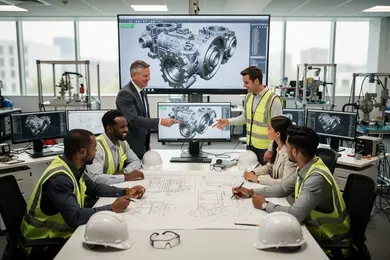
Systems thinking means understanding how parts interact inside a larger machine, process, product, or organization. In mechanical engineering, it shows up when an engineer weighs thermal limits, materials, controls, manufacturing cost, maintenance, safety codes, and user needs at the same time instead of optimizing one component in isolation.
The jobs below tend to reward engineers who can connect technical details to whole-system outcomes. Use the table to compare how different roles apply mechanical engineering knowledge in practical settings.
| Career path | What the role focuses on | Why systems thinking matters | Common employers |
| Robotics or mechatronics engineer | Mechanical design, sensors, actuators, controls, and automation | A small change in motor selection, payload, software logic, or safety guarding can affect the whole machine | Manufacturers, warehouse automation firms, medical device companies, defense contractors |
| Aerospace systems engineer | Aircraft, spacecraft, propulsion, structures, or subsystem integration | Weight, thermal performance, vibration, reliability, and certification requirements are tightly connected | Aerospace manufacturers, federal contractors, research labs |
| Energy systems engineer | Power generation, thermal systems, renewables, storage, and efficiency | Engineers must balance output, lifecycle cost, grid constraints, emissions, and reliability | Utilities, energy developers, consulting firms, industrial facilities |
| HVAC and building systems engineer | Heating, ventilation, cooling, controls, and building performance | Comfort, energy use, indoor air quality, code compliance, and maintenance all interact | Architecture and engineering firms, hospitals, universities, facilities departments |
| Manufacturing systems engineer | Production lines, process improvement, quality, automation, and throughput | Equipment decisions affect labor, defect rates, supply chain resilience, and unit cost | Automotive, electronics, machinery, food, and aerospace manufacturers |
| Product development engineer | Designing, testing, and improving physical products | Successful products require trade-offs among performance, manufacturability, user experience, compliance, and cost | Consumer products, medical devices, industrial equipment, startups |
These careers fit people who enjoy ambiguity, cross-functional teamwork, and design trade-offs. They may be less appealing if you prefer narrowly defined calculations with minimal collaboration, because systems-heavy roles usually involve meetings with electrical engineers, software teams, suppliers, technicians, customers, and project managers.
A practical way to prepare is to build evidence that you can connect theory to implementation. Strong projects often include a design requirement, a model or simulation, a prototype or test plan, and a short explanation of the trade-offs you made.
What degree do you need for mechanical engineering careers?
A bachelor's degree in mechanical engineering is the most common requirement for entry-level mechanical engineering jobs. Some technician, CAD, drafting, or manufacturing support roles may accept an associate degree, but engineering design authority, licensure pathways, and advanced systems roles usually require at least a bachelor's degree.
The best degree choice depends on how close you want to be to hardware, software, research, or management. This comparison shows how common education paths map to mechanical engineering career goals.
| Education option | Best fit | Typical career use | Decision note |
| Associate degree in engineering technology or CAD | Students seeking a faster route into technical support | Mechanical technician, CAD drafter, test technician, manufacturing support | Good for entry into industry, but may not meet requirements for engineer titles or PE licensure paths |
| Bachelor's in mechanical engineering | Students seeking broad engineering roles | Design engineer, manufacturing engineer, test engineer, HVAC engineer, product engineer | The standard choice for the widest mechanical engineering options |
| Bachelor's in mechanical engineering technology | Hands-on learners focused on applied work | Manufacturing, field engineering, quality, technical sales, equipment support | Can be valuable, but licensure and graduate-school options may differ from engineering programs |
| Master's in mechanical engineering | Engineers targeting specialization or leadership | Robotics, thermal systems, aerospace, advanced simulation, R&D, technical lead roles | Most useful when tied to a clear specialization, employer requirement, or funded opportunity |
| Graduate certificate | Working engineers adding a targeted skill | Controls, additive manufacturing, systems engineering, energy, data analytics | Lower commitment than a master's, but usually not a substitute for an engineering degree |
Students who are drawn more to algorithms, software architecture, AI systems, or app development may want to compare mechanical engineering with a computer science degree online. Mechanical engineering is usually the better fit if you want to work with physical systems; computer science is usually better if you want software to be the main product.
Common mistake: choosing a degree based only on the job title you want. Instead, look at actual job postings in your target industry and region. Note whether employers ask for mechanical engineering, mechanical engineering technology, aerospace engineering, industrial engineering, computer science, or a related field.
Is an ABET-accredited mechanical engineering program worth it?
For most students seeking traditional mechanical engineering careers, an ABET-accredited program is worth prioritizing. ABET accreditation signals that a program has been reviewed against recognized engineering education standards, including math, science, design, ethics, communication, and continuous improvement.
ABET matters most if you may pursue Professional Engineer licensure, work in infrastructure or public-sector engineering, apply to competitive graduate programs, or seek roles with employers that use accreditation as a screening factor. It may matter less for some product, startup, manufacturing, or technical sales roles, but it still reduces risk because it keeps more options open.
Use this short process before enrolling, especially if a program is online, newly launched, or labeled as engineering technology rather than engineering.
- Confirm the exact program name, not just the school name, in ABET's official program search.
- Check whether the accreditation applies to mechanical engineering, mechanical engineering technology, or another engineering discipline.
- Ask admissions how the program supports labs, senior design, internships, and FE exam preparation.
- If licensure may matter, verify requirements with the state engineering board where you plan to work.
A common red flag is a school saying it is "seeking" or "aligned with" ABET accreditation. That may be acceptable for some students, but it is not the same as currently accredited status. If you are taking on debt or planning a PE route, do not rely on informal wording.
Should you choose an online or campus mechanical engineering program?
Online mechanical engineering programs can work well for motivated students, transfer students, military learners, and working adults, but the format needs careful review because mechanical engineering depends heavily on labs, design projects, and hands-on testing. Campus programs usually make labs, clubs, machine shops, and recruiting events easier to access.
The key question is not whether online or campus is universally better. The better question is which format gives you enough lab experience, project work, faculty access, and employer visibility for your target career.
| Format | Strengths | Trade-offs | Best fit |
| Campus mechanical engineering program | Direct lab access, design teams, machine shops, research groups, career fairs | Less flexible schedule and may require relocation or commuting | Traditional students, students seeking internships, research, robotics teams, aerospace clubs, or hands-on design culture |
| Online mechanical engineering program | Flexibility for working adults and students with transfer credits | Labs may require kits, simulations, partner sites, or short residencies | Self-directed learners who can manage time and confirm that lab requirements are credible |
| Hybrid engineering program | Combines online coursework with in-person labs or intensives | Travel planning and scheduling can be challenging | Students who need flexibility but want stronger hands-on validation |
If sustainability, water systems, or environmental infrastructure interests you more than machines, energy conversion, or product design, an environmental engineering online degree may be a better match than mechanical engineering. The decision should follow the systems you want to improve, not just the word "engineering."
Before choosing an online program, ask how students complete fluid mechanics labs, materials testing, instrumentation, controls, and senior design. Also ask whether employers recruit online students and whether the transcript distinguishes online delivery. A low tuition price is not a bargain if the program weakens your access to internships, design teams, or licensure options.
What classes are in a mechanical engineering curriculum?
A mechanical engineering curriculum builds from math and science into design, analysis, testing, and manufacturing. The systems-thinking value comes from learning how thermal, mechanical, electrical, material, and human factors interact in real products and processes.
The table summarizes common course areas and why they matter for career preparation. Course titles vary by school, but the underlying competencies are broadly similar in accredited programs.
| Course area | What you study | How it supports systems-thinking careers |
| Calculus, differential equations, and statistics | Mathematical modeling, uncertainty, optimization, and quantitative reasoning | Helps engineers model performance and evaluate trade-offs rather than rely on guesses |
| Physics and chemistry | Mechanics, energy, matter, and basic physical laws | Provides the foundation for understanding how real systems behave |
| Statics, dynamics, and mechanics of materials | Forces, motion, stress, strain, failure, and structural behavior | Supports safe design of machines, structures, and components |
| Thermodynamics, heat transfer, and fluid mechanics | Energy conversion, heat flow, pressure, flow, and efficiency | Essential for HVAC, engines, turbines, energy systems, cooling, and process equipment |
| Materials science and manufacturing | Material selection, processing, machining, additive manufacturing, and quality | Connects design intent to cost, durability, supply chain, and production feasibility |
| Controls, instrumentation, and mechatronics | Feedback systems, sensors, actuators, data acquisition, and automation | Important for robotics, smart products, test systems, and automated manufacturing |
| Computer-aided design and simulation | CAD, finite element analysis, computational tools, and digital prototyping | Allows engineers to test ideas before building expensive prototypes |
| Capstone design | Team-based design under constraints | Shows employers that students can integrate requirements, budget, testing, communication, and iteration |
Current mechanical engineering students should also build comfort with data tools, scripting, simulation workflows, and AI-assisted engineering software. These tools do not replace engineering judgment; they increase the need for people who can check assumptions, validate models, and understand physical consequences.
One mistake is treating software as optional. Even if you plan to work in hardware, basic programming, data analysis, and simulation skills can make you more useful in testing, automation, digital twins, predictive maintenance, and model-based design.
What are the admission requirements for mechanical engineering programs?
Admission requirements vary by school and degree level, but mechanical engineering programs generally look for readiness in math, science, and problem-solving. Because the curriculum is sequential, weak preparation in calculus, physics, or chemistry can delay graduation even after admission.
For undergraduate mechanical engineering programs, applicants commonly need a high school diploma or equivalent, transcripts, math and science coursework, and a general college application. More selective programs may review calculus readiness, physics preparation, GPA, essays, recommendations, extracurricular projects, and sometimes standardized test scores if the school still uses them.
Graduate mechanical engineering programs usually expect a bachelor's degree in mechanical engineering or a closely related engineering field. Applicants from physics, mathematics, engineering technology, or another engineering discipline may need prerequisite courses before taking advanced mechanical engineering classes.
To strengthen an application, focus on evidence that you can handle both theory and implementation. The most useful preparation steps are practical and verifiable.
- Complete the strongest available math sequence, ideally through calculus if your school offers it.
- Take physics and chemistry seriously because they support core engineering courses.
- Build a small project portfolio, such as CAD models, robotics builds, 3D-printed prototypes, energy audits, or repair projects.
- Ask schools how transfer credits apply to engineering prerequisites, not just general education.
- For graduate admission, contact faculty or departments before applying if your background is not a direct match.
When comparing costs, do not assume that tuition pages from unrelated fields estimate engineering expenses accurately. A resource on the average cost of MLIS degree us can show how professional-degree pricing is reported, but mechanical engineering may add lab fees, equipment costs, software access, and residency requirements.
How long does a mechanical engineering degree take?
A full-time bachelor's degree in mechanical engineering typically takes four years, but the real timeline depends on math placement, transfer credits, course sequencing, co-ops, internships, and whether the student studies full time. Because many engineering courses have prerequisites, missing one course can push a required class into the next term or even the next year.
The table below shows common timelines so you can plan realistically rather than assume the fastest advertised path applies to every student.
| Path | Typical length | What can extend the timeline | Best planning move |
| Associate degree or pre-engineering transfer path | About two years before transfer | Credits may not apply cleanly to engineering prerequisites | Use transfer maps from the destination engineering school before enrolling |
| Bachelor's degree in mechanical engineering | About four years full time | Calculus placement, failed prerequisites, limited course availability, co-ops | Build a term-by-term plan with an engineering advisor |
| Part-time bachelor's degree | Often longer than four years | Sequential classes and lab scheduling can be hard to fit around work | Ask which upper-division courses are offered evenings, online, or only once per year |
| Master's degree in mechanical engineering | Often one to two years full time | Thesis requirements, employer schedules, prerequisite gaps | Choose thesis, project, or coursework options based on career goals |
| Doctoral study | Commonly several years beyond the bachelor's or master's | Research progress, funding, publication expectations, advisor fit | Apply only when the research area and funding model are clear |
Co-ops can extend graduation time, but they may improve career readiness by adding paid experience and employer contacts. The trade-off is usually worthwhile when the experience is directly related to your target industry, such as aerospace testing, manufacturing automation, HVAC design, or product development.
To avoid timeline surprises, ask each program these questions before enrolling.
- Which courses are prerequisites for upper-division mechanical engineering classes?
- Are core courses offered every term or only once per academic year?
- How many students get delayed because of math placement or capacity limits?
- Can internships or co-ops count toward degree requirements?
- How are labs handled for transfer, online, or part-time students?
What salaries do mechanical engineers earn by specialization?
Mechanical engineering salaries vary widely because the degree feeds into many industries. The U.S. Bureau of Labor Statistics reported a 2024 median annual wage of $102,320 for mechanical engineers; that figure is a useful baseline, but it should not be treated as a guaranteed outcome for a new graduate.
Specialization matters because some roles use mechanical engineering directly while others overlap with adjacent occupations. The table uses 2024 U.S. wage context for mechanical engineers and closely related engineering fields to show where systems-heavy mechanical engineering skills often lead.
| Specialization or related path | 2024 U.S. salary context | How to interpret it |
| General mechanical engineering | Median annual wage of $102,320 | A broad benchmark for design, testing, manufacturing, product, and systems roles |
| Aerospace engineering | Median annual wage above the general mechanical engineering median | Often rewards specialization in structures, propulsion, thermal systems, controls, and regulated design environments |
| Industrial engineering and manufacturing systems | Salary levels often comparable to mechanical engineering, depending on industry | Strong fit for engineers who like process flow, automation, quality, and cost-performance trade-offs |
| Materials engineering | Often overlaps with mechanical design, manufacturing, and reliability work | Useful for engineers interested in failure analysis, composites, metals, polymers, and additive manufacturing |
| Biomedical or medical device engineering | Pay depends heavily on product area, regulation, and employer size | Good fit for mechanical engineers who want design work tied to anatomy, usability, testing, and compliance |
| HVAC and building systems | Can vary by region, licensure, and consulting experience | PE licensure and code expertise can strongly affect advancement in this path |
For salary decisions, compare roles by total opportunity rather than base pay alone. Location, overtime expectations, security clearance, travel, bonuses, tuition support, patent incentives, and promotion pathways can change the real value of an offer.
New graduates should be especially cautious with salary averages from job boards or alumni anecdotes. They can be useful signals, but official wage data, local postings, internship conversion rates, and employer conversations usually give a more realistic picture.
What is the job outlook for mechanical engineering careers?
The outlook for mechanical engineering is positive, especially for engineers who can work across hardware, software, manufacturing, energy, and data-informed design. The Bureau of Labor Statistics projected 11% employment growth for mechanical engineers from 2023 to 2033, which indicates stronger-than-average demand but not equal demand in every industry or region.
Several trends are shaping mechanical engineering careers. Advanced manufacturing is increasing demand for automation and process improvement. Electrification is changing vehicle, battery, HVAC, and energy-system design. AI-assisted simulation, generative design, and predictive maintenance are raising expectations for engineers who can use data while still validating physical reality.
Mechanical engineers who want to stay competitive should build a skill mix that combines fundamentals with modern tools. The most practical priorities are:
- Learn CAD and simulation deeply enough to explain assumptions, not just produce attractive models.
- Develop basic programming or scripting skills for test automation, data analysis, and design workflows.
- Get hands-on experience through labs, internships, co-ops, design teams, or technician-adjacent work.
- Understand manufacturing constraints so designs can be built, inspected, repaired, and scaled.
- Practice technical communication because systems roles require explaining trade-offs to non-specialists.
Some mechanical engineers move into analytics, autonomous systems, or digital-twin work after gaining engineering experience. If your long-term goal is research leadership in data-heavy technical systems, comparing mechanical engineering graduate options with an online PhD data science can clarify whether you want to specialize in physical engineering systems, data science methods, or the intersection of both.
Which certifications help mechanical engineers advance faster?
Certifications are most valuable when they match a role, industry, or promotion requirement. They rarely replace a degree, but they can help mechanical engineers demonstrate readiness in licensure, project management, quality, manufacturing, energy, HVAC, safety, or specialized software.
The certifications below are commonly relevant to mechanical engineers. Requirements vary, so candidates should verify eligibility, experience rules, renewal requirements, and state-specific licensure details before paying for exams or courses.
| Credential | Best for | Why it can help |
| FE exam and Engineer-in-Training or Engineer Intern status | Students and early-career engineers considering PE licensure | Starts the licensure pathway and signals commitment to professional engineering standards |
| Professional Engineer license | Engineers in public safety, infrastructure, HVAC, consulting, utilities, and regulated work | May be required to sign and seal engineering documents or advance in consulting roles |
| Certified Manufacturing Engineer | Manufacturing, process improvement, automation, and production engineering roles | Shows applied knowledge of manufacturing systems and production practices |
| Six Sigma Green Belt or Black Belt | Quality, operations, manufacturing, and reliability roles | Supports data-driven process improvement and defect reduction work |
| Project Management Professional | Engineers moving into project leadership | Useful when managing budgets, schedules, vendors, and cross-functional teams |
| Certified Energy Manager | Energy efficiency, facilities, HVAC, and sustainability roles | Supports work involving building performance, energy audits, and efficiency projects |
| Software-specific CAD or simulation credentials | Design, analysis, product development, and test roles | Can help early-career engineers prove tool fluency, especially when paired with a portfolio |
The smartest certification sequence depends on your target path. For HVAC consulting, FE and PE planning may matter more than a software badge. For manufacturing, quality and lean credentials may be more useful. For product design, a portfolio of tested designs can carry more weight than a long list of certificates.
Avoid collecting certifications without a career reason. Before enrolling, ask whether the credential appears in job postings, whether your employer reimburses it, whether it requires experience you do not yet have, and whether it helps you qualify for responsibilities you actually want.
Other Things You Should Know About Mechanical Engineering
In 2027, mechanical engineers use systems thinking to integrate different engineering disciplines, optimize product lifecycles, and improve sustainability. This approach is crucial for working on complex projects, such as developing automated systems and enhancing AI technologies, which require understanding and managing interconnected systems.
Employers often value CAD, simulation, technical writing, data analysis, teamwork, lab testing, manufacturing awareness, and the ability to explain trade-offs. A small portfolio with projects, test results, design iterations, and lessons learned can make those skills easier to prove.
Yes. Mechanical engineers can work in AI-adjacent roles involving robotics, predictive maintenance, digital twins, automated inspection, control systems, and manufacturing analytics. The strongest candidates usually combine mechanical fundamentals with programming, sensors, data analysis, and validation skills.
Review real job postings, visit labs if possible, talk to current students, compare ABET status, estimate total cost, and try a hands-on project such as CAD modeling, robotics, repair work, or energy analysis. If you dislike math, physics, troubleshooting, and iterative design, consider related fields before enrolling.
References
- What Classes Do Mechanical Engineers Take In College? https://www.grace.edu/what-classes-do-mechanical-engineers-take-in-college/
- Campus vs Online Engineering Degrees - What Employers Think https://www.itcareerfinder.com/brain-food/blog/entry/what-employers-think-about-online-engineering-degrees.html
- Curriculum https://www.ccsu.edu/programs/mechanical-engineering-bs/curriculum
- What is Mechanical Engineering? Career Paths & Opportunities Explained https://www.matchtech.com/resources/blog/what-is-mechanical-engineering/
- Classes Mechanical Engineers Take | University of Bridgeport https://www.bridgeport.edu/news/what-classes-do-mechanical-engineers-take/
- Mechanical Engineering https://www.ualberta.ca/en/undergraduate-programs/bachelor-of-science-in-mechanical-engineering-mechanical-engineering.html
- Why ABET Accreditation Matters - ABET https://www.abet.org/accreditation/what-is-accreditation/why-abet-accreditation-matters/
- Online Mechanical Engineering Degrees 2025 https://www.affordablecollegesonline.org/degrees/engineering-programs/mechanical-engineering/
- Mechanical Engineer Certifications: Best Credentials to Advance Your Career | Teal https://www.tealhq.com/career-paths/mechanical-engineer-certifications
- ABET Accreditation Explained: Do Engineering Students Really Need It? — Lantern College Counseling https://www.lanterncollegecounseling.com/insights/for-aspiring-engineers-understanding-the-value-of-abet-accreditation