2027 Mechanical Engineering Topics Writers and Editors Should Watch

Co-Founder and Chief Data Scientist
Mechanical engineering is changing as employers combine traditional design skills with AI, robotics, energy systems, advanced manufacturing, and sustainability. The U. S. Bureau of Labor Statistics projects mechanical engineer employment to grow 11% from 2023 to 2033, much faster than the average for all occupations. This guide is for students, career changers, writers, and editors tracking where the field is headed. You will learn which topics matter, what degrees lead into the field, how online programs compare, what costs to expect, and how to evaluate career value before enrolling.
Key Things You Should Know
- Mechanical engineering is expanding beyond machines into AI-assisted design, robotics, clean energy, additive manufacturing, biomedical devices, autonomous systems, and digital twins.
- A bachelor's degree from an ABET-accredited mechanical engineering program is the standard entry route for engineering roles, while associate degrees usually lead to technician or transfer pathways.
- BLS data published in 2024 projects 11% employment growth for mechanical engineers from 2023 to 2033, but salaries and opportunities vary by industry, location, experience, and technical specialization.
What are the most important mechanical engineering trends and emerging topics right now?
The most important mechanical engineering topics are those that connect physical systems with software, data, sustainability, and automation. Mechanical engineers still design, test, and improve machines and systems, but the tools and problems are changing quickly.
One useful way to evaluate trends is to ask whether they create new design constraints, new employer demand, or new skills students should learn. The table below summarizes the topics most worth watching and why they matter for education and career planning.
| Emerging topic | What it means in mechanical engineering | Why writers, editors, and students should watch it |
| AI-assisted engineering design | Use of machine learning, generative design, simulation automation, and optimization tools to create and test designs faster. | It changes the skill profile from manual drafting alone to model validation, data interpretation, and engineering judgment. |
| Robotics and autonomous systems | Design of robotic arms, mobile robots, drones, sensors, actuators, and control systems. | Demand is tied to manufacturing automation, logistics, agriculture, defense, and medical technology. |
| Additive manufacturing | 3D printing of metals, polymers, composites, and complex geometries that are difficult to machine traditionally. | It affects product design, supply chains, prototyping speed, and materials education. |
| Clean energy and thermal systems | Work involving batteries, heat pumps, hydrogen systems, turbines, HVAC, energy storage, and efficiency. | Energy transition projects need engineers who understand heat transfer, fluids, materials, and system reliability. |
| Digital twins and simulation | Virtual models of machines, factories, vehicles, or buildings that update with sensor data. | These tools help companies predict failures, reduce downtime, and test scenarios before making physical changes. |
| Advanced materials | Development and selection of lightweight alloys, composites, biomaterials, smart materials, and high-temperature materials. | Materials decisions affect safety, cost, sustainability, and performance in aerospace, transportation, and medical devices. |
Students should not chase every trend at once. A smarter approach is to build a strong foundation in mechanics, thermodynamics, materials, and design, then add one or two focus areas through electives, projects, internships, or undergraduate research.
For writers and editors, the biggest editorial shift is that "mechanical engineering" should no longer be framed only as engines, manufacturing, and HVAC. The field now overlaps with software engineering, data science, environmental systems, biomedical innovation, and robotics.
How do current mechanical engineering research areas translate into real-world applications and innovation?
Mechanical engineering research becomes valuable when it improves performance, lowers cost, increases safety, reduces emissions, or enables products that were previously impractical. Research areas such as fluid dynamics, heat transfer, controls, biomechanics, and materials science often appear abstract in a course catalog, but they directly support real-world innovation.
The following examples show how research areas connect to practical applications. This matters because students can use these connections to choose electives, lab experiences, and internships that match their career goals.
| Research area | Real-world application | Industries affected |
| Heat transfer and thermal management | Battery cooling, data center cooling, electronics packaging, heat pumps, and aerospace systems. | Energy, automotive, aerospace, computing, building systems. |
| Fluid mechanics | Aircraft wings, wind turbines, pumps, medical flow devices, pipelines, and combustion systems. | Aerospace, energy, biomedical, oil and gas, environmental engineering. |
| Biomechanics | Prosthetics, implants, rehabilitation devices, sports equipment, and surgical tools. | Medical devices, healthcare, sports technology, rehabilitation engineering. |
| Controls and mechatronics | Robots, autonomous vehicles, smart manufacturing equipment, and precision instruments. | Manufacturing, transportation, defense, logistics, consumer technology. |
| Materials and failure analysis | Safer aircraft parts, stronger medical implants, longer-lasting turbines, and more reliable consumer products. | Aerospace, healthcare, energy, product design, forensic engineering. |
Students who want innovation-focused careers should prioritize project-based learning. A capstone design project, student competition team, fabrication lab role, or research assistantship can show employers that the student can move from equations and simulations to physical prototypes and test data.
One common mistake is assuming that research careers require a doctorate in every case. A PhD is important for many university research roles and some advanced R&D positions, but bachelor's and master's graduates can still work in applied engineering, product development, testing, and systems integration.
What degree pathways lead into mechanical engineering, from associate through graduate study?
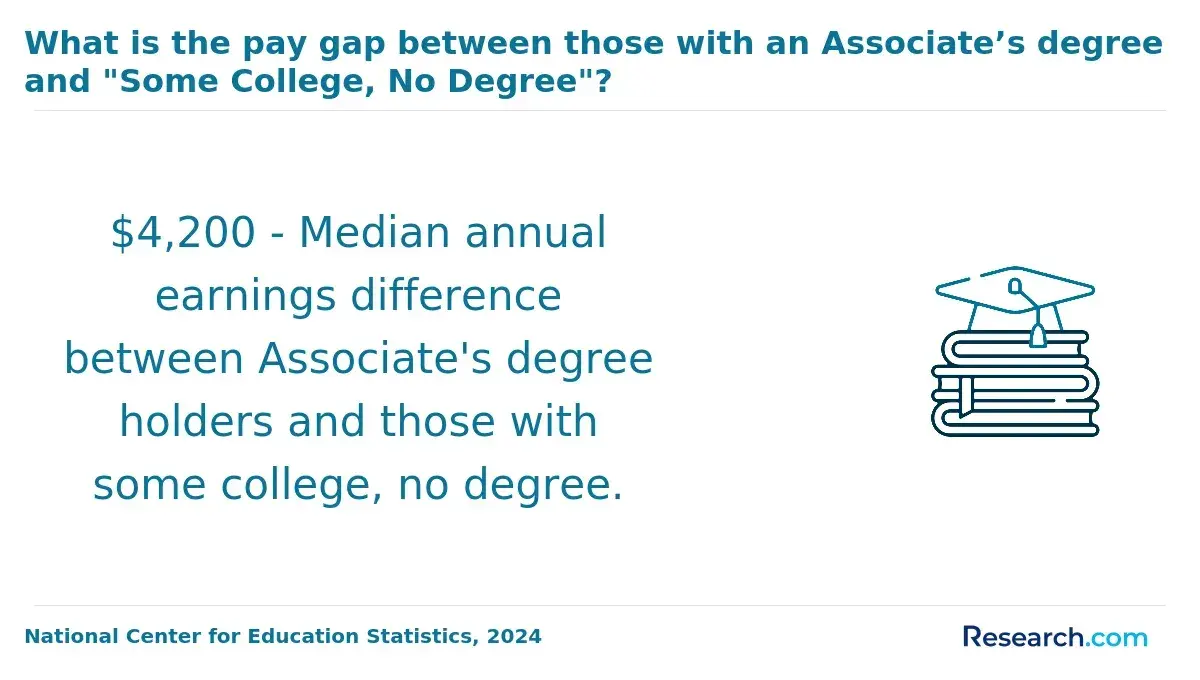
The most direct path to becoming a mechanical engineer is a bachelor's degree in mechanical engineering from an ABET-accredited program. However, students may enter the field through several routes depending on their preparation, budget, schedule, and career target.
The table below compares the main academic pathways. It can help students distinguish between engineering technician preparation, professional engineering preparation, and advanced specialization.
| Pathway | Typical purpose | Best fit | Important limitation |
| Associate degree in engineering technology or pre-engineering | Prepares students for technician roles or transfer to a four-year program. | Students seeking a lower-cost starting point or stronger math preparation before transfer. | It may not qualify graduates for mechanical engineer roles without further study. |
| Bachelor's degree in mechanical engineering | Standard entry credential for mechanical engineer positions. | Students who want design, analysis, testing, manufacturing, energy, robotics, or product development roles. | Requires substantial math, physics, labs, and design work. |
| Bachelor's degree in mechanical engineering technology | Emphasizes applied design, testing, production, and hands-on systems. | Students interested in manufacturing, field engineering, quality, or applied technical roles. | Some employers and licensing boards distinguish it from an engineering degree. |
| Master's degree in mechanical engineering | Adds specialization in areas such as robotics, thermal systems, aerospace, materials, or advanced manufacturing. | Engineers seeking R&D, advanced design, leadership, or a technical pivot. | ROI depends on employer support, specialization, and whether the role requires graduate training. |
| PhD in mechanical engineering | Prepares students for academic research, high-level R&D, and specialized technical leadership. | Students who want to lead original research or teach at the university level. | It is a long path and may not be necessary for many industry roles. |
Students who are attracted to mechanical engineering because of energy, materials, climate, or earth systems may also want to compare adjacent science routes such as a geology online degree. That option may fit better for students who prefer field science, natural resources, environmental geology, or geospatial work over machine design and mechanical systems.
The best pathway depends on the target job. A student who wants to design aircraft components should prioritize an ABET-accredited engineering bachelor's program, while a student who wants to operate, test, or maintain production equipment may find an engineering technology route more practical.
How do online mechanical engineering programs compare with campus-based options for quality and outcomes?
Online mechanical engineering programs can be credible, especially when they come from accredited institutions and include rigorous labs, proctored exams, team projects, and faculty interaction. However, mechanical engineering is more lab-intensive than many online majors, so format matters more than convenience alone.
Students should compare online and campus options by looking at how each program delivers labs, design projects, advising, and employer connections. The table below summarizes the practical trade-offs.
| Program format | Strengths | Trade-offs | Best fit |
| Campus-based mechanical engineering | Direct access to labs, machine shops, student teams, faculty offices, and local recruiting. | Less flexible for working adults and may require relocation or commuting. | Traditional students, students seeking research access, and those who learn best through in-person labs. |
| Fully online mechanical engineering | Maximum schedule flexibility and access for students who cannot relocate. | May require careful verification of lab quality, ABET status, and hands-on requirements. | Working adults, military students, and students with strong self-direction. |
| Hybrid mechanical engineering | Combines online lectures with in-person labs, summer intensives, or campus residencies. | Travel planning and scheduling can be challenging. | Students who need flexibility but still want structured hands-on learning. |
| Online engineering technology | Often more applied and may be easier to align with working technicians' schedules. | May not lead to the same engineering roles as an ABET mechanical engineering degree. | Technicians seeking advancement in manufacturing, quality, maintenance, or operations. |
Students comparing online STEM options should be honest about their preferred work environment. For example, someone more interested in food systems, wellness products, or public health education than mechanical design may be better served by the best online nutrition degree rather than forcing a mechanical engineering path.
A common red flag is an online program that describes engineering broadly but does not clearly explain lab delivery, design software access, faculty qualifications, or accreditation. Before enrolling, ask whether the program has ABET accreditation, whether lab kits or campus visits are required, and how students complete senior design.
What core courses and technical skills are taught in a typical mechanical engineering curriculum?
A mechanical engineering curriculum teaches students how to model, design, build, test, and improve physical systems. The early years usually focus on math and science, while later years emphasize engineering analysis, labs, design, and specialization.
Most programs include a sequence of technical courses that build on one another. The list below shows the core areas students should expect and why they matter.
- Calculus, differential equations, and linear algebra: These courses support modeling, simulation, controls, vibrations, fluids, and optimization.
- Physics and chemistry: These provide the scientific foundation for motion, energy, materials, and thermodynamic behavior.
- Statics, dynamics, and mechanics of materials: These courses teach how forces affect structures, machines, and components.
- Thermodynamics, heat transfer, and fluid mechanics: These areas prepare students for energy systems, HVAC, engines, turbines, pumps, and thermal management.
- Materials science and manufacturing processes: Students learn how materials behave and how design choices affect cost, reliability, and production.
- Mechanical design and machine elements: These courses focus on gears, shafts, bearings, fasteners, fatigue, tolerances, and safety factors.
- Controls, instrumentation, and mechatronics: Students learn how sensors, actuators, feedback systems, and embedded controls interact with mechanical systems.
- Computer-aided design and simulation: CAD, finite element analysis, computational fluid dynamics, and modeling tools help students evaluate designs before prototyping.
Beyond coursework, employers often look for evidence that students can solve messy, real engineering problems. That evidence may come from internships, co-ops, senior design, student engineering teams, fabrication experience, or a portfolio of CAD models and test results.
The most valuable technical skills are usually paired with communication and documentation skills. Engineers must explain assumptions, record test results, write design reports, present trade-offs, and defend decisions to non-engineers, managers, clients, and regulators.
What admission requirements, prerequisites, and math preparation do mechanical engineering programs expect?
Mechanical engineering admissions requirements vary by school, but strong math and science preparation is consistently important. Students should expect admissions committees to look for evidence that they can handle calculus-based coursework, physics, labs, and a demanding course sequence.
Applicants can use the checklist below to prepare for admission or transfer. It highlights the academic areas that most often affect readiness.
- Complete high school or college algebra, trigonometry, and precalculus before attempting calculus-based engineering courses.
- Take physics and chemistry when available, especially if the program requires calculus-based physics early in the major.
- Review placement-test policies because starting below calculus can extend the degree timeline.
- For transfer students, confirm that calculus, physics, chemistry, and engineering graphics courses transfer as major requirements rather than only general electives.
- Ask whether the program has progression requirements, such as minimum grades in calculus, physics, or introductory engineering courses.
- Prepare for selective admission if the university admits students first to a pre-engineering track and later to the mechanical engineering major.
Students who feel underprepared should not assume they are disqualified. Community college pre-engineering courses, summer bridge programs, tutoring, and a slower first-year schedule can help build the foundation needed for success.
The mistake to avoid is rushing into the major without enough math preparation. Mechanical engineering courses are cumulative, so weak algebra or trigonometry can make calculus, physics, dynamics, and controls much harder than they need to be.
How long do mechanical engineering degrees take, and what tuition and total costs should students expect?
A bachelor's degree in mechanical engineering typically takes four years of full-time study, but the actual timeline can be longer if a student starts below calculus, changes majors, studies part time, repeats a prerequisite, or completes co-op rotations. Associate pathways often take two years, master's programs commonly take one to two years, and PhD programs can take several additional years.
Cost should be evaluated as total cost, not tuition alone. Students should include fees, books, software, lab supplies, commuting or housing, health insurance, lost wages, and the cost of extra semesters if prerequisites delay progress.
NCES data published in 2024 shows that the average total price for first-time, full-time undergraduates living on campus in 2022-2023 was substantially higher at private nonprofit four-year institutions than at public four-year institutions. For readers, the takeaway is not that one institution type is always better, but that net price after aid and time to completion can change the value calculation dramatically.
The table below summarizes the main cost and timeline factors students should compare before choosing a program.
| Factor | Why it affects cost | Decision tip |
| Program length | Extra semesters add tuition, fees, and living costs. | Check the four-year course map and whether key courses are offered every term. |
| Math placement | Starting below calculus can delay engineering courses. | Use placement results to build a realistic timeline rather than an optimistic one. |
| Transfer credit | Accepted credits can reduce cost, but rejected credits may not help the major. | Request a degree-specific transfer evaluation before enrolling. |
| Lab and software costs | Engineering programs may require tools, kits, CAD access, and materials. | Ask for a program-level estimate of fees and required equipment. |
| Co-op or internship structure | Paid work terms may help offset costs but can extend calendar time. | Compare earnings potential with any delay in graduation. |
Students focused on affordability can compare the cheapest online mechanical engineering degree options, but they should still verify accreditation, lab quality, transfer policies, and employer recognition before choosing the lowest listed price.
The best financial decision is usually the program that balances credible outcomes, manageable debt, strong completion support, and a realistic schedule. A cheaper program that does not transfer credits properly or lacks required labs can become more expensive if it delays graduation or limits career options.
What entry-level and advanced careers can mechanical engineering graduates pursue across industries?
Mechanical engineering graduates can work across manufacturing, aerospace, automotive, energy, robotics, biomedical devices, construction systems, consumer products, defense, and consulting. The degree is broad because it teaches transferable principles: motion, energy, forces, materials, design, testing, and systems thinking.
The table below maps common roles to responsibilities and typical preparation. It can help students connect degree choices and electives to career outcomes.
| Career path | Typical responsibilities | Common preparation |
| Mechanical design engineer | Create components, assemblies, CAD models, drawings, tolerances, and prototype plans. | Bachelor's degree, CAD skills, mechanics, design projects. |
| Manufacturing engineer | Improve production processes, tooling, quality, workflow, and cost efficiency. | Bachelor's degree or engineering technology background, manufacturing courses, internship experience. |
| Thermal systems engineer | Analyze heat transfer, cooling, HVAC, engines, turbines, batteries, or energy systems. | Strong thermodynamics, fluids, heat transfer, and simulation background. |
| Robotics or mechatronics engineer | Integrate mechanical parts, sensors, actuators, controls, and embedded systems. | Controls, programming, electronics, robotics projects. |
| Test engineer | Design experiments, collect data, troubleshoot failures, and validate products. | Instrumentation, statistics, lab experience, communication skills. |
| Product development engineer | Turn concepts into manufacturable products while balancing performance, cost, and user needs. | Design, prototyping, materials, project management, cross-functional teamwork. |
| Engineering manager | Lead teams, budgets, schedules, technical decisions, and stakeholder communication. | Experience, leadership, business knowledge, sometimes a graduate degree. |
Entry-level candidates should focus less on having every specialization and more on showing evidence of applied problem-solving. Employers often value internships, co-ops, capstone projects, CAD portfolios, test experience, and the ability to explain design decisions clearly.
Advanced careers usually require a combination of experience and specialization. For example, a mechanical engineer may move from design engineer to senior engineer, project engineer, systems engineer, technical specialist, engineering manager, or product leader.
What are typical mechanical engineer salary ranges and how do they vary by role and location?
Mechanical engineer pay varies by experience, industry, geography, employer size, clearance requirements, and technical specialization. Salaries should be used as planning benchmarks, not promises of individual outcomes.
The U.S. Bureau of Labor Statistics reported a median annual wage of $99,510 for mechanical engineers in May 2023 in data published in 2024. For students, this means the field can offer strong earning potential, but actual offers may be lower for entry-level roles and higher for experienced engineers in specialized or high-cost markets.
The table below summarizes the main factors that influence salary. It is more useful than a single national number because mechanical engineering roles differ widely across industries.
| Salary factor | How it affects pay | What students should do |
| Industry | Aerospace, energy, defense, software-adjacent hardware, and advanced manufacturing may pay differently from smaller local firms. | Compare job postings in the industries you are targeting before choosing electives. |
| Location | High-cost metro areas may offer higher nominal salaries, but housing and commuting costs can reduce the advantage. | Evaluate salary together with cost of living and relocation expenses. |
| Experience level | Entry-level engineers usually earn less than senior engineers, specialists, or managers. | Look for employers with clear promotion paths, mentorship, and technical ladders. |
| Technical specialization | Skills in simulation, robotics, controls, thermal management, manufacturing automation, or regulated industries can improve competitiveness. | Build a portfolio or project record that proves the skill, not just a course list. |
| Licensure and credentials | A Professional Engineer license may matter more in consulting, public infrastructure, HVAC, and roles involving signed engineering work. | Ask employers whether FE and PE pathways are valued in your target role. |
Students should also consider non-salary factors such as benefits, tuition assistance, paid training, overtime expectations, travel requirements, and career mobility. A slightly lower starting salary with strong mentorship and project exposure can sometimes lead to better long-term growth than a higher initial offer with limited development.
How can students evaluate ABET accreditation, lab resources, and industry partnerships when choosing programs?
ABET accreditation is one of the most important quality signals for mechanical engineering programs in the United States. It indicates that a program has been reviewed against standards for curriculum, faculty, facilities, student outcomes, and continuous improvement.
Students should evaluate programs systematically rather than relying only on rankings, advertising, or tuition. The checklist below focuses on the questions that most directly affect academic quality and career readiness.
- Confirm ABET accreditation for the specific mechanical engineering program, not just the institution as a whole.
- Ask how students complete labs, machine-shop work, instrumentation exercises, and senior design projects.
- Review faculty expertise in areas that match your interests, such as robotics, thermal systems, manufacturing, materials, or biomechanics.
- Look for industry-sponsored capstone projects, internship pipelines, co-op options, career fairs, and alumni employer data.
- Compare student support services, including tutoring for calculus and physics, advising, transfer support, and career coaching.
- Ask whether students get access to current CAD, simulation, data acquisition, and manufacturing tools.
- Check graduation requirements, course sequencing, and how often required upper-division courses are offered.
Students comparing graduate or online education across fields can apply the same quality-checking mindset to other professional programs, including a library science masters. The specific accreditor and career outcomes differ, but the core questions remain similar: Is the program recognized, well-supported, transparent about costs, and aligned with the student's target career?
The biggest red flags are vague accreditation language, weak lab explanations, limited advising, poor transfer transparency, and programs that promise broad career outcomes without showing how students gain practical engineering experience. A strong program should make its curriculum, facilities, outcomes, and employer connections easy to verify.
Other Things You Should Know About Mechanical Engineering
Yes, coding is becoming increasingly essential in mechanical engineering. With the rise of technologies like automation, robotics, and data analysis, programming skills in languages like Python and MATLAB are crucial for modern mechanical engineers to solve complex problems and enhance design efficiency.
Not always. Many mechanical engineers in manufacturing, product design, robotics, or private industry work without a PE license. Licensure is more important for roles involving public safety, consulting, HVAC design, infrastructure, or work that requires signed engineering documents.
A strong portfolio can include CAD models, simulations, prototypes, test results, design reports, photos of builds, capstone work, and short explanations of your role. Employers value portfolios that show clear engineering judgment, not just attractive images.
References
- How Long to Become a Mechanical Engineer? | University of Bridgeport https://www.bridgeport.edu/news/time-to-become-a-mechanical-engineer/
- Pathways to Careers in Mechanical Engineering in the USA - Estudo No Exterior https://estudonoexterior.com/mechanical-engineering-in-the-usa
- 2025 Best Online Mechanical Engineering Degrees https://www.onlineu.com/degrees/mechanical-engineering
- What Classes Do Mechanical Engineers Take In College? https://www.grace.edu/what-classes-do-mechanical-engineers-take-in-college/
- From Code to Cloud: Practical DevOps with AWS https://aiubcc.org/wp-content/pgs/kakovy_vaghneyshie_tendencii_v_mehanike_i_mashinostroenii.html
- ABET Accreditation and Laboratory Experiment Systems https://acrome.net/post/experiment-systems-for-abet
- Seven essential skills for your mechanical engineering career - Academic and Future Workforce https://blogs.sw.siemens.com/academic/seven-essential-skills-mechanical-engineering-career/
- Emerging Trends in Mechanical Engineering for 2026 - Technical Partners https://technical-partners.co.uk/emerging-trends-mechanical-engineering-2026/
- Criteria for Accrediting Engineering Programs, 2025 - 2026 - ABET https://www.abet.org/accreditation/accreditation-criteria/criteria-for-accrediting-engineering-programs-2025-2026/
- Mechanical Engineer Salary Guide 2026 - KORE1 https://www.kore1.com/mechanical-engineer-salary-guide/