2027 How to Compare Online Mechanical Engineering Degrees by Lab Strength

Co-Founder and Chief Data Scientist
Choosing an online mechanical engineering degree is harder than comparing tuition or course lists because lab quality can determine how well you build, test, measure, and troubleshoot real systems. The stakes are practical: the U. S. Bureau of Labor Statistics reported a 2024 median pay of $102,320 for mechanical engineers, but employers still expect evidence of applied skills. This guide is for prospective undergraduates, transfer students, and working adults who want to compare online programs by lab strength, accreditation, cost, scheduling, and career fit before enrolling.
Key Things You Should Know
- Strong online mechanical engineering programs combine physical lab kits, short campus residencies, remote-controlled equipment, simulation tools, and design projects; a program that relies only on videos or software is usually weaker for hands-on preparation.
- ABET accreditation is one of the clearest quality signals because accredited engineering programs must show that students can conduct experiments, analyze data, design systems, and solve engineering problems, but ABET status should be checked for the exact online program and campus location.
- Cost comparisons should include tuition, lab fees, travel for residencies, software, tools, and hardware; College Board's 2024 data shows average published tuition and fees of $11,610 for in-state public four-year colleges and $43,350 for private nonprofit four-year colleges, before engineering-specific expenses.
How do online mechanical engineering degrees deliver and assess hands-on lab experiences?
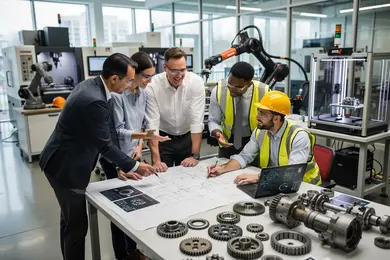
Online mechanical engineering degrees use several delivery models because mechanical engineering is not a purely screen-based discipline. Students must learn how materials deform, fluids move, heat transfers, machines vibrate, and measurements fail in the real world. The strongest programs make those experiences visible in the curriculum rather than treating labs as occasional add-ons.
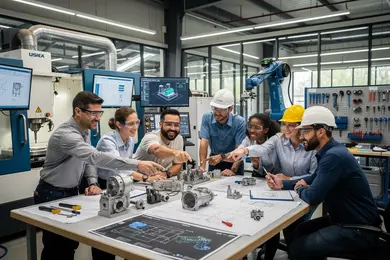
Most credible online programs use a blended lab model. That means some experiments are completed at home, some are completed through remote access to campus equipment, some are simulated in engineering software, and some may require short on-campus sessions. The right model depends on whether the program is a full bachelor's degree, a degree-completion path for transfer students, or a master's program for engineers who already completed undergraduate labs.
Assessment matters as much as delivery. A serious lab course should require students to plan the experiment, calibrate sensors, collect data, analyze uncertainty, write technical reports, and explain what went wrong. If a school says students "observe" experiments but does not require measurement, design decisions, or independent analysis, the lab experience may be too passive.
Use the comparison below to understand how common online lab formats differ. None is automatically best; the strongest programs usually combine several formats so students practice both physical testing and digital modeling.
| Lab format | What students typically do | Strength | Limitation to check |
| Home lab kits | Use mailed equipment, sensors, microcontrollers, small test rigs, or measurement tools | Builds independent troubleshooting skills | May not expose students to industrial-scale equipment |
| Remote-controlled labs | Operate real campus equipment through an online interface and analyze live data | Gives access to equipment that cannot be mailed | Scheduling windows may be limited |
| Simulation labs | Model systems using CAD, finite element analysis, computational fluid dynamics, or MATLAB-style tools | Reflects modern engineering workflows | Should not replace all physical measurement |
| Campus residencies | Attend short intensive sessions for manufacturing, materials, fluids, or capstone testing | Provides concentrated hands-on work with faculty supervision | Adds travel, lodging, and time-off costs |
| Employer-site projects | Use approved workplace equipment or industry problems under faculty oversight | Can connect coursework to real engineering practice | Requires clear safety, supervision, and documentation rules |
A red flag is a program that describes labs only as "virtual" without explaining which courses use physical kits, which use real data, and how students are graded. Another red flag is a capstone that is only a paper design and never requires prototyping, testing, validation, or failure analysis.
What lab facilities and technologies should you compare across online mechanical engineering programs?
When comparing online mechanical engineering degrees by lab strength, look beyond whether a school has a machine shop or fluids lab on campus. The important question is whether online students can actually use those resources, either remotely, during residencies, through shipped kits, or through supervised project work.
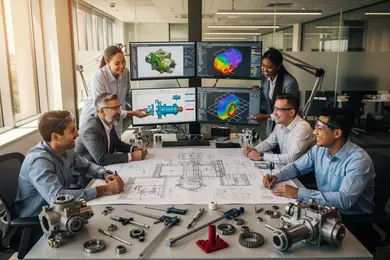
Mechanical engineering programs increasingly blend traditional lab equipment with digital engineering platforms. AI-assisted design tools, cloud CAD, digital twins, additive manufacturing, sensor-rich test rigs, and simulation-based verification are becoming more common in engineering education because employers want graduates who can move between physical prototypes and computational models.
The following facilities and technologies are worth comparing because they map directly to mechanical engineering practice. Ask schools which required courses use each resource and whether online students have the same learning outcomes as campus students.
- CAD and product design tools: Students should use professional-grade modeling software to create parts, assemblies, drawings, and design documentation.
- Manufacturing and prototyping resources: Look for CNC exposure, 3D printing, machining, metrology, tolerancing, and design-for-manufacturing assignments.
- Materials testing equipment: Tensile tests, hardness tests, impact tests, fatigue concepts, and microscopy help students connect theory to material behavior.
- Thermal and fluids systems: Wind tunnels, pumps, heat exchangers, pressure measurement, and flow visualization are important for HVAC, aerospace, energy, and process roles.
- Controls, instrumentation, and data acquisition: Sensors, LabVIEW-style data systems, microcontrollers, and feedback control experiments show whether students can measure and control dynamic systems.
- Simulation and analysis platforms: Finite element analysis, computational fluid dynamics, multibody dynamics, and numerical methods help students test designs before building them.
- Capstone design infrastructure: Strong programs provide parts budgets, faculty mentoring, testing protocols, team collaboration tools, and a final design review.
If you are comparing engineering with other online technical paths, remember that lab expectations vary by discipline. A computational program such as a data science PhD online may prioritize research computing and datasets, while mechanical engineering must show how students handle physical systems, measurement error, and design validation.
How does ABET accreditation relate to lab quality in online mechanical engineering degrees?
ABET accreditation is not a simple ranking of lab facilities, but it is one of the most important quality filters for mechanical engineering. In the U.S., many employers, graduate programs, and state licensure boards give preference to or require degrees from ABET-accredited engineering programs, especially for students who may later pursue the Fundamentals of Engineering exam and Professional Engineer pathway.
ABET's engineering criteria require programs to demonstrate student outcomes such as applying engineering design, conducting appropriate experimentation, analyzing and interpreting data, and using engineering judgment. For online students, that means an accredited program must show how distance learners meet those same outcomes, not merely watch demonstrations.
Use this table to interpret what ABET can and cannot tell you about lab strength. It is a starting point, not the only comparison tool.
| ABET factor | What it tells you | What it does not tell you |
| Program-level accreditation | The specific degree program has been reviewed against engineering education criteria | It does not automatically mean every online lab is equally convenient or modern |
| Student outcomes | The program must assess design, experimentation, data analysis, teamwork, and communication | It does not reveal how much time online students spend with physical equipment |
| Continuous improvement | The program must use evidence to improve curriculum and outcomes | It does not guarantee a particular job, salary, or internship |
| Licensure relevance | It may support future PE eligibility depending on state rules | It does not replace checking your state board's requirements |
Before enrolling, verify accreditation for the exact degree name, institution, and delivery location. A school may have an ABET-accredited campus program while a newer online version is still seeking accreditation, or it may offer mechanical engineering technology rather than mechanical engineering. Those can both be valuable, but they may lead to different licensure and employer interpretations.
A common mistake is assuming regional institutional accreditation is enough. Institutional accreditation matters for financial aid and transferability, but ABET is the specialized accreditation most directly tied to engineering program quality.
What types of mechanical engineering labs are essential for a strong undergraduate curriculum?
A strong undergraduate mechanical engineering curriculum should expose students to the major physical domains of the field: mechanics, materials, thermal-fluid systems, manufacturing, controls, and design. Online delivery can work, but the program must prove that students are not missing the experimental backbone of the discipline.
The table below summarizes essential lab categories and why each matters. Use it to compare course plans, lab manuals, and capstone descriptions across schools.
| Lab category | Core learning goal | Why it matters for career preparation |
| Statics, dynamics, and mechanics of materials | Measure forces, deformation, stress, strain, and structural response | Supports product design, structural components, testing, and failure analysis |
| Materials science | Connect microstructure, processing, and properties | Helps students choose materials and understand fatigue, fracture, corrosion, and heat treatment |
| Thermodynamics and heat transfer | Test energy conversion, conduction, convection, and heat exchangers | Relevant to HVAC, energy systems, engines, electronics cooling, and manufacturing |
| Fluid mechanics | Measure flow rate, pressure drop, drag, pumps, and pipe losses | Important for aerospace, automotive, energy, water systems, and process equipment |
| Manufacturing processes | Practice machining, additive manufacturing, measurement, tolerances, and quality control | Builds practical judgment about how designs are actually made |
| Controls and mechatronics | Use sensors, actuators, feedback loops, and data acquisition | Connects mechanical systems to automation, robotics, and smart products |
| Senior design or capstone | Design, build, test, document, and present a working solution | Creates portfolio evidence for employers and graduate programs |
For undergraduates, the weakest substitute is a curriculum that offers many simulations but little physical measurement. Simulation is valuable only when students understand model assumptions, boundary conditions, calibration, and uncertainty. A student who can run software but cannot explain why test data disagrees with a model may struggle in design, manufacturing, or testing roles.
Students interested in biomechanics, ergonomics, rehabilitation devices, or human performance technology may also compare an online degree in exercise science, but mechanical engineering is the stronger fit when the goal is to design mechanical systems, devices, structures, or thermal-fluid products.
How do online and campus-based mechanical engineering labs differ in access and scheduling?
The biggest difference between online and campus-based mechanical engineering labs is not always quality; it is access. Campus students may walk into scheduled lab sections every week, while online students may need to reserve remote equipment, wait for shipped kits, attend weekend intensives, or travel for a residency.
For many working adults, online access is the advantage. Recorded lectures, asynchronous problem sets, and remote lab windows can reduce commuting and make degree completion possible. The trade-off is that labs become logistical events. You need to plan around shipping, software setup, safety requirements, team meetings, and occasional synchronous sessions.
This comparison can help you decide whether online or campus-based labs better match your life and learning style.
| Factor | Online mechanical engineering labs | Campus-based mechanical engineering labs |
| Scheduling | More flexible for lectures, but labs may require reserved time slots or residencies | More predictable weekly lab schedule, but less flexible for full-time workers |
| Equipment access | Uses kits, remote equipment, simulations, and occasional campus access | Direct access to campus labs, shops, and instructors during lab periods |
| Peer teamwork | Often managed through video meetings, shared CAD files, and project platforms | Easier face-to-face collaboration and immediate troubleshooting |
| Cost exposure | May add shipping, tools, software, and travel expenses | May add commuting, parking, relocation, or reduced work hours |
| Best fit | Self-directed students, transfer students, military learners, and working adults | Students who want daily lab access, campus clubs, and frequent in-person mentoring |
Online programs in other fields can be easier to schedule because they may not require physical experimentation. For example, students comparing flexible graduate options such as MLIS programs should recognize that mechanical engineering has a heavier lab and equipment burden than many professional online degrees.

What questions should you ask schools to evaluate remote lab, simulation, and project support?
Admissions pages often use broad language such as "hands-on," "industry-relevant," or "state-of-the-art." To compare lab strength accurately, ask questions that force the school to describe exactly what online students do, what equipment they touch, and how faculty evaluate their work.
Use these questions during admissions calls, engineering department information sessions, or email conversations with program coordinators. The answers should be specific enough that you can compare schools side by side.
- Which required courses include physical experiments, and which use only simulation or data analysis?
- Are lab kits included in tuition, rented, purchased separately, or returned after the course?
- What equipment can online students operate remotely, and how are time slots scheduled?
- Are any campus residencies required, and how many days per term should students expect to travel?
- How are safety training, tool use, and shop access handled for online students?
- What professional software licenses are included, and what computer specifications are required?
- Do online students complete the same capstone design sequence as campus students?
- Can students use employer facilities for approved projects, and what documentation is required?
- How quickly do faculty or teaching assistants respond when a lab kit, sensor, software license, or remote access session fails?
- Can the department share sample lab reports, project abstracts, or capstone examples from online students?
Listen for red flags. Vague answers such as "students get equivalent experience" are not enough unless the school can explain the mechanism. You should also be cautious if the program outsources too much technical support to general IT staff rather than engineering faculty, lab coordinators, or trained teaching assistants.
A practical next step is to build a simple comparison sheet before you apply. Score each program on ABET status, required residency days, lab kit costs, capstone depth, software access, faculty support, transfer credit policy, and internship connections. This prevents you from choosing based only on tuition or brand recognition.
How can working adults balance online mechanical engineering lab requirements with full-time jobs?
Working adults can succeed in online mechanical engineering programs, but the lab load requires realistic planning. Mechanical engineering courses are often sequential, math-heavy, and project-based. A student working full time may need a slower pace than a traditional four-year plan, especially during semesters with fluids, controls, manufacturing, or senior design.
The National Center for Education Statistics reported in 2024 that many undergraduates work while enrolled, which makes scheduling flexibility a real enrollment factor rather than a convenience. For mechanical engineering students, the key is not just whether lectures are asynchronous; it is whether lab deadlines, team meetings, and residency requirements can fit around work obligations.
These strategies can reduce schedule conflicts without weakening the learning experience. They are especially useful before enrolling, when you still have leverage to choose the right format.
- Map the lab calendar early: Ask for a sample two-year or four-year course sequence and identify which terms include lab-heavy courses or residencies.
- Use transfer credits strategically: Completing calculus, physics, chemistry, or general education courses before entering the major can free time for upper-division labs.
- Avoid stacking difficult lab courses: Taking fluids, controls, and machine design together may be unrealistic with a full-time job.
- Discuss residency dates with your employer: If campus visits are required, treat them like planned professional development rather than last-minute absences.
- Protect a weekly lab block: Reserve consistent time for setup, troubleshooting, data analysis, and report writing, not just the experiment itself.
- Check team expectations: Capstone projects can require evening meetings, design reviews, and coordinated testing sessions across time zones.
Who should consider a different path? If your job schedule changes weekly, you cannot travel at all, or you do not have a reliable workspace for kits and hardware, a less lab-intensive engineering technology program, a campus program with predictable evening labs, or a slower part-time plan may be more realistic.
What role do industry partnerships and internships play in strengthening online lab experience?
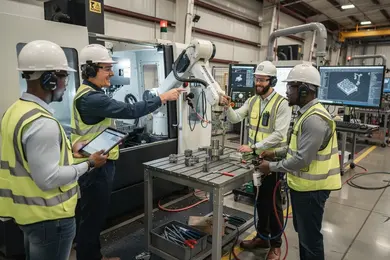
Industry partnerships can make an online mechanical engineering degree stronger by giving students access to real design constraints, workplace equipment, mentorship, and applied projects. This is especially valuable when students cannot spend frequent time in a campus lab.
Look for programs that connect coursework to employers through internships, co-ops, sponsored capstones, applied research, manufacturing partners, energy companies, aerospace suppliers, robotics firms, or local engineering organizations. A school does not need a famous corporate partner to be strong, but it should have a clear process for helping online students find and document applied experience.
Partnership quality is easier to judge when you know what evidence to request. Ask for concrete examples rather than broad claims about "industry alignment."
- Sponsored capstones: Companies propose real problems, review design milestones, and give feedback on final prototypes or analyses.
- Internship pipelines: The department helps online students identify roles in testing, manufacturing, CAD design, quality, energy, or automation.
- Employer-approved projects: Working students may be able to use workplace problems for course projects if confidentiality and safety rules are clear.
- Advisory boards: Employers review curriculum and help faculty keep labs aligned with current tools and industry expectations.
- Professional networking: Online students have access to virtual career fairs, engineering societies, alumni panels, and resume reviews tailored to technical roles.
Internships are not a replacement for core labs, but they can strengthen a student's portfolio. For online learners, the best outcome is a degree plan that combines required experimentation, simulation, capstone design, and at least one employer-facing project or internship before graduation.
How do lab-intensive online mechanical engineering degrees impact career outcomes and salaries?
Lab strength can influence career readiness because many mechanical engineering roles require applied judgment, not just theoretical knowledge. Entry-level engineers may help design components, run tests, analyze failures, improve manufacturing processes, validate simulations, prepare technical documentation, or support quality investigations. Employers often look for evidence that candidates can work with data, tools, teams, and constraints.
The U.S. Bureau of Labor Statistics reported a 2024 median annual wage of $102,320 for mechanical engineers. That figure is useful as a labor-market benchmark, but it is not a guarantee for any graduate. Pay varies by industry, region, experience, security clearance, graduate education, internship history, and whether the role is closer to design, testing, manufacturing, energy, robotics, or aerospace.
Lab-intensive programs can support better career positioning in three practical ways. First, they give students examples to discuss in interviews. Second, they create portfolio artifacts such as CAD models, test reports, code, prototypes, and capstone presentations. Third, they help students avoid the "theory-only" gap that can appear when a program lacks physical testing or design validation.
Career outcomes also depend on how students use the degree. A strong online program may prepare students for entry-level mechanical engineer, design engineer, manufacturing engineer, test engineer, quality engineer, systems engineer, controls engineer, or applications engineer roles. Students interested in research-intensive roles, university teaching, advanced simulation, or specialized R&D may eventually need a master's or doctorate.
Do not evaluate return on investment only by headline salary. Compare total program cost, time to completion, ability to keep working, internship access, employer tuition assistance, ABET status, and how closely the labs match your target industry. A lower-cost program with weaker labs may not be a bargain if it leaves you with fewer portfolio examples or requires extra training after graduation.
What costs, fees, and equipment expenses are typical for lab-heavy online mechanical engineering programs?
Lab-heavy online mechanical engineering programs can be more expensive than they first appear because tuition is only one part of the total cost. You may also pay for lab kits, shipping, software, hardware, proctoring, travel, lodging, safety gear, and project materials. The most useful comparison is total cost to graduation, not cost per credit alone.
College Board's 2024 Trends in College Pricing data reported average published tuition and fees of $11,610 for in-state students at public four-year institutions, $30,780 for out-of-state students at public four-year institutions, and $43,350 at private nonprofit four-year institutions. Those figures are not specific to mechanical engineering, but they show why residency status and institution type can significantly affect the baseline before engineering fees are added.
When comparing affordability, include these common cost categories. Ask each school which items are mandatory, which are optional, and which can be covered by financial aid or employer reimbursement.
- Tuition per credit and total credits required after transfer evaluation
- Engineering course fees, lab fees, technology fees, and online learning fees
- Home lab kits, sensors, microcontrollers, tools, safety glasses, measurement devices, and replacement parts
- Computer hardware capable of running CAD, simulation, programming, and data analysis software
- Software licenses that are not included in tuition or student access agreements
- Travel, lodging, meals, parking, and unpaid time off for required campus residencies
- Capstone project materials, prototype parts, fabrication costs, and shipping
- Exam proctoring, transcript fees, graduation fees, and professional exam preparation if relevant
If your main constraint is price, compare programs using total net cost after grants, scholarships, transfer credits, military benefits, and employer tuition assistance. A guide to the cheapest mechanical engineering degree online can be a useful starting point, but affordability should be weighed against ABET status, lab access, completion timeline, and career support.
A common mistake is choosing the lowest tuition without checking residency travel. Another is buying a laptop too late and discovering that required software performs poorly. Ask for computer specifications before the first engineering graphics, CAD, controls, or simulation course, not after classes begin.
Other Things You Should Know About Mechanical Engineering
Possibly, but the paths are not identical. Mechanical engineering technology programs are often more application-focused, while mechanical engineering programs usually emphasize deeper math, theory, and design analysis. Some employers hire from both backgrounds, but graduate school options and PE licensure rules may differ by state and employer.
In 2027, online mechanical engineering programs increasingly use virtual labs and simulations. When comparing, evaluate if programs offer hands-on lab kits, access to advanced simulation software, and partnerships for in-person lab experiences. Check if the curriculum provides real-time lab support and if faculty have relevant lab experience.
They can be, because engineering courses are highly sequenced and lab requirements must match closely. General education, calculus, physics, chemistry, and introductory programming often transfer more easily than upper-division engineering labs. Always request a course-by-course transfer evaluation before committing.
Not always. Many mechanical engineers work in product design, manufacturing, aerospace, automotive, robotics, or private industry roles without a PE license. Licensure becomes more important for engineers who offer services to the public, sign off on certain projects, or work in regulated areas such as building systems. Requirements vary by state.
References
- Partnerships between Industry and CTE Programs https://tech-labs.com/blog/partnerships-between-industry-and-cte-programs
- 3 Questions to Ask When Evaluating the Impact of PLCs https://otus.com/resources/blog/3-questions-school-leaders-should-ask-to-evaluate-the-impact-of-plcs
- A Comprehensive Comparison Between Virtual and ... https://cjos.histr.edu.ly/index.php/journal/article/download/876/696
- University Partnerships That Connect Learning to Employability https://absoluteinternship.com/blog/university-partnerships-that-connect-learning-to-employability/
- 35 key questions to evaluate an online assessment platform | Janison Solutions Pty Ltd https://www.janison.com/resources/post/35-questions-to-evaluate-an-online-assessment-platform/
- Criteria for Accrediting Engineering Programs, 2025 - 2026 - ABET https://www.abet.org/accreditation/accreditation-criteria/criteria-for-accrediting-engineering-programs-2025-2026/
- Online Mechanical Engineering Degrees 2026: Costs & Salary Compared https://www.fernstudi.net/en/onlinestudies/technology/mechanical-engineering
- Optimising Engineering Labs: Choosing the Right Multi-Disciplinary… https://www.tecquipment.com/knowledge/optimising-engineering-labs-choosing-the-right-multi-disciplinary-lab-equipment
- Classes Mechanical Engineers Take | University of Bridgeport https://www.bridgeport.edu/news/what-classes-do-mechanical-engineers-take/
- Why an Engineering Degree is a Solid Investment | Vaughn College https://www.vaughn.edu/blog/why-an-engineering-degree-is-a-solid-investment/