2027 Online Mechanical Engineering Degrees That Help Build Industry-Ready Technical Skills

Co-Founder and Chief Data Scientist
Choosing an online mechanical engineering degree is really a question of fit: can the program build serious engineering skills without requiring you to relocate? The need is timely because the U. S. Bureau of Labor Statistics projects mechanical engineer employment to grow 11% from 2023 to 2033, faster than the average for all occupations. This guide is for working adults, transfer students, military learners, and career changers comparing online options. You will learn how programs work, what they cost, how to verify quality, and how to connect a degree to career goals.
Key Things You Should Know
- Online mechanical engineering bachelor's programs are less common than online master's programs because ABET-aligned lab and design requirements can be hard to deliver fully online.
- The BLS reported a $102,320 median annual wage for mechanical engineers in May 2024, but pay varies by industry, location, experience, and software depth.
- Program value depends on accreditation, transfer credit, total cost, hands-on design access, CAD/CAE software training, and whether the curriculum matches your target industry.
What is an online mechanical engineering degree and how does it compare to campus programs?
An online mechanical engineering degree is a college program that teaches the design, analysis, testing, and improvement of mechanical systems through distance-based coursework. Depending on the school, lectures may be asynchronous, live online, or hybrid, while labs may use simulation software, mailed lab kits, remote instrumentation, local proctors, or short campus residencies.
The most important comparison is not simply "online versus campus." It is whether the online program gives you enough access to faculty, design projects, engineering software, labs, career support, and accreditation-aligned outcomes for the role you want.
The table below summarizes the practical differences readers should weigh before choosing a format.
| Factor | Online mechanical engineering degree | Campus mechanical engineering degree | Best fit |
| Schedule | Often built for working adults through evening, asynchronous, or part-time study | Usually follows a fixed daytime academic calendar | Online fits students balancing work, family, or military obligations |
| Hands-on labs | May use simulations, remote labs, mailed kits, local facilities, or limited residencies | Usually includes direct access to campus machine shops, labs, and test equipment | Campus may be better for students who want frequent physical prototyping |
| Software training | Can be strong when programs provide CAD, MATLAB, Python, FEA, CFD, and cloud lab access | Often integrated with campus computer labs and design studios | Either format can work if software access is clearly documented |
| Peer networking | Depends on discussion boards, group projects, virtual teams, and optional residencies | More organic through clubs, labs, competitions, and daily contact | Campus may help students seeking in-person project culture |
| Career use | Strong when accredited, project-based, and aligned with employer expectations | Strong when supported by internships, labs, and faculty research | The stronger option is the one with better outcomes for your target industry |
Online programs are usually a better fit for students who already have some college credit, are employed in a technical setting, or need geographic flexibility. A campus program may be the better option for first-time students who want daily access to labs, engineering clubs, faculty research groups, and in-person recruiting.
A common mistake is assuming that "online" means easier. Mechanical engineering remains math-heavy and design-intensive regardless of delivery format. Students should expect calculus, physics, programming, mechanics, thermodynamics, and substantial project work.
How do online mechanical engineering degrees build industry-ready technical and software skills?
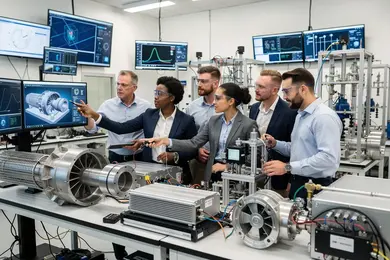
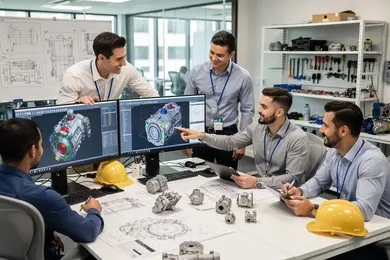
Industry-ready skill development depends on whether the curriculum turns engineering theory into usable technical practice. Strong online mechanical engineering degrees do this through applied assignments, virtual labs, capstone design projects, team-based simulations, and software platforms used by employers.
Mechanical engineering is also becoming more digital. Employers increasingly value engineers who can connect physical design with modeling, automation, controls, sensor data, and manufacturing constraints. Students who want to move heavily into analytics, machine learning, or predictive modeling may also compare mechanical engineering with a data science masters online, especially if their long-term goal is data-driven product development rather than mechanical design.
Look for evidence that the program teaches the following competencies in an applied way, not only as textbook topics.
- Engineering modeling: CAD, 3D modeling, assemblies, tolerancing, and design documentation.
- Analysis and simulation: finite element analysis, computational fluid dynamics, stress analysis, heat transfer modeling, and vibration analysis.
- Programming and computation: MATLAB, Python, numerical methods, data visualization, and automation of engineering calculations.
- Manufacturing awareness: materials selection, machining, additive manufacturing, quality control, lean production, and design for manufacturability.
- Systems thinking: controls, mechatronics, sensors, robotics, energy systems, and integration of mechanical and electrical components.
- Professional engineering practice: technical writing, project management, engineering ethics, safety, standards, and teamwork across disciplines.
Because AI-assisted design and simulation tools are becoming more common, students should ask whether faculty teach verification and engineering judgment. Generative tools can accelerate concept exploration, but engineers still need to validate loads, assumptions, boundary conditions, safety factors, materials, and manufacturability.
One red flag is a program that lists software names but does not explain how students use them. A stronger program will show sample projects, capstone examples, lab methods, or portfolio expectations.
Which types of mechanical engineering degrees can be earned fully online in the U.S.?
Online mechanical engineering options vary by level. In the U.S., fully online master's degrees are easier to find than fully online bachelor's degrees because graduate programs often emphasize advanced analysis, simulation, management, or specialization rather than foundational in-person labs.
The table below helps distinguish degree types so students do not accidentally choose a credential that sounds similar but leads to a different career path.
| Degree type | Availability online | Typical purpose | Important caution |
| Associate degree in engineering or mechanical engineering technology | Sometimes available online or hybrid | Preparation for transfer, technician roles, CAD drafting, or manufacturing support | Usually not equivalent to a mechanical engineering bachelor's degree |
| Bachelor's in mechanical engineering | Limited fully online availability; hybrid and degree-completion formats are more common | Entry into mechanical engineering roles and possible foundation for PE licensure | ABET accreditation and lab delivery should be checked carefully |
| Bachelor's in mechanical engineering technology | More likely to be offered online than traditional engineering in some cases | Applied manufacturing, testing, operations, product support, and technical roles | Some employers or licensing boards may distinguish engineering from engineering technology |
| Master's in mechanical engineering | Commonly available fully online | Advanced technical specialization, promotion, career pivot, or research preparation | Often requires an engineering or closely related undergraduate background |
| Doctoral degree in mechanical engineering | Rarely fully online | Research, university teaching, advanced R&D, or technical leadership | May require residencies, lab access, dissertation research, and advisor availability |
Students comparing online STEM paths should choose based on the problems they want to solve. Mechanical engineering fits students interested in machines, energy, robotics, vehicles, manufacturing, HVAC, aerospace systems, or product design. Students more interested in food science, health behavior, or wellness-focused careers may find a nutrition degree online more aligned with their goals.
The biggest mistake in this section is treating all "engineering" degrees as interchangeable. Mechanical engineering, mechanical engineering technology, industrial technology, manufacturing engineering, and applied engineering can overlap, but they may carry different employer, graduate school, and licensure implications.
How can students verify that an online mechanical engineering program is properly accredited?
Accreditation is one of the most important quality checks for an online mechanical engineering degree. It helps confirm that a school or program has been reviewed against recognized academic standards, and it can affect transfer credit, financial aid eligibility, graduate admission, employer screening, and professional licensure options.
Students should verify accreditation in a sequence rather than relying on marketing language. Use the steps below before applying or sending transcripts.
- Confirm that the institution is accredited by an accreditor recognized by the U.S. Department of Education or the Council for Higher Education Accreditation.
- Check whether the specific mechanical engineering or engineering technology program has ABET accreditation, especially for a bachelor's degree.
- Look up the program directly in ABET's public accredited program search rather than relying only on a school webpage.
- Ask whether the online version, campus version, and degree-completion version share the same accreditation status.
- If you plan to pursue Professional Engineer licensure, check your state engineering board's education requirements before enrolling.
- Save written confirmation from the school about accreditation, lab requirements, transfer credits, and graduation requirements.
ABET accreditation is especially important at the undergraduate level because many employers and state licensing boards look for it when evaluating engineering education. Graduate mechanical engineering programs are not always ABET-accredited, and that is not automatically a problem; the key is whether the degree serves your goal and whether your prior education satisfies any licensing or employer requirements.
A serious red flag is vague wording such as "aligned with ABET standards" or "designed around ABET principles" without actual programmatic accreditation. Those phrases may describe curriculum intent, but they are not the same as an accredited program.
What core courses and technical specializations are typically included in online mechanical engineering curricula?
Mechanical engineering curricula usually combine mathematics, science, engineering fundamentals, design, computation, and specialization. Online programs may deliver theory through recorded lectures and problem sets, while labs and design work may use remote tools, simulation platforms, or scheduled residencies.
The table below shows common curriculum areas and why each matters for workplace readiness.
| Curriculum area | Common courses or topics | Why it matters professionally |
| Math and science foundation | Calculus, differential equations, linear algebra, physics, chemistry, statistics | Supports modeling, simulation, and engineering problem solving |
| Mechanics and materials | Statics, dynamics, mechanics of materials, materials science, machine design | Builds the ability to analyze forces, stresses, failures, and component behavior |
| Thermal and fluid systems | Thermodynamics, heat transfer, fluid mechanics, HVAC, energy systems | Prepares students for energy, aerospace, automotive, building systems, and process roles |
| Design and manufacturing | CAD, product design, manufacturing processes, additive manufacturing, quality engineering | Connects analysis with buildable products and production constraints |
| Controls and mechatronics | Control systems, instrumentation, robotics, sensors, electromechanical systems | Supports automation, robotics, smart products, and modern manufacturing |
| Professional practice | Engineering ethics, project management, technical communication, capstone design | Develops the documentation and teamwork skills employers expect |
Specializations can make a degree more valuable when they align with a target industry. Common options include robotics, aerospace systems, advanced manufacturing, energy systems, automotive engineering, biomechanics, materials, thermal sciences, computational mechanics, and product design.
When comparing specializations, avoid choosing the most exciting title without checking course depth. A robotics concentration with only one introductory elective may be less useful than a broader mechanical design path with strong controls, programming, sensors, and capstone work.
What are the usual admission requirements and prerequisites for online mechanical engineering programs?
Admission requirements depend on the degree level. Bachelor's programs focus on college readiness and prerequisite math/science preparation, while master's programs usually require an engineering or closely related undergraduate degree. Selective programs may also review professional experience, GPA trends, and prior technical coursework.
The following checklist shows the requirements students most often need to prepare before applying.
- For bachelor's programs: high school diploma or equivalent, transcripts, algebra and pre-calculus readiness, prior science coursework, application form, and sometimes placement testing.
- For transfer or degree-completion programs: completed general education credits, calculus, physics, chemistry, programming, and minimum grade requirements for technical courses.
- For master's programs: bachelor's degree in mechanical engineering or a related engineering field, undergraduate calculus and physics, engineering mechanics, thermodynamics, GPA minimum, resume, statement of purpose, and letters of recommendation.
- For applicants without an engineering background: bridge courses may be required in calculus, differential equations, statics, dynamics, materials, fluid mechanics, or thermodynamics.
- For international or multilingual applicants: English proficiency documentation may be required, depending on the school's policy.
Some online programs no longer require GRE scores, especially for professionally oriented master's degrees, but policies vary. Students should not assume test-optional means prerequisite-optional; mechanical engineering programs still need evidence that applicants can handle advanced math and technical analysis.
Before applying, ask admissions staff which credits will transfer, whether older math and science courses expire, and whether online students can complete every required lab or proctored exam from their location. A common mistake is enrolling before receiving a formal transfer evaluation, which can add time and cost later.
How long do online mechanical engineering degrees take, and what formats and schedules are offered?
Program length depends on degree level, transfer credit, enrollment intensity, and whether the program uses traditional semesters, accelerated terms, or part-time scheduling. Online learning can make attendance more flexible, but it does not remove the workload of engineering problem sets, labs, team projects, and design reviews.
The table below gives realistic timeline expectations by degree type. Students should use these as planning ranges, not guarantees, because prerequisites and transfer evaluations can change the schedule.
| Program type | Common full-time timeline | Common part-time timeline | Scheduling notes |
| Associate or transfer pathway | About 2 years | 2.5 to 4 years | Best used when credits are designed to transfer into an engineering bachelor's program |
| Bachelor's degree | About 4 years | 5 to 7 years | Transfer credit can shorten the timeline, but lab and course sequencing may limit acceleration |
| Master's degree | 1.5 to 2 years | 2 to 4 years | Many online master's programs are designed for employed engineers |
| Doctoral degree | Varies widely | Often extended | Research topic, advisor availability, lab access, and dissertation progress drive completion time |
Online formats generally fall into a few categories. Understanding the difference helps you choose a schedule that matches your work and learning style.
- Asynchronous courses: lectures and assignments can be completed within weekly deadlines, which helps working adults but requires strong self-management.
- Synchronous courses: live online classes provide more structure and interaction but may be harder across time zones or work shifts.
- Hybrid or low-residency formats: most coursework is online, but labs, orientations, exams, or design reviews may require campus visits.
- Accelerated terms: shorter sessions can speed progress, but engineering courses may feel intense when compressed.
- Cohort formats: students move through the program together, which can improve peer support but reduce scheduling flexibility.
Students who work full time should be cautious about taking multiple upper-division engineering courses at once. Thermodynamics, fluid mechanics, machine design, and controls can each require substantial weekly problem-solving time.
What do online mechanical engineering degrees cost, and how can students compare value and ROI?
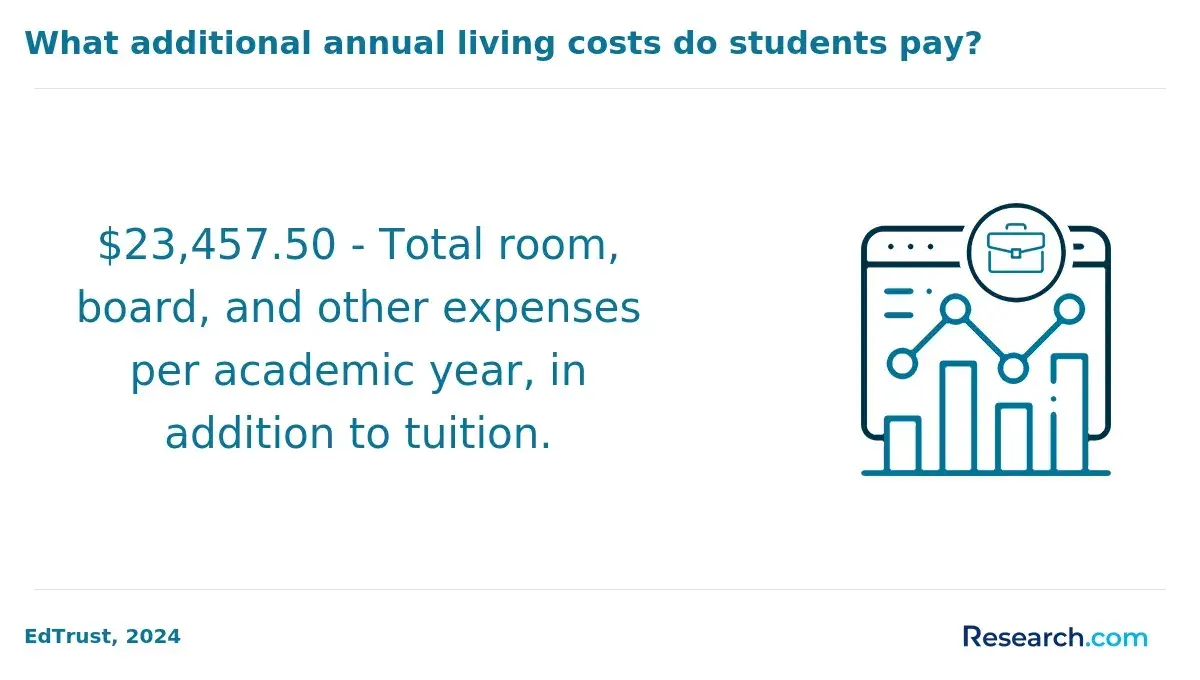
Costs vary widely because online mechanical engineering students may pay different rates based on residency, institution type, credit load, technology fees, lab fees, software access, textbooks, and travel for required residencies. Published tuition is only the starting point.
For a national benchmark, the College Board's 2024 college pricing data reported the following average published tuition and fees for full-time undergraduates. These figures are not mechanical-engineering-specific, but they help students understand the broader U.S. price environment.
- Public four-year in-state average published tuition and fees: $11,610
- Public four-year out-of-state average published tuition and fees: $30,780
- Private nonprofit four-year average published tuition and fees: $43,350
Online tuition may be lower, similar, or higher than campus tuition depending on the school. Engineering programs can also add costs for proctoring, software licenses, lab kits, course materials, high-performance laptops, and travel. This is why students should compare total program cost rather than price per credit alone.
Use the following steps to compare value and ROI in a disciplined way.
- Calculate total tuition by multiplying required credits by the actual online tuition rate.
- Add mandatory fees, software, textbooks, lab kits, proctoring, residency travel, and graduation fees.
- Subtract grants, scholarships, employer tuition assistance, military benefits, and confirmed transfer credits.
- Check whether the program's accreditation and curriculum match your target roles, not just whether the school is well known.
- Compare expected debt payments with realistic salary scenarios for your region and industry.
- Ask for career outcomes, internship access, employer partnerships, and examples of student design projects.
- Review withdrawal, course repeat, and transfer policies because engineering course sequencing can make failed or missed courses expensive.
Be careful when comparing mechanical engineering to unrelated online degrees. A program such as a library science masters may have different technology, fieldwork, accreditation, and career-cost dynamics, so its tuition structure is not a reliable benchmark for engineering ROI.
The most common cost mistake is choosing the lowest tuition without checking completion risk. A cheap program that lacks required labs, transfer clarity, academic support, or employer recognition can become expensive if credits do not apply or the degree does not support your career goal.
What careers, industries, and job roles can graduates of online mechanical engineering programs pursue?
Graduates of online mechanical engineering programs can pursue roles in industries that design, build, test, maintain, or improve physical systems. Career options depend on degree level, accreditation, experience, portfolio quality, internships, software skill, and the employer's requirements.
The table below connects common roles with the type of work graduates may perform. It is designed to help readers match program features to career direction.
| Career area | Common roles | Typical responsibilities | Useful preparation |
| Product design and development | Mechanical design engineer, product engineer, CAD engineer | Design components, create models, run simulations, support prototyping, document specifications | CAD, FEA, materials, GD&T, capstone portfolio |
| Manufacturing | Manufacturing engineer, process engineer, quality engineer | Improve production processes, reduce defects, support tooling, analyze workflow and quality data | Lean manufacturing, statistics, automation, additive manufacturing |
| Energy and thermal systems | Energy engineer, HVAC engineer, thermal systems engineer | Analyze heat transfer, fluid flow, energy efficiency, and system performance | Thermodynamics, fluids, heat transfer, building systems, simulation |
| Aerospace and automotive | Test engineer, systems engineer, vehicle engineer | Support testing, structural analysis, propulsion-related systems, vibration analysis, and performance validation | Dynamics, controls, materials, CFD, testing methods |
| Robotics and automation | Mechatronics engineer, robotics engineer, controls engineer | Integrate mechanical systems with sensors, actuators, controls, and software | Controls, programming, electronics basics, robotics labs |
| Technical management | Project engineer, engineering manager track, operations engineer | Coordinate schedules, budgets, vendors, documentation, and cross-functional technical teams | Project management, communication, systems thinking, work experience |
Mechanical engineering also overlaps with sustainability, infrastructure, and environmental systems. Students who are more interested in water systems, pollution control, or environmental compliance than machines and product design may want to compare environmental engineering schools online before committing to a mechanical engineering path.
Entry-level candidates should build evidence of applied ability while enrolled. Useful signals include a capstone project, CAD portfolio, simulation reports, internship or co-op experience, undergraduate research, manufacturing exposure, and documented teamwork on design problems.
Students should avoid assuming that the degree alone will open every role. Aerospace, robotics, and advanced R&D jobs can be competitive and may expect specialized electives, internships, security clearance eligibility, graduate education, or strong programming skills.
What salary ranges and job outlook can mechanical engineers expect in the United States?
Mechanical engineering salaries vary by experience, industry, state, metro area, employer size, and technical specialization. Software-heavy, defense, energy, semiconductor, aerospace, and advanced manufacturing roles may pay differently from general product support or facilities-oriented positions.
The most reliable national benchmark is the BLS wage and outlook data. In May 2024, the BLS reported a $102,320 median annual wage for mechanical engineers. That median is not a promise for graduates, but it gives students a useful midpoint for evaluating tuition, debt, relocation, and career goals.
The BLS also projects 11% employment growth for mechanical engineers from 2023 to 2033. For students, this suggests a favorable national outlook, but local hiring can still depend on industry concentration, defense spending, manufacturing investment, energy projects, and regional employer demand.
Use these salary bands as a practical way to interpret job postings and career planning without assuming guaranteed outcomes.
| Career stage | How to interpret pay | What can improve competitiveness |
| Entry level | Often below the national median, especially without internships or a specialized portfolio | ABET-aligned degree, internships, CAD/CAE projects, FE exam preparation, strong references |
| Early to mid-career | May approach or exceed the median as engineers gain design ownership and industry experience | Licensure path, advanced software skill, manufacturing or testing experience, domain specialization |
| Senior or specialized | Can rise above the median when roles involve technical leadership, niche systems, or high-value industries | Graduate study, PE license where relevant, systems expertise, project leadership, business communication |
Students should evaluate salary expectations locally. A role in a high-cost metro area may advertise a higher salary but leave less disposable income after housing and commuting costs. A lower-cost region with strong manufacturing or energy employers may offer a better overall value.
Another mistake is using national salary data as the only ROI measure. The smarter approach is to compare program cost with realistic roles you can access based on your location, experience, clearance eligibility, internship record, and willingness to relocate.
Other Things You Should Know About Mechanical Engineering
Yes, but students usually need to be proactive. Ask the program whether online learners can access the same career portal, employer events, faculty referrals, and co-op advising as campus students. Local internships can also work if the employer approves your school schedule.
The Fundamentals of Engineering exam can be useful for students who may pursue Professional Engineer licensure. It is especially relevant for roles connected to public safety, consulting, infrastructure, HVAC, or regulated engineering services.
Yes, online mechanical engineering students in 2027 need a powerful computer. Due to resource-intensive software like CAD and simulation tools, having a machine with a high-performance processor, sufficient RAM, and dedicated graphics capability ensures smooth operation and productivity.
References
- Future-Ready Mechanical Engineering Courses in 2025 https://snu.edu.in/blogs/mechanical-engineering-courses-future-trends-technologies-job-market/
- GaugeHow for Organizations https://gaugehow.com/business
- What Classes Do Mechanical Engineers Take In College? https://www.grace.edu/what-classes-do-mechanical-engineers-take-in-college/
- Is College Worth it? | Return on Investment Analysis of College Degree https://educationdata.org/college-degree-roi
- Does College Pay Off? A Comprehensive Return On Investment Analysis - FREOPP https://freopp.org/whitepapers/does-college-pay-off-a-comprehensive-return-on-investment-analysis/
- Fastest Online Engineering Degree Programs - Educating Engineers https://educatingengineers.com/degrees/fastest-online-engineering-degree-programs/
- Is Your Online Degree Legitimate? How to Verify Private University Approval https://matchtocollege.com/blog/verify-private-university-online-degree-approval
- How to Become a Mechanical Engineer - Degree & Steps https://www.onlineengineeringprograms.com/faq/how-to-become-a-mechanical-engineer
- 2025 Best Online Mechanical Engineering Degrees https://www.onlineu.com/degrees/mechanical-engineering
- Find Programs - ABET https://www.abet.org/accreditation/find-programs/