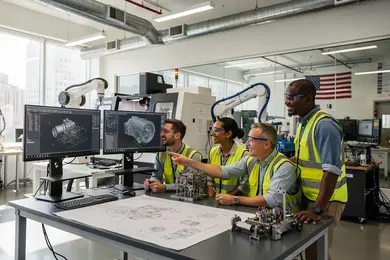
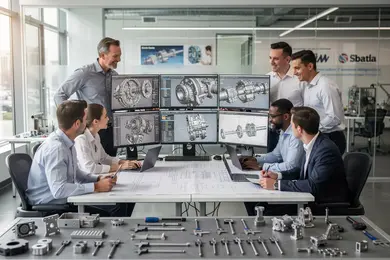
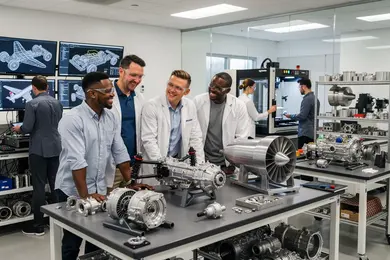
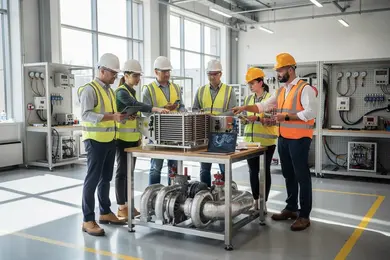
2027 Best Mechanical Engineering Degrees for Robotics-Adjacent and Automation Careers

Co-Founder and Chief Data Scientist
Choosing a mechanical engineering degree for robotics or automation is difficult because the "best" option depends on whether you want to design machines, control motion, integrate sensors, or manage automated production. The timing is strong: the U.S. Bureau of Labor Statistics projects mechanical engineer employment to grow 11% from 2023 to 2033, faster than average.
This guide is for students, career changers, and working technicians comparing programs. You'll learn which degree paths fit robotics-adjacent roles, what skills matter, how online options compare, and how to judge cost, accreditation, and career return.
Key Things You Should Know
- The strongest robotics-adjacent mechanical engineering paths usually combine ABET-accredited mechanical engineering with electives in mechatronics, controls, CAD/CAE, embedded systems, manufacturing automation, and robotics labs.
- Cost varies widely: College Board's 2024 pricing data lists average published tuition and fees of $11,610 for in-state public four-year colleges and $43,350 for private nonprofit four-year colleges, before grants and living costs.
- BLS May 2024 wage data lists a $102,320 median annual wage for mechanical engineers, but robotics and automation outcomes depend heavily on industry, software ability, internship experience, and location.
What is a mechanical engineering degree with a focus on robotics and automation?
A mechanical engineering degree with a robotics or automation focus is a mechanical engineering program that adds targeted coursework and projects in machine design, motion control, sensors, actuators, manufacturing systems, and computer-aided engineering. It is not always called a "robotics degree."
Many strong pathways use labels such as mechanical engineering with a mechatronics concentration, automation minor, robotics certificate, manufacturing systems track, or controls-focused senior design sequence.
The core idea is simple: mechanical engineers usually design the physical systems that make robots and automated equipment move, carry loads, transfer heat, survive stress, and operate safely. In robotics-adjacent roles, they often work alongside electrical engineers, computer engineers, software developers, industrial engineers, and technicians.
This path is best for students who enjoy physics, design, manufacturing, and hands-on problem-solving. It is less ideal for students who primarily want to build machine learning models, write full-time software, or design digital circuits unless they deliberately add computer science, controls, or embedded systems training.
For decision-making, the most important distinction is between robotics as a product and automation as a system. Robotics product work may involve designing robot arms, grippers, mobile platforms, drones, or medical devices. Automation work may involve integrating conveyors, sensors, PLCs, inspection systems, automated cells, and factory equipment so production runs faster, safer, and more consistently.
Which mechanical engineering degrees are best for robotics-adjacent and automation careers?
The best degree depends on how close you want to be to robot design, production automation, controls, or research. The table below compares the most practical mechanical engineering degree options and the career situations where each makes the most sense.
| Degree option | Best fit | Robotics and automation value | Watch-outs |
| BS in Mechanical Engineering with robotics or mechatronics electives | First-time undergraduates seeking broad engineering eligibility | Builds fundamentals in mechanics, design, thermodynamics, controls, and manufacturing while allowing robotics projects | Some programs offer only one or two robotics electives, so check the actual course catalog |
| BS in Mechanical Engineering with manufacturing or automation concentration | Students targeting factories, process automation, quality systems, and equipment design | Useful for roles involving automated production lines, fixtures, tooling, robotics cells, and lean manufacturing | May be less focused on autonomous robots or AI-heavy robotics |
| BS in Mechatronics Engineering or Mechanical Engineering Technology | Hands-on learners who want applied design, controls, sensors, and troubleshooting | Strong match for automation engineering, field service, test engineering, and integration roles | Engineering technology degrees may not be treated the same as engineering degrees by every employer or licensing board |
| MS in Mechanical Engineering with robotics, controls, or dynamics specialization | Engineers seeking advanced design, simulation, controls, or R&D roles | Can deepen modeling, advanced controls, optimization, robotics kinematics, and research experience | Best value when the curriculum directly supports your target role and employer expectations |
| Graduate certificate in robotics, automation, or manufacturing systems | Working engineers who already have an engineering degree | Can add targeted skills without committing to a full graduate degree | Usually not a substitute for an ABET-accredited bachelor's degree in engineering |
For most students, the best starting point is an ABET-accredited BS in Mechanical Engineering with enough flexibility to add robotics, mechatronics, controls, or manufacturing automation. If your goal is embedded robotics, autonomous systems, or firmware-heavy work, compare mechanical engineering with computer engineering options; a cheapest online computer engineering degree list can help you understand lower-cost alternatives in the hardware-software direction.
A practical ranking of degree fit would look like this: choose mechanical engineering with robotics or mechatronics for physical robot design, mechanical engineering with manufacturing automation for industrial systems, mechatronics engineering for applied integration roles, and a master's degree for advanced controls, simulation, or R&D.
How do robotics-focused mechanical engineering programs differ from general mechanical engineering degrees?
A general mechanical engineering degree teaches broad engineering fundamentals. A robotics-focused or automation-oriented version uses those same fundamentals but applies them more often to moving systems, feedback loops, sensors, actuators, automated equipment, and integrated design projects.
The table below shows the practical differences a student should look for when comparing program pages. The goal is not to find a school that uses the word "robotics" the most, but to find evidence that the curriculum, labs, and projects match the jobs you want.
| Program feature | General mechanical engineering | Robotics-adjacent or automation-oriented mechanical engineering |
| Core emphasis | Mechanics, materials, thermodynamics, fluids, machine design, and engineering analysis | Same foundation plus controls, mechatronics, automation, robotics design, sensors, and system integration |
| Lab experience | Materials testing, fluids, heat transfer, mechanical measurements, and design labs | May add robotics platforms, PLCs, motion control, machine vision, automated manufacturing cells, or mobile robots |
| Capstone projects | Broad mechanical design projects across industries | Often includes robotic arms, autonomous vehicles, automated fixtures, inspection systems, or medical/mechatronic devices |
| Software exposure | Engineering computation, CAD, simulation, and data analysis | More likely to include MATLAB, Python, ROS exposure, PLC programming, simulation, controls modeling, or embedded basics |
| Employer alignment | Broad mechanical engineering roles | Automation integrators, advanced manufacturing, robotics companies, aerospace, automotive, medical devices, logistics, and test systems |
The main trade-off is breadth versus specialization. A broad mechanical engineering degree keeps more doors open, especially for energy, aerospace, HVAC, product design, and manufacturing roles. A focused program may help you build stronger robotics evidence for internships, portfolios, and early-career interviews, but only if it preserves the core engineering foundation employers expect.
A common mistake is choosing a program because it has a robotics club but not enough robotics-related courses. Clubs are valuable, but they should complement the curriculum, not compensate for a weak technical pathway.
What core courses and technical skills prepare mechanical engineers for robotics and automation roles?
Mechanical engineers in robotics-adjacent work need both classical engineering depth and enough software, electrical, and systems knowledge to collaborate across disciplines. The most useful programs make students practice design, modeling, control, testing, and troubleshooting rather than treating robotics as a single elective.
When reviewing a curriculum, look for courses and experiences that build the following capabilities:
- Mechanical design and CAD/CAE: machine elements, tolerances, finite element analysis, product design, and manufacturability.
- Dynamics and control systems: modeling motion, vibration, feedback control, stability, motors, and system response.
- Mechatronics: integration of sensors, actuators, microcontrollers, data acquisition, and mechanical subsystems.
- Manufacturing and automation: robotics cells, CNC, fixtures, PLCs, quality systems, industrial safety, and process improvement.
- Programming for engineers: MATLAB, Python, C/C++ basics, simulation, data analysis, and version-control habits.
- Robotics fundamentals: kinematics, path planning basics, end effectors, mobile platforms, perception concepts, and human-machine interaction.
- Testing and validation: measurement systems, design of experiments, reliability, documentation, and failure analysis.
Software ability is now a meaningful differentiator. A mechanical engineering student does not need to become a full-stack developer, but students who can automate calculations, work with data, and understand embedded or controls code are usually better prepared for robotics teams.
If you discover that software, AI, or data systems interest you more than mechanics, comparing an affordable online computer science degree may help you decide whether a computing-first path is a better fit.
Employers also look for proof of applied work. Internships, co-ops, capstone projects, competition teams, undergraduate research, and a small portfolio of design files, simulations, test results, and project summaries can make a degree more credible than coursework alone.
How do online mechanical engineering programs for robotics compare to on-campus options?
Online mechanical engineering can work well for some students, especially working adults, transfer students, and graduate learners. The challenge is that robotics and automation are lab-heavy fields. Before choosing an online program, verify how the school handles labs, design projects, proctored exams, equipment access, and internships.
The table below compares the format trade-offs that matter most for robotics-adjacent mechanical engineering students:
| Factor | Online or hybrid mechanical engineering | On-campus mechanical engineering |
| Flexibility | Often better for working students and those who cannot relocate | Less flexible but more immersive |
| Hands-on labs | May use lab kits, simulations, local labs, short residencies, or transfer lab credits | Usually easier access to robotics labs, machine shops, testing equipment, and faculty-supervised projects |
| Robotics projects | Possible, but students may need to be more proactive about equipment and team access | Often stronger access to clubs, capstone teams, competitions, and research labs |
| Networking | Depends on employer partnerships, online communities, and local internships | Usually stronger for campus recruiting, peer teams, and faculty relationships |
| Best fit | Working adults, transfer students, military learners, and graduate students with prior engineering experience | First-time students who want intensive labs, research, and robotics team participation |
Online learning may be strongest at the graduate level, where students already have engineering fundamentals and can focus on advanced analysis, controls, simulation, or systems topics. Students interested in AI-heavy automation research may also compare related advanced pathways such as an online PhD in data science, although that path is more appropriate for data, machine learning, and research leadership than mechanical design roles.
Choose online mechanical engineering only after confirming that the program is accredited where relevant, offers credible lab alternatives, accepts any transfer credits you need, and provides enough design or project work to support robotics-adjacent employment.
What admission requirements and prerequisites do robotics-oriented mechanical engineering programs typically have?
Admission requirements vary by school and degree level, but robotics-oriented mechanical engineering programs usually expect strong preparation in math and science. Selective programs may also review engineering readiness through grades in calculus, physics, chemistry, and prior technical coursework.
For undergraduate applicants, common requirements often include the following:
- High school diploma or equivalent with strong grades in algebra, trigonometry, pre-calculus or calculus, physics, and chemistry.
- Completed application, transcripts, and any school-specific essays or engineering interest statements.
- Standardized test scores if required or recommended by the institution.
- Placement testing or prerequisites before starting calculus, physics, and introductory engineering courses.
- Transfer evaluations for community college students, especially for calculus, physics, chemistry, and engineering graphics.
Graduate mechanical engineering programs commonly require a bachelor's degree in mechanical engineering or a closely related engineering field. Applicants from physics, mathematics, engineering technology, or other STEM backgrounds may be admitted conditionally but could need bridge courses in mechanics, thermodynamics, fluid mechanics, controls, or design.
Before applying, students can reduce delays by taking a structured preparation approach:
- Check whether the program admits directly into mechanical engineering or uses a pre-engineering progression model.
- Compare prerequisite sequences, because falling behind in calculus or physics can delay engineering graduation.
- Ask how transfer credits apply to the major, not just to general education.
- Review whether robotics, controls, or automation electives have enrollment limits or GPA prerequisites.
- Confirm whether co-op or internship participation requires separate admission, minimum GPA, or campus attendance.
A common red flag is a program that markets robotics heavily but does not publish clear engineering prerequisites, lab expectations, or upper-division technical electives. If the curriculum is vague, ask admissions for the official degree plan before enrolling.
How long do these mechanical engineering programs take, and what do they cost?
Most bachelor's degrees in mechanical engineering take four years of full-time study, but engineering course sequences can make part-time study longer than students expect. A master's degree commonly takes one to two years full time, while graduate certificates may take several months to a year depending on course load.
Published tuition can differ sharply by institution type and residency. College Board's 2024-25 pricing report lists the following average published tuition and fees for four-year colleges, which helps frame the cost range before grants, scholarships, housing, books, tools, and transportation:
- Public four-year in-state: $11,610
- Public four-year out-of-state: $30,780
- Private nonprofit four-year: $43,350
Those prices are not the same as net cost. Many students pay less after grants and scholarships, while others pay more once living expenses, health insurance, lab fees, software, commuting, and interest on loans are included. Engineering students should also budget for a capable laptop, calculator, safety equipment, project materials, and possible travel to internships or campus labs.
The table below summarizes typical timelines and cost considerations by credential type. Use it to compare the total commitment, not just the tuition headline.
| Credential | Typical time | Cost factors to compare | Best value when |
| BS in Mechanical Engineering | About 4 years full-time | Residency status, scholarships, lab fees, co-op availability, transfer credits, housing, and time to graduation | You need broad entry-level engineering eligibility and want long-term flexibility |
| BS in Mechatronics or Engineering Technology | About 4 years full-time | Program accreditation, employer recognition, lab access, equipment, and transferability to graduate study | You want applied automation, testing, or integration roles |
| MS in Mechanical Engineering | About 1 to 2 years full-time | Employer tuition support, assistantships, thesis versus coursework option, and specialization fit | You already have engineering fundamentals and need advanced controls, simulation, or R&D preparation |
| Graduate certificate | Often less than 1 year to about 1.5 years part-time | Credit transfer into a master's degree, employer reimbursement, and course relevance | You need targeted upskilling without a full degree |
Mechanical engineering is harder to deliver fully online than some non-lab majors. For example, a nutritionist degree online may rely more on remote coursework and local experiential requirements, while mechanical engineering programs must solve for design labs, measurements, prototyping, and equipment-based assessment.
To control cost, prioritize accredited public options, transfer-friendly pathways, paid co-ops, employer reimbursement, and programs with strong four-year course sequencing. The cheapest tuition is not always the lowest total cost if limited course availability delays graduation.
What careers can graduates of robotics-adjacent mechanical engineering programs pursue?
Graduates can pursue a range of roles that sit near robotics, automation, product development, and advanced manufacturing. The exact job title depends on whether the employer needs design, integration, testing, controls, manufacturing, or field support.
The table below maps common roles to responsibilities and the preparation that makes candidates more competitive:
| Career path | Typical responsibilities | Helpful preparation |
| Mechanical design engineer | Design robot structures, fixtures, housings, mechanisms, end effectors, and moving assemblies | CAD, FEA, machine design, GD&T, prototyping, and materials |
| Automation engineer | Improve automated production systems, coordinate equipment, troubleshoot bottlenecks, and support line performance | Manufacturing, controls, PLC exposure, sensors, safety, and process improvement |
| Robotics applications engineer | Help customers or internal teams select, configure, test, and deploy robotic systems | Mechatronics, communication skills, robot programming basics, and system integration |
| Test engineer | Develop test procedures, collect data, validate designs, and investigate failures | Instrumentation, statistics, data analysis, reliability, and documentation |
| Manufacturing engineer | Design tooling, improve workflows, support automation cells, and reduce defects or downtime | Lean manufacturing, CAD, quality systems, robotics safety, and production methods |
| Controls-adjacent mechanical engineer | Model mechanical systems and collaborate with controls engineers on motion, vibration, and feedback behavior | Dynamics, controls, MATLAB/Simulink, sensors, actuators, and system modeling |
| Field service or integration engineer | Install, commission, troubleshoot, and maintain automated equipment at customer or plant sites | Hands-on labs, electrical basics, safety, documentation, and travel readiness |
Entry-level candidates often start in design, test, manufacturing, quality, field service, or applications roles before moving toward robotics specialization. Advancement may lead to senior engineer, controls-focused specialist, automation project lead, systems engineer, engineering manager, product manager, or technical sales leadership.
Students who want to improve employability should target internships or co-ops in industries that actually use automation: automotive, aerospace, medical devices, logistics, semiconductors, food production, consumer products, energy, and industrial equipment. A robotics title is helpful, but experience with automated systems, sensors, testing, and production equipment can be just as valuable.
What salary ranges and job outlook can mechanical engineers expect in robotics and automation?
Salary depends on role, location, industry, degree level, and experience. Robotics-adjacent mechanical engineers may be classified under several occupational categories, so students should compare multiple labor-market signals rather than relying on one job title.
The table below uses U.S. Bureau of Labor Statistics May 2024 wage data and 2024 employment projection releases. These figures describe occupations, not guaranteed outcomes for any individual graduate.
| Occupation | Relevant connection to robotics and automation | Median annual wage or outlook context |
| Mechanical engineers | Core category for machine design, mechanisms, thermal systems, manufacturing equipment, and robotics hardware | BLS May 2024 median annual wage: $102,320; projected employment growth from 2023 to 2033: 11% |
| Industrial engineers | Often connected to automation strategy, production systems, workflow optimization, and advanced manufacturing | BLS 2024 projection materials show faster-than-average growth for this occupation over 2023 to 2033 |
| Electro-mechanical and mechatronics technologists and technicians | Support, install, test, and maintain automated and robotic equipment | Typically more applied and technician-focused than mechanical engineering roles |
| Computer hardware engineers | Relevant for robotics hardware, embedded systems, sensors, and computing platforms | Most relevant when a student combines mechanical interests with electronics and computing |
The BLS median wage for mechanical engineers is useful because it anchors expectations, but it does not isolate robotics-specific pay. A mechanical engineer designing automated warehouse equipment, a manufacturing engineer optimizing a production line, and a robotics applications engineer supporting customer deployments may have different compensation structures.
AI and automation are changing the skill mix rather than eliminating the need for mechanical engineering judgment. Employers increasingly value engineers who can work with simulation, sensor data, automated test systems, digital twins, and cross-functional software teams. The safest career strategy is to pair mechanical fundamentals with practical tools that make you useful in automated environments.
How can students evaluate accreditation and choose a reputable mechanical engineering program?
Accreditation is one of the most important filters for mechanical engineering. In the U.S., ABET accreditation is widely recognized for engineering programs and can matter for employer screening, graduate school options, and the path toward professional engineering licensure. Not every robotics, mechatronics, or engineering technology program has the same accreditation status, so students should verify the exact program name, not just the university.
Use the following process before committing to a program:
- Confirm whether the specific mechanical engineering, mechatronics, or engineering technology program is ABET-accredited.
- Read the official degree plan and count the robotics, controls, mechatronics, manufacturing automation, and design electives actually available.
- Ask how often key electives are offered and whether undergraduates can enroll without delays.
- Review lab facilities, machine shop access, robotics clubs, capstone examples, internship pipelines, and undergraduate research options.
- Compare total cost, net price, scholarships, co-op earnings, transfer credit rules, and average time to graduation.
- Check career services support for engineering-specific employers, not just general resume help.
- Ask whether online or hybrid students have equal access to labs, projects, advising, and recruiting.
Several red flags deserve extra caution. Avoid programs that advertise robotics heavily but cannot show relevant courses, labs, or project examples. Be careful with non-accredited engineering degrees if your target employers require ABET credentials. Do not assume a private, public, nonprofit, or for-profit label alone determines quality or return on investment.
Also avoid choosing based only on rankings; a lower-ranked program with ABET accreditation, strong co-ops, and affordable tuition may be a better fit than a famous school that does not support your specific goals.
The best program is the one that aligns with your target role, budget, schedule, and learning format while preserving strong mechanical engineering fundamentals. Robotics and automation reward breadth, but they also reward evidence: projects, internships, labs, and the ability to explain how a system works from design through testing.
Other Things You Should Know About Mechanical Engineering
Mechanical engineers typically do not need a professional engineering license specifically for robotics jobs. However, licensure can enhance career opportunities and credibility. Some robotics positions might require specific certifications or advanced degrees depending on the job responsibilities and employer requirements.
Yes. A bachelor's degree can be enough for entry-level design, test, manufacturing, applications, and automation roles if the student has relevant projects, internships, CAD skills, controls exposure, and some programming ability. A master's degree is more useful for advanced controls, research, simulation, or specialized robotics development.
Useful minors include robotics, mechatronics, computer science, electrical engineering, manufacturing, data science, mathematics, or industrial engineering. The best choice depends on whether you want to strengthen software, controls, production systems, analytics, or hardware design.
References
- Robotics Engineering, Bachelor of Engineering https://www.metropolia.fi/en/study-at-metropolia/bachelors-degrees/robotics-engineering
- What to Study for a Career in Robotics? https://blog.robotiq.com/what-to-study-for-a-career-in-robotics
- How Long to Become a Mechanical Engineer? | University of Bridgeport https://www.bridgeport.edu/news/time-to-become-a-mechanical-engineer/
- What Are The Top 10 Careers in Robotics in 2026? | NEIT https://www.neit.edu/blog/careers-in-robotics
- Mechanical Engineering (Robotics Focus) Course | Careers in Automation & Smart Technology | Collegenearby https://www.collegenearby.com/blog/mechanical-engineering-robotics-focus-powering-the-future-of-smart-machines-automation
- Robotics and Automation Engineer https://www.skillnetmmcaccelerate.ie/en/manufacturing-offsite-production/robotics-and-automation-engineer
- Is Robotics Engineering a Good Career in 2026? https://www.apollotechnical.com/is-robotics-engineering-a-good-career/
- How to Prepare for an Engineering Career in Robotics - Ernest Gordon Recruitment https://www.ernestgordonrecruitment.com/blog/how-to-prepare-for-an-engineering-career-in-robotics/
- Robotics Engineering - Fees, Syllabus, Eligibility, Career Scope https://search.aeccglobal.com/article/robotics-engineering-course
- Best Colleges for Mechanical Engineering: Programs Where Students Thrive — Lantern College Counseling https://www.lanterncollegecounseling.com/insights/best-colleges-for-mechanical-engineering-how-to-find-the-right-fit-beyond-the-rankings